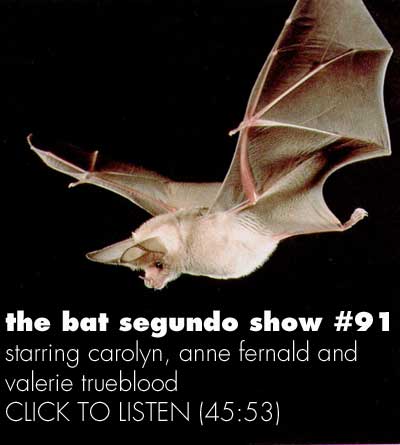
Condition of Mr. Segundo: Fleeing from disco.
Guests: Anne Fernald and Valerie Trueblood
Subjects Discussed: Weaknesses for beautiful books, life as “structured anarchy,” the definition of plot, David Markson, narrative flow, cause and effect in narrative, unexpected events, Seven Loves‘ “eventless” perception, on being “anti-plot,” the beginnings of May Nilsson, family characteristics, the relationship between unpredictable life and fiction, compartmentalized American novels vs. compartmentalized British novels, Edward P. Jones, MFA workshops, the short story form, the paucity of older protagonists in fiction and how older people are underestimated, Faulkner and race, Sidney Thompson, verboten perspectives, underlying nuances beneath sentences, Trueblood’s unintentional wisdom, two-inch items in newspapers, “quiet” vs. melodramatic reader perceptions, people who disappear, and being an apocalyptic person.
(A co-production of the LBC, Pinky’s Paperhaus and The Bat Segundo Show)
EXCERPT FROM SHOW:
Trueblood: Narrative seems to me to be something that sort of flows in many currents through us and carries us through life, but is not — I guess what I mean by plot and why I’m sort of anti-plot is the sort of contained arc: the beginning, the complication and the resolution. Novels like that, I just don’t believe. It’s hard for me to see that things could really ever be tied up with a resolution.
© 2007, Edward Champion. All rights reserved.
Listen: Play in new window | Download
Take me off your mailing list because I’m not reading here anymore. It has nothing to do with this thread in particular.