Ed, I’ve done my share of hating on JLethem’s novels, but I know you’ll know what I mean when I say there’s always a twinge of regret when you meet a writer who you’ve criticized. I’m sure he’s a good guy. I’m just insanely jealous that he won a MacArthur genius grant and I’m just a schlub with a blog and a day job.
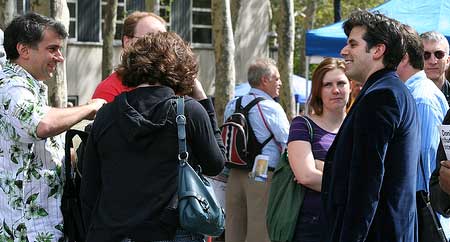
Um. In a truly petty move (perhaps bolstered by the same jealousy as Levi), I feel compelled to point out that Lethem has worn that jacket every time I’ve seen him in person and quite a few times in pictures depicting others seeing him in person. I’m intrigued…
Ami
18 years ago
I should probably say that I’m the girl in purple looking inexplicably surly, but it wasn’t aimed at J-Leth. I think this was the first time I caught sight of that weird dog with the Target logo on his tummy.
Tom
18 years ago
Callie- Wow, I recognized the jacket, too. He wore it when he had a reading in Milwaukee this spring.
Alas, the picture did not capture Lethem’s t-shirt – which, if memory serves, was unapologetically 70s-retro and very colorful. (oh, and that’s me with the back to the camera. Now that fall’s here I will be wearing that hooded sweater EVERY SINGLE DAY.)
Nice relaxed shot! And why expect writers to have lots of jackets, anyhow? We had a writer here, Elizabeth Jolley, who delighted in wearing the same stuff everywhere. Saved herself lots of time and spent it producing the goods. That’s my kind of writer.
Ed, I’ve done my share of hating on JLethem’s novels, but I know you’ll know what I mean when I say there’s always a twinge of regret when you meet a writer who you’ve criticized. I’m sure he’s a good guy. I’m just insanely jealous that he won a MacArthur genius grant and I’m just a schlub with a blog and a day job.
Um. In a truly petty move (perhaps bolstered by the same jealousy as Levi), I feel compelled to point out that Lethem has worn that jacket every time I’ve seen him in person and quite a few times in pictures depicting others seeing him in person. I’m intrigued…
I should probably say that I’m the girl in purple looking inexplicably surly, but it wasn’t aimed at J-Leth. I think this was the first time I caught sight of that weird dog with the Target logo on his tummy.
Callie- Wow, I recognized the jacket, too. He wore it when he had a reading in Milwaukee this spring.
Alas, the picture did not capture Lethem’s t-shirt – which, if memory serves, was unapologetically 70s-retro and very colorful. (oh, and that’s me with the back to the camera. Now that fall’s here I will be wearing that hooded sweater EVERY SINGLE DAY.)
Aren’t you required to wear a hooded sweater in parts of the city? BTW, good to see Asher survived this encounter.
Nice relaxed shot! And why expect writers to have lots of jackets, anyhow? We had a writer here, Elizabeth Jolley, who delighted in wearing the same stuff everywhere. Saved herself lots of time and spent it producing the goods. That’s my kind of writer.