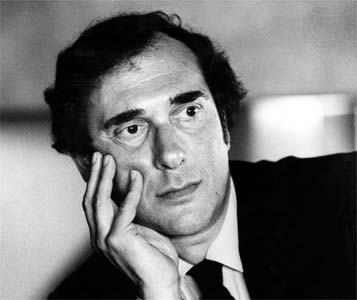
 A: Is Harold Pinter dead?
B: He is dead.
A: Are you sure?
B: Yes, I’m sure.
(pause)
A: Well, who will fill his shoes?
B: I will fill his shoes.
A: You will fill his shoes. Are you a playwright?
B: No.
A: No?
B: No. Nobody can fill his shoes. I could fill his shoes if I were a playwright. But I’m not.
A: You know, the thing I suspect you’re getting at here is that Harold Pinter was unlike anybody else. But on a more literal level, I suspect you may have shared his shoe size. Assuming that you pay attention to feet. Specifically, the feet of those who contribute significantly to culture. Does anybody really know what Harold Pinter’s shoe size was?
B: His wife. The Nobel Committee maybe. I’m sorry for suggesting that I could fill his shoes. That was unintentional hubris on my part. I obviously knew that Harold Pinter was dead longer than you, and I’m still grieving.
A: Maybe they’ll offer Harold Pinter’s shoes at an auction.
B: An auction?
A: Yes, an auction. It seems the best place to consider Pinter’s legacy.
B: Will they begin selling off Pinter’s scraps of paper?
A: Maybe they’ll hold the funeral at an auction house. And there can be a little sniveling man crunched down under the bier offering work that hasn’t yet been published.
B: Work that hasn’t been published?
A: Work that hasn’t been published, yes.
B: At an auction house?
A: The publishing industry may not work this way, but maybe.
B: Oh, that’s wonderful.
A: If you’ve got the cash, perhaps.
B: As it so happens, I don’t have the cash. And I’m still a bit sad about Pinter dying.
A: I’m sad about Pinter dying too, although you wouldn’t know it from my morbid sense of humor.
B: Sometimes, a morbid sense of humor is just what it takes to take in the passing of a legend.
(pause)
A: You like the idea?
B: Not really. But we can argue about it over a game of tennis, old chap.
© 2008, Edward Champion. All rights reserved.
The authentic intellectual Left is dying off; may Chomsky live to 120.