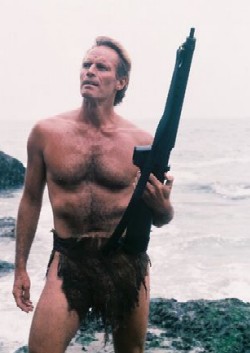
 They did it. They finally…really did it. Those damn dirty apes started playing around with this Internet thing and revived it. And because Cornelius and Zira know that I can speak, they now have me blogging, much like the litbloggers once did. I suppose in six months, they’ll be running the place.
But oh how strong we thought we were! A sampling of yesterday’s headlines, if you will. Imagine me needing them. Back on Earth, or at least the Earth where I came from, I never did.
- Remember the Guardian and its sanctimonious headlines. How carefree they were to study what books helped men through life. Oh, those were the days. Before the cats and the dogs had died and, as I understand it, one brave young ape said no.
- Or those thoughts men like Bud Parr once had that we somehow knew ourselves. Before the revolution. Before the atomic horror.
- Sometimes we were so self-important that we thought we could take six-year hiatuses to get away from ourselves. I never read much Dick Francis during my days on Earth. And I don’t think I ever will again.
- And then there were those flirtations with vegetarianism by writers like Jonathan Safran Foer. I’m not sure if he’d survive here. It’s hard enough finding meat here in the Forbidden Zone, much less fruit from the trees.
- They had bright and colorful memes.
- They had guys like Peter David adapting Stephen King’s The Dark Tower, as that Hogan guy, who seemed to pinpoint the dystopia that came true, once attested.
- They mourned over poets like Constance Hunting.
- Their “literary problems” were trivial. Would an ape make an author doll…that talks? And complains about “literary problems?”
Fighting off the gorillas single-handedly is enough of a problem for me. My fellow astronaut friends are dead. I have only Nova’s beauty left. I suppose that’s enough solace, but can a man find love like this? Can a man survive in a nuclear wasteland knowing that he’s the last of a race declared inferior?
I’ll avenge the human race. I’ll stop these goddam apes if it’s the last thing I do. And if that means sacrificing books in the process, so be it!
© 2006, Edward Champion. All rights reserved.
Oooh, Robert Neville next!