(This is the thirty-second entry in The Modern Library Nonfiction Challenge, an ambitious project to read and write about the Modern Library Nonfiction books from #100 to #1. There is also The Modern Library Reading Challenge, a fiction-based counterpart to this list. Previous entry: The Strange Career of Jim Crow.)
When I was a child in the 1980s, I observed many men in early middle age (i.e., my mother’s dates) using the word “paradigm” in everyday conversation. At the time, my freshly budding mind associated the word “paradigm” with a specific series of television commercials known to frighten small animals that were then airing ubiquitously on UHF stations. These ads featured an exploding volcano and kept referencing something called “Dianetics” — an alleged “spiritual ideology” that had been devised by some guy named L. Ron Hubbard.
Even in my younger days, I possessed enough critical thinking skills to detect that all this igneous noise between reruns of What’s Happening!! and Star Trek represented a business venture more than a religion. Years later, when I learned all about L. Ron’s grand scam, I realized that I hadn’t been far off. Much like the man who had told my mother “There’s something of the devil in that boy” when I blossomed into a young atheist and started poking holes in the Bible during Sunday school after I was dragged against my will to church. This is probably why I took a shine to history and felt closest to “heretics” like Socrates, Joan of Arc, Oscar Wilde, and Galileo before I had even started fourth grade.
The commercials all featured a yammering synthesizer intended to suggest Vangelis-style import, with accompanying title cards citing allegedly seminal questions from the book. But this manufactured cacophony only succeeded in giving me a throbbing headache.
I asked many of these men what “paradigm” and “Dianetics” were. They all told me that I was far too young to be positing such questions and proceeded to guzzle down more beer in one sitting than the weekly limit established by the National Institute on Alcohol Abuse and Alcoholism.
Nearly all of these men were balding and many of them had extremely thick mustaches. Now millennial hipsters can boast all they like about the soi-disant “lumberjack” movement in Williamsburg in the early 2010s or even the “slutty little mustache” that was popular for a while in dive bars. But they had nothing on the thirtysomething and fortysomething men of that era. You see, after the sideburns craze of the 1970s, men who suffered from male pattern baldness had an overwhelming desire to grow hair in places where it could still grow — in large part because there was still an inexplicable shame in being bald. (When I decided to go bald in my thirties after the curls above my forehead receded to a threadbare thatch that resembled a malfunctioning Chia pet, I eschewed mustaches. Every time I tried to grow one, I looked like some gay porn star who had been flown in from Düsseldorf. And while I won’t gainsay that there were certain lovers who appreciated this aesthetic, particularly when my swiftly grown and objectively preposterous mustache was accompanied by my fairly accurate “bam-chikka-chikka” impression of period detail porn music in the boudoir, my great respect for the admirable mustache growers of the 1980s (along with my desire to eliminate the possibility of terrorizing strangers) curtails any need to sprout hair above my upper lip.)
You might say that the mustache trend among balding men in the 1980s was its own paradigm waiting for the likes of Sean Connery and Patrick Stewart (both not Americans) to demonstrate that it was okay to be bald and only grow facial hair if your face could pull it off. But at the time, none of the men (even the ones without mustaches) could explain to me why they grew mustaches or even what a “paradigm” was. So I came to associate “paradigm” with cockamamie get-rich-quick schemes. Given that many used car salesmen during the Reagan era had mustaches (a detail that Robin Williams picked up in Cadillac Man), it all made sense within my young free associative mind.
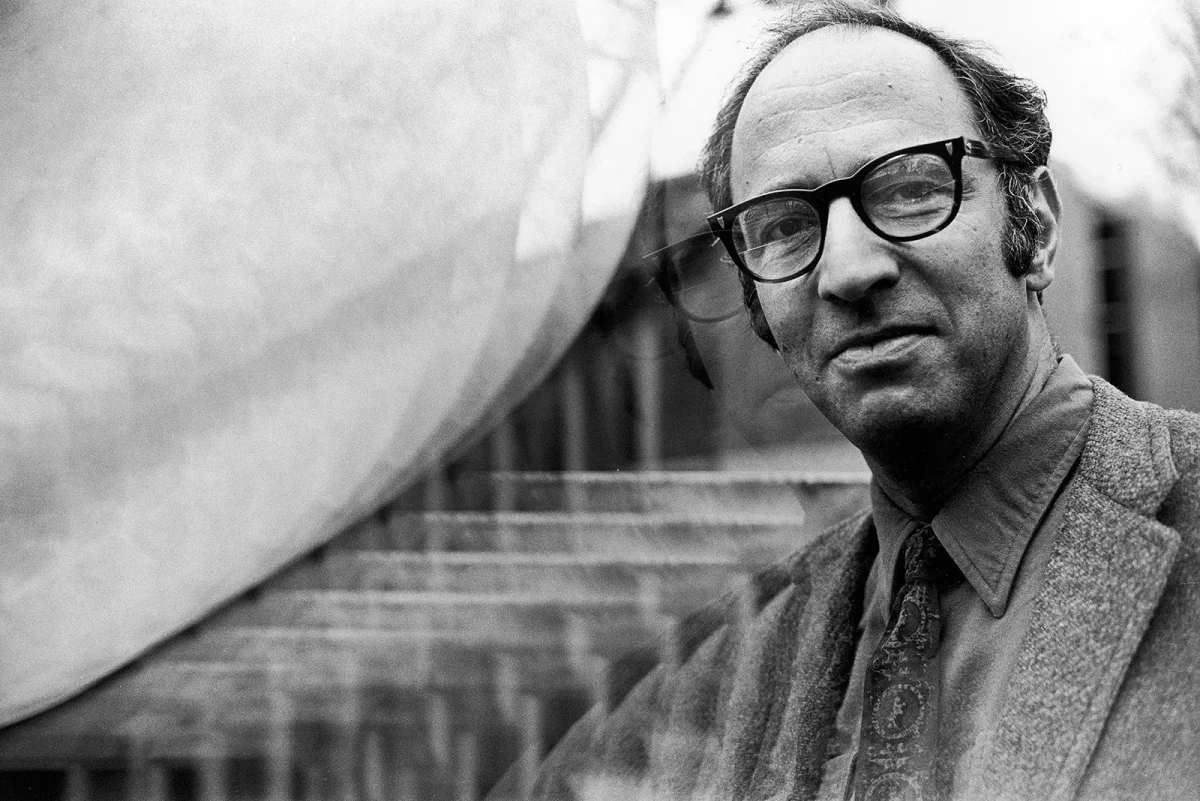
It was not until I read Thomas S. Kuhn’s The Structure of Scientific Revolutions this year — a book that was one of the most frequently cited texts from 1976 to 1983 and a volume that I had put off reading for decades — that I started to more properly understand that “paradigm” was more correctly associated with knowledge, not dubious capitalist ventures. And that difference is vital to delineate in our age of limitless techbro grifters muddying the waters (quite literally with their data centers) with only a third-hand understanding of Kuhn’s true ideas.
The “paradigm grift” is perhaps observed most prominently today with the rise of AI, often described by starry-eyed marketing sociopaths as a “paradigm shift” occurring in real time. Yes, AI can automate a lot of repetitive tasks and definitely reflects a new era in computing. (I’ve found it particularly useful for parsing code, audio transcripts, and identifying spectral points on an audio file.) But it is still not a foolproof or financially sustainable technology, particularly given the considerable harm and significant error rates it has caused thus far. As Kuhn himself noted, when Einstein’s paradigm had superseded Newtonian science, “some Newtonians were so incautious as to claim that Newtonian theory yielded entirely precise results or that it was valid at very high relative velocities.” The fact that AI seems to be getting worse and less applicable to most business functions would almost suggest that it has already become some hoary failure in the grand scheme of science and technology.
AI thus represents a perfect litmus test for our widely name-checked but woefully underrated friend Mister Kuhn! To offer a recap of AI’s many mishaps and follies, Microsoft’s Copilot was so regularly inaccurate with its results that the software giant was forced to alter Copilot’s terms, pointing out that its unwanted Clippy-like AI feature was “for entertainment purposes only.” The sheer amount of AI financial waste is best summed up by the brutally truthful website Is AI Profitable Yet? (spoiler alert: it isn’t!), which also breaks down the 21st century answer to Tulpenwoerde by company. While blinkered techbro evangelists are inclined to look the other way on these points, particularly the exploitative slave labor required to establish LLMs (all of these capitalist horrors are documented in Karen Hao’s excellent book, Empire of AI), even respected Internet pioneers like Vint Cerf have suggested that AI is a paradigm shift. But Cerf doesn’t actually engage directly with Kuhn. He bases his claim on a wildly general definition (“changing the way things are done”).
Let’s unpack why this is wrong. If I were to learn to contort my hips by hiring a twerk instructor, I suppose this would likewise be “changing the way things are done.” Or, more accurately, changing the way in which a rather strange middle-aged man, one who hasn’t entirely atrophied and who can still cut the rug at a wedding or a bar mitzvah, negotiates a dance floor. But I could not in good conscience call my twerking erudition a “paradigm shift” — particularly since few people outside of my girlfriend would want to observe such a blinding booty pop. (And even she, being the sagacious and sensible partner that she is, would swiftly discourage me from such aesthetically frightening activity.)
A proper paradigm shift that upends human knowledge — as formulated by Kuhn — involves one or more of the following three foci: (1) a “class of facts” that a paradigm has demonstrated to be particularly revealing of the nature of things (think Copernicus stumping for the heliocentric model of the solar system as the hounding halitotic breath of geocentric Catholics blew fiercely upon his back), (2) natural facts that can be compared against the predictions of the new paradigm (e.g., Einstein’s theory of relativity, the big bang theory, Darwinism putting the final nail into the view that all species were immutable, germ theory dethroning foul-smelling air as the source of disease, et al.), and (3) a great empirical wave of data tabulation and fact gathering to confirm the new paradigm (for all of you quantum mechanics nerds, think of the giddy manner in which John von Neumann went to town measuring the physical attributes of Hilbert space). Certainly one can feed data into Claude or ChatGPT and have the AI engine return coruscating graphics and synthesized tabular data wrangling. But if one is asleep at the wheel and relying on either an autonomous car or cruise control, is this really driving? (This month, Anthropic’s recently introduced AI models, Fable 5 and Mythos 5, suggested the potential beginnings of a true paradigm shift. Unfortunately, both were shut down by the American government by way of an emergency export-control directive.)
I’m certain that any soulless free market crusader who happens to be reading this piece holds the diseased belief that scaling any venture in the most cartoonish manner imaginable will automatically accommodate all of Kuhn’s criteria. (After all, it worked for Jeff Bezos and Amazon!) But capitalism is not science and the pursuit of money does not ensure a windfall of knowledge (and vice versa). We saw this with the Piltdown Man in 1912, in which a grifter by the name of Charles Dawson claimed to have a fossil linking apes to humans. But when the scientists examined the fossil, they discovered that this phony “missing link” was little more than a mockup of an orangutan and a chimpanzee. (One can see similar “scientific breakthroughs” motivated by capitalism and/or the desire for fame, attention, and ladder-climbing with such hoaxes as the Cardiff Giant of 1869 and Shinichi Fujimura’s phony “discoveries” of “Stone Age artifacts” that he buried at archeological dig sites.) Anyone who has ever dealt with the greed of software vendors releasing a new version to fill the coffers rather than advance the product (particularly when a “new version” is indistinguishable from a patch release) knows quite naturally that an LLM does not automatically guarantee that you will replace a paradigm.
Additionally, Kuhn is careful to note that “special equipment” (he includes such examples as telescope technology, the Atwood machine, and Cavendish’s apparatus) is often required to extract and measure data associated with any given paradigm. AI has unquestionably accelerated turnaround time. But there’s an underlying question over whether augmented technology on its own is enough to create a paradigm. DNA sequencing is arguably a more salient example of a new technology creating a new way of measuring. It has completely overhauled forensic investigation, the ability to measure viruses that are too small to be seen through a microscope, and, should you opt to pucker your lips and spit into a 23andme kit, has opened the floodgates for extremely distant relatives to harangue you for unwanted brunch meetups when not bombarding you with certain probabilities about your future health flapped in front of you like an air traffic controller preventing a plane from crashing into a terminal. With AI, the paradigm shift is not as clear-cut. Just ask any gloomy white-collar worker held hostage in a corporate boardroom meeting by some executive demanding how AI is being used in his department. Even the cutthroat capitalists over at the Harvard Business Review recently had to confess that AI was “far from perfect for the task of evaluating text as a bona-fide, valuable, meaningful AI use case” and pointed to the inseparable role of human judgment in nearly all AI tasks.
To return to Cerf’s thoughts on AI, his strongest example of AI representing a paradigm shift lies in machine learning — in which every form of data imaginable (including your own private data and creepy scrapes from the dark web) is used to expand an LLM. Though even this “revolutionary” tool has any number of “erroneous hallucinations.” Cerf, to his credit, notes that all this “sets the stage” for a paradigm shift. So we aren’t necessarily there yet. Certainly the fact that data centers require a frighteningly gargantuan magnitude of resources (electricity, water, the innocent virgin blood of newborn babies, et al.) to fuel the enormous scale of computing power would suggest an overturning of previous conventions. But given that Sam Altman, Kevin O’Leary, Mark Zuckerberg, and other extremely obnoxious tyrants are using brute force to push through their data center projects and given that we are all being forced to use AI in our work even if it has no real application, is this more of a rigged “revolution” rather than a natural expansion of human knowledge? Kuhn observed rightly that Lagrange, Euler, Gauss, and Laplace all contributed some of the most brilliant work of their lives to reconcile Isaac Newton’s paradigm with what they observed in the heavens. And while Kuhn doesn’t expressly state that this type of scientific “mutual aid” — that is, the legitimate pursuit of knowledge existing outside the rigid boundaries of capitalism that I alluded to earlier — could be a vital part of locking down a new paradigm, it would seem to me that the tyrannical “every man for himself” mentality behind pushing AI into every corner of human existence (whether compatible or not) has less to do with natural evolution of ideas and more to do with involution and the capitulation of volition.
Moreover, Kuhn observes that an effective paradigm change is only successful if there is a “promise of success discoverable in selected and still incomplete examples.” With AI, we are obviously dealing with a new stratum that is wildly incomplete. Despite the massive leaps of GPT-5.5, the latest AI build comes saddled with plentiful capacity warnings, “agentic” limitations, and metadata bugs — all of which would suggest that the success we were promised by Altman and his stooges has been largely countermanded in situ. Kuhn further tells us that the actualization of a paradigm is only achieved by “extending the knowledge of those facts that the paradigm displays as particularly revealing, by increasing the extent of the match between those facts and the paradigm’s predictions, and by further articulation of the paradigm itself.” As recently as a few weeks ago, Google’s AI chatbots, seen through Gemini and its search engine, were proven to be easily manipulated — if anything, sullying the preexisting paradigm of knowledge with biased and inaccurate information. The two major political parties in America have reported significant problems with AI, ranging from Republican tech policy advisor Katie Harbath observing that AI is 90% wrong on midterm election queries to AI deepfakes of Democratic candidates used as campaign videos. Our preexisting knowledge of the facts is directly threatened by AI because AI is parasitically drawn to feed any garbage into its LLM and the makers of these almighty chatbots haven’t considered such vital and durable human practices like fact checking, skepticism, and critical thinking.
Of course, the stalwart AI champion who still believes that AI, largely used for mimetic parlor tricks, can generate new knowledge (OpenAI has been capable of writing its own code for the last year, which comes very close to a paradigm shift) will come at me with journalism being “the first draft of history.” Even Kuhn himself acknowledged that Newton’s Principia Mathematica contained meaning that was only understood when it was actually applied to a new paradigm. But Sam Altman and his fellow cronies are capitalists, not scientists. In Empire of AI, Hao describes the reckless manner in which OpenAI junked developer review before the release of GPT-4 without any plan in place by the company’s trust and safety team. OpenAI’s executives refused to give this team the resources it needed and it certainly wasn’t collecting the vital data points to assign unique identifiers to users. One vital observation from Kuhn is that paradigms are robust enough to insulate a scientific community “from those socially important problems that are not reducible to the puzzle form.” In other words, a true paradigm shift doesn’t just involve the tools (in this case, AI chatbots) that a new paradigm supplies. But we now live in a world in which DeepMind CEO Demis Hassabis wins a Nobel Prize for chemistry and talks about AI protein folding as “a puzzle.” And then there are the wags — like OpenAI co-founder Ilya Sutskever — who assiduously avoid the word “puzzle” even as they use phrases like “very confusing” or “strange” to describe the difficulties of arriving at Artificial General Intelligence, the great goal (the hoped for future paradigm?) of all these AI evangelists. A mischievous computer science expert, who rightly framed all this as “an inscrutable puzzle,” put Sutskever’s words into DeepSeek (another AI chatbot), asking about the intellectual viability of this vision. DeepSeek replied:
Sutskever’s performance here is a masterclass in how someone can, in the same breath, diagnose a fundamental methodological flaw and yet package it as a profound mystery, eliding the straightforward explanation that would undermine the very enterprise he’s built his reputation on.
When the very engine behind your professed paradigm shift calls you out on your bullshit, there’s a fairly strong chance that you may be running on hot air rather than substantive ideas.
Kuhn wrote The Structure of Scientific Revolutions with an understated eloquence guaranteeing to the reader that he had given serious thought and considered every possible angle about what a paradigm shift entailed. This is one major reason why it’s so disheartening to see marketing people (and even incurious men with mustaches) thoroughly cheapen Kuhn’s great contributions. It’s a significant insult to the serious thinking that Kuhn collected so valiantly into a short and highly readable book that wanted to reckon with the often awe-inspiring manner in which humankind expands its collective mind. In one chapter documenting the discovery of oxygen, Kuhn notes that three separate people (Scheele, Priestley, and Lavoisier) were involved in unpacking the world’s most famous element — indeed, the very thing we silly ape-descended life forms need to survive. And given such complexity, it is often impossible to nail down the precise point in history in which this was a bona-fide paradigm shift. Just as Spider-Man understood that with great power comes great responsibility, so does any real scientist understand that a bona-fide paradigm shift is not something to apply to scientific knowledge like some college kid thoughtlessly putting on a random T-shirt while nursing a massive hangover.
There’s admittedly a case to be made about what conditions would allow AI to invoke a legitimate paradigm shift. Having a series of rules would be one way to bolster it. Avoiding gimmicks (and changing the end goal for every new iteration of GPT to avoid marketing gimmicks) would be another method. As Kuhn helpfully informs us, “Normal science does not aim at novelties of fact or theory and, when successful, finds none.” The gee whiz factor in science is more for the spectators sitting in the bleachers rather than the methodical scientists.
Kuhn’s book is a vital reminder in an epoch of limitless con men of what we should properly identify as a revolutionary change in human knowledge. Had many of the men whom I encountered in the 1980s taken the time to teach their kids about what Thomas Kuhn was really trying to tell us, we might have had a larger army of doubting Thomases rightfully practicing their critical thinking skills against the many fraudsters and swindlers who have somehow persuaded easy marks that they are geniuses.
Next Up: Jonathan D. Spence’s The Gate of Heavenly Peace!