Sarah Hall appeared on The Bat Segundo Show #206. Hall is most recently the author of Daughters of the North (published in the UK as The Carhullan Army). My essay on Sarah Hall can be found at the B&N Review.
Condition of the Show: Remaining optimistic about a dystopian future.
Author: Sarah Hall
Subjects Discussed: Daughters of the North vs. The Carhullan Army, writing books that aren’t set in the present day, concern for environmental details, the comforts of familiar territory, catastrophe knocking everything to the past, the wandering impulse within British dystopian novels, Rupert Thomson, Anthony Burgess’s The Wanting Seed, the tension between town and country, literary conversations and outdoing Margaret Atwood’s sense of terror, overcoming perceptions associated with women writers, Samantha Power’s castigation, being overly scrutinized, presentation of the author, the authenticity of testimony, writing a pageturner vs. a leisurely literary novel, being more selective with sentences, writing within confining environments, switching to first person, the origins of the Nixon surname, characters with reddened faces, rural words, Brave New World, names that echo across history, the origins of Rith, schools and buildings that shut down after centuries, Ursula K. Le Guin’s “The Ones Who Walk Away from Omelas,” the dog box and the military training that inspired it, a microutopia within a macrodystopia, nitpicking the apathy within Daughters of the North, the possibilities of revolt and verisimilitude, manipulating the reader and gray areas, violence that occurs offstage, women and violence, bumps on heads, the beauty of corporeal flaws and dilapidated environments, how society transforms the body, To Kill a Mockingbird, Robert C. O’Brien’s Z for Zachariah, sudden relationships and getting to the naughty bits, pornography, the risks of thinking on the page, and romance.
EXCERPT FROM SHOW:
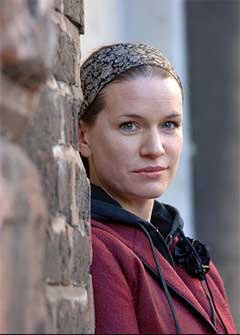 Hall: I think familiar territory is always of comfort to a writer. I find the North of England, where I’m from, fascinating. It’s a very dramatic landscape. It’s kind of a Wordsworth country. So you’ve got the Romantic sense on one hand. And then you’ve got the strange past battling with the future. I suppose Hardy did this to an extent as well. You pick a territory. And even if it’s rural, you have human beings working within that arena. So human drama is going to arise out of those interactions. And I’ve always felt, even though the settings are sometimes quite remote and underpopulated in my fiction, there’s enough going on. You can explore ideas of civilization, breakdown of civilization, human emotional dramas. All the rest of that. But I think what’s interesting with Daughters of the North is — even though we’re casting ahead maybe thirty, forty years from now — and I think British science fiction and speculative fiction does this a lot — there’s this idea of play. When catastrophe happens, everything is knocked back to the past. And so here is what you’re left with. Day of the Triffids. This strange science fiction going on. But at the same time, everybody’s going down to the pub like they always have.
© 2008, Edward Champion. All rights reserved.
Listen: Play in new window | Download
SF Tidbits for 6/21/08…
Interzone #217 features fiction by Paul McAuley, M.K. Hobson, Jason Sanford, Paul G. Tremblay, Suzanne Palmer and Karen Fishler. Free audio fiction from Escape Pod: “Revolution Time” by Lavie Tidhar. The 1929 film Tarzan the Tiger is based on the……