The Bat Segundo Show: Alex Rivera

Alex Rivera appeared on The Bat Segundo Show #281.

Alex Rivera is the director and co-writer of Sleep Dealer, which is scheduled for limited release on April 17, 2009.
segundo281

Condition of Mr. Segundo: Hoping to avoid Morpheus’s maquiladoras.

Guest: Alex Rivera

Subjects Discussed: David Riker’s La Ciudad, splitting screenwriting/directing duties, the collaboration process, the dynamics of globalization, labor and New World Order, the importance of having a heart when making a film, being the “Tin Man” to the “Wizard of Oz”, setting a futuristic story in the Third World, doing something new with science fiction, Sleep Dealer‘s lack of references to contemporary guerrilla armies, the Mayan Army of Water Liberation, intercepting a radio signal without problems, encryption, the heightened realities that come from balancing multiple narrative issues, clairvoyance in a bed of glue, machines and remote control, William Gibson’s Neuromancer, wireless vs. cables, what “looks cooler” on film, organizing specific movements, looking for actors with dance backgrounds, ambition vs. practicalities of low-budget films, Fritz Lang’s Metropolis, satirical television commercials, Robocop, the “post-border spirit” of collaboration, class division, using humor and satire to discuss the evils of fascism, Starship Troopers, Brazil, on directing a first feature after 15 short films, mashups and found footage, Craig Baldwin, reusing and recontextualizing images, switching from collage to narrative, financial assistance from the Sundance Institute, the false creative ideas of being a director, sprinkling found footage from the Iraq War into the narrative, pharmaceutical company ad campaigns, shanty towns on the outskirts of Tijuana, Mad Max, hiding behind technologies, police resistance, Thomas Mann’s “principle of least resistance”, increased connectivity vs. widening economic gap, the Berlin Wall, mariachis offering to play songs, Mexico’s legacy of tradition, the “wacky prediction” of big ideas, ultimate outsourcing, machines that eat up money, the Slurpee effect, Tijuana as the city of the future on t-shirts, spoofing Independence Day, flying sombreros that blow up Congress, Nortec DJs, Urban Outfitters, donkey shows and getting drunk, Tijuana as immigration gateway, and bad puns.

EXCERPT FROM SHOW:

sleepdealerCorrespondent: I would put forth to you, based on how excited you were just talking about Craig Baldwin, that you still have this impulse to take other things and transmute them and rearrange them. I’m curious how you got your fix during the course of Sleep Dealer in terms of recontextualizing found stuff and found locations. Did it come back to initial objects? Or taking things from eBay and the world around us and reconfiguring for this particular world?

Rivera: First of all, I would say, for me, the notion of being a director and the notion of being creative is laden with a lot of false ideas. This idea that the artist, the filmmaker, generates this vision. The truth is we sample. We work with actors who bring what they bring. We work with locations that pre-exist. So we’re always sampling and recycling no matter what we pretend to be doing. And Sleep Dealer is a film that does recycle more than other films in two big ways: one is we’ve got found footage sprinkled throughout the narrative. There are helicopters and aerial shots that were probably filmed for some news crew. And we bought them and put them in the film. And they’re woven into the narrative. There’s footage from the war in Iraq that is recontextualized as part of this sci-fi future war. There are images of the nervous system that are used in this science fiction-y way in Sleep Dealer that were probably produced for a pharmaceutical company ad campaign. And we brought those into our narrative. And so this is a science fiction where it’s perforated by already existing footage. The other way that we’re sampling is in the locations. Because as a documentary filmmaker, I saw places that blew my minds. Shanty towns on the outskirts of Tijuana that push up against the border wall. The border wall itself running down a beach and out into the ocean. High-tech factories next to some of the poorest neighborhoods in the world. And so you see these things that look, in front of your own eyes, more bizarre, more dystopic, than anything in Mad Max. And so I got the idea that we could make science fiction using documentary strategies.

BSS #281: Alex Rivera (Download MP3)

This text will be replaced

The Bat Segundo Show: Laura Lippman

Laura Lippman appeared on The Bat Segundo Show #280.

Laura Lippman is most recently the author of Life Sentences.

segundo280

Condition of Mr. Segundo: Frightened of sleazy and opportunistic biographers.

Author: Laura Lippman

Subjects Discussed: Cassandra Fallows vs. Kathryn Harrison, writers with peculiar personalities, the memoir dictating the memoirist, Hegelian synthesis, the Quarter Pounder and Proustian comparisons, philosophical modifiers, the inauthentic self, stereotypes of NPR listeners, book smart vs. people smart, satire and gentle fun, shaking the “serious is better” notion, Thomas Pynchon, being true to voice, the problems with the word “ballsy,” writing effrontery, Janet Maslin’s overanalysis of Life Sentences, the value of the red herring, the benefits of found opportunities, the problems with plans, Portnoy’s Complaint, creating deflections for the reader, the Oz books and the Nome King, Philip Roth’s Zuckerman, overworking sentences, the joys of dashes, Emily Dickinson, smarmy memoirs, reading the entire book aloud at 40 pages per day, writing a book a year, following instructions, William Gibson, editing as “deboning a fish,” Lippman’s work ethic as a saving grace, racist perceptions, generalizations, and the older generation in Baltimore, the fallibility of memory, the purpose of memoir, Ann Patchett’s Truth and Beauty, making stuff up, basing a novel on true crime, the ethics of taking from real-life stories, responding to email, investigative journalism and amateurism, faking it, and losing sight of the victims over the course of fiction or investigation.

EXCERPT FROM SHOW:

lippmanCorrespondent: You have, of course, Callie-ope — Calliope — and Cassandra. I read Janet Maslin’s review in the New York Times and she seemed to be really hung up on the notion that this represented some Greek mythology. But when I read your book, I immediately said to myself, “Oh! Well, this is a very funny red herring to throw the reader off.” Just as the dates that precede each particular section have no significant meaning, or very little meaning, on the narrative. And I’m wondering if little red herrings along these lines are intended to either see if the critics of the Janet Maslin streak are going to latch onto them or whether they represent a way for you to obtain this level of “just doing it” that you just described in your last answer.
Lippman: It is true that both Cassandra and Calliope show up in the narrative, show up in my writing, with their names attached to them. I did not sit down and schematically design a story in which, yes, I will create two characters named after classic figures of Greek mythology. Cassandra was Cassandra. And then I realized her father was a Classics professor, and I began to think he would have conveyed. And Calliope was just always Calliope. There’s a certain Baltimore-ness to it. But I’m a really big believer in found opportunity. And sometimes writers create their own found opportunities. So it’s an accident that the two main characters of this novel have these names that have a lot of resonance. But I’m okay when people then see the resonance and point it out. It’s like someone at a painting and focusing on a detail that might not have been the intent. But it’s in there. It is there.

My belief is that if one is overly schematic in writing, it will feel a little stale and airless. So on the one hand, I’m delighted that people come to this and say, “Oh! Cassandra and Calliope. There’s all this significance.” Well, there is for them. They found it and it affects the way they read the story. And that’s great. At the same time, I think that if I had had a plan, I think the novel would have a really contrived feeling to it. I think it would feel kind of pedantic. One of the things I didn’t plan. You know, it just comes out. You’re writing. I write trying to think about who is this person and what would they be doing and what would they be thinking at this moment. And there’s a scene in which Cassandra has sex with someone who she’s really been yearning for. And because Cassandra can’t turn her head off ever, she’s thinking and thinking. And for some reason, she starts thinking about Leda and the Swan. Which if people are really paying attention, and they’ve seen the bit about Portnoy’s Complaint in the book, that’s very important in Portnoy’s Complaint. So Cassandra, whether she knows or not, is actually channeling that book that she read as a kid, which she remembers seeing in her father’s house.

So I’m writing this. And, you know, I don’t remember every line of Leda and the Swan! And, by the way, although I’m pretty well versed in Greek mythology, I didn’t remember that Leda gave birth to Cassandra. I didn’t remember that. So I go back and I read the poem and I just think, “Oh my god. That’s hilarious!” And if I had planned it. If I had been writing to that moment steadily for days and days — “Oh, I can’t wait until the moment in which Cassandra evokes her namesake’s mother. Via Yeats in bed.” — I think it would have felt a little off.

BSS #280: Laura Lippman (Download MP3)

This text will be replaced

The Bat Segundo Show: Carl Wilson

Carl Wilson appeared on The Bat Segundo Show #279.

Carl Wilson is the author of Let’s Talk About Love and reports indicate that he is loved, in turn, by the actor James Franco.

segundo279

Condition of Mr. Segundo: Evading the pomp and circumstance of cultural taxonomies.

Author: Carl Wilson

Subjects Discussed: Celine Dion and incompatible tastes, Elliott Smith, the questioning of canonical knowledge, Paul Valery’s concept of taste composed of a thousand distastes, TV on the Radio, choosing sides when dismissing trash, defying the stereotypes of Celine Dion fans, snobbish record store clerks and zealous fans, anti-snobbery, false dichotomies and cultural advantage, culture and existing power structures, Fiona Apple’s Extraordinary Machine, the Internet and the music industry, fans and cultural capital, Immanuel Kant and “common sense,” cultural consensus, the Beatles, questioning Wilson’s party criteria, middlebrow aesthetes in newspapers, separating the person from the artist, the relationship between vituperative feelings and meeting people, the celebrity-industrial complex, Dion’s 2005 appearance on Larry King, whether or not Larry King mocks his guests, judging a person on a handful of eccentricities, whether it’s possible to see the “real” Celine Dion, reinforcing celebrity image, whether or not personal information about an artist can affect your opinion about the art, Michael Jackson, “classic” vs. contemporary pop culture, the expiration date of scorn, that damn song from Titanic, Celine Dion in Vegas, music and emotional frames of reference, the problems with the word “social” being applied to art, Pierre Bourdieu’s Distinction, the problems with “hip,” coolness and judgment, the Mountain Goats, the perceived “hipness” of alt-music boosters, authenticity, “keeping it real,” and civil disagreement.

(Note: Video excerpt forthcoming.)

EXCERPT FROM SHOW:

wilson2Correspondent: But look at the Beatles and Elvis. I mean, this would seem to me to confirm the ideal conditions. It would be very difficult to find someone who is a music lover who hates the Beatles or the Rolling Stones or Elvis. I mean, there’s a fairly common consensus. Even if you don’t love them, you can at least appreciate the achievement of these bands that just went in and likewise captured the popular consensus. And this is a little bit different from Celine Dion.

Wilson: It is.

Correspondent: In which there’s an artistic criteria likewise being applied. So how do you separate this?

Wilson: I mean, it’s different than Celine Dion. And it’s different than Stockhausen. Right? So look at them as poles of a spectrum and the Beatles and Elvis as being somewhere in the center of that spectrum. By the end of the book, there’s a whole essay at the end of the book about taste and different ways of thinking about it and criticism. And the thing, that at the end of this whole process of immersing myself into a different taste world than my own, was that where those big aesthetic disagreements arise, my tendency at this point is to suspect that really it’s a problem of terms. That people are arguing on a different set of assumptions than one another, but that their conclusions are perhaps equally valid. But that doesn’t mean that I think now that Celine Dion and the Beatles are equals. And it would be a whole other sort of chapter of this exploration to figure out where to find some kind of more objective set of measurements for greatness. But if you’re using populism and anti-populism hand in hand, what you do find with people like Elvis and the Beatles, and Louis Armstrong and Ray Charles — you know, they kind of win all of those contests. I’m not saying everything’s the same.

Correspondent: Then what accounts for the aberrative impulse for Celine Dion then?

Wilson: I think that there are things that are confirmed both by elite opinion and populist opinion. And in those cases, it’s kind of good to think, “Oh, well, whichever direction you come from, this gets through the gates.” What explains what doesn’t get through one set of gates and what doesn’t get through another set of gates. And so the book is more concerned with aesthetic disagreement than aesthetic agreement. And it’s a question of when we have these fights. When you’re at a party and somebody’s saying, “This is great,” and you’re saying, “This is terrible,” what are you really talking about? And my suspicion is that you’re talking about something that has more of a deeply autobiographical root than it has any connection to some objective set of markers. But that’s not to say that there might not be works of art that are more profound and universal than others.

Correspondent: But see, Carl, this is where I’m going to have to disagree with you. Because you’re applying a criteria here where if I go to a party to express a particular opinion about music, I’m immediately going to focus in on Celine Dion and absolutely damn her to the skies. When, in fact, in my case, I have not actually thought about Celine Dion in any serious capacity until I read your book. I mean, I largely ignored her. So this is why I’m a little suspicious. I mean, I hear where you’re coming from. But I’m a little suspicious of how you’re applying such a broad brush to how we have tastes and how we express those tastes at parties.

Wilson: Well, it might just be that Celine’s not the best example for you. But maybe Whitney Houston is a good example for you. I think there’s a whole category…

Correspondent: I ignore her too!

Wilson: But that just, to me, speaks to the aesthetic world that you live in — it’s well cordoned off enough from places where you might have to deal with that. But, I mean, the places where I use as examples in setting this up is, in the media, the people who are representatives of our tribe. You know, the aesthetes. Which are middlebrow aesthetes in terms of who’s writing a column in the newspaper. Celine is a very favorite whipping boy.

Correspondent: Whipping boy. Have you looked at her lately?

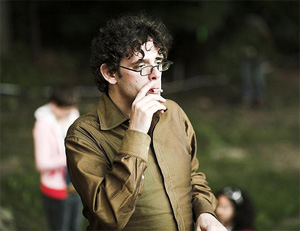
(Photo credit: David Waldman)

BSS #279: Carl Wilson (Download MP3)

This text will be replaced

The Octagon

At the bottom edge of every beer bottle, you will find a series of dots — a crude glass Braille identifying the specific glass moulding. If you examine your medicine cabinet and your building is old enough, you may find a tiny slit that once held razor blades. If you have lived long enough, you may remember when the capsules on jars and bottles were once made of lead or even cork (before health regulations replaced these with plastic and aluminum foil).

stopsignThe octagonal STOP sign, which is well-known throughout the United States and more observed than the above items, is only fifty-five years old. The eight-sided seed was planted in Mississippi by a three-man crew insisting on different shapes for disparate signs. Why this trio made the jump from four sides (rectangle) to eight sides (octagon) is an answer just as mysterious as the chopped diagonal ends on the paper in Battlestar Galactica. (It is a sad indication of our largely non-inquisitive culture that even fanboys have not sought to grill Ronald D. Moore on this omnipresent observation.)

But in 1935, the original STOP sign was yellow and octagonal, with red or black letters cast in the same font we know today. Two decades later, the yellow was changed to red. Doug Lennox’s Now You Know: The Book of Answers suggests that red “was logical because red had symbolized danger for thousands of years.” But this is too pat an explanation. A gentleman named Eric Reiss opines that the color code established by traffic signals beckoned the need for visual standards and conformity. My own theory is that the old STOP sign resembled an overripe banana, and made numerous aesthetes (and possibly a few vicars) vomit. Perhaps the yellow background caused automobiles to advance faster past a crossing to avoid the sign’s dreadful color, and this movement to avoid ugly signs was initiated in California, thereby bringing the phrase “California stop” into our national vocabulary. But I have only speculation and wild imagination to bring to this discussion. I remain convinced to this day that John Montagu took credit for the sandwich by swiping the idea from a culinary innovator stressed out in the kitchen. But, of course, nobody can prove it. If only the sandwich had emerged a few centuries later, when recording devices had become ubiquitous. Or maybe we’d rather not ask these questions.

In the case of the STOP sign, I’m sure there are public records to sift through. There may even be a transcript from some MUTCD meeting. A search for books on traffic signs reveals that most of them can, in fact, be found in the children’s section. We’re quite willing to document the signs around us, but we’re not willing to get our hands dirty and uncover the stories behind the signs. We’re not willing to encourage children to find answers to these questions. We accept their constant questions of “Why?” as an indication of a phase. The inquisitive impulse is discouraged and permitted to die. The great hoarding of money, needless trinkets, and Babbitt-like sinecures begins with two decades of education, and the world of facts, imagination, and ambiguities — that magical and less competitive realm as limitless as Schläfli — is thrown into the dust heap.

When you see a STOP sign, do you simply accept it? Or do you ever ask yourself, “Why this polygon above all others?” Is it selfish to disseminate an idea or to suggest to another person to get lost within this second concern? When I promulgated a playful riddle on Twitter yesterday, a narcissist by the name of Tony Hightower, who purports to “make stuff up for other people’s benefit,” responded, “I don’t get it. I’m too busy to understand you and your arcane obliquenesses, anyway.” I have the feeling that he simply accepts the STOP sign, and I feel sad for him.