Posts by Edward Champion

Edward Champion is the Managing Editor of Reluctant Habits.

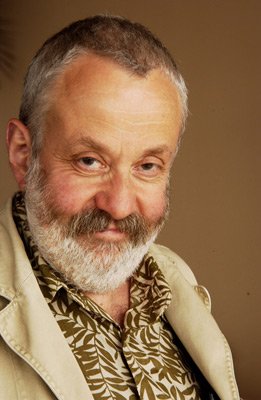
The Bat Segundo Show: Mike Leigh

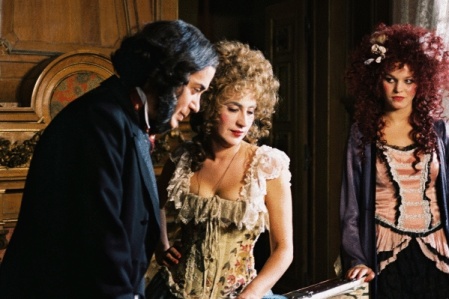
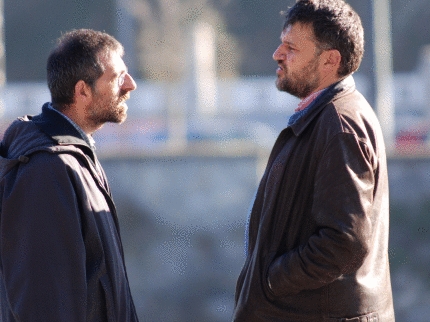
Mike Leigh is the filmmaker behind Naked, Life is Sweet, Vera Drake, and, most recently, Happy-Go-Lucky, which is currently playing the New York Film Festival (among many others) and opens in the United States on October 10.

Condition of Mr. Segundo: Too unhappy and too unlucky.

Guest: Mike Leigh

Subjects Discussed: Vocational symmetries within Leigh’s films, Oscar Wilde, looking at a community, bad teachers, Leigh’s considerable frustrations about Poppy being “too happy,” the difficulties of filming Poppy’s jewelry, audience members misperceiving details, the confusion over Scott being a taxi driver, Bechdel’s Rule, depicting women who aren’t in relationships, the duty to portray life, Leigh’s problems with semiotics, collaborating with cinematographer Dick Pope, feeling the buzz of a visual instinct, devising Naked‘s opening shot, getting an Ozu fix, pursuing the issue of technology, flamenco dancing, MySpace, drawings and investigating domestic violence, “En-ra-ha,” Aleister Crowley, gloomy bookstore employees and literary references, shooting in High Definition, and film financing.

EXCERPT FROM SHOW:

Leigh: But as to the jewelry as a symbol of cyclical anything, I don’t know whether I’d go along with that one.
Correspondent: Okay. Well, fair enough.

Leigh: (laughs) Nice try.

Correspondent: Well, let’s talk about another possible symbol. The back pain that she experiences. This to me suggests that here we have Poppy moving forward as her specific identity — “happy-go-lucky” — and yet there is this pain in the back. And, of course, she laughs it off while she’s at the chiropractor’s office. But the thing that’s fascinating about this to me is that, well, this is behind her. So it’s almost as if she has her blinders on. She’s so focused in on moving forward that she doesn’t notice what she’s feeling in the back. And I’m wondering again how much one should read symbols into these particular choices.

Leigh: I think as we progress into this conversation — I think you are plainly a fundamental, unreconstituted, top-rate intellectual. Which I’m not. I think it’s fascinating, your analysis. But I think it’s a load of old rope. Basically. And I can’t go along with it at all. I mean, the fact is, she gets a bend in the back because she pulls her back when she’s trampolining. And it happens to be her back because that’s what she pulls. The back muscle. I think what’s more interesting about that unfortunate thing that happens to her, which gets fixed by an osteopath, not a chiropractor…

Correspondent: My apologies.

Leigh: No, no, you couldn’t, you know. But I think what is interesting, I’ve found, is that, you know, a lot of people — this has nothing to do with your question, but it’s talking about the same part of the film.

Correspondent: Sure.

Leigh: The same aspect of what happens to Poppy. You know, people are conditioned — mainly, courtesy of Hollywood — into the inevitability that something terrible is going to happen. And a number of people have thought, “Oh! She’s got cancer of the kidneys! That’s what this film is about!” Partly because the last film I made was about an abortionist. The fact is that it’s not about that. People say, “Well, couldn’t something terrible happen to her in the film?” And then you think of that. And you say, “No. Because that’s not what it’s about.” Of course, this could become a film about a woman who dies of cancer of the kidneys. But so what? That’s not what it’s about. It’s about somebody who giggles at stuff and is positive.

Correspondent: You also quibbled in another interview over people identifying Scott as a taxi driver instead of a driving instructor.

Leigh: Yeah, people say “that scene with the taxi driver.” I mean, it’s amazing. The number of people everywhere — here, in Paris, in London, in Berlin, and we’re talking about international fests — who call him a taxi driver. And it’s very curious. It’s as though this is a film about an airline pilot and people are calling him a doctor. It’s very strange.

Correspondent: I mean, I’m wondering. Could it be the way that you actually shot him? Because I know that you and Mr. Pope actually used lipstick cams to get…

Leigh: No, no. Come on. You cannot construct any correlation between how the film was shot and the fact that, for some reason, people call a driving instructor a taxi driver. You really can’t do that.

Correspondent: So it’s the audience’s problem. Not yours.

Leigh: No, no. It’s just a weird thing. I mean, I don’t think it’s even a problem. It’s just a strange quirk. But I don’t think anything should be made of it really.

BSS #238: Mike Leigh (Download MP3)

This text will be replaced

Quick Roundup

NYFF: Bullet in the Head (2008)

[This is the ninth part in an open series of reports from the New York Film Festival.]

Your intrepid reporter has lined up several interviews with filmmakers and has even braved a press conference. (I try to be spontaneous whenever I attend mammoth expositions of this sort, but I wasn’t entirely aware that there was a press conference component to some of the screenings. A good reporter, however, always comes prepared. Just don’t ask what essential items I have in my backpack. I’m sure that my arsenal is somewhat unorthodox. But among the ordnance was some equipment to perform a little experiment.) The press conference did not quite work out to my satisfaction, but I now have a plan in place that should work well for next week.

I saw two films today: one very, very good, the other very, very bad. And there’s still have another film (good) from yesterday that I need to cover. So let’s get the bad apple out of the way first, shall we?

Jaime Rosales’s Bullet in the Head, which by no means should be confused with John Woo’s entertaining 1990 action flick of the same name, is a sleep-inducing mess that should be avoided at all costs. If you’ve been reading the nearly 10,000 words (!) I’ve generated here, you may recall that I expressed certain reservations with Serbis. I was fairly certain that I wouldn’t see a film that could be worse. Much to my regret, I was proved wrong this afternoon. (It’s a strange coincidence that probably means nothing, but I must point it out. Both films feature a sound mix loaded with intrusive street traffic.)

Despite copious quantities of coffee that were ingested very carefully in the morning, your intrepid reporter was forced to slap his cheeks in order to stay awake. Not just once. Four times. Unfortunately, I was not armed with a large trout that could probably wake me up in one slap. So I had to settle for palms that needed to do it in four. I caught a glimpse of my mug in the mirror about an hour ago and espied a slightly pinkish mark from these pelts. Let it not be said that your intrepid reporter nodded off on the job. I cannot say the same for some of my colleagues.

Let us be clear. Within Rosales’s film lies a perfectly interesting concept for a good 15 minute short. This is a film determined to tell its story without a line of dialogue. And with the exception of a character yelling “Fucking cops!” twice, it clings quite devoutly to this credo. I presume that this “artistic” choice was made so that the film would stand a better chance of being accepted into film festivals around the world. Or maybe the idea here was to cut down on the subtitling bill. Whatever the motivations, Rosales’s approach shares much in common with the flawed but interesting 1952 film, The Thief, which starred Ray Milland as a physicist and did not feature a single line of dialogue. But The Thief, for all of its problems, at least gave us an FBI agent pursuing Milland and featured the Empire State Building. Rosales’s film, by contrast, features not a single distinguishing landmark. Nor is there an FBI agent.

I would have liked an FBI agent.

There are, however, two cops. But they don’t really look like cops and they don’t really offer what one might identify as cop-like behavior. Instead of the character shouting “Fucking cops!,” he might have yelled “Fucking nondescript guys around thirty!” I contend that this would have been a slightly subversive and more entertaining line of dialogue for Rosales to deploy. And if Rosales had inserted this line into the movie, I would have been the first to declare Rosales a genius. But “Fucking cops!” is what we have to work with here. So “Fucking cops!” it shall be.

Bullet in the Head, for its first hour, doesn’t clue us into the possibility that there might actually be a bullet fired into someone’s head. The film saves this violent moment for later. So if you’re looking for a bullet in the head, you’ll get one. Just don’t expect anything spectacular. And I may have spoiled the film a bit by pointing out the cops. But maybe I’m not really giving anything away because the movie is, after all, called Bullet in the Head. So there’s a certain promise here in the title that the film has to live up to.

We see characters talking behind windows, across the street, at the other end of a restaurant, and at pay phones. Strangely enough, nobody in this movie seems to own a set of blinds or drapes. Which strikes me as damn curious and damn convenient, especially since we see the stoic Ion (played by a burly guy named Ion Arretxe, which suggests that Rosales is quite lazy in naming his characters) getting it on with his girlfriend/wife. Rosales, to his credit, does occlude our view of the events quite frequently, having people pass while the camera pans, thus deliberately mangling the camera move. He does sometimes choose interesting and incongruous audio to play over the visuals, such as a basketball court in the film’s establishing shot of Ion’s apartment. The actors don’t overexpress with their hands too much. And there is one amusing moment at a restaurant in which three people try to look over at another table without suspicion, and their body language indicates how obvious their efforts to be sneaky are.

But this film isn’t called Views Through a Window. It’s called Bullet in the Head! And your intrepid reporter, being a patient man, eagerly awaited a payoff. But there was none. There was indeed no compelling narrative to speak of. No particular detail within the apartment decor that might have said something about the characters. But I can assure you based on the number of eating shots that Ion is a character who likes to eat.

I suppose I would have enjoyed this film if I could (a) read lips and (b) read lips that spoke Spanish. But I am only slightly competent in (a) and utterly incompetent at (b). And if Rosales really wanted us to know what the characters were saying, he would have provided us with audio and/or subtitles.

So what we have here is a pretty disappointing film — indeed, one so disappointing that there was an audible hiss from the critics when the credits rolled. And while I’m not a guy who likes to fall into critical consensus, I will admit that the hissers had a good point. I certainly hope that Rosales’s misfire doesn’t hinder other filmmakers from making films without dialogue. There is much within our body language and our actions that is interesting without silly lines getting in the way. But these future filmmakers may want to consider including an FBI agent.

NYFF: Four Nights with Anna (2008)

[This is the eighth part in an open series of reports from the New York Film Festival.]

(Our podcast interview with filmmaker Jerzy Skolimowski can be found here.)

Much like American filmmaker Terrence Malick, Polish auteur Jerzy Skolimowski spent a large chunk of time out of commission. But he now returns to cinema after a seventeen year absence with Four Nights with Anna (now making the film festival rounds and emerging next week in New York) and America, a film currently in production. That Skolimowski never quite received the laurels awarded to the likes of Roman Polanski and Andrzej Wajda is something of an unpardonable oversight. For Skolimowski demonstrated with 1982’s Moonlighting that he was an adept and muted iconoclast. In that film, he took aim at the Polish government’s assault on the Solidarity movement through a very straightforward premise: a group of Polish workers, recruited because they can work for cheap, remodels a London house for a diplomat. But the central Polish figure (played by Jeremy Irons) begins to steal food and desperately hits on women. And his behavior offers the audience a Rorschach test about the degree to which Irons’s personal plundering is politically motivated, also raising questions about the responsibility Westerners have to take care of immigrants.

A house likewise figures into Four Nights with Anna. It is a ramshackle and nearly uninhabitable domicile assembled together with stray bits of lumber, and it is occupied by a clumsy, middle-aged man named Leon (played by Artur Steranko). We learn early on that Leon has served some prison time. He wears an ill-fitting jacket that barely confines his chunky frame. He circles around other people, as if terrified of the possibilities of social interaction. He is clumsy, frequently slipping into the mud. He is also quite a creepy protagonist, reminiscent of the protagonist in Ross Raisin’s novel, Out Backward, and it’s not just because he works for a crematorium and keeps malodorous body parts in his shack just before disposing of them. For he also spends his spare time peeping at his neighbor — the titular (in more than one sense of the word) Anna, a nurse who we likewise obtain sparse details about and whose house Leon frequently wanders into through the window. Anna has plenty of friends who will come to her birthday party, but she spends much of her time alone. We see her purchasing bottles of wine and cigarettes with a friend. But she doesn’t notice Leon at the store. Indeed, she doesn’t seem to be aware of his presence next door. Or so we are led to believe.

It was something of a brave gesture on Skolimowski’s part to present Anna largely from Leon’s perspective. We know almost nothing about her, aside from her avocation and (in flashback; or is it flashforward?) the horrible fact that she was raped. This presents Kinga Preis, who plays Anna, with a scenario in which she is objectified by Leon and therefore the camera, which could not have been an easy thespic sell when Skolimowski was casting. Anna, however, was not necessarily raped by Leon. Leon stumbled upon the rape in progress and, if we are to believe him, did nothing and ran away. He then served a prison sentence because he was unable to recall quite what happened, although his account, if we are to rely on it, involves a dead cow floating down a river and a siren timed either before or after.

Skolimowski’s central question here involves what Polish society should do with a person like Leon. And he wisely avoids a full explanation about Leon’s backstory. We learn that Leon was raped while in prison, but I felt this, and a few other details, were needless efforts to capitulate to the audience’s empathy. After all, should we not accept Leon for who he is? The degree to which an audience member is likely to demonize Leon reflects the degree of empathy that an audience member is likely to feel for the less palatable members of society. To suggest this, Skolimowski’s camera frequently tracks along the windows of houses and down streets, and this visual decision affords us a sideways glance that doesn’t even begin to delve into his tortured psyche. Leon may be a creepy voyeur, but we are just as much voyeurs when it comes to people like Leon. For we have only superficial ideas about their lives to go by. And Skolimowski suggests that there’s something sadly contemporary about this moral hypocrisy by placing two specific items in Anna’s house: (1) an old clock that Leon tries to repair and (2) an artificial waterfall landscape confined within a box that lulls Anna to sleep. The wry imputation here is that Anna, much like many seemingly well-adjusted members of society, prefers to ignore the reality of passing time, itself a more quantifiable measure, for a false atmospheric screen that blocks out the more troubled members of society. As we learn later in the film, she is indeed very aware of Leon. Perhaps more aware than we ever anticipated.

The film, however, has grave problems. As I’ve suggested, Skolimowski tries to have it both ways. Leon is someone we should empathize with based on sketchy information. But Leon is also someone we should empathize with because he is ordered by a tough police officer who has asked Leon for a statement to pick up an ashtray that he has knocked to the floor. There is the suggestion of cyclical behavioral patterns with one deadpan joke involving Leon being accused of stealing a ring from a disembodied hand. Later, after this scenario has been resolved, we see Leon purchasing another ring, which he wishes to give to Anna. While this is an interesting semiotic, it doesn’t entirely submerge us into the ethical quandary of Skolimowski’s central question. Thus, the film doesn’t quite live up to the complexities presented in Skolimowski’s other films.

But it is good to have Skolimowski back in the saddle, even if this latest offering offers decidedly mixed results. Perhaps Skolimowski’s next film, which, like Moonlighting, deals with a Polish emigrants attempting to find an identity in another nation, might see Skolimowski achieve another masterpiece in his autumn years.