This is the second of a year-end three part article celebrating the many podcasts I listen to. To read the first part, go here. To read the third part, go here.
 Fugitive Waves: Until I had listened to The Kitchen Sisters’s very thoughtful podcast, I had no idea that an all-women radio station once flourished in Memphis during the mid-20th century (and was the idea of Sam Phillips!). Fugitive Waves has been doing incredible work finding meaning and history within snippets of sound and tracking down many fascinating figures whose daily lives involved significant advancements towards much of what we take for granted today and what may, in fact, be disappearing before us (such as this fascinating portrait of the late Taylor Negron, which was told largely through a series of voicemails that the comedian horded). (Link)
 Great Lives: Great lives are often riddled with unfathomable sacrifices and ambition, and can indeed be so great that we scarcely know how great a person is until she is no longer around. And then there’s the matter of contending with greatness when we have never met the person in question. Influence remains a strange human predicament, but the details are always worth coaxing out. For how else do we instill our lives with the curiosity and the wonder to be as great as we can be for others? Presenter Matthew Parris is sometimes a tad too interested in aberrant gossip, but this program remains a reliable watermark illustrating the impact of a major figure on another prominent person’s life. And there are some fascinating inspirational sources, such as Monica Ali championing Richard Francis Burton or Ian McKellen on Edmund Hilary. The show reminds us that we are, even late in life, indebted to the people who formed us, who gave us some clue on how to go about living as greatly as we can. (Link)
 Guys We Fucked: When I tell people how much I love this show, and how wonderfully courageous and honest hosts Krystyna Hutchinson and Corinne Fisher are, they look at me as if I’m some prurient middle-aged man. Well, perhaps I am in some way. But that’s not why I’m recommending the excellent Guys We Fucked. The setup involves the two ladies interviewing people who they have slept with or who have made a similarly splashing impact in their lives or who, like 62-year-old Jenice Matias, are still living the good life with a high sex drive. But this is not a podcast merely devoted to the licentious. There’s also a great vulnerability and sense of discovery in these conversations, with vital discussion points examining our relationship to sex, whether we be promiscuous or not. In a recent program, Krystyna described her many feelings in participating in her first threesome with her boyfriend. She was forced to reckon with the pleasure, the unexpected jealousy, the ennui, and the uncertainty of what transpired. It was one of those human moments, where the bawdiness gave way to ineluctable emotional dilemmas, that made me become an unrepentant booster of this podcast, that it wasn’t just some fun sex-positive show but one chronicling something much bigger that few people have the bravery to face and that we probably should in some way. (Link)
 Here Be Monsters: Much like Sword and Scale, producer Jeff Entman is keenly pursuing some of the darker and challenging aspects of human existence — whether it be how a parent raises a small boy who suddenly realizes she’s really a girl or an extremely compelling and disturbing take on hate speech that is a must listen for anyone who cares about national expression. Entman rarely take the easy judgmental way out and it is his gentle compassion that compels us to dive deep into the lives of people we might not otherwise encounter in the real world. Entman is a true-blue humanist who pushes past our distaste and demands that we feel for the beasts and the demons we’d otherwise ignore. And if he’s this good now, I can’t wait to see the kind of radio he’ll be making five years from now. (Link)
 Imaginary Worlds: I must confess that I’ve had a queasy and uneasy relationship with speculative fiction and fantasy over the last few years. I’ve always loved these genres and still dip in these reading waters, but the thoughtless agitation by frightened white men (seen with the Hugo Awards imbroglio) and the unearned arrogance of passable but not really all that terrific authors who seem to believe that being nominated for a World Fantasy Award is akin to Popehood has really helped to push me away. So I’m terribly grateful that the thoughtful and level-headed Eric Molinsky has gone out of his way to not only investigate tricky topics and listen to all sides (such as this episode on the Slave Leia controversy), but is rich enough in his pursuits to look into why certain types of stories (the paranoid and conspiracy-based appeal of The X-Files) take hold upon American culture. This is to speculative fiction what A Life Less Wasted is to video games: shining ruminative radio that has vacillators like me giving cultural terrain occupied by children another chance. (Link)
 The Infinite Monkey Cage: It’s a fairly simple setup: put scientists together with comedians and have them discuss everything from quantum theory to the science of speed to genetics to the big bang. The conversations are always fun and thoughtful, sometimes heated, and the show remains a reliable stalwart among many science-based podcasts. (Link)
 Limetown: I glommed onto Limetown, thanks in part to Jason Boog’s impassioned advocacy, and I’m so glad that I did. This is first-class radio drama and, once you hit the fourth episode, you won’t be able to stop listening to the entire run. It starts off as an homage to Serial, following a radio reporter investigating a mysterious “Panic” in a small town, before turning into a smart and riveting dialectic between science and the supernatural, and then folding in on itself with some high personal stakes. The show has top-notch production, great voice acting (particularly John Milosich as the obsessive scientist Max Finlayson), and sometimes veers into poetic riffs on Planet of the Apes, capitalism, what knowing your lover’s every thought really means — to the point where you forget, even as the final show takes on the form of a “live radio show,” that this is indeed an ostensible radio show, much less a radio drama. Limetown is very much the present and future of radio drama. It is not to be missed. (Link)
 Longform: It took a few years for the boys at Longform to get their sea legs, but, now that they are attracting the likes of Ira Glass and Renata Adler (arguably her most revealing interview yet, thanks to Max Linsky’s enthusiastically persistent questioning style), the big draws are forcing these conversations about media and journalism life to mature quite gracefully. The dudebro talk is now at a minimum now that the hosts have gotten hitched and sired kids. And where else are you going to hear Ira Glass caviling with the interviewing style, forcing Longform to return for an unexpected rematch to atone for unasked questions? (Link)
 Lore: In a podcasting climate crowded by many personal narratives, Lore distinguishes itself with its philosophical thrust, looking into the history of why people cling to possessions or how we live with hunger. Producer Aaron Mahnke’s investigation into the Cleary family is, for example, a fascinating examination of how Michael Cleary’s crazed belief that his wife Bridget was a changeling led to the most tragic outocme imaginable: the murder of his wife. But Mahnke seems to believe that there was something more human in the relationship that caused Michael Cleary to create a belief. Whether you believe Mahnke’s conclusions or not, his show is always thought-provoking, enhanced by a very atmospheric sound design. (Link)
 Love + Radio: One of the most moving radio installments I heard in the last year was a story called “The Living Room,” in which a woman watches her neighbors, who always keep their curtains open and walk around the house naked, and then witnesses something tragic and extraordinary. And that is because Nick van der Kolk’s Love + Radio continues to take some of the biggest chances in podcasting, documenting the life of a “humilatrix,” finding fresh angles on the eruv, and talking with a man who speaks on behalf of sex offenders. This is compelling radio without being creepy. These are stories that need to be told. (Link)
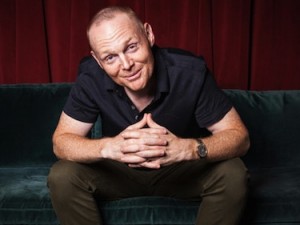 Monday Morning Podcast (with Bill Burr): In addition to being one of the funniest standup comedians working today (and really you should see him if he passes through your town), Bill Burr puts out a twice-weekly podcast where he complains (often about banks, sports, drinking too much, and his problems with computers), looks things up on the Internet, offers advice to people who write in, and mangles the copy of his sponsors without apology. Burr claims not to give a fuck and often says a lot of foolish things for the sake of saying them, but there’s a weird humanity to Burr in the way he cares for the people who write in that makes him more than a mere everyman. The best parts of this show often occur when Burr’s wife Nia gets on the mike to rightly bust his chops for his errant views. (Link)
 Mystery Show: When the great Jonathan Goldstein closed his witty radio show Wiretap earlier this year, I was bummed out, but delighted to find him cropping up on an episode of Mystery Show in obsessive desperation. His goal involved tracking down the mystery of a knotted jacket that once appeared on a Welcome Back, Kotter lunchbox, a scene that never appeared in the show that had aggravated him for years. Goldstein needed peace on this pressing issue and producer Starlee Kine devoted a good 88 minutes for her friend, talking with actors, hounding Gabe Kaplan, tracking down co-creator Alan Sacks, entering the world of lunch box illustrators. It is such great journeys, revealing the wends and digressions of good faith investigation, that makes Mystery Show a great deal of fun and show its bright promise in our rigorous pursuit of the joyous unknown. (Link)
 Neighbors: If podcasting is indeed in a “golden age,” this well-earned glory has much to do with the sudden influx of raw personal narratives to the airwaves unfolding in ways that the weak-kneed, risk-averse NPR oligarchs have neither the vision nor the originality to conceive. By now, you’ve undoubtedly glommed onto the fact that many of the podcasts on this list are composed of emotionally naked stories of people who have discovered some connection to the universe they didn’t know they possessed. The Nashville-based Jakob Lewis’s contribution to this field has everything to do with connection, even an unusual one. One especially standout episode explored the draw that stuffed animals have upon adults, a phenomenon that might be easily dismissed by the thuggish snark police as nostalgia or sustained adolescence. But in Lewis’s hands, this exploration becomes something unexpectedly poignant, where we become aware how the plush toys (one posted on a street flyer) allow many of these people to sustain a vital link between childhood and adulthood through the intimacy of sleep. It may be eccentric, but who are we to gainsay how a person remains a caring individual? Who indeed are we to judge the eccentricities of others? Lewis’s brilliant podcast contains vital questions about how our scrutiny of others affects their lives and, for a man like me who is trying to be kinder, it has provided a welcome wakeup call that we could very well be on the other side of another person’s judgment and why it’s so important to accept a quirk or a fallacy rather than condemn it. (Link)
 New Sounds: If you have any true sense of adventure at all, you know intuitively that it’s necessary to shake up your music palate from time to time. That’s where John Schaefer comes in, helpfully investigating new possibilities for the trombone (including a mass composed of 77 trombones!), plunging into American folk songs, profiling the Kronos Quartet, offering one of the best overviews of street composer Moondog produced for radio, and exploring the intersection between chamber music and turntables. New Sounds regularly turns me onto artists and genres I’ve never heard of before. And Schaefer treats every cut, even if it is a batshit offering, with the tranquil import of a DJ working classical radio. New Sounds is a vital forum for eclectic music. I’m hard-pressed to summon any podcast that comes even close to Schaefer’s exquisite curation. (Link)
 Nocturne: I stumbled upon this marvelous night-themed podcast quite by accident. I’m someone who often walks at night and, Googling around at an early morning hour after an eight mile walk, I stumbled upon this stunning segment of a woman who took to walking in a effort to find a similar peace. And then I started listening to producer Vanessa Lowe’s other episodes, such as this investigation into night as something of an iconoclastic cri de couer, and started to understand how little our relationship to the dark hours has been investigated and how truly extraordinary this simple yet essential pursuit truly is. (Link)
 The Noise Pop Podcast: If you’re anything like me, you’re probably on the hunt for underground music that you’ve never heard of, even if you’re an old bastard. (Okay, maybe I’m not that old. But I knew I had aged out of the concert scene years ago when a young man, seeing me excitably dancing, called me “Dad” at a Spoon concert. This has not stopped me from attending shows on a regular basis.) And if you live a busy life, well, that’s where finding the aggregators becomes a necessary option. I first knew of Noise Pop when I lived in San Francisco, where it was a reliable festival for emerging bands. I don’t live in San Francisco anymore, but I’m very glad that Noise Pop still has a strong presence in podcasting form through a very useful monthly show that celebrates many of the acts without resorting to the kind of snark found all too often in Brooklyn Vegan message forums and Pitchfork reviews. (Link)
 Note to Self: I really love Manoush Zomorodi. She has almost the perfect mix of enthusiasm, heart, journalistic introspection, and thoughtfulness in her pursuits of many of the technological dilemmas that plague us. How, for example, do you contend with a racist Facebook friend? Should teens who sext be entirely condemned? How do we deal with phones that seem to be reading our minds (and, similarly, this remarkable investigation into surveillance should give every American pause)? Do we really need a profile ghostwriter to find love through online dating? Why do our exes text us? Note to Self is smart without ever skimping on fun. It’s the kind of effervescent exploration into digital issues that is more needed today than ever. (Link)
 Notebooks on Cities and Culture: I’ve no idea what Colin Marshall’s podcasting future is, but I hope it’s a bright and productive one. Marshall’s enthusiastic pilgrimages to many faraway and nearby lands (especially his ardor for Korea) have revealed angles on cities I never would have otherwise considered. (The Copenhagen shows are especially interesting.) His most recent campaign to raise funds for his podcast didn’t pan out (despite an indefatigable 67 episodes in his fourth season), yet his gallant and gracious visits to the people devoted who think about urban design and cities continues with a new project on Byline. He’s still contributing podcasts to The Los Angeles Review of Books. I’m including him on the list, even though he is in limbo, because my sense is that Marshall’s epic canvassing is only the beginning of something that could prove very groundbreaking and game-changing, if he’s able to find the support to keep his journeys afloat. (Link)
 On the Media: If you care about journalistic ethics or any subject that involves our always-shifting media climate, Brooke Gladstone and Bob Garfield’s long-running show remains essential listening. Garfield has the voice of a grizzled veteran who’s been working the room too long and is often best when he’s delivering cranky interrogations of people he deems egregious. Gladstone is the empathizer to Garfield’s gruff beat cop. Together, the pair valiantly upholds important news standards, but does so with the same spirit of fairness that they demand of their subjects. (Link)
 The Organist: It took a little while for this podcast adjutant to The Believer to figure out what it was doing, but now that it is less committed to cutesiness and awkward radio plays (though that strain hasn’t been entirely deracinated), it has started to produce very interesting radio, such as this glimpse into what it was like to work for Orson Welles and this tremendously fascinating look at poet Christopher Knowles that really got me thinking about how loops and mainstream culture could very well be vital parts of being a distinct artist. There are some podcasts you have to stick with for a while to see how they develop. I’m thankful that I hung in there for The Organist, which I now greatly look forward to rather than remain uneasy about. (Link)
Next Up: Continue to Part Three!