Posts by Edward Champion

Edward Champion is the Managing Editor of Reluctant Habits.

In Cold Blood (Modern Library Nonfiction #96)

(This is the fifth entry in The Modern Library Nonfiction Challenge, an ambitious project to read and write about the Modern Library Nonfiction books from #100 to #1. There is also The Modern Library Reading Challenge, a fiction-based counterpart to this list. Previous entry: The Journalist and the Murderer.)

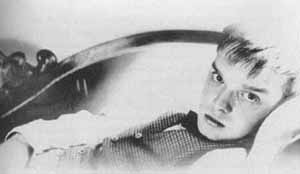
halmacapoteTruman Capote was a feverish liar and a frenzied opportunist from the first moment his high voice pierced the walls of a literary elite eager to filth up its antimacassars with gossip. He used his looks to present himself as a child prodigy, famously photographed in languorous repose by Harold Halma to incite intrigue and controversy. He claimed to win national awards for his high school writing that no scholar has ever been able to turn up. He escorted the nearly blind James Thurber to his dalliances with secretaries and deliberately put on Thurber’s socks inside out so that his wife would notice, later boasting that one secretary was “the ugliest thing you’ve ever seen.” Biographer Gerald Clarke chronicled how Capote befriended New Yorker office manager Daise Terry, who was feared and disliked by many at the magazine, because he knew she could help him. (Capote’s tactics paid off. Terry gave him the easiest job on staff: copyboy on the art department.) If Capote wanted to know you, he wanted to use you. But the beginnings of a man willing to do just about anything to get ahead can be found in his early childhood.

Capote’s cousin Jennings Faulk Carter once described young Truman coming up with the idea of charging admission for a circus. Capote had heard a story in the local paper about a two-headed chicken. Lacking the creative talent to build a chicken himself, he enlisted Carter and Harper Lee for this faux poultry con. The two accomplices never saw any of the money. Decades later, Capote would escalate this tactic on a grander scale, earning millions of dollars and great renown for hoisting a literary big top over a small Kansas town after reading a 300 word item about a family murder in The New York Times. Harper Lee would be dragged into this carnival as well.

mlnf96The tale of how two frightening men murdered four members of the Clutter family for a pittance and created a climate of fear in the surrounding rural area (and later the nation) is very familiar to nearly anyone who reads, buttressed by the gritty 1967 film (featuring a pre-The Walking Dead Scott Wilson as Dick Hickock and a pre-Bonnie Lee Bakley murder Robert Blake as Perry Smith) and a deservedly acclaimed 2005 film featuring the late great Philip Seymour Hoffman as Capote. But what is not so discussed is the rather flimsy foundation on which this “masterpiece” has been built.

Years before “based on a true story” became a risible cliche, Capote and his publicists framed In Cold Blood‘s authenticity around Capote’s purported accuracy. Yet the book itself contains many gaping holes in which we have only Smith and Hickock’s words, twisted further by Capote. What are we to make of Bill and Johnny — a boy and his grandfather who Smith and Hickock pick up for a roadside soda bottle-collecting adventure to make a few bucks? In our modern age, we would demand the competent journalist to track these two side characters down, to compare their accounts with those of Smith and Hickock. Capote claims that these two had once lived with the boy’s aunt on a farm near Shreveport, Louisiana, yet no independent party appears to have corroborated their identities. Did Capote (or Hickock and Smith) make them up? Does the episode really contribute to our understanding of the killers’ pathology? One doesn’t need to be aware of a recent DNA test that disproved Hickock and Smith’s involvement with the quadruple murder of the Walker family in Sarasota County, Florida, taking place one month after the Clutter murders, to see that Capote is more interested in holding up the funhouse mirror to impart specious complicity:

Hickock consented to take the [polygraph] test and so did Smith, who told Kansas authorities, “I remarked at the time, I said to Dick, I’ll bet whoever did this must be somebody that read about what happened out here in Kansas. A nut.” The results of the test, to the dismay of Osprey’s sheriff as well as Alvin Dewey, who does not believe in exceptional circumstances, were decisively negative.

Never mind that polygraph tests are inaccurate. It isn’t so much Hickock and Smith’s motivations that Capote was interested in. He was more concerned with stretching out a sense of amorphous terror on a wide canvas. As Hickock and Smith await to be hanged, they encounter Lowell Lee Andrews in the adjacent cell. He is a fiercely intelligent, corpulent eighteen-year-old boy who fulfilled his dormant dreams of murdering his family, but Capote’s portrait leaves little room for subtlety:

For the secret Lowell Lee, the one concealed inside the shy church going biology student, fancied himself an ice-hearted master criminal: he wanted to wear gangsterish silk shirts and drive scarlet sports cars; he wanted to be recognized as no mere bespectacled, bookish, overweight, virginal schoolboy; and while he did not dislike any member of his family, at least not consciously, murdering them seemed the swiftest, most sensible way of implementing the fantasies that possessed him.

We have modifiers (“shy,” “ice-hearted,” “gangsterish,” “silk,” “scarlet,” “bespectacled,” “bookish,” “virginal,” “swiftest,” and “sensible”) that conjure up a fantasy atop the fantasy, that suggest relativism to the two main heavies, but there is little room for subtlety or for any doubt in the reader’s mind. Capote does bring up the fact that Andrews suffered from schizophrenia, but diminishes this mental illness by calling it “simple” before dredging up the M’Naghten Rule, which was devised in 1843 (still on the books well before psychiatry existed and predicated upon a 19th century standard) to exclude any insanity defense whereby the accused recognizes right from wrong. But he has already tarnished Andrews with testimony from Dr. Joseph Satten: “He considered himself the only important, only significant person in the world. And in his own seclusive world it seemed to him just as right to kill his mother as to kill an animal or a fly.” I certainly don’t want to defend Andrews’s crime (much less the Clutter family murders), but this conveniently pat assessment does ignore more difficult and far more interesting questions that Capote lacks the coherence, the empathy, or the candor to confess his own contradictions to pursue. Many pages before, in relation to Hickock, Capote calls M’Naghten “a formula quite color-blind to any gradations between black and white.” In other words, Capote is the worst kind of journalist: a cherry-picking sensationalist who applies standards as he sees fit, heavily steering the reader’s opinion even as he feigns objectivity. The ethical reader reads In Cold Blood in the 21st century, wanting Katherine Boo to emerge from the future through a wormhole, if only to open up a can of whoopass on Capote for these egregious and often thoughtless indiscretions.

Capote’s decision to remove himself from the crisp, lurid story was commended by many during In Cold Blood‘s immediate reception as a feat of unparalleled objectivity, with the “nonfiction novel” label sticking to the book like a trendy hashtag that hipsters refuse to surrender, but I think Cynthia Ozick described the thorny predicament best in her infamous driveby on Capote (collected in Art & Ardor): “Essence without existence; to achieve the alp of truth without the risk of the footing.” If we accept any novel — whether “nonfiction” or fully imaginative — as some sinister or benign cousin to the essay, as a reasonably honest attempt to reckon with the human experience through invention, then In Cold Blood is a failure: the work of a man who sat idly in his tony Manhattan spread with cadged notebooks and totaled recall of aggressively acquired conversations even as his murderous subjects begged their “friend” to help them escape the hangman’s noose.

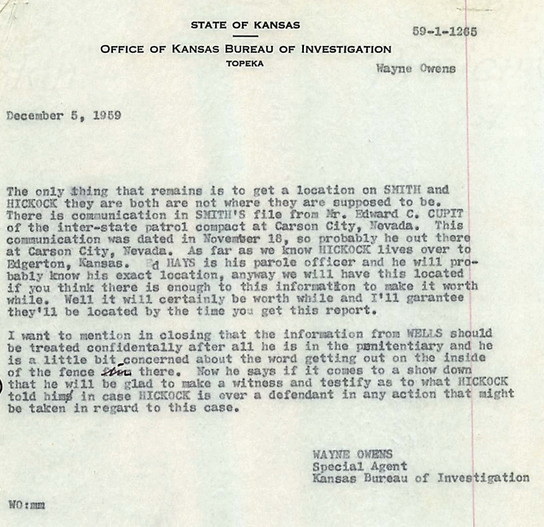
In 2013, Slate‘s Ben Yagoda described numerous factual indiscretions, revealing that editor William Shawn had penciled in “How know?” on the New Yorker galley proofs of Capote’s four part opus (In Cold Blood first appeared in magazine form). That same year, the Wall Street Journal uncovered new evidence from the Kansas Bureau of Investigation, which revealed that the KBI did not, upon receiving intelligence from informant Floyd Wells, swiftly dispatch agent Harold Nye to the farmhouse where Richard Hickock had lodged. (“It was as though some visitor were expected,” writes Capote. Expected by Hickock’s father or an author conveniently tampering his narrative like a subway commuter feverishly filling in a sudoku puzzle?) As Jack de Bellis has observed, Capote’s revisions from New Yorker articles to book form revealed Capote’s feeble command of time, directions, and even specific places. But de Bellis’s examination revealed more descriptive imprudence, such as Capote shifting a line on how Perry “couldn’t stand” another prisoner to “could have boiled him in oil” (“How know?” we can ask today), along with many efforts to coarsen the language and tweak punctuation for a sensationalist audience.

And then there is the propped up hero Alvin Dewey, presented by Capote as a tireless investigator who consumes almost nothing but coffee and who loses twenty pounds: a police procedural stereotype if ever there was one. Dewey disputes closing his eyes during the execution and the closing scene of Dewey meeting Nancy Clutter’s best friend, Susan Kidwell, in a cemetery is not only invented, but heavily mimics the belabored ending of Capote’s 1951 novel, The Grass Harp. But then “Foxy” Dewey and Capote were tighter than a pair of frisky lovers holed up for a week in a seedy motel.

Capote was not only granted unprecedented access to internal documents, but Capote’s papers reveal that Dewey provided Capote with stage directions in the police interview transcripts. (One such annotation reads “Perry turns white. Looked at the ceiling. Swallows.”) There is also the highly suspect payola of Columbia Pictures offering Dewey’s wife a job as a consultant on the 1965 film for a fairly substantial fee. Harold Nye, another investigator whose contributions have been smudged out of the history told Charles J. Shields in a December 30, 2002 interview (quoted in Mockingbird), “I really got upset when I know that Al [Dewey] gave them a full set of the reports. That was like committing the largest sin there was, because the bureau absolutely would not stand for that at all. If it would have been found out, he would have been discharged immediately from the bureau.”

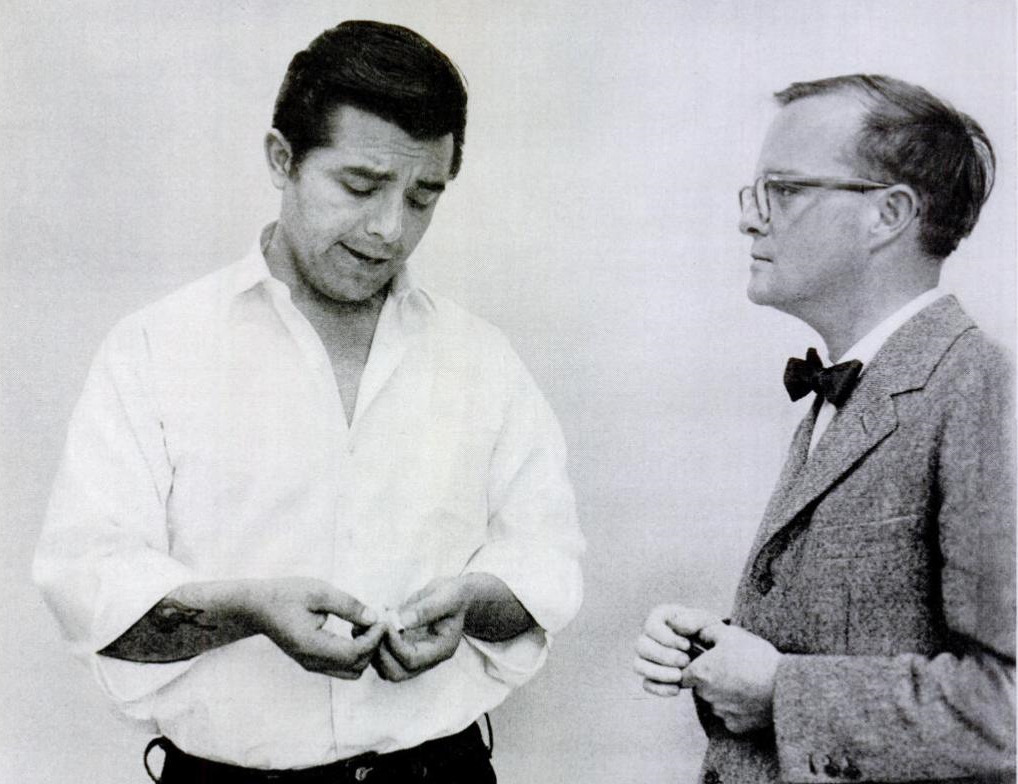
haroldnyeIn fact, Harold Nye and other KBI agents did much of the footwork that Capote attributes to Dewey. Nye was so incensed by Capote’s prevarications that he read 115 pages of In Cold Blood before hurling the book across the living room. And in the last few years, the Nye family has been fighting to reveal the details inside two tattered notebooks that contain revelations about the Clutter killings that may drastically challenge Capote’s narrative.

Yet even before this, Capote’s magnum opus was up for debate. In June 1966, Esquire published an article by Phillip K. Tompkins challenging Capote’s alleged objectivity. He journeyed to Kansas and discovered that Nancy Clutter’s boyfriend was hardly the ace athlete (“And now, after helping clear the dining table of all its holiday dishes, that was what he decided to do that — put on a sweatshirt and go for a run.”) that Capote presented him as, that Nancy’s horse was sold for a higher sum to the father of the local postmaster rather than “a Mennonite farmer who said he might use her for plowing,” and that the undersheriff’s wife disputed Capote’s account:

During our telephone conversation, Mrs. Meier repeatedly told me that she never heard Perry cry; that on the day in question she was in her bedroom, not the kitchen; that she did not turn on the radio to drown out the sound of crying; that she did not hold Perry’s hand; that she did not hear Perry say, ‘I’m embraced by shame.’ And finally – that she had never told such things to Capote. Ms. Meier told me repeatedly and firmly, in her gentle way, that these things were not true.

(For more on Capote’s libertine liberties, see Chapter 4 of Ralph F. Voss’s Truman Capote and the Legacy of In Cold Blood.)

Confronted by these many disgraceful distortions, we are left to ignore the “journalist” and assess the execution. On a strictly showboating criteria, In Cold Blood succeeds and captures our imagination, even if one feels compelled to take a cold shower knowing that Capote’s factual indiscretions were committed with a blatant disregard for the truth, not unlike two psychopaths murdering a family because they believed the Clutters possessed a safe bountiful with riches. One admires the way that Capote describes newsmen “[slapping] frozen ears with ungloved, freezing hands,” even as one winces at the way Capote plays into patriarchal shorthand when Nye “visits” Barbara Johnson (Perry Smith’s only surviving sister: the other two committed suicide), describing her father as a “real man” who had once “survived a winter alone in the Alaskan wilderness.” The strained metaphor of two gray tomcats — “thin, dirty strays with strange and clever habits” – wandering around Garden City during the Smith-Hickcock trial allows Capote to pad out his narrative after he has exhausted his supply of “flat,” “dull,” “dusty,” “austere,” and “stark” to describe Kansas in the manner of some sheltered socialite referencing the “flyover states.” Yet for all these cliches, In Cold Blood contains an inexplicably hypnotic allure, a hold upon our attention even as the book remains aggressively committed to the facile conclusion that the world is populated by people capable of murdering a family over an amount somewhere “between forty and fifty dollars.” As Jimmy Breslin put it (quoted in M. Thomas Inge’s Conversations with Truman Capote), “This Capote steps in with flat, objective, terrible realism. And suddenly there is nothing else you want to read.”

That the book endures — and is even being adapted into a forthcoming “miniseries event’ by playwright Kevin Hood — speaks to an incurable gossipy strain in Western culture, one reinforced by the recent success of the podcast Serial and the television series The Jinx. It isn’t so much the facts that concern our preoccupation with true crime, but the sense that we are vicariously aligned with the fallible journalist pursuing the story, who we can entrust to dig up scandalous dirt as we crack open our peanuts waiting for the next act. If the investigator is honest about her inadequacies, as Serial‘s Sarah Koenig most certainly was, the results can provide breathtaking insight into the manner in which we incriminate other people with our emotional assumptions and our fallible memories and superficially examined evidence. But if the “journalist” removes himself from culpability, presenting himself as some demigod beyond question or reproach (Capote’s varying percentages of total recall memory certainly feel like some newly wrangled whiz kid bragging about his chops before the knowledge bowl), then the author is not so much a sensitive artist seeking new ways inside the darkest realm of humanity, but a crude huckster occupying an outsize stage, waiting to grab his lucrative check and attentive accolades while the real victims of devastation weep over concerns that are far more human and far more deserving of our attention. We can remove the elephants from the lineup, but the circus train still rolls on.

Next Up: The Promise of American Life by Herbert Croly!

Some Ruminations on Modern Romance

Sometimes it takes only two words, uttered by someone very kind at the right place at the right time, to keep you soaring for days. There is nothing wrong with giving or receiving affection or coveting a loose ledger that is never in need of an audit. It is the gamble we all take as we stumble upon the fine intuitive glue that keeps the heart pumping in a ferociously stable place and that fills the spirit with newfound signposts to paths uncharted and untried. There is always the risk of heartbreak, but it is overshadowed by salacious quips and dancing eyes and exchanged smiles, the discovery of bright lively flora blossoming inside another soul, the enchanting unknowingness of it all.

Once the poker faces of our best selves dissolve over a few glasses of malbec, we learn of forgotten cards buried up our sleeves. The stagecraft is intuitive and vaguely mystical, transcending optical illusion, undetectable by the smartest Broadway crowd. A good pair of magicians understands that they can bring down any house through a shared glance or a sotto voce declaration or the slightest brush of fingers on a windy stage. Good living theater is all about the magic that arrives out of nowhere when no one, not even the featured players, is looking.

In recent years, we’ve abandoned our late night telephone conversations for flirty evocative texts that careen across the 4G matrix well past the midnight hour, circumventing the long established rule of never calling another after ten. But maybe we confine our expressions to words because we crave shared physicality more than ever before, perhaps because it is more easily consummated than at any other time in human history. The phones are parked in our pockets and our purses in the early stages of whatever counts for current courtship, intimating that we are occupying some private shared territory that will never be intruded upon. Dating, like show business, is all about showing up.

We sometimes succumb to cliches, but we can still be surprised by someone else even when we are exhausted. This is the magic and the fluidity of romance. The jittery excitement of meeting someone new or deepening something that seems to be tottering happily along a thrilling edge can turn a seemingly collected and rational mind into a visceral thunderball, prone to wild whims and daring moves that were never staked out on the syllabus.

It becomes easier to listen and glisten and kiss and even miss out. It becomes easier to be courteous even when the date is disastrous. It becomes easier to be honest about whatever it is you truly want. The only requirements for enjoying yourself amid a series of pleasures and mishaps are curiosity and a zest for life. And when someone emerges from the ever rotating throng who is gentle with your ventricles and willing to accept your totality, it can shoot you across the moon in ways that no cosmonaut can mimic.

It will never go the same way. This is the first thing you learn. You are more of a catch than you know. This is the second thing you learn. But there are more important lessons following these obvious revelations.

We learn of our resilience. We learn how many chances we give to other souls. We learn, even the skeptics and the bitter cynics among us, that we allow more idealism in our lives than we are willing to acknowledge. We even learn somehow to be comfortably alone during the breaks. There are patterns, but there are also deviations.

It does not matter how many there are. Equations are meaningless in this journey. There is no need to scribble gibberish upon the theoretical chalkboard of your mind. Some grand soul will emerge, even if for a brief time, if you have the courage and fortitude to go the distance.

In Defense of Chrissie Hynde: Why NPR Needs to Change and Why David Greene is a Sexist Fool

Twitter isn’t always the best yardstick when it comes to pinpointing the vox populi’s whims and anxieties, but given the way that the digital horde reacted to Chrissie Hynde’s interview on NPR’s Morning Edition, you’d think that it had just survived the Battle of Stalingrad or an unscheduled viewing of The Human Centipede 3:

“Not for the faint of heart,” “still recovering,” “gamely soldiering.” These are not the phrases one typically associates with a junket interview. But the Pretenders founder adroitly decided that she didn’t enjoy being subjected to David Greene’s insipid questions. Greene, a man apparently terrified of a woman with an independent mind and a fuddy fuss who muttered “bleeping’ instead of “fucking” when quoting a passage from Hynde’s new memoir, Reckless: My Life as a Pretender, made several mistakes. Instead of asking Hynde for the story behind her 1979 rock anthem “Brass in Pocket,” Greene wrongly assumed that Hynde would subscribe to his reductionist thesis that this was “a song that empowers women”:

Hynde: You know, it’s just a three minute rock song. It’s…I don’t think it’s as loaded as that.

As someone who has interviewed close to a thousand authors, filmmakers, and other celebrated minds and who fully cops to an exuberance involving overly analytical takes on an artist’s work, I’ve seen plenty of moments like this unfold before me. What you do in a situation like this is backtrack from your prerigged thesis and let the subject talk. The whole purpose of a conversation is to listen very carefully to what someone else is saying and ask questions that specifically follow up on the other person’s remarks. There was an opportunity here to get Hynde talking about how her music had been appropriated by ideological groups or whether a three minute rock song could ever have any real cultural stakes. But Greene, with an almost total lack of social awareness, could not read Hynde’s clear cues and sustained his foppish interlocutory thrust to the bitter end:

Greene: People certainly thought in its day [sic] as being very different and really emboldening women.
Hynde: Okay, well I’m not here to embolden anyone.

From here, the NPR producer cuts away in aloof and hilarious fashion to a lengthy clip of “Brass in Pocket” to pad out time, leaving the listener wondering what embarrassing (and possibly more interesting) bits were left on the cutting room floor. Perhaps there were many minutes in which David Greene, a man who seems incapable of improvisation, was left with his tongue capsized in a Gordian knot. Greene tells us that “Chrissie Hynde is a really tough interview,” even though Hynde sounded perfectly relaxed with Marc Maron last December and, most recently, with Tig Notaro.

Nice try, David. The fault here is clearly with the stiff interviewer and NPR’s despicably antiseptic culture, which is all about soothing the listener with pat platitudes easily forgotten in a morning commute haze. It’s telling that Greene speaks of Hynde “sharing her story,” as if the rock and roller’s rough life was akin to a child showing off a hastily composed watercolor painting at nursery school. Greene condescends to Hynde by calling this 64-year-old music veteran “a Midwestern girl” and trying to use her Ohio roots to presumably appeal to NPR’s easily shocked demographic. If Greene had truly been interested in Hynde, he might have described her in less innocuous and truer terms. Moreover, Greene can’t even deign to praise the Pretenders. Instead, he gushes over the Rolling Stones rather than the band that Hynde has been a member of:

Greene: And the Rolling Stones. They came — I mean, I, I loved reading about how you sort of took some of the staging off to take it with you, almost as a souvenir.
Hynde: Yeah. Do you want me to repeat the story?
Greene: I’d love you to.
Hynde: Is that the question?
Greene: No. I’d love you to.
Hynde: Can I just not repeat the stories that I’ve already said in the book? Can we talk about things outside of that? Is that possible? I don’t want to do a book reading, as it were.

Let’s unpack why this is terribly insulting to Hynde and why Hynde, much as any woman should, might react as hostilely as she did. Here is someone who has been creating music for many decades. She’s not a neophyte. She’s an accomplished rock performer. Instead of talking to her about The Pretenders, Greene has opted to paint Hynde as some Rolling Stones groupie plucking staging as souvenirs. Hynde has given Greene a big clue, pointing out that she’s not some automatic doll who performs book readings.

Compare this with Greene’s fawning treatment of Stones guitarist Keith Richards back in September. Not only was Richards permitted the courtesy to smoke inside the studio, but Greene gushed about Richards’s considerable accomplishments (children’s book author, raconteur, solo artist) in a manner so obsequious that you’d think he was the Pope. It would never occur to a sycophantic sexist like Greene to ask Richards what he thought of the Pretenders, much less paint him as some febrile fanboy.

Instead of recognizing his clear mistake, Greene digs in the dirk further, demanding that Hynde, presumably because she is a woman, express her “emotions” about an experience that is nowhere nearly as germane as her rugged life:

Greene: No, I would just like to hear some of the emotions of why you love the Rolling Stones so much. I mean, you were — you were taking some of the notes that people had written for Mick Jagger and Keith Richards and taking them home with you. I mean, what was driving you?
Hynde: Well, well, I just loved the bands. That’s what drove me all my life is that I just loved the bands. Back in those days, nobody thought I wanted to grow up and be a rock star. Nobody thought about fame. Nobody thought about making a lot of money. I just liked music and I really liked rock guitar. I didn’t think I was going to be a rock guitar player because I was a girl. I would have been too shy to play with, you know, guys.

It’s bad enough that we have to suffer though NPR’s crass abridgements of complex emotion into superficial seven minute segments, but it’s hard for any progressive-minded listener to hear a talented and interesting woman, one who emerged from an uncertain blue-collar existence to a Rock and Roll Hall of Famer, reduced to something akin to a toy.

If Hynde were a man, this interview wouldn’t be a controversy. One would think that the Twitter crowd, so eager to denounce such demoralizing portraits of women, would have glommed onto an autonomous voice being diminished by an incurious and inattentive fool. But instead the shock is with an interview departing from mealy-mouthed form. The time has come for more women to stop letting “nice guys” like Greene diminish their accomplishments and for all radio producers to be committed to organic conversations. If NPR insists on being a forum for gutless toadies and the celebrities who tolerate them, then perhaps the cure involves opening up the floodgates to every voice on the spectrum with thought and compassion. Of course, podcasting has been doing all this quite wonderfully for years. So if Greene cannot adjust his timid mien to the 21st century, then perhaps his stature should perish.

In Defense of Banned Books Week: A Call to Expand the Debate

Ruth Graham, the oafish opiner who unsuccessfully tried to nuke the YA genre from orbit last year with splashes of sophism and dollops of dilletantism, has returned to Slate‘s realm of callow clickbait with an equally preposterous proposition that “there is no such thing as a ‘banned book’ in the United States in 2015” and that, as such, Banned Books Week is a well-intended wash. Aside from ignoring the obvious fallout of the “likable character” debate from 2013 or the way in which Scarlett Thomas’s ambitious and risk-taking novel The Seed Collectors has been summarily repressed by nervous publishers that lack the stones to put it out on this side of the Atlantic, Graham’s remarkable failure to consider the recent Charlie Hedbo/PEN controversy, much less the way in which seemingly liberal minds continue to “ban” viewpoints that they despise belies her woeful ignorance of current reactionary developments in United States culture.

Graham cites a recent uproar over Rebecca Skloot’s The Immortal Life of Henrietta Lacks in Knoxville, Tennessee, whereby a mother objected to “pornographic” descriptions of infidelity and a lump on Lacks’s cervix being taught in a public school. Graham is right to observe that it was more or less a slam dunk to find the right side on this particular debate, but where she goes astray, undoubtedly aided and abetted by the usual gang of reductionist editorial idiots, is her insane suggestion that Banned Books Week somehow used the occasion to reveal itself as a sinister venue specializing in fearmongering. But Graham doesn’t cite a single word that the Banned Books Week group actually wrote. Blogger Maggie Jacoby compared the mother’s recriminations to “a modern day kind of book burning,” but how is this fearmongering? What Jacoby was rightfully suggesting is that the old forms of suppressing books — fearsome censorship laws, burning books, removing them from school reading lists — have been replaced by an equally diabolical practice whereby one imperious individual or group now decides, irrespective of scholarly or literary merit, that a book or a viewpoint should be expunged from the community.

Censorship battles aren’t limited to blinkered crusaders in Tennessee. “Prudish moms” can be found in such sanctimonious types as Francine Prose and Peter Carey, who cannot seem to comprehend a universe in which offensive and disagreeable ideas are meant to be argued against rather than silenced. The literary world has increasingly failed to understand that an awful idea — and Charlie Hedbo’s juvenile and despicably racist caricatures were indeed meretricious, to say the least — needs to be articulated rather than silenced and that accolades such as the James G. Goodale Freedom of Expression Courage Award are vital reminders of our duty to ensure that anyone has the right to say something offensive or provocative, especially if it runs counter to our perspective, without fear of death or censorship.

Books may not have not faced as many overt censorship challenges in recent years, but the need to squelch undesirable or offensive viewpoints is now being practiced in covert and personal ways that are just as unconscionable. The courageous author Alissa Nutting not only faced a relentless wave of indignant emails and threats after her novel, Tampa, was published, but was also subjected to a histrionic op-ed piece in which a mother believed Nutting’s book was so dangerous that she kept it locked away from her daughter. If the morally scolding can’t get reading material banned from classrooms, then they have proven quite effective in removing “offensive” material from the stores, such as the three men’s magazines ejected by Walmart in 2003 because of efforts made by querulous Christians or, most recently, Rhonda Rousey’s memoir pulled because it was “too violent.”

The public square, whether we like it or not, has been replaced by the venal clamor of a marketplace selling comforting reads and the rising din of outrage culture publicly shaming an author like Erica Jong for ignorant remarks. And while some critics have smartly observed that one can critique an author without excluding her from the conversation, perhaps working to change her mind through a dialogue, others valiantly celebrate an author’s shortcomings as “far more important than any one author’s resistance to a changing zeitgeist.”

In her insistence that “books win” in this new age of condemnation, it’s telling that Graham practices the naive first year law school student’s overused argument of clinging to taut definitions of “banned or challenged” even as she overlooks some very obvious developments which demand that these terms be expanded outside of their presently rigid definitions. A fear of “bad language, violence; and, over and over, sexual content” very much applies in the cases I’ve cited above, just as it does when college students increasingly dole out the manipulative dog-ate-my-homework “trigger warning” charge for classic literature because they don’t want to contend with human realities. These plaints are no different in scope from the mother who tried to pull Skloot’s book from a public school and demand that we expand what a “banned book” really means in 2015.

Nobody wins when some easily offended reader expends a great deal of time and energy to guarantee that a book is withdrawn from a vital forum rather than assembling a provocative and possibly unpopular argument against it, especially when the same ninny fails to provide any evidence of having read the book in question. But American culture is increasingly drifting towards an impulsive immaturity where we cannot fathom that a person is more than the sum of a few foolhardy tweets or inopportune soundbytes and we lack the fortitude to speak with our enemies, let alone maintain cordial relationships with friends we disagree with. It is, however, instinctive enough to find other primordial methods to ban books, whether through trigger warnings or thoughtless censorship campaigns, rather than fostering opportunities for spirited and informed debate. Salman Rushdie should not have to suffer “lasting damage” to his friendships because of a disagreement, but American culture is too wrapped up in blocking or banning anything it finds remotely offensive to have adult conversations. And we are cursed with Pollyanna types like Ruth Graham, serving as myopic propagandists, who are just as implicitly prescriptive as the “prudish moms” who avoid uncomfortable truths that require a drastic change in the ways we relate to the written word and other readers.

Scarlett Thomas: The Unsung Hope for Ambitious Fiction

THE SEED COLLECTORS
by Scarlett Thomas
Canongate, 384 pages
(UK only, unavailable in the United States)

A little more than a decade ago, fiery ambitious fiction was in something of a crisis. Time-taxed readers flocked to meliorative middlebrow, thrilled to have their middle-class worldviews confirmed by authors too paralyzed to take real chances, but pretending to be prodigious talents. Remarkably mediocre novelists like Julia Glass actually won distinguished awards for pounding out sappy pablum. Jennifer Weiner — the Michael Moore of literature — conned smart readers (including this one) into believing that her privileged pink-covered rubbish was as meritorious as such deservedly popular authors as Stephen King, Laura Lippman, Megan Abbott, and Richard Russo, befriending the right people to ensure that her formulaic tales were vaguely perceived as “literary.” Before he found appropriately mercantilist stature on a Times Square billboard, Jeffrey Eugenides preyed on progressive naiveté with Middlesex, his big fat Greek wedding of a novel, using transgender symbolism to deliver a epic that was only as sweeping as the hot air blowing against his vest, even as he doled out references and metaphors that, as Sarah Graham has smartly argued, were complicit in the exploitation he seemed to be railing against. Michael Cunningham entered this scene like Isaac Pocock carving up Waverley into bits of melodramatic balderdash, braying about happiness contained in a kiss and a walk and sealing the illusory import with the portentous inclusion of Virginia Woolf. It was no surprise that Cunningham’s treacly Madison Avenue nonsense (“It’s the city’s crush and heave that move you; its intimacy; its endless life.”) was adapted into a pretentious film scored by Phillip Glass. Ask any dependable reader today with any self-respect about The Hours and she will give you the look of a shellshocked Frenchman still taking in the miracle of surviving the First Battle of the Marne. Alice Sebold’s The Lovely Bones, was a YA book before its time (“Sometimes the dreams that come true are the dreams you never even knew you had”) that practically demanded a string section to accompany its condescendingly pat narrative.

eugenidesvest2

In one way or another, these authors produced fiction that was wrongly perceived as different and ambitious. (The Lovely Bones: “refreshingly experimental, and ambitious in the extreme.”) They believed that ambition was not so much a burning drive to stir the hearts of readers, but a buzzword that could cover their lumpy noggins like a borrowed chapeau. But none of their crass careerist efforts held a candle to the most entitled and pampered literary huckster of them all. Jonathan Franzen, rightly condemned by Ben Marcus as “against the entire concept of artistic ambition,” presented himself as a subversive by defying Oprah even as he renounced his experimental roots with The Corrections. Yet Purity, his latest barking dog of a novel, is despicably Republican-minded and unrealistic in its treatment of women. Nearly every female character is sexually assaulted, sexually humiliated, inexplicably serves up her body to an older man (and often apologizes for it!), uses her body to get ahead, is defined more by flirtation than the prowess of their minds or the depths of their souls, and, if sex isn’t an option (because apparently older people don’t fuck in Franzen’s universe), is considered crazy or bipolar. (Indeed, one of Purity‘s characters, Anabel spends many years working on a film about the female body, as if this is the only topic that a struggling woman artist is meant to explore.)

All these novelists had to do was bang you over the head with a traditional narrative that ran way too fucking long and — voila! — marketing forces could turn these dithering Pollyannas into putative literary titans.

In fairness, people probably sought comfort reads, much as they always do in tragedy, in 9/11’s immediate aftermath. In recent years, the major literary awards have redressed concessionary wrongs, recognizing fierce and original talents like Jesmyn Ward, Jaimy Gordon, Paul Harding, Junot Diaz, Edward Jones, and Adam Johnson. Bold websites such as the regrettably departed HTML Giant kept the flame alive for the quirky, experimental, and small press titles, with the legacy continuing today in spurts. Yet the reductionist symphony of Goodreads groupthink, Slate clickbait (“Can a public intellectual speak for us all in an era of fragmented culture?” reads one recent subhed, as if meaningful intellectual argument involves universal concord) and Book Riot circlejerks (“If Shakespeare Plays Were Fast Food Chains” and “The Therapeutic Effects of Reading Middle Grade Fiction as an Adult” read two Book Riot posts) belie the same childish, unambitious, and risk-averse hydra that buttressed Claire Messud’s spirited response to a foolish question about “unlikable” characters. Today, the reading comprehension problems cited by Jack Green in 1962 in relation to William Gaddis’s masterpiece, The Recognitions, are now applicable to only remotely “difficult” books. When Mark Z. Danielewski outdoes Knausgaard with The Familiar, an ambitious and visually striking 27 volume project that works to tell its story in a challenging manner that is perhaps only an eighth as “difficult” as William Faulkner’s The Sound and the Fury, a professional jackass declares the first installment “unreadable” rather than comprehend the book on its own terms. While great novels such as Hanya Yanagahira’s A Little Life have changed the rules on how to depict abuse in contemporary fiction, one cannot gainsay the clunky magazine-style prose used to push forward the message. Today’s young authors are so desperate to please and so fearful of social media recriminations that their books are more likely to feature predictably escapist tales with likable characters.

But there is one author who may very well be our great hope out of this predicament, if people are willing to read her. Much like Richard Powers, Scarlett Thomas is one of the most unsung novelists working in literature today. Her extraordinary new novel, The Seed Collectors, is smart, funny, willing to explore all sides of thorny moral and intellectual questions, and defiantly working against reader expectations even as it grabs the reader by the lapels. Yet no American publisher has the stones to issue her book on this side of the Atlantic.

scarthomastwitter-tweak

When Scarlett Thomas’s The End of Mr. Y arrived in the United States, it was rightfully heralded among hardcore Yankee readers as as the arrival of a major talent: someone who didn’t see literary and genre as working against each other, yet someone also determined to fuse fun and thought with a realm known as the Troposphere, whereby people could enter into a unified consciousness and dance with the thoughts of others. Thomas followed this novel up with Our Tragic Universe, an equally extraordinary volume that was foolishly derided by Thomas’s professed boosters as “[relying] on the two laziest storylines the world of fiction has ever thrown up.” What Thomas’s sudden apostates couldn’t seem to understand was that this thoughtful author was using coincidence and predictability, not unlike David Foster Wallace investigating boredom in The Pale King, to create a rich portrait on what it is to live a life when we are surrounded by endless structure:

A couple of years before, I’d sat on my father’s lap and asked him what he did all day at the university. He told me that he spent most days looking at numbers and doing calculations in order to try to find out how old the universe was. He said his whole job was like being a detective where you look at clues and find out what things are made of or how old they are. I asked why he wanted to know how old the universe was, and he said that was a good question, but a difficult one. I remembered something from school assembly and suggested that perhaps he wanted to know more about God, and his smile died and he put me down on the floor and told me it was time for bed.

Published in 2010, when we were only just starting to understand how social media’s liking and favoriting was hindering unpopular or less glamorous content, reducing the wonders of curiosity into quantified binaries devoid of nuance, Our Tragic Universe was not the big American breakout hit that its publisher hoped it would be, perhaps because it adamantly refused to kowtow to the trite pleasantries that American readers were increasingly becoming drawn to.

The Seed Collectors is the first book I’ve read in a very long time that not only has its finger perspicaciously on the pulse of our anxieties and afflictions, but that challenges the notion of family structure and the way in which we push forward our best selves. It is ambitious not necessarily because of its form (although the number of thoughts that Thomas contains within less than 400 pages is quite phenomenal and makes the novel difficult to describe), but in the way that it unites numerous observations into a Weltanschauung that the smart reader will feel compelled to argue with. To a certain degree, The Seed Collectors is almost a referendum on the early Lily Pascale mysteries with which Thomas established her literary career (and which she no longer lists in her credited works). The engaging Lily Pascale trilogy, which is hardly as egregious as Thomas would have you believe, was as much about exploring whether normalcy and family could serve as acceptable panacea as it was a trio of gripping yarns about murders and psychedelic cults leaving inexplicable imprints on small communities. But now Thomas is a wiser and more adroit writer, nimble enough to take on a remarkably broad range of subjects in one go — what we don’t hear when people are telling us their most intimate thoughts, body image, toxic masculinity, gamification, porn, thwarted career ambition, botany, travel, online shaming, interpretive rigidity, and numerous other topics — even as she spins an elaborate story involving a vast and variegated family drawn together by the recent death of a beloved matriarch who has left a collection of mysterious seed pods to her many scions.

The novel’s considerable dramatis personae represents a wildly vast cross-section of contemporary life, yet it is a great testament to Thomas’s extraordinary talent that we come to know all these characters quite vividly. Bryony Gardner is, to a large degree, the book’s conflicted heart: an overweight alcoholic who, not unlike Our Tragic Universe‘s heroine Meg Carpenter, ponders whether her marriage and her life is all that it’s cracked up to be. If The Seed Collectors had been written by Jonathan Franzen, Bryony’s needs would have been ridiculed or belittled. If The Seed Collectors had been written by Jennifer Weiner, Bryony would become a superficial plus-size stereotype squeezed into a predictable story template. But Thomas is too good and too humane a novelist to wince away from Bryony’s inner world. Despite Bryony’s extraordinary behavior, we come to empathize with her because she is always measuring her calorie intake and her weight against fears that she is not cut out for normal life, whatever that might be. Her three glasses of champagne after an afternoon tea and her casual eating binges are part of a full-bore commitment to excess and entertainment, an imposing pit that anybody can fall down in our age of instant gratification and casual swipes of the credit card. Bryony thinks about an ugly man following her into a train restroom and becomes alarmed at how her fantasy alters into something grotesque as she masturbates. “Your job was not to CHOOSE Holly’s birthday present,” says Bryony to her husband midway through the novel, “just to collect it.” And with the purchase of this tennis racquet neatly compartmentalized, we come to wonder whether Bryony’s impulsive and often quite specific consumption habits could be remedied if she had the guts to place her stock in warm nouns rather than cold verbs.

seedcollectors

To a large degree, The Seed Collectors is holding up a very large mirror to the Quantified Self movement, whereby everything we do in this world creates data, collected and hawked and redistributed in ways that are not necessarily compatible with our complex feelings. The above passage, a glorious pisstake on gamification, sees Ollie, a man who Bryony is considering sleeping with, at the mercy of an Oral B Triumph SmartGuide, an alarmingly horrific (and quite real) device that demands its practitioners to brush teeth in highly specific ways, with emoticons rewarding a commonplace activity with Candy Crush-style perdition. Even a monstrous man named Charlie, who is introduced sexually violating a blind date before the thirty page mark (perhaps another reason why American houses lack the spine to publish this book), is someone who clings to a list of attributes that he’d like to see in “my perfect girlfriend.” And if quantification is the deadly condition uniting all these characters, then how do these disparate characters live? As the novel progresses, Thomas introduces a great deal of dialogue in which the speakers are never identified. And this missing data, so to speak, steers the reader towards an emotional intuition well outside any data subset. And as Thomas serves up more twists and revelations, we come to understand that it is still possible in our age of unmitigated surveillance to be attuned to our private thoughts (though for how long?). The novel, which we have believed all along to be thoroughly structured, has perhaps been a lifelike unstructured mess all along. And this unanticipated alignment between fiction and our data-plagued world feels more artful and poignant than such conceptual stunts as writing a short story composed entirely of tweets. It makes The Seed Collectors almost a cousin to Louisa Hall’s recent novel, the quite wonderful Speak, which used a computer algorithm to determine which of its five perspectives would be on deck next. But even if you don’t want to play this game of six-dimensional chess, The Seed Collectors still works as a sprightly narrative on its own terms, at times reading like an Iris Murdoch novel written for our time and beyond.

But the forces that be will not publish The Seed Collectors in America. They have remained distressingly resolute in recoiling from any book, even one as enjoyable as The Seed Collectors, that understands that readers have brains and are worthy of being respected and challenged. This is a pity. Because The Seed Collectors proves that a great novel can be poignant, ambitious, artful, and a bit punkish.