Posts by Edward Champion

Edward Champion is the Managing Editor of Reluctant Habits.

Scott McLemee: A Wildly Weak and Untrained Mind

In 1998, a Salon byline revealed that Scott McLemee was “at work on a book, Where the Pyramid Meets the Eye: Conspiracy Theory in American Culture.” Eleven years later, that book has not materialized. Indeed, not a single book has emerged from the McLemee Easy-Bake Oven, save for two books he edited: 1994’s C.L.R. James and Revolutionary Marxism: Selected Writings of C.L.R. James 1939-1940 and 1996’s C.L.R. James on the Negro Question. So what has McLemee, a man who doesn’t even possess a bachelor’s degree, been doing on the book front over the past two decades? Well, nothing. He’s your garden-variety freelancer hacking into the fallow with a small shovel, lacking the courage to plant even a grand gardenia. He’s the kind of sad middle-aged loser you see shuffling around the philosophy section at a Barnes & Noble, hoping that some local notable will observe him buying a Josiah Royce volume as a tenuous gesture to phony erudition.

All that time to think and not a single tome to show for it! Well, these professional deficiencies haven’t hindered McLemee from bleating his tendentious little heart out at Inside Higher Ed and in newspapers, where his crude and lifeless essays have proven so soporific that, in 2004, the National Book Critics Circle awarded him the dubious Nona Balakian Citation for Excellence in Reviewing for his unadventurous pursuits. It was a questionable distinction, enervated by the fact that only a handful of out-of-touch elitists actually care about this dubious accolade. But as McLemee put it in his victory speech, “In the ordinary course of things, people do not grow up thinking that they would like to publish book reviews someday. But I did. ” It was the apotheosis of an undistinguished and unambitious career.

Now in an anemic attempt at a Cornel West takedown, this underachieving pot has called the kettle black. McLemee has avoided engaging directly with West’s book, which is not academic, thereby violating Updike’s first rule of reviewing: “Try to understand what the author wished to do, and do not blame him for not achieving what he did not attempt.” He bemoans three academic works in progress that West has not yet finished, as if West were operating solely to placate McLemee’s childish gimme gimme disposition. He expresses his disenchantment with West producing hip-hop albums and appearing in a Matrix movie. (Why not badmouth Marshall McLuhan for appearing in Annie Hall? Or Susan Sontag in Zelig? Or Neil deGrasse Tyson for his goofy appearances on The Colbert Report? West isn’t the only prof with a musical hobby. Bruce Bartlett reported that Russ Roberts was shooting a rap video in October.) He is annoyed that West has written a popular book rather than a formidable academic text. West has set out to write a book in a “conversational voice” (in a line quoted by McLemee). McLemee chides West for not enlightening. But West has clearly set out to dive into raw and visceral waters with this volume. In an interview with Amy Goodman, West states that he “just wanted to lay bare the truth in my life, the ways in which I’ve tried to bear witness to love, truth, justice.” Not the stuff of scholarly exegesis, to be sure, but then McLemee prefers to pursue clumsy dichotomies between amour propre and self-knowledge without textual excavation.

McLemee insists that “West’s work has grown less substantial over time,” but fails to cite any examples from West’s recent academic work to prove this hypothesis. With a dated Run DMC references confirming his unfamiliarity with crunk and glitch, McLemee is more energized by foolish armchair speculations into West’s personal life rather than a full-scale analysis of West as scholar. While it’s true that many are waiting for West to deliver more academic books, McLemee confirms his crass commitment to Perez Hilton-style gossip by reading a personal passage to his wife, obtaining her simplistic analysis, and then belittling West for getting divorced for a fourth time. It’s a superficial conclusion distressingly reminiscent of a teabagger’s uninformed protest. What does West’s personal life have to do with his academic life? What indeed does any of this have to do with West’s academic work? If West is truly finished, should not such a bold argument be presented in response to his scholarly papers? Should not McLemee be sifting through the large gap between the early 1980s and the present day? Well, yes, but our dopey man in Washington refuses to tackle this. Why, for example, is McLemee so silent on Race Matters? He quotes West’s future projects from The Cornel West Reader. Could it be that McLemee has merely skimmed this greatest hits collection with all the éclat of a dutiful CliffsNotes acolyte rather than tackling the West oeuvre? Judging by McLemee’s failure to write or publish a book and this deficient article, this appears to be the case.

McLemee fails to understand that Lawrence Summers’s request for fortnightly meetings, as related in West’s book, emerged after Summers called West’s hip-hop album “an embarrassment” — an affront extending beyond West’s academic role and into the territory of black identity. Summers also claimed that West allegedly missed numerous classes. West responded to Summers by stating that he could not “tolerate the disrespect you show me by attacking me without a shred of evidence” and by pointing out that he only missed one class in twenty-six years, when West was scheduled to deliver a keynote lecture at an AIDS conference. McLemee also conveniently elides West’s remarks before the “miscreant graduate student” line. Here is the full passage:

“Professor Summers, I am glad to meet with you whenever you like. You’re the president of Harvard and, as such, you’re surely entitled to meet a faculty member whenever you like. But if you think that I’m going to trot in here every two weeks to be monitored like a miscreant graduate student, I’m afraid, my brother, that you’ve messed with the wrong brother.” (221)

While it certainly takes two egos to tango, when one factors in Summers’s infamous remarks about believing that “under-populated countries in Africa [being] vastly UNDER-polluted,” one uncovers a distressing pattern. Since scholarly work was at the center of the Summers-West imbroglio, is it really much of a surprise that West is disinclined to do more of it at Princeton?

We have in Scott McLemee a failed and unaccredited critic with a potentially interesting thesis, completely undermined by his country bumpkin approach to scholarship. As W.E.B. Du Bois once put it, “To stimulate wildly weak and untrained minds is to play with mighty fires; to flout their striving idly is to welcome a harvest of brutish crime and shameless lethargy in our very laps.” With McLemee, we have more than shameless lethargy. We have a sad and vitiated charlatan desperately striving for relevance with agonous and unconsidered tactics.
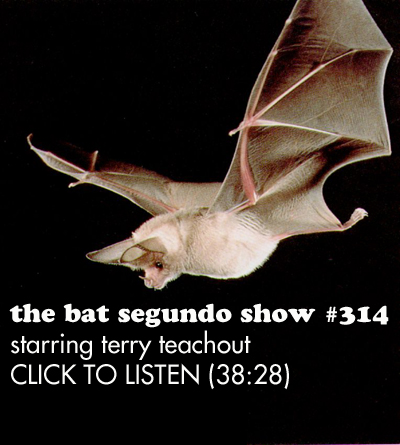
The Bat Segundo Show: Terry Teachout

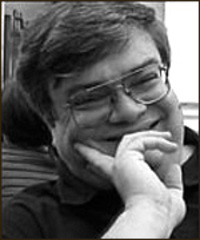
Terry Teachout appeared on The Bat Segundo Show #314. He is most recently the author of Pops.

segundo314

Condition of Mr. Segundo: Playing for handy water closets.

Author: Terry Teachout

Subjects Discussed: Managing professional duties, the exigencies of sifting through 650 reels of Louis Armstrong’s tapes, Armstrong’s encounters with the mob, Armstrong’s relationship with manager Joe Glaser, the aborted Duke Ellington collaborative album, Pierre “Frenchy” Tallerie’s rough tour management, Frenchy as company spy, the effect of Armstrong’s star status on his musicians, the disparity between the net worth of Armstrong’s estate and Glaser’s estate, Armstrong’s remarks on the Little Rock Nine, FBI files and FOIA requests, condemnations Armstrong received in later years, rivalry between Armstrong and Dizzy Gillespie, James Baldwin, Armstrong’s aversion to bebop, why Armstrong didn’t break from his popular style, whether or not an artist has a responsibility to push past a middlebrow reception, floundering artists, disbanding the All Stars and improving the musical dynamic with the All Stars’s second iteration, Armstrong’s unexpected late career collaboration with Dave Brubeck, Armstrong’s ability to sell records during the Great Administration, popular tunes and mainstream accessibility in the 1920s, the dangers of critical consensus, Armstrong’s in-performance improvisation within “Stardust,” Armstrong’s unwavering affinity for the Swiss Kriss herbal laxative, the 1953 conflict between Armstrong and Benny Goodman, the question of artistic ego, the entertainer’s instinct, Armstrong’s conflict with Earl Hines’s showboating, Duke Ellington’s insistence on top billing, Armstrong’s tour of England and racist critics, the mistaken notion of Europe as an Eden for jazz musicians, exploring reception histories, Armstrong’s lawsuit with OKeh Records, the difficulty of collating Armstrong’s correspondence, Armstrong as writer, and self-awareness.

EXCERPT FROM SHOW:

teachouttCorrespondent: In light of Armstrong’s remarks about the Little Rock Nine, and of course his infamous remarks about Eisenhower, did the guy have an FBI file? Were you able to…?

Teachout: He did. It was mostly innocuous.

Correspondent: Oh, okay.

Teachout: There just isn’t anything of interest in it. I know this because I’ve seen it, but also because I FOIAed Joe Glaser. He doesn’t have a file.

Correspondent: None?

Teachout: None.

Correspondent: Despite his mob connections?

Teachout: I appealed the decision to make sure. And they told me that there was no file in Glaser. And this is a guy whose business was taken over by Sidney Korshak, who has an FBI file the size of the Encyclopedia Brittanica. So I can only assume that the FBI saw Glaser as too small-time in terms of their interests to start a file on him.

Correspondent: Unless, of course, it was expunged in some capacity.

Teachout: It could have been. I don’t have any reason to think that it was and, since Korshak’s file wasn’t, I assumed that there simply wasn’t anything there. Armstrong’s file contains nothing of any interest because he didn’t play at political benefits. I mean, the FBI was aware of the fact that he used marijuana. Because he was vetted by the State Department. But other than that, there wasn’t anything that was even worth passing on in the book. I mention actually in one of the endnotes that he had a file and that its contents were of no interest. But Glaser — we were all on pins. I had actually alerted the Armstrong Archive that I FOIAed Glaser. Because no one had ever thought to do this before.

Correspondent: Wow.

Teachout: And it took me a year and a half from end to end, from the original Freedom of Information request to wrapping up the appeal and concluding that there just wasn’t anything there.

BSS #314: Terry Teachout (Download MP3)

This text will be replaced

No

No. Not. Nipple. Noodle. No. Twat. Not. No N. No. Keep it no. One word. Did you hear me? No. No. No. No. Yes. Not exactly. No. Nugatory. Negative. Nipple. Stop. Not. No. No. No. Why no? No. No answer. No reply. No. No. No. No. No. No. Stop. Next sentence. No. No answer. No. No. No. No. No. No. No. No. No. Know? No. It’s no. No. No. Recite. No. No. No. Yes. No. No. No. More nos. No. Nose. No. Nostril. No. No. No. No for no’s sake. Your orgasm’s fake. No. No. No. Bank balance? No. Tax returns? No. Republicans? No. No. No. It’s better. No. No. Beat? No. Nipple. Noodle. No. No. No. No. Pessimist? No. Nihilist? No. Any -ist? No. No. No. Noist. Gnomist. Gnome. No. Troll. No. No. No. What purpose? No. No. No. Pho. No. No. No. Should read this. Should Vado this. No. No. No. Stet. No. No. No. Tweet. Twit. Tit. No. Fuck. No. Fuck no. Fuck not. Fuck you. Fuck me. No. No. No. No. No. No. No. No. No. No. Nip. No. No. No. No. Pull. No. No. No. No. No. Mad? No. Sad? No. Beast? No. Ugly? No. Beauty? … … … … … … … … Ellipse. Ellipse. Ellipse. Ellipse. Ellipse. Ellipse. No. No. No. Style? No. Words? No. Sentence? No. Answer? No. No. No. No. Economy? No. Sociology? No. Psychology? No. No. No. No. No sake. No. No state. No. Non. Null. Nyet. No. No. No. Same in Spanish. No. Conceptual exercise? No. Purpose? No. Corso? No. Coarse? No. Polysyllabic? No. Silly? … … … … … … … … Morse? No. Nipple. Noodle. No. Doodle. No. Poodle. No. No. No. Ellipse. Ellipse. Ellipse. No. Ellipse. No. Eclipse. No. No. No. No. No. Printable? No. Sendable? No. Flexible? No. Fungible? No. No. No. No. Repetition. No. No. Repetition. No. Ellipse. No. No. No. Not at all. No. Not at all. No. Appropriate? Yes. No. No. No. No. Pattern? Ha. No. No. No. Ha. No. No. No. Ha. Ho. Do the math. No. No. No. No. You can’t print this in a newspaper. You can’t print this in a magazine. You can’t print this in a blog. No. No. No. No. No. Does no have any meaning? No. It should. No. No. No. No. No. Context. No. No. No. Crucifix. No. No. No. No. Na. No. No. Nip. No. Tip. No. No. Sip. No. Stultify. No. Send. No. Shazam. No. Prism. No. Secret. No. CIA. FBI. DHS. No. No. No. No. Acronyms eat at the table. No. No. Experimental? Genius? No. No. Conceit? No. Purpose? No. Just imagine. No. Can’t imagine. No. Ideal no. The first no was uttered thousands of years ago. No. No. The second no was uttered shortly thereafter. No. No. No. Means nothing. No. Use it or lose it. No. No. No. Lingua franca. No. No. No. A cross-culture no. An ironic no. A surly no. A burly no. No. No. That’s what he said. No. No. State of mind. No. No. No. No. No. No. No. No. No. No. No. No. No. No. No. No. No. No. No. No. No. No. No. No. No. No. No. No. No. No. No. No. No. No. No.

The Windshield of a VW Bus

vwbus2

Every once in a while, I check the Social Security Death Index to see if he’s been chewed up by the maggots. I know that his parents are dead. Thirteen years ago, a few years before she died, I spoke with his mother on the phone. She begged me to come up. Her husband had just died. I didn’t. Wasn’t prepared. I also spoke with him on the phone. He said the wrong things. I hung up after ten minutes. There’s been no contact since.

His father was a CHP officer. His mother made mascot costumes. He was raised in the Midwest. He had a twin brother. There are many twins in my family. When he picked me up, I would stay at his parents’ house, where I was fed undercooked liver that was difficult to digest. I recall Rich Little booming from a television cabinet and endless blue spirals of cigarette smoke pervading the living room. We didn’t sit around a table to eat dinner. We scarfed it down before a blaring television. But his parents were kind and they did the best that they could. When he wasn’t kind to me, he would burn me with his cigarettes and bite me and beat me. When he comes up in family conversations, he is described in menacing and unfavorable terms that are well-earned. But I prefer to remember the kinder moments. An afternoon where we pulled over and secretly raced go-karts without telling her. He was still capable of that even after the accident. He was a stubborn man and he refused to wear his seatbelt. And when his entire body was thrown through the windshield of a VW bus, he was never quite the same. He could no longer control his savage instincts. I can’t even count the number of times I hid behind a locked door.

The Social Security Death Index informs me that he’s not yet dead. And I’m glad. I’m not afraid of him and I don’t hate him, although I have good reason to. After him, I wouldn’t let any other man that my mother brought home — and there were many, most dubious and desperate, some fat and balding, few enamored with children, all wanting to get into her pants — with the exception of one. But my mother screwed up that one golden opportunity. I pilfered my manhood from other models. From books. From films. From unknowing older friends. From a determination to be true to myself. Although I worried about the latter source. His family, you see, was big on Ayn Rand. And I read her books and thought they were bunk. This probably encouraged my anti-authoritarian streak.

He drank. He swore. He smoked. He regretted the job at the chemical factory. The one he needed to keep the money coming in. And there wasn’t much. For a time, there was only one car — a rusting Lincoln Mercury called the Silver Bullet — and we’d wake up before sunrise to ensure that he could get to work on time. He was often lazy. From this, I developed my work ethic. He did read a bit, but it was mostly horrible poetry that was then in fashion. He wanted to be a writer. But he was often lazy. Writers can’t be lazy.

I’ve already passed the age he was when I was born. And I didn’t expect to think about him much, even when I saw friends lose fathers and helped as many as I could through the pain. I had healed the scars a long time ago. But memory is a funny thing. One sight, one stray bit of music, one smell, one sight, and the storehouse explodes. One shouldn’t relive the past. It is a surrogate reality as deadly as drugs, paranoia, or self-deception. But it never entirely gives up its magnetic pull. Sometimes I think about him.

I’m not married. I have no children. But he did at my age. I share some of his qualities. I’m happier than he ever was. I probably swear more than he ever did. I haven’t been thrown through the windshield of a VW bus. I remember to buckle up. Sometimes.

Killer Queen

Evil Living: “Roughly 48 minutes into the conversation, Sheriff Arpaio was cut short while talking about his stance on immigration by a group of protestors singing to the tune of Queen’s ‘Bohemian Rhapsody.’

“After efforts to quell the crowd failed, Sheriff Arpaio and the panel of journalists interviewing him promptly removed their microphones and exited the stage of the First Amendment Forum.”