Bat Segundo: Technical Issues & Some Developments

Because IE and Safari users were having difficulty accessing the Bat Segundo site, I’ve temporarily disabled podPress. I’ve tested the site on Firefox, Seamonkey, IE, Safari, and Opera, and you should be able to stream the files during this transition. The podPress developer had pledged that he would fix the “Operation Aborted” problem by Sunday, but, sadly, he still has not offered an update. And regrettably, due to my failure to backup the database when caught up in the geeky excitement of upgrading, I cannot downgrade from WordPress 2.6 to 2.5 to make the current version of the plugin work.

The show is still appearing on iTunes, and you can play the shows and still download them to your iPod. But we’re not going to have specific metadata available until either (a) podPress is updated or (b) I adopt an alternative. I have momentarily activated a barebones Audio Player plugin so that those who listen to the show on the main Segundo site will be able to hear it.

For any podcasters who are currently using the podPress plugin, my advice is to not upgrade to WordPress 2.6 until the podPress developer has worked out the kinks. And for any WordPress user who is upgrading in general, be sure to make a backup of your database before you upgrade. WordPress 2.6 is experiencing problems with its image editor and several Flash-related plugins cannot operate under the current code. Since many of the plugins originate from hobbyists who are doing all this all on their free time, this creates a situation in which one must be especially cautious.

I’m going to have some additional news about the Save Segundo campaign in a few days. I am making efforts right now to keep the show running through the end of the year at its current level of prolificity. I also managed to squeeze in another eleventh-hour interview before the hiatus, which I am trying to cut down from unspecified months to a few weeks at most. The interview relates to the lexicon unveiled yesterday.

In the meantime, you can now access the show directly at http://www.batsegundo.com. I’ve also made the site W3C complaint. There will be more this week. Bear with me.

Bat Segundo and IE/Safari Users

A few listeners have informed me that they are having difficulties accessing The Bat Segundo Show site using Internet Explorer and Safari. Unfortunately, the podPress plugin used to stream the programs has proven to be incompatible with WordPress 2.6. (And had I known this, I never would have upgraded.) I would downgrade to WP 2.5 to solve this, but then that would mean using an old backup of the database and losing entries. And the gentleman behind this plugin has yet to release a new version, although he has promised one in the next few days.

So we essentially have to wait this out until this programmer, who is working a very time-consuming day job, can find time to fix this.

However, after a bit of code tweaking, I’ve made everything operational under Firefox. So I would recommend using Firefox for the time being.

The Bat Segundo Show: Nam Le

Nam Le is the author of The Boat. He appeared on The Bat Segundo Show #222.

Condition of the Show: Attempting to find classification within the media industrial complex.

Author: Nam Le

Subjects Discussed: On writing about panna cotta before experiencing it, plausibility and aesthetics, subjectivity, the dangers of autobiographical connections and personal experience perceived by readers and critics, why fiction needs to be influenced by strangeness, place and topography, “Meeting Elise” as an inverted New Yorker story, when the bludgeon of language falls apart, Nam Le’s comic impulses, on not being published in the New Yorker, the relationship between artistic frustrations and the short story infrastructure, making stories succeed on their own terms, bouncing around the globe and using different tones, being perceived, writing without being restrained, political discourse and infantile reductionism, Nam Le’s concern for plant and tree life, getting things wrong, prioritizing descriptive details, the risks of not providing all geographic details, readers who don’t look things up, spelling things out vs. not holding a reader’s hand, elemental meaning within place names, fixed location vs. transitory location, the surrender of identity in relation to how people attach themselves to community, the natural topical limitations of a writer, smooth description, not trusting the veneer of the self, the many references to the body within the stories, the body as an epidermal buffer between the soul and the environment, authentic dialogue and ground rules established for vernacular, the decision to capitalize “Child,” the ethics of writing, and looking in sentences and paragraphs with a sense of aesthetics and ethics.

EXCERPT FROM SHOW:

Le: First of all, I think that place names are — I mean, you’d be a fool not to use them in many regards. Because they’re such charged and resonant words. Because they carry the connotation of all of the expectations and assumptions, and all of the misconceptions, as well as all of the history and culture of the place. So a word like Cartagena has such layers and meaning, and also has references to — for example, to be wanky again, Carthage. But there are elements that are simply embedded into a name like that. And with Hiroshima, for example, I mean, geez, can you think of a word or a place name that is more loaded?

Correspondent: Auschwitz maybe.

Le: Exactly.

Correspondent: I’m waiting for that story from you.

Le: (laughs) You know what I mean? I mean, that was a particularly calculated title.

Download BSS #222: Nam Le

This text will be replaced

The Bat Segundo Show: Grandmaster Flash & Karen Abbott

Grandmaster Flash and Karen Abbott appeared most recently on The Bat Segundo Show #221.

Grandmaster Flash is most recently the author of The Adventures of Grandmaster Flash (with David Ritz).

Karen Abbott is most recently the author of Sin in the Second City.

Condition of the Show: Marinating in urban culture.

Authors: Grandmaster Flash and Karen Abbott

SUBJECTS DISCUSSED: Using “adventures” in a book title, cutting, rubbing and scratching, finding obscure records in a digital age, turntables vs. mashups, time-coded vinyl, illicit methods of obtaining equipment, Sylvia Robinson, the risks of entering into a deal without an attorney, Flash’s problems with “The Message,” Ray Chandler, “Getting Everleighed,” bawdy verbs in desuetude, research and literary associations, the swank decor of the Everleigh Club, the legendary attorney Colonel MacDuff, determining reliable sources a century later, Clifford Roe and Ernest Bell, the danger of writing a history with clear-cut protagonists and antagonists, the white slavery scare, maintaining high standards in prostitution, balancing the pursuit of the facts with the writing an entertaining book, the reformist tendency to slum in the Red Light District, Ike Bloom and graft money, filling in the missing pieces of the narrative constructed by the Everleigh sisters, the Everleigh sisters’s idiosyncratic grammar, whether Abbott portrayed Vic Shaw in a fair light during her final days, Bathhouse John Coughlin — the buffoon and poet laureate of the Levee District, Clement Moore, the early days of Al Capone, the rush of reformist regulation before the 1920s, Jack Johnson, needless persecution under the Mann Act, the lack of coordination between federal and local authorities, the early days of the FBI, the 1908 bombing of the Coliseum, speculation on why the wondrous debauchery of the First Ward Ball were stopped, the downside of advertising a brothel, insular zoning, and prognosticating on the motivations of reformers going after the Everleigh Club.

EXCERPTS FROM SHOW:

Corresponent: If you listen to “The Wheels of Steel” today, as I have actually a couple of times, you can actually hear your hands on the turntables, whereas you can’t always hear someone who is just doing a mashup. You don’t hear that analog quality. So I’m wondering how things have adjusted for you in light of this. How do you keep the analog part of things legitimate? Real? How do digital tools help you as well?

Flash: Okay, first of all, I’m a scientist before I’m a DJ. So pushing the envelope for new technology, I’m always with that. Because I was ahead of my time thirty-three years ago. So now that it’s become things like Serato, Torq, FinalScratch — Traktor Scratch, which is what I use — you still have to drive it in the same fashion. Meaning that if you were a great mixer, a great DJ, in the analog world with vinyl, you still have to drive it the same way in digital. So if you was wack in the analog world, you will be wack in the digital world. So the real fact of the matter is follow through how you play your songs and what songs you play. That still separates the boys from the men, and the ladies from the women. So the modern technology has brought in convenience. You can put 15,000, 20,000 songs on a hard drive, and carry those. Where at one point, we as DJs used to have three or four guys who used to lift our boxes. That isn’t the case anymore. I carry less vinyl and I have more in my laptop.

* * *

Correspondent: It’s interesting that something like “Everleighed,” as well as “decentized,” which you point to later in the book — these are verbs that didn’t quite make it in the 21st century.

Abbott: “Decentize.” I’m surprised. You’d think that some reformers today would have latched onto it.

Correspondent: You’d think in light of the fundamentalist furor that is going on as we speak. But how much of your research is oriented around these associations? Because obviously, this is a very literary approach in a certain way to the facts that exist. There’s a lot of fanciful language that you use that really gets us into this atmospheric context. I’m wondering. Does something like this originate from the facts? Or does it originate from a phrase? Or does it originate from a verb as we sort of suggested here?

Abbott: You know, I think a lot of the phrases that exist in the book were already in existence. The characters sort of latched onto them. I’m kind of ashamed to admit that I spent two days researching the etymology of Susie Poontang.

Correspondent: Really?

Abbott: Of where “poontang” might have come from.

Correspondent: Well, did you come up with any conclusions here?

Abbott: It was a Chinese phrase that had to do with prostitutes. And I think she had to latch onto that for herself. It’s sort of a chicken and the egg question. But I’m sure that she probably appropriated it for herself to get to America.

(Please note: Due to current incompatibility between PodPress and WP 2.6, I have had to institute a workaround. If the player button does not work, then try the direct link to the MP3 below.)

BSS #221: Grandmaster Flash & Karen Abbott

The Bat Segundo Show: Mark Kurlansky

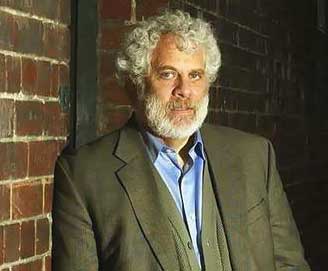
Mark Kurlansky appeared on The Bat Segundo Show #220. Kurlansky is most recently the author of The Last Fish Tale.

Condition of the Show: Moving forward after unexpected losses.

Author: Mark Kurlansky

Subjects Discussed: Mark Kurlansky’s wonderful dog, coming into Gloucester from an outsider’s perspective, possible solutions to global fishing problems, the close parallels between bottom dragging and the decline in fish stocks, ineffective methods of government subsidization, bycatch, intercontinental arguments over fishing, the problems with regulating fisheries, trying to find uses for excess fish stock, Gorton’s, bureaucracy and other political problems in Massachusetts, the clash between environmentalists and fishermen, the Elise vs. Bluenose race, downtown zoning and fishing, careful hotel development, chowder recipes, Moby Dick, Portuguese linguica, fishermen going out to sea without being able to predict the dangerous weather, the history of the schooner, various fishing technologies, oceanography, Howard Blackburn, Gloucester newcomers, ethnic groups and the granite industry, the Luminists and Fitz Henry Lane, Emile Gruppe, non-native Gloucester residents and art, Kurlansky’s illustrations, Motif Number 1, T.S. Eliot’s The Waste Land and Ezra Pound’s cut of Gloucester passages, balancing non-specific details about interviews with primary sources, and Kurlansky’s journalistic approach.

EXCERPT FROM SHOW:

Correspondent: I’m wondering if it’s a matter of this obdurate Gloucester character that you allude to many times throughout the book. In fact, I was curious about the whole Elsie vs. Bluenose race. You actually write that essentially, they didn’t have time to deal with this great defeat. That they were more concerned with fishing. And in a desperate effort to determine whether this was true, I was digging through the New York Times archive and I found this particular quote from Captain Marty Welch in a 1921 article. He basically says, “I’ve no excuses. The larger boat won. The Elsie is as good as the Bluenose is, only she’s smaller. Give me a vessel of that size and I’d like to race her every day in the week.” So this seems to me either a sense of Gloucester bluster or perhaps a notion of some kind of pride. What is this exactly?

Kurlansky: Well, in that particular case — and it was a different era — you have to remember that schooners were invented in Gloucester. And they were invented as fishing boats. And so fishermen had this tremendous pride that they were the masters of schooners. And they became yachts. Today, the only schooners around — except for in a few museums — are yachts and for racing. So fishermen — and it’s the same thing with the environmentalists. “These aren’t real men of the sea. These are just rich guys who are playing around on these boats. We’re the guys who know how to handle a schooner.”

Correspondent: And then, on top of everything else, the Canadians decide to put the Bluenose on their stamps, their dime….

Kurlansky: On everything.

Correspondent: My girlfriend’s Canadian and I asked her about the Bluenose. And she gave me a slight grin. So I’m like, “Come on. Give the Gloucester guys something.”

Kurlansky: Well, Bluenose visits Gloucester. There’s a new…

Correspondent: The Bluenose IV. Yeah, I saw that.

Kurlansky: But one of the unusual charms, I think, of Gloucester is that it is very determinedly a blue-collar place. And it takes a tremendous pride in its blue-collarness. And it’s a community in which there are a number of extremely wealthy people. And they all get along pretty well. At least, they socialize. In a way, it is the classless society. Except that there is this tremendous awareness of class and the ethos of working-class people. You have to be aware of that if you want to deal with Gloucester.

(Please note: Due to current incompatibility between PodPress and WP 2.6, I have had to institute a workaround. If the player button does not work, then try the direct link to the MP3 below.)

BSS #220: Mark Kurlansky