My Birthday Problem

On most days, my mother, the most manipulative and emotionally scarring narcissist I have ever known, would spend the entire evening feeling sorry for herself, tanking herself up on a box of cheap wine and lounging about like a squeamish lout on the couch. I don’t know how many times she asked us to refill her glass because she could never be bothered to get up, but it was surely somewhere in the thousands.

On any given night, my mother would shamble into drunken oblivion. Yet there was nothing more horrifying than the occasion of her birthday to reveal the full depth of her affliction. The hell of it was that we were too young to see it.

We loved her, even with all the Gehenna she marched us through. We hated to see her sad. We tried so desperately to please her. We didn’t understand that she had a much bigger problem.

So when her birthday rolled around, no amount of celebrating her life would suffice. She could not summon gratitude for having a loving family or a stable job. She could not find any real reason — and there were many — to be alive. She could not stretch one inch outside herself. My mother wanted attention, but she would never spell out the deranged egocentric fantasy she truly craved. Her true ideas, never expressed, were grandiose and delusional. Here was a woman incapable of apologizing for her mistakes or seeing what had gone wrong, much less right. Her solution to her self-pity involved the world stopping everything that it was doing to celebrate her existence in the most unvoiced yet extravagant way. What I think she sought was a deranged and surreal scenario not unlike that old Twilight Zone episode, “It’s a Good Life,” in which a tyrannical boy with demonic powers has everyone in town doing anything he wants. What the boy cannot see, what he refuses to consider for even a second, is how these obliging and miserable adults must live out this perdition. The people around him are never once allowed to be themselves as they serve his every whim.

When it came to my own birthday, I never wanted anything big, just some basic acknowledgment that I existed from the people who were dear to me. But my mother did a number on me. And as much as it hurts me to say this, I want to be able to live with myself. I have a very serious birthday problem. I am certain that some of you do too, whether it is tied up in comparable abuse or some other hangup. But I am here to tell you that this is okay and that you don’t have to be ashamed. I’m hoping that those of us who suffer from paralyzing birthday anxieties can come together and tell ourselves that it is perfectly reasonable for us to celebrate our lives. We can beat this in the same way that we have stared down other demons. If you need someone to tell you that you matter, I urge you to email me and, whoever you are, I will be happy to celebrate your existence each year. Because I know too well what you’re feeling.

There was my twentieth birthday in which I was trapped in a remote cabin and my mother spoke to me in her high quavering voice and treated me as if I were a boy of five. I was still trying to figure out how to be a man in the wake of abusive father figures, and I just couldn’t take this bullshit anymore. I felt enraged and humiliated for being infantilized on a day that was supposed to be mine, especially since I could not escape the cabin. So I stormed off in shame and beat my fists into a metal sign until my knuckles were red and raw. And since it was a very small community, the commotion caused by my machine gun-like flailing had the cabin owner calling the police. I recall hiding behind a tree as the police car’s bright searchlight flooded its blinding circle onto the dark waters of the tranquil creek that lined the ragtag cluster of cabins, in search of the violent perpetrator apparently at large. My sister and her now husband found me and escorted me back to the cabin, holding me, knowing why I needed to sob and why I couldn’t. I couldn’t cry. Because who knew what this would do to my mother?

I spent my twenty-first birthday in Reno and had a lot of fun.

It’s hardly an accident that I first started smoking on my twenty-second birthday. I did so out of boredom, walking the streets of San Francisco by myself and feigning adulthood. There was a part of me cultivating a leisurely form of self-destruction that would grow and bite me in the ass years later. When Kurt Vonnegut replied to interviewers that he was committing suicide by cigarette, I knew what he meant.

I tried to win my birthday back over the years, but couldn’t. You couldn’t beat the house.

There was the time in which I asked twenty people (no expectations, no gifts necessary; in fact, I’m happy to buy you a drink like they do in Britain!) to meet in a bar on my birthday. Nobody showed.

Today, I do not smoke. Or I try not to.

My self-pity grew over the years. I felt terrible and birthdays were a big part of this. But there was also a burgeoning desire to rid myself of the pain. I wanted to feel good about myself without shame. Could this actually happen?

A few days before my forty-first birthday, which is today, I suffered the worst insomnia I had experienced in three years. Couldn’t sleep. Had to cancel a date with a very kind woman.

This is all greatly ridiculous. Because I’ll feel perfectly myself once my birthday has passed.

In the past, people have tried to step in and give me a good birthday. They didn’t know how. I was always a terrible member of the thinktank masterminding the plans. I didn’t want to feel sorry for myself in the way that my mother had, but I can’t say that there haven’t been birthdays where I worked my way to the end of the bottle and utterly despised myself.

I don’t want to hate myself anymore. And I don’t want to inflict any of this on anyone.

Friends, knowing my hangups, have understandable worries about even mentioning my birthday. They saunter around the subject like a trepidatious sous chef walking on eggshells in a chaotic kitchen.

Friends also point to my resilience, which they claim is unmatched by anyone else they know. And they know people who are far more accomplished than me.

I have no problem hanging out with my friends any other time of the year. But I have always felt deeply ashamed at doing anything good for myself on the day that it counts.

Is that terrible? It certainly feels that way.

So I am saying something now, risking ridicule from the rubberneckers who still want me dead because they have invented some wrong idea of me that is considerably less distorted and monstrous than the false and bestial image I spent many years perfecting. Because now, more than any other year, I know that my life is worth something.

It is very hard for me to say all this. It has taken me more than four decades to get here. My existence is worth celebrating. I love being alive. I have a great deal to be thankful for. I am neither washed up nor finished. I’m just getting started. I’m working on many magnificent projects right now and am supremely indebted to some exuberant Scotsmen who were gracious enough to help me get back on the horse. And to anyone who has been kind to me during the past year, I cannot possibly convey how much your generosity has meant to me.

For those who have had to endure my birthday blues over the years, please know that I am more contrite than you can ever know. But I want to be honest now.

In his wry and endlessly thoughtful book, Faking It, which is a fantastic volume if you’re interested in the bottomless pit of hypocrisy and self-illusion, the marvelous thinker William Ian Miller observes:

Be careful what you pretend to be. Toughness, or a certain hardness, is a very useful trait to have, but the person who undertakes a pose of hardness or flippancy to protect what he fears is his core vulnerable sweetness may end with his sweetness shrunk to invisibility or inaccessible behind the ramparts, though he maintains the belief that his toughness is only a pose.

For a very long time, I have feigned being hard or insouciant about this birthday business, pretending that it is “just another day.” What I have feared (aside from becoming my mother, who I both am and am not) is capitulating to the pose that my birthday does not matter rather than being candid about the reality that I, like countless others, carry a modest vanity one day each year that I am deeply abashed about. That my forty-first birthday will be the first in more than a decade in which I will not share a bed with anyone speaks volumes about how I have gone out of my way to smother the act of being myself by projecting some version of my intimate core onto others willing to be intimate with me. I trace the beginnings of this to the blonde bombshell who smiled at me on my seventeenth birthday as we went to see Hot Shots! at a movie theater long closed. It is a sick and dishonest practice, but then I had the worst possible example growing up.

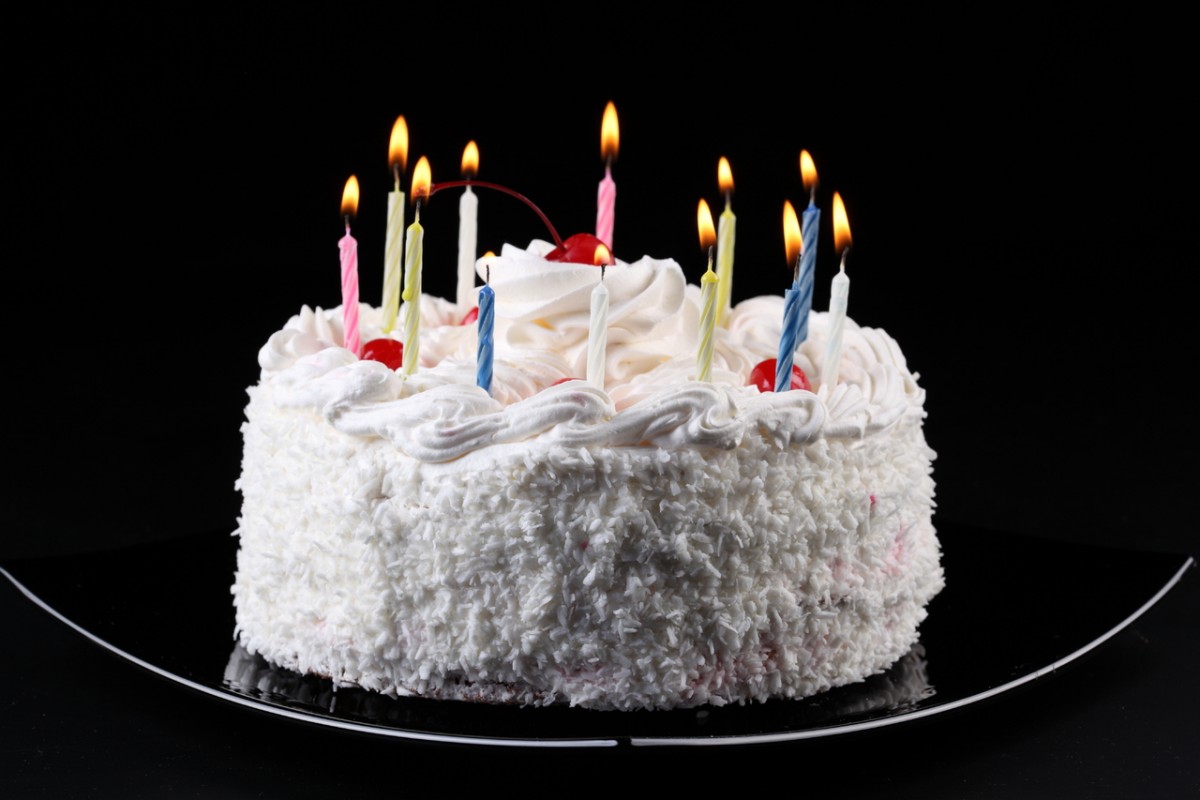
So here is what I am doing. Tonight I will be having a marvelously low-key dinner. Alone. I will be eating a slice of chocolate cake. Alone. And I am going to have a great goddam time doing this. Because if I can’t respect myself, then how can I expect anything from other people? I cannot leech on geniality in the way that my mother did.

It could take me many years before I can invite other people to celebrate my birthday. But the one thing I can do, starting this year, is to stop wielding my birthday around like a loaded gun. If I don’t commit myself to a happy time, then I’ll never have it. Of course, any birthday wishes from others are very welcome. There’s no sense in denying this anymore. But I will not retreat to any couch.

The first step in solving a problem is admitting that you have one. There is no pat remedy and I’d be kidding myself if I really believed that what I’m doing this year will flense my soul entirely of this predicament. But it’s a new year. I’ve just had my eyes checked and I have a new pair of glasses. This is the longest I’ve stared into the mirror. I am liking more of what I see. He is worth celebrating. And if he expects to give lavishly and effortlessly to others, as is his incurable habit, then he must give to himself first.

A Brief Sabbatical

The summer heat has seared into the cultural fabric, smoking out closet racists among op-ed hash slingers, unmasking literary grand dames as xenophobic attention whores, and revealing other minds lightened of socioeconomic rumination thanks to reliable fingers plugged into ears. To anyone who feels or thinks, this is a difficult time. No response seems adequate. One races to comprehend the complexities of some latest development, amalgamating thought with heart, sans treacly pronouncement or crass sentiment. But then there’s some new nightmare around the corner, such as Juror B37’s tense-mangling ignorance, to which one can only feel despondent and contrite, with jaw agape and the determination not to shirk jury duty ever again.

But hopelessness isn’t an option. This was abundantly demonstrated on Sunday as I walked the march for Trayvon Martin, witnessing protesters stop traffic in Times Square amid conciliatory honks and watching those who were silenced from the initial shock rejuvenate into robust souls slapping high-fives with anyone with a spare hand.

Getting back on the digital treadmill isn’t viable either. As you grow and evolve and you learn and get better with the humility and the ceaseless struggle that your shaky bag of tricks affords, you begin to understand why it’s vital to raise the stakes and take risks and not become caught in the same routine. The examples of what not to become are now distressingly legion: the waning talents who grow bitter, the bright minds who settle and permanently extinguish the spark. That’s the double-edged sword in an age where we are expected to reveal all. You don’t want to go there, but your heart hangs when you spot the easily seduced.

I have been hit with an entirely unanticipated epiphany that has forced my hand. But it cannot be online. And it cannot be immersed in the immediate. It cannot involve courting an audience. It involves blocking out all distractions and kudos and admonishment and focusing on the very best I can do.

I am taking a brief sabbatical from the Internet. For two weeks, I will keep my online peregrinations to near zero. There will not be a Follow Your Ears show this month. There will probably not be any Bat Segundo episodes (save perhaps one), although I will continue conducting conversations for future episodes. I will stay momentarily off Twitter — not with the extreme gumption as the convivially sardonic Ben Anastas, but certainly with true priorities in mind.

You won’t find the way ahead through your computer or your phone. The real world is more munificent and embracing of the human spirit than anything the digital world can offer. This isn’t a retreat. It’s an awakening.

See you in August.

Jane Eyre (1990 : 2011 :: Reality : Film Adaptation)

I was a teen when I first read Jane Eyre from beginning to end. The decision to read this Charlotte Bronte classic wasn’t prompted by any authority, but sprang from personal shame. An English teacher had assigned Robert Penn Warren’s All the King’s Men, pairing me up with two other students to write a collective essay in response to the book. I didn’t read the book. It wasn’t because I didn’t try. I just couldn’t read the book. And when I went to one of their comfortable middle-class homes to huddle around one of their computers, the jig was up. I was considered an impostor, with the calumnious sigil embedded invisible on my forehead for weeks.

These two other kids were right. I am still very much an impostor. I grew up in a home sullied by blows both violent and verbal, where shrieks from other family members careened around corners and mice scurried and scratched in the walls. The garage was nothing less than a shelter for junk that my parents lacked the effrontery to throw out, and I would have to climb over all manner of bric-a-brac to get the mail (which included a clandestine Playboy subscription addressed to my name, which I read for the pictures and the articles). Embarrassed friends would telephone me, hearing screaming and saying nothing and sometimes offering their homes as momentary refuge. This made it very difficult to read or concentrate or think or feel or write.

I didn’t have a computer; just an ancient electric typewriter with a highly unreliable ribbon and jittery keys. I had learned how to type 100 words per minute in eighth grade, but the contraption made my skills useless. I would type essays on this baleful beast late at night, when the chances of shouting and interruption were slimmer, often needing an hour to hone a paragraph to make sure that the ink didn’t smudge on the liberated bond and the characters hammered to the paper properly. Even one of these very patient hours, which could only come when I was holed up in my bedroom, still required the dutiful applique of white-out (mostly stolen, not purchased; there wasn’t much money). One of my English teachers – a man named Jim Jordan fond of leaving a tally on the blackboard with my name under the heading INANE COMMENTS (he did the same thing to a nice kid named Nick Hamilton; who knows how many aspiring jesters this man tormented over the years?) and who added a horizontal slice every time I overcame my shyness, announced my associative mind, and got the classroom to laugh — decided to condemn me further when I would turn in papers labored over into the early morning. As far as he was concerned, it wasn’t the content, but the pockmarked presentation, something I couldn’t help due to the poverty of my instruments, that offended this Murphy Brown watcher’s sensibilities.

Factor in all the ruthless ribbing, and this was a tough time for me. Misery at home, misery at school. But I tried my best to see the positive side of things. One needed to develop a thick hide to survive. I figured this neoliberal teacher just hated the poor kid with the wild and crazy hair and the trenchcoat and the hat and the Looney Tunes tees (found very cheap at Marshall’s and treated with some care, given that shopping for clothes was a rare occurrence) preventing him from charming a largely middle-class group as patriarchal pedagogue. It was a wonder, years later, that I ended up finding some dodgy living as a guy who wrote about books and that any page in literature spoke to me more than anything Jim Jordan, who hated genre and hated Stephen King and rebuffed my interest in HP Lovecraft and always let the class know all this, had to say over a semester.

I felt bad about not reading Robert Penn Warren. (Years later, I read the book in its entirety.) I also felt bad when I learned that the two students, whom I thought my friends, ridiculed me to another friend, figuring that I had to be a stupid son of a bitch for not reading Warren. (This third friend defended me, in part because he was also not quite in their class bracket and had some tangible understanding of what I was going through. Vice versa. We’re still friends to this very day. Old soldiers who fought many wars together.) And so I decided to prove to myself that I could read a big book that wasn’t science fiction or fantasy. I plucked a copy of Jane Eyre from a box in another classroom and I brought it home. (I would later do the same thing with George Orwell’s 1984 and Charles Dickens’s A Tale of Two Cities, both of which I was not required to read but did.)
For obvious reasons, I could relate very much to Jane’s early plight in the Red Room and at Lowood. Psychologically abusive family members, teachers who tormented me because I didn’t fit into their suburban idyllic fantasy, feeling stupid and plain – what here wasn’t there to relate to? I had no kind teacher equivalent to Miss Temple at the time, although I would later encounter a marvelous teacher named James Wagner, who not only encouraged me to write by looking upon every essay as an opportunity for fun and mischief, but who paid attention to the prose style contained in my DNA. When my sister took Mr. Wagner’s class a few years later, he said to her, “That’s what I like about you Champions. Short and snappy sentences.”

But once Jane hit Thornfield, I began to despise her and the book. I didn’t like this Rochester fellow who was trying to control her. He reminded me of too many paternal figures who wanted to correct me rather than accept me. And I didn’t like the way that Jane (or Janet, as Rochester called her; a modest corruption of her name that Jean Rhys was to investigate further in Wide Sargasso Sea) wasn’t honest about her feelings. I didn’t like the convenient fortune that Jane encountered later in the book, which seemed a terrible contrivance, and I didn’t like the way that Jane heard Rochester’s voice and how this conveniently urged her to return to Thornfield. Life just didn’t work like this. But I read it to the end and returned the book back to the box, grateful that my fury towards the book would not have to be voiced and shot down by an English teacher who didn’t like me. However, before an eccentric drama teacher (Mr. Cody), I dismissed Jane Eyre as “a Harlequin romance.” I was very surprised when Mr. Cody replied with approbation and enthusiasm.

Still, as much as I hated the book, I have to credit Jane Eyre for giving me a reading discipline I had never known before that time. It hadn’t occurred to me to look at the novel again until there came a time later, more than twice a lifetime later.

* * *

January 10, 2011. I publicly pledge to read the top 100 novels of the 20th century, as decided upon in 1998 (about eight years after I read Jane Eyre and about thirteen years before I made the promise) by the Modern Library of America. What I don’t quite comprehend at the time is that Jean Rhys’s Wide Sargasso Sea -– a prequel to Jane Eyre -– is #94. (April 22, 2011 Interjection: Essay on Wide Sargasso Sea now here.) What I also don’t quite get is that there’s a new film adaptation of Jane Eyre set to be released on March 11, 2011.

A few weeks later, I make the connections. I receive an email from Russell Perreault (I’m on one of Random House’s mailing lists) about the movie tie-in edition. After my high school experiences, there’s no way in hell that I’m going to obtain a fresh copy of Jane Eyre on my own. Not from a bookstore or a library. Yet somehow I cannot resist. Through sheer folly and laziness, I send Perreault an email. Much to my surprise, Perreault humors me and a copy of Jane Eyre shows up in the mail days later. My fate is sealed. I can’t exactly ignore this polite gesture. I must reread the book. Who knows? Maybe my adult self will appreciate what my kid self did not.

I arrange to attend a press screening of the movie, with the idea that I’ll have the book reread before I hit the movie. (What I don’t count on is that all this industry triggers thoughts and feelings outlined in the first part of this essay.) I reread the book. I bang out the following Goodreads review:

It shouldn’t be thoughtless to condemn this terrible book, which I read for the second time in my life. The first time was in high school. I hated it then, but I read it to the end — unprovoked by any force in particular, aside from my own flowering self-discipline. I despise this book slightly less now. But I am now most anxious indeed to read Jean Rhys’s corrective prequel, which appears to be much shorter and has the temerity to condemn such terrible characters. Jane Eyre is almost smug in the end, after 600 pages of near helplessness (especially the unintentionally hilarious chapter of her asking around for food and a job: if she were truly smart, she would have contrived the damn escape over time; what does it say about this diabolical doormat that I longed for her to take up prostitution, hoping in vain that my memory of the book was wrong, but knowing the chirpy fate of this dimwitted damsel in distress, who requires an extra-strong dose of feminist enlightenment). Rochester and St. John are two male specimens whom I would not only outdrink, but out think and out act. When Rochester begs Janet to save him, an image of castrated Williamsburg hipsters beating him to a pulp entered my mind. Alas, such a deserved fate was not to be. Don’t get me started on the doddering St. John.

But of course, being very stubborn-minded, I read this damn book to the bitter end. My partner asked me to leave the room because I was talking back so violently to the book, making sounds resembling “Wah wah wah” or something like that when I had to endure pages upon pages of angst. A critic friend says that he never made it past the first half of this book and suggested that I read Wuthering Heights. He may be right, but I think I’m done with the Bronte Sisters for at least a year. I don’t care how groundbreaking this book was on the Gothic front. It’s just plain hokey. Convenient windfalls from dead relatives, hearing Rochester’s voice from afar. Contrived! So you can’t take responsibility for marrying the crazy woman in the attic? Cry me a river. Man up and deal. Don’t take out your problems on your poor servants, illegitimate children, a governess, and so forth. Hey, Rochester, didn’t you see the sign on the boat to Jamaica? YOU BROKE IT, YOU BOUGHT IT. The fact that you view humans as hairy beasts, sir, is part of the problem. Bronte’s understanding of people, even accounting for the centuries, leaves much to be desired too.

* * *

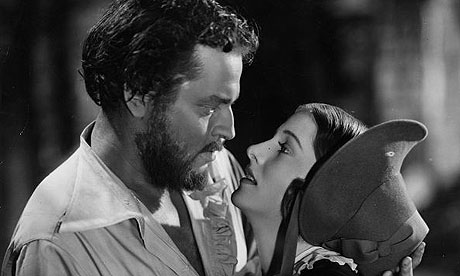
In high school, I understand that many people consider the book to be a masterpiece. And while I don’t share this viewpoint, I do find myself in high school obtaining a VHS copy of the 1943 film starring Orson Welles as Rochester and Joan Fontaine as Jane. I love every damn minute of it. Maybe it’s the melodrama. Maybe it’s the black-and-white. I am familiar then with Citizen Kane and Touch of Evil and the wine commercials and am only just starting to understand what a great cinematic genius Orson Welles was. (My friends only seem to know him from Transformers: The Movie.) There is clearly no better man who can channel Rochester’s oily charisma and convince us why Jane Eyre would fall victim to what would now be very serious sexual harassment in the workplace.

There is, in 1996, a lesser film adaptation with William Hurt in the role. And I learn that George C. Scott has also played him, although I still haven’t seen that version. In college years, I also discover that there’s a 1973 version with Michael Jayston in the part. (I know Jayston as the Valeyard in the 1986 Doctor Who serial, “Trial of a Timelord.”) I track some of these dramatic versions down (not an easy thing to do in the pre-Internet days of video stores and tape trading by mail), but I don’t tell anyone about this adaptation fixation until March 2011, when I write and publish this essay. Perhaps in my secret watching, I am trying my best to find ways of appreciating a book I don’t care for.

“My master’s colourless, olive face, square, massive brow, broad and jetty eyebrows, deep eyes, strong features, firm, grim mouth, — all energy, decision, will, — were not beautiful, according to rule; but they were more than beautiful to me; they were full of an interest, an influence that quite mastered me, — that took my feelings from my own power and fettered them in his. I had not intended to love him; the reader knows I had wrought hard to extirpate from my soul the germs of love there detected; and now, at the first renewed view of him, they spontaneously arrived, green and strong! He made me love him without looking at me.”

Why is Rochester the entry point? Is it because I’m a man? Is it because of this idea of loving someone without the object of your affection looking back at you? I don’t think so. I think it’s because I’m trying to understand why Jane would be so attracted. That’s one of the great narrative mysteries sticking at the back of my mind for years. Even if she doesn’t have much experience with men, and even if the times weren’t exactly friendly for women, it doesn’t make sense that someone brave enough to stand up to the abuses at Lowood would fall for some of Rocheter’s dull philosophy. Yet Rochester, plainly described in that above passage, is charming in these dramatic versions in a way that he isn’t charming in the book.

* * *

March 8, 2011. I’m in the Dolby 88 screening room. I know within a minute of first seeing Michael Fassbender in this movie that he doesn’t have what it takes to be Rochester. And it gets worse as the film goes on. He isn’t fierce enough. He doesn’t have the eyes that men like Orson Welles or Oliver Reed had; the eyes that somehow convince you to jump into an abyss before you know you’re falling. When Rochester sits in a chair, the chair has more screen presence. Poor Fassbender looks as if he’s been asked to do nothing but stare intensely at the camera. His arms and legs have pinioned by bad direction.

It doesn’t help that screenwriter Moira Buffini (responsible for Tamara Drewe) has restructured Jane Eyre so that a good portion of the St. John episode comes first (i.e., the movie begins with Jane’s escape from Thornfield, which in itself is a ballsy and interesting choice), followed by a surprising extension of the early business with the Reeds, with the Lowood stuff getting cheapened into what appears to be digital cardboard decor, which results in Rochester’s first appearance getting postponed and the narrative structure collapsing in on itself.

The “pedestal of infamy” mentioned in the book, which is a metaphor, is mentioned directly by an evil teacher in the movie. That’s how literal-minded the script is. The script also includes numerous moments where characters tell each other what they’re feeling, as if Buffini doesn’t understand that this is a visual medium. “How very French,” replies Fairfax after Adele sings a song. “You’re depressed,” says Rochester to Jane Eyre, who doesn’t look depressed. “Your eyes are full,” he also says when they’re not. “You’re blushing,” he says, when she’s not. This technique certainly worked for Lev Kuleshov, whereby Kuleshov cut a blank expression of a man with a bowl of soup (he’s hungry), a girl’s coffin (grief), and so forth – with audiences praising the blank man’s great acting. But that was almost 100 years ago and it relied on visual cues rather than oral ones. You’d think that such bad narrative dialogue would have the simple explanation of lines cribbed directly from the book. In other words, that essential exposition which works in text was simply plucked wholesale and put into the script. But that isn’t the case at all. Because none of these lines are in the book. Buffini (or some tampering studio executive) has added them. Because she (or someone) believes that the audience is a collection of morons.

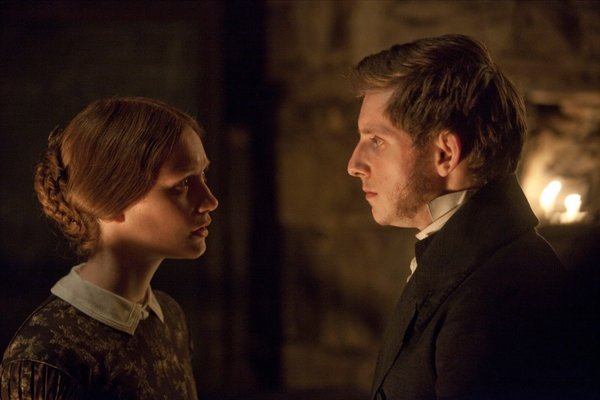
There is no Miss Temple in this movie. Indeed, the movie cannot afford to offer us any nuances, anything that strays from the cliches. The red-maned Mia Wasikowska is too luminous to be so plain. The movie’s real “machine without feelings” here is cinematographer-turned-director Cary Fukunaga, who comprehends how to capture a world by lantern and candlelight, and even manages a moment of battledore and shuttlecock. But he doesn’t know that cobwebs and dust and flies often clutter up a dark and expansive mansion. Fukunaga isn’t much interested in creating visual atmosphere. He’s into fake scares through an aggressive sound mix, such as a bird flying up into the air. It doesn’t really enhance the story or the mystery or give us a reason to care.

* * *

I was an adult when I reread Jane Eyre from beginning to end, and when I realized that my feelings for the classic were just as needlessly prejudicial as the teacher’s enmity towards me. I gave it a try anyway, devoting many unknowing hours trying to reconstruct something that I had locked away in the attic of my mind. My own private Bertha was not insane and would not stay caged and would not set the place on fire. I resolved to approach Jane Eyre again in ten years, when the associations were less fresh and I was presumably more human. The next time around, I will judge it not through the prism of its dramatic iterations, but on the very novel itself. After all, wasn’t it Jane herself who said that repentance is said to be its own cure?

Content Slows Momentarily to a Crawl

Due to my present participation in a rather mammoth undertaking, I don’t anticipate much in this space over the next few weeks — aside from the weekly podcast (several conversations already conducted!) and a few essays on movies. I’m also pushing back today’s podcast to sometime early next week in the interests of balancing content release. Probably curtailing my Twitter activities to a few tweets a day. All is very well. This ain’t exactly a hiatus. But I’m finding myself increasingly committed to offline activities.

The Diary

10:00 AM: Ass in chair. Write 1,000 words.

Sometime After: Live life, collect ideas, talk with friends and strangers, maintain giddy and optimistic faith in the universe despite all pessimistic curveballs, read, and do fun shit that is none of your business.

Next Day: Repeat.

There is no mystique. There are no excuses.