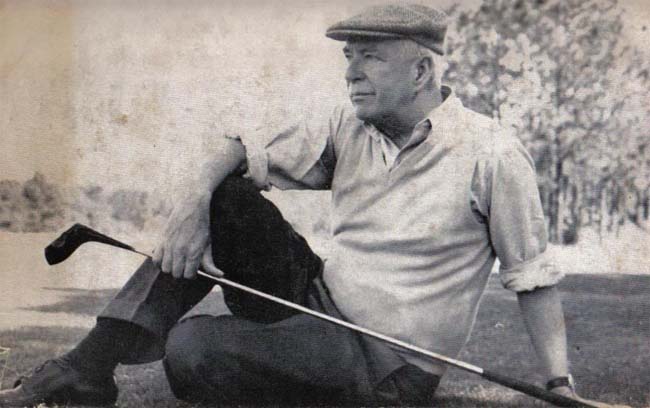
If there are no second acts in American lives, then John P. Marquand’s straying bankers and layabout lawyers certainly pine for a turning point.
Marquand, who won the 1938 Pulitzer Prize for his satirical masterpiece, The Late George Apley, has remained a remarkably overlooked author despite his midcentury accolades. Martha Spaulding, Terry Teachout, and Jonathan Yardley have all made valiant critical efforts to restore Marquand’s reputation, but, today, many of his novels remain out of print. This dropoff is astonishing, considering that Marquand once graced the covers of Time and Newsweek. But the Harvard-educated author’s razor-sharp examinations of upward mobility and class trappings also appealed to a mass audience, not unlike the weekly wistfulness of Dunder Mifflin workers depicted in the television comedy The Office. His rudderless protagonists are overly concerned with how they appear to others. They pine for the next rung on the corporate ladder, even as eidetic recall from the past freezes their possibilities in the present.
Marquand cut his teeth writing slick stories for The Saturday Evening Post, not unlike the early potboilers written by his satirical contemporary Sinclair Lewis. He found additional commercial success with a Charlie Chan knockoff named Mr. Moto, whose adventures were serialized in the Post before being published as books. And while this generated money, Marquand soon revolted against his agent’s hopes for steady lucre with an epistolary novel featuring a belated Boston aristocrat named George Apley, whose letters were organized by a fictitious biographer (and family friend) to reveal “the spirit of the man and his influence on the life around him.” While the novel found some Post supporters, more than a few editors felt it necessary to stick with the foundation. Unlike Marquand’s previous novels, only four excerpts from Apley were published. But to everyone’s surprise, including the author himself, Apley was a critical and commercial hit.
In Apley, it is the biographer’s voice, frequently proffering lofty context (“It would be a slur upon George Apley’s integrity to doubt the absolute sincerity of his statement”), that reveals a kind yet bumbling upper-class man attempting to be true to his inner ingenuousness while running afoul of societal expectations. A private matter of baby naming becomes a needless tempest with the in-laws (“It has been the custom in our family…to give the first son of a new generation one of the Apley names”). Apley takes up Saturday morning birdwatching with an “old playmate and lifetime friend, Mrs. Clara Goodrich.” Yet even this quiet moment cannot escape scrutiny. A reverend, also an old friend of Apley’s mother, fires off a letter: “Could you not arrange to see a little less of Clara Goodrich, or at any rate to visit her in the company of others?”
Marquand’s unique satirical approach involved skewering folkways, institutions, and other assorted tableaux while remaining sincere to his characters, even when his characters could not perceive their own telltale follies. In H. M. Pulham, Esquire, the eponymous attorney, Harry, attempts to read his way through The Education of Henry Adams for personal enlightenment, but he cannot discern that his wife is carrying on an affair with his best friend. Later in the book, Harry sees the two sitting in the dining room, but the ethereal affair has drifted into uncomfortable territory: “Bill must have been telling Kay again what a good time he had had, because they were both sitting saying nothing. Whatever it was that Bill said, it made Kay look awfully sad.”
Many of Marquand’s unhappy marriages are, like George Babbitt’s, founded and maintained on an almost conformist common ground. In Pulham, Harry reports of his marriage: “The best part of it was that Kay and I seemed to have a good many of the same ideas — the same tastes in furniture, the same ways of spending our time.” Marquand’s remarkably bitter final novel, Women and Thomas Harrow, offers what may be the author’s worst nightmare: a man defined almost exclusively by his relationships to wives and mistresses.
It is this juxtaposition between marriage and identity that likewise presents a troubling dilemma for Point of No Return‘s Charles Gray. Charles is a banker who commutes from his suburban “thirty-thousand-dollar house — not including extras” to his New York job on an 8:30 train “designed for the executive aristocracy.” Not having graduated from Harvard or Yale, he is sometimes embarrassed because “the New York banks he dealt with most were full of Harvard and Yale men.” He does not know if he will get a coveted promotion to vice president. But his wife Nancy coaches him on what he needs to do and how he needs to act, urging him as she does to turn out the downstairs light — because the neighbors might think they’re having a fight. And he certainly doesn’t want to remember Clyde, Massachusetts — the hamlet where he grew up and fell in love with a young woman from an affluent family. (Just as Lewis set many of his novels in the fictitious state of Winnemac, many of Marquand’s novels take place in the fictitious Clyde.)
Upon the 1949 publication of Point of No Return, Marquand’s six previous novels had sold nearly three million copies; three were turned into movies and three selected for the Book-of-the-Month Club. Some highbrow critics furrowed with suspicion. Edmund Wilson once wrote of Marquand, “We have plenty of novelists in America who make Mr. Marquand’s abilities seem as modest as his pretensions.” In the same essay, Wilson pardoned Sinclair Lewis for similar sins, suggesting that a Lewis novel was “a work of the imagination that imposes its atmosphere, a creation that shows the color and modeling of a particular artist’s hand.”
Wilson, however, overlooked the plain fact that Marquand not only got through to his audience, but embedded much beneath his seemingly slick formalism. Marquand’s characters frequently received the short end of the stick, but he was the very rare novelist to make domestic heartache both enthralling and entertaining. If Marquand gave into the demands of his audience, it was precisely because he hoped to impart his own particular atmosphere, conjured from careful observation with an abundance of Morris and Windsor chairs hiding in studies and lonely rooms, but without Sinclair’s smoky bluntness.
Unable to curry favor with a literati set demanding a refined spice, Marquand spent many of his years serving as a Book-of-the-Month Club judge, sticking his neck out for such titles as Animal Farm and Aurora Dawn for an appreciative populist audience. While Lewis tackled prejudice and a fascist president in his later novels, Marquand confined his narratives to domestic environments. And while this insular territory accounted for some of his limitations, Marquand recirculated his keen insight into the class aspirations that inhabited this modest sphere. It’s a literary injustice that this intriguing comic tension between the twain is now almost forgotten.
© 2012, Edward Champion. All rights reserved.
[…] Edward Champion on the novels of John P. Marquand. […]
Nicely done, and I hope it will point a few readers toward Marquand. I’d suggest “Point of No Return” as the best place to start; at least I find it to be his most purely entertaining novel. I associate Marquand with three other mid-20th century novelists I greatly admire,all now barely remembered: John O’Hara, James Gould Cozzens, and Peter de Vries. They don’t have much in common except that they all wrote the sort of novel we just don’t get these days. And if de Vries doesn’t seem to quite fit in with the others, I couldn’t resist including him because he’s just so good.
Well said. I have been a fan for years and have slowly collected as much of his work as I can afford. I think Wickford Point with the tension between a ‘writer’ on one hand and an academic English professor on the other illustrates Marquand’s own situation
In Point of No Return and So Little Time, Marquand manages to show us the impact of cultural and historical changes on individuals, using the minutia of personal lives. He is, I think, better at showing the impact of the change occurring between the wars and with WWII than the more canonized writers of the same period.
That he has lost out with the critics is due in no small part to his commercial success.
His books are good reads…and sneak up on you with their insights.
I just started reading Mr. Moto’s Three Aces – and it’s excellent.
I am glad to have discovered him and will read more.
I recently discovered John P. Marquand, and now I can’t understand how I didn’t grow up hearing about his novels the way I heard about Fitzgerald and Hemingway. He’s that good. His writing is as smooth and honest as any I’ve read, his dialogue is ear-perfect, his characters are multi-dimensional and interesting, his books are entertaining and fascinating in the portrait they draw of early 20th century American life. When he was alive Marquand was consistently among the best-selling writers, but after his death he seems to have been quickly neglected and is now forgotten. How incredibly sad….for US, because we’re the ones missing out on the legacy of a great writer. The only “reason” I can come up with for this tragic literary whitewash of a great American writer (G.A.M.) is that he wrote primarily about white rich people, as did John O’Hara, another forgotten G.A.M. And while we love our Ewings and our Kardashians on TV, for some reason modern Americans dislike them in print, at least if they aren’t named Gatsby or Buchanan. I found most of Marquand’s novels in a used bookstore in Spokane, Washington, and I’m working my way through them slowly and leisurely, just like the pace of the novels themselves. The first one I read, “Melville Goodwin, USA” is a good place to start. Many have suggested “Point of No Return,” which I’m reading now. If you find his books (a few are available on Amazon), by all means pick one up and give it a try. You’ll find there was a very good reason that he was a popular, best-selling author in his day: because he’s a great writer.
The above comments cover what I think about Marquand very nicely. He’s an author who deserves some kind of revival. If you can find his books, give him a try. For the most part, I’ve considered him a “guaranteed good read” for a long time. The only one exception was “B. F.’s Daughter”. Other than that, … enjoy!
[…] Marquand graced the covers of Time and Newsweek, and was awarded a Pulitzer Prize in 1938. But no one much thinks about him nowadays, or his […]
[…] How many of you have heard of J.P. Marquand? […]
Point of No Return…through Melville Goodwin, Sincerely , Willis Wayde, and Women and Thomas Harrow is as good a 4 book run as anyone has ever had. It pieces together a 50 year social history of white collar working America, but also some highly valued literary themes such as the quality of memory and society’s constriction of human nature.