Blake Bailey, Casual Misogynist and Eager Rube

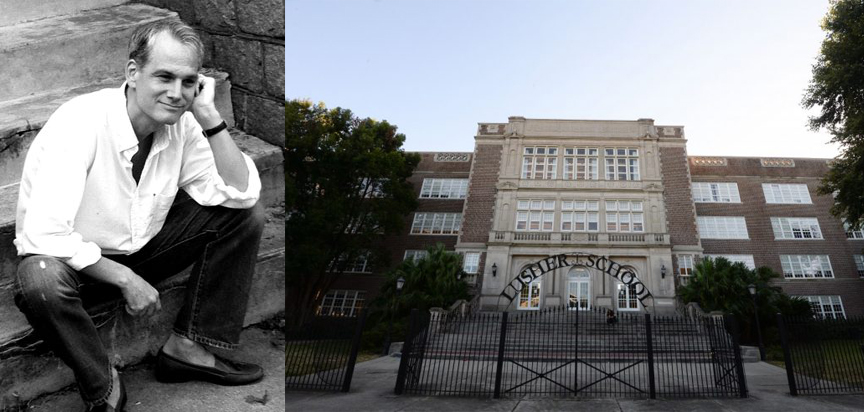
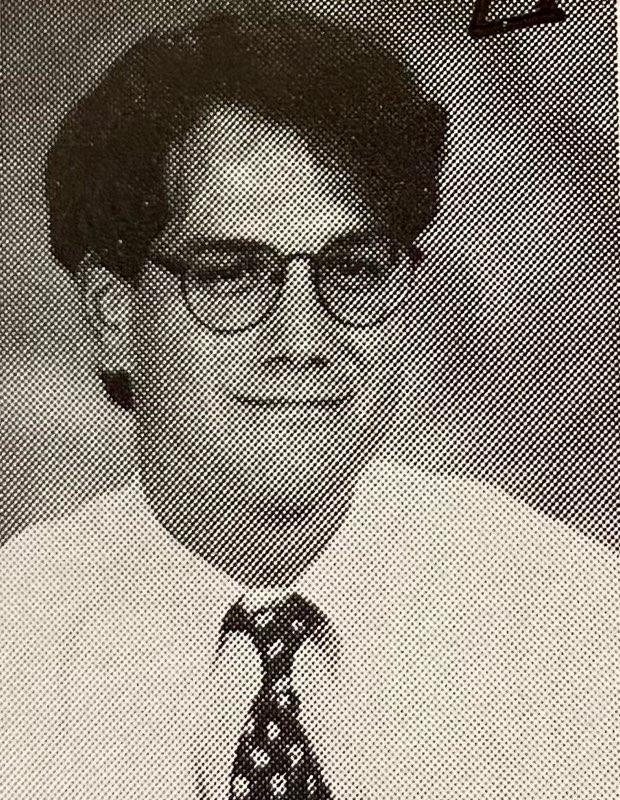
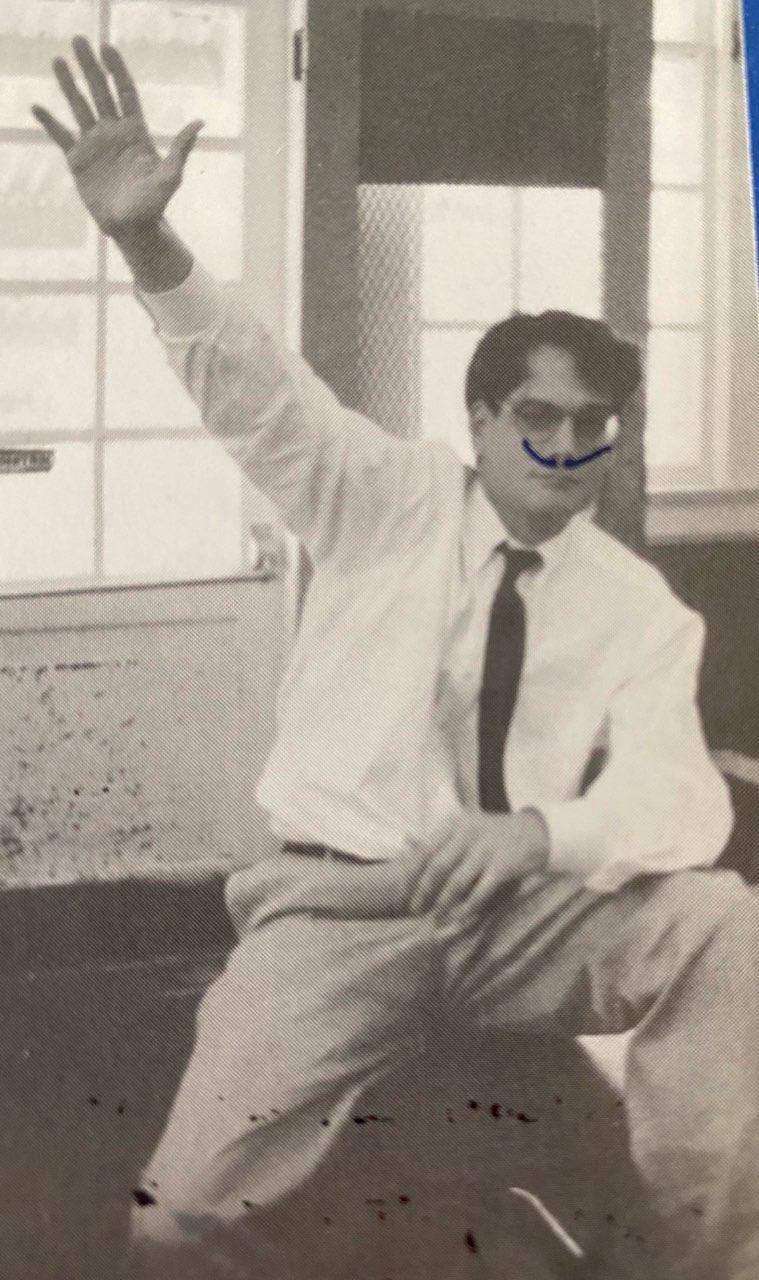
[4/20/21 UPDATE: Comments left on this post led to two thorough and detailed investigations which uncovered severe allegations of grooming, rape, manipulation, sexual assault, and much else from Blake Bailey. I conducted an investigation focused on Bailey’s time as a teacher and the allegations of grooming and manipulation. The New Orleans Advocate‘s Ramon Antonio Vargas focused on what happened to Bailey’s former students as adults. I urge you to read both of these stories. (Mr. Vargas is a great reporter. And the two of us communicated with each other to ensure we had accurate information.)]

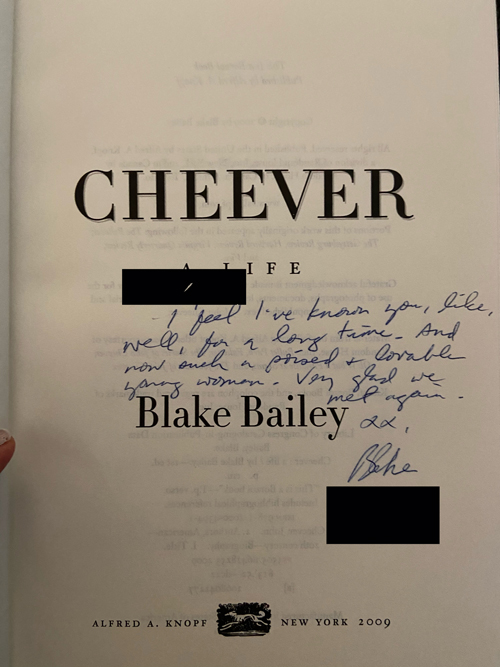
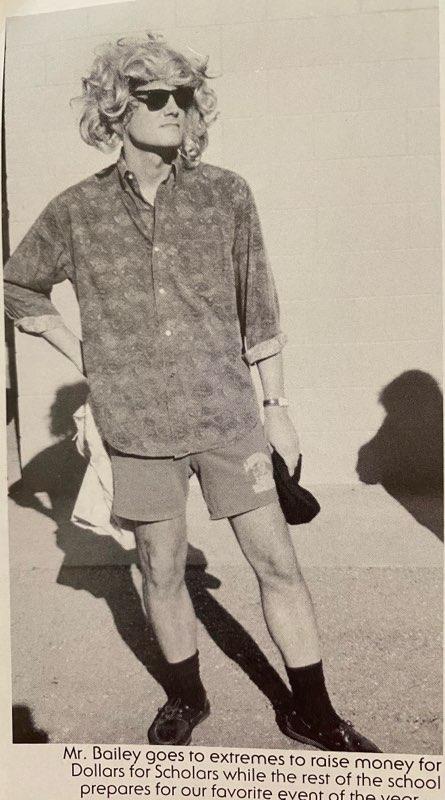
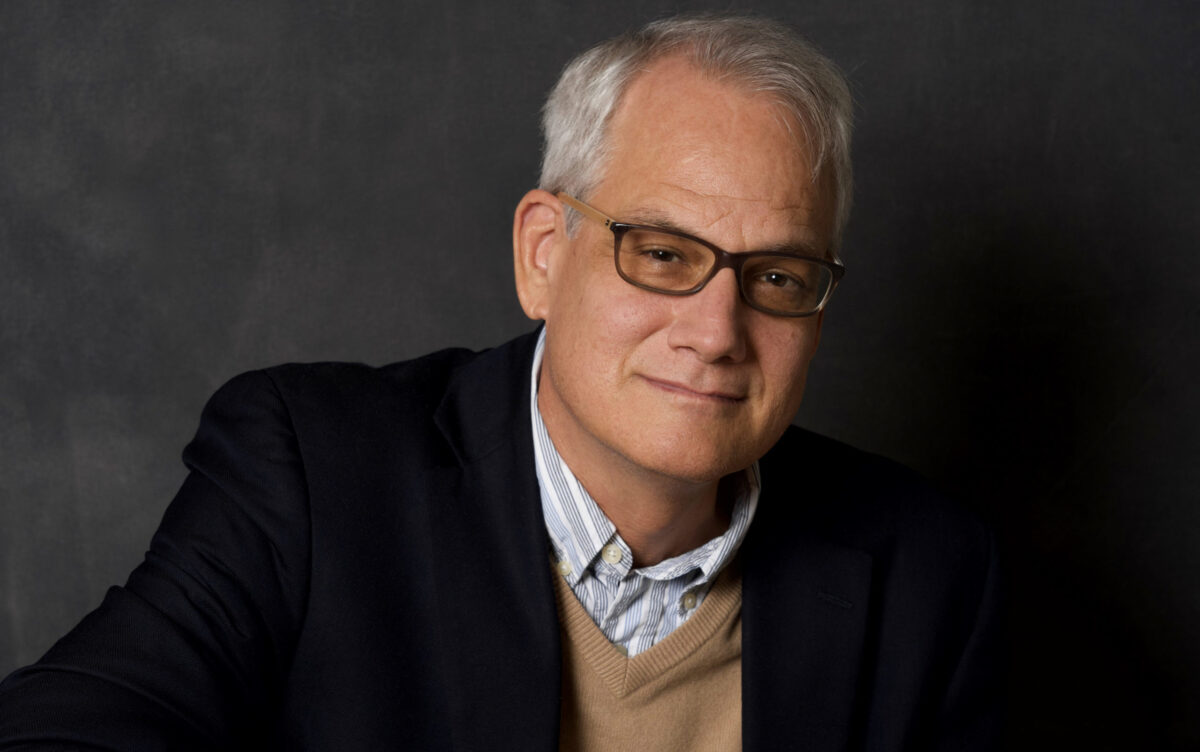
When I first met Blake Bailey at the back of a Le Pain Quotidien outlet just south of Central Park in the spring of 2009, he was carrying a large foamcore blowup of a glowing New York Times review of his most recent book. He pointed to this gargantuan slab, raising it above his head like a dubious trophy, and spent at least five minutes pointing to it and laughing hysterically as I was setting up the mics, vacuuming up the rapturous sentences in a way that made me (and the person who I was with) think, “Christ, how much ego-stroking does any man need?” While I had come to expect occasional insecurity from authors during my long former tenure as a literary interviewer (which I did my best to assuage with off-air empathy before I rolled tape), this was one of the most absurd displays of narcissism I had ever seen, obscenely disproportionate to the delicate hand that had forged two remarkable literary biographies with lapidary care. But when I interviewed Bailey, he did eventually win me over with his charm — the same “charm” that has allowed him to exhume all sorts of sordid skeletons from the unlikeliest subjects; he even got me to summon a few vulnerable truths that I wish I hadn’t spilled when I met him years later on the Charles Jackson bio. This is pretty much the promotional manner that this boiler room man of letters has used to win over the entire literary world with his current volume, a Philip Roth biography with the decidedly uninventive title of Philip Roth. Like most literary biographers (and, for that matter, most literary interviewers), Bailey is a louche leech and an attention whore with an oleaginous sheen, a dishonest huckster who has built up a career with, yes, some laudable volumes, but ultimately with the relentless Energizer Bunny cadences of a sycophantic solipsist. Fortunately, for Bailey, this is the kind of shameless promotional spectacle that the literary world, which I am mercifully no longer a part of, eats up with the voracity of starved wolves moving in on a recently slaughtered lamb thrown to them by some sadistic god.

Of course, as a Philip Roth fan, I was quite elated when I heard the news that Blake Bailey — the accomplished biographer of Richard Yates, John Cheever, and Charles Jackson — was the big choice enlisted to tackle one of the 20th century most controversial writers. In his previous volumes, Bailey had balanced fairness with gentle tugs at the ugly truths to present literary titans as glaringly flawed, needlessly neglected, and ultimately very human. What made Bailey a compelling biographer was the way in which he aligned himself with the underdog. His empathy (at least on the page) not only applied to his troubled subjects, but to the many patient friends, lovers, and literary associates who endured volatile excesses and often booze-fueled torrents of abuse. In A Tragic Honesty, Bailey wrote of the way in which Richard Yates’s patient agent, Monica McCall, did her best to make Yates a better writer while contending with Yates’s often shaky life circumstances and shaky sense of self-worth. Bailey was gentle in reporting the often fragile dynamic between John and Mary Cheever, implicating both husband and wife through methodical interviews and archival excavation that were impressively vigorous. Bailey spent years combing the dusty stacks and often tracked any connection who was still alive to get a hot tip. If he wasn’t quite Richard Ellmann (who could be?), it was certainly the stuff of solid shoe-leather journalism.

But with his Philip Roth biography, Bailey’s approach has changed to what The New Republic‘s Laura Marsh has perspicaciously described as “an adoring wingman who thinks his friend can do better” — particularly in relation to Roth’s first wife, the troubled Margaret Martinson. Until Martinson enters the picture, Bailey’s biography is the usual even-keeled mix of life-forming incidents and wild jaunts through disruptive gossamer. Unfortunately, with this book, Bailey cannot walk the tightrope. For one thing, Bailey is no longer documenting a neglected author on the margins, but a literary giant whose work will very likely stand the test of time. Roth’s stature has very obviously altered the winning Bailey formula for the worse. Roth isn’t a dark horse to root for. He is, instead, an admittedly fascinating egomaniac boasting about how he’s the equal of Malamud and Bellow well before Goodbye, Columbus is even published. (Never mind the seventeen years of duds and shaky curiosities that Roth turned out after Portnoy, including such horrors as The Breast, before stumbling upon Zuckerman and truly securing his genius, beginning with a breathtaking run that began with The Counterlife.) What’s so disappointing (and indeed outright nasty) is the way that Bailey has traded in his compassion for casual misogyny and a complete lack of fairness in relation to Maggie Martinson. Much as it pains me to say, Bailey’s Roth assignment turns out to be his Faustian bargain. Bailey now operates with a repulsive misogyny that is incongruous and completely unacceptable in an age of #metoo and women significantly victimized by COVID job losses.

You know that something is awry when Maggie’s first introduction comes saddled with a footnote in which Bailey has “changed the names of Maggie’s first husband and their daughter.” Did Bailey burn his sources? Was this an edict from Norton legal to prevent a lawsuit? Is Bailey about to launch some character assassination to perform ardent fellatio to his hero? Yes, definitely, on the latter question. You read some passages of this biography wondering if Bailey was writing sentences on his knees with Vaseline-smeared lips extended to their widest diameter for Roth’s throbbing member. (To cite one of many embarrassing examples, Bailey approaches Roth’s calculated courting of Andrew Wylie and his eventual bolt from FSG for lucre as if Roth is somehow a humble naif or a victim. He willingly buys into Roth’s bullshit that he “begged” FSG’s Roger Straus to make him a sizable counteroffer, which not only demonstrates just how much of a sad and naive mark Bailey is in matters of ruthless business transactions, but the pathetic amounts of dun that Bailey is eager to apply to his covetous nose in order to more exquisitely adulate his subject.)

As I read on and became increasingly unsettled by the nasty sexism directed towards Maggie (of which more anon), I wondered why Bailey only seemed to draw solely from Maggie’s journal (how did Bailey obtain this?) as opposed to including any independent sources outside the Philip Roth Seal of Approval, which would seem to me to be the responsible journalistic approach. I was stunned to find this endnote:

PR gave me MR’s journal and the abortive beginnings to her novel(s) in progress contained therein. The story of how this intriguing artifact came into PR’s possession is told at the end of Chapter 19.

One then flips to the end of Chapter 19, only to find this footnote from Bailey:

In most cases I’ve tried to cull only the most telling, pertinent, and perceptive passages in Maggie’s journal, and hence may have inadvertently misrepresented the basic tenor of what is, indeed, a pretty insipid piece of writing.

In short, Bailey has imbibed the Roth Kool-Aid and is far from objective. If anything, this development — complete with the needlessly subjective aside that Martinson was only capable of “insipid writing” (this was a journal, for fuck’s sake) — completely erodes any trust we can have in Bailey as a fair-minded biographer.

Instead of considering Maggie’s trauma of growing up with an alcoholic father who was arrested, Bailey instead offers a nonchalant aside about how this personal anecdote was possibly shoehorned into And When She Was Good. Instead of empathizing with possible sexual abuse from her father, Bailey skims over this. He describes her as possessing “a gimlet eye” at the age of eighteen, establishing Maggie as a masterful manipulator of men. There isn’t a shred of sympathy for Maggie becoming pregnant while studying at the University of Chicago. Bailey also cheapens Maggie’s aspirations to be “a scholar and a bohemian” by painting her as merely “an unwed mother in college.” We have only Roth’s July 19, 2012 email to Bailey used to uphold the spurious claim that Maggie believed she was impregnated “by force.” Pages into Maggie’s first appearance in the book, Bailey has aligned himself with Roth and villainized Maggie and used dubious sources to uphold this convenient narrative.

Bailey skims over abuse that Maggie’s first husband inflicted upon her, but casts needless doubt on these ugly assaults by claiming that it doesn’t “appear to be entirely untrue.” And this comes even though both of Maggie’s children remember growing up in a household of violence. Then Bailey has the audacity to besmirch Maggie further by slyly suggesting that her affair with an auto mechanic named Bob may have suggested that Maggie deserved it. It’s a setup that foreshadows the abhorrent misogyny to come. “Look at this evil bitch who slept around,” Bailey seems to be saying. “Is it any wonder why our man Roth was victimized?”

In short, Bailey is not on the side of women. And certainly not on the side of “difficult” women. But then anyone steeped in Bailey knows that this old Southern white boy grew up in an environment of casual misogyny. As Bailey wrote of his brother Scott in his memoir The Splendid Things We Planned, without much in the way of familial rebuke:

I think he called her a cunt at some point (the word was such a normal part of Scott’s vocabulary that it didn’t really convey the usual nastiness).

Maggie is then portrayed as someone with “likable spunk.” When Roth’s friend Herb Haber says that he was impressed by Maggie’s qualities (“very bright, very funny, good sense of humor”), Bailey negates this observation one sentence later by claiming this to be a persona. Then Bailey proceeds to describe Maggie’s “withered and discolored” vagina by way of Roth’s transposition in My Life as a Man. After glossing like a mercenary pornographer on physical attributes and Roth’s lack of physical attraction to Maggie, Bailey then describes Maggie’s Chicago railroad flat not much in terms of how she actually lived, but more in relation on how Maggie’s boarder slept around. He can only countenance Maggie’s friend Jane Kome as “a big blonde who was ‘attractive in a kind of blowzy Blythe Danner way'” (the quote is Roth’s). And then Maggie gets pregnant from Roth and there is some perfunctory mention of the “heavy bleeding” she suffers (little concern, of course, to the anguish that a woman undergoes after an abortion) and inserts a quote from Roth only sentences later, “I had my first sense that she was crazy.”

So Maggie is established by Bailey (serving as Roth’s willing sock puppet) as some wild, insane, and adulterous free spirit who was set to ruin the Great Man of LettersTM rather than a woman of her own mind and soul. He describes Roth as being “unsettled by the novelty of her rage” after Maggie’s abortion, as if having to contend with the feelings of a woman who has made a significantly stressful decision should be received not with empathy, but as a troubling inconvenience. He never once considers Maggie’s pain or the behavior that Roth may have committed to induce such fury. Throughout all this, Roth carries on affairs, at least the ones that Bailey is privy to. Could it be that a woman might be justifiably angry towards her lover if, in the immediate aftermath of her abortion, her lover has affairs behind her back and shows disdain? At no point does our good old Southern biographer even consider this. He is too seduced by the Roth legend. And if he has to surrender his empathy, well, then that’s the cost of doing business.

He describes Maggie “weepily harangu[ing]” Roth after Roth selfishly spoiled her two weeks of vacation. Note the use of “harangue” — which is lecturing someone in an aggressive and critical manner. Maggie is an “aggressive” woman, not a thinking and feeling soul. “Harangue” is the kind of clinical word you use when you want to dismiss someone’s feelings. The fact that Bailey has modified this with “weepily” suggests that any tears that Maggie rightfully spilled for being betrayed are largely superfluous.

More Bailey misogyny: Maggie is described as having “a brittle laugh.” Maggie is “relentless” in showing “her displeasure” when Roth abruptly leaves Chicago. She “acquits” herself by playing hostess (as if Maggie is incapable of being pleasant or social in any way). Maggie acts “like a pig.” And when Maggie joyfully waits for Roth as his ship comes in, Bailey describes her as “waving radiantly in a white dress that made her look like a summer bride.” The implication is clear. Maggie is a woman trying to manipulate Roth into marriage. Bailey interviews a man named Gene Lichtenstein, whose wife reports that Maggie screamed (while house-sitting in a Bowery apartment by W.H. Auden), “I don’t want a strange man coming here overnight! How dare he!” (Bailey italicizes this quote to stack the deck against Maggie. But we don’t have any information about why Maggie would say something like this. Aside from the reality of roommate dynamics, particularly temporary roommate dynamics, when you live in a crowded apartment, things can get tense. Without context, one gets the sense that Bailey is grasping at straws to further declare Maggie as evil incarnate.)

Bailey is such a smug and self-serving elitist that he also has no compassion for the desperate lengths that people will go to when they are completely impoverished. When Maggie is broke and has to pawn Roth’s old Royal typewriter in order to survive, Maggie is portrayed as the one who betrayed Roth, rather than a victim of dire hard-scrabble reality. Maggie announces that she is pregnant. And it isn’t too long before Bailey lines up a quote declaring Maggie to be “an hysterical schizophrenic Gentile girl.” And this is the way it runs until the tragic end.

I could quote Elaine Showalter or Kate Zambreno or any number of smart feminist writers to tell you why all this is completely and distastefully wrong. But surely these examples — taken with the examples that Laura Marsh has tendered — abundantly demonstrate that Blake Bailey is a misogynist. Bailey offers scant redeeming qualities about Maggie. She lives only as a vessel for which Roth to deposit his entitlement. And Maggie isn’t the only victim. In his Roth bio, Bailey can only view women as histrionic and enraging and kvetching — even if they happen to be single mothers who are struggling.

If you call out Bailey on his misogyny, it turns out that he is a spineless thin-skinned coward and not much of a man about it. I truly wanted to understand why a biographer who had written empathy-driven volumes in the past would stoop to such a stunning low. I offered a fair-minded question to him on Twitter. Bailey replied, claiming that I was “disparaging” him. He claimed that he had talked with Maggie’s family and then he blocked me. His reply was favorited by a bountiful variety of fellow misogynists who were happy to cosign onto his sentiments — which included the author Jonathan Carroll, biographer Lance Richardson, cultural journalist Costanza R.d’O, and the proprietor of Neglected Books. Bailey appears incapable of recognizing the vile hatred he has towards women. I mean, I haven’t even ventured into how he portrayed Claire Bloom. I will leave others to sort that out. But he clearly has an ugly strain of misogyny that he needs to reckon with. Unfortunately, this also aligns with the Philip Roth legend. You look the other way when a brilliant writer is being sexist and dismissive and abusive. You ignore the facts. You ignore the way that glossy hagiographers like Bailey cover up the sordid details. You simply print the legend and sell as many copies as you can.

4/16/21 11:00 PM UPDATE: Shortly after this review went up, Blake Bailey threatened that he would ruin me, with a cc to his agent. Screenshot below:

4/18/21 3:00 PM UPDATE: I have received a number of messages and comments alleging that Bailey committed unspeakable behavior to eighth-graders while teaching in New Orleans in the mid-to-late 1990s. If you were a student of Bailey’s during that time, please email me at edATedrants.com. Anonymity and sensitivity guaranteed. Thank you. (Concerning the comments left publicly here, Bailey contacted me, claiming, “It is untrue that I EVER committed an illegal sexual act.”)

4/19/21 4:15 PM UPDATE: The Story Factory, which represented Blake Bailey as an agent, sent me the following email:

Please be advised: Immediately after we learned of the disturbing allegations made against Blake Bailey, The Story Factory terminated its agency representation with Mr. Bailey on Sunday, April 18, 2021.

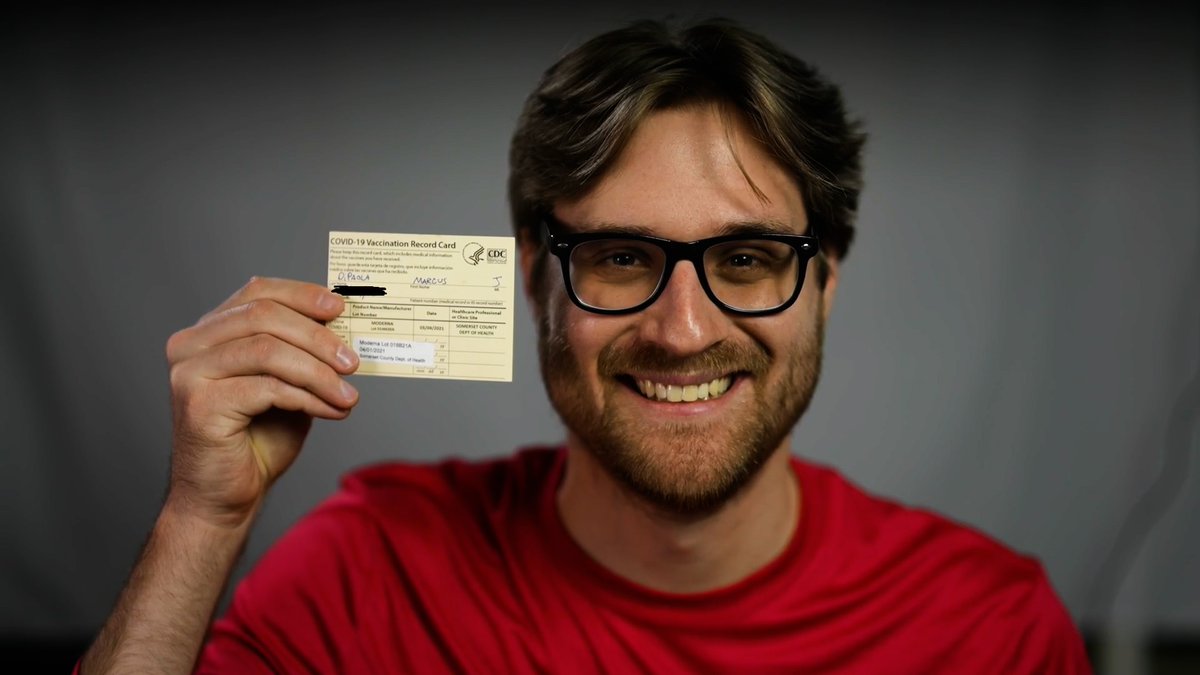
Marcus DiPaola is Not a Journalist

If you’re on TikTok, there’s a good chance that you’ve stumbled across Marcus DiPaola on your For You Page. He has 2.5 million followers and he doesn’t follow anybody back. With thick-framed glasses, poorly groomed stubble, and hair parted in the middle in a manner that suggests that he could be the love child of Alfalfa and a Williamsburg hipster, DiPaola reads the news in an intense and fearmongering style against an Olan Mills backdrop that is grossly at odds with his “I spend most of my time in a basement” aesthetic. Think of DiPaola as Awkward Family Photos enhanced with white male rage. Like many grifters who have made a name for themselves in an age in which facts, fairness, and the appearance of objectivity are increasingly devalued, DiPaola cloaks his inadequacies behind his mission statement: that he is, according to his own bio, using a writing style “designed to make it possible for middle schoolers with learning disabilities to understand the news.” But if this were truly the case, why then does DiPaola enunciate innocent words like “trains” with all the sinister timbre of Richard III chewing up the scenery just before hiring assassins to kill his older brother? If he is truly speaking to children, why then does his content have the feel of Walter Winchell with severe anger management issues? DiPaola reminds me of that Simpsons bit in which Christopher Walken read Goodnight Moon, only for the kids to scurry away in fear.

Up until recently, DiPaola’s bizarrely aggressive “reporting” style was largely tolerated as something you had to endure before scrolling onto a shirtless Russian man loving his bear in subzero temperatures. But on March 29th, DiPaola offered a preposterously inaccurate report that “LGBTQ residents of Philadelphia are getting attacked by criminals so often that, today, the person in charge of dealing with crime in Philadelphia created an advisory board to figure out how to deal with the problem.” It is certainly true that a transgender woman was attacked in Philadelphia on March 20th and that there was an uptick in transgender attacks last year. But DiPaola’s hysterical rhetoric suggested that Philly was something out of Frank Miller’s apocalyptic portrayals of Gotham. Last year, USA Today reported that Philadelphia was among the friendliest cities to LGBTQ people. The city was one of the first places in America to initiate a yearly Pride parade in 1972.

@marcus.dipaola

If you don’t recognize the real world is a scary place, it’s time to grow up.

♬ original sound – Marcus DiPaola

DiPaola faced rightful pushback for his histrionics, which felt more like the bilious white supremacy spewed by Tucker Carlson than a man who professes to “anchor the news” on his Twitter bio. He never once corrected his inaccuracies — the basic responsibility of even a soi-disant journalist. Instead, he doubled down on his demagogic fury with a video that was swiftly parodied and widely condemned:

Journalism exists to point out things going wrong so people can change them. It is never my job to cheerlead or to make people happy. It is my job to point out the scary and bad stuff happening in the world, to build up pressure on the people in power so they fix things. If you want to make a change in the world, this is the channel for you. If you’re scared of real life and want to pretend things are perfect, follow someone else.

As the user @jewishanarchist observed, this represented a case in which DiPaola refused to countenance the LGBTQ-friendly truth of living in Philadelphia. “You might not have the job to cheerlead,” said @jewishanarchist, who grew up in Philly and who noted the vibrant drag scene in the City of Brotherly Love, “but you have the job to represent the accurate facts. Because what you did? You made the people of Philly look bad. You didn’t make the government of Philly look bad. You made the people look bad. That’s bad reporting.”

Moreover, there’s something incredibly dodgy in DiPaola’s partisan approach here. It is a journalist’s job to present the facts fairly and accurately. If the reader (or, in this case, the viewer) decides that she wants to change things, then that’s on the audience, not the journalist. But these basic responsibilities are clearly beyond DiPaola’s wildly limited faculties. He often fails to cite his sources. And a cursory exhumation of his feed instantly reveals numerous inaccuracies or willful misreadings of other reports. Irrespective of who your audience is, this is a deeply irresponsible approach for anyone who claims to report the news.

DiPaola could be easily ignored if he didn’t have such a large platform to deliver his venomous spittle-flecked tirades. The fact of the matter is that, for some people who are hopelessly hooked on TikTok (it is incredibly addictive!), DiPaola could very well be the first place that they hear about a news story. And if they hear it from a man who is so careless and capricious with the facts, then DiPaola’s outsize influence is incredibly dangerous. Not unlike Father Coughlin in the 1930s, who used his vast radio audience to whip up widespread anti-Semitism and support for fascism. Even comedians like Jon Stewart, Stephen Colbert, and John Oliver have employed fact-checkers. Because they have known very well that millions of people are watching their shows and that they have a responsibility to convey the basic truth.

But DiPaola shows no such care or commitment. He cannot, by any standard, be called a journalist.

The Droppers, the Ghosters, and the Grifters

I am blessed to have friends who are far more brilliant than I am. I am fiercely loyal to all of my friends. And if my friends happen to toil in a creative field like me, then the admiration I have for their work, which is always honest and never false, only helps to seal the deal. But I am also someone who has stood out simply for being who I am. I try not to second-guess life. The universe could throw you an unanticipated curveball tomorrow. Thus, it is better to be instinctive and decisive and expressive and idiosyncratic and true to who you are. Still, people like me tend to attract a particular form of fawning admirer — usually a younger man on the make — who eventually turns into a peculiar rival.

They start off as fans in apparent awe of my talent. I am hopelessly confused but grateful. And I like them. For I am a congenial wiseacre who tends to be very fond of people and deeply curious about them. My curiosity in them greatly exceeds any interest I have in myself. I usually sense that someone who admires me and who reaches out is probably going places or that they are certainly on their way somewhere. And I spend months or years steering our dynamic towards one in which they are not so much acolytes, but creative and human peers. Being a self-effacing type, I have always felt strange being placed in the role of outlier sage. Thankfully, that happens less often these days.

I hedge my bets against this unanticipated game of impostor syndrome by expressing honesty and vulnerability and gentle truth about my life so that they understand that I am highly fallible. I would rather be a human being than a cult leader.

There comes some point in which they achieve some hard-won success and I congratulate them and I am never jealous but always in admiration. But the fame floats to their head much like a hot air balloon drifting over wine country. And the relationship swiftly careens into a spectacle. That’s when they drop me. That’s when they finally recognize the truth that I’ve known all along: that they are better equipped for achievement than me. That they can negotiate the false metric of fans and gigs and hosannas simply because they relish the guise of being a somebody who others look up to and I am more interested in admiring other people without a comparative yardstick. They are better at playing the game of ingratiation and sucking up and flattering other people — as if frangible souls who happen to be in the public eye are ridiculous superheroes being paraded and marketed before a horde of rabid zealots bedecked in cosplay. Maybe this was always their game with me, but I don’t look back. Maybe they recognized that I was the type of man who would quickly puncture their outsize estimation by being real and they needed to meet me for their hubris to swell.

1. The Ambitious Writer: He started off publishing chapbooks at very small presses, but he was hungry for attention. His ambition was limitless and this was certainly reflected in the massive and awe-inspiring volumes he published years later. I didn’t recognize how voracious he was when he first contacted me. But back then, I was being bombarded by everyone. I misconstrued his hunger to be hyperbole. He landed press and attention by starting feuds with other literary people. But before he did any of this, he contacted me with a fawning email, telling me that I was one of the most important voices writing about books. A few years later, I ran into him at an event and introduced myself. And he said nothing and stared right through me. As if I was an eidolon. Not even a friendly hello. What a stark contrast from the obsequious email from only a few years before! I couldn’t find it within me to read his books until years had passed and one friend who reads him told me that he didn’t have anybody else to discuss his books with (being a good friend, I obliged by reading the ambitious writer’s work). Another friend told me of his phone calls with the ambitious writer and this allowed me to see from a distance that this guy was human. Still, this isn’t someone who I would go out of my way to talk with. Far better to keep him at a distance so that I can read his books without prejudice.

2. The Fawning Podcaster: For many years, he ran a very smart podcast on a niche psychogeography topic that was unlike anything else out there. So he had my admiration already. But he also thought that I was terrific and even wrote a piece in which he didn’t understand why I wasn’t a huge star. So I wrote him an appreciative note and opened myself up slightly. I sent listeners to his podcast. And that was when he suddenly wished to have nothing to do with me. Now I am wondering if what he had to say about me had any genuine validity. I have stopped listening to his podcast. And I haven’t communicated with him in any way for many years.

3. The Chicken Farmer: On TikTok, there was a lonely man who lived with chickens who became a huge fan of my commentaries. Being an affable sort, I sincerely expressed my empathy for his situation and marveled over the fact that he expressed such affection for his chickens. Then, out of the blue, he left a number of vituperative comments on my feed, claiming that I wasn’t very intelligent and so forth. And I was forced to block him. What changed? Could it be that he resented me for taking the time out of my life to offer him solace and interest? There was no warning for any of this. I never said an unkind word about him.

4. The Admiring Commentator: I had read her work for years and admired it. Then we met. We became friends in San Francisco, meeting regularly to write together in coffeehouses. We had many hilarious and honest conversations. Perhaps my mistake was not letting her more into my life. But I’ve talked with other people she’s known and she’s done the same thing to them. She seemed convinced at one point that I was a one-in-a-million voice. At one point, when a major development rightly landed in her lap (she is incredibly smart and ferociously talented), I delivered a protective monologue urging her to be careful about having her writing voice compromised in any way and declaring that she was a vital writing voice. It’s not that I didn’t think she couldn’t handle herself. It’s that I wanted to see her blossom and I knew certain inside information about the editors behind the operation. Perhaps I overstepped. One day, she seemed to disregard me. She offered a writing job to a friend as I was sitting right there, never once considering that I might be in need of work. I was hurt. There are more discreet ways to handle an offer like this. When I went to revisit San Francisco after several years of living in New York and I met up with her, I was pushed to the side, feeling like an afterthought rather than a human being and I knew the friendship was over. But I do know that she pushes many people she befriends away until they are not useful to her. I haven’t communicated with her since.

5. The Competitive Blogger: I am not competitive with anyone other than myself. And when this blogger started out, he fawned over me. I hooked him up with publicist contacts and told him how he could get review copies and gave him several suggestions on how he could become a major literary website. Like all my other admirers, I got the gist that I was a “vital voice” and so forth. And then one day, he turned on me and turned into a wild egomaniac. Not just to me, but to friends who I had introduced to him. He started a literary criticism outlet. I sent a few people his way. He then decided that he was better than me and took on the practice of exploiting these people, who later came back to me. And I was forced to apologize to my friends for the competitive blogger’s conduct and buy them many beers.

* * *

These are only five exemplars of an underlying pattern. There are dozens more. The common element is me. So I clearly must be the problem. There must be some fatal flaw within me that allowed these relationships to veer into the dynamics I have described. It’s quite possible that I simply don’t possess any particular draw that allows a reader or a listener of my work to stick around for the long haul.

I have found, of late, that I am better at keeping friends. But that is only because I have never allowed my friendship to be defined by the art that I make. I usually never mention what I do. I am more keen on listening. I am not so in need of approval, as so many other writers are, to require constant validation for my work. If I send anything on, I do so because I know the friend is going to be entertained by that side of me. Or it may be referencing something we’re talking about and this allows me not to repeat myself. Or, if the friend is a fellow writer, I know that I can trust that friend to rake me across the coals, tell me what’s wrong, and not bullshit me.

But I do need to be validated as a person sometimes. And I find that, on the whole, people in the media world often make the worst friends. If your default position in life is admiration for a slice of someone rather than an appreciation of his totality, warts and all, then I think you’re doing friendship very wrong.

The Growing Indignities of Unemployment

The nine-month contract paid below market rate, but I went for it, under the theory that having some income coming in over time was better than scrambling for work. (I even turned down another shorter gig to make the nine-month contract happen.) Nine months would offer enough time for the pandemic to be theoretically at an end, with both regular life and the economy returning with a giddy vengeance. I offered five references instead of the usual three just to seal the deal. Got the job. Or thought I did. I signed the onboarding papers. I submitted my personal information. I received repeat assurances that the job was on. I looked forward to busting my hump as a content writer.

Then, after heading all the way to Astoria to resolve one part of the background check and just over a week before I was set to start, I got a phone call. In less than twenty-four hours, the agency had moved from texting “What’s the address to send the equipment to?” to a telephone call in which I was told, “The client has decided against hiring people for the position.” As much of a cruel last-minute act of disrespect as this was, I somehow wasn’t upset. Maybe I’ve become dead inside. Maybe it’s adjusting to the brusque reality of living during the apocalypse. Maybe it was an unanticipated side effect from getting the first Pfizer shot the day before.

I do wonder what the point of looking for work is. Because I’ve never had problems like this before in my life. Never. I’m not lazy. I’m a go-getter. And I’ve never been fired from a job. I even landed work during the Great Recession.

Yet I still look for work. Every weekday morning like clockwork. This is easily the most demoralizing job hunt of my life.

In the past year, I’ve applied to more than 700 jobs and can’t seem to catch a break. It doesn’t matter how targeted my cover letter is. There are just too many applicants for every job. You rarely hear back from hiring managers. And even if you go around a hiring manager and talk to people who work directly in the department and get them excited about the possibility of you being a co-worker (as I have done several times), it really comes down to the whims of hiring managers, who seem to thrive on the petty despotism of being a small-time tyrant squeezing wages and breaking the down-and-out when not subjecting candidates to callous indignities. Honestly, I’ve known bill collectors and criminal prosecutors who possessed better manners. Even the automated Phil from ZipRecruiter is far more respectful.

Since I started my quest for work, I have been the victim of an elaborate identity theft scam. I was proud to work at a vaccination center for a week. I enjoyed cheering up numerous nervous people who were getting their first shot in the arm. And, as such, the twelve-hour shifts flew by fast. But then the agency that hired me started playing games. They would text me a shift and, just as I was replying to the text message (a mere three minutes later), they would pull it. There was the audio production company that said that it would send me a job offer after I aced a lengthy Zoom interview. And then the company ghosted me. I came very close to getting an audio producer job at another place. Took the editing tests and everything. But they went with the other candidate. Now I’ve had this nine-month contract dangled in front of me and pulled away. Much in the manner of a sociopath torturing an ant with a searing magnifying glass.

No matter how justifiably confident you are of your professional abilities (and I have more than twenty years of experience to back it up), this all does a number on you. Especially now, as life as we once knew it is locked in amber. I’ve had nights where I’ve cried and imbibed too much scotch. And this too is embarrassing. Because others out there are much worse off than me. I’ve been nimble enough with my finances to pay my rent on time and remain debt-free. The fine freelancing art of cutting costs and living like a grad student. But who knows how long that will last?

When I started venting about my job-hunting woes on TikTok, an unremarkable person in Maine lathered up her peers and led a cyber-bullying campaign against me. An easy target for a garden-variety sociopath who, lacking any real life, lashes out at others with unbridled selfishness. So I know for a fact that anything I have to say here really doesn’t matter. But I’m one of 10.1 million Americans who feel this way. One of many Americans with a hard thumb on his mental health and his emotional wellbeing. But sometimes your grip slips and you reach for the bottle and you can’t leave your bed or call your friends. You certainly can’t tell anybody about the pain you’re fending off or the hell you’re going through. It’s a bit like the bleak joke in Richard Aldington’s Death of a Hero, in which there was no sympathy for returning soldiers. You have shell shock? Who cares? Everyone does.

Being unemployed is only one step above being homeless. You’re something of a leper and a walking slab of shame to those who have lucked out enough to keep their jobs during the last year. And you wake up the next day for more indignities. More automated replies (if you’re lucky to get these) from people you know you could have won over if they had only given you a shot. A stronger sense that, despite your best efforts, there isn’t a future for you. Merely a tenuous present.

Decline of a Wandering Brooklynite

My friends know me as someone who can easily locate some recherche venue in a city I’ve just set foot into for the first time. Even without GPS, I can usually drive my way to where I need to be. It’s a blind instinct. The seeds for this sense of direction were planted when I was four years old. There was a large map of Santa Clara County hanging on my bedroom wall and I memorized all the streets to pass the time. I asked my mother to order more free maps from AAA and I scooped up these new geographical sectors with relish, happily adding these fresh streets to the spatial depository of my ravening mind. My mother was someone who could get easily lost. But I had traced the clover leaves and followed the construction of new freeways with my little fingers. I had calculated the shortcuts that got you to your destinations faster. At four years old. A few years later, I would sneak out of the house and spend the entire day bicycling to areas on the map that I was curious about. I once got into trouble when a neighbor ratted me out after discovering that I had high-tailed it six miles away. I’ve always felt wanderlust was something vital that binded you to a community. My heart flows with a great hunger to investigate every nook and cranny of any neighborhood I live in.

I learned yesterday that the pandemic has destroyed this essential part of me.

There was a place in Queens that I needed to be at. Anybody who lives off the 2 line in Brooklyn knows that the easiest way to get there is through one simple transfer move. In the Before Times, that free-wheeling maskless epoch now so inconsolably long ago, the switch between Hoyt and Hoyt-Schermerhorn was as easy as breathing oxygen. You’d shuttle up the stairs from the 2, walk a few blocks over, and descend into the subway system’s subterranean bowels to catch the A.

But yesterday, as I squinted into the early morning light, I found myself incapable of recognizing whether I was north or south. I didn’t seem to know where I was at. It was shocking. The stores along Fulton Street seemed as foreign to me as they were fourteen years ago, when I had first mapped Downtown Brooklyn’s bustling blocks onto my mind, pleasantly amazed that I was ambling down the same strip that Spike Lee and Ernest Dickerson had captured in beautiful black-and-white in She’s Gotta Have It.

Perhaps I was fated to feel confused because I had excavated four pairs of pants from the closet that very morning — slacks and trousers that I had not worn in a good two years and that I had replaced with more elastic jeans — and discovered that only one pair still fit me. My waistline had expanded under lockdown by a few inches. It was bad enough that the pandemic had saddled me with a burgeoning mass of neck fat that had nestled uninvitingly beneath my chin. I lost a lot of weight seven years ago and had always kept it off through exercise. But the exercise bike in my apartment, which I once used regularly with gusto, has lost any allure and now feels as tedious as taxes. My three hour constitutionals had been denied me. My long walks through New York didn’t feel fun anymore because, even with the double mask protection, my glasses still fogged up. Whenever I leave the house, my only choice to stumble blindly into a metropolis I love but can now no longer see, with everything five feet ahead of me rendered into some blur, the muddy vista of a previous city that now lurks only on the mnemonic fringes. The random social encounters and the trips to new places no longer exist. So any saunter feels tiresome. The only geography that most of us have are the cells we now call home.

Earlier this week, Ellen Cushing noted our collective decline in The Atlantic, pointing to an epidemic of people forgetting words or names and succumbing to absent-mindedness. Like Cushing, I can trace the decline of my motivation and my productivity to the grim cold of late December, in which the risk of hypothermia became the prerequisite for safe socializing. I saw my friends less. I dated less. Even when I did the math to meet someone in socially distanced real life, I would find that the date or the friend would backpedal at the last minute, disrespecting the two weeks of self-quarantine I had subjected myself to before meeting anyone (and only meeting one person at a time). Life increasingly became a relentlessly bleak calendar of entombed solitude. I would go weeks or months without smoking or drinking, only to take one or both up again. Anything to change the grim and hopeless cadences of routine. My mind and body atrophied. My progress on my audio drama and the wild novel that I had drafted in a gleeful three-month summer frenzy stalled. Without the social glue to keep me effervescent, there really wasn’t much point in doing anything. It didn’t help that looking for work was becoming increasingly demoralizing. I had always been able to land a job before with a phone call or, in a few daring cases, showing up in person, cracking jokes, and introducing myself. I was still able to play guitar. I started learning keyboard, but found that this was increasingly pointless. I obtained a ukulele at the start of this month, learned it fairly fast, and that lifted my spirits a bit. I became prolific on TikTok in an attempt to remedy some of the loneliness of living alone. I read books at a ridiculous rate, slamming back nearly a book a day during the month of February. But even that part of me surrendered to dismal pandemic perdition.

One year of this. Who knows how many more months? We weren’t built to live like this. But we have no other choice.

But I’m most disturbed by the fact that I can’t find my way in a city anymore. Even one that I’m deeply familiar with. I’m terribly alarmed that something that was as vital to me as food and water seems to be permanently lost. While Cushing ends her Atlantic essay on a sanguine note, I’m not sure if my synapses or hers are as plastic as she thinks they are. Even if we somehow hit the magical goal of mass vaccination by the summer, we cannot deny the reality that our collective mental health will take years, maybe even decades, to repair. Maybe there’s a case to be made for human beings showing more kindness and understanding to each other, given that we all know that nobody has escaped this pandemic without some kind of crippling toll. But I’m not so sure. Those who have been lucky enough to be vaccinated have developed signs of what I call “vaccine privilege,” where they are boasting about how invincible they are and eagerly making plans to be social while leaving the unvaccinated sad sacks in the dust. Selfishness seems to be an ineluctable part of the grim equation, perhaps more so now than ever. And we can’t even begin to rebuild our social fabric unless we relearn how to be there for other people and to include them. But many of us can’t or won’t be able to do this. Our vital parts have been deracinated. The qualities that once made us distinct are trapped in amber. What kind of community can anyone build when our personalities are so lobotomized?