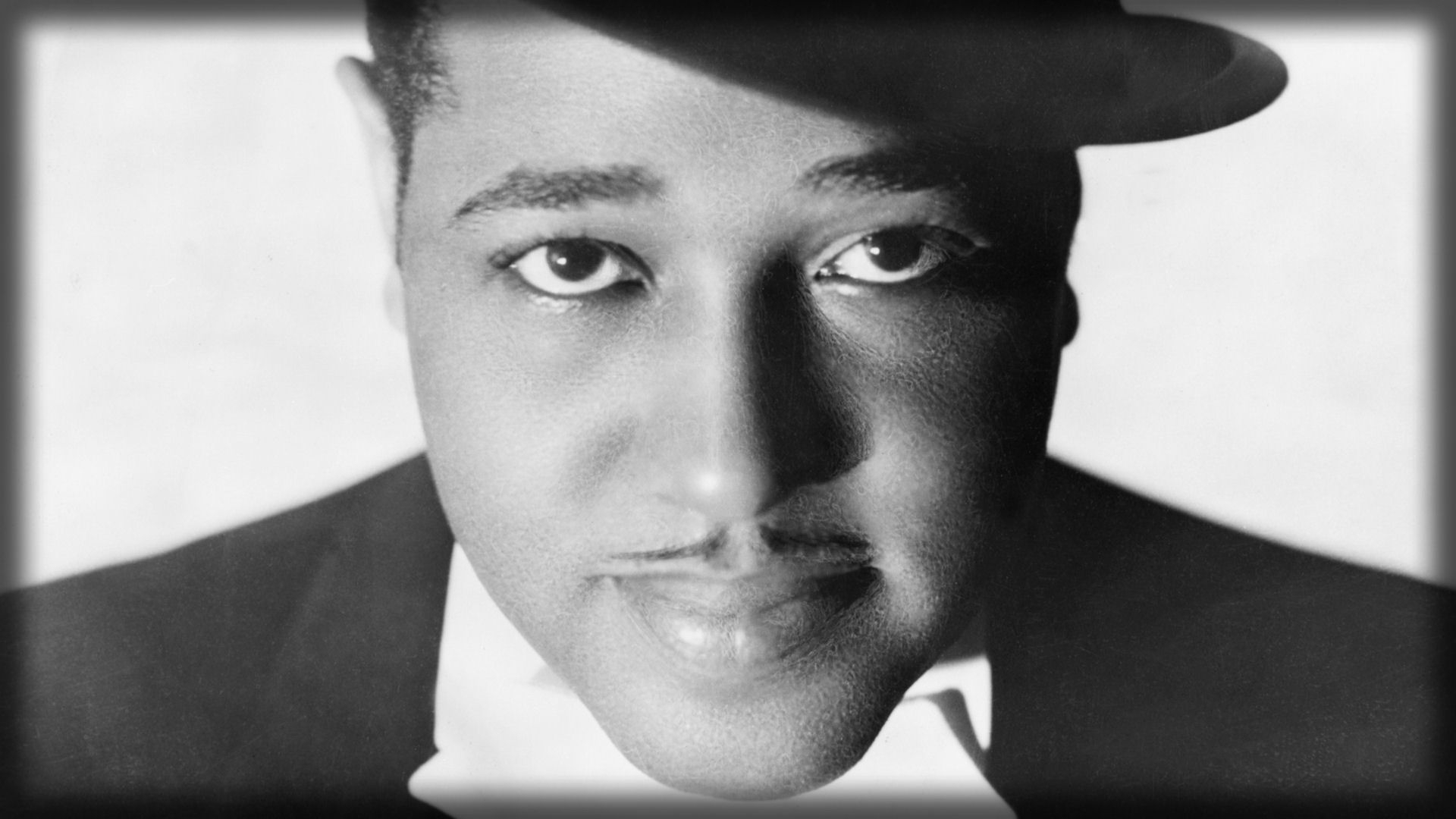
Terry Teachout is most recently the author of Duke. He previously appeared on The Bat Segundo Show #314.
[PROGRAM NOTE: There are a few modest errors in this program, all of them spoken by Our Correspondent. Our Correspondent referred to the “National Front,” when he meant the “Popular Front.” He misstated the year of Duke Ellington’s comeback concert at the Newport Jazz Festival. It was 1956, not 1959. There are also a number of moments where Our Correspondent refers to Duke Ellington as “the Duke.” We strive to keep this show as accurate as possible and apologize for these errors.]
Author: Terry Teachout
Listen: Play in new window | Download
Subjects Discussed: Guther Schuller’s Early Jazz, vertical harmony vs. horizontal melody, the way Ellington used his musicians, David Hajdu’s Lush Life, Ellington’s exploitation of Billy Strayhorn, Ellington’s ability to attract women close to his death, attempts to track Strayhorn’s true contributions, what pop songs reveal about Ellington’s composition skills, transformative art vs. plagiarism, the Cotton Club, playing racially segregated venues, broadcasting on CBS Radio, William Paley, Irving Mills as publicist and manager, Ellington’s terrible management skills, his tolerance of drunken and drugged up musicians, Paul Gonslaves, Ellington’s comeback at the 1956 Newport Jazz Festival, appearing on The Ed Sullivan Show with Herman’s Hermits, the decline of jazz and the rise of R&B, the ribald songs of the 1920s written by Jimmy McHugh, Bessie Smith’s “Kitchen Man”, Dorothy Fields’s lyrics, high-class talents writing smutty songs, Ellington’s emulation of pop, why Duke Ellington is sexy, the suggestive qualities of “Warm Valley,” Ellington’s remarkable promiscuity (and his adroit skills in using as many as four hotel rooms at once in one city), the influence of Bubber Miley’s solo on “East St. Louis Toodle-oo” on Jimi Hendrix’s wah-wah, how Ellington surrounded himself with master musicians, viewing Ellington as the auteur of the band, Johnny Hodges, Harry Carney, why Ellington’s band members kept coming back, Cootie Williams leaving Ellington’s band for Benny Goodman, Raymond Scott’s “When Cootie Left the Duke,” Clark Terry, why Ellington’s best soloists didn’t function as well when they tried to make a break on their own, Billy Strayhorn’s body of work, the one interview that Edna Ellington gave to Ebony, the circumstances that caused Duke’s scar on his left cheek, why Duke and Edna stayed married, Duke’s philandering, Ellington’s fear and distrust of women, the value of Betty McGettigan’s oral history, networks of Ellington gossip, plausible vs. usable material, the mysterious Countess Fernanda de Castro Monte, fakes who contain multitudes, women who are prepared to lick the feet of geniuses, Ellington’s contradictory politics, Ellington’s idea of fighting segregation through paying people, his views on the 1963 March on Washington, Ellington winning the NAACP’s Spingarn Medal, Ellington’s Popular Front activities, Jump for Joy, Ellington’s pecuniary political commitment, fame and money as the road to equality, being a member of the black bourgeoisie, Ellington’s devastation over not getting the Pulitzer Prize, the tight-lipped Teachout moment, John Hammond’s inept evisceration of “Reminiscing in Tempo,” the difficulties of synthesizing one man’s life, Mercer Ellington, quintessential connections between geniuses and their talented sons, the 1941 ASCAP strike, Herb Jeffries, John Garfield’s questionable suggestions about makeup, lighter skinned performers asked to darken their skin, Ellington’s sensitivity to questions of intra-prejudice, clueless white audiences and Duke, Ellington playing country clubs, the working life of a musician, Duke taking care of his fellow musicians, being beholden to marketing demands, a spontaneous 1940 recording in Fargo, North Dakota, the convergence of popular and sophisticated tastes.
EXCERPT FROM SHOW:
Correspondent: I want to start with a very geeky musical technical question. You point out that Duke Ellington thought almost exclusively in terms of vertical harmony rather than horizontal melody, that his best-known tunes were little more than elaborations on the top notes of chord progressions. You quote Gunther Schuller in Early Jazz about him noticing, “The parallel blocks of sound he favors so predominantly are handled with such variety that we as listeners never notice the lack of occasional contrapuntal relief.” You suggest that this compositional liability, which Duke was, in fact, able to work around led him to rely on other composers, other musicians, other band members. And, of course, he didn’t always share credit. So I’m wondering. To what degree was Duke himself aware of this creative liability? How was he able to keep so many of his collaborators, and even the audience who was listening to him, in the dark about this for so long?
Teachout: Well, a lot of it has to do with the fact that Ellington was the biggest public personality in his band. I mean, his great soloists, except for Ben Webster, who was known to beat up people, tended not to have that kind of flashy personality. So even though, if you look at the credits of a song like “I’m Beginning to See the Light.” You see Johnny Hodges’s name on there. You’re not going to think Hodges. You’re going to think of Ellington. Because Ellington is the trademark of the Ellington Band. And this is even true in the case of Billy Strayhorn, a composer of equal quality and I think equal genius to Ellington. But Strayhorn is completely in the background, doesn’t appear with the band. Maybe a half dozen times in the band’s whole life. I’ve only seen one bit of film with Strayhorn playing with the Ellington Band at a gig. So even though for the last fifteen years or so of their working together their albums were jointly credited to Ellington and Strayhorn, and that’s to be taken very seriously, the fact is that if you don’t know the score, if you don’t know how important Strayhorn is, you’re going to assume that Ellington is the senior partner.
Correspondent: Yeah. And actually there’s also a wonderful book by David Hajdu, Lush Life, as well. Let’s talk about Strayhorn. He’s one of the tragic figures in this book.
Teachout: Yes.
Correspondent: He’s a man who has composed and arranged many of Duke’s finest moments. Duke, as we are implying here and establishing here, was an incessant credit hog. And he strung Strayhorn along for decades. So I’m wondering. What was it about Duke’s charisma? It was so formidable that he even attracted women when he came close to death, when he was ill. Which was really impressive, I gotta say! (laughs)
Teachout: (laughs) I was pretty amazed by that myself. Yes.
Correspondent: What caused people like Strayhorn and other people who were robbed of their credit — what kept them coming back to Duke?
Teachout: He was what he was. He was a genius. I mean, Strayhorn became what he became because Ellington was his model. And also we have to talk about the specific nature of Strayhorn’s life and personality and why it worked for him to work for Ellington. Billy Strayhorn was a homosexual. You were not a homosexual who was out and a public figure. Least of all if you were black in the world of jazz in the ’30s and ’40s. This was not an option for Strayhorn. And Strayhorn, who was completely at ease with his sexuality, wished to live his life the way he wanted to live it. So he made a kind of bargain — with himself, with the world, and with Ellington — that he would remain on the sidelines. Ellington would pay him — quite generously as a matter of fact. Strayhorn essentially had the equivalent of a drawing account and could pretty much do whatever he wanted. And in return for this, in supplying this music and writing hundreds of uncredited arrangements for Ellington, he just steps back into the shadows and lets Edward, as he always called him — “We’ll let Edward do that” would be Strayhorn’s line. And Ellington, unlike Strayhorn, was not only a creative personality, but a kind of theatrical figure. Now one of Duke Ellington’s greatest creations was Duke Ellington, the man who goes out on stage with the fabulous outfits and the baggy eyes and the gorgeous bass baritone voice and the catchphrases. And he charms your socks off. Now even if he couldn’t have done all this, he would have still been Duke Ellington the great composer. But because he served it up with all that frosting, people whom might not otherwise have been drawn to him and especially, when we talk about race again, drawn to a black man in the ’20s and ’30s, this is a different kind of black man. This is the elegant presentable fellow. And that is an important part of what Ellington was. And Strayhorn knew, consciously or not, that he needed this kind of front man to lead the kind of life he wanted to lead and be able to have that great Ellington Band play his music the way it played Ellington’s music.
Correspondent: Do we really know in 2013 the full extent of Strayhorn’s contributions to Ellington? Because it’s come out over and over in the last several decades. We have suddenly understood, “Well, he did this. He did this.”
Teachout: It’s completely knowable now. Because the manuscripts have survived. And a lot of people in Ellington’s life and in Strayhorn’s life, and for many years after it, speculated about who wrote what. Now it’s not a matter of speculation. We know right down to the fact that Billy Strayhorn wrote the last ten bars of Ellington’s Harlem, for example. That’s the level of specificity that we’re talking about. So there is a debunking line that’s gotten about, that Strayhorn was the power behind the throne. And that’s just not true. In the suites that they wrote together, Strayhorn would normally compose maybe between a third and a quarter of the numbers. They were not written jointly. The movements are separate. There’s a Strayhorn movement. There’s an Ellington movement.
Correspondent: You describe that moment in the hotel room where they’re trading off. One’s asleep. The other composing.
Teachout: It’s a wonderful story.
Correspondent: There’s a monster movie playing in the background.
Teachout: It’s an unusual thing to have happen. So Strayhorn’s contribution is immensely important. And he didn’t get, for these complicated reasons we’ve talked about, complete credit for it. But most of the music that we believe is written by Duke Ellington is written by Duke Ellington, including virtually all of his major instrumental works. The real problem of attribution with Ellington is the pop songs. For me, that was the big surprise. When I started to go systematically into the Ellington output, I heard stories about this. I heard stories about that. But suddenly, as I looked at the work as a totality, the light went on. And I realized, “Well, of course! It’s the pop songs. Because he’s not a natural melody writer.” It stands to reason that that would be where he went. To those natural melody improvisers like Johnny Hodges.
Correspondent: Pop songs not only reveal Duke’s limitations. It also reveals how much he plundered from other people.
Teachout: Yes. That’s right. But there’s another side of it. It also reveals what his essential contribution is. In a song like “Sophisticated Lady” — that’s the most striking example of this — the main strain is by Lawrence Brown, the trombone player. The bridge, the release is by Otto Hardwick, the alto saxophone player. But it was Duke Ellington’s idea to take these two bar fragments and put them together in a 32 bar pop song and harmonize them and orchestrate it and create the total composition that we know as “Sophisticated Lady.” So who wrote what? The question is, and the answer is, Ellington didn’t write the melody. But it is his composer’s mind that took these two found objects, if you want to put it that way, and transformed them into the song “Sophisticated Lady.” So it’s a complex attribution problem. You can’t just sum it up by saying, “Oh yes. Duke Ellington was a plagiarist.” Duke Ellington was never — in the sense that a literary person normally uses the term — a plagiarist. He didn’t steal without telling you and then you looked up six months later and your work was in print under his name.
Correspondent: He was not the Jonah Lehrer of… (laughs)
Teachout: No, sir. Not in the slightest. Was he scrupulous? Not always. And sometimes he was entirely unscrupulous. And sometimes unscrupulous things were done in his name. A fair number of Strayhorn pieces — the royalties were copyrighted in Ellington’s name. But there’s no reason to assume that Ellington himself was responsible for that. It may, in some cases, just have been sloppy bookkeeping. But when Strayhorn finally did look into this, he was horrified and it led to a temporary break between the two men and ultimately to the renegotiation of billing that created the later Ellington/Strayhorn compositions where they always get equal billing.
Correspondent: I’m abashed almost to say this. But I have not once mentioned the Cotton Club in more than 500 shows of Bat Segundo.
Teachout: (laughs)
Correspondent: So thank goodness you wrote about it, Terry!
Teachout: Now’s the time.
Correspondent: Now is the time. And I wanted to get into this. You know, here was a segregated venue. A place that paid its performers quite handsomely.
Teachout: And mobbed up to the eyebrows.
Correspondent: That’s right. Langston Hughes railed against how most whites who attended the Cotton Club saw the cabarets rather than the houses of Harlem. Duke played there. But he didn’t really mention this other aspect of the Cotton Club in his memoir, Music is My Mistress.
Teachout: Right.
Correspondent: But he also broadcast on CBS Radio from the Cotton Club. This risk taken by William Paley. And he got the attention of the press simultaneously by playing midtown clubs. So he has these broadcasts through CBS that give him that national attention while simultaneously it had me wondering. Was there any other way for Duke to make his way to CBS without the Cotton Club? Was he going to face racial segregation no matter what path he took?
Teachout: Oh sure. Remember. We’re talking about 1927, 1928. Black bands get paid less. They get inferior gigs. So suddenly Ellington gets this break. And it’s an extraordinary break. The price he pays for it is he’s coming into a segregated club in the middle of Harlem, where the only way that a black person can get in is if he is very famous and then they put him in a table in a corner. Preferably in the shadows. But in return for that, the Cotton Club’s got a national radio wire on CBS. Every rich person in New York is going to hear him. The word gets around. And that radio wire suddenly puts Duke Ellington in your living room, no matter where you live. So I think the biggest break that ever happened to Duke Ellington was meeting Irving Mills. The second biggest — and it’s related to this — is going into the Cotton Club. That and Mills’s publicity campaign, presenting Ellington as a different kind of black man — you fuse those together and you get the root to the great success that Ellington had by the ’30s.
Correspondent: But when Mills was no longer around, Ellington seems to collapse. Did he really take any hard lessons? Did any of the hard lessons he learned from Mills get taken to heart in later years? Because I was reading this book and my mouth was agog at what a terrible organizer he was. He tolerated his band coming at odd hours. Any hour. Even not showing up to the actual gig. He tolerated musicians who were hopped up on heroin, who were alcoholic.
Teachout: His was the most irresponsible band maybe in jazz. But you have to remember that Duke Ellington had a very clear sense of priorities. He knew what he wanted. He wanted a band that would play his music every night. He was willing to put up with an enormous amount of nonsense from extraordinarily gifted players. Because they were the particular guys that he wanted on the stand at the time. He was never a businessman. And when he worked with organized businessmen after Mills — well, Mills really ran the show. But after that, they had to do things within the parameters of the way Ellington wanted them to be done. You know, if you’d brought in a hardass manager in 1956 to transform the situation with the Ellington Band, probably the first thing you would have done would have been to fire Paul Gonsalves, this man who was simultaneously an alcoholic and a heroin addict, who would nod off on the bandstand. But if you made that smart business decision, then you wouldn’t have had Paul Gonsalves on the bandstand for the 1956 Newport Jazz Festival, where he plays a million choruses and “Diminuendo and Crescendo in Blue” and the crowd explodes and Ellington is on the cover of Time Magazine. So I think in the long run, Ellington wasn’t interested in money. He wanted an operation that would allow him to lead the life he wanted, which was a life on the road, a life where a lot of women were passing through his life, a life lived in hotel rooms, and a life where his music gets played every night. He didn’t want to be a millionaire. He wouldn’t have known what to do with it.
Correspondent: But before that 1956 Newport appearance, he is really on the skids. I mean, it seems as if he is not going to come back. But even with that Newport appearance that is a huge sensation, he’s going onto Ed Sullivan and he’s sharing the bill with Herman’s Hermits.
Teachout: Well, yes, the world has changed. Ellington predates the Big Band era. But it was the booster rocket that made him the culture celebrity that he was in the ’40s. But he outlived it. After World War II, first big bands themselves become financially dicey. And then the whole flavor of pop music changes. You have rhythm and blues, which soaks up the black audience that was formerly in jazz. You have rock and roll becoming the lingua franca of modern music. And so by ’56, Ellington was perceived pretty widely as yesterday’s news. And it wasn’t just him. It was everybody who was playing that kind of music. This incredible good fortune that he had, of coming into the Newport Jazz Festival and getting on the cover of Time Magazine, which pretty much insured that for the rest of his life people who didn’t necessarily know much about jazz would know who he was. And you mentioned Ed Sullivan. Television exposure generally, but Sullivan in particular, is enormously important to Ellington in those last twenty years of his life. Because he is, as we said earlier, this personality. I looked through thousands of photographs to choose the ones for the book and they’re all good. You can’t take a bad picture of Duke Ellington. So you put a guy like that on television. And television was made for him. Just like it was made for Louis Armstrong. So even if Ellington went on Ed Sullivan — maybe he wasn’t playing particularly what you wanted to hear or the bill was an odd mixed one — the fact was that it was going out to the largest audience in television.
Correspondent: But I think we’re straying away from the point I’m trying to get from you. We were talking about how Ellington was a terrible organizer while simultaneously he’s facing the reality of rock and roll becoming a dominant part of the culture and rhythm and blues taking away the audience. I mean, he faced Frank Sinatra before. If he was yesterday’s news, could any amount of mad organization revive his career? I mean, he had so many shots there with the Newport thing and all that.
Teachout: If he’d lived another fifteen years, I don’t know what his life would have been like. He and Louis Armstrong, who died around the same time. Early to mid ’70s. Remember that Armstrong made the last number one pop single, “Hello Dolly,” which was jazz. After that, never again. So they may have died at a particularly fortuitous moment. It would have gotten harder for Ellington. The bookings, they weren’t drying up. But they were becoming more difficult in the ’70s. You know, part of genius is having good timing. And maybe he knew when to make the exit.
The Bat Segundo Show #525: Terry Teachout II (Download MP3)
This text will be replaced