Ralph Bakshi appeared on The Bat Segundo Show #214. Bakshi is the director of such films as Heavy Traffic, Coonskin, and American Pop. There is also a recent book, Unfiltered: The Complete Ralph Bakshi, now out that collects his work.
Condition of the Show: Caught in a musical daydream.
Guest: Ralph Bakshi
Subjects Discussed: The role of music in Bakshi’s films, making good films without a lot of money, emotionally correct songs, daydreaming, Bakshi’s record collection, the original idea of using Led Zeppelin for Lord of the Ring, Leonard Rosenman, Bakshi’s relationships with composers, Andrew Belling’s Wizards score, the “Maybelline” sequence in Heavy Traffic, artistic freedom, why Bob Seger’s “Night Moves” was the final song in American Pop, the relationship between writing fast scripts and revising in animation, the ending of Heavy Traffic, subconscious symbolism, the use of long shots and extended takes, Sergei Eisenstein, Aleksander Nevsky, giving Thomas Kinkade his first big break, on Fire and Ice not being a Bakshi film, using imagination with pre-existing visual elements, rotoscoping, getting the little artistic details, Edward Hopper, designers vs. montage, operating in the present as an artist, being honest, The Last Days of Coney Island, the impending collapse of America, Barack Obama, burning out, American avarice, and Bill Plympton.
EXCERPT FROM SHOW:
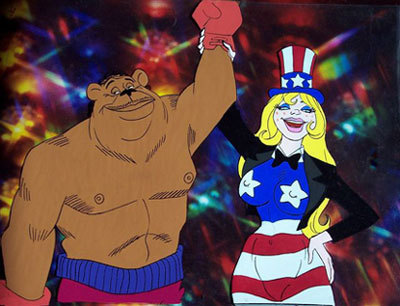 Correspondent: I wanted to ask you about music in your films. It’s certainly important in American Pop. You pilfered from your record collection for that, as well as the “Maybelline” sequence in Heavy Traffic. And there’s “Ah’m a Niggerman” from Coonskin, which you wrote. I’m wondering if you did this because you have an aversion to Carl Stalling-style orchestral music.
Bakshi: First of all, I love music. I’ve always loved music. And I’ve loved various kinds of music. Music is part of our lives. It’s part of the soundtrack that what we all grow up with. Especially in my day. I don’t know today. There’s so many things going on. I’m talking about yesterday and my day, which are the 40s, 50s, 60s, and 70s. Music is so emotionally important to the movie. It’s just as important as anything else. If the song is emotionally correct for a scene, the scene plays better. Or the scene plays better than it would have with a different song. So music is so critical to movies. I chose songs that I knew emotionally worked with these scenes that I wrote. Because whenever I listened to music while either driving in a car or sitting at a bar or listening to Coltrane or Billy Holiday – you daydream. If you don’t daydream to music, then you’re not listening to good music.
(Lengthier excerpts from this program can be found here and here.)
© 2008, Edward Champion. All rights reserved.
Listen: Play in new window | Download
[…] Ralph Bakshi on Bat Segundo! […]
SF Tidbits for 7/11/08…
Chris Weston shows off the awesome artwork he did for Marvel’s The Twelve 1/2. Interviews and Profiles:If You’re Just Joining Us interviews David louis Edelman (Multireal).The Bat Segundo Show interviews Ralph Bakshi.SFScope interviews Tom Piccirilli…