The Bat Segundo Show: Charlie Huston II

Charlie Huston appeared on The Bat Segundo Show #267.

Charlie Huston is most recently the author of The Mystic Arts of Erasing All Signs of Death. To listen to our previous interview with Mr. Huston, check out The Bat Segundo Show #98.
segundo267

Condition of Mr. Segundo: Looking for an efficient and affordable cleanup service.

Author: Charlie Huston

Subjects Discussed: Huston’s concern for locative detail, unusual sentence structures, sequential details within sentences, the run-on sentence in relation to narrative action, the burdens of writing novels quickly, rhythm and alternating sentences, whether or not the word “motherfucker” haunts Huston in his dreams, sentences repeating and following a character demand, getting across pace without having characters describe the pace, working over sequences amidst restrictive writing conditions, pushing the story forward with aggression, trying to steer around cliches, being subconsciously funny with the books, the burden of the Joe Pitt books, masturbating on the page, avoiding violence directed at dogs in the most recent books, consciously playing down the violence, on “going soft,” slipping into habit, the typographical dash mistake in Mystic Arts, on whether John Wayne is the standard for the roundhouse haymaker, why almonds were chosen over pecans, agricultural hijacking, cockroaches, transcribed speech and fey okays, the culinary horrors of Slim Jims, and conducting research.

VIDEO CLIP:

EXCERPT FROM SHOW:

hustonHuston: Sometimes, if you use the same words, you can put a little tinkle of irony into it. In the fact that you describe him doing it exactly the way the person just told him. So you use the exact same words. It’s hard for me to answer questions about the writing that are that precise. Because so much of the process is not that precise for me. So much of it is shoveling. And you’re not too terribly conscious of how you shovel while you’re doing it. Whether you’re good at it or not.

Correspondent: But you just confessed to me that the “heartbeat” sequence was worked over. I mean…

Huston: That one, yes, absolutely. But in general, I’m saying. Like if you’re asking general questions about the way I use rhythm and use repetitions and stuff, I can draw out an example like that. Where it was very specific and where I had very particular goals that I’m articulating now with much more depth than I ever articulated to myself at the time. But in terms of being able to generally say why those rhythms appeal to me, why I use them, I don’t know. I’m kind of making it up right now the same way I’m making it up as I write it. Well, I think it works like this. But does it? That’s kind of where I am with that stuff.

Correspondent: Yeah. But this is interesting to me because you have such restrictive deadlines. And here you are working over a specific sequence. This is why I’m kind of interested in how you’re developing your rhythm, even with these constrictive conditions.

Huston: And that may also just be part of it. You know, some of those things. You know, Ed, I just don’t know, man. I mean, that’s really the bottom line. I don’t know how far I can penetrate into this and have it not just be bullshit at a certain point. I mean, it’s just coming out that way. It’s just coming out that way. And I don’t know if the time frame has as much to do with it. The time frame tends to play more into things that slip through the crack that might be messy. Like that long sentence that you had. And how it’s a combination of “I find myself making connections that I might not otherwise make because I’m writing clip clip clip” and also a situation in which “I find myself writing sloppy things that I might otherwise clean up if I had more time.” The time constriction tends to manifest itself more in pushing the story forward very aggressively. In sometimes making choices that, fifty pages later, I wish I hadn’t made. Because there were implications I hadn’t considered, but with enough time to go back and unchoose that choice. So I have to do some more tap dancing to make it all work. And it also plays a large role in the extent to which I will more willingly embrace some genre conventions and cliches that I might otherwise try to find ways to steer around if I had a little more time.

(Photo credit: Mary Reagan)

BSS #267: Charlie Huston II (Download MP3)

This text will be replaced

The Bat Segundo Show: Catherynne M. Valente

Catherynne M. Valente appeared on The Bat Segundo Show #266.

Catherynne M. Valente is most recently the author of Palimpsest.

segundo266

Condition of Mr. Segundo: Looking for a way into a secret city.

Author: Catherynne M. Valente

Subjects Discussed: Writing a novel with four character perspectives, how structure influences perspective, the importance of numbers, color theory, thriving on restriction, Neal Stephenson, the importance of flow and reading out loud, Mark Danielewski’s House of Leaves, synesthesia, the purpose of puns, being a child of the Internet generation, Italo Calvino and the literature of the new millennium, planning a book entirely in one’s head, PersonalBrain, on not outlining a novel, having semiotics for breakfast, writers with kinks, multiple topographies within Palimpsest, perceptions of New York, the individual relationship to a city in relation to one’s individual sensibilities, genre classification, New New Weird and mythpunk, thinking while doing other things, the factors that cause Valente to write very fast, fighting the forces of marketability, chick lit, a future project involving the myth of Prester John, the problems with accessibility, the addiction to story, geek outreach and the publishing industry, Lev Grossman’s article, the communal experience, novel patches, the book as a permanent medium, secretive networks, the Kindle and the Sony eReader, Cory Doctorow, the bridge between print and online, Eric Kraft, and the signal-to-noise ratio in e-books.

EXCERPT FROM SHOW:

valenteCorrespondent: Which number is your favorite? Or maybe one of your five favorite numbers?
Valente: Oh, my favorite number!

Correspondent: Do you do this on a single digit scenario?

Valente: I’m going to have to go with seven.

Correspondent: Seven!

Valente: Actually, a little girl came to one of my Orphan’s Tales readings. She came up to me after and said, “Why are there all those sevens in your book?” And I love seven. It’s a prime number. And it’s a typically mystical number. And it’s fascinating to me. But I almost never use it in structure. Because it doesn’t fit very well. It’s kind of an ornery number that way, which, I suppose, is why I’m attracted to it. Because I’m kind of ornery myself.

Correspondent: Well, you know, Neal Stephenson told me that seven was the ideal number of guests at a dinner table.

Valente: Oh, wow. I hadn’t thought about that.

Correspondent: What are the applications of seven? Not just to your fiction, but also to your general life?

Valente: Well, I guess it’s the number that I don’t use though. Seven is a number that doesn’t occur in nature very often. There aren’t too many seven-leafed or seven-petaled plants. That is why it’s a mystical number. Because it exists outside of the world. And so I don’t actually use it all that much. When I’m arranging things, I go with three. I go with four a tremendous amount. Of course, four is a very thorny number in Eastern culture. Because there’s four noble truths. But four also means death in Chinese and Japanese. And so they will often, much as our number thirteen, consider it unlucky, remove it from hotel rooms, and things like that. But I love the number four. I love the number eight. But seven is the number apart. So I use it in fairy tales all the time in terms of time. Seven days, seven years, seven months. There’s a character named Seven in The Orphan’s Tales. And that particular character deals with coins that have a seven-pointed star on them. But seven, I love, because it’s weird.

Correspondent: What’s your position on The Magnificent Seven or The Seven Samurai?

Valente: Well, of course, those come from Seven Against Thebes! Which is a wonderful ancient Greek play. I’m a classicist. So I always go straight back to that. And, of course, Seven Against Thebes comes from the seven dragon teeth that Cadmus planted in the earth. Yeah. Seven’s great.

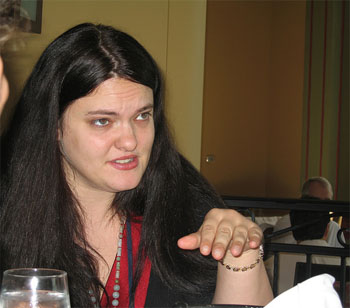
(Photo credit: Ellen Datlow)

BSS #266: Catherynne M. Valente (Download MP3)

This text will be replaced

The Bat Segundo Show: Robert G. Kaiser

Robert G. Kaiser recently appeared on The Bat Segundo Show #264.

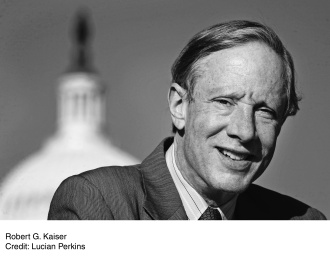
Robert G. Kaiser has worked at the Washington Post since 1963. He is most recently the author of So Damn Much Money: The Triumph of Lobbying and the Corrosion of American Government.

segundo264

Condition of Mr. Segundo: Still waiting for the lobbyists to work out a deal with him.

Author: Robert G. Kaiser

Subjects Discussed: Obama’s first executive order, revolving door bans, Tom Daschle’s recent troubles, “exceptions in extraordinary circumstances,” candidates for office with lobbying backgrounds, Gerald Cassidy, picking a character for a Washington narrative, the birth of the lobbying firm Schlossberg-Cassidy Associates, the Bankruptcy Abuse Prevention and Consumer Protection Act of 2005, Cassidy falling into second place, lobbying problems and the 1994 Republican Revolution, the K Street Project, lobbying and partisan politics, Cassidy’s lobbying style vs. Abramoff’s lobbying style, Tom DeLay, safe seats, John Lewis, Richard Lugar, Chuck Schumer, the likelihood of an equitable earmarking system, Columbia’s early lobbying efforts with the chemistry lab, peer review, attempting to sort out differing accounts concerning the Tufts Nutrition Center, Jean Meyer, Edward Bernays and why his influential essay, “The Engineering of Consent,” took a few decades to catch on in Capitol Hill, Joe McGinnis’s The Selling of the President, Roger Ailes, the abandonment of objective reality over the past 45 years, the Jim Wright ethics investigation and whether or not Cassidy was culpable in Wright’s downfall, Newt Gingrich’s rise, and the potential for a return to the comparatively virtuous pre-Nixon Congress.

EXCERPT FROM SHOW:

kaiserCorrespondent: You also bring up one moment in the book, where you depict Senator John Stennis — the man, of course, who wrote one of the first Senate ethics codes; in fact, the first Senate ethics code. And who had not raised more than $5,000 for all of his campaigns in the past. Now here he is up for reelection in 1982. And he needs to raise $2 million. He is now forced to accept this devil’s bargain. This leads me to wonder whether, in fact, there is even room for a Sam Rayburn type of Congressman anymore. Whether it’s even possible for someone of any ethical core to be in this deeply ingrained system. If John Stennis can’t do it, then who can?
Kaiser: Well, it’s one of my favorite stories in the book. I’m glad you noticed it. But all these things are complicated. For example, in today’s Congress, in the House, we have 435 members. Probably 200 of them — or even 220 — are in totally safe seats. That is to say, they can win reelection without campaigning at all probably. Or very minimally. And that’s because of the impact of, now, two generations of very aggressive gerrymandering. We call it redrawing of the districts and state legislatures every ten years after the census is done, in which both parties have accepted the same rule of thumb that the ideal outcome is to maximize the number of safe seats for our side and minimize them for the other side. You remember this episode in Texas, which actually lead to DeLay’s downfall, when he overplayed his hand on this subject and got the Texas legislature as soon as it was under Republican control to add four more Republican seats from Texas. Which he got away with initially. But he eventually got indicted for it. And that, I think, was the beginning of the end for DeLay.

Anyhow, there are opportunities because of these safe seats for people who don’t raise any money. And they don’t participate in the corrupt system at all. Which is an interesting footnote. It just means that a large portion of members are exempt from the usual pains and tribulations of trying to raise all this money. Not true in the Senate, where everybody is theoretically more vulnerable in a way. They all try and raise the dough.

Correspondent: But if there are so many safe seats, is it possible that there could be some sort of Sam Rayburn type in a safe seat? Someone who refuses to, of course, accept any money. Pays his own way, as Rayburn did.

Kaiser: John Lewis of Atlanta. The great leader of the civil rights movement and fascinating figure, who I know slightly. I heard him preach on Sunday before the inauguration in a black church in Washington, which I just went to by chance. I didn’t realize he was going to be preaching there. He gave a remarkable presentation. But John Lewis has a very safe seat in parts of Atlanta. He’s a revered figure. I have no idea how much he raises for his elections. I should probably check that out. But Lewis is a good example of a distinguished citizen in Congress who is not corrupted by this system, as far as I know. And there are people who build up a kind of invincible status. Richard Lugar of Indiana would be a really good example of this. Lugar: former mayor of Indianapolis, Rhodes Scholar, good citizen. Conservative Republican. Nixon Republican originally when he came to town in the 70s. Lugar wins reelection, as he did this time, by huge majorities and doesn’t have to do any bad stuff, I don’t think, to raise money. There are a number of such figures who could fulfill your definition, I think, of a Sam Rayburn-like independent man. But they are the exceptions certainly.

BSS #264: Robert G. Kaiser (Download MP3)

This text will be replaced

The Bat Segundo Show: Nick Antosca

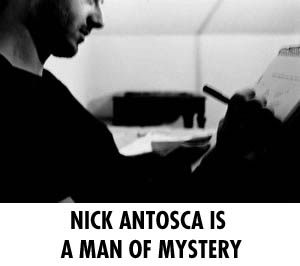
Nick Antosca recently appeared on The Bat Segundo Show #263.

Nick Antosca is most recently the author of Midnight Picnic.

segundo263

Condition of Mr. Segundo: Terrified about what his ex-wife does during a midnight picnic.

Author: Nick Antosca

Subjects Discussed: The lack of picnics in Midnight Picnic, Jackie Corley’s confusion with the title, Midnight Picnic vs. Midnight Panic, dream logic, mouth birth dogs, Mr. Antosca’s lifelong dog trauma, writing about dogs being hurt, being self-conscious about writing, Charlie Huston, interviewers who use the phrase “blown your load” in relation to Mr. Antosca, Ned Vizzini, drinking as the natural fatal flaw for a homicidal maniac, short sentences, word counts and trauma, James Salter and ghost stories, the two year waiting period before assessing, unconventional chapter headings, the geography of the afterlife, tumbling into other memories, smell of the living vs. smell of the dead, the relationship between lap dancing and rigor mortis, dining experiences at Roy Rogers restaurants, New Orleans, the reality of midgets, high school deaths, “Appalachian monsters” in Florida, breastbone descriptions, razors with frightening blades, blocking, 2666, on being self-conscious and subconscious while writing, “You can’t take the dogs out of Nick Antosca,” science and melting pit bulls in an Antosca screenplay from the early years, the last-minute publishing shift from Impetus to Word Riot, the Clinton and Obama of publishers (but no Bush apparently), the publishing apocalypse, working a day job, writing for the now defunct New York Sun books section, demand for Antosca’s work, and anxiety.

EXCERPT FROM SHOW:

antosca2

Correspondent: Do you have any personal experience of putting your mouth around a dog? How did this come about? It’s rather extraordinary. There are four of them.

Antosca: No, I can’t. I don’t know where that came from. I think the idea was just that there had to be something pretty disturbing that this kid wanted to do to the man who had killed him. Well, I don’t want to describe what the mouth birth dogs are too much for people who haven’t read the book. But it’s supposed to be a shocking moment in the book, and kind of disgusting and disturbing.

Correspondent: Enthralling, I would say.

Antosca: Yeah.

Correspondent: But then that’s just me.

Antosca: I hope it’s pretty memorable. But I don’t know. I can’t remember where the idea of them came from. I think I saw a picture of a giant Continental Rabbit somewhere. I think these are rabbits. They’re as big as dogs. And they’re sort of cute and sort of disgusting. And for some reason, I pictured that as half-rabbit and half-dog, and that became this image. Like I said, with this book, I was willing — like I encouraged myself to just follow imagery where it would lead.

Correspondent: Is there something in the obvious spelling scenario? In which dog spells “god” backwards. That this might be your inverted way of coming to terms with a potential deity. And the fact that it comes from the mouth as opposed to from the skies. I mean, I don’t know. You tell me here.

Antosca: Well…

Correspondent: Are you a religious man, Nick?

Antosca: No, not really.

Correspondent: Okay. So the dog is your religion then?

Antosca: Well, the idea of the dog god mouth is a pretty fascinating question. I don’t think that my interest in dogs has anything to do with concern about god. Or whether god exists. I think it’s more a concern about possibly being betrayed by something that you trust, aren’t close to, and think is not ever going to harm you. You think of a kid and his dog as a pure relationship. And the idea that it might turn on you and shred you is sort of compelling.

Correspondent: It certainly is.

Antosca: The idea that you might still feel an allegiance to that animal. It’s almost a cliche. The idea of the kid being attacked by the dog when the parents want to put the dog to sleep. “No! No! Don’t do that!” Which I think is what I remember from when I was five or six. When that happened.

(Photo credit: Sonja Ostrow)

BSS #263: Nick Antosca (Download MP3)

This text will be replaced