The Mysterious Origins of “Oh Snap!”

Is it possible that the 1910 children’s novel, The Bobbsey Twins at School, was a prescient influence on hip-hop?

“Oh, Snap! Snap!” cried Freddie. “Don’t go there!” But Snap kept on, and Freddie, afraid lest his pet dog be bitten, caught up a stone and threw it at the place.

Probably not. But “Oh snap!” and “Don’t go there!” were clearly phrases that begged to be loosened into the English language. And they both made their way into the American vernacular through hip-hop.

This article concerns “Oh snap!” — that handy phrase which accompanies a moment of consternation or a dutiful dissing. The phrase has seen more frequent use in mainstream media, and, in 2009, it is just about at the point where “My bad” was in 2004. Here again, we have two words that linger in popular culture well past their shelf life, a term that once populated the lingua franca of a minority subculture and that is now loosened from the lips of Caucasians who think they are in the know.

But where did “Oh snap!” came from? And why did it take two decades to establish itself prominently in mainstream culture?

I’ve become more than a tad obsessed with these questions, but I have developed a working theory.

Now if you’re interested in slang, you can take one of two positions. Get excited by it or get smug about it. The Indianapolis Monthly‘s Cara McDonald (writing in July 2004, no less, well after “Oh snap!” was in popular use) chose the former:

She sparkles and burbles, all oh my goshes and oh my goodnesses; when she forgets where she put her tracks and shouts, “Oh, snap!” — presumably a euphemism for “shit.”

And here’s what the linguists have to say. We are informed unhelpfully by The New Partridge Dictionary of Slang and Unconventional English that “oh snap!” was “used as a mild oath.” But there appears to be no effort by Connie Elbe, the cited linguist who “discovered” the phrase in October 2002 and published the results as editor of UNC-CH Campus Slang, to track down its cultural references. (Elbe, incidentally, was thanked in the acknowledgments section in Tom Wolfe’s I Am Charlotte Simmons, which may explain why that novel’s campus patois is out-of-touch.)

In Alonzo Westbrook’s 2002 book, Hip Hoptionary, he identifies “Oh, snap” as either an “epiphany; to understand something, like a light turned on” or “a gesture where one literally snaps a finger after a statement to emphasize a point, like the period at the end of a sentence.”

But the first time I heard “Oh snap!” was in Biz Markie’s “Just a Friend.” (The usage is best observed in the above video at the 4:12 mark, so that one can get a sense of the timing preceding the “Oh snap!” moment.) This was in 1989. And “Oh snap!” was quickly picked up by many of the high school punkasses — including me — who were likewise amused by Markie’s deliberately awful singing.

Markie, however, was hardly the first. The earliest written trace I can find of “Oh snap!” is in William Hauck Watkins and Eric N. Franklin’s 1984 volume, Breakdance!:

I said, “Oh, snap, what’s that?” He said, “It’s the new style called breaking.” I said, “It looks like you’re going to break your body.”

Breaking did not quite survive. But “Oh snap!” certainly did. A hip-hop group by the name of Latin Empire used “Oh snap!” in a Spring 1991 interview published in Centro 3, 2. The first USENET use of the phrase was, not surprisingly, on November 7, 1997 on rec.music.hip-hop. Even a rock fan by the name of Dwayne Lutchna used the phrase in a This Week in Rock segment that appeared on MTV. “Oh snap!” was making the rounds.

But it didn’t entirely stick. At least not in the way that it has today. For a while, it looked as if the phrase would disappear into the crevices with “Hells yeah!” and “getting jiggy with it.” But then comedians like Tracy Morgan and Dave Chappelle began using “Oh snap!” in their routines. Then it became fair game for everybody. (It is now used regularly by Jon Stewart on The Daily Show.)

The big question is where Markie and his friends got the tip from. Is it possible that the phrase came from England?

From Norman Harrison’s Once a Miner (1954) — a hard depiction of Southeast English mining:

Oh, snap. All right; you’d better get yours if you want.

We see the phrase also in the 1994 film, Tom and Viv, which is interesting, considering that the film is a period piece. “Oh snap. I was in Lagos,” says Maurice Haigh-Wood.

From Peter Ackroyd’s novel, First Light (1996):

“Tell me,” he added, more comfortably, “what are you drinking?”

“Gin and it.”

“Oh snap. So am I. Isn’t it lovely?”

So we see a British usage of “Oh snap!” from four decades before that is quite similar to the American usage of “Oh snap!” in the 1980s and 1990s.

If “Oh snap!” did come across the Atlantic and make its way into the hip-hop community, one wonders how this happened. Was there some seminal moment in which “Oh snap!” was unfurled at a breakdancing showdown? A moment in which all witnessing the usage of “Oh snap!” felt compelled to remember it and cite it to their friends? Did “Oh snap!” serve as a response to “Snap out of it,” which was possibly considered a less definitive term?

These are questions that require an investigation in which it may not be possible to find the missing link. But assuming that “Oh snap!” crossed the Atlantic, the American and British forms prove that a phrase can evolve in two different nations and adopt an attitude specific to each, even when the phrase conveys the same meaning.
New Policies

For all future posts, whenever I make a claim, I plan on emboldening my efforts to get related individuals on the record.

Likewise, because there has been a slight uptick in comments left by people pretending to be other people, or people who cannot be bothered to leave real names (or, if they choose to remain anonymous, specific blogs, websites, or email addresses where they can be contacted), as of today, I shall enact a new policy.

All commenters must now leave a real name or, if they wish to remain anonymous, a website or an email address where they can be contacted. (I will, of course, keep your email address confidential. But if you can’t be bothered to return an email, or the email attached to your comment bounces, then your comment will not appear on this website.)

This does not mean that I am curtailing my satirical assaults. Nor am I attempting to enact censorship. My feeling is that everyone needs to be held accountable for what they say, and that goes for me too.

You can say anything you want about me or what I write, and I will continue to approve your comments, as I have in the past. But since I have put my name on everything I have ever written for this website, it seems only reasonable that commenters are held to the same standard. Getting into arguments with individuals who want nothing more than to fan the flames and who do not possess a set of virtues that they are simultaneously standing for is a waste of time, and it certainly doesn’t promote healthy and spirited discussion. So let’s all try to do better.

In Which I Talk with Tanenhaus

On Wednesday night, Sam Tanenhaus and I talked. I was in the middle of arguing with my colleague Levi Asher about the future of literary coverage, saying something to him about a priori arguments in relation to rumors about The Washington Post Book World. A soft voice behind us asked, “Book World?” It was Tanenhaus.

I must give Tanenhaus credit. It was a particularly freezing evening and Tanenhaus clearly wanted to go home. But he did take the time out to chit-chat.

Our discussion was fiery but civil. I had blunt words to say to him about the New York Times Book Review‘s paucity of translated fiction coverage and its poor attention to genre — particularly science fiction. (I suggested a replacement name for Dave Itzkoff when he asked.) He had blunt words to say to me about the harsh language directed his way on this blog — and there has been, much to my present shock, quite a lot of posts devoted to Tanenhaus. But any man who can tell me to my face that he doesn’t care for my work, without a cowardly online pseudonym or an entirely batshit perspective, can’t be all bad. And I certainly took no offense to anything he said.

I had approached Tanenhaus earlier in the evening, just after he had concluded a talk at Barnes & Noble. I came to him pointing out that I merely had one question, that there would be no ambush journalism on my part, and that I simply hoped he could clarify the record. Why had seven of the top ten books of 2008 been granted to Knopf? He did not know who I was initially. It could have been the beard. And while he grew visibly agitated when I told him I was Ed Champion, he did stick around a bit to answer my question.

He indicated to me that the books selection process was publisher-blind and suggested that “the readers don’t really care.” (He seemed to be insinuating that the NYTBR only cared about the “common reader.”) In a scenario in which one conglomerate dominated the top ten monopoly (in 2008, nine of the ten titles had gone to Random House), Tanenhaus was strongly against the idea of offering a level playing field in which a few titles from another publisher might fill in some of the slots. “We can’t really say to ourselves which one doesn’t fit,” said Tanenhaus. Although he did insinuate that “seven Graywolfs” would also be great, if the selection process had veered down that direction.

But what of a hypothetical alternative list that involved splitting up the top ten books among multiple publishers? Or one that considered genre? This was, in Tanenhaus’s perspective, reflective of “commerce at the center.”

I then pointed out to Tanenhaus that commerce was perhaps more “at the center” when the NYTBR placed 90% of its top ten list with one conglomerate, and noted that other newspapers had different criteria in place to present such a scenario from happening. Tanenhaus tsk-tsked this, before another guy, who looked to be either a friend or a colleague, came to rescue Tanenhaus and extract him from my inquiries.

I returned to my amigos, and we began shooting the shit about all this. I believe Eric was the first to point the predictability of Tanenhaus’s answers. But one had to try. Tanenhaus then came rushing by, looking for his coat. I then introduced Tanenhaus to Levi, notably responsible for the excellent “Reviewing the Review” weekly series. I asked Tanenhaus if he had found any of Levi’s observations helpful. He said no.

And so we left to grab drinks. I had joked that Tanenhaus’s inflexibility to other perspectives made him the “George W. Bush of the literary world” and suggested that perhaps the NYTBR “needed an Obama” to restore coverage back to the heights of John Leonard. The group then suggested that I was that Obama, and I responded that they couldn’t possibly be serious.

As it turned out, my Bush comparison was also wrong. For Tanenhaus did talk with us about twenty minutes later. He did express some regret that he hadn’t given enough space to translated titles, but he had no answers as to how or when he would do this in the future. The sense I got was that Tanenhaus was completely reliant on his editors’ respective judgments and that this judgment permitted him to do what he needed to do in an executive capacity, but prevented him from plunging first-hand into some of today’s realities. Levi brought up the rather unfunny offerings to be found in The Back Page. And Tanenhaus suggested to us that we should send him ideas on how to improve it. The Back Page was largely freelance.

Ideas? Freelance? I know damn well that there’s no way in hell that I will ever write for The New York Times Book Review, but I decided to present a mock hypothetical. What if I were to pitch him ideas? He suggested that my journalism was “irresponsible” and “defamatory.” I asked him when he had last read my blog, and he indicated it had been many years. Well, how could he be certain that everything I was writing was “irresponsible” and “defamatory?” Another editor had told him. I mentioned the 1,600 word response to Adam Sternbergh’s review of David Denby’s Snark.

Tanenhaus was stunned to learn that I had been published in other newspapers. There was a tinge of fury flushing through his face upon hearing this news, but Tanenhaus did keep things civilized. He insisted that my “defamations” were not up to the New York Times‘s “standards.” I had the feeling he had been wanting to say much of this for some time and, given that I had zinged him here multiple times, it seemed only fair to shut up and let him deliver his apparent vitriol. I pointed out that I went after all targets, and Levi and I both observed that these posts were largely satirical. Levi defended me and compared my work to Paul Krassner. A kind and humbling comparison, but I doubted that Tanenhaus had much appreciation for a yippy.

“Ad hominem” was the key term on Tanenhaus’s mind. And I pointed out that Leon Wieseltier’s review of Nicholson Baker’s Checkpoint was just as ad hominem as anything I had ever written in calling Baker’s novel “a scummy little book.” Ah, Tanenhaus responded, but Wieseltier was attacking the book, not the person. (I probably should have said to Tanenhaus that the definition of ad hominem involves attacking the object of the argument instead of making an effort to discredit it. Wieseltier calling Baker’s novel “a scummy little book” is just as low and pointless, a missed opportunity to explain to the reader why it doesn’t hold up as a novel.) This was where Tanenhaus remained stubborn. I had pointed out that Wieseltier’s aside about liberals vs. conservatives had very little to do with the quality of the book. Tanenhaus flatly declared that it was a tight argument.

“You don’t have to like what I do. I don’t have to like what you do,” said Tanenhaus. Fair enough. But this seemed absurd. Couldn’t we agree on a few common points?

He was particularly fixated on my “The Knopf Times Book Review” post, in which I had proposed that The New York Times Book Review had been bought and paid for by Knopf. But the words I wrote, while quite blistering, were satirical in the end. And beneath the vituperation was the telltale entreaty to Tanenhaus that he should exercise more judgment in his selection process if anyone wanted to take the New York Times Book Review seriously, with Dwight Garner’s recent work as daily book reviewer held up as a more virtuous model. (Not unlike Tanenhaus’s entreaty to me that I should stop tossing around ad hominem bombs. But Tanenhaus has admired Tom Wolfe and Joe Queenan, both writers who specialize in ad hominem. There were, of course, double standards on this question.)

In the end, I’m glad that Tanenhaus and I finally got to chat a bit. No, we’re not going to be BFF anytime soon. And I will continue to criticize the NYTBR‘s inadequacies, particularly when Tanenhaus and his team continue to perform grave injustices to covering translated fiction, debut fiction, graphic novels, and genre. But we were able to come together and have a civil disagreement and an exchange of views, and clear up a few points. That, in the end, is a healthy and constructive form of communication.

[UPDATE: Levi Asher has posted his report of the events.]

The “Save Gary Coleman” Petition!

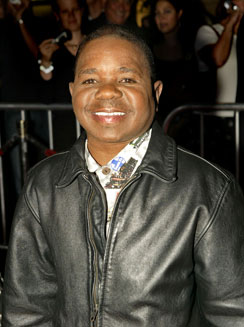
Even though I have yet to hear back from Marcus Brauchli concerning the future of the Washington Post‘s book coverage, and not a single journalist or NBCC board member has confirmed a specific decision, I believe that the time has come to blame what nobody really knows on actor Gary Coleman.

Coleman, who once ran for California governor and is therefore thoroughly qualified to know about the Washington Post‘s internal decisions, needs to be saved. The information needs to be extracted from Coleman’s seerlike skull. And the action needs to happen now. Before Friday, January 23rd. By email. Because we all know how email gets lost and caught in spam filters. But a campaign like this sure beats sitting around and speculating. One suspects that Coleman can handle the pressure. And besides, everybody needs a scapegoat. And perhaps Coleman knows something that not even Marcus Brauchli knows. Let us always consider our strangest hunches.

Here is the plea to Gary Coleman and his editors:

“As chronic speculators and worrywarts, we write to implore you to go to Washington, DC, and kick a few asses. There are bloggers writing in Terre Haute basements who actually love what they do, and they are apparently being read and hired by some newspapers. The only solution is to beat a few people around and prevent these upstart bloggers from having the same prestige and influence of newspapers. As book critics, we have earned the right to write reviews that we believe enriches culture. Yes, it may read like the equivalent of castor oil sometimes. But it is our God-given right to pollute books section with bland and humorless drivel.

“We believe that you have important information about the newspaper business contained within your head, and that you have been rather selfish about sharing your vital data with the elitist book critics. We therefore wish to save you, so that we can save ourselves. The anemic discussion of books is vital to an elitist society. ‘James Wood defected to the New Yorker! What the fuck are we going to do?’ wrote an editor of The New Republic last year. And it is safe to say that since we do not know what the fuck we are going to do, then you will likely be in a better position to do something about it. We checked in our spines with our coats at last night’s book party.

“We call on you to preserve the Washington Post‘s books coverage, and to give it all to the dullest critics now working in America. We also call on you to ensure that not a single idiosyncratic voice or blogger will ever write for its pages again.”

(Photo: Eek! Online. For more petitions of the “Eek!” variety, go here.)

Episode XLIV: A New Hope

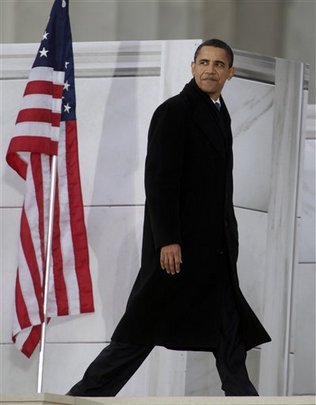
obamapresToday is the beginning of a new epoch. The slate is clean, the road ahead is paved with shrapnel, and the body language between the Obamas and the Bushes just before their preinaugural coffee is wonderfully comical. While I retain my hearty skepticism about politics, I can say, without reservation, that I am very proud to be an American right now. The last eight years nearly destroyed my faith in government, transformed me into something of a fiery curmudgeon in matters pertaining to politics, and made me wonder if we could ever set this country straight. But this morning, upon seeing Obama walk into the White House, there was one overwhelming and seemingly inconceivable thought: My god, this man will be our President.

Let us hope that he will not blow it. Let us also hope that the American people will live up to the tenets of the Constitution and consider every decision made by President Obama, who possesses every sign that he will be a first-class communicator. I believe that President Obama will be transparent about his actions and atone for the last guy, who was secretive and uncooperative and will almost certainly have a lonely existence for the rest of his days. It is a faith that I place today and that may be discarded tomorrow, for I will be watching the new guy like a hawk. Nevertheless, I can’t even begin to describe what the climate shift means. We have moved from an obdurate-minded autocrat to a man who may have ushered in a new political era of national concert and civil disagreement.

My nation has snapped out of an eight-year nightmare. Let us hope that this will translate into a new age of maturity and civilization. Let us learn from our mistakes and emerge stronger than we were before.