In what may be one of the oddest cinematic adaptations of all time, First Showing’s Alex Billington reports that Run Lola Run/The International director Tom Tykwer is hard at work attempting to adapt David Mitchell’s imposing novel, Cloud Atlas, for the big screen. He has enlisted the Wachowski Brothers for help. While Mr. Billington seems to possess an unfamiliarity with Michell’s great novel, asking Tykwer “which of the six he would be focusing on” (which, uh, sort of defeats the purpose), what’s interesting here is that Tykwer, who has written all of the scripts for his films, is even trying to adapt what is possibly an unfilmable novel. Whether or not Tykwer has asked the Wachowski brothers to read several books before reading Mitchell’s novel and getting to work on the script remains unknown. (Hat tip: mdash)
Author / Edward Champion

WaPo Book World: History Repeats Itself
To jump off from the previous post, in 1973, Washington Post cut the standalone Book World section, leaving at the time only The New York Times Book Review and The Los Angeles Times Book Review as the only standalone sections published in this country.
Does this sound familiar? The parallels increase once you plunge into Ronald Smothers’s New York Times 1973 article on the initial folding. The article is behind a paywall, but there are some interesting facts: (1) The section was closed because of the high cost of paper and because the tabloid format was a waste of space. (2) If you think the current dilemma of 12 tabloid pages is bad, consider that the 1973 cut reduced books coverage to a four-page pullout in the Sunday Style section. (3) Carol Nemeyer, then the staff director of the Association of American Publishers, is quoted: “a danger signal to publishers who see the outlets for advertising and media reviews diminishing.”
And of course, the article contains much of the same arguments. Former Book World editor Byron Dobell — perhaps the Steve Wasserman of his time — noted, “A book review supplement should not have to pay for itself in advertising any more than a sports section should.” In November 1973, then Book World editor William McPherson disseminated a letter, reading, “These are parlous times….Will the books that most of us hear about be the major selections of the major book clubs, the highly touted bestsellers, what George Plimpton is advertising on television, and certain sensational items like The Sensuous Woman?”
Now keep in mind that all this was occurring when there weren’t any of those pesky bloggers banging out diatribes in Terre Haute basements.
Book World, as we all know, was revived as a standalone section in the early 1980s. And in an era of Kindles, G1s, and iPhones, what’s not to suggest that Book World won’t emerge yet again as a standalone section in a new format?
I get very well that the Jane Ciabattaris of the world are terrified of the present. But fear and desperate anxiety has rarely solved anything. Instead of ranting and raving about doom and gloom, and starting meaningless email campaigns, it might help to be more constructive and pro-active about current realities. Yes, Book World has taken a hit. But it’s not nearly as severe as the one leveled in 1973. Yes, you won’t see a standalone section anymore. But what about the hundreds of reviews that are still going to be published this year?
Literary journalism isn’t going to go away if we keep fighting for it, but we must consider the present realities. Hysteria certainly didn’t work for Book World in the 1970s. But adjustment and reaching out to readers did. Let us learn from the lessons of history. This time, we even have a better way of getting the word out.
[RELATED: Kelly Burdick has some interesting ideas over at Moby Lives.]
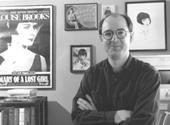
Thomas Gladysz Laid Off from Booksmith
I have learned that Thomas Gladysz, the events coordinator for the now less wonderful San Francisco bookstore Booksmith, has been let go by new owners Christin Evans and Praveen Madan. No explanation given, but presumably it’s “the economy.” Thomas had been at the Booksmith for 21 years, and the man had events coordination down to a science. Not only was he one of the vital guys who held the Haight’s literary community together, but he was always very kind and courteous — even to loudmouth regulars like me. One of his many achievements involved organizing and hosting Allen Ginsberg’s last reading — this, when the man was dying. Without Thomas, the bookstore simply won’t be the same. I recognize the need for change in this ever-shifting economy, but getting rid of Thomas is hardly conducive to making a store “an integral part of the neighborhood,” as the smug Chuck Nevius boasted only a few weeks ago. Evans and Madan owe the San Francisco literary community a transparent explanation for this disgraceful move. Canning veterans like Thomas is hardly “building the independent bookstore for the 21st century,” as the Booksmith’s website now boasts. It’s more like lopping off one of the legs that made the bookstore a serious player in the first place. (Rather criminally, there is no mention of this terrible news at SFist or the ostensibly Bay Area-based litblog, Conversational Reading. What a way to stand up for the little guy. For goodness sake, Smokler, can you look into this story?)
Forthcoming Coverage
In addition to a rather enormous roundtable discussion that I have in the works here (author and book to be revealed soon), I should note that I’ll also be reporting on New York Comic Con and Tools of Change. There will be a considerable number of podcasts and written reports. Our Correspondent, who does not require alternating current and is somewhat adventurous, will most certainly not be confined to Podcast Alley, expecting people to come to him. Our Correspondent will be considerably more pro-active, walking the floor, and interviewing numerous figures of interest. But a few sitdown interviews have been scheduled. While most media outlets will be circling like moths around the high-profile lightbulbs, the emphasis at both affairs will be on the people who aren’t getting that kind of attention. If you are attending either event, please tap Our Correspondent on the shoulder and whisper the words, “Tom Spurgeon didn’t return my emails,” if you have something interesting to say. I anticipate being bald and beardless at both conferences, although any number of factors could affect my hair status. So there are no guarantees.