The Bat Segundo Show: Juan José Campanella & Allison Amend II

Juan José Campanella and Allison Amend both appeared on The Bat Segundo Show #331.

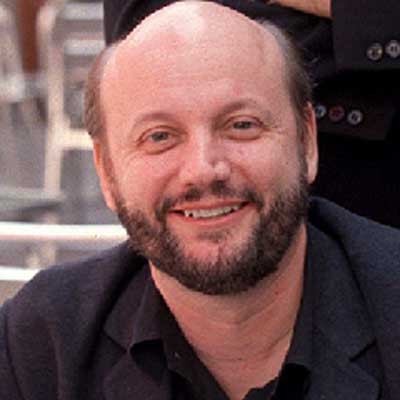
Mr. Campanella is most recently the co-writer and director of The Secret in Their Eyes, which won the Academy Award for Best Foreign Film and opens in theaters on April 16, 2010.

Ms. Amend is most recently the author of Stations West and previously appeared on The Bat Segundo Show #256.
Condition of Mr. Segundo: Searching for Old West secrets in various eyes.

Guests: Juan José Campanella and Allison Amend

Subjects Discussed: Devising a stadium shot that’s a hybrid between Touch of Evil and Black Sunday, stitching shots together through CGI, using Massive Software, contending with how details change between 1974 and 2010, expressive focal lengths, lava lamps that isn’t replaced over decades, hippie actors who are ideal to play authoritarian judges, piles and piles of paper, the myth of the paperless office, creating a train station through CGI, the steps you need to take to ensure that fake walls aren’t seen by daytime courthouse workers, sports statistics, working with novelist Eduardo Sacheri, why novelists are especially suited to screenplay collaboration, philosophical questions about one man having a singular passion, the best way to look for someone who has disappeared, Campanella’s non-cinematic passions, the tormented eight year creative process of turning a story into a novel, how one does the “find an agent dance,” true sex vs. sexy sex, the role of women in early patriarchal America, questions of “commercial appeal,” prejudice against women in the publishing industry, the Stephen Crane principle of writing about what you don’t experience, anonymous peer reviews of novels at university presses, believability and research, Pullman cars, getting accustomed to thinking about a world without present technology, requirements it takes to be a train enthusiast, Stations West‘s early version as a “Forrest Gump novel,” Harvey House restaurants, internal rhyme, Zima, overwriting, pesky adjectives and adverbs, comparative measurements, eugenics and multiculturalism, Lamarckian descriptions and the American melting pot, Pinckney Benedict, historical precedent with character names, mythical bureaucratic forms, delving too much into census records, getting accurate historical dialogue, talking a ton, the strategy of removed narrators, The Jews of Oklahoma, violence and death, unexpected deaths in history and narrative, train accidents, the glee of killing animals in fiction, and the role of the misunderstood in history.

EXCERPTS FROM SHOW:
Correspondent: The wonderful marvelous stadium shot that’s in the middle of this movie — it’s a hybrid of Black Sunday and Touch of Evil.

Campanella: Yes, exactly.

Correspondent: The question. I mean, obviously, I would love to ask you how you did this. But I’m also really curious how you got all these people in the stadium. I mean, I don’t know what your budgetary scenario was.

Campanella: Well, the budget was very low. As you know, it’s a national Argentine movie. So we don’t have millions of dollars to do it. And we did it with the help of a few buttons and chips and stuff.

Correspondent: Aha! The wonderful CGI.

Campanella: Some of it is CGI. Some of it is real. You never know what is what. Because we interspersed it. So it wouldn’t look like a PlayStation game. But also, you know, most of the work was done not in populating the stadium, but in stitching the shots together. To make it look like one continuous take and to make you feel like we were throwing you from a helicopter into the bleachers, and then chasing the guy together with our heroes.

Correspondent: So the actual crowd. How many extras was that?

Campanella: About 300.

Correspondent: And you just basically composited over and over again.

Campanella: Well, no, it’s more involved with that. Because for the regular composition shot — we call it compleción in Spanish — you need to have the camera locked. And the camera’s moving here all the time. It’s a handheld shot with a lot of crazy movement. We’re actually in an avalanche of people at one point. Trying to keep ourselves standing. So no, no, you cannot do the compleción trick. No, it involves the Massive software. It’s called Massive. It was developed for Lord of the Rings. It’s a very involved work. It’s a very crafty work. That’s another thing. People think that if you get the software, you can do it. And it’s not like that. This is the same thing as if I give you a brush and oil paint, and you paint the Mona Lisa. It’s not like that. You need real artists to pull it off.

Correspondent: Got it. It’s not just a bunch of monkey typing Shakespeare. A million monkeys.

Campanella: (laughs) Exactly.

* * *

Correspondent: You clearly did not settle into the Old West or can foods or run a store.

Amend: No.

Correspondent: At least not to my knowledge.

Amend: I did work at a hot dog stand once.

Correspondent: I’m curious how much invention went into this and how much you were concerned about getting verisimilitude with this. The 80 year epoch that you explore.

Amend: I was originally not particularly concerned with either of those things. I had to do a lot of research just to know even what I was dealing with. And then I went randomly to hear E.L. Doctorow speak. The king of setting books in historical settings. And he said, “Oh, you don’t do research. Just make it up. You’ve seen enough TV and watched enough movies. You’ll probably get it right. And if not, someone will tell you.” Which is easy for him to say. Because he has seven paid research assistants. But that was really liberating. And I thought, “You know, I have seen enough old Westerns. And I’ve been to Oklahoma. I’ll just write the book.” And the truth is that there’s no plot twist that hinges on an invention that hadn’t been invented yet. Everything is changeable.

And for a while there in the middle, I was working with the University of Oklahoma Press. And they had it read by a historian of Oklahoma, who tore the book to shreds. He’s like, “Well, I couldn’t get past Page 5. Because the author says the landscape is very arid. And that part of Oklahoma is actually very lush.” Therefore this book can’t be considered as a legitimate work. And I said, “Okay, cross out ‘arid.’ Insert the word ‘lush.'” It doesn’t change the character development.

Correspondent: Who is this guy?

Amend: He was anonymous. Because he was a peer reviewer. Which is part of the problem with university presses.

Correspondent: I noticed that there was a reference to him in the acknowledgments.

Amend: Yes. That’s actually not him. That was a very wonderful editor who subsequently died of stomach cancer. Which is very sad. But the reviewer in question was known as “Mr. Grouchy Pants.” And I do not know who he is. And if he’s hearing this interview, I changed “arid” to “lush.” Most easy.

Correspondent: Did he set up an anonymous email account? Did he telephone you?

Amend: Oh no. It was like a five page report that he sent to the editor, who then forwarded it to me.

Correspondent: With mysterious initials at the end?

Amend: Yeah, I know.

Correspondent: Wow. That’s how they do things over there.

Amend: Yeah. Well, you know, it was a university press. So the procedure there is that everything goes through a peer review. Which makes a lot of sense if you’re publishing a textbook or a piece of scholarship. Less sense…

Correspondent: (laughs) …if you’re publishing a novel.

Amend: If you’re publishing fiction.

Correspondent: Wow.

Amend: Yeah. But they could not seem to get beyond that step.

Correspondent: This is probably the craziest editing process that you’ve gone through, I would guess.

Amend: Oh. For sure. Although my path through the publishing world has been non-traditional. Let’s put it that way.

Correspondent: I mean, I can’t even imagine working with an editor who’s speaking behind — like Charlie’s Angels or something.

Amend: Yeah, it really was. Like a box on the wall.

Correspondent: Behind the red door.

The Bat Segundo Show #331: Juan Jose Campanella & Allison Amend II(Download MP3)

This text will be replaced

The Bat Segundo Show: Julie Klausner

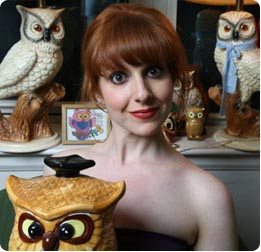
Julie Klausner most recently appeared on The Bat Segundo Show #330. Ms. Klausner is most recently the author of I Don’t Care About Your Band

Condition of Mr. Segundo: Dodging dubious-minded vegans.

Author: Julie Klausner

Subjects Discussed: [List forthcoming]

EXCERPT FROM SHOW:

Correspondent: I actually wanted to ask you of your keen interest in the Muppets.
Klausner: Yes.

Correspondent: You know, I was very interested in this. You have a great affinity for Miss Piggy.

Klausner: Yes.

Correspondent: But you have a problem with the Miss Piggy-Kermit wedding — particularly the line, “What better way could anything end. Hand in hand with a friend.” You insist that this represents Kermit’s preference for guys, or going out with the guys, instead of having a commitment.

Klausner: Sort of. Or that he, in other words, how he feels about her deep in his heart is almost like how he feels about Fozzy.

Correspondent: Yeah, but…

Klausner: That she’s a friend of his more than anything else. And that she’s not special, I guess.

Correspondent: But you’ve developed an entire theory about your life based off of this. And this caused me some confusion.

Klausner: It’s normal, right?

Correspondent: Well, well, I mean, I want to just poke holes in this.

Klausner: Sure. Poke away.

Correspondent: First of all, you have Miss Piggy voiced in a high-pitched tenor by Frank Oz.

Klausner: Frank Oz. The great, the great Frank Oz.

Correspondent: Yes. And Kermit the Frog by Jim Henson.

Klausner: M’hmm. Rest in peace.

Correspondent: Depending upon how obsessive a Muppets fan you talk to, it’s kind of a bromance thing more than a romance thing.

Klausner: Interesting. Interesting.

Correspondent: So therefore your whole childhood theory may very well be….

Klausner: About a man in drag.

Correspondent: …despoiled by what was going on underneath the Muppets.

Klausner: That’s interesting. So let me ask you this. Do you think of Miss Piggy as a man in drag? Or do you think of her as a lady?

Correspondent: I think of her as a wonderfully poly-gender, polysexual queen.

Klausner: That’s a beautiful answer!

Correspondent: But I’m just wondering if this had occurred to you. Because you’ve seen The Muppet Movie so many times.

Klausner: Oh my god. I love the Muppets. And I’m a huge fan of the Muppets. And my interpretation of the relationship between Kermit and Miss Piggy is — I mean, it’s obviously cheeky. I’m not going to go around and be like, “Children shouldn’t watch this filth! It’s going to give them bad ideas!” But I remember identifying with their relationship as being very — it resembled a lot of the dating experiences that I had. Which is that I was always chasing this sort of skinny guy that was more interested in his friends and his projects and his band or his show than me. And it’s interesting this way to think of Miss Piggy as a drag queen. As Frank Oz. Because drag queens are sort of hyperfeminine in that glamorous jewelry and perfume. And fabulous performers. And all of it.

Correspondent: I’ve seen that karate chop deployed in the Castro.

Klausner: I’m sure you have. And you know what? I don’t even know where the target was. But it was probably well deserved.

The Bat Segundo Show #330: Julie Klausner (Download MP3)

This text will be replaced

The Bat Segundo Show: Marisa Meltzer

Marisa Meltzer appeared on The Bat Segundo Show #328. Ms. Meltzer is most recently the author of Girl Power.

Condition of Mr. Segundo: Wondering why Liz Phair is running away.

Author: Marisa Meltzer

Subjects Discussed: [List forthcoming]

EXCERPT FROM SHOW:

Correspondent: You quote Susan Douglas’s Where the Girls Are, in which Douglas notes that the women performing in the 1960s gave voice to all these inner warring selves. But she also notes later in her book — not quoted by you — that this period of music also captured the way that young women were caught between this entrapment and this freedom. Now some of the examples you use in the book, such as Phair, Bikini Kill, riot grrl culture in general, they tend to suggest more of the latter than the former. What do you think is the ultimate distinction between, say, the music of the last twenty years versus almost this second wave reaction to the 1960s?

Meltzer: That’s a hard question. You know, I’m reading her new book right now. And it’s all about the ’90’s and the past few decades. So I’ve been thinking about her a lot, but not so much the ’60’s. I think the distinction is that there’s so much more feminist rhetoric in culture now that, after the ’70’s, you had this postfeminist era — which is not a word that I’m a fan of. But in everything from advertising to music to television, there’s all this lip service and references to feminism and empowerment. But I don’t know how many actual empowerment there is. To me, that’s the difference. I think it’s really easy to think that we’ve come a long way musically or politically because there’s so much feminism around us. But I don’t know if it’s so substantive.

Correspondent: On the other hand, empowerment has been rather easily co-opted by marketing forces.

Meltzer: Yeah.

Correspondent: And so the question of what empowerment actually provides within this music, I suppose, is subject to the fluctuating market forces that may actually abscond with the inherent self-righteous truth of this message.

Meltzer: Yeah. I mean, the word “empower” is also just one of those words that, at this point, I don’t even know if it has much meaning. I feel like it’s been drained away by marketers. So it’s something that I have a lot of suspicion towards.

Correspondent: Yeah. Well, it begs the question of whether a phrase or a word — whether it be “riot grrl,” “girl power,” “lady” as you point out later in the book — if the terms are constantly shifting, then are the terms essentially meaningless? Or must one gravitate towards whatever terms are presently fashionable among young girls, or among culture at large, and just attempt to play this game of leapfrog?

Meltzer: Yeah. I do think that there is a certain amount of leapfrog. I think that there is a lot of fashion. I think of my mother’s generation — the baby boomers. And none of them describe themselves as girls. Whereas all of my friends — many of them in our thirties or even in our forties now — constantly use the word “girl” to describe ourselves, to describe other people, to describe people who are older than us, younger than us. And you see some real generational divides. And then you also see in divisions in terms of culture, where there was “grrl” and “girl power,” and suddenly that was taken over, and you had to start calling everyone “lady.” I hope that those terms don’t seem compulsory. But I do think that there can be a certain amount of feeling — it’s kind of like a password or a code. I think that — especially the term “lady” for the past few years — it was “Oh, you’re going to love this great lady.” Or “Have you seen this lady that’s making cupcakes at the flea market or the pop-up shop?” Or whatever. I think there’s a certain shorthand to it. But is it necessary? No. But I think that if it makes you feel good, if it makes you feel as if you’re in on something.

(Image: Shayla Hason)

The Bat Segundo Show #328: Marisa Meltzer (Download MP3)

This text will be replaced

The Bat Segundo Show: Chang-Rae Lee

Chang-Rae Lee appeared on The Bat Segundo Show #327. Mr. Lee is most recently the author of The Surrendered

Condition of Mr. Segundo: Searching for the middle-ground between “beat” and “sweet.”

Author: Chang-Rae Lee

Subjects Discussed: The similarities and differences between writing in first-person vs. third-person, the advantages of sitting in the god’s seat, infinite choices within sentences, the difficulties in pursuing the “inner life” on the page, becoming imbued by character consciousness, feeling obliterated when writing about the ravages of war, Brian Evenson, Lee’s ongoing fascination with violence, pursuing time and space within sentences, contending with false starts, agonizing over sentences, Lee’s perfectionism in relation to revision and line editing, the reasons behind the two year publishing delay for The Surrendered, the problems with possessing a hard work ethic and producing slow, writing the first chapter in a swift period of time, distrusting prose results, the difficulty of final chapters, writing as a medium for thinking and character development, character names and historical references, the Battle of Solferino, Hector as a Jean-Henri Dunant type, Hector’s creative origins as a guy from Southwest Texas, the town of Iliad, New York, Hector’s design as an immortal, the double-edged sword of persistence, the influence of Cheever and Updike, and the need to mature (as a writer and as a person) before tackling a serious story.

EXCERPT FROM SHOW:

Lee: I’ve always been very conscious of language. It might seem silly of me to say, given all of the things that have happened in my books. I’m not terribly interested in plot. (laughs) I mean, I enjoy it. But I find, for me, the real action in drama is in the play of the sentences and in the play of the words. That’s what draws me through the story too. I mean, in some ways, unless I hear the sentence, I don’t understand what it really means. And even back in school, when I was writing a lot more essays, I would always try to craft it so that it felt like something and it sounded like something to me, rather than just said something. And particularly vis-à-vis the scenes of violence, I wanted — I think in this book and in A Gesture Life — I tried to think to myself, “What was the most, in some ways, unlikely way to describe this?” With perhaps spare and beautiful language that would add a layer of a different kind of horror to the moment. Just the contrast between how not lovely, but how handsome everything seemed and normal, given what was happening.

Correspondent: Well, that’s interesting. It also makes me ask whether you could ever possibly stop work in the middle of a sentence or whether this would actually drive you insane over the course of a day.

Lee: No, no. I can never do that. That’s my problem as a writer. I work the sentences so long. And even the very plain ones that probably don’t seem to anyone to be worth it. (laughs)

Correspondent: A five-word sentence? (laughs)

Lee: (laughs) I work them and work them until each one satisfies certain requirements and follows up the last sentence, and fulfills and promises something about the next one. You know, it’s not a great way to write in some ways. Because at the end of a paragraph, I often feel, “Okay, this is a pretty good paragraph.” But sometimes that paragraph is completely useless. Because it’s irrelevant or it’s not quite looking at the right thing.

Correspondent: Well, let’s expand this to chapter units. These are rather lengthy chapters. And so this also makes me wonder when you knew the chapter was done, if you’re constantly working and crafting these sentences.

Lee: Well, let me tell you. I threw away chapters. I threw away many chapters. They do get done. But often they’re just irrelevant. And this has been my mode in all my novels. (laughs) And it’s a maddening, frustrating mode. Because I do tend to write chapters that are a little bit longer. It just appeals to me somehow. The rhythm that I get in having a little full narrative in each chapter. A fully detailed scene. And again, for me, they’re all like little tiny books.

Correspondent: Well, this also leads me to ask quite naturally, there has to be an advantage in tossing away a chapter. Because you didn’t get it this time. But you may have had a rough idea of what worked. And you know that you can possibly recapture those particular elements and try again and get it right. Or does the process work like that for you?

Lee: No, no. It definitely helps. I mean, the second time around, you’re much more aware. You have to get over the excruciating pain of having thrown away that chapter and feeling as if there were good parts of it, but that I probably can’t use anymore. Because the whole thing for me is — again, the whole chapter has to feel that it has a certain kind of rhetorical orchestration. And even a musical orchestration, for me at least, that I hear. And maybe it’s because I grew up writing poetry first. And, in some ways, I was raised by poets as I was learning the craft. And I’m still learning. But I’ve always been attuned to meter and a certain kind of stressing and a certain kind of musicality.

Correspondent: So you cannibalize essentially with the subconscious. With these second attempts. Is that how you might put it? You throw it away. You don’t look at it again. The false starts.

Lee: I’ll sometimes look at them. But again, it’s painful to look at them. Because in and of themselves, they seem okay. And that’s what I tell my writing students. It’s not a matter of writing well ultimately. I mean, that’s not the only matter, right? It has to fulfill all the things that you’ve been writing to up to that moment and connect up in a mysterious way, in an ineffable way, with what you’ve laid down and what you might lay down. So I don’t know. Sometimes I feel as if maybe that’s the way I have to do it. I have to write every novel four times. Not four different novels. But in the process of it. Just kind of work it and work it and work it. And I’m a slow writer too. I’m pretty methodical. I’m not the sort of writer who can jam out 2,000 words and then go back and fix them and be happy with it. So it’s coalmining. (laughs)

(Image: Daniel Hulshizer)

The Bat Segundo Show #327: Chang-Raee Lee (Download MP3)

This text will be replaced