
Why Does Michiko Kakutani Hate Fiction So Much?

The New York Times‘s Michiko Kakutani has rightly earned the wrath of fiction authors for her scathing reviews. But until now, nobody has thought to collect some loosely quantifiable data with which to demonstrate just how much Kakutani hates fiction.

So here’s a breakdown of Kakutani’s last twenty-seven fiction reviews, written between the period of May 2009 and May 2010.

May 11, 2010: Martin Amis’s The Pregnant Widow called “a remarkably tedious new novel.” Verdict? HATED IT (0).

Aprl 28, 2010: “Suffice it to say that the fans of Presumed Innocent who can suspend their disbelief for the first couple of chapters of this follow-up will not be disappointed. ” She also spoils several plot twists contained within Scott Turow’s Innocent. Verdict? HATED IT (0).

April 22, 2010: Sue Miller’s The Lake Shore Limited is declared “her most nuanced and unsentimental novel to date.” Verdict? LIKED IT (1).

April 13, 2010: Yann Martel’s Beatrice and Virgil “is every bit as misconceived and offensive as his earlier book was fetching.” Verdict? HATED IT (0).

March 30, 2010: Of Solar, Kakutani declares the book “ultimately one of the immensely talented Mr. McEwan’s decidedly lesser efforts.” Verdict? HATED IT (with scant positive remarks) (0).

March 9, 2010: On Chang-Rae Lee’s The Surrendered, Kakutani writes, “Mr. Lee writes with such intimate knowledge of his characters’ inner lives and such an understanding of the echoing fallout of war that most readers won’t pause to consider such lapses ” Verdict? LIKED IT (1).

March 2, 2010: In So Much for That, Lionel Shriver “turns this schematic outline into a visceral and deeply affecting story.” Verdict? LIKED IT (1).

February 12, 2010: T.C. Boyle’s Wild Child serves up “dashed-off portraits of pathetic weirdos; curiously, some of the most powerful entries in this volume also deal with frustrated, unhappy people, but people depicted with a mixture of sympathy and skepticism, emotional insight and dagger-sharp wit.” Verdict? MIXED (0.5).

February 7, 2010: Adam Haslett’s Union Atlantic “is a lumpy, disappointing book.” Verdict? HATED IT (0).

February 1, 2010: Of Don DeLillo’s Point Omega, Kakutani writes “there is something suffocating and airless about this entire production.” Verdict? HATED IT (0).

January 28, 2010: Zachary Mason’s The Lost Books of the Odyssey is “an ingeniously Borgesian novel that’s witty, playful, moving and tirelessly inventive.” Verdict? LIKED IT (1).

January 26, 2010: Robert Stone’s Fun with Problems is “a grab-bag collection that’s full of Mr. Stone’s liabilities as a writer, with only a glimpse here and there of his strengths.” Verdict? HATED IT (0).

January 4, 2010: Anne Tyler’s Noah’s Compass “devolves into a predictable and highly contrived tale of one man’s late midlife crisis.” Verdict? HATED IT (0).

December 14, 2009: Norberto Fuentes’s The Autobiography of Fidel Castro is “a fascinating new novel.” Verdict? LIKED IT (1).

November 29, 2009: The stories contained within Alice Munro’s Too Much Happiness “are more nuanced and intriguing than such bald summaries might suggest. And yet the willful melodramatics of these tales make them far cruder than Ms. Munro’s best work.” Verdict? MIXED (0.5).

November 9, 2009: Vladmir Nabokov’s The Original of Laura “will beckon and beguile Nabokov fans” despite being a “fetal rendering of whatever it was that Nabokov held within his imagination.” Verdict? MIXED (0.5).

October 26, 2009: John Irving’s Last Night in Twisted River “evolves into a deeply felt and often moving story,” despite its flaws. Verdict? LIKED IT (but with caution) (1).

October 22, 2009: Kazuo Ishiguro’s Nocturnes “read like heavy-handed O. Henry-esque exercises; they are psychologically obtuse, clumsily plotted and implausibly contrived.” Verdict? HATED IT (0).

October 12, 2009: Jonathan Lethem’s Chronic City is a “tedious, overstuffed novel.” Verdict? HATED IT (0).

September 21, 2009: Audrey Niffenegger’s Symmetry is “an entertaining but not terribly resonant ghost story.” Verdict? LIKED IT (but with caution) (1).

September 14, 2009: With The Year of the Flood, Margaret Atwood “has succeeded in writing a gripping and visceral book that showcases the pure storytelling talents she displayed with such verve in her 2000 novel, The Blind Assassin.” Verdict? LIKED IT (1).

August 31, 2009: E.L. Doctorow’s Homer & Langley “has no Poe-like moral resonance. It’s simply a depressing tale of two shut-ins who withdrew from life to preside over their own ‘kingdom of rubble.'” Verdict? HATED IT (0).

August 27, 2009: With A Gate at the Stairs, Lorrie Moore has “written her most powerful book yet.” Verdict? LIKED IT (1).

August 3, 2009: Thomas Pynchon’s Inherent Vice “feels more like a Classic Comics version of a Pynchon novel than like the thing itself.” Verdict? MIXED (0.5).

July 16, 2009: Stieg Laarson’s The Girl Who Played with Fire “boasts an intricate, puzzlelike story line that attests to Mr. Larsson’s improved plotting abilities.” Verdict? LIKED IT (1).

July 2, 2009: Chimamanda Adichie’s The Thing Around Your Neck is an “affecting collection of stories.” Verdict? LIKED IT (1).

June 29, 2009: Shahriar Mandanipour’s Censoring an Iranian Love Story “leaves the reader with a harrowing sense of what it is like to live in Tehran under the mullahs’ rule.” Verdict? LIKED IT (1).

Based on our point system, over the course of 27 reviews, Michiko Kakutani has awarded 14 positive points to fiction. And when we do the math, we see that Kakutani enjoys fiction about 51.9% of the time.

Is such a high percentage of negative reviews unreasonable? Judging by the Top Reviewers index on Publishers Marketplace, which has tracked reviewers since October 2002, it would appear so. Kakutani is more negative than what is reasonably expected from a professional critic. And if we rank all professional reviewers in order of negativity, we find only five reviewers who have a negativity percentage over 25%.

Out of 46 reviews, 48% of Edward Champion’s reviews are negative.*
Out of 63 reviews, 44% of Charles Taylor’s reviews are negative.
Out of 29 reviews, 38% of Christopher Kelly’s reviews are negative.
Out of 29 reviews, 38% of Ilan Stavans’s reviews are negative.
Out of 38 reviews, 37% of Mike Fischer’s reviews are negative.
Out of 232 reviews, 32% of Bob Hoover’s reviews are negative.
Out of 27 reviews, 30% of Robert Cremins’s reviews are negative.
Out of 28 reviews, 29% of Louisa Thomas’s reviews are negative.
Out of 31 reviews, 29% of Donna Freydkin’s reviews are negative.
Out of 48 reviews, 29% of Clay Reynolds’s reviews are negative.
Out of 26 reviews, 27% of Francine Prose’s reviews are negative.
Out of 27 reviews, 26% of Lorraine Adams’s reviews are negative.
Out of 45 reviews, 27% of Saul Austerlitz’s reviews are negative.
Out of 63 reviews, 27% of Donna Rifkind’s reviews are negative.
Out of 42 reviews, 26% of Robert Braile’s reviews are negative.
Out of 62 reviews, 26% of Kristin Latina’s reviews are negative.

So that’s sixteen reviewers (out of a total of 361) who are miserable enough to award at least a quarter of the books that they review a negative rating. In other words, a mere 4.4% of reviewers have hated more than 25% of the fiction that they write about.

And if we account solely for Kakutani’s fiction reviews in the past twelve months, Kakutani is more negative than any professional reviewer in the past eight years. Kakutani hates 48.1% of the fiction she reads. She barely edges out this odious Ed Champion fellow, who I will certainly be having a talk with later this afternoon.

Or to frame this revelation another way, in the past twelve months, the only reviewer more obnoxious than Edward Champion is Michiko Kakutani.

And when a reviewer is this negative, one must ask one a vital question. Should she continue to be paid to write reviews?

* — Nobody was more alarmed by this percentage than me. While Michael Cader is permitted his estimate, I should point out that there are numerous positive reviews I’ve written he hasn’t counted.
Literary Podcasts

Back in 2005, I prepared a list of literary podcasts. Five years later, the original list has become outdated, with many of the previously listed programs biting the dust. (There were many more that appeared and disappeared, including the Washington Post Book World podcast, which folded with scant notice not long ago. This was too bad. Because Ron Charles hammed it up in a manner all too rare in a mainstream books podcast.) Literary podcasts, while nowhere nearly as abundant as they should be, are still around. And this updated list represents an effort to track any and all podcasts of a literary or books-related bent that are presently being produced.

This list includes podcasts of a books or literary nature that are still putting out new episodes on a regular basis. If a podcast has not put out a fresh installment in the last six months, or if the podcast limits itself (such as an author reading from his book during a set period of time), then I have not included it. I have also excluded comics-oriented podcasts: not because I’m against comics (far from it), but because there are just too many to list. On this subject, I direct all interested listeners to The Comics Podcast Network, which has done a fine job of uniting numerous shows under the same umbrella. I also felt that radio programs that didn’t feature books as a central topic (such as Fresh Air, an all-purpose program that often features authors) shouldn’t be included in this list. The hope is for all books-related podcasts to be collected at one helpful central point.

I should also warn the reader in advance that this list, while inclusive, does contain a few subjective descriptions, particularly in relation to bland mainstream media — a sentiment emerging from my considerable frustrations with the dryness and scarcity of present literary radio. Nevertheless, there are still plenty of good ones to listen to.

If I’ve left anybody out (my apologies), please feel free to note any missing podcasts in the comments, and I’ll be sure to add them to this list. Hopefully, this post will generate a useful nexus.

Author Interviews

The Agony Column: Rick Kleffel doesn’t get nearly enough credit for his considerable archive. He’s been doing this since 2002. More genre-oriented, but there’s some literary folks too.

Arts and Ideas: BBC’s flagship arts program. Includes in-depth interviews and vigorous philosophical debates.

Barnes and Noble Studio: Not quite as dry as most NPR programs, but not really that exciting.

The Bat Segundo Show: My own humble and eccentric podcast based out of New York, which features more than 300 in-depth interviews with the likes of John Updike, David Lynch, Guy Maddin, Marilynne Robinson, and more. New episodes every Friday.

Between the Covers: The National Review‘s John J. Miller talks with authors.

The Biblio File: Often odd but enjoyable interviews from Nigel Beale. Updated intermittently.

The Book Studio: Based in Washington DC, WETA’s Bethanne Patrick features numerous interviews (both audio and video) with contemporary authors.

Book Tour: Not the most compelling interview program. But if you like your interviews without spontaneity, this NPR program’s your best bet.

Bookworm: Michael Silverblatt has been around for a long time, but his interviews are quite thoughtful and a must for any literary enthusiast. New episodes every Thursday. Aired at KCRW.

Lewis Burke Frumkes: Weekly interviews with authors from a guy in New York who’s been around a while.

The Marketplace of Ideas: Colin Marshall’s program (airing in Santa Barbara) features several author interviews pertaining to “books, culture, commerce, and fascinating concepts.”

Morning Media Menu: Galleycat’s Jason Boog interviews authors about the publishing industry.

World Book Club: Produced by the BBC, there’s a new author interview each month. Presented by Harriett Gilbert.

Writers & Company: This CBC podcast (hosted by Eleanor Watchel) features a new author interview every Monday. (Regrettably, podcasts are only archived for four weeks.)

Fiction

Antithesis Predestination: A five volume novel read by J. Daniel Sawyer. “A character-driven espionage thriller that follows the adventures of ten people from different worlds, and their personal obsessions that send them hurtling headlong into history.”

Apostophre Cast: Dry but straightforward biweekly program devoted to contemporary authors reading their work.

Awakenings: “A podcast discussion show that is dedicated to deciphering all things about The Secrets of the Immortal Nicholas Flamel book series by Michael Scott.”

Bound Off: A monthly literary audio magazine featuring new stories from writers.

The Classic Tales with B.J. Harrison: Every week, Harrison (a fan of old time radio dramatizations) reads a classic short story to his audience.

Crimewav: A podcast series hosted by Seth Harwood devoted to reading published crime stories.

The Dark Verse: A prolific podcast devoted to “sharing the strange works of M. Amanuensis Sharkchild with the sole purpose of introducing a unique world of horror and fantasy that will follow you to the visions of your sleep.”

Dunesteef: A nonprofit story forum, focusing mainly on genre.

Escape Pod: A science fiction podcast magazine that features a new short story every week.

Forgotten Classics: This podcast is devoted to authors who have been unfairly neglected by the sands of time. Featuring sample readings and some information on the writers.

Librivox: Hosting a number of podcasts devoted to reading stories.

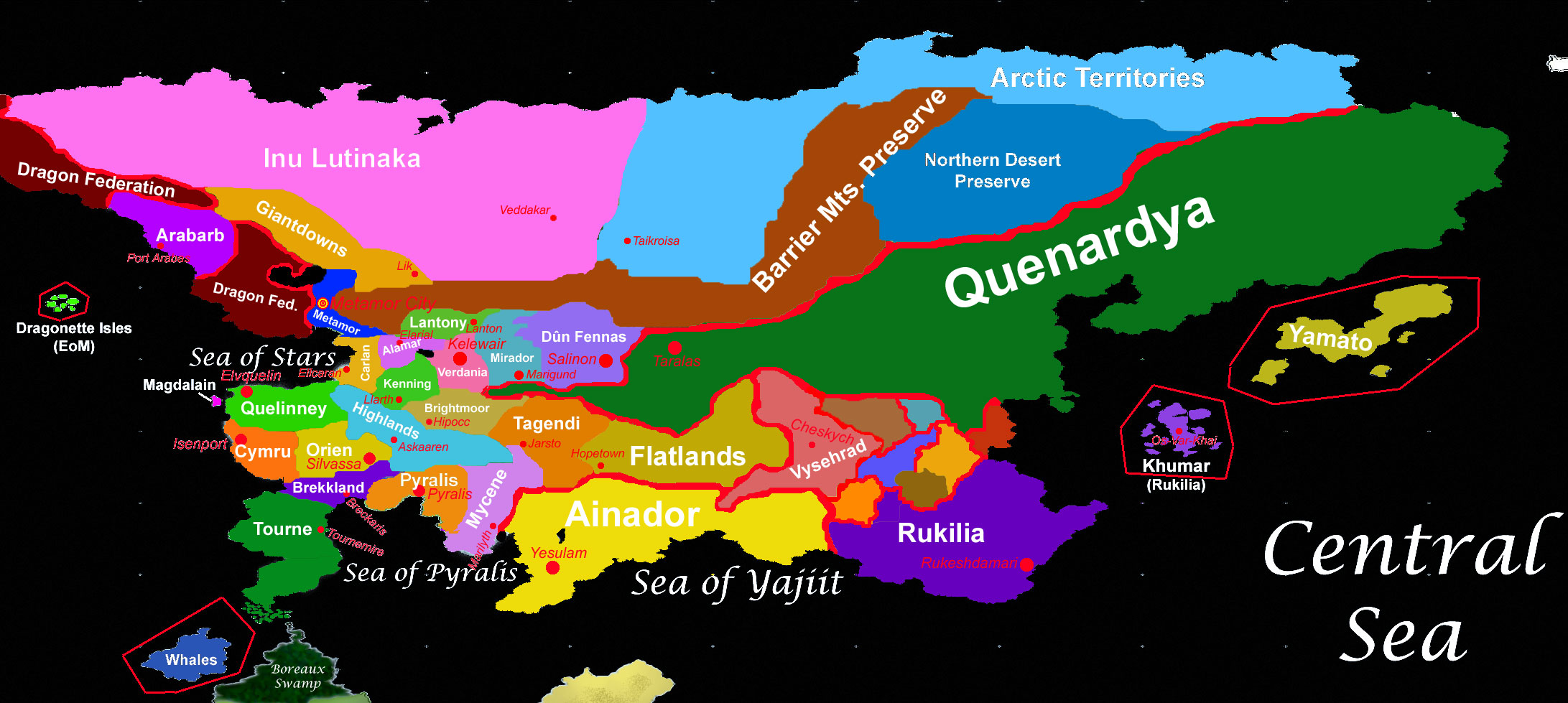
The Metamor City Podcast: An audio fiction series involving stories and novels all centered around the Metamor City universe. The only podcast I know of that has generated a map for its chronicled world.

Miette’s Bedtime Short Story Podcast: Twice each month, Miette reads a bedtime story for her listeners.

New Yorker Fiction: It may have a bland name, but this podcast comes highly recommended for the concept alone. The show features big-name writers discussing stories from other authors each month.

Podcastle: If Pseudopod has the horror niche and Escape Pod has the science fiction niche, Podcastle certainly has the fantasy reading niche.

Psuedopod: Much like Escape Pod, Psuedopod offers a weekly genre offering. But Pseudopod specializes in horror fiction dramatizations.

The Secret World Chronicle: Created by Mercedes Lackey and Steve Libbey, this podcast depicts the Secret World. There’s a helpful master list to keep track.

Selected Shorts: PRI’s award-winning series of short fiction read by the stars of stage and screen. New episodes every Monday.

Writer’s Block: Every Wednesday, the Writer’s Block (based out of San Francisco) features a contemporary author reading a selection from one of her latest books.

General

Authors@Google: Regrettably, Google doesn’t have a central website for its author talks. And I’m not sure if this technically counts as a podcast. But you can sift through the general purpose Talks@Google YouTube page.

The Book Babble Show: A news-oriented podcast that features shows devoted to such topics as online author fanaticism and whether critics have any influence upon reading.

The Book Show: Hosted by Ramona Koval, this startlingly prolific Australian program features new installments on weekdays.

Books on the Nightstand: Unlike some mainstream podcasts confining themselves to soulless corporate boardrooms, Ann Kingman’s wonderful and far-ranging podcast features festival reports, review roundups, and other segments, providing a disparate mix for literary lovers.

Free Library Podcast: The Free Library of Philadelphia permits listeners who can’t make it to author events to listen to the talks.

The Guardian Books Podcast: A very solid offering of lively books banter that demonstrates the great disparity between mainstream literary coverage in the UK and the States.

New York Review of Books: Extremely intermittent podcast featuring some conversations.

The New York Times Book Review Podcast: Every Friday, for fifteen minutes, the corporate yesman Sam Tanenhaus manages to take all the life out of books.

NPR Books Podcast: This isn’t so much a podcast proper, as it is a depository for recent NPR books-related segments.

Slate’s Audio Book Club: This mainstream podcast has made many of my literary friends angry due to the low quality of discourse. But it is included here because Stephen Metcalf, who cannot be faulted for trying, certainly does the best he can to contend with egotistical nincompoops.

The Writer’s Almanac: Garrison Keillor tends to put most people under the age of fifty to sleep, but his daily five minute collection of biographical notes and other miscellany can contain a few interesting morsels.

Genre

Library of the Living Dead: A podcast devoted to all things zombie-related, which includes fiction.

Starship Sofa: A magazine program devoted to science fiction.

Tor Tor includes two podcasts for science fiction fans: Fiction with Mur Lafferty and The Geek’s Guide to the Galaxy.

Poetry

Classic Poetry Aloud: This independently produced podcast (Author unknown: “Who I am is not important. The point is the poetry.”) gives the Poetry Foundation a run for its money with nearly 550 poems available for your listening pleasure.

The Joe Milford Poetry Show: Features readings and interviews with acclaimed and established poets.

Poetry Off the Shelf: Produced by the Poetry Foundation’s Curtis Fox, this podcast features readings, interviews, and numerous other angles pertaining to poetry.

Poem of the Day: Also from the Poetry Foundation. A new poem each day. Thankfully not as soporific as Garrison Keillor.

Topical

Craftlit: A fiction reading podcast with a slightly different hook: reading directed towards those who like to craft (or knit).

H.P. Lovecraft Literary Podcast: Hosted by Chad Fifer & Chris Lackey, this ambitious podcast tackles a new Lovecraft story each week.

Imprint: A Twilight-specific podcast that discusses “the latest developments in the Twilight fandom, along with exceptional literary analysis.”

Mister Ron’s Basement II: The only books-related podcast I know of which is in the four digits. This podcast specializes in public domain writers, with an emphasis on humor.

Mugglecast: J.K. Rowling may have stopped writing Harry Potter novels, but this biweekly podcast lives on. Nearly 200 episodes have been posted since 2005.

Read It and Weep: Not entirely books-related, but it does have a fun angle. This podcast is devoted to discussing terrible books, movies, and television.

Twilighters Anonymous: If you like Stephenie Meyer, this is the podcast for you. Some 92 episodes to date have aired, many discussing extremely specific aspects of the Twilight universe.

Vox Tablet: Hosted by Sara Ivry, this podcast — often featuring Jewish writers — is a weekly audio report.

Writing

The Dead Robots’ Society Podcast: By aspiring writers, for aspiring writers.

Odyssey SF/F Writing Workshop Podcasts: Intermittent but valuable lectures from numerous SF/F writers. Including Jeff VanderMeer, Nancy Kress, Jack Ketchum, and more.

Writing Excuses: A fifteen minute weekly podcast that discuss numerous issues pertaining to writing.

The Writing Show: One of the older podcasts (it’s been around since 2005) devoted to exchanging “information and inspiration for writers of all kinds.”

The Bat Segundo Show: Julie Orringer

Julie Orringer appeared on The Bat Segundo Show #334. Ms. Orringer is most recently the author of The Invisible Bridge.

Condition of Mr. Segundo: Bridging the gap between Paris and Budapest.

Author: Julie Orringer

Subjects Discussed: [List forthcoming]

EXCERPT FROM SHOW:

Correspondent: You’re balancing a 200,000 word manuscript, I’m guessing.

Orringer: Yeah, that’s pretty accurate.

Correspondent: The thing I actually wanted to talk to you about in terms of revision. I noticed that you were very careful to use words like “panchromium” and “circlet” and “lemniscate.”

Orringer: That one’s stolen directly from Nabokov.

Correspondent: Oh really? Yeah.

Orringer: Yeah. From Lake Lemniscate in Lolita.*

Correspondent: That’s right. And then “laxard,” which I think is a neologism on your part.

Orringer: It is, I’m afraid.

Correspondent: Yeah. But the thing that interested me about the vocabulary in this book is that you were very careful to ensure that you didn’t use the same word multiple times, but also use a word that wasn’t the ultimate ten-center that sticks out like a sore thumb. I want to know how you agonized to get that balance. The lexical balance here.

Orringer: That’s a great question. I’m so glad you’re asking me about the language of this book. Because that’s not something I’ve had to think about aloud yet. When Andy Greer and I were at MacDowell [writing colony] together a couple of years ago — as he was working on his novel, The Story of a Marriage, and I was revising this book. We would sometimes go swimming in the afternoons and trade a list of neologisms. Coinages that we had created over the course of the day. It became a kind of game. I felt like, if there was a principle behind the language choices that went into this book — I felt like the guide that I followed had something to do with what was actually happening in the narrative. That there were times when a character was in a more reflective moment or when the action was a bit quieter or when we really needed to be able to see something slowly and clearly — those were the moments when I felt like I had a little bit more freedom to allow the language to open up, and to become more interesting and maybe even to call more attention to itself in places. And then there are moments in the book where the action is so painful or the series of events is complicated, or where the events themselves are so emotionally fraught that the language really has to back away and allow the events to speak for themselves. And sometimes it’s tough to do that. Because sometimes those are the moments where you really want to draw out some word that you feel is particularly expressive or particularly unusual. But those are also the times, I think, when it’s really not about the language. It’s really about what’s happening to the characters. And when the language wants to be a little bit quieter.

Correspondent: I observed that too. And I’m glad that you brought this up. Because to me, this almost seems like two books. The “invisible bridge” is between the first half and the second half in my mind. This first half with an elegant, romantic view of Paris, where many of these words that we’re talking about manage to flourish. Versus the darker, bleaker, straightforward part in Hungary. This leads me to wonder if you were bouncing around between these two halves. Whether you were, as you point out, very language happy. Or very happy to portray something romantic. And here you have to portray something that’s particularly bleak and Holocaust-related. Did you bounce around? Or was it pretty much beginning to end?

Orringer: Kind of beginning to end. And in fact, it was really important to me. This wasn’t something that I knew about — the structure of the book beforehand. But I did know that the life that I was creating for Andras Levy in Paris was going to fall apart in the second half of the book. And what surprised me was the fact that, in terms of the number of pages, the book is evenly balanced between the setup, the creation, the future-looking part of Andras’ life and the breakdown and the uncertainty and the horror and the tragedy of the second part. And I feel that this was so important to my understanding of the people who were going through these times. That, in fact, I wanted for the reader to feel with Andras all of his expectation and all of his hopes about the future of his architecture career. And the development of the friendships he made at school with other future architects, and the relationship with Klara, and its complications and all of these currents that really are drawing him forward. But throughout the whole first section, another movement has to do with the increase of his awareness of the political threat that’s building throughout Europe. And there’s also the intimation of the approach of a war. So right around the midpoint of the book, there’s this fulcrum where he loses his scholarship and he has to return to Budapest and is conscripted into the Labor Service. And in a way, I feel like this is the most important thing about the book. To feel all the expectation of the first part. And then to have that juxtaposed with all the disaster of the second part.

* — This little footnote is going to get geeky. But then geekiness is permitted when it comes to Nabokov. The word “lemniscate” first appeared in The Gift, Nabokov’s final Russian novel, and can also be found in Pale Fire: “the miracle of a lemniscate.” It doesn’t appear in Lolita. But I still think this was a nifty appropriation. In fact, if you’re truly a Nabokov junkie, there are discussions of “lemniscate” in Leona Toker’s Nabokov: The Mystery of Literary Structures and Robert Alter’s “Nabokov’s Game of Worlds” in Partial Magic.

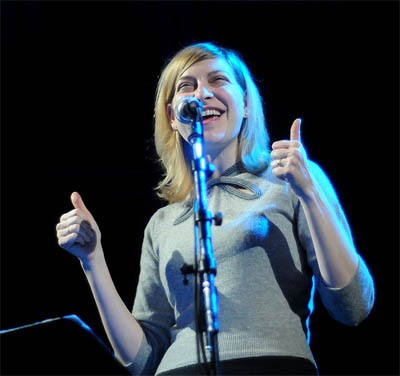
(Image: HERS Photo)

The Bat Segundo Show #334: Julie Orringer (Download MP3)

This text will be replaced