
Borders Sets Up Innovative Slavery Program

Shortly after securing $42.5 million to repay its loans and taking on additional credit to stay alive in a particularly troubling economy, Borders Group Inc. announced that it will be issuing a payroll freeze, enrolling 90% of its employees into an innovative Slavery Program. The program is legal, thanks to a little-known clause contained within the Borders Employment Agreement that none of the workers thought to read.

A memo from the Ann Arbor, Michigan-based company, intercepted by The New York Times, revealed that the Slavery Program would begin in mid-April. Borders stores are now being remodeled to provide slave quarters in the back. Several ringlets will be placed in convenient locations to shackle up employees at various points within the store. Clerks will be lashed if they don’t restock shelves fast enough.

“We had to cut costs somewhere,” said interim CEO Michael Edwards, “and this seemed the best way to secure a profit. After all, didn’t Aristotle say that slavery was a natural part of civilization?”

Asked if the slaves would prove unsettling for regular customers, Edwards pointed out that the employees were never noticed anyway.

Edwards pointed to several tall piles of job applications to buttress his viewpoint, observing that several desperate people had offered to work for free after a long and unsuccessful job search.

“So you can see it’s a win-win situation,” said Edwards. “And if other corporations follow, we can keep up a very good slave trade.”

Borders managers have begun a grueling fast-track Slavemaster Training Program, presently taking place in Arizona. Here, they will learn how to issue corporal punishment whenever a Borders employee gets uppity. Thankfully, employee behavior has proven infinitely adaptable. The new slaves have already started bringing glasses of lemonade for the managers without being asked.

Edwards expects to face legal resistance to his plans — in large part because nobody has thought to challenge the 13th Amendment for quite some time.

“You say ‘slavery’ like it’s a bad thing,” said Edwards. “But we’re more civilized than we were in the 19th century. At least they now get healthcare.”
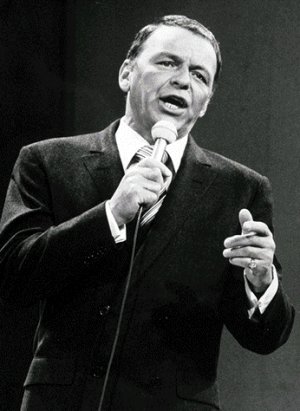
Sinatra’s Corpse Disinterred for BEA Keynote

Facing considerable indifference shortly after the announcement of has-been Barbra Streisand as a headliner, Reed Exhibitions announced that they had disinterred Frank Sinatra’s corpse to replace Streisand as BookExpo America’s opening night act.

“We recruited some mob guys in Hoboken to dig up the corpse,” said BEA spokesman Lance Fensterman. “They were very helpful and worked for a reasonable price, but there were a few other agreements we reached that I can’t discuss on the record.”

Sinatra, who has been dead since 1998, will be asked to perform a series of rousing numbers to awaken the increasingly dwindling booksellers and publishers who will be attending this year’s event. It is not yet known precisely how Sinatra will perform before this crowd, given that Sinatra has spent the past twelve years being chewed on by the maggots. But an expert team of touchup artists has been recruited to make Ol’ Blue Eyes look a little less like a corpse. But efforts to clear out the stench of death on Sinatra’s corpse haven’t started yet.

“They’ve got a lot of work ahead of them,” elaborated Fensterman. “But we remain confident that Sinatra will be in fine shape before the end of May. If we can’t reconstruct his face, we’ll simply replace it with a large watermelon.”

Fensterman’s audacious publicity move has attracted hostility from the Sinatra family, who have expressed a strong desire not to undergo a second round of bereavement. Nancy Sinatra has entered negotiations with Reed, offering to perform a version of her famous song called “These Books Were Made for Reading,” in an effort to keep BEA’s opening night tasteful.

On the Cannibal Film Genre

There’s some more content coming (indeed, there will be a good deal of content published tomorrow). But in the meantime, I feel compelled to direct your attention to this morning’s Barnes & Noble Review, where my essay on the cannibal film genre has just run. What happened here is that my editor had me review a film. Then, knowing very well of my tendency (indeed, one could more accurately style it a full-blown obsessive commitment) of performing serious background research, I began watching a good deal of cannibal films. And so this rather unusual cannibal film essay emerged in its place. You can read the results here. Here are the first few sentences:

The cannibal film, much like its topical larder, may be the genre of last resort. But open-minded cineastes wishing to move beyond Hannibal Lecter’s fey gravitas may be surprised to find an edgy contextual reframing that mainstream cinema lacks the guts to approach.

The Bat Segundo Show: Marisa Meltzer

Marisa Meltzer appeared on The Bat Segundo Show #328. Ms. Meltzer is most recently the author of Girl Power.

Condition of Mr. Segundo: Wondering why Liz Phair is running away.

Author: Marisa Meltzer

Subjects Discussed: [List forthcoming]

EXCERPT FROM SHOW:

Correspondent: You quote Susan Douglas’s Where the Girls Are, in which Douglas notes that the women performing in the 1960s gave voice to all these inner warring selves. But she also notes later in her book — not quoted by you — that this period of music also captured the way that young women were caught between this entrapment and this freedom. Now some of the examples you use in the book, such as Phair, Bikini Kill, riot grrl culture in general, they tend to suggest more of the latter than the former. What do you think is the ultimate distinction between, say, the music of the last twenty years versus almost this second wave reaction to the 1960s?

Meltzer: That’s a hard question. You know, I’m reading her new book right now. And it’s all about the ’90’s and the past few decades. So I’ve been thinking about her a lot, but not so much the ’60’s. I think the distinction is that there’s so much more feminist rhetoric in culture now that, after the ’70’s, you had this postfeminist era — which is not a word that I’m a fan of. But in everything from advertising to music to television, there’s all this lip service and references to feminism and empowerment. But I don’t know how many actual empowerment there is. To me, that’s the difference. I think it’s really easy to think that we’ve come a long way musically or politically because there’s so much feminism around us. But I don’t know if it’s so substantive.

Correspondent: On the other hand, empowerment has been rather easily co-opted by marketing forces.

Meltzer: Yeah.

Correspondent: And so the question of what empowerment actually provides within this music, I suppose, is subject to the fluctuating market forces that may actually abscond with the inherent self-righteous truth of this message.

Meltzer: Yeah. I mean, the word “empower” is also just one of those words that, at this point, I don’t even know if it has much meaning. I feel like it’s been drained away by marketers. So it’s something that I have a lot of suspicion towards.

Correspondent: Yeah. Well, it begs the question of whether a phrase or a word — whether it be “riot grrl,” “girl power,” “lady” as you point out later in the book — if the terms are constantly shifting, then are the terms essentially meaningless? Or must one gravitate towards whatever terms are presently fashionable among young girls, or among culture at large, and just attempt to play this game of leapfrog?

Meltzer: Yeah. I do think that there is a certain amount of leapfrog. I think that there is a lot of fashion. I think of my mother’s generation — the baby boomers. And none of them describe themselves as girls. Whereas all of my friends — many of them in our thirties or even in our forties now — constantly use the word “girl” to describe ourselves, to describe other people, to describe people who are older than us, younger than us. And you see some real generational divides. And then you also see in divisions in terms of culture, where there was “grrl” and “girl power,” and suddenly that was taken over, and you had to start calling everyone “lady.” I hope that those terms don’t seem compulsory. But I do think that there can be a certain amount of feeling — it’s kind of like a password or a code. I think that — especially the term “lady” for the past few years — it was “Oh, you’re going to love this great lady.” Or “Have you seen this lady that’s making cupcakes at the flea market or the pop-up shop?” Or whatever. I think there’s a certain shorthand to it. But is it necessary? No. But I think that if it makes you feel good, if it makes you feel as if you’re in on something.

(Image: Shayla Hason)

The Bat Segundo Show #328: Marisa Meltzer (Download MP3)

This text will be replaced