A Decent Issue of the NYTBR for Once?

I am especially surprised to see that this week’s edition of the New York Times Book Review has a lot of good material. I don’t know if some crafty editor over there who still cares about books had the bright idea of tying up Sam Tanenhaus and throwing him into a closet for a week in review. I cannot possibly envision Tanenhaus coming up with the brilliant idea of having Tom McCarthy review Jean-Philippe Toussaint (a literary translation, Orthofer, can you believe it?), getting Douglas Wolk weigh in on Spiegelman, Ames, and Heatley, and securing Sophie Gee to politely dismiss the Hensher novel, among other things.

This issue seems to have arrived from a parallel universe in which Tanenhaus declined the Times gig and finished his Buckley bio. There is a whiff of revolution in the air. The deputy editors seem eager to seize the means of production and make the NYTBR matter again. Yes, the NYTBR could certainly improve its terrible male-to-female ratio. But this week’s articles don’t bear the sleazy telltale assignment pairups that regularly spawn from Tanenhaus’s grubby little mind. This is an issue written by informed people who wants to assess literature and who are chomping at the bit to go all the way. Which is all that many of us have been asking over the years. None of Tanenhaus’s stuffy and out-of-touch regulars — Joe Queenan, the hopelessly unfunny Henry Alford, Lee Siegel, the pair of thirtysomething dopes Troy Patterson and Dave Itzkoff, et al. — are in here this week. (But sadly, neither is the one good regular mainstay: Liesl Schillinger.)

If the issue still carries the stigma of sleazily tendentious decision making, at least it has managed to restore itself with pretty decent coverage.

Of course, I fully expect next week’s issue to go to pot. It has become abundantly clear that Sam Tanenhaus is the primary reason why the NYTBR is mostly a joke. Keep Tanenhaus away from the cookie jar, and the NYTBR has some chance of recapturing a modicum of its former glory. And we’ll all have some tasty gingerbread to munch on.
The Bat Segundo Show: Paul Schrader

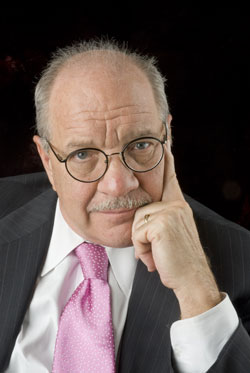
Paul Schrader recently appeared on The Bat Segundo Show #255.

Paul Schrader is a filmmaker who is most recently the director of Adam Resurrected. The film opens in limited release on December 12.

segundo255

Condition of Mr. Segundo: Waiting for Deborah Harry to call him.

Guest: Paul Schrader

Subjects Discussed: Being asked to direct vs. originating a film project, Jeff Goldblum working against his natural tics, Goldblum’s considerable preparation for the role, balancing the element of play with too much preparation, making a film from Yoram Kaniuk’s untranslatable novel, initial efforts to adapt Adam Resurrected, defying the fixed notion of a Holocaust film, adapting books into films, working with cinematographer Sebastian Edschmid, mimicking the memory of specific historical times, making a film without the prospect of financial returns, why the present time is the worst for independent film, clarifying the details about Extreme City, recent events in Mumbai, the opening scene in Lolita, allowing for a minimum of verisimilitude within a magical realist narrative, actors barking like dogs, clearing up some of the information in Peter Biskind’s Easy Riders, Raging Bulls, keeping a loaded gun, Sam Peckinpah, the importance of being crazy, and whether or not Schrader has exorcised all of his demons.

EXCERPT FROM SHOW:

schraderCorrespondent: Did you have any of the actors study dog movement at all?
Schrader: Jeff did. He hung out with this guy. The dog whisperer guy. And the boy who plays the dog….

Correspondent: Tudor [Rapiteanu]?

Schrader: Tudor. He spent a fair amount of time with dogs. And the dog in the film, Sam, he was with us quite a while. Jeff spent quite a lot of time with Sam. The two of them.

Correspondent: Tudor is hiding under the blanket. At least, that is what we are led to believe. I don’t think that he hid under the blanket the entire time. Or did he? Was there at any point somebody else? Did he have a dog double? Was there a Tudor double? Was there an actual dog there?

Schrader: Oh, no, no. That’s always Tudor.

Correspondent: Really?

Schrader: Yeah. He’s a rather exceptional kid. He was twelve at the time. Smart as a whip. He had just placed fourth in the Romanian Academic Olympics. But he was totally into that whole dog. He would play a dog even when we weren’t shooting.

Correspondent: And the actors were perfectly okay and happy? They felt fairly safe being dogs like this? Because you’re working on all fours. I don’t think I’ve done that for longer than an hour, I suppose, in my life. And so I’m wondering, what did you do to ensure that their performances would be safe? To perform and have this, I guess, canine verisimilitude.

Schrader: Well, you have to sort of watch out for their knees. You can hurt your knees trying to go around down on all fours.

BSS #255: Paul Schrader (Download MP3)

This text will be replaced

The Bat Segundo Show: Nacho Vigalondo

Nacho Vigalondo appeared on The Bat Segundo Show #254. Vigalondo is a filmmaker who is most recently the writer and director of Timecrimes, a film that opens in New York and Los Angeles on December 12.

segundo254

Condition of Mr. Segundo: Searching for future Bats.

Guest: Nacho Vigalondo

Subjects Discussed: What to expect when attending one’s first press day in New York, being isolated from the Hollywood scene by making films in Spain, unexpected attention, Darren Aronofsky’s The Wrestler, the current speed in adapting comic books, Mark Millar, the Timecrimes remake, the pink bandaged head as an old Universal Horror motif, finding the monster within the movie, writing a script out of sequence, Steven Zaillian, trying not to bore the audience, showing the ridiculous side of the situation, using the best bits of Karra Elejalde’s cinematic career for the different Hectors, the influence of fashion choices upon performance, making a movie work in a natural way, the criticism of “improvisation,” criticizing the reasons behind Chica’s nudity, not explaining everything within a movie, the tendency for music to blare throughout every environment, learning from Hitchcock, practical locations vs. planned sets, and making a timeless movie.

EXCERPT FROM SHOW:

nacho-vigalondoVigalondo: When you’re writing a script, sometimes the script is put into a nightmare. Sometimes, it’s giving you some gift. And in this case, when I was writing Timecrimes, I found a monster inside the story. But the story itself gave me the monster. I needed someone with a hidden face, with a scissors on the hand. So I found out that the story was building a monster. A monster that had these classical resonances, as you are telling. So I feel so fortunate. Because when you have a monster in your movie, the movie gets better most of the time. Every movie with a monster is better than the same story without the monster. You can apply this to all the other — to every example. I don’t know. If Million Dollar Baby had a monster, it would be a better film.

Once you find a monster inside your film, well, in my case, it’s something you have to celebrate. For two reasons. It’s a monster that sounds like a Universal classic film monster. And at the same time, it’s a pretty cheap Halloween costume. If the people like your film, they can disguise as the big mummy with little money on the bandages and the scissors. So if you want to dress like Freddy Krueger, it’s more expensive than my monster in my film. So it’s like giving something to the people. In depression times, giving cheap monsters to the people is something I really appreciate. (laughs)

BSS #254: Nacho Vigalondo (Download MP3)

This text will be replaced

Cry of the Hornet

The loud flashes pierced into his eyes as they ushered him before the cameras. The shrapnel of sharp questions sliced into inextricable loss that the men behind the massacre could never tally up or scratch away, and for which they still hadn’t apologized.

He still flinched from the stench left in the wake of the carcass that had once been his home, the hillock of his humble life, the now obliterated pile for which he had moved hard mountains. He had wanted to die with them, but he was halfway through a twelve-hour shift when he got the call. At the moment his cell phone chirped, he was selling a pack of Marlboros to a gloomy guy sliding dimes across the counter, grumbling about the economy. But he knew he had to go on.

He couldn’t believe the news and he couldn’t close the store. There was nobody else. And if he didn’t move a hundred dollars by day’s end, they’d be short for the month. There were no savings.

The pilot had lived, ejecting just before the Hornet rammed into their humble stucco home. He wanted answers, but his neighbors only offered spooky silent stares. Shadowy details loosened once they saw his dark inquisitive face. The deaths had been sudden. The wreckage would be remunerated. The tall thin plumes could be seen as far away as Poway.

Now he was here. Lost in a crackling haze of slapdash queries he’d somehow felt obliged to answer. The journalists asked him what he thought of the pilot, but they’d never know the fluke of this sacrifice. They asked him what he was going to do next. Forgive so that he could go somewhere and grieve, but not forget.

God, he had loved them. It wasn’t so much not seeing his daughters grow up or his wife grow old or even his grandmother’s kind smile, but the comforts of their happy routine. The knowing twinkle that came when she read his mind. His kids discovering some pedantic joy he’d somehow overlooked. All now dry and irreplaceable rivers frozen into the hazy pool of memory.

He couldn’t remember the words that the cameras and the microphones had recorded. But he must have said something. The phone never stopped ringing. The letters kept coming. They’d even tracked down his email address. They called him a hero, but he had only done the right thing. And he wanted to go back to work because it was the only regular routine he had left. Even if it meant crying and remembering in the lonely terrain of the dark while they sung the stark ballads now attached to his name.