“Pretentious Literary Fiction” To Get New Section in Bookstores

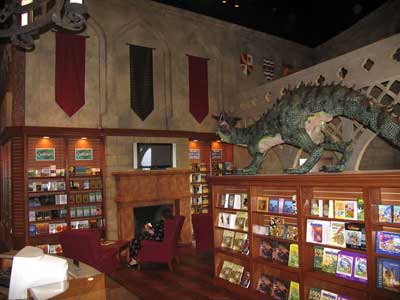
This morning, booksellers finally figured out what to do about the massive influx of pretentious literary fiction that has taken over the “Fiction” section in bookstores. Starting next month, “Pretentious Literary Fiction” will get its own section in bookstores, in an effort to hinder confusion for today’s customers. Nearly all books published by Ecco would be part of this new reorganization.

“It was really getting out of control,” said Thelma Rhustein, manager of a Barnes & Noble in Peroia, Illinois. “These New York people actually believed that these mutant books were fiction, and tried to ram them into our stacks.”

Of course, there is only so much space. Since other genres — such as science fiction, mystery, YA, comics, chick lit, and romance — have become less pretentious and are now more acceptable to the reading public, the elaborate plan calls for these genres to be integrated into the main Fiction section.

Many newspaper book review sections have begun adjusting their sections accordingly. Now that “pretentious literary fiction” is a lesser genre, many plan to begin ghettoizing “pretentious literary fiction” to capsule reviews while moving previously little-regarded genres up to full-length reviews.

“It’s purely a business decision,” said a spokesman for Tribune Newspapers.

Ecco spokesman Michael McKenzie could not be reached for comment. He was reportedly too busy playing an addictive Flash game. But he did pledge to a co-worker that he would cut down on his pedicures in an effort to figure out what it was that average people found pleasurable about books.

Psychiatrists have also been enlisted to make many pretentious literary fiction publishers less douchey.

Orange Unveils Male-Only Banana Prize

In response to recent criticisms from A.S. Byatt, the Orange Broadband Prize announced that it would begin handing out an all-new male-only prize called the Banana Prize, which will hand out awards to male-only writers. Prizes would be awarded to “red-blooded tales” that celebrate masculinity, male swagger, and sexist offerings in contemporary fiction.

“We had hoped to offset the literary world’s tendency to give too many male writers money,” said project director Harriet Hastings. “We were wrong. And we wanted to send a message. We like cocks too.”

The future of the Orange Prize remains in jeopardy. But “lad lit” authors remain very excited about reaping the benefits of this new outlet for writers.

“I was beginning to get worried that we weren’t dominating literature in the same way we were dominating film and music,” said Nick Laird, who, upon hearing the news, began modifying his novel-in-progress to read more like a book-length version of Maxim. “I now have my protagonist hating women. This should counter the wrong-headed notions set forth by the Orange Prize. There can never be enough celebration of manhood in literature.”

William Vollmann Turns In Uncharacteristically Slim Children’s Book

National Book Award-winning writer William T. Vollmann stunned the Penguin offices when he submitted a 22-page children’s book to Viking editor Paul Slovak this morning.

“It’s the shortest manuscript I’ve ever seen from Bill,” said Slovak, who also told reporters that editing this “would be a breeze.”

The book, entitled Shooting Guns at the Gnus, is also illustrated by Vollmann. Vollmann hoped that the book would encourage young children to start firing guns early, so that they could get a sense of “what it means to be free” at a very early age.

Parents bristled at Vollmann’s plans, claiming that he was taking advantage of his literary reputation to sully the pristine nature of the children’s book market. One organization, The Society for Safe Books, plans to picket the Penguin offices this morning, demanding that Penguin not publish anything even remotely offensive. None of the activists, however, had read the book in question.

Neal Pollack to Write Dad Essays Until the End of Time

Writer Neal Pollack, who found considerable success with his book, Alternadad, has decided to write nothing other than father-related essays through the end of his natural life.

“They keep paying me for this,” said Pollack. “So why spoil a good thing?”

It was previously thought that the demand for dad essays would run out sometime last year. But like the Hubbert peak theory, nobody really knows when it will happen.

The news came as James Howard Kuntsler announced that he was beginning work on a new polemical book called The Dad Emergency, which suggests that America is spiraling into an age where dad essays will run out and America will be left helpless, looking for reading material in the suburbs.

“There will come a time when people will be shooting each other in the parking lots of malls and roasting babies over a spigot because there aren’t enough dad essays to go around,” said Kunstler. “And not even Neal Pollack will be able to fill the demand.”

At the present time, there remain enough dad essays. Although the price of dad essays seems to be going up. Some gas stations have begun installing vending machines next to pumps to take these rising costs into account.

“On some days, the dad essays sell more than gallons of gas,” said Tony Primera, the 42-year-old owner of a Shell station outside Wyoming. “I’ve been toying with the idea of shifting to a dads-and-gas style business, but I’m beholden to the forces at Shell.”

Indeed, Shell has started to commission writers to write more dad essays, believing that selling dad essays with gas will make people forget that the price of gas is going up.

“Pollack was ahead of the curve on this,” said a Shell spokesman. “But we’ll smoke him out of the supply. Conglomeration is our specialty. And I think that we have a track record to back this up.”

Litbloggers Agree That Blogging “Takes Too Much Time”

Hot on the heels of the Litblog Co-Op’s disbandment, litbloggers decided to combine their collective malaise and stop blogging.

Bookbanger.com’s Gary Hesmith was the man who came up with the idea after experiencing peer pressure shortly after reading Remainder, which other litbloggers had gone crazy over. “I just wanted to type ‘Tom McCarthy is cool’ into Typepad, and even that sentence seemed too much time for me to commit to.”

Many litbloggers who stopped blogging had long wondered when the money would start showing up. They had remembered the magical dot com days, when cashes of money would often saunter into offices unannounced and someone would have the professional courtesy to deposit some of this into random bank accounts. These litbloggers figured that by sitting on their asses doing nothing, the dinero would arrive just in time for dinner.

But 1999 was a long time ago. And the dollar was in poor health against other currencies. So Hesmith decided that the only thing anybody could agree upon was that blogging was almost as hard as assembling a piece of IKEA furniture.

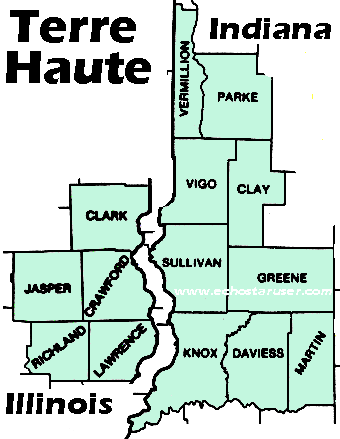
The moratorium on litblogging will remain in effect until someone gives these litbloggers money. Many of them moved into basements in Terre Haute.

“They laughed at me when I first said that,” said writer Richard Ford, who had made litbloggers very angry with remarks delivered to Motoko Rich. “But I was right the entire time.” Before I could ask Ford additional questions, he then cut the interview short, because he needed to find another talented African-American writer to spit on.