When it comes to examining vicious crime, it remains a common practice among American journalists and the general public to ignore the story once the suspect has been apprehended or the verdict has been delivered. We want our deadliest realities to confined away from us, sight unseen. But an astute human observer understands that resolution is never quite this tidy and criminals are not always reformed. Human lives continue. One monster’s acts will have consequences upon another life, often creating sharp yet silent obstacles that are too piercing to discuss.
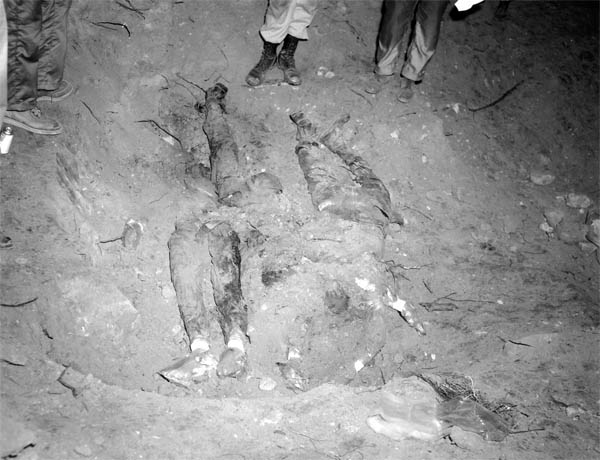
Thankfully a new documentary, Neshoba: The Price of Freedom, offers a rare angle that defies these conventional narrative trappings and attempts to tackle this wider canvas. The film focuses upon recent efforts to bring Edgar Ray Killen — an ex-Ku Klux Klan organizer who helped organize the vicious 1964 murders of three civil rights workers in Neshoba County, Mississippi — to justice. As the film is swift to observe (indeed, sometimes too swift), the ugly scab from this aftermath remains a painful eyesore that the Neshoba County residents haven’t entirely come to terms with. When, in 2004, a group of outraged citizens demands reopening the case upon the 40th anniversary of the killings, the documentary suggests a dichotomy between this multiracial coalition and predominantly white citizens who wish to bury this ignoble history. “What’s happened has happened,” says one man. “It’s been too many years,” says another. “I think he’s suffered enough.” (This latter statement, suggesting the idea that Killen’s ongoing “suffering” is worth more than the families of James Chaney, Andrew Goodman, and Michael Schwermer, mirrors another of the movie’s hypotheses — that, had not two white Jewish kids been killed among the three, the murders would not have received national attention.) Certainly after Killen’s conviction, the then 80-year-old had enough support within the community to raise $600,000 for an appeal bond — a development that the filmmakers skim over. Indeed, one of this documentary’s curious qualities is that it never quite captures the violent sting of the 1964 murders. But if the movie is making a good faith effort to chronicle the present atmospheric aftermath, perhaps this is just as it should be.
Killen himself features quite prominently in this documentary, which centers itself mostly around the reopened trial. And Killen’s stature as an entitled monster, along with his crazed rants about the illusory Jewish Communist conspiracy, make for fascinating viewing. Killen is so ostensibly religious that he has placards of the Ten Commandments spoked into his lawn. And despite his clearly racist fulminations, he insists that he’s not a Jew hater. But the film is ballsy enough to suggest that this vicious cycles often continue in unanticipated ways. Among its prodigious roster of talking heads include several family members and relations to the victims — one of whom calls out for Killen’s blood in a manner not dissimilar from the hate speech that Killen and his collaborators are so fond of. While Killen must be punished for his crimes, there’s an important question here of whether one becomes just as savage as a homicidal white supremacist when howling for blood. Western civilization, as Gandhi once quipped, would be a pretty good idea.
So while this documentary is sometimes quite pedestrian in its assembly (collected interviews, dusty archival footage, perfunctory vox populi interviews), it has the great advantage of being caught within the shoals of an important story.
© 2010 – 2012, Edward Champion. All rights reserved.