The Bat Segundo Show: Bonnie Tyler

Bonnie Tyler appeared on The Bat Segundo Show #237. Tyler is the legendary singer behind such tracks as “Vernal Equinox of the Mind” and “Holding Out for a Supervillain.”
Condition of Mr. Segundo: Nothing he can say, a total eclipse of the Bat

Guest: Bonnie Tyler

Subjects Discussed: Tyler co-writing most of the tracks on the album, Wings, singing vs. songwriting, breaking up with managers, shyness, hairs that stand up on the back of the neck, turning down a song by Jim Steinman, songs that involve the devil, Desmond Child, James Bond, Tyler turning down the Never Say Never Again theme, Heartstrings and recording cover songs mostly from male recording artists, the song selection process, Meat Loaf, rehearsing “Total Eclipse of the Heart,” the seven minute opuses on Faster Than the Speed of Night, a group of passengers who were traumatized by Tyler singing on an Air France jet, Noel Gallagher, contending with hardcore fans, a 15-year-old Australian who claimed to be Tyler’s daughter, avoiding retirement, the number of shows Tyler performs a year, the endless onslaught of greatest hits albums, the Psion SMX and iPods, country music, Duffy, what Bonnie reads, Les Dawson, Tyler tells a bawdy joke, Botox, ageism, music videos and photo shoots, being judged on physical appearance, looks vs. voice, MTV and YouTube videos, the nightmare of making music videos, restrictions from record companies, independent labels, and music and the Internet.

EXCERPT FROM SHOW:

Correspondent: Going back to Wings, I actually wanted to talk about “Crying in Berlin.” This song, out of all the songs that I’ve listened to of yours, sounds the most like a James Bond song. And I do know the Hindustan Times reported in 2006 that the only thing that could bring you out of retirement was recording a James Bond theme of some sort. I’m wondering if you’ve considered approaching the Bond producers to sing a song just as you called up and contacted [Jim] Steinman, and said, “Hey, I want you to go ahead and produce this particular album.”

Tyler: No. It just happened. They just asked me. Would I like to do a song? And they sent me the song. “Never Say Never,” right?

Correspondent: Yeah.

Tyler: And I listened to it, and I thought, “Ugh! Shit! I don’t like it.”

Correspondent: It is one of the weakest of all the Bond themes.

Tyler: I really would die to do a James Bond song, you know? But I can’t do it. My heart wouldn’t have been in it. I had to turn it down. Now how many people turn down a Bond song, I don’t know. But I turned it down because I didn’t like it. And I was proved right. Because I think out of all the songs.

Correspondent: Who remembers it?

Tyler: I can’t even remember it.

Correspondent: (sings) “Never say never again.” Yeah, I know.

Tyler: I don’t remember. It didn’t appeal to me at all. So I turned it down. And that’s the only regret that I have. But it was…

Correspondent: It wasn’t actually an official Bond movie, technically speaking. Because it was produced outside the [Albert] Broccoli camp. So I think you’re on safe ground.

Tyler: It was a Bond movie!

Correspondent: It was a Bond movie, but it wasn’t official under the Albert Broccoli camp. It was a Sean Connery once-over. Because it was also Thunderball revisited.

Tyler: Whatever. I got offered one and I turned it down.

Correspondent: Did you consider reapproaching them and saying, “Hey, I’d love to do a James Bond song. But this one doesn’t cut it. Can I bring in one of these many songwriters who are sending me songs?” Did you try that tactic?

Tyler: No, I didn’t. But you’ve just given me a good idea. (laughs)

BSS #237: Bonnie Tyler (Download MP3)

This text will be replaced

The Bat Segundo Show: Courtney Humphries

Courtney Humphries appeared on The Bat Segundo Show #234. Humphries is the author of Superdove

Condition of Mr. Segundo: Severely underestimating the carnivorous impulses of pigeons.

Author: Courtney Humphries

Subjects Discussed: Eating squab, pigeon dining options in restaurants, Robert Dunn’s pigeon paradox, urban forms of nature, pigeons as an ineluctable aspect of the city, people’s attitudes towards wildlife, the pigeon’s place in the food chain, pigeons as the garbage disposal of Mother Nature, feral pigeons, interbreeding, when baby pigeons fend for themselves, distinguishing pigeon types, corpulent vs. svelte pigeons, individual variation, Daniel Haag-Wackernagel’s efforts to reduce the pigeon population in Basel, Switzerland, synanthropy vs. symbiotic relationships, the human failure to consider other species within our current habitats, being a social synanthropic animal, cooing sounds, birds imitating urban sounds, the difficulties of raising funds to study pigeons, Richard Johnston’s Feral Pigeons, artificial selection, General Mills’s funding of B.F. Skinner’s Project Pigeon, the folly of the pigeon-guided missile, overstating the cognitive potential of pigeons, Robert Cook’s experiments at Tufts, and Charles Walcott and pigeon homing.

EXCERPT FROM SHOW:

Correspondent: You’ve actually dined on squab. You allude to the fact that it’s delicious, that it’s dark meat. But as a carnivore and somewhat of a curio, I had to ask whether it tasted like chicken or like duck or like turkey. I mean, you didn’t go into specifics here. And I’m wondering if the experience was possibly unsettling or you couldn’t convince yourself completely that it was delicious. Because you also sympathized with these birds. But what of this?
Humphries: Yeah, I was a little bit nervous about eating them. At the time, I had been looking at pigeons for a long time and was working on this book. And so I was very interested in them. So I was a little worried about eating a pigeon, how I’d feel about it. But it was really good. Because it’s dark meat. They’re small birds. So you’re not getting huge pieces of meat. But it’s kind of a dense meat. It’s not fatty like duck is. But it’s good. And I had it again recently in Chinatown — in Boston, where I live — and it was crispy fried squab, where they didn’t deep-fry the whole bird. And they serve it to you cut in pieces including the head. So that was a little more.

Correspondent: With the head included, yeah.

Humphries: That was a little unnerving to me to have the head just lying there.

Correspondent: But you ate it anyway.

Humphries: I did. But I have to admit that I didn’t feel as great about it as the first time I had it, which was a very nice upscale restaurant. They just served some pieces of the squab sitting on some rice.

Correspondent: So that’s twice you’ve had pigeon?

Humphries: Yes.

Correspondent: Have you had it any other time?

Humphries: No, well, for one thing, it’s very expensive when you go to the nice restaurants. It can cost you a lot. You know, I wouldn’t mind trying more different varieties. I do feel that if I was eating pigeon all the time and talking about how great they are, maybe I wouldn’t. I’d feel strange.

Correspondent: You’d be branded in some sense.

BSS #234: Courtney Humphries

This text will be replaced

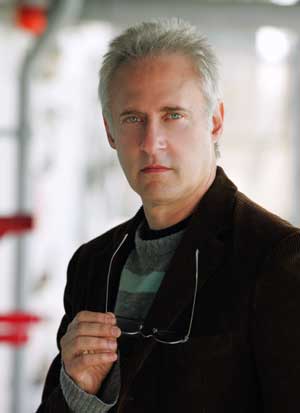
The Bat Segundo Show: Brent Spiner

Brent Spiner appeared on The Bat Segundo Show #233. Spiner is most recently a producer and performer on the album, Dreamland.

Condition of Mr. Segundo: Ducking his head and dodging paranoid crooners.

Guest: Brent Spiner

Subjects Discussed: Natural reverb, conversational limitations, co-owning a recording studio with Dave Way, being a control freak, the shaky profitability of the music industry, self-distributing a CD through Bellarama, David Byrne’s DIY article, the lack of response from magazines and newspapers vs. the response from blogs and online sites, being restricted by self-production, the distribution for Ol’ Yellow Eyes is Back, getting mechanical rights for the songs, merging “I Love You” with “Nice and Easy,” the difficulties of getting Cole Porter’s “Let’s Fall in Love,” DJ Giagni, tap dancing and footfalls, sound effects, maracas that appear on the left speaker, arguments for and against the older man-younger woman musical trope, certain elements that are holding back Dreamland from being transposed to a live performance, the belting quality of Spiner’s voice, wrestling, Spiner’s extraordinary claims as an opera singer, Mark Hamill as a figure to help smooth over the rancor between two popular science fiction franchises, growing up in Houston, the demolition of the Shamrock Hilton in June 1987, Cecil Pickett and the brothers Quaid, Randy Quaid and Actors’ Equity, Spiner’s complex feelings for Rutger Hauer, Hauer and Whoopi Goldberg, taking umbrage with YouTube commenters, working with Maude Maggart, signing on for a six-year contract for a show that rhymes with “car wreck,” committing to a project without knowing when it will end, Threshold, negotiating the limitations of television, the relationship between art vs. commerce, why Spiner moved to Los Angeles, Superhero Movie, living like a college student vs. an adult lifestyle, and the trappings and consistent struggles of being an actor.

EXCERPT FROM SHOW:

Correspondent: I should observe that you grew up in Houston.

Spiner: Yes.

Correspondent: Of course, for a long time, the Shamrock Hilton was there.

Spiner: Right.

Correspondent: And what is rather unusual is that it was demolished in June 1987, which almost exactly coincides with your big break on the show that shall not be named. I was wondering if you ever contemplated this connection, and whether the hotel [in Dreamland] may have jumped out because of this. Why did you choose the hotel? And what of the Shamrock Hilton?

Spiner: You know what, Ed, I’m not sure what the question is really. And I’m not even sure you know what the question is.

Correspondent: No, no, I’m just throwing associations at you.

Spiner: Yeah, you know what?

Correspondent: I figured that you can handle this.

Spiner: Let me say, and I will say the word, I did Star Trek purposefully because of the demise of the Shamrock Hotel.

Correspondent: Yeah. I knew it.

Spiner: There was no other reason that I took that job. When they told me…

Correspondent: …that Houston was dead to you.

Spiner: Yeah, Houston was dead to me once the Shamrock Hilton was gone. But let me just say this. How do you know about the Shamrock Hilton?

Correspondent: I just am curious.

Spiner: Are you from Houston?

Correspondent: No, I’m not. I’ve never actually been in Texas, aside from, I believe, a layover. But I just knew about it. I knew that big people came through there.

Spiner: Yup. Oh! Please.

Correspondent: And so I figured you hung out there.

Spiner: I did.

Correspondent: When these big people made their way through there.

Spiner: I once saw Mel Torme at the Shamrock.

Correspondent: Really?

Spiner: At the Shamrock pool. Walking fast. And even more importantly, I once saw Jock Mahoney doing chin-ups outside by the Shamrock pool.

Correspondent: Did you talk with these folks when you were there?

Spiner: You know, I didn’t. I wish I’d talked to Jock Mahoney, which is another story altogether.

Download BSS #233: Brent Spiner (MP3)

This text will be replaced

The Bat Segundo Show: Sarah Manguso

Sarah Manguso appeared on The Bat Segundo Show #232. Manguso is most recently the author of The Two Kinds of Decay.

Condition of Mr. Segundo: Contemplating fifty-five additional states of decay.

Author: Sarah Manguso

Subjects Discussed: David Markson, sentences that originate in other formats, fan mail, whether a paragraph is truly a paragraph, problems with typesetting nomenclature, remembering personal moments at 1,000 words a day, word arrangement units (”WAUs”), themes vs. timeline, organic vs. inorganic writing, unrecognized planning mechanisms, thinking of the reader, Adam Thirlwell’s The Delighted States, syntactic barriers and foreshadowing meaning, mosaic tiles, the goofy perils of being called a poet, incidental metaphors, the engine of intelligence getting in the way, the uncertainty of employment, the solipsistic degrees of writing, stumbling upon a cohesive idea of what the universe entails, other memoirs of illness, categorization and after-the-fact marketing, reading fiction while writing, John Cheever’s Falconer, surveillance and paranoia, the alphabetical pursuit of hobbies, and the identity of the famous writer baffled by the idea of a hobby other than writing.

EXCERPT FROM SHOW:

Manguso: I thought of the pieces as an arrangement in two phases. The first phase was completely chaotic and the second phase was orderly. And during the chaotic first draft phase, the project that I set myself was really just to try to remember everything I could remember about this nine-year period in my life. Just everything. Every individual memory that I could bring up. And after my latest revision had lasted seven years, after that time, it really did seem that the memories had become particulate. Like there really was just one memory that espoused the insertion of the first central line in my chest. And it really did seem to have hardened in my memory into this item, this thing, this chunk of this chapter. And so while I was first writing the book, I didn’t think about chronology. Mainly because I had no idea how to write a book about one thing. I’d never done it before. And I didn’t know anything about narrative or what should come first. I really just wrote the pages all as individual files. And once I couldn’t remember anything else, I printed them all out and tried to notate based on memory and based on asking people what months and what year each thing had happened. And then I just put them in chronological order.

Correspondent: Well, there’s specific phrasing for some of these “thingies.” Pardon my…

Manguso: Let’s call them chapters now. I think that sounds more professional.

Correspondent: These particular word arrangement units. WAUs. Wows?

Manguso: Wows.

Correspondent: We’ll call them wows. Or waz.

Manguso: I’m going to call them chapters. But I like wow.

Correspondent: You often have text within text. With this italicization. But you have a particular timeline. Because you often use “the day before the decision I wrote” or “I wrote this three months after the diagnosis.” And so it seems that not only arranging these wows into themes, but also into a timeline. I’m wondering how you place prioritization upon a theme over a timeline. Were there certain circumstances? Was this entirely an organic process? Or was there just a lot of tinkering around with order and with rhythm? The way we were talking about this, it almost seems like this quarto of some sort.

Manguso: Well, I wish I knew. I’m not really sure how to differentiate an organic process from an inorganic process.

Correspondent: Okay. Let’s just say blindly intuitive vs. carefully planned and calculated.

Manguso: Well, at the risk of sounding difficult, I’m really trying my best to remember what it was like to write this book. But I made the thing. And the thing is a result of my guiding intelligence engaged with my memory. And I don’t know if I can really distinguish between the decisions that were more intellectual than intuitive. Or more intuitive than intellectual. I wish I knew. It is true that, after the book was done or after the final draft was done, it does seem that there were themes that had been inserted or injected into the book by some planning mechanism that I didn’t really recognize. But I think that’s kind of a familiar recognition to have after you make a thing. It makes sense in ways that you weren’t exactly planning. I’d rather not say that the whole thing is mysterious to me. But I think enough of it is that I’m hesitant to say, “Well, I meant to this, this, and this.” I don’t know what I really meant.

Correspondent: Well, I mean, how much should we be really dwelling upon dichotomies?

Download BSS #232: Sarah Manguso (MP3)

This text will be replaced

The Bat Segundo Show: Paul Auster

Paul Auster appeared on The Bat Segundo Show #231. Auster is most recently the author of Man in the Dark.

Condition of Mr. Segundo: Opening himself up to explanation.

Author: Paul Auster

Subjects Discussed: Starting a novel from a title, the advance titles contained within The Book of Illusions, the working title of The Music of Chance, Mr. Blank, the relationship between Travels in the Scriptorium and Man in the Dark, shorter baroque novels vs. longer naturalistic novels, the use and non-use of quotation marks within speech, the writing history of The Brooklyn Follies, the political nature of ending novels, the 2000 presidential election, parallel worlds, the death of Uri Grossman, didactic novels, the comfort of books, the Auster eye-popping moment, the party scene in The Book of Illusions, violence, reminding the reader that he is in a novel, emotional states revealed through imaginary material, Vermont’s frequent appearance in Auster’s novel, Virginia Blaine as the shared element between Brill and Brick in Man in the Dark, magic, The Invention of Solitude, memorializing memory, Rose Hawthorne, website archives, Auster’s relationship with the Internet, having an email surrogate, Auster’s concern for specific dollar amounts in Man in the Dark and Oracle Night, Hand to Mouth, Auster’s reading habits, the 8-10 contemporary novelists Auster follows closely, being distracted, the intrusive nature of the telephone, diner moments in Auster’s most recent novels, perception and stock situations, summaries of books and films within Auster’s books, and intimate moments in great movies.

EXCERPT FROM SHOW:

Correspondent: I wanted to ask you about something that I’ve long been interested in your books, and that is your concern for specific dollar amounts. Again, it plays up here in the Pulaski Diner, where everything is five dollars. And I also think about the scenario with M.R. Chang in Oracle Night, in which there’s the whole situation between the ten dollar notebook and the ten thousand dollar notebook.

Auster: Right.

Correspondent: And again it becomes completely, ridiculously violent. But there is something about the propinquity of the dollar amount that you keep coming back to in your work. What is it about money? And what is it about a specific figure like this?

Auster: It’s funny. I never, never thought about that. Wow. Well, listen, money’s important. Everyone cares about money. And when you don’t have money, money becomes the overriding obsession of your life. I wrote a whole book about that.

Correspondent: Yeah.

Auster: Hand to Mouth. And the only good thing about making money is that you don’t have to think about money. It’s the only value. Because if you don’t have it, you’re crushed. And for a long period in my life, I was crushed. And so maybe this is a reflection of those tough years. I don’t know. I don’t know.

Correspondent: Or maybe there is something absurd about a specific dollar amount or something. I mean, certainly, when I go to a store and I see that something is set at a particular dollar amount or it fluctuates, it becomes a rather ridiculous scenario. Because all you want to do is get that particular object.

Auster: Yes, yes, yes. But often in my books, people don’t have a lot of money in their pockets. So they have to budget themselves carefully.

Correspondent: Well, not always. You tend to have characters like, for example in The Brooklyn Follies, people who have a good windfall to fall back on and who also offer frequently to help pay for things, and their efforts are often rejected out of pride by your supporting characters. And so again, money is this interesting concern. But I’m wondering why you’ve held on to this notion. It’s now thirty years since the events depicted in Hand to Mouth. I mean, is this something you just haven’t forgotten about?

Auster: I guess I haven’t forgotten about it. (laughs)

Correspondent: Do you still pinch pennies to this day?

Auster: No, no, no. Not at all. No, I’m not a tightwad at all.

Correspondent: (laughs)

Auster: I’m generous. I give good tips. It’s just — the way I live my life, ironically enough, is: I don’t want anything. I’m not a consumer. I don’t crave objects. I don’t have a car. We don’t have a country house. We don’t have a boat. We don’t have anything that lots of people have. And I’m not interested. I barely can go shopping for clothes. I find it difficult to walk into stores. The whole thing bores me so much. I guess the only thing that I spend money on is cigars and food and alcohol. Those are the main expenses.

Correspondent: Not books?

Auster: No. Because our library in the house is so bursting, we have no more room. We have things on the floor. And books come into the house at the rate of — you see, three came today for example. I’m pointing to them on the table. So we’re just inundated with books.

Download BSS #231: Paul Auster (MP3)

This text will be replaced