Posts by Edward Champion

Edward Champion is the Managing Editor of Reluctant Habits.

The Bat Segundo Show: Lawrence Block

Lawrence Block appeared on The Bat Segundo Show #308.

Lawrence Block is most recently the author of Step by Step.

segundo308

Condition of Mr. Segundo: Ruminating upon a life of exquisite indolence.

Author: Lawrence Block

Subjects Discussed: Step by Step as an anti-memoir, exploring childhood experience in print, randomness and finding connections, writing with a greater degree of freedom, Random Walk, concerns about a limited audience, earlier attempts at memoir, attempts by Block to write memoirs in the mid-1990s, the virtues of getting older, being less guarded with age, following up on Block’s remarks from Galut, avarice as the guiding principle, Evan Hunter, Charles Ardai and Hard Case Crime, growing less reticent about limited editions, the $479 Kindle, not carrying about work being preserved, genre fiction as a window to a specific world, Raymond Chandler, Agatha Christie never going out of print, Block and Judaism, being a creature of intense and transitory enthusiasms, not having a goal, the lack of commonality between writing and race walking, becoming increasingly drawn to pursuits that don’t involve leaving the house, writing screenplays, short stories vs. novels, and Alexander McCall Smith’s Wall Street Journal article and reader “ownership” of the characters.

EXCERPT FROM SHOW:
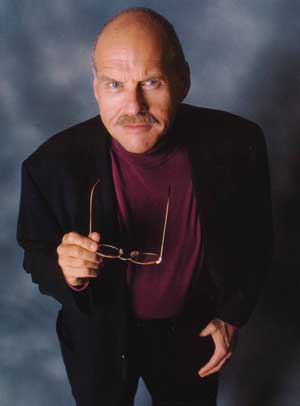
lawrence_blockCorrespondent: You mentioned that you had attempted memoir before.

Block: Right.

Correspondent: And that memoir, which I presume is still unfinished, that had more to do with the working life of a writer, I suppose?

Block: That memoir was about the early years. About the years writing pseudonymous books and getting started in the business. And I wrote about 50,000 words of it. And it still exists. And I went back to it. It was part of a multiple contract. It was submitted as part of that. And eventually the day came when I bought it back. It was a tiny portion of the advance. And I don’t think anybody at Morrow was that excited about it. My agent had just bundled things together. And because I didn’t seem inclined to resume it, oddly enough, now I find myself thinking maybe I ought to. That maybe that’s what I might want to do next.

Correspondent: Really?

Block: Yeah.

Correspondent: What brought this on? Was it just from…?

Block: The experience of Step by Step. It’s early days. I have no idea how it will sell. But people seem to like it and it seems to be getting a fair amount of attention. So we’ll see.

Correspondent: Well, I think just speaking as one person familiar with your work, the reason I was piqued when you talked about this unfinished memoir was because there’s almost like a surprising lack of amount of stuff written about that time period where you were writing pseudonymously. There was a book written by the guy who later went on to do Don’t Know Much About History, who wrote a book published about twenty-five years ago about the paperbacking of America [Kenneth C. Davis’s Two-Bit Culture] and went on about mass market paperbacks as a whole. But nothing much about the dawn of Gold Medal and Dell and all the other paperback houses. And the pseudonymous aspect. So I wonder could this interest also have to do with the fact that, with all due respect, you’re also one of the few people left who remember.

Block: Yeah. That might have something to do with it. Also, when I wrote — I think it was about ’95, ’94 or ‘5, that I wrote the memoir. And I hadn’t been planning to, as I may have mentioned in there. I was stuck on something else. I had time booked at Ragdale. And I had to write something. And at the time — that was what, fourteen years ago? — I was fifty-five, fifty-six years old. It felt early days to be writing a memoir to me.

Correspondent: Right.

Block: And before the memoir genre became something.

Correspondent: Now you have memoirs by twentysomethings.

Block: I know. I know it. “I remember the birth canal.” (laughs)

BSS #308: Lawrence Block (Download MP3)

This text will be replaced

The Bat Segundo Show: Michael Muhammad Knight

Michael Muhammad Knight appeared on The Bat Segundo Show #307.

Michael Muhammad Knight is most recently the author of Impossible Man and Osama Van Halen.

segundo307

Condition of Mr. Segundo: Expressing forceful words about his distinct identity.

Author: Michael Muhammad Knight

Subjects Discussed: Knight’s powers of prescience, Muslim punk, fictional suicide as a form of personal critique, the fictional character Mike Knight vs. the real Mike Knight, the Amazing Ayyub, character creation as the author arguing with himself, spiritual poles and quasi-Mikes talking with Mike creations, romanticizing the failure to be an adult, the mythology of consolation, leading a life in peripatetic homelessness, being a provocateur, compromise vs. getting into certain quarters, reading Will & Ariel Durant’s big red books at an early age, God as the Force (Star Wars) vs. God as the Dao, the Asma Gull Hasan defamation suit, Edward Norton’s soliloquy in The People vs. Larry Flynt, the coercive nature of apologies, getting kicked out of ISNA press conferences, journalism and formality, being disheartened by the Sunnis, whether or not umma is impossible, respecting religious difference, noting laundry lists of possession, constant reference to Spike Lee’s Malcolm X over The Autobiography, women-led prayer and Islam, disowning whiteness, Pakistan as a white supremacist country, elaborating on Knight’s remarks to David Hunter concerning cyphers, filtering information from the outside world, the apostasy essay, following up on Mark Athitakis’s remarks on allegorical house layout, and the last time Knight was in touch with his father.

EXCERPT FROM SHOW:

mmkCorrespondent: I want to start off with something that you have a particular talent for in your fiction — and that is the anticipation of events. The Taqwacores, of course, most famously initiated the Taqwacore punk movement. But as I learned in the afterword of Osama Van Halen, you write about Muzammil Hassan, arrested for beheading his wife on British TV. And you are unnerved by the fact that you were not only not able to foresee it, yet it happened. What do you attribute this prescience to? I’m curious.

Knight: I don’t know. It spooks me out a little bit. You know, I wrote this fictional decapitation of myself in the parking lot of a TV station in Buffalo. Having a Muslim TV station in Buffalo and then, in real life, there was a Muslim TV station in Buffalo. And an actual decapitation happened there. Just as this book was about to come out. And that started to spook me out a little bit.

Correspondent: Yeah.

Knight: I’m starting to get afraid right now.

Correspondent: Well, this is interesting. Because as I read your two memoirs — both Blue-Eyed Devil and Impossible Man — I saw, for example, that the Victoria’s Secret catalog actually came from a personal example.

Knight: Oh yeah. Yeah.

Correspondent: As did the Penguin misspelling of the Qur’an. And I’m curious as to whether this almost convenient lifting of events from your own life is what leads to this prescience. Have you ever thought about this?

Knight: I don’t know. But it’s all starting to blend together. Because I was on the set of the Taqwacores movie, when they were shooting that in the fall. And one day, I showed up on the set and I saw Dominic Rains, who was playing Jehangir, in a drum circle with Marwan from the real life band Al-Thawra in the parking lot of this house. The driveway. And you had the real life Taqwacore punks and the film Taqwacore punks. The fiction and the reality, all the borders are gone.

Correspondent: But drawing from events so explicitly, what do you do to invent? To draw the distinction between something that is personally experienced versus what you concoct? Such as the idea of a Muslim punk scene.

Knight: I don’t know, man. Because in Osama Van Halen, I have a fictional character. So sometimes I’m writing from the omniscient narrator. Sometimes I’m writing myself. Like the real-life author. First person narrative. Sometimes I’m talking about this fictional Mike Knight. And it’s almost like there’s no distinctions anymore. I mean, I just wrote myself getting my head chopped off. And now I’m afraid that’s going to happen.

Correspondent: I’m wondering if this is more of a metaphorical losing your head. Because after you wrote The Taqwacores, I know that you were considering leaving Islam altogether. And you were urged back into it when you realized there was some fluidity. And so I’m curious as to whether this was finally cutting the cord to a particular type of Mike Knight or….

Knight: Well, there were some serious things I was trying to talk about in that story. You know, Imam Ali said to hate in yourself what you’re going to hate in other people. So the way that I made my points was to just look at myself in the worst way and to see myself as the object of critique. Everything that I was lashing out against I could search into myself and find some trace of that. That’s why at the end, I deserved to have my head chopped off.

(Image: Publishers Group Canada)

BSS #307: Michael Muhammad Knight (Download MP3)

This text will be replaced

The Bat Segundo Show: Laurie Sandell

Laurie Sandell recently appeared on The Bat Segundo Show #306.

Laurie Sandell is the author of The Impostor’s Daughter.

segundo306

Condition of Mr. Segundo: Wondering if the coalminer was an impostor.

Author: Laurie Sandell

Subjects Discussed: Chicken recipes, the quest for truth within memoir, how narrative shapes and stretches truth, subjective vs. objective accounts, the essay written anonymously for Esquire, memory vs. concrete evidence, emails from Ashley Judd, how hard evidence enhances a visual diagram, lawyers sifting through evidence, the use of clothing against background, working with a colorist, becoming one’s parents, the use of motion lines, adopting comic book semiotics, drawing from an intuitive part of the brain, Art Spiegelman’s Maus, feeling liberated in comic form vs. restrictions in textual form, maintaining privacy vs. spilling all details to the public, diagramming environment, knowing the lay of the land, static panels, consulting graphic novels, Scott McCloud, arrows pointing to figures, strange stays in five-star hotels, sketching out the book before drawing, taking the story arc from the text version of The Impostor’s Daughter, structure and spontaneity, maintaining momentum vs. contending with painful memories, emotional change and artistic change, whether or not writing is the proper way to exorcise demons, the story of Sandell’s father as a former sense of identity, the ethical dilemmas of narrative seduction, and fearlessness.

EXCERPT FROM SHOW:

lauriesandellCorrespondent: I should point out I’m not trying to insist that stretching [the truth] is necessarily a bad thing. I’m merely pointing out that memory, as we all know, is a fallacious instrument.

Sandell: Yes, it is.

Correspondent: It’s been said that memory is the greatest liar of them all. It’s been said — by, I believe Lincoln — that you have to have a great memory to be a great liar.

Sandell: Right.

Correspondent: So given this conundrum, I’m wondering to what degree you relied on your own memory and to what degree you relied on reference shots. You have, for example, illustrations that crop up within the course of the book. This leads me to wonder about other specific details. But maybe we can start on memory vs. concrete evidence.

Sandell: Well, you know, it was a mix of memory and concrete evidence. On the one hand, I had a lot of concrete evidence because I had interviewed my father over a period of two years and I tape recorded our conversations with his knowledge. This was leading up to the Esquire piece when I had a 300-page transcript. So most of the things that my father said in the book came directly from those transcripts. So he’s telling stories from his past. Those came directly from my father’s mouth.

Correspondent: Yeah.

Sandell: As far as — I’m trying to think. I don’t know. What else?

Correspondent: Well, I could actually cite specific examples.

Sandell: Okay, sure.

Correspondent: For example, the difference between the narration and what is actually spoken in the text bubbles.

Sandell: Right.

Correspondent: Here’s one example. When you’re working at the office, you have a text box point to the screen: “Have you considered inpatient treatment.” We don’t actually see the email on the screen.

Sandell: Okay.

Correspondent: We actually see your particular perspective.

Sandell: Right.

Correspondent: And so I want to ask you about why that particular emphasis — I mean, that’s inherently subjective. We’re counting on your subjective viewpoint as to what is on the screen. As opposed to later on, when we actually see what’s on your screen, when you’re on your laptop in your motel room.

Sandell: I need to be honest. The reason you didn’t see that screen was probably because it didn’t fit in that box.

Correspondent: Okay.

Sandell: And so I had to deal with little callouts so you could actually see what was on the screen. But the interesting thing about the process of putting together all this evidence — a lot of it really was evidence — is that there were so many emails. For example, that email was an email, I believe, from Ashley Judd.

Correspondent: Yeah.

Sandell: And I have those emails from Ashley Judd. I have the emails from my father. You know, I worked with a private investigator for two years. So I have all of his information and the lawsuits he compiled and all the various evidence and things written by my father. You know, I think — did you ever read Autobiography of a Face by Lucy Grealy?

Correspondent: No, I never read that.

Sandell: It’s a beautiful memoir. Ann Patchett later went on to write Truth & Beauty: A Friendship.

Correspondent: That’s right.

Sandell: And one of the things that Ann Patchett said in her afterword — after Lucy died, Ann Patchett wrote an afterword to the book — and she described how, at a reading, someone said to Lucy Grealy, “How did you remember all those details about your past?” And she said, “I didn’t remember it. I wrote it.” And people were a little bit up in arms about that. But she was pointing out the fact that this was a piece of art, it’s a piece of subjective memory, and the most important thing is to show the emotional truth of the situation. And I would say that in my case, because I have so much evidence, and evidence that Little Brown asked to say and anytime I’ve done television, they’ve actually asked to see the evidence, I feel pretty comfortable that there’s not going to be any big explosive James Frey situation.

Correspondent: Well, to what degree were they asking for the evidence? Because we’re talking about transcripts. We’re talking about investigative reporting. This is all text right now. And here you are. You have a visual document here.

Sandell: Yes.

Correspondent: You have to construct something from the text here. So it’s a wonder that evidence even means anything if it’s a visual result.

Sandell: I think it does. I mean, the visual result is obviously my memory. It’s the way I remember the situation.

(Image: Brantastic)

BSS #306: Laurie Sandell (Download MP3)

This text will be replaced

Placeholder

placeholderThe girl broke his heart. Just like the previous one had. And the one before that. But it was meant to be this way. This was his lot in life. He hadn’t intended it to play out like this, but it always did. And he was helpless when it came to the horrible side effects of his strangely appealing character. Three years from now, he would discover that the latest girl who broke his heart would be married to somebody else. A man less photogenic on Flickr, some Romeo who wrote blog posts and tweets that were inarticulate (to put it charitably), and yet the new man was somehow meant for the girl. He’d stumble onto photos of the happy couple and he’d see her snuggling up to the new man in the same way that she had once snuggled up to him. And while this hurt, he knew deep down that the new man, the right man, somehow fit better.

He wondered why he was always doomed to be this temp chip on the felt. He had done everything right, sending roses at the right time, alternating between surprise and routine, and lending an open ear over so many silent hours. But he was always the unappetizing appetizer. The sampler before the main meal. The one year prerequisite course before soulmate. The previous girls had called him soulmate. They lied. Or maybe he was and they had been wrong. Or maybe he wasn’t and they had been right. Feelings were fickle and subject to change. Still, all these endearments were meaningless in the end. These girls needed him because for some reason he lifted them. He empathized and listened and walked them home. Then he’d loosen his own feelings and the girls would accuse him of selfishness. And he’d read all the emails frozen with those telltale time-date stamps of a soul locked in development and he’d see confusion instead of solipsism. But he couldn’t blame these girls. It may have taken two to tango, but the dance of blame didn’t require a partner and was often harsher.

And just when he thought he was finished with girls, another would come. Some unexpected fuck blooming into a full-fledged relationship. Sometimes they would make the moves. They smelled his nascent shyness and sniffed something in him. And since it always played out the same way, he wondered if they had always anticipated his inevitable role as placeholder. They would sometimes approach him after the break, sponging his heart and intellect, hoping to grab a few more bits.

He was thirty and he already felt like an old man. But he wouldn’t be a placeholder forever. He would learn, like most men waking up just before the midlife hill, just why he had been a placeholder and his chip would slip from the green.

If you are a placeholder right now and you are reading this, please have patience. The wheel turns after you stop paying attention to the clock.