Posts by Edward Champion

Edward Champion is the Managing Editor of Reluctant Habits.

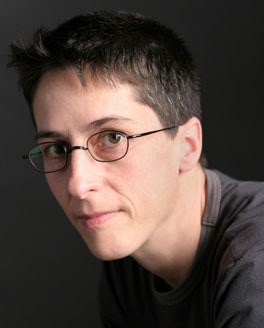
The Bat Segundo Show: Alison Bechdel II

Alison Bechdel recently appeared on The Bat Segundo Show #250.

Ms. Bechdel is most recently the author of The Essential Dykes to Watch Out For. To listen to our previous interview with Ms. Bechdel, check out The Bat Segundo Show #63.

Condition of Mr. Segundo: Overly concerned with modifiers attached to artists.

Author: Alison Bechdel

Subjects Discussed: The relationship between visual developments and storyline developments, how personal developments worked their way into Dykes to Watch Out For, Tips o’ the Nib, narrative authenticity, research through asking people, being afraid of the telephone, the comics world as a simulacrum of the real world, being overly stimulated by the real world, developing specific background details, the risks of diverting attention between graphic novels and comic strips, dwelling upon a community vs. dwelling upon the self, therapy, Woody Allen, being ahead of the technological curve, Proust and the first telephone call in a novel, laziness vs. being seduced by technology, scanned lettering, managing all the characters in the strip, having characters refer to each other by first name, the advantages and disadvantages of deadlines, adapting media messages for the comics medium, Mad Magazine and Mort Drucker, fear of empty space, when text and images are not enough for comics, political semiotics and behavior, strips with little to no dialogue, artistic influences, fitting multiple people into a frame, portraying the butts of various characters, contending with censorious requests from newspaper clients, the limitations of four rows, Madwimmin Books and big box stores, why the bookstore is the perfect social nexus, the outcry upon introducing Stuart, the ideological balance between Mo and Stuart, gender jokes as cheap shots, contending with those who didn’t understand Bechdel’s storytelling style, the role of politics in Dykes, the moral responsibilities of a cartoonist, and Proposition 8 and the future of cartooning.

EXCERPT FROM SHOW:

Correspondent: I think we should really clarify this for the record. I mean, the stripes on Mo’s shirt become more pronounced over the course of time. And they increasingly grew thicker during the course of the early ’90’s. And then sometime around 1995, they solidified into that absolute thickness that we have enjoyed for the last decade or so. I know there have been many Harry Potter jokes that you’ve thrown around. But you were there, of course, before Harry Potter.

Bechdel: That’s right.

Correspondent: But I have to ask you about the stripes. Had it occurred to you at any time to have Mo not wear a striped shirt? Or did you feel that this was such an indelible part of her disposition?

Bechdel: I think there might be one scene where she’s not wearing a striped article of clothing. But I can’t remember what it is or what its significance is. Indeed, the stripes did grow thicker. Very good observation!

Correspondent: Yeah! They did! They did! It was really great to read this all in one burst, because there are so many different character developments, which I plan to ask you about. But maybe I could probably phrase this better by pointing out Sparrow, for example. How the front curls that she had were chopped off to fit in with the adjusting times. And I’m wondering when you decide to change the look of a character. What circumstances dictate that? And some characters, of course, like Mo, stay the same over the course of time.

Bechdel: Wait, can I just make an observation? Thinking about those thickening black stripes, I think that’s of a piece with the increasing darkness of the strip and indeed the era in which it was passing through.

Correspondent: Yeah, yeah, that’s true.

Bechdel: Maybe now if I were continuing to write it, Mo’s stripes would continue to get thinner and thinner.

Correspondent: Thinner, thinner, thinner.

Bechdel: No, I mean literal — I mean like figurative darkness.

Correspondent: Figurative darkness!

Bechdel: Yeah! Yeah!

Correspondent: So there’s some allegory here, I see. So it’s

Bechdel: Yeah, I’m totally bullshitting. I’m totally making this up.

Correspondent: Ah! No, no, this is good. This is good.

Bechdel: But…

Correspondent: But we can give the listeners something to latch onto here. Great allegorical decisions upon your part. I mean, how much of this is intuitive? And how much of this is really a conscious effort? Well, you know, Mo’s stripes look better. They just look better.

Bechdel: No, it was purely a visual decision. I don’t know. I just used a different pen or something. And it looked better thicker.

Correspondent: Okay, what about Sparrow’s hair?

Bechdel: Sparrow’s hair. Well, what made me decide to do that? I don’t know, but interestingly it prefigured her crossing over from being a lesbian into being a…

Correspondent: Yeah.

Bechdel: …a bisexual. I forget what she called herself. A bisexual lesbian.

Correspondent: I think she did.

Bechdel: But she didn’t want to completely let hold of her lesbian title. But she got this slightly more feminine-looking haircut.

Correspondent: Yeah, she did. She did. I mean, did you plan her to essentially shack up with Stuart?

Bechdel: No, not at that point. I didn’t.

Correspondent: How much does a visual decision like this predate the actual plotting? Or perhaps anticipate it in some way? It’s a very interesting observation.

Bechdel: It is interesting. What’s even more interesting is that the way that these storylines and developments prefigure my own life. Or are a reaction of things going on in my own life. Which I don’t like to admit, typically. But as I looked back over the book, I could see all these absurd parallels with my own life. It seemed almost indiscreet to have included them.

BSS #250: Alison Bechdel (Download MP3)

This text will be replaced

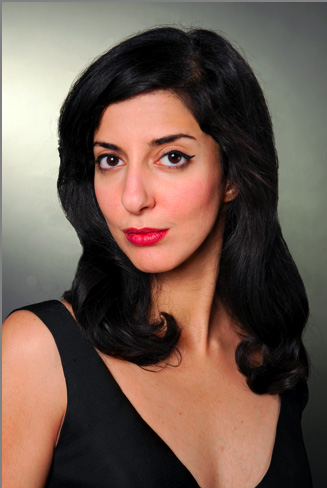
The Bat Segundo Show: Porochista Khakpour

Porochista Khakpour recently appeared on The Bat Segundo Show #249. Ms. Khakpour is the author of Sons and Other Flammable Objects.

Condition of Mr. Segundo: Avoiding the seemingly erudite man with the flamethrower.

Author: Porochista Khakpour

Subjects Discussed: Professional doodling, italics that represent facial expressions, acting out dialogue, the protracted difficulties of editing, the creative benefits of neurosis, thinking of an audience vs. writing in a distinct voice, maintaining lists of words, bulleted lists within the novel, the relationship between the equal sign and character consciousness, writing lengthy scenes that involve the anxiety of waiting, working from a journal to get at feelings within fiction, playing games in novels, aversion to mainstream narratives, the burden of universality, the novelist as an authoritarian figure, David Foster Wallace as a distinct author who reached a mass audience, “Good People,” the cycle of abuse that runs through Xerxes, missing daughters, how women relate to men, character names and explicit historical associations, the Americanization of Iranian names, truncated names, contrast and comparison with Sam and Suzanne, how 9/11 transformed the idea of looking at other people with an open mind into something else, relying on general descriptions for physical details, keeping specific details from the reader, how far an author must go for emotional truth, going against the contract of a book, the diminished acknowledgments section between hardcover and paperback, losing old friends, reading group questions, moving into an age where 9/11 novels are going to date, Mahmoud Ahmadinejad and American diplomacy, and lucky timing with pub dates.

EXCERPT FROM SHOW:

Correspondent: So you actually added 10,000 words just in the editing process?

Khakpour: Yeah, I did.

Correspondent: Really?

Khakpour: Every time I edit. Everything. I have. Even with my journalism. They’ll tell me cut this piece down. And we’ll get to the editing phase. And I’ll always end up adding. Even when they tell me specifically, “Cut it down.” I don’t know what it is. Editing to me just means adding instead of cutting. It’s crazy.

Correspondent: Is it possible that perhaps you’re getting questions from an editor and this influx of information causes you to think more, and therefore causes any kind of piece or novel or whatever you write to expand and protract or the like?

Khakpour: Yeah. Probably, I think. I always think of my audience. And that person that I think of as my audience is very quiet and sits with their folded hands, and is very polite and approving.

Correspondent: Folded hands? I didn’t have my hands folded when I read this. I want to assure you.

Khakpour: (laughs) It’s a good somber schoolgirl.

Correspondent: Wow, I didn’t realize this.

Khakpour: Crossed legs. Very approving. (laughs)

Correspondent: There should have been an etiquette guide in the paperback here.

Khakpour: But then the minute the editor speaks up, I’m like, “Uh oh. This is a very intelligent human being who is not going to buy all my bullshit, is actually going to question me now.” And then I fall into super-neurotic mode. And that always means, well, not only am I going to think of this editor, but I’m going to think of all the other voices of dissent. All the people. And it goes from there. And so it just involves adding and adding and adding. To appease all the various voices in my head. (laughs)

Correspondent: Thinking about the audience then makes you more neurotic.

Khakpour: Overanticipating often. Yeah. I’m trying to tone that down right now.

Correspondent: That’s interesting. But then to a certain degree, you have to leave things relatively organic and intuitive, and you can’t think about an audience. It’s important to have gestation here. And I’m curious if this might possibly be an issue.

Khakpour: I think it is. I’m a control freak.

Correspondent: You want people to like you? Really, really like you?

Khakpour: Well, not even like me. But I like some control over how people are digesting my work. That’s ridiculous. But I think it also has to do with communication. And because English wasn’t my first language. I always feel like I repeat. I’m like Joe Biden. I’m often repeating the same thing over and over and over at people. “I got it the first time.” You know, there’s no need to say the same sentence over and over and over. But I always feel that people aren’t hearing me, or somehow don’t understand what I’m saying. So….

Correspondent: You know, I…

Khakpour: I think I’m going to have to back off now. I’m learning that.

Correspondent: I’ve heard that Nicholson Baker — what he does is that he Control-Fs a specific phrase throughout all of his work to make sure that he has not written that particular phrase before.

Khakpour: Oh, that’s great.

Correspondent: Do you have this level of detail?

Khakpour: I’ll do that with certain words. Because I’ll have certain words that are my favorite word of the moment. And I’ll still — I’ll do that thing that I did when I was a young immigrant. I used to keep a list of vocab words that I loved. And even now, there will be some word every once in a while on a little list by my desk. Like I like that word! Let’s use that word somewhere.

Correspondent: You actually have a list of words by your desk?

Khakpour: Yes, sometimes I do that.

Correspondent: The words I have to include in the book. Really?

Khakpour: Yeah. And they’re not like ten dollar words.

Correspondent: Okay.

Khakpour: Or hundred dollar words. But they’re just interesting or strange. Or words. Or unusual usages. I’m often very much tried to find the Find function or the Replace function. So I’ll have to double check and make sure I don’t use that word several times. But it’s usually on a word level there.

BSS #249: Porochista Khakpour (Download MP3)

This text will be replaced

Attorney General Mukasey Collapses

Tonight, while delivering a speech at a Washington hotel, Attorney General Michael Mukasey began slurring his words and lost consciousness. He collapsed and was rushed off to George Washington University Hospital. Mukasey’s Wikipedia page has been undergoing numerous revisions, with versions of the page claiming that Mukasey is dead. But there isn’t any hard or credible information to suggest that Mukasey has passed away. If there is any reliable information to report, I will update this post.

Billy Joel: “Fuck You”

A few days ago, I openly pondered why Billy Joel’s “A Matter of Trust” was released to the airwaves. I vowed to track down the people responsible, but, frankly, I forgot about the issue altogether. But tonight, Billy Joel responded from Australia (where he is now preparing for a few tour dates) through one of his Robert Burns LLC email accounts with the following comment:

Here’s my ‘ouvre’ – Fuck You. Sincerely, Billy Joel

Presumably, the jet lag that Mr. Joel was suffering from caused him to misspell “oeuvre.” Or perhaps he is not accustomed to typing. But I’m disappointed. Frankly, I expected more from Mr. Joel. Perhaps some lengthy explanation on why he steered down this regrettable musical path and gave us “A Matter of Trust.” Perhaps a defense of the endless F Sharps and C Sharps within this particular song. Yes, it can’t be easy to take some constructive criticism when you’re sitting on millions of dollars. And it can’t be easy when you’re a major pop star now relying on AutoTune to sing the national anthem on live television. But let us give Mr. Joel the benefit of the doubt. Perhaps Mr. Joel is suggesting with his answer that his entire career has been predicated on saying “Fuck You” to the general public. And if that’s the case, then I thank Mr. Joel for his candor. Perhaps things would be different if a little bit of this “Fuck You” attitude was in the new material. But “Fuck You” is Mr. Joel’s explanation. And “Fuck You” represents Billy Joel’s career from 1985 onwards. Which is a pity. Because I actually kind of liked his early stuff.