I have unpublished this piece and all of the comments. (Please see my February 14, 2024 essay.)
Category / Uncategorized
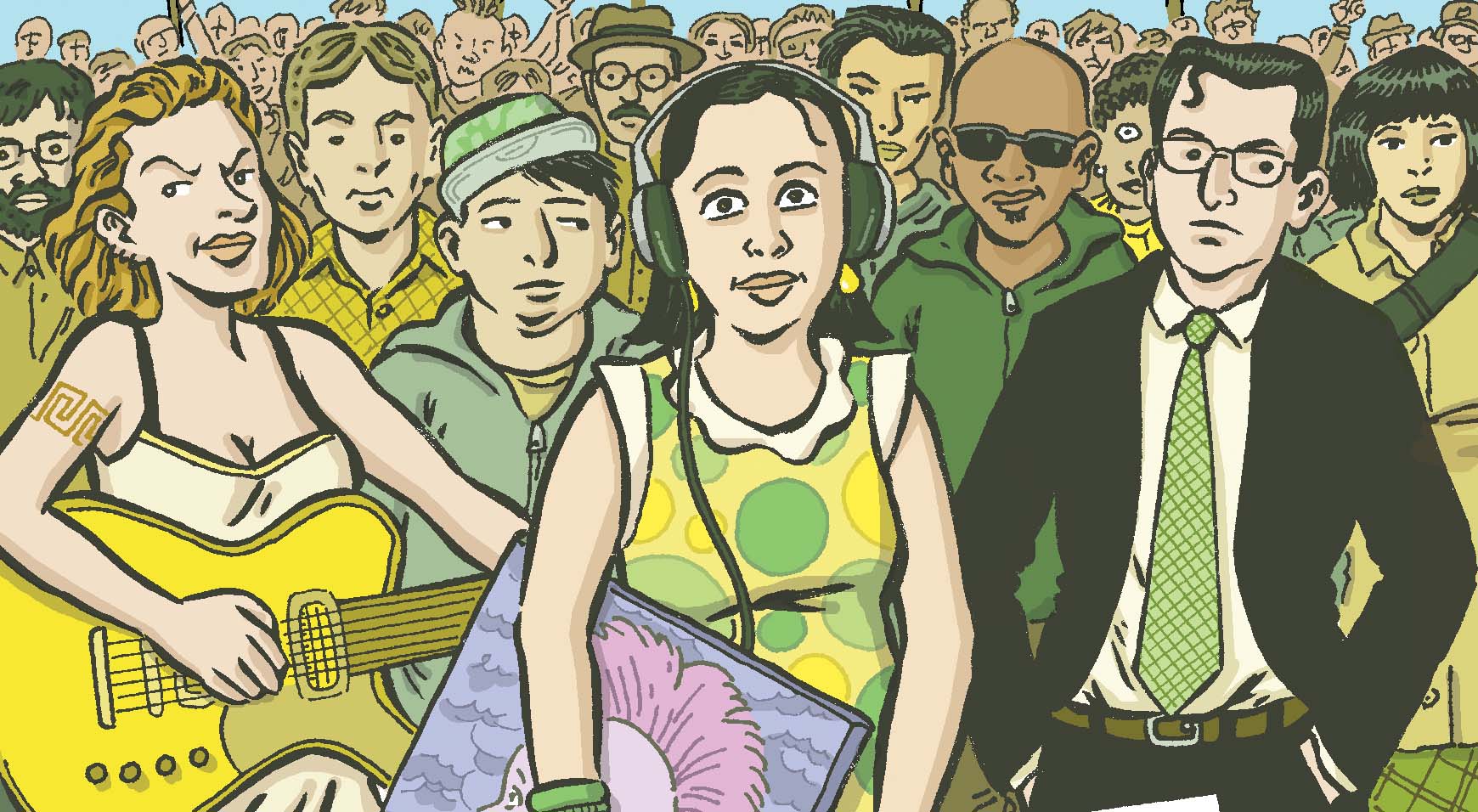
Alissa Quart (The Bat Segundo Show #514)
Alissa Quart is most recently the author of Republic of Outsiders. This show is the second of two related programs devoted to the American epidemic of gravitating to mainstream culture in an age of limitless choice. (You can listen to the first part: Show #513 with Kiese Laymon.)
Listen: Play in new window | Download
Author: Alissa Quart
Subjects Discussed: George Lucas as “independent filmmaker,” how the presumed amateur mediums of YouTube and Kickstarter have become dominated by established figures, Amanda Palmer’s exploitation of musicians, Marina Abramović’s exploitation of dancers, Tilda Swinton marketing herself as an outsider, problems with the term “maverick,” the problems with Dave Eggers’s “selling out” rant, why resisting “selling out” has declined in the last ten years, Branded, OK Soda, how alternative cartoonists defied corporations, the decline in ad parodies, Yahoo cracking down on Tumblrs with sexual content, the flat self, how the lack of privacy destroys existential possibilities, the online exhibitionist impulse, Marie Calloway and easily deciphered pseudonyms, the relationship between the professional and the amateur, the rise of Etsy, T.J. Jackson Lear’s notion of antimodern dissent, people who strive to be featured sellers, false feminist fantasies, stealth capitalistic wish fulfillment, how physical space of hobbyists is appropriated by digital companies, handmade status, parallels between Etsy and freemium video games, addiction to Candy Crush Saga, Team Fortress 2, Netflix as an elaborate scheme to mine entertainment data, the narcotic state of false entertainment empowerment, vegans and fake meat, sanctimonious parallels between an animal rights activist telling you to watching a stream of slaughterhouse videos and a supermarket chain which claims that it slaughters animals humanely, crying over a field mouse dying, animal rights futurists, how prescriptive dichotomies develop into mainstream tropes, morally ostentatious ideological positions, The Icarus Project, the fine line between being eccentric and in need of help, bipolar writers, Mad Pride, a thought experiment concerning healthcare, whether or not it is the outsider’s to constantly resist, nontraditional settings for psychiatric care, Wikipedia’s transphobia against Chelsea Manning, transfeminists pointing to the assumption that the decision to have children is an assumption for all women, #solidarityisforwhitewomen, blind spots of mainstream feminists, gender distinctions at Barnard, young people and privacy*, Snapchat, how outsider ideas become mainstream, a Comics Alliance review of Heroes of Cosplay, cosplay as the professionalization of fans, the Tron Guy, how body image is becoming more Hollywood with professional cosplay, Vimeo auteurs, viral videos about broken subway steps, corporations that use images of people against their will, Beasts of the Southern Wild, Star Wars Uncut, contemporary collective filmmaking of today vs. truly independent filmmaking of the past (John Cassevetes, et al.), how tastemakers saved Kenneth Lonergan’s Margaret, the entitled fan critic vs. the designated gatekeeper, the decline of auteurism, mumblecore, documentary collectives in the 1960s, designated advocates vs. fan advocates, Kickstarter and behavioral economics, what a true outsider is, Sublime Frequencies’s Alan Bishop, the discipline of only being influenced by the sensibilities you cultivate, Pitchfork, taste as the last recourse in a world with too much information, how the word “curator” has been inverted, Maria Popova, the obligation to be outsider in some way, NPR Pop Culture Happy Hour, Lev Manovich’s idea of data streams, and the limited cultural scope of hyperniche groups on Twitter.
EXCERPT FROM SHOW:
Correspondent: When George Lucas made Star Wars Episodes I through III, he declared himself an “independent filmmaker.” Even though he was self-financing these movies for many millions of dollars. I also remember in 2011 when Zooey Deschanel and Joseph Gorden Levitt were singing “What Are You Doing New Year’s Eve?” and they released this to YouTube. They faced a great deal of criticism. YouTube is the amateur medium. Well, now we’re in a totally different ball game these days. Now we have crowdfunding. We have Spike Lee, Zach Braff, Veronica Mars on Kicktarter. And these people say, “Hey, it’s okay.” And what’s even more astonishing is that people are more accepting of this. And maybe, just to start off on what we’re dealing with here in terms of insiders and outsiders, why do you think that independent filmmaking has changed so that we now accept these people moving into the turf previously occupied by outsiders and people who were scrabbling together various resources to make different, eclectic art?
Quart: Well, I think right now we’re seeing coalitions of insiders and outsiders in a single person. So you have someone like Spike Lee, who is doing a Kickstarter campaign. He may have raised it by now. He was trying to raise $1.4 million. And then you have Amanda Palmer raising something similar on Kickstarter. Even more. And then you have actual true outsiders, or people who would have defined themselves as outsiders for many years, also using these same media. And it becomes, as I write in my book, a “republic of outsiders” — some which are arguably relying on their fans too much.
Correspondent: To the point of exploiting them, as Amanda Palmer is. “Hey, we’re going to have professional musicians play for free.” Which she’s received a lot of understandable flack for.
Quart: And I just saw recently Marina Abramović — the performance artist who had a big show at MOMA, quite famous. A dancer was complaining about being exploited for her labor in a crowdsourcing. Now there’s highbrow artists who are getting in on this kind of fan/star collapse and also monetizing the labor of people who are non-stars.
Correspondent: It’s interesting. Because I saw recently that Tilda Swinton went to Russia and is presenting herself as a total outsider. Of course, there’s her famous exhibit where she’s basically sleeping there. We’re now seeing a situation where mainstream people, or people who have dabbled between mainstream and outsider type of art, now feel this overwhelming need to define themselves as a rebel in some way. And yet they’re still reliant in many ways upon corporate cash or mainstream sources.
Quart: Or ordinary people’s cash.
Correspondent: Yes!
Quart: Or a friend’s cash.
Correspondent: And with crowdfunding. Yes.
Quart: Or a friend’s labor. And in a sense, the traditional selling out, where you’re relying on a corporation, can start to seem somewhat more innocent.
Correspondent: Well, why do you think that identifying yourself as an outsider is now a fundamental part of being? We can all sort of see through it. Especially when one tracks the general tenor or some artist’s voice. So why is this such a big thing these days?
Quart: Originally I was going to call this book either The Maverick Principle or Mavericks. And then there was the 2008 election. Sarah Palin and John McCain calling themselves “mavericks.”
Correspondent: “A real maverick.” Yes.
Quart: And then at some point Obama was even called “renegade.” So I think it’s really interesting. There’s a lot of use of language of the rebel/renegade. But part of what I did in this book was that I tried to include as many people who I considered — and I use this word advisedly — authentic outsiders, as well as people who are in this inside/outside thing like Amanda Palmer.
Correspondent: Sure. Well, one piece of writing you don’t actually include in the book, that I feel is actually germane to this argument, is Dave Eggers’s famous “selling out” speech, which he gave to The Harvard Advocate. And I still see it crop up all the time on Tumblr, where people constantly post it. And he basically says, okay, so the Flaming Lips appeared on 90210 and they performed their popular songs. But who cares? And he says, “Hey, I take money. Considerable thousands of dollars from Fortune Magazine. But I’m giving that away.” But what’s interesting about this, and what no one actually seems to think about in considering the Eggers rant, is that he’s not willing to hold himself accountable for how being indoctrinated in that kind of mainstream situation is going to affect his outsider nature or is actually going to compromise it in some way. And I’m wondering why this is such a compelling piece of text even almost fifteen years later, after it was originally disseminated. Why do you think people are still clinging to this notion of being an outsider or wanting to justify the fact that we’re all ensnared in this trap of having to…
Quart: As I said, the term “selling out,” which I considered an honorific when I was growing up. Or the opposite. Not selling out was honorific. Selling out was a terrible thing to do. I think the paradoxes of the term “selling out” have collapsed. And so you see people not even recognizing what that means. Now I’m going to start sounding like an old fuddy-duddy. But it’s not really a term that people really use or judge themselves by. It’s seen as a compliment. “Oh, I got Doritos to use my content that I created. Even though I’m just a fanboy.” Or “I got the latest hip-hop artist to use my remix in an advertisement. I’m so great.” So I think one of the reasons this document may hold appeal is that it’s a smart, well-heeled person kind of explaining what a lot of people are experiencing and addressing, if there is any, their lingering doubt. Is this a problem that I don’t even have this lodestone of selling out/not selling out anymore?
Correspondent: Why do you think that the notion of “selling out” became — when do you think the stigma was deflated? I mean, is this probably the last ten years, would you say?
Quart: I could feel it. I wrote a book. It came out in 2003.
Correspondent: You did.
Quart: Branded. And that to me was like — I didn’t even know it then, but I was seeing all these adolescents — I called it self-branding — who were defining themselves by the products they were consuming. Like “I am Coke. I am Pepsi. I am Abercrombie.” And I thought to myself, “Wow, this is just a teen thing.” But then the more I looked into it, these kids were growing up. And they were going to similarly retain that kind of identification. So I think a lot of it happened in the ’90s. It happened during the consolidation of corporations. It happened with the faltering economy. So people didn’t feel that they had the courage necessarily, even if they wanted to. To not define themselves by status markers. So I think there’s a multitude of factors that went into it.
Correspondent: You think people wanted to belong? And not really finding an absolute group, they turned to what corporations had to offer?
Quart: Yeah. I think it was just a surround sound culture. I mean, it is right now. We live in a screen culture where there’s endless pop-up ads, where our data is being mined. Where if I check out a jacket on a site, I’ll be seeing that jacket reappearing endlessly on my browser with every site I visit. In the early 2000s, when I wrote Branded, the line between advertorial and editorial in teen publications was collapsing. And that itself was a cause for dismay in media critic circles. And I wrote about it. “Oh no. They’re getting these advertising giveaways that are masquerading as magazines for teenagers.” Now everything they read carries promotional content. Magazines themselves are promotional entities. Again, the paradoxes of what selling out means have collapsed. And given the difficulties of the magazine and newspaper businesses right now, people don’t even focus on this that much. What content carries a commercial valence and which doesn’t.
Correspondent: But there was a time — like I think, for example, of OK Soda, where Coca-Cola hired Dan Clowes and Charles Burns to make this hip kind of design. I love this story. And they basically took the money and ran. I mean, there used to be a more honorable way of taking corporate money and pissing in their face.
Quart: Well, I think what you’re talking about is subversion, or subvertising. Remember all those terms that people used to use, and I loved? They don’t seem to be around so much anymore. Remember there was that moment. Well, it starts with MAD Magazine. Ad parodies? I mean, I don’t even see ad parodies anymore. It’s kind of weird.
Correspondent: Yeah! There used to be a rich culture in the ’90s and even in the early noughts. They were still, I think, flourishing even after September 11th. But I think something happened. And I guess I’m trying to ask you, Alissa…
Quart: What happened?
Correspondent: What was it? It probably, as you say, was post-2008 economic problems.
Quart: Some of them. 9/11 is a pertinent moment. Because you saw our President telling us to go shopping. It wasn’t “Have courage! Batten down the hatches!” It was “Go to the mall!” This is the way to be American. That was just one of many data points on that journey towards becoming an American shopper, not an American citizen.
Correspondent: One thing you didn’t really write about in this book that I think is possibly germane to this conversation is Tumblr. I mean, here is a situation where people think they’re being alternative on Tumblr. And very often, I see that they’re actually tailoring their posts so they can be liked or favorited and reposted elsewhere. And then on top of that, we had Yahoo recently purchase Tumblr. And they’ve started to quash down on certain blogs that actually have sexual content. And — I call them the Tumblrettes — the people who work at Tumblr, they scurry away when anybody has a more outsider or traditionally pugnacious reply in response to a cultural ill. Do you think that sometimes mediums such as Tumblr enable our worst impulses?
Quart: I mean, if we’re talking about companies buying other companies, we see that all the time. We see Goodreads being bought by Amazon. I guess in the ’90s, they would have called it mini-majors. Remember when independent studios were being bought? Miramax or Sony would purchase an independent company. Well, you see that happening a lot with companies that would be offering alternative platforms, that would be bought by companies that don’t offer those platforms. What happens, I guess, is that eventually there’s a neutralization of content. That’s another way in which outsiderdom is controlled.
Correspondent: But I think people have a choice to limit themselves or put themselves into some position where some moderating force is going to discourage them from truly expressing what’s on their mind. Clearly, there is something to be said about people’s choice of expression. I mean, they’re consenting to this. It’s not just evil corporate forces. And I’m wondering why that is.
Quart: I think, in the past, you used to see science fiction movies where people’s souls would be sucked out of their bodies by alien beings. And now we give away our information for the price of a five dollar badge online. For a sale item. There’s just such a level in a certain way. I call it the flat self. I mean, this isn’t in my book. But it’s something that I see a lot. And I guess it’s one of the incentives for writing a book like this, for people who are less flat. But for people who are willing to give away their information, their data — even the reaction to the fact that our information is being obtained against our will by all these companies and by our government. People are like, “Eh? Sure! I’ll give that away for 10% off!”
Correspondent: Well, what would be the typical flat self? Or I suppose a pernicious flat self? Since we’re on this particular metaphor. It seems to me it’s kind of an evolution of the dyed hair craze of people. As I grew up in San Francisco and Berkeley, you’d see people with dyed hair and punk T-shirts and they’d all look alike. Possibly more alike than a sea of corporate navy blue suits.
Quart: Well, there’s lots of ways to be a flat self. I guess what we’re talking about here is people who have, in some ways, are afraid and have succumbed to just a commercialized self that doesn’t have an interior life. So if you don’t think you have much of an interior life, the only thing you’re afraid of is if you’ve done anything wrong that people will see. You don’t really care about protecting the nature of your subjectivity. That’s not something that you’re concerned about.
Correspondent: A lack of an interior life is possibly part of this problem?
Quart: Perhaps. Or a lack of an interior life that you care about preserving.
* — Our Correspondent misstated the exact statistic. We regret the error and hope that the above link will set the matter straight.
(Loops for this program provided by Kristijann, 40A, ferryterry, and Boogieman0307.)
The Bat Segundo Show #514: Alissa Quart (Download MP3)
This text will be replaced
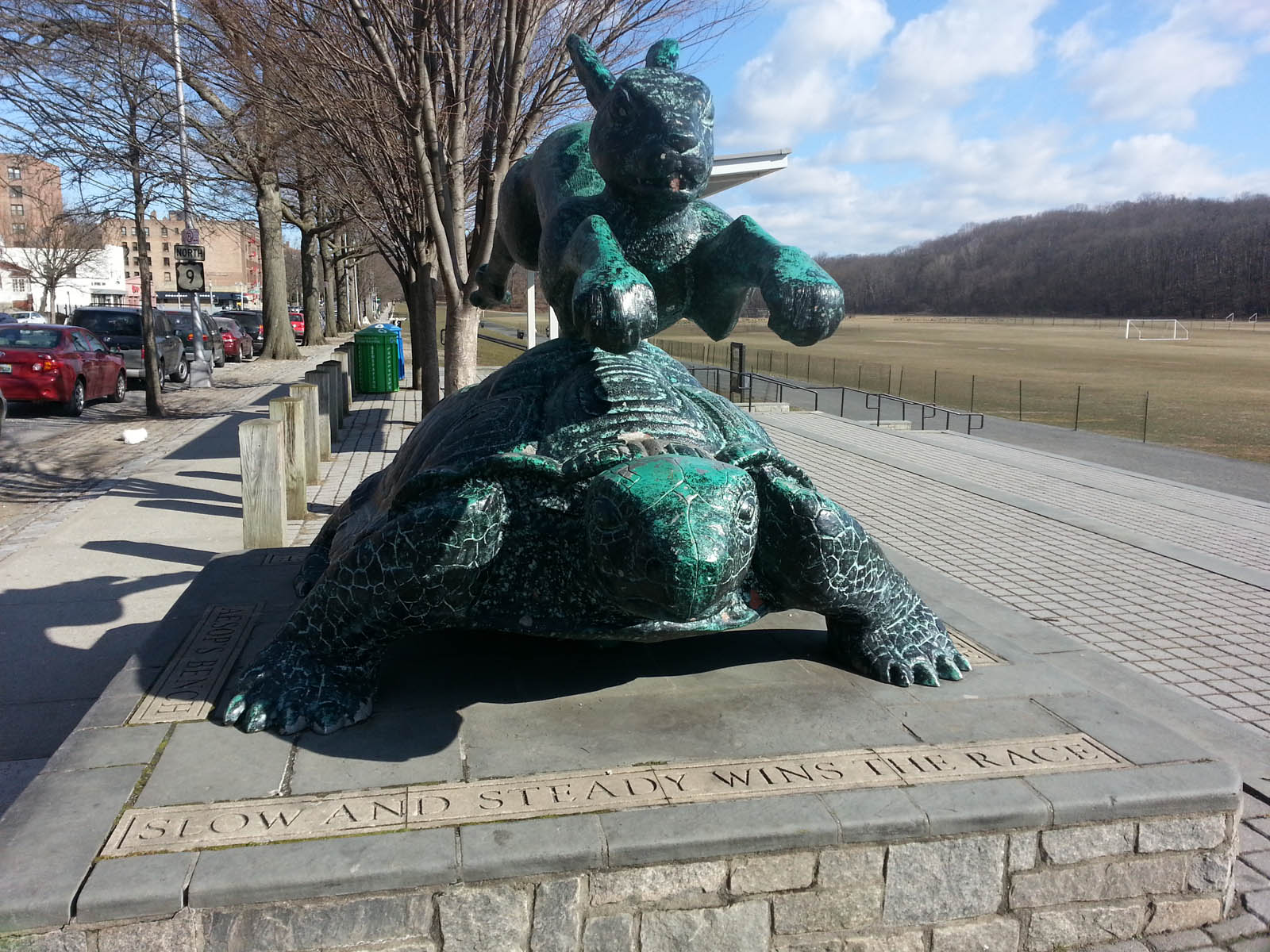
A Walk from Manhattan to Sleepy Hollow
[EDITOR’S NOTE: On March 22, 2013, I set out on an eighteen mile “trial walk” from the top tip of Manhattan to Sleepy Hollow, New York, to serve as a preview for what I plan to generate on a regular basis with Ed Walks, a 3,000 mile cross-country journey from Brooklyn to San Francisco scheduled to start on May 15, 2013. It will involve an elaborate oral history and real-time reporting carried out across twelve states over six months. But the Ed Walks project requires financial resources. And it won’t happen if we can’t raise all the funds. But we now have an Indiegogo campaign in place to make this happen. If you would like to see more adventures in states beyond New York, please donate to the project. And if you can’t donate, please spread the word to others who can. Thank you!]
Other Trial Walks:
2. A Walk from Brooklyn to Garden City (Part One and Part Two)
3. A Walk from Staten Island to Edison Park (Part One and Part Two)
The Broadway Bridge rumbled hard with tardy cars hoping to beat that dreaded moment when the lift raised for a big boat hauling cargo across the Harlem River, tying up traffic into a time-consuming knot that no sailor could unravel at gunpoint. On the whole, this was a reasonable bridge, agreeable and unassuming, not unlike a workmanlike band following an act that bombed spectacularly on stage. You couldn’t help but like the Broadway Bridge after all the barbed wire coils and the industrial grit that came before. But I think I may have loved the bridge simply because I crossed it on foot.
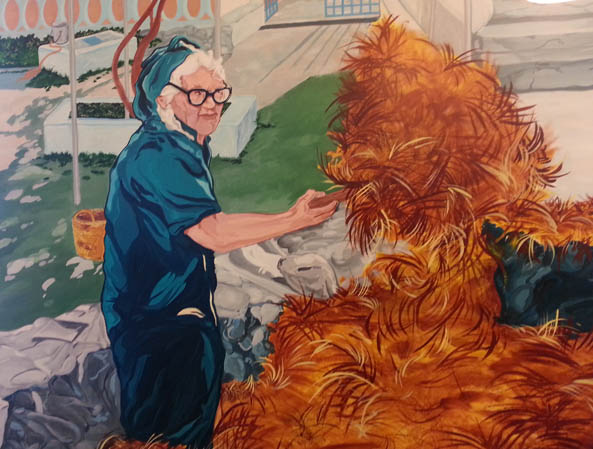
I was walking across to meet Lisa Peet, a good soul with a wily mane and a knowing glint who had kindly agreed to be my first interview subject. We met in the Gold Mine Cafe, a former donut shop recently renovated to serve breakfast at all hours of the day. This establishment inveigled the locals with its new kitschy interior, which included a Greco ideal, his knee raised, ensnared in a vessel with a periwinkle lid. This marvelously extravagant illustration, seen only if you look to your left when you leave the joint, rightly reflected the neighborhood inconsistencies that Lisa told me about. There was also a painting of an elderly woman tempting fate with a reddish orange mass, which hung just behind the table where Lisa and I chatted:
[haiku url=”http://www.edrants.com/_mp3/trialwalk1.mp3″ title=”Conversation with Lisa Peet” ]
“No restaurants,” said Lisa of her neighborhood. “No coffee shops. No galleries. No bookstores. No nothing. There’s the Bronx Ale House, which opened up a few years ago. That’s a nice place. No takeout really. There’s Riverdale. You can get delivery from there. You have to leave if you want to do anything fun.”
I pointed to the Gold Mine Cafe’s charms, which suggested new fun in the making.
“There’s fun, but you really have to make it.”

I saw the geese after I saw the coyote statue atop a rock and the slowly thawing ice rink that needed to be deliquesced out of its misery. I saw the geese after shuffling around a memorial lawn with its grave markers parked low to the grass and American flags shooting out of the soil. I saw the geese wandering near the Van Cortlandt Park baseball diamond, not far from the big track that still attracted stubborn joggers in the morning chill, and I attempted an interview.
I spent more minutes than I care to admit slowly advancing on the icy lawn, hoping that the geese might view me as more peaceful and more inquisitive than the average human. But the geese had seen humans pull this parlor trick many times before. They squawked and they sprinted in that gangly manner that only geese can and they fluttered into the air when I pursued them beyond the specified maximum distance established by the Human-Geese Accord of 1872.
The geese did not wish to answer my inquiries concerning income inequality or human-animal relations or Katy Perry’s sartorial style. Still, I was having a good deal of fun coaxing the geese to talk with me. I opted to leave them alone and file an interview request with their publicists. I did not know that there was a bigger interview ahead in Yonkers.
The idea came when I walked into Yonkers and saw Mayor Mike Spano’s name on the city limits sign. I had never been in Yonkers before. Perhaps Mayor Spano would talk with me. I had not known that Mayor Spano had just delivered the State of the City address. In fact, I knew nothing about Yonkers politics at all.
I decided to hit City Hall.
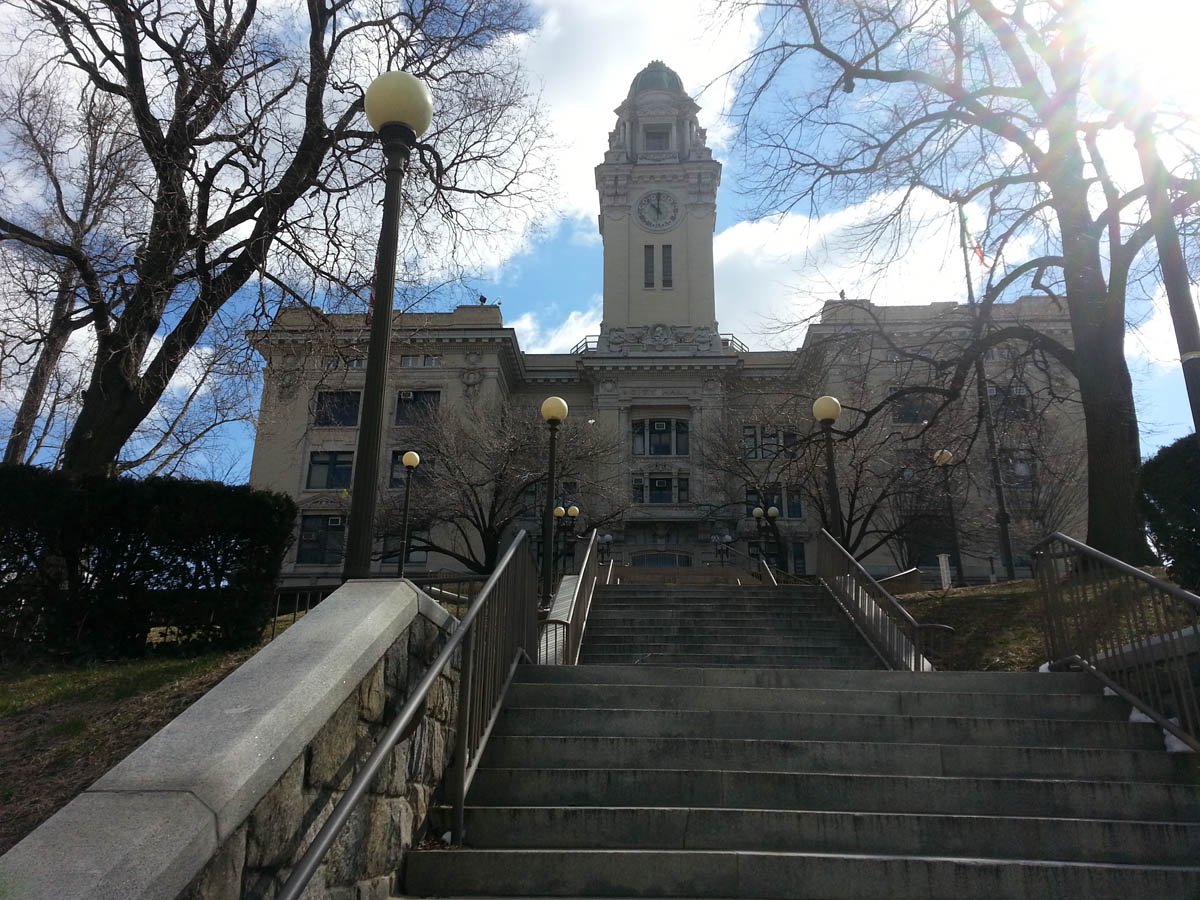
I didn’t anticipate that Yonkers City Hall would be a fairly imposing Italianate edifice built in 1908 and situated on a rather high hill.
This did not stop me.
I walked to the side entrance and told the amicable guard that I was going to the Mayor’s Office. He seemed to believe that I knew what I was doing and directed me to the second floor. I went to the Mayor’s Office and talked with a friendly woman named Francesca. The Mayor was in Albany. I asked if there was anybody else who would talk with me, but apparently all communications people were locked in an implacable meeting. It was so quiet behind Francesca that I began to wonder if city officials were playing a long game of Spin the Bottle, perhaps over coffee and cake. I asked Francesca if she would talk with me and she said that she wasn’t authorized to do so. But she was very nice about it.
It then occurred to me that Yonkers City Hall had other floors and, quite possibly, more movers and shakers who might talk with me. Since I had gone to the trouble of walking up the rather high hill, it seemed eminently reasonable to bag the Munro.
There were a few fun-filled conversations inside the Public Works Department and the Department of Engineering, although I quickly learned that Yonkers City Hall acoustics share certain qualities with an invisibility cloak. The doors throughout the building are sturdy and loud when opened. Every lawmaker and aide knows the precise moment someone enters an office. I entered one room in search of a Yonkers booster and was alarmed to hear a man reply from his office just after I chatted with several good-natured people craning their heads out of cubicles. He had heard the whole exchange. I wondered if the man was preparing for some inevitable moment when he would overhear some vital gossip that would pull him from his chamber and into some position where he would spend the rest of his days laughing as hard as Emil Jannings.
Nearly everyone in Yonkers City Hall was kind and courteous. Maybe I was stunned because, living in New York City, I’m accustomed to city employees who give you the look of someone who wants to rip out your heart with gelid hands and watch you die. It’s also possible that city employees don’t often receive visitors or interview requests quite like this.
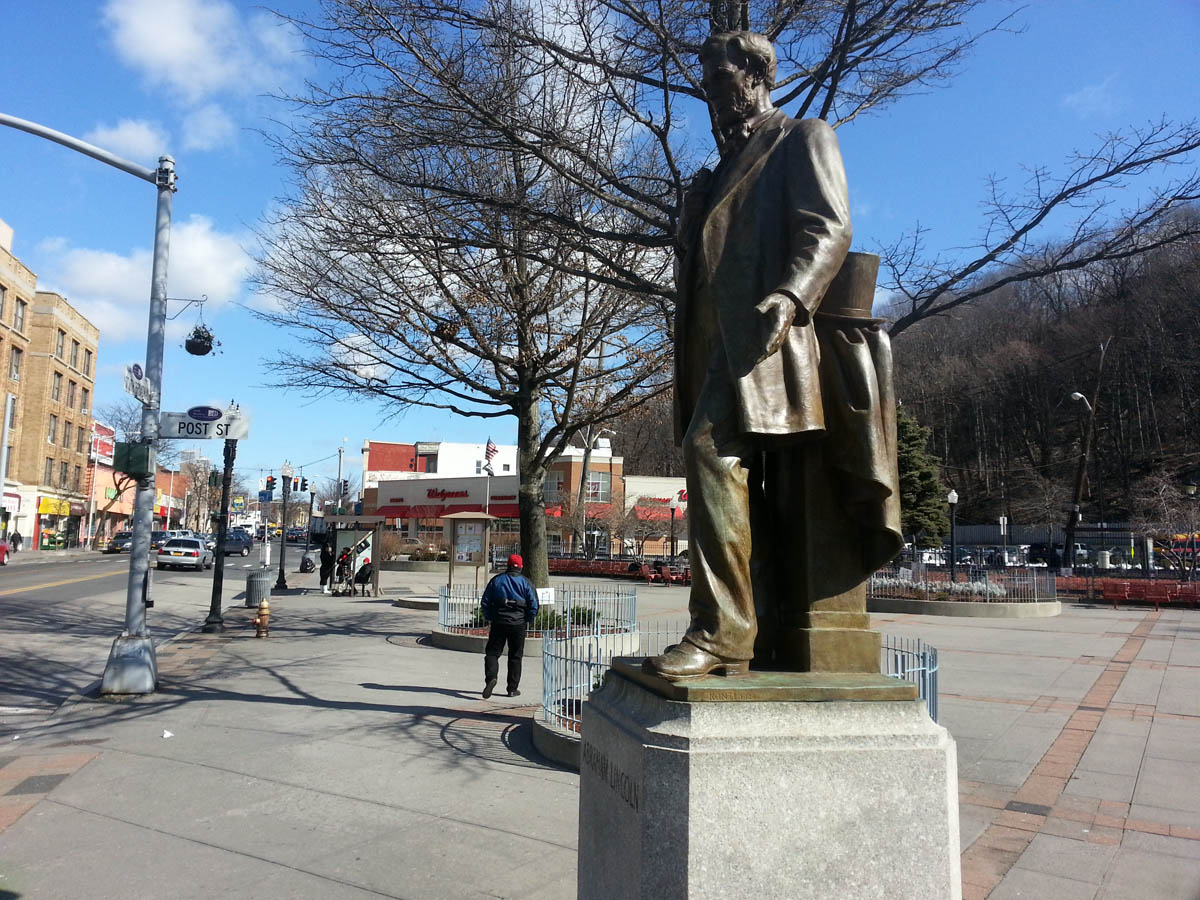
Whatever the reason, all this bonhomie led me to believe that I could talk with someone on the City Council. My journey started at one wing of the fourth floor, where administrative types were answering telephones and sealing envelopes and trying to hold the majority leader — a man named Wilson A. Terrero — to his hectic schedule. Nerissa Peña, Chief of Staff of the Yonkers City Council, was very helpful in seeking five minutes with Terrero, who was at the tail end of a vivacious meeting with two businessmen. I thanked Nerissa and told her that I would return, once I had investigated the opposite wing.
I walked to the other side of City Hall. Several people told me that there was a man named Chuck who liked to talk. Chuck was the Council President. All spoke fondly of his gregariousness. The three women working in his office. The communications guy, who name-checked Joshua Ferris’s The Unnamed when I told him about the walk. And I’m fairly certain that if I had loitered around City Hall after business hours, some wraith kicking around for decades would tell me that Chuck Lesnick is the man you need to spread the Yonkers gospel.
But Chuck wasn’t there.
It was suggested that I schedule an appointment, even though the four lovely people I talked with in Chuck’s office understood that these interviews were spontaneous.
I returned to the other wing to see if I could catch Mr. Terrero just before he was splitting for Albany. As I chatted more with Nerissa about this drop-in prospect, a calm man in a near navy sweater and a fluted gray scarf draped around his neck in a tidy coil passed along some papers for her and, eyeing the recording unit dangling across my chest with its concomitant microphone, said hello. This was Terrero himself! We came up with a plan to wait for Terrero to finish up with the two businessmen. Then I’d talk with him for five minutes before he made the two hour drive upstate.
I settled into a chair and watched the world of Yonkers politics whirl around me. The walls were white and mostly unadorned: the vagaries of city politics ensured that nobody stuck around long enough to hang a Matisse print. But Terrero had tacked his diplomas and his certificates on the wall so that any curious soul sifting through the door knew who she was dealing with. There was a Dominican flag perched behind a manilla folder and neatly arranged photos of the majority leader on a dark brown credenza: the thickest gold frame featuring Terrero in uniform, but all photos showing Terrero sharp and smooth and poised and prepared. I began to understand why he was the majority leader.
I asked Nerissa if Terrero relied almost entirely on her to keep the schedule running on time. “Yesssssssssss!!!!!” she said, the stage whisper of someone who appreciated a sharp observation.
The clock above the door pushed closer to noon.
This was now getting tight for me, especially since I still had fourteen miles to hike that day to Sleepy Hollow. So I asked Nerissa if she could chat with a few minutes.

[haiku url=”http://www.edrants.com/_mp3/trialwalk2.mp3″ title=”Conversation with Nerissa Peña” ]
Nerissa came to City Hall four years ago on the day Terrero was elected. She told me that there’s never a dull moment in City Hall. I asked Nerissa if she had any political aspirations. “Not at the moment,” she replied, which I noted was a very political answer.
Nerissa was a big fan of Tinker Bell. There was a small statuette of the famed fairy on her desk. Two interns had made a sign just before their stint was up, calling Nerissa “the best supervisor an intern could ever come across” in rainbow lettering, with Tinker Bell waving her wand in the top right corner. These days, Nerissa was sprinkling vital pixie dust for the Yonkers constituents. She said the job could get very busy, but she enjoyed the opportunity to help other people.
[haiku url=”http://www.edrants.com/_mp3/trialwalk3.mp3″ title=”Conversation with Wilson Terrero” ]
Shortly before the stroke of twelve, Terrero emerged from his office and, upon saying goodbye to the two businessmen, turned to me without missing a beat. As we sauntered slowly down the stairs, Terrero told me that while his job was technically part-time, he worked full-time to serve the community.
“There is a community out there that is in need of representation. And when I say ‘needs,’ it’s basically the Latino community, which has been underrepresented for so long.”
Despite the fact that 35% of the Yonkers population is Latino, the city had been slow in electing Latinos to the City Council. This was one of the reasons why Terrero had decided to run.
“The Party was looking for someone who had been involved in the community, who was likable and electable also. And they found me. And I said, ‘Okay.’ I went to my family. I went to the community to ask them for questions. Whether you see me as a politician now. Do you think I can do a good job?”
Last year, Terrero became the first Latino City Council Majority Leader in Yonkers. It was an unanimous vote and it’s easy to see why. Despite all the meetings (four that day) and the community events that take up Terrero’s busy calendar, he has a calm and easygoing manner. And when we hit the ground floor, many city workers clapped his shoulder with affection on their way out to lunch.
Terrero has developed this quiet patience that allows him to speak with all types of people, regardless of education and background. When I asked Terrero about the greatest nightmare he’s ever faced in his political career, he told me that he loves the job so much that the excitement of a tough vote overshadows the difficulty. He’s more interested in making things happen.
“Yesterday, we called this special meeting to vote for a project I believe is very important for the city. It’s going to create jobs. Temporary jobs, permanent jobs. And the people of the city are the ones who are going to benefit. The Teamsters are going to build that housing complex. And only five of us voted for the project. And there was a discussion about it. And at the end, some people just crossed lines and said, ‘Yes, I’m going to vote for it.’ And they did.”
His day begins at eight in the morning, when Terrero exercises and showers and prepares himself for the long day. He is a former baseball player. So he’s had some practice at this. City Council meetings can stretch into the dead of Tuesday night and often across the rest of the week. And when your time is devoured by talks and votes, you need every bit of energy you can to keep the flame alive.

I had spent more time in Yonkers than planned and there was still the matter of lunch. I walked north on Warburton Avenue, which ran along the river and the rails. I passed schools and churches and houses increasingly labeled “private.” I passed riverside dog runs and attracted barks from playful canines.
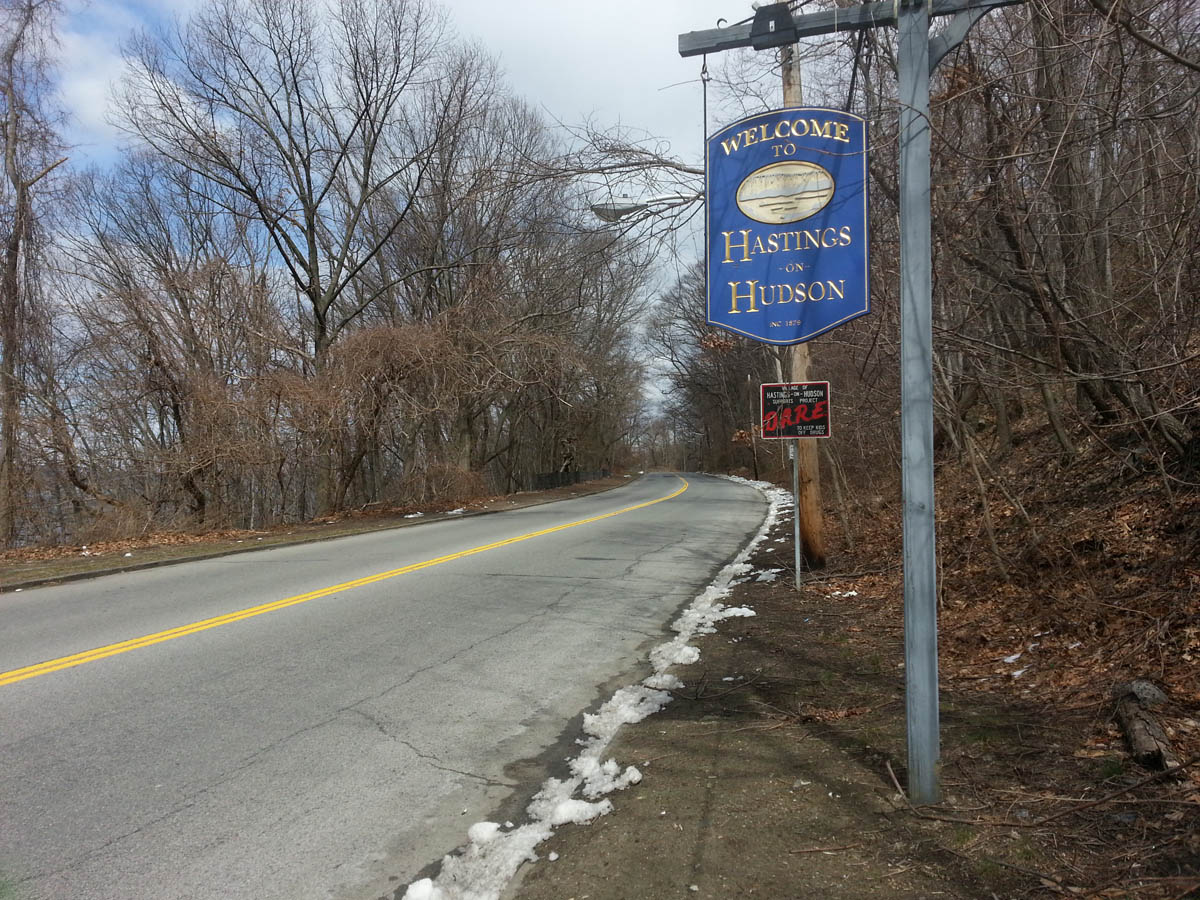
The plan was to stop at Hastings-on-Hudson and grab something to eat there. But I became so caught up in my walking rhythm, taking in the beautiful quietude of creeks burbling into the Hudson and the wind lapping at the surviving vegetation, that I overshot Hastings entirely and ended up in a village called Dobbs Ferry.
I settled into a booth at Doubleday’s, the kind of place where a man in late middle age sits at a bar and orders a lemonade and vodka at 2:00 in the afternoon. There were many TVs blaring sports, with a slight echolalia among sets televising the same feed. None of this stopped the talk from flowing like a loose tap.
“We did fall in love with each other, but we didn’t have much of a choice. Forty years later…”
This expansive establishment was arranged like a triptych: a restaurant to the south, the bar forming the central hub, and an open room to the north for overflow on busy nights. There was talk of football pools and objects flying up from the road and scratching the insides of eyes. This was a place where you could melt away hours of your life and not even know it. I would have stayed if I did not have an appointment with Washington Irving.
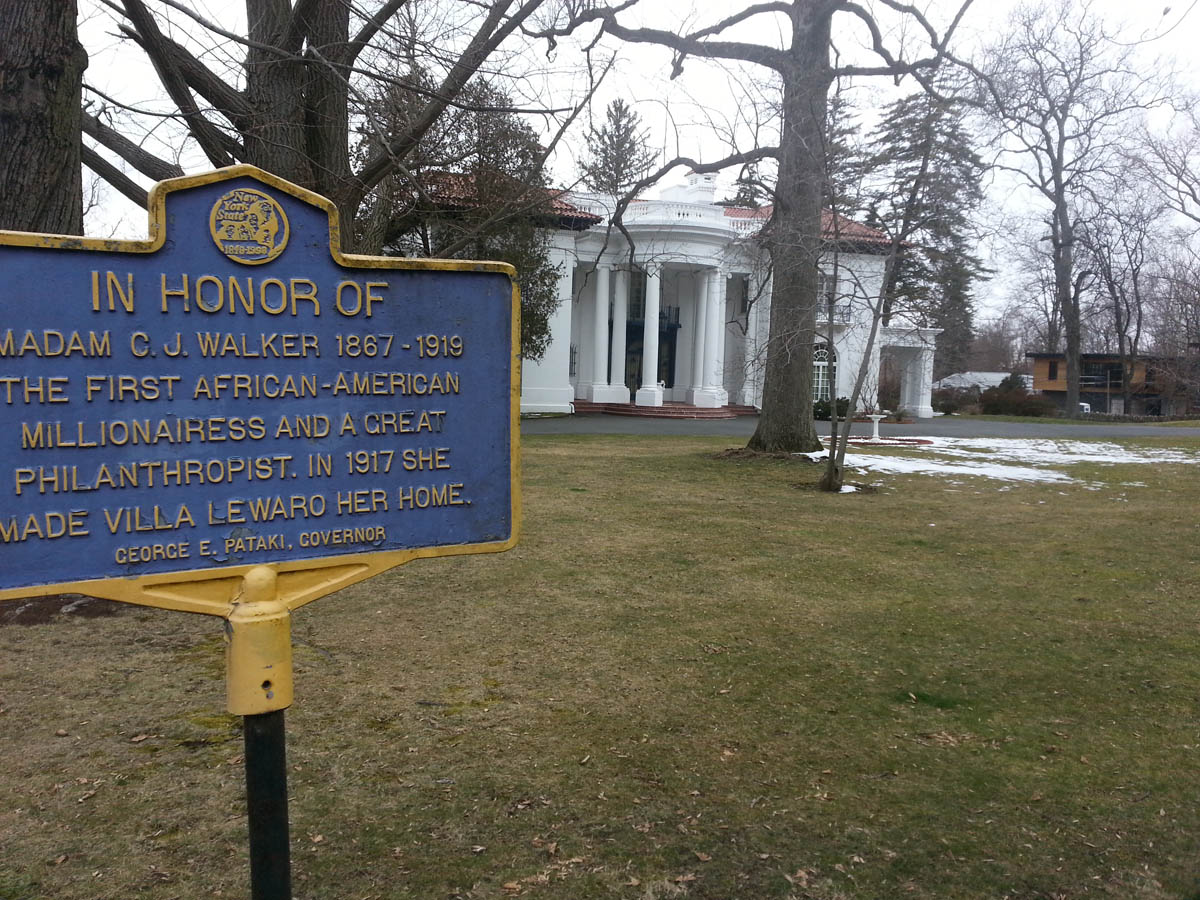
I had only a few hours left of daylight and six miles left before Sleepy Hollow. One of the big surprises was running into Villa Lewaro, the home of Madam C.J. Walker, the first self-made African American millionaire. Madam Walker had made her mark with a sulfur-enhanced shampoo and donated considerable money to the YMCA and the NAACP. She even saved Anacostia, the home of Frederick Douglass. She lived in the house in 1917 and taught many other women to run their own businesses.
I knew Andrew Carnegie was buried in Sleepy Hollow Cemetery, which was where I was heading. Given my Indiegogo campaign, it was odd how my trial walk had me running into very charitable people. Maybe Carnegie could use a dramatic audio reading about steel. I considered hitting these two up for donations. But then I remembered that Walker and Carnegie were dead, which probably prohibited them from helping me.
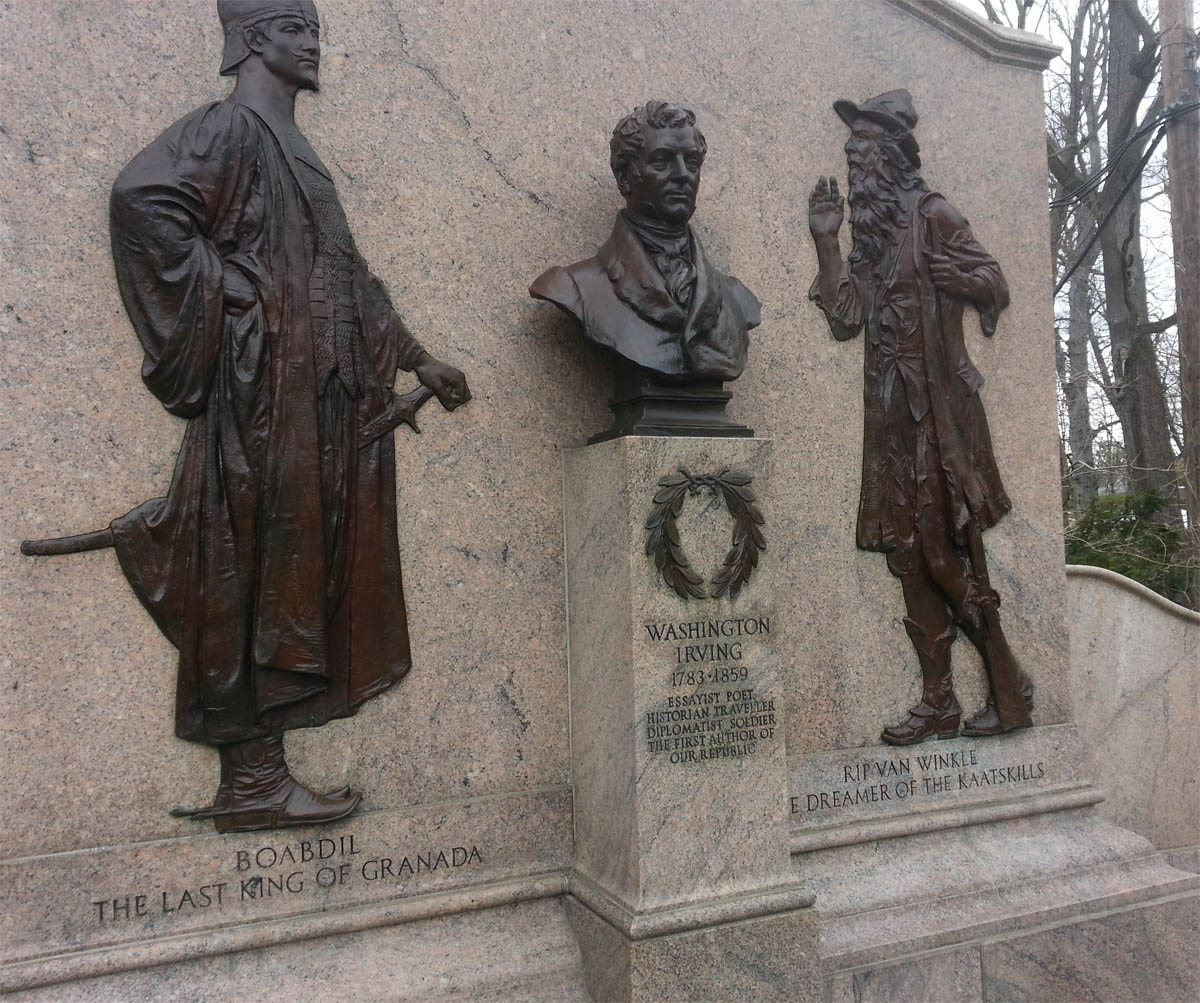
Not long after Villa Lewaro, I hit the Washington Irving Memorial on the edge of Tarrytown. There were increasing indicators that I was close to Sleepy Hollow. Washington Irving School. A housing project named after Washington Irving. Washington Irving appeared to have more places named after him in Tarrytown than Walt Whitman did in Brooklyn. I wondered if culture would be this kind to its literary figures fifty years from now. Would we see Joyce Carol Oates School or William Gass School? Or would tomorrow’s educational institutions be named after the likes of Brett Ratner or Sergey Brin?
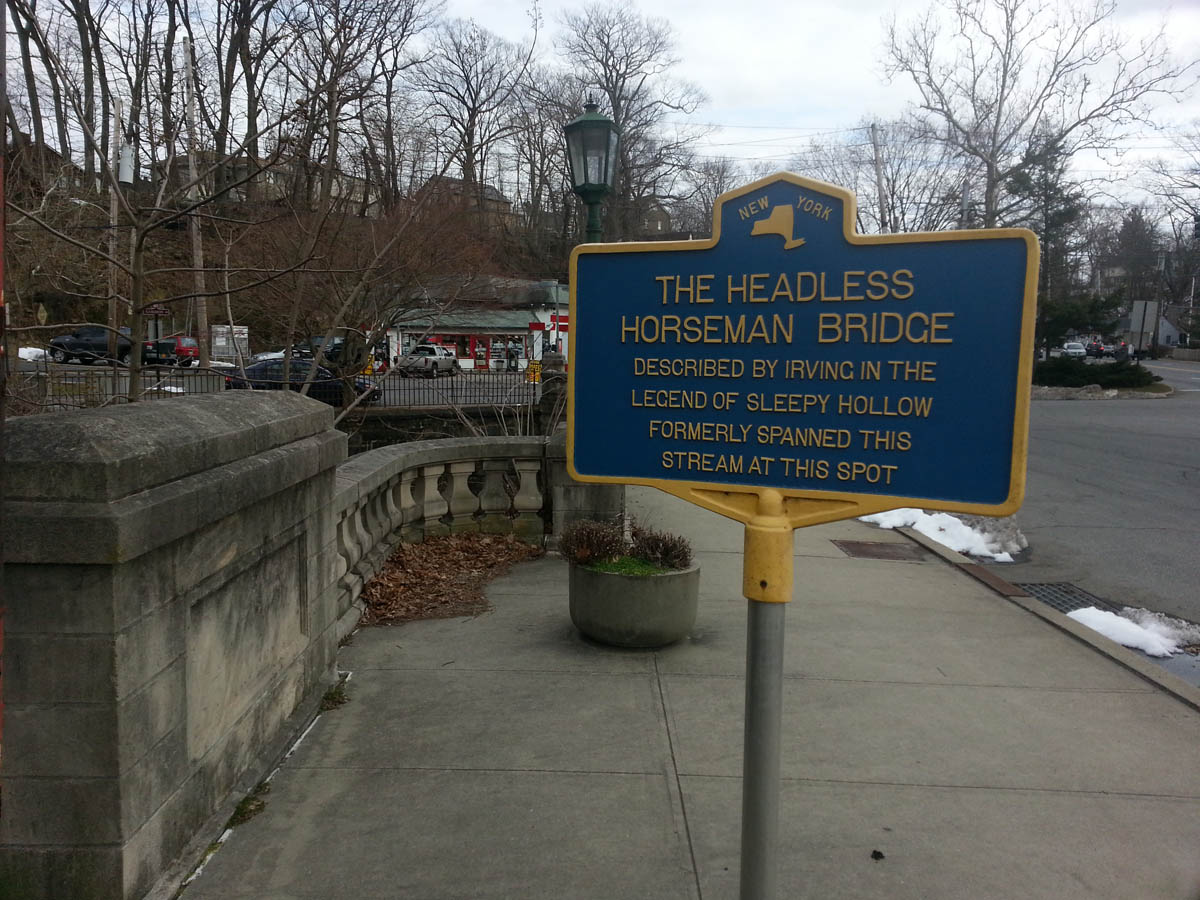
“Over a deep black part of the stream, not far from the church, was formerly thrown a wooden bridge; the road that led to it, and the bridge itself, were thickly shaded by overhanging trees, which cast a gloom about it, even in the daytime; but occasioned a fearful darkness at night. This was one of the favorite haunts of the headless horseman; and the place where he was most frequently encountered.” — Washington Irving, “The Legend of Sleepy Hollow”
After eighteen miles of walking, I arrived in Sleepy Hollow at around 5:00 PM, where I was overjoyed to discover the Headless Horseman Bridge or, rather, the place where it had once stood. But given how Irving had described it in the original story as “formerly thrown,” I wondered if had ever truly existed. I didn’t have a horse, but I dropped my head beneath my shirt and walked across the bridge headless. A car horn beeped back with approval. Then I turned my attention to the cemetery, the final destination of my journey, only to find this:

The gates were locked. Sleepy Hollow Cemetery had closed only a half hour before I arrived.
This was surely the most crushing setback I have ever experienced as a walker. I had walked so long and hard to get here. I had two choices: I could turn around and frown my sorrows into a beer or I could find a way in.
You can probably guess the option I chose. I rationalized my decision by pointing out that I was no common trespasser. These were extenuating circumstances! Nobody in American history has ever walked eighteen miles to check out a great cemetery. I found an open area and walked in.
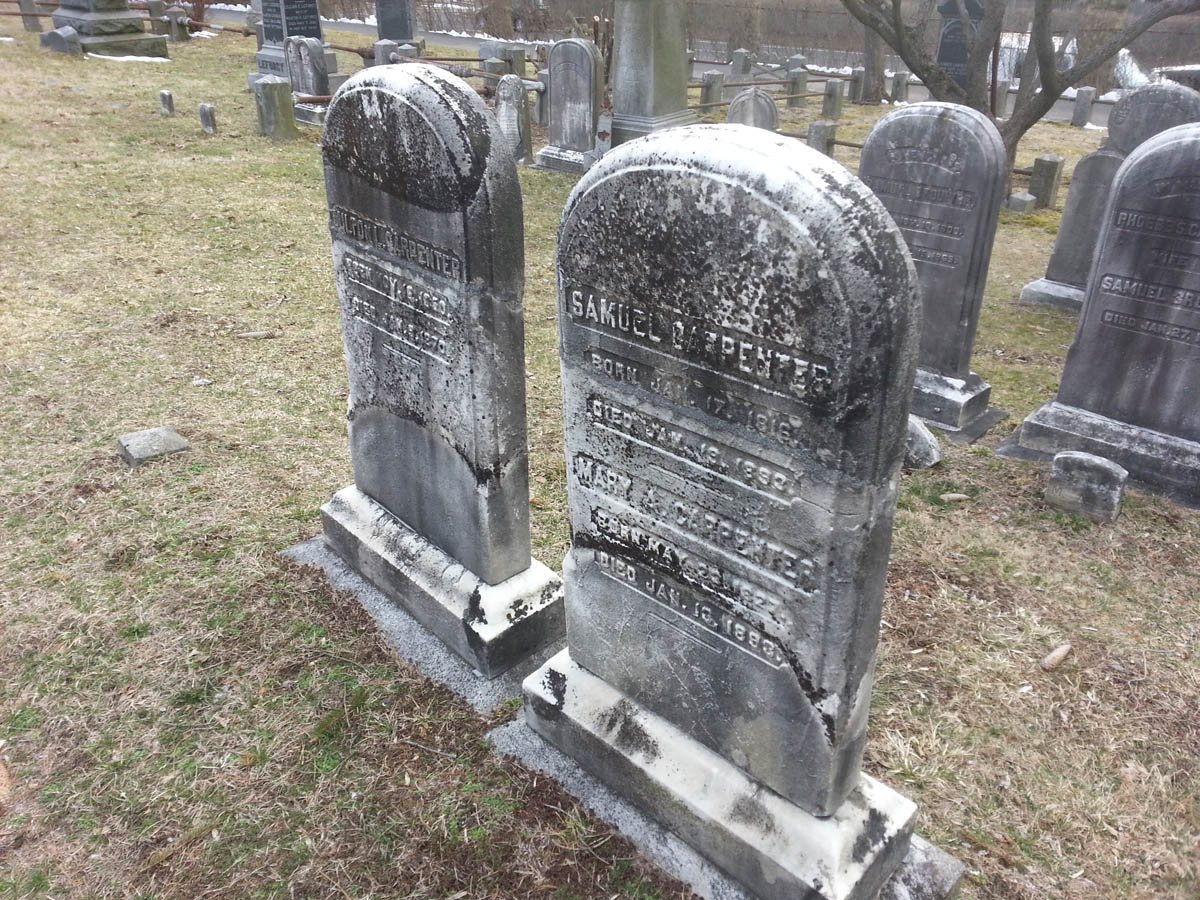
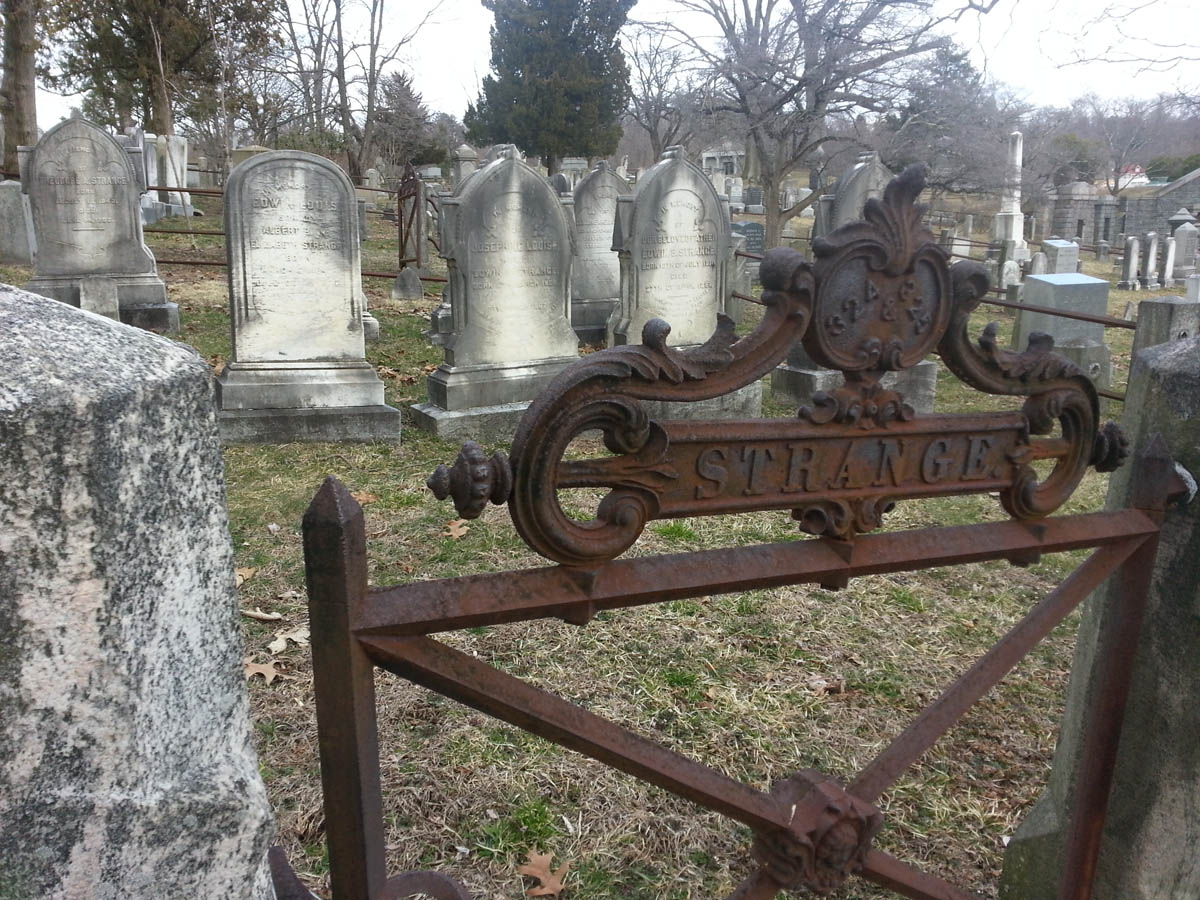
I was surrounded by numerous tombstones: glorious gray slabs with carefully carved names that had been eaten away by the elements over the centuries. There were families now long forgotten and many of the plots were quite strange.
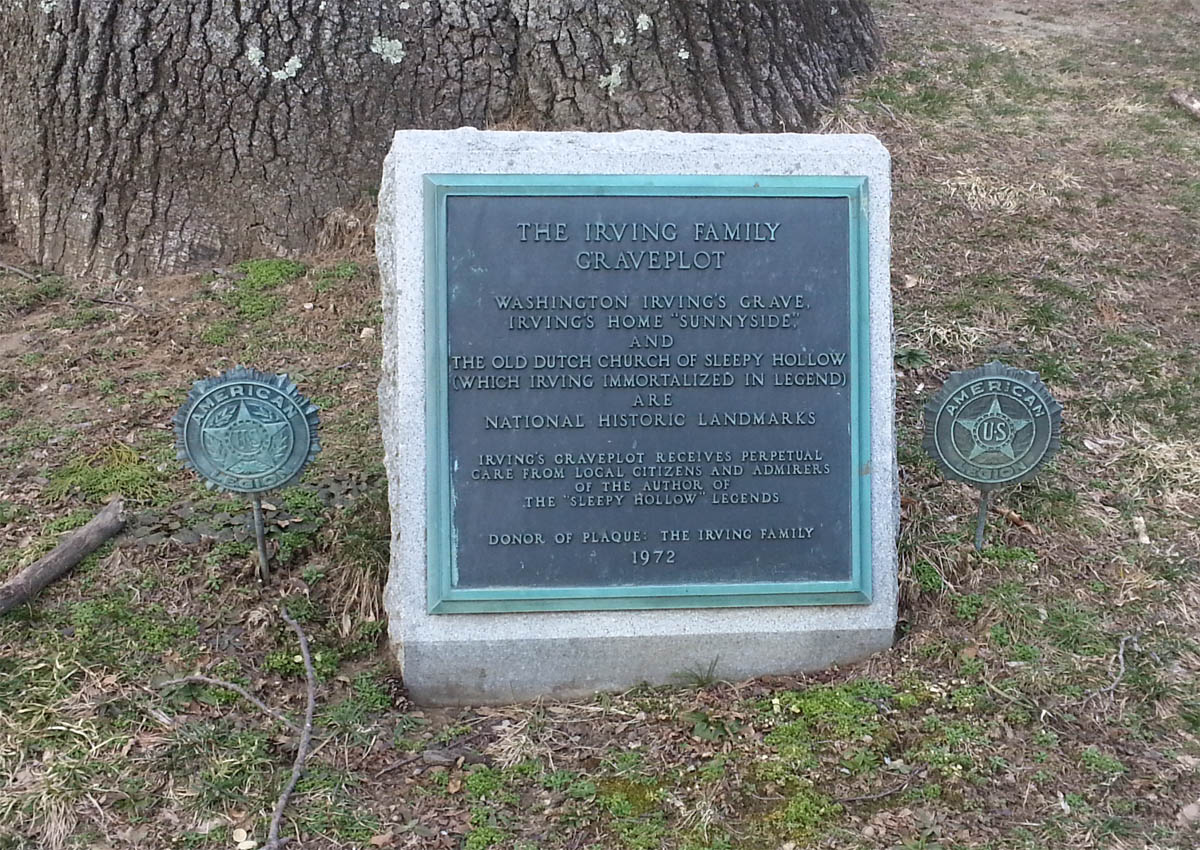
Then there was the Irving family:
With the sun falling fast, I flailed around the graveyard, seeking Andrew Carnegie’s marker, but I couldn’t find it. I should note that I became so exuberant about this magnificent cemetery that I was live tweeting my finds, openly using the terms “Sleepy Hollow” and “Sleepy Hollow Cemetery.” I am almost certain that these announcements of modest interloping led to what happened next.
In an effort to track down Carnegie’s grave, I tried searching online for a cemetery map with my phone. I was unsuccessful, but I did learn that physical maps existed close to the gates. I grabbed a map from the entrance, long after I had informed The Man on Twitter of my activities. Then I saw a white minivan roll up to the cemetery gates, with the driver making a move to unlock them. I decided to hightail it back to the way in. With the gate open, I saw the minivan roll slowly my way. On my way back, I heard two loud siren blurts near the Headless Horseman Bridge.
I knew that if I continued that way, I’d probably be grabbed by the cops. So I found a fence and I hopped over, landing into an unmaintained sidewalk. I heard another blurt from the police just south of me. So I walked across North Broadway and made my escape.
My eighteen mile walk had ended in a modest chase. I had gone from the noble heights of Yonkers City Hall to the unanticipated lows of being on the lam.
It was time to grab a beer.
[EDITOR’S NOTE: If you would like to see more adventures and investigation into our nation like this and regularly offered over the course of six months, please donate to the Indiegogo campaign.]
The Bat Segundo Show: Maggie Anderson
Maggie Anderson appeared on The Bat Segundo Show #445. She is most recently the author of Our Black Year: Our Family’s Quest to Buy Black in America’s Racially Divided Economy.
Listen: Play in new window | Download
[PROGRAM NOTE: The universe did nearly everything in its power to prevent Ms. Anderson from appearing on The Bat Segundo Show. On the day that I was scheduled to meet Ms. Anderson in New York, I suffered from an acute and especially debilitating case of gastrointestinal poisoning. I was forced, much to my great dismay, to cancel our meeting at the last minute. Nevertheless, I felt that the book’s subject matter was important. So I made a rare exception to my “in person only” rule and talked with Ms. Anderson over Skype. But then this appointment was delayed — in large part because the universe conspired with similar health interventions against Ms. Anderson’s family. I am pleased to report that we did end up talking and that all parties are hale and hearty. And while the subsequent conversation was a fun and fruitful one, I should also note that Skype sent out an inconsistent signal for much of the conversation. My apologies to Ms. Anderson and the listeners for any lapse in quality.]
Condition of Mr. Segundo: Becoming more conscious about his volatile spending habits.
Author: Maggie Anderson
Su0bjects Discussed: The Empowerment Experiment, the decline in African-American owned grocery stores over the past few decades, how far the dollar goes by ethnicity, median wealth and income disparity by race, the decline of black labor in Milwaukee, African-Americans targeted by advertising in the 1970s, WEB Du Bois’s The Talented Tenth, the increasing popularity of Polo Ralph Lauren among blacks, Quiznos’s exploitation of franchise owners, the burden of attempting to persuade blacks to support black business, the Venn diagram between supporting black businesses and independent stores, buying local, Oak Park affluence, trying to rehabilitate the Chicago West Side, attempts to keep Karriem Beyha in business, the fading of black entrepreneurs, class divisions within the black community, the Washington Post‘s Eugene Robinson, class and race, the disintegration of black solidarity over the last few decades, hypocritical pride, factors that help create a racially divided economy, Magic Johnson’s business savvy, the problems in spending $48,943.89 to buy black over the course of the year (as Anderson did in her experiment) which cuts out working-class blacks, the privilege of shopping where you want, subscribing to The Chicago Defender, gentrification, Hyde Park and Bronzeville gentrified, attempts to find unity between working-class blacks and middle-class lifestyles as prices go up during gentrification, efforts to start a progressive chamber of commerce in Bronzeville with Mell Monroe, trying to balance progressive idealism with realism, securing affordable services in the black community, the original name of the Empowerment Experiment (Ebony Experiment) and legal threats from Ebony Magazine, interactions with Linda Johnson Rice, Bill Cosby, and hateration.
EXCERPT FROM SHOW:
Correspondent: You are responsible for a rather amazing idea called the Empowerment Experiment, which you document in this book, in which you spent the entire year buying from nothing but black-owned businesses, frequenting them and so forth. Just to get the ball rolling here, I want to discuss why this is necessary. You point out in the book that there were 6,339 African-American owned and/or operated grocery stores in the United States in the early decades of the 20th century. And then, by the time we get to the new millennium, only 19 African American owned grocery stores existed in the U.S. So a number of questions come to mind. First off, what specific figures are you relying on? Is this from the 2002 Economic Census? What ultimately accounts for this dramatic decline?
Anderson: Well, the numbers are so important to us. And we’ve got to let your listeners know that we fashioned this as an experiment. It was, of course, a stand. But we really wanted these important numbers to be injected into the national dialogue. Those numbers. How we used to have so many businesses in the country in our community. We had hotel chains, department stores, hardware stores, drugstores. We don’t have any of that now. Grocery stores. And that when we have those businesses, our community didn’t suffer. We didn’t have the high unemployment. Our kids weren’t choosing gangs over college. We didn’t have all this drug abuse and violence and recidivism. So we really wanted to bear out that correlation. That when we had strong black-owned businesses, our community didn’t suffer. So if we can find a way to do little things to bring some of those businesses back, maybe we can counter the social crises that disproportionately impact our community. We wanted to show the numbers. The big number that we wanted to talk about was our $1 trillion in buying power and that less than 6% of that makes it way back to the black community.
Correspondent: Yes.
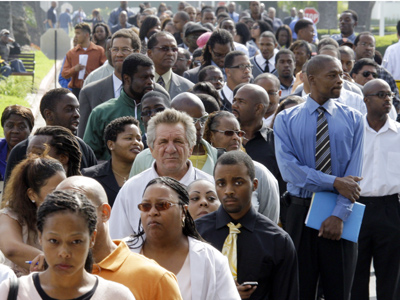 Anderson: If we can just get a little bit more of our own buying power to be recycled in our own communities, maybe we can bring those jobs numbers up. The other number is that black businesses are, by far, the greatest private employer of black people. Black unemployment, we know, is three times the national average of our white counterparts. Highest among any ethnic group. And in some places like Birmingham and Cleveland, we’re at black unemployment like 15, 16%. So maybe if we start supporting more black businesses that employ black people, we can stop black unemployment. So it was really just about making sure the conversation about the black situation in America is thorough and comprehensive. We can’t just keep talking about black unemployment and then not talk about black buying power and the fact that black businesses employ people and that none of our buying power is going to black businesses. So the numbers that we depended on — to get back to your question — you know, it’s just kind of known in our community how we don’t support each other. How if you walk up and down the street in a black neighborhood, none of the businesses there are black-owned except for funeral parlors, barber shops, and the braid salons. It’s just kind of known that most of the products on the shelves, none of the retailers in our community, none of the franchises are black. So we just kind of know that and joke about it. It hurts, but we just accept it. But it’s so hard to find data to bear that out. My roommate jokes about it. But we did find an interesting study — I think it was an economist, John Wray. Who did a study based out of DC that proved this horrible statistic about how long the dollar lives in different ethnic communities.* This statistic is used a lot in this conversation when people talk about “leakage,” economic leakage, recycling wealth in minority communities, that kind of stuff. This is a well-known statistic. That in the Asian community, the dollar lives close to 28 days. In the Jewish community, I think it was 19 to 21 days. Hispanic communities: 7 days. But for black people? The dollar in the black community lasts six hours.
Correspondent: Yeah.
Anderson: And it’s like, no wonder we live at the bottom! So we’re just so frustrated. And no one talks about that six hours. Because if you want to talk about the six hours, then you’re basically saying that all of these horrible things happen in the black community as a reflection of our propensity and our potential. Not a byproduct of how there’s a lack of support from black consumers — it’s our fault! — or black businesses. Sorry about the long-winded answer.
Correspondent: Oh no.
Anderson: I can’t leave that out. It’s such an open-ended…
 Correspondent: I know. No, this is all very good. And there’s a load of threads to start from here. Actually, I’m sure you’re familiar — there was a study in 2010. A rather alarming study from the Oakland-based Insight Center for Community Economic Development, which revealed that the median wealth of a single white woman in the prime of her working years — roughly 35 to 49 — was $42,600. And the median wealth for a single black woman was only $5!
Anderson: Yes! Yes!
Correspondent: Yeah. I’m sure you’re familiar.
Anderson: I’m onto that one. I’ve heard about that. That’s just — man! The one that really blows me away. There’s the other one where I think we’re at 3% transferable wealth or whatever the definition of wealth. 3% compared to the white purse. [NOTE: I believe Ms. Anderson is referring to Arthur Kennickell’s “A Rolling Tide.” (PDF) The economist revealed that African-Americans had less mean wealth than white non-Hispanics.] But that thing about the single black woman, that’s ridiculous. I mean, we’ve been here 400 years. We have a black president now. We have folks like me.
Correspondent: Yes.
Anderson: We have living manifestations of the American dream at work. You know that my family’s an immigrant family.
Correspondent: Yes.
Anderson: You know, we have all of this and we still have that. And it’s going to be hard to make that kind of number a fair number. It’s going to be really hard. But at least, if everyday consumers like me were to try and find the businesses that were going to employ that woman or give her a fair wage or give her community a chance and invest in her community instead of just making money from that community and taking it away, maybe we can do something about that number.
Correspondent: And the statistics actually get slightly better when you account for marriage or cohabitation. The white woman has a median wealth of $167,500 and the black woman has $31,500. So better than $5. But still really troubling. I guess the question I have, since we’re talking about the idea of a black dollar not going so far, what do you think ultimately accounts for this failure to have the wealth reinvested in the community? In black neighborhoods? How can they be expected to invest their wealth in any concentrated matter? I mean, what are the underlying issues here? I’m curious.
Anderson: Right. And it’s so funny. Because when people just hear about the essence of our experiment — black families say they’re only going to support black businesses — there’s accusations of racism. And people will assume that the book is this thing of taking it to the Man. And getting back at Charlie. And all that stuff.
Correspondent: Getting back at Charlie. (laughs)
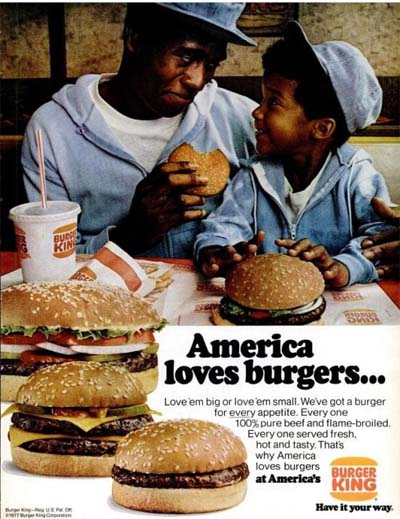 Anderson: The white man Charlie. But anyway, the book is really — if I’m yelling at anyone, it’s at black consumers. Because there’s a lot of history here that contributes to the bad situation we’re in. I’ll be really quick. A lot of it has to do with integration. Of course, we love what integration did in this country. Of course, we fought for it. But it had some really negative impact. Some deleterious impact into the black economy, if you will. Because we’re forced to, because we’re segregated, we built up our own businesses. We had a strong sense of entrepreneurship in our community. And we recycled our wealth. So that was just the fact. That was the way it was. And the University of Wisconsin just did a study** that showed in 2009, when there was over 50% black unemployment in Milwaukee, in the same area, where there used to be black businesses flourishing in the 1950s before integration, there was less than 7% unemployment. So it really bears out that when we have the businesses where black people work, black people are employed. So after integration, we were so anxious to be enfranchised. We were so happy to have that opportunity to shop at Woolworth, to go to Walgreen’s, that we did it in droves. And it was just kind of our way of saying, “Yeah! We’re going to show you that our money is just as good as white people’s money and we’re going to show you how important we are and how equal we are by spending as much money with you as we can!” And in so doing, we kind of abandoned our would-be Woolworth’s, which were already providing quality goods and services in the community. All of our consumers just left those local black businesses that helped our community shine to go out to these big corporations where we were denied the right to shop before. So that was the first punch. And then the second punch came in. Because these corporations started seeing the value of the black consumer dollar. So they started to market to us very positively. Another term that I’ll bring up, which is kind of funny. We used to say “colored on” at one point. Colored on. We were so excited if GM were to show a black family coming out of a house, driving their Cadillac to the family vacation. Or McDonald’s, where you’d have a black family enjoying a black family meal. We were so happy when we saw that and that was the best way for them to market to us. And we returned that honor with our dollar, with our loyalty. So that was the second punch. They started marketing to us more aggressively. And we started spending more money with them, with their businesses. And then the third punch was they started to recruit us. So when I was coming up — I’m 40 — so in the ’70s, when I was coming up, the big deal for black mothers, for black parents, for black grandparents, was for me that kind of shining star, that smart kid that hoped to get out of the ghetto, was for me to find a great job at a big white company. That was the goal. It wasn’t like with our Asian counterparts, even our Hispanic counterparts, to continuing the family business, to start a business, to stay in the community. No. It wasn’t that. It was get out and do so by getting that great job. So the would-be entrepreneurs or the Talented Tenth, if you remember that.
Correspondent: Yes.
Anderson: We didn’t do our Talented Tenth duty. We left the community and we gave all our talent to big corporations. All of these things contributed to the lack of support for black business and our lack of entrepreneurship in the community. The big deal is to get a good job, not be an entrepreneur. So the entrepreneurs we do have don’t have the capital or the training to compete. So we can only survive in the industries where no one else can do it better. And that’s by braiding hair, cutting black hair, and providing funeral services in our community. So that’s where we can still have a stronghod. Even in black hair, in beauty supplies. Even in all that kind of stuff, we’ve lost those industries. That was kind of the fourth punch when immigrant groups basically started to leverage this wonderful phenomenon of a whole class of people that loves to spend money outside our community. They set up shop in our communities. Not racist. Not trying to steal our wealth. But they set up shop there and did well there. And now we’re upset because we can’t find quality black businesses in our own neighborhoods when basically we invited the intrusion by not supporting the black businesses we did have. So all of this has led to the demise that we have now. So some of it, yes. Some of it, our racist history. A lot of it has to do with our consumers, our people, kind of seeing our own businesses in a negative way. It’s a real difficult thing to talk about outside the black community. It’s just kind of cultural. But the definition is another term. White man’s ice is colder.
Correspondent: Sure.
Anderson: Why go to a black business when you can go to a white business? The way we show that we’re equal is by buying Polo and Hennessy. By living in the white suburbs. That’s how we demonstrate our equality. Not by buying black products and supporting local black businesses. I know it’s kind of a disgusting thing to say, but that’s the truth.
Correspondent: Well, as an effort to unpack much of what you just said — for example, in this book, among the businesses that you include in the Empowerment Experiment are, for example, a black-owned Quiznos. But my understanding is that a white guy named Rich Schaden is the principal shareholder and that he and his company have this history of ripping off numerous franchise owners. I’m sure you’re familiar with the Quiznos franchise holder, Bhupinder Baber. He killed himself over this. So, yes, I agree that a black-owned Quiznos, it may indeed hire more black employees. But if the parent company is exploiting its franchise owners, I’m wondering if this cycle of exploitation has a negative impact on a black neighborhood or a black community. Shouldn’t one also consider the independent nature of a business as well? How does a black-owned Quiznos help a community more than, say, an independent family restaurant?
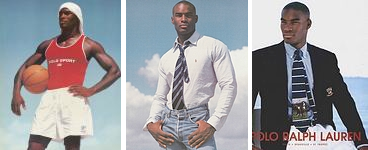 Anderson: Right. And this is a huge point that I have to contend with when I push this supply diversity franchise rediversity message into the community. And here’s how it goes when I’m talking to black folk who I’m trying to get to support black businesses. It should not be that tough of a fight, but it is. When I say this to them, they come at me, generally with stuff like “Well, we tried to Karriem [Beyah]’s grocery store. He didn’t have the thing that we wanted.” Or it wasn’t like going to our Jewel, the big grocery store chain around here. Or you can go to this black franchise. But I didn’t see a bunch of black employees there. Or how do I know Quiznos is a good franchise to be supporting? So I get a bit of a challenge. Then I say, “Well, you know what? How is that? I mean, what are you doing now?” Basically, we’re just out there supporting anybody. Not thinking about what the businesses are doing for us. Polo. I mean, Polo blew the lid off of black consumers. We have black Polo parties that we have for our kids. I mean, it’s just ridiculous how addicted we are to the Polo brand. I have nothing against Polo Ralph Lauren. But I did have a friend who works writing for the CFO of Polo, and I asked her to do some research for me. She’s a conscious consumer like me. HBS grad. Very well connected in the company. And she thinks they talked with the marketing folks, the procuring folks, everybody about buyer diversity. Do you do business? How do you invest in the black community? We have so much money coming in from the black community. And their answer to me was, “Well, our label comes out of Indonesia.” And it’s unbelievable. That’s the best we can do to reciprocate the loyalty that the black community’s giving you? So it’s like, “Yeah. Maybe.” And you’re totally right about the Quiznos thing. But the first answer to them is, “But you’re supporting Polo. And it’s not like you’re stopping in support of Polo.” And I’m not saying don’t support Polo. But if you’re so discriminating with how you spend your money, there’s a lot of things that we shouldn’t be doing that we ought to be doing.
* — This study can also be found in Brooke Stephens’s Taking Dollars and Making Sense: A Wealth Building Guide for African-Americans. There seems to be no online version of this.
** — After reviewing the study (PDF), I believe Maggie’s slightly off — that is, if she’s referring to the Marc Levine findings from January. But black unemployment is absolutely a problem a Milwaukee. There was a huge hit in the last several decades. 1970: 84.8% employment rate for metro Milwaukee black men in their prime working years. By 2010, that figure had fallen to 52.7%. Here’s the important paragraph from Levine’s report:
The city of Milwaukee, where almost 90% of the region’s black males live, has lost over three-quarters of its industrial jobs since the 1960s. As Table 5 suggests, this manufacturing decline has disproportionately affected the employment prospects of African American males. In 1970 54.3 percent of Milwaukee black males were employed in 1970 as factory operatives, more than double the white percentage. By 2009, only 14.7 percent of black males were working in Milwaukee factories, about the same percentage as white males. By 2009, in fact, even though working-age black males outnumbered Hispanic males by 55 percent in Milwaukee, there were more Hispanic male production workers (7,200) than black male production workers (4,842) in the region, a sign of the degree to which manufacturing is no longer the bulwark it has been historically for the Milwaukee black male working class.
The Bat Segundo Show #445: Maggie Anderson (Download MP3)
This text will be replaced
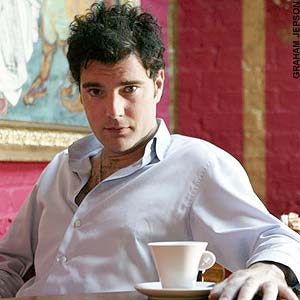
Edward Docx: A Slug Defending His Gated Community
On December 12, 2010, The Guardian published a pretentious essay by an amental snob named Edward Docx. Docx foolishly suggested that “genre writers cannot claim to have anything.” He accused Lee Child of “ersatz machismo bullshit” even as Docx himself could not see the fecal specks sprouting throughout his own ineptly argued assault on genre. He wasted his first two paragraphs blabbing on about the plebs on the train and, like a petulant infant longing to grow into a long-winded David Cameron, bitched about not having space to provide “a series of extracts…to illustrate the happy, rich and textured difference.”
Yes, it’s class warfare, my friends. But here’s the thing. Docx isn’t on the working man’s side. His essay reads like some corpulent slug defending his gated community with a Magpul PDR and then slithering away because he doesn’t know how to release the safety. It’s the kind of unfit approach that invites ridicule rather than confidence, alienation rather than mobilization. For if you’re going to claim yourself a champion of the people (or, to use Docx’s inept populist metaphor, a half-hearted burger eater), shouldn’t you be paying attention to what they’re reading? If you wish to demonstrate why Stieg Larsson is such a shitty writer, shouldn’t you have the guts to quote him at length? After all, your argument is airtight, isn’t it? The writer is dead and he can’t respond, right? Win win!
Alas, Docx can’t be bothered. He identifies “the most tedious acronym-packed exchange” that he has ever read, but he fails to comprehend that what Docx considers “tedious” might be the kind of wonky info banter that is going to get a journalist like Blomkvist rock hard. He quotes from a very early part of The Girl with the Dragon Tattoo (page 24 in my copy) and gives us no full indication that he has read the whole book. This makes Docx not only an illiterate, but an inept bully foolish enough to support his claim through deductive induction — a logical fallacy that hasn’t worked ever since newspapers had the good sense of opening up their articles to public comment. Because Docx says that genre is lesser, and Docx fancies himself an authority, then it must be true! No need to provide airtight examples of Swedish silliness. Docx also tries to quote a few passages from Dan Brown to make his case. But wait a minute, that’s a logical fallacy! What about Larsson? That guy you just shit talked in your previous paragraphs? Shouldn’t you be taking him down? Oh dear, secundum quid! If only Docx had the space, he’d demolish your genre! He’d *gasp* have an argument!
Well, not really. It becomes abundantly clear that Docx doesn’t know what the fuck he’s talking about when he attempts to quote others. In a feeble attempt at wit, Docx deliberately misquotes Isaac D’Israeli’s Curiosities of Literature (the full quote: “Whatever is felicitously expressed risks being worse expressed: it is a wretched taste to be gratified with mediocrity when the excellent lies before us”). But D’Israeli was writing rather sensibly about how well-read writers are those comprehending the wit of other men. Does Docx comprehend D’Israeli? To employ a populist reference that Docx might frown upon, you make the call. For Docx misses the vital sentence that came before the business about being “gratified with mediocrity”:
It seems, however, agreed, that no one would quote if he could think; and it is not imagined that the well-read may quote from the delicacy of their taste, and the fulness of their knowledge.
And here’s what came after:
We quote, to save proving what has been demonstrated, referring to where the proofs may be found. We quote to screen ourselves from the odium of doubtful opinion, which the world would not willingly accept from ourselves; and we may quote from the curiosity which only a quotation itself can give, when in our own words it would be divested of that tint of ancient phrase, that detail of narrative, and that naivete which we have for ever lost, and which we like to recollect once had an existence.
So if Docx wishes to uphold worthy literature, why is he unable to provide a corresponding set of virtues other than a measly list of literary names? According to my word count feature on OpenOffice, this doddering dunce had 1,770 words to stake his claim. All that space and he couldn’t be bothered to provide a single passage? Talk about long-winded. It’s safe to say that Docx is no D’israeli. I think it’s also safe to say that Docx has utterly mangled D’isreali’s great sentiment.
So why bring the argument up in the first place? Why make such a spectacle of yourself? Why do this when you tacitly admit that “there is also much theatricality to the debate?” Sarah Weinman has a few answers. Certainly I can understand the Guardian‘s need for attention in this vanquished media economy. But I’d like to think that some editor over there was having a good laugh at Docx’s expense.
You see, Docx is the kind of humorless elitist who observes people reading books on a train and actually sees this as a bad thing. Rather alarming that ordinary Joes don’t seem to share Docx’s refined instinct for spending their increasingly valuable leisure time reading a 900 page Russian epic. How dare the rabble sully literature by having a good time! In this essay, Docx vomits so many half-digested meals out of his mouth that one detects an uptight gourmand who showed up to an orgy wearing a chastity belt. The man is incapable of understanding that when people flock to Stieg Larsson, they may very well move on to other authors beyond the missionary position. The very “literary” authors Docx desires them to read. And he’s incapable of finding anything positive in this apparent predicament. Which makes him more of a pinpricked sourpuss than a viper for the people.
Here is a man who berates a blue-collar worker for having to put down a Larsson volume. He writes: “And when, finally, I arrived at the buffet car, I was greeted with a sigh and a how-dare-you raise of the eyebrows. Why? Because in order to effectively conjure my cup of lactescent silt into existence, the barrista in question would have to put down his… Stieg Larsson.” Now if it had been me, I would have viewed this exchange as a rather comic moment. Maybe an opportunity to ask the barista why he liked Larsson and recommend a few names in response that might help him find a way to wider reading pastures. That is, if he didn’t want to go back to his volume. In which case, I would have offered a generous tip for blabbing on for five minutes. But for Docx, the barista represents a foolish opportunity to cling to class assumptions that haven’t been in place since the 1880s. You insolent reader! Fix me my latte now, you unthinking peon! And this makes Docx not unlike Charles Pooter, the hapless protagonist of Diary of a Nobody, who demands some respect from a blue-collar “monkey of seventeen.” The laborer replies: “All right, go on demanding!”
Of course, Docx can go on demanding all he wants. It isn’t even noon Eastern Standard Time, and I can see that the man has already been thoroughly ridiculed on Twitter. But if Docx gets his money quote, I get mine. And if we assume that dictating taste represents a fleeting freedom, I think Nietszsche best sums up why Edward Docx is such a small and pathetic man:
People demand freedom only when they have no power. Once power is obtained, a preponderance thereof is the next thing to be coveted; if this is not achieved (owing to the fact that one is still too weak for it), then “justice,” i.e., “equality of power” become the objects of desire.
[UPDATE: This post has been corrected. An earlier version of this article incorrectly observed that Docx had not cited Larsson. This was not true. Docx did quote a passage, but his argument remains so pisspoor that Docx’s “takedown” still doesn’t hold water. Nevertheless, I apologize for my error and express my gratitude to Nico for pointing this out to me.]