Content Slows Momentarily to a Crawl

Due to my present participation in a rather mammoth undertaking, I don’t anticipate much in this space over the next few weeks — aside from the weekly podcast (several conversations already conducted!) and a few essays on movies. I’m also pushing back today’s podcast to sometime early next week in the interests of balancing content release. Probably curtailing my Twitter activities to a few tweets a day. All is very well. This ain’t exactly a hiatus. But I’m finding myself increasingly committed to offline activities.

The Bat Segundo Show: John Waters

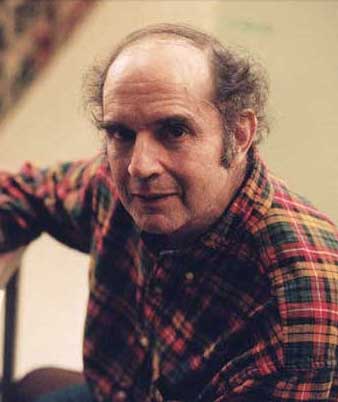
John Waters appeared on The Bat Segundo Show #342. Mr. Waters is most recently the author of Role Models.

(Considerable gratitude to Wayman Ng, who resuscitated this conversation from the data grave.)

Condition of Mr. Segundo: Comparing himself to unspecified reference groups in Mertonian social situations.

Author: John Waters

Subjects Discussed: [List forthcoming]

EXCERPT FROM SHOW:

Correspondent: You observe that listening to what Tennessee Williams has to say could save the reader’s life too. But how can Tennessee Williams save the life of, say, a humorless tax auditor?

Waters: They won’t read him. So I’m not saying he can save anybody’s life. But if the humorless tax auditor — and I actually know one tax auditor who does have a sense of humor.

Correspondent: Yeah.

Waters: If they read Tennessee Williams, maybe they could save their life. Maybe they would overlook one receipt that wasn’t exactly deductible for business if they thought the person was doing art.

Correspondent: Yeah. That’s true. In Role Models, you note that you drink every Friday night. Now in Crackpot, you observe that in your final year of smoking, you smoked only on Fridays.

Waters: Yeah.

Correspondent: Why would you confine vice to one day of the week?

Waters: Well, because the cigarette thing. Didn’t smoke. I used to. I haven’t smoked in — I write it down every day. I could tell you how many days. I’d have to look at my file card. But today — and even before then, I only smoked for three days. I fell off the wagon. But when I smoked every Friday night, it got to be — I couldn’t do that. Because at Thursday night at 11:59, I would light up and hotbox. Do you know what that means? Where you take one drag on a cigarette burn.

Correspondent: Oh yeah.

Waters: A carton! Like right in a row. So I learned that I can’t chip. I am an addict with cigarettes. So that’s why. Friday nights? Because I don’t work on Saturday. And every other ngiht’s a schoolnight to me. I write in the morning. I can’t write with a hangover. I can’t. And when I drank on Friday — I did smoking on Friday night because I knew that I didn’t have to work the next day. I was going to drink too. I might as well do it all.

Correspondent: This is your answer to Shabbos?

Waters: No. It’s just how I get through life really. That I’m very organized during the week. And as I said, I believe if you’re going to have a hangover, it should be planned on your calendar three weeks in advance.

Correspondent: But you can’t plan everything.

Waters: I do plan everything.

Correspondent: You do plan everything.

Waters: Everything! I never have a spontaneous moment. I don’t want a spontaneous moment.

Correspondent: Really.

Waters: Order is important to me. It brings me happiness. Which makes my assistants insane.

Correspondent: Really?

Waters: Yeah.

Correspondent: What do you do when a curveball shows up?

Waters: I plan. Well, a curveball? I deal with it. But I’m saying that I won’t not do something that’s going to be great fun because I didn’t plan it.

Correspondent: Yeah.

Waters: But I make sure that I have great fun planned so I don’t wait around for someone to knock on my door and give me great fun.

Correspondent: (laughs)

Waters: I go out to have great fun. And plan it.

Correspondent: Well, how rigidly do you plan your life?

Waters: Rigidly enough.

Correspondent: Are you like a senator?

Waters: Let’s just say…

Correspondent: Do you schedule when you shit? I mean…

Waters: No. But I usually do that around the same time too. And I get on an airplane. And I can adjust my watch to whatever time it is. Get off and be on that time. I’m organized, yes. But if something — you know, when I go out on Friday nights, something can happen. It’s not like I know what’s going to happen. But I have certain people I go with to different places. Because I don’t want to drink and drive. So I have a great pool that I go out with. And they’ll go to any weird bar. You’ve seen the bars I like to go to. There’s a whole chapter on that.

Correspondent: But I’m curious. Do you allot a two hour time to just go out and observe people? Or something along those lines?

Waters: Well, I’m always observing people. It doesn’t matter. On the subway, I’m observing people. I take the bus in San Francisco a lot to observe people. I watch people in airports get off the plane. I make up stories about every person. And if you look, the ugliest people get off first. They aren’t first class. The cuter they are, the worse seats they have on an airplane. It’s awful. It almost is foolproof. I know that sounds ridiculous. The poorest planners. The ones that lasted till the last minute and got the middle seat in the last row?

Correspondent: Yeah.

Waters: They’re cuter than the ones who are rich or smart enough to plan to use their frequent flyer miles to get one of the few seats available in first class. They’re never that good looking.

The Bat Segundo Show #342: John Waters (Download MP3)

This text will be replaced

Review: Cyrus (2010)

“What kind of comedy would you say that was?” said the man.

The marketing guy had observed my considerable laughter during the movie. While I don’t believe in withholding my emotional response within a screening room, and while I cannot in good conscience fall into that dishonest “Oh, I loved the movie!” mode practiced by certain joyless New York film critics judging a flick after observing the collective herd, my approach does run the risk of Bernaysian collisions.

“I’ll give you a hint,” I said. “Albert Brooks.”

Surely my insinuation would lead the man to remember the great film, Modern Romance, where Brooks played a film editor attempting to grapple with his romantic neuroses. Surely this mention would cause the gentleman to observe that John C. Reilly’s character was also a film editor, and just as neurotic as Brooks. Alas, Albert Brooks, as great as he is, cannot be called “box office draw” even after the most creative fudging of the numbers. Alas, this marketing man was more concerned with general taxonomies. This was hardly a matter of artistic comparison. It was crass bean counting.

“Well, is it black comedy?” he said. “Quirky comedy?”

“Psychological,” I replied, beating a hasty retreat to the elevator and hoping to consider my thoughts and feelings on the subway home.

I want to be clear that the man was perfectly nice and was only doing his job. But the idea that a “psychological comedy” — particularly one as well-made as Cyrus — can no longer be marketable is something I must object to. When we live in a world in which a self-serving BP executive bemoans wanting his life back and in which millions of unemployed individuals cannot find jobs (with their unseen plights ignored by media and government alike), it would seem to me that the need to convey American psychology is more pressing than ever. Not through marketing, but through artistic representation.

I am delighted to report that Cyrus lives up to this task. Written and directed by Jay and Mark Duplass, and featuring John C. Reilly, Marisa Tomei, and Jonah Hill in plum roles, Cyrus is one of the few American comedies in recent memory where the character dysfunction invites us to examine motivations rather than bask in base American Idol-style ridicule. It’s a great relief to see the Duplass brothers reclaim reality television’s handheld camera work for their film, which neither overplays its quietly empathic hand nor resists portraying embarrassing truths. This Duplassian commitment establishes itself with our first introduction to John (John C. Reilly), ostensibly in the midst of masturbation. “I have jock itch,” John explains to his ex-wife Jamie (Catherine Keener), who has showed up, unannounced, to check up. It continues when Jamie invites John to a cocktail party, where “people who will stimulate you intellectually” fail to do so. After our intoxicated hero strikes out with libidinous prospects, he goes outside to pee, meeting up with Molly (Marisa Tomei), who quickly responds, “Nice penis. Go ahead. Finish up.” But the two hit it off. They return inside. The Human League’s “Don’t You Want Me?” — which John considers to be “the greatest song” — causes John to dance and embarrass himself further. Molly joins him. Our two middle-aged heroes return to John’s, where John declares Molly “a sex angel.” John awakes to a note reading JOHN: THAT WAS AWESOME. CALL ME. And after Molly accepts an invitation that very evening to a home-cooked meal at John’s, an impromptu relationship is formed.

“My life is really complicated right now,” explains Molly. John drives out to Molly’s house the next morning to knock on her door. His efforts are interrupted by the titular Cyrus (Jonah Hill), who is revealed to be Molly’s son. Cyrus is a boomerang kid — one of those post-teens who clings to parental comforts rather than making a move in the real world. He’s pursuing a dubious music career involving avant-garde keyboard compositions. “Sounds like Steve Miller,” says John after Cyrus plays a sample. “No, it doesn’t,” replies Cyrus. But Cyrus has unspecified psychological problems and a morbid sense of humor. “Don’t fuck my mom,” says Cyrus, once the parental relationship has been laid out. “I’m just kidding,” he says next without skipping a beat.

The Duplass brothers are extremely effective in using our established ideas of these actors to their advantage. Jonah Hill’s warmhearted presence takes some of the edge off Cyrus. And because of this, we become tremendously curious about the hold Cyrus has over his mother. And if John were played by an actor other than John C. Reilly, we might interpret his morning drive to Molly’s home as stalking. Yet Reilly is so good at maintaining an avuncular balance between loneliness and a goodhearted nature that we accept his moves.

And while Marisa Tomei is extremely good in this movie, I’m wondering just how long she’ll be able to play the middle-aged woman who has seen it all and yet quietly accepts her fate. Cyrus follows The Wrestler and Before the Devil Knows You’re Dead in this line. And while these films have permitted Tomei to shine, I’m baffled as to why filmmakers haven’t centered their films around Tomei, rather than making her the supporting nurturer.

Perhaps the answer to that latter concern has much to do with the marketing man who accosted me during the closing credits. Fox Searchlight threw a considerable amount of cash attempting to promote Cyrus. In the week before its release, the film sponsored numerous WNYC programs. Pop-up ads invaded several major movie-related websites. Yet my conversation, which I felt compelled to note here in the interest of ethical transparency, would seem to indicate that today’s studios don’t see “psychological comedy” as an audience draw. That’s truly a pity. Because Cyrus demonstrates why it’s so important to pay attention to the smaller people around the corners. For their stories are often more fascinating than the loud explosions.

RIP Jose Saramago

Nobel Lecture: “The voice that read these pages wished to be the echo of the conjoined voices of my characters. I don’t have, as it were, more voice than the voices they had. Forgive me if what has seemed little to you, to me is all.”

Book Magazine, 2002: “You may disagree with such a pessimistic vision. But if there is a way for the world to be transformed for the better, it can only be done by pessimism; optimists will never change the world for the better.”

Julian Evans, The Guardian: “It is difficult to find dissenters from Wood’s description of Saramago as an ‘attractive and sinuous’ writer, though the Irish novelist John Banville is one.”

“The Unexpected Fantasist,” The New York Times, 2007: “Yet Saramago also often appears to be disliked. In part this is the resentment of a country that has long been dominated by a small elite. In part, it is a matter of Saramago’s own unaccommodating personality. Everywhere I went in Lisbon in June, people described him as ‘cold,’ ‘arrogant,’ ‘unsympathetic.’ When my interpreter inquired at a DVD store if a documentary about Saramago was in stock, the young salesman, startled by the request, replied, laughing, ‘I hope not!'”

The Bat Segundo Show: Reed Cowan

Reed Cowan appeared on The Bat Segundo Show #341. Mr. Cowan is most recently the director of 8: The Mormon Proposition, which opens in numerous theaters on June 18, 2010.

Condition of Mr. Segundo: Conducting investigations on Dick Van Pattern’s possible Mormon connections.

Guest: Reed Cowan

Subjects Discussed: [List forthcoming]

EXCERPT FROM SHOW:

Correspondent: I wanted to also ask about the box of secret documents. You don’t actually cite a source. And there’s no indication in the film that you made efforts to corroborate this with the LDS. Or to even contact the names that were possibly on the emails or the memos. I mean, I’m a viewer — let’s say — who is on the fence. I see this. There’s no provenance. Did you make any steps to confirm the provenance? And why isn’t this in the film? I mean, is there some sort of website component here that one can use to find authenticity?

Cowan: I’ve actually met the person with the documents out of the Church offices. Out of the archives. So there was some corroboration that went on there. And also, what a lot of people don’t know is that, during the federal case that’s going on right now, those documents were provided to the case as well. Which led to subpoenas of other documents from the Mormon Church. In those subpoenas, we were able to see that the documents the Church had to hand over correlated with the ones we have. So it’s a matter of court record, from my understanding with the people inside the trial, that they match.

Correspondent: Which court record is this? Which case?

Cowan: In the federal trial that’s going on right now. Perry vs. Schwarzenegger.

Correspondent: Okay. Got it. And speaking of which, I actually wanted to ask you why you didn’t cover Strauss vs. Horton — the three cases that were consolidated into the California Supreme Court. And the Supreme Court upheld Proposition 8. It would seem to me that that’s just as much a part of the story as the Mormon mobilization. And also the efforts to try and take Proposition 8 off the ballot that were again rebuffed by the California Supreme Court.

Cowan: Well, the thesis of our film is “8: The Mormon Proposition.” And so really the onus is on us to prove their strategy, right? And to prove to the audience how it came together, how the strategy was formed. And so we feel like we did that. And anything else is outside of that focus. And, you know, there’s so much here. I mean, you’re right. There is so much here that if the citizenry really wanted to see what’s going on, I mean, you could produce ten, fifteen hours of programming. Just in the federal trial alone. I mean, the fact that they are not allowing the testimony to be televised, to me, is sickening. And could be hours and hours and hours of documentary material that we could obviously add to the film.

Correspondent: Hours and hours of dramatization as well.

Cowan: Sure. Sure. But I don’t know an audience that wants to sit through ten hours of documentary. And so look for the books, I guess. Look for other documentaries. And I hope there are more made.

Correspondent: I’m wondering if you believe that any Mormon can believe in same sex marriage.

Cowan: I do. I know that some of my high profile Mormon friends believe that I have the same rights as they do. And I have the right to claim those rights. It would be surprising, I think, to a lot of Mormons to know that one of the most popular governors in the state of Utah, Jon Huntsman, and his wife Mary Kaye are dear friends of mine. Jon has now been appointed the Ambassador to China by President Obama. And they are very close friends of mine. And Jon Huntsman has gone so far in that state — now a lot of people wouldn’t like that he didn’t come out and advocate for marriage, but he advocated in that state for civil unions. And that was a huge step. And Mary Kaye said to me, “You realize why we took this stand and took the heat. It was because of you and your partner. It was because of our relationship and friendship with you.” So can Mormons get it? Absolutely. Absolutely.

Correspondent: Then I’m wondering why you didn’t profile, for example, Laura Compton, who started that site MormonsforMarriage.com. I mean, that seems to me a decided apostasy in relation to this particular issue. That not all Mormons are some sort of Borg-like collective.

Cowan: Yeah. You know, there were a few who did dare speak out. There were many who were punished in certain ways for speaking out. And that created a culture where they didn’t dare. So people like Laura are heroes. But again, the thesis was to prove “Look, this was their proposition.” It wasn’t the Catholic proposition. The Mormons were the man behind the curtain. And so again, I welcome any documentary who can profile her or the other few, the minority of Mormons who stood up for marriage equality. And continue to do so. And who are now crossing the aisle and seeing where the inequity happened.

Correspondent: Surely deflecting criticisms from the Mormon Church by having someone like Laura Compton in your documentary would have allowed, I suppose, for those sitting on the fence to consider the issue perhaps a little bit more.

Cowan: Maybe she would have provided a light that people could follow. But again that’s not what the film was about. The film was to show the inequity. Because that was the great wrong that happened. And, you know, in an hour and twenty minutes, that’s the time we had. The time we had to try to prove that case.

The Bat Segundo Show #341: Reed Cowan (Download MP3)

This text will be replaced