The Bat Segundo Show: Joseph Wallace

Joseph Wallace appeared on The Bat Segundo Show #336. Mr. Wallace is most recently the author of Diamond Ruby.

Condition of Mr. Segundo: Replacing his failed Atkins diet with three square squirrel meals each day.

Author: Joseph Wallace

Subjects Discussed: [List forthcoming]

EXCERPT FROM SHOW:

Correspondent: Radar guns were introduced in 1935 to measure a baseball’s speed. Before that, you had speed machines, which were increasingly rare. And as I understand it, there’s extremely little recorded information on pre-radar speed machines. In this book, Ruby looks at the machine in question, and you write, “To be honest, she couldn’t make head or tail of it.” This leads me to believe that there was some guesswork or confabulation upon your part.

Wallace: No. The only thing I didn’t know was exactly what — that’s a great question. In 1913, Baseball Magazine decided that they wanted to figure out how fast Walter Johnson and — I can’t remember, Matt. I can’t remember. Another pitcher. Walter Johnson pitched. But of course, that wasn’t so easy to do in 1913. So they went — in fact, as the book says, they went to the Remington Arms Company. And they said, “Help us out. We want to be able to do this.” The Remington Arms Company, in fact, has a device for measuring the speeds that bullets flew that was exactly the way I describe the speed machine here. Baseball Magazine — in fact, this is all completely accurate; it was one of those things that I found for a nonfiction book and loved and said, “Oh, I have to be able to use this somehow” — they ended up doing a fifteen page article that described and photographed the wire mesh that you had to throw the ball through. It was the simplest thing. You’d throw a baseball. It would brush through the mesh, which would register on the device. It would then hit a steel plate that was also wired to the device. They had the ability then to calculate the amount of time in between. And they knew the distance. And they could figure out how fast the ball was going. So they did this article. It was really, really hard for Walter Johnson, who was incredibly fast and incredibly accurate, to throw the ball through the wire mesh. So the only thing I changed from the original was that I made the mesh — the screen that Ruby and the people who are throwing the ball against her — bigger. Because if Walter Johnson had trouble getting it through, it would be really unfair to anybody other than Ruby.

It was a wonderful article. And my favorite thing about it was that, when I was researching the book, I went to the Remington Company and I said, “Tell me more.” And the Remington Company said, “We had never heard of this. We believe it exists. Here’s a historical forum where people talk about Remington’s history. Go to it.” And I went to it. And I posted. And I asked a bunch of questions about it. And people were so fascinated. And they’d seen the article. But none of them still exist. In other words, it’s a lost part of the Remington Arms Company’s history that they used to measure the speed of bullets.

Correspondent: They don’t keep very good records.

Wallace: They must not. I was very disappointed! So the answer is that it’s completely accurate. The only thing that wasn’t accurate, other than the size of the mesh, was the fact that the photographs of the machine itself don’t take you into the inner workings. So everything is accurate. Except I couldn’t describe how it worked inside. Because that wasn’t there. But I probably would not have been able to write the entire Coney Island part. This book — if there’s one article that’s the most important thing to this entire book, it’s the fact that in 1913, Baseball Magazine was smart enough. And, in fact, the same year, they decided to look into whether lengths of arms actually increased how fast you were. And there was a long article with all these shots — again, Walter Johnson, who had very long arms — standing there shirtless as they measured his wingspan versus other pitchers’ wingspans. So Baseball Magazine was this remarkably forward-thinking and clever magazine back in the 1910s.

Correspondent: Very conceptual, it sounds like.

Wallace: And extremely helpful to a writer like me! Who needed both long arms and the speed machine to make the book work.

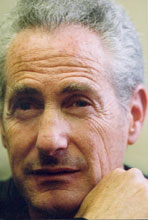
(Image: Mary Reagan)

The Bat Segundo Show #336: Joseph Wallace (Download MP3)

This text will be replaced

Galleygate: Open Questions to Stephen Elliott

Since my critical comment in response to the Rumpus Book Club is “awaiting moderation,” I thought I would reproduce it here:

Since nobody here has the balls to ask important questions (and I fully expect this comment to be deleted), and Elliott has been far from transparent, here goes:

1. A galley typically costs at least $5 to make. Are you paying the publishers for these galleys with these funds? Or are you pocketing the cash and plundering these galleys, redistributing them among the people who pay you money for financial gain? If the latter, then how can this be considered even remotely ethical (particularly in light of the recent FTC blogger policy)?

2. How is it ethical to take money from subscribers when they can express their professional interest and have the galley sent to them for free when they write to the publisher?

3. Why are you disrespecting the authors with this plan? The galley is not the version that the author wishes to put out. It is riddled with typos, gaffes, and other errors. So not only are you besmirching an author’s vision. You are also taking away much needed sales to that author that will assist her in getting another book deal.

4. Why cut into the galley supply like this? Galleys are typically distributed to booksellers, critics, et al. so that a publisher stands a chance of getting some advance buzz or generating sales. When you take fifty galleys, then this destroys fifty potential shots at a book getting publicity. It is nothing less than monopolizing a supply that you have no right to horde.

RELATED: Liz Burns’s thoughts on a library that categorizes an ARC as the finished copy in its stacks.

UPDATE: Stephen Elliott has responded at the Rumpus:

I think you’re wrong about this. I don’t think we’ll be sending galleys out the majority of the time. I don’t want to commit to that, because I’m not sure, but I’m reasonably certain that the majority of time it will be hardcover books, not galleys. Or it might be a mix.

If the publishers don’t think participating in the book club will be good for sales they probably won’t agree to do it. The author has to agree to it as well. An awful lot of authors have already asked us to consider using their book.

While I appreciate Mr. Elliott’s civil tone, he has not yet directly addressed the four questions. Hopefully this open exchange will encourage him to do so.

BEA 2010

Since there have been some inquiries, here’s the deal. Due to a number of ongoing projects that require my vital attention (along with this tricky little thing called life), my BookExpo America participation will be severely reduced this year. But I will be offering some modest coverage of an amusing and vaguely informative nature. I won’t be attending the Book Blogger Convention. But feel free to email me if you’re in town and interested in meeting up.

Long Live Nothing, Built From Nothing: A Manifesto

Both of my parents did not exist. My mini-rebellion was to exist. There was no sperm, no egg. To this day, I survive by visiting Loaves & Fishes, where they throw me scraps. And yet here I am. I won’t go away. Even after you secured the temporary restraining order.

I defied all human biology, but remain strident and humorless. I am neither dead nor alive. The fact that I exist, that I occupy such a prodigious portion of the collective human mind and that the entire world revolves around me, permits me the authority to spout forth ridiculous bullshit. And by the time you reach the end of this very important essay’s third paragraph, which I will repeat for emphasis, you will believe everything that I say. If you do not, you are inferior. You are dead. You are a scrap to be thrown into my mighty maw.

The novel is dead.

I have eaten you. If I have not eaten you, you will wake up tomorrow and find my teeth burrowed into your leg. If you do not throw your scraps to me, I will spend the evening sobbing. And I will spout forth a fount that is even more ridiculous than before. When I begin biting into your limbs, I will not like the taste, but I will eat you because you are dead. You cannot exist because I do not exist. I am delusional. I love literature, but I hate you. I love you, but I hate literature. This is not a contradiction. I find nearly all the moves the traditional novel makes unbelievably predictable, tired, contrived, and essentially purposeless. I have not had a blowjob in sixteen years. Blowjobs are for dead people. And yet, being dead, I have not received one.

My lofty intentions were misunderstood by Stephen Colbert. When I attempted to partake of a certain biological practice that occurs in bedrooms and motel rooms, I could not find a willing partner. There was only a series of shrill essays. For every essay, I slapped on the subtitle “A Manifesto” so that you would detect its importance. To this day, I have my defenders. But they are all dead. Just as the people I see on the plane are dead. We get to pretend that people are alive. But I know that they are not.

The novel is dead.

Twenty years ago I applied for a job at the University of Washington creative writing program and I was escorted out of the office by security. However, by the mid-1990s, I made several additional attempts at gainful employment. I would not leave the office. I felt after a while that they should pay me money to write a book that was not a book, to promulgate literature that was not literature. Some of the faculty members at the University of Washington believed I was employed. But most of them felt sorry for me. I responded that I was dead and I asked them to pay me money. They told me to write a book. And I did so to justify my existence. Now everybody laughs at me. Even after I gave them what they wanted.

The novel is dead.

Every year, my book became less unwieldy. I became convinced that it was the greatest book that had ever been published in the history of humankind. I was not wrong. Because the novel was dead. I saw how I could take statements from others and make them my own. None of the material was mine. It was dead. Deader than a dead Eskimo. Deader even than Michael Jackson, a recording artist who is dead and whom I am not fond of. I am not fond of many things. Please be miserable with me. But in being dead, the book became alive. And my book incited controversy.

The novel is dead.

And here was the big break: I realized how perfectly the words embodied my argument. It was the best argument that humankind had to offer. I wanted the reader to understand that they should burn all of their books, because the novel was dead, and read my book over and over and over. I wanted them to buy my book again after they had burned their original copy. I took it upon myself to appear on every talk show. Because I liked talking about myself, even though the novel was dead. Even though I remained dead.

The novel is dead.

Numerous bloggers have failed to perform fellatio upon me. This is unfair. I have paid my dues. Because I don’t genuflect the twin altars of the novel (dead) and life (dead). I’ve become the poster boy for the Ridiculed Polemicist. I can’t even get Charlie Rose to book me on his show. The New Yorker doesn’t accept my contributions. Fine by me. They misunderstand my genius, which is dead. Like the novel. Like you. Like your mother.

I will hate the book you’re reading. If you smile at literature, you will find me sitting behind you, staring at you like a stalker and taking all the joy out of your reading experience. If only you had invited me to more parties. If only you had invited me for even one dinner. If only you had serviced me. The way that you had shown affection to all the happy people who were dead and who did not deserve your affection.

Forms evolve.

Forms are there to serve a hairdresser, and when your hair falls out, the hair falls out for a good reason.

The novel is dead.

Long live nothing, built from nothing.

The Bat Segundo Show: Barry Gifford

Barry Gifford appeared on The Bat Segundo Show #335. Mr. Gifford is most recently the author of Sailor & Lula: The Complete Novels.

Condition of Mr. Segundo: Wilder than his heartburn.

Author: Barry Gifford

Subjects Discussed: [List forthcoming]

EXCERPT FROM SHOW:

Gifford: Well, the point is “Don’t be a victim.” I mean, I think I have another chapter somewhere that’s called “Victims.” But that’s always been another kind of thing that I could never abide. People who see themselves as victims. You know, with a capital V. And I just don’t like to be around people like this. People who complain all the time or are a victim or who feel that they’re a victim of their environment, their parents, their husband, their wife, their boyfriend, their girlfriend, God. Whatever it is that they want to call it. It’s convenient, isn’t it? It’s an easy way out. And in the case of the kids in Perdita Durango, they’re just kids. They were like dumb college kids. And here they were kidnapped for the purpose of human sacrifice. I mean, what a terrible thing? And Romeo and Perdita are certainly colorful characters, but malevolent ones. So they’re the natural contrast to Sailor and Lula.

Correspondent: But these two college kids. Did you really feel a good deal of fury or hatred towards them?

Gifford: No! No, I don’t feel any fury or hatred towards any of these characters. I mean, in one sense, yes, we’re all subject to all of the things that have come before, to our upbringing, and to all these things that I mentioned. The key is: How do you deal with them? How do you assert yourself? How do you retain some semblance of control over your own life? Control has always been a big issue with me. I’m not an easily controlled person. In a way, I’m very faithful and loyal and all those things. But it has to be on my own terms. In the sense that if somebody is there purposefully and clearly and obviously attempting to manipulate me, that’s over. There’s no chance of my having any sort of friendship or relationship with that person. And that’s what Perdita Durango is mainly about. Now nobody had a worse childhood than Perdita Durango. She’s definitely — if anybody could be called a victimized person. It laid out her life for her. And what does she try to do? She’s trying to control her own existence. She’s fighting for her life. And that’s the theme that I always felt with Perdita. I love Perdita. I mean, she’s crazy and she’s dangerous. But I love her.

Correspondent: These issues of control are interesting. Because here you have worked in Hollywood, in which the writer is always considered last. For the most part. I know that you appeared on a panel recently in which you had no problem with your books being adapted and being transformed into something different. But there is, in dealing with Hollywood, a sense of capitulating control. And I’m curious as to how you find control in a situation in which you know the writer’s always going to get screwed.

Gifford: Well, as my friend Richard Price has mentioned before, and said the other night, he says, “I’m in it only for the money. I have my books.” And one thing that I said was, after the film Wild at Heart came out, people said to me, “Well, what do you think about what David Lynch did to your book?” I said, “I wasn’t aware that he did anything to my book.” I knew what they were asking. But the book is still there. Read the book. He didn’t change a sentence. He didn’t change a period or a comma. The book is there. The movie may endure the book. It may or may not endure whatever it happens to be. But it’s still there. It’s inviolable. The movie’s another animal. It’s a different form. It’s a different art form. You have other opportunities with movies. And I love the movies. And I learned a lot about how to write from the movies when I was a child. Just watching all-night movies all the time. That sort of thing. And I learned how to tell a story, and how to build character development, and all that kind of thing. That doesn’t mean that I sat down to write movies. I did not. And when I have the opportunity, or choose the opportunity, to write a screenplay, really the writer only has one shot at it. It’s that first draft. So when you write that first draft, you have to see that movie the way you want it to be seen. And so there are no excuses. Of course, there’s more or less manipulation. I mean, sometimes I work better in Europe. Because they change fewer things. But it isn’t the case with Lost Highway, which David Lynch and I wrote together. Everything that’s in that movie is written. It’s all there Nothing was changed. So what could be better than that?

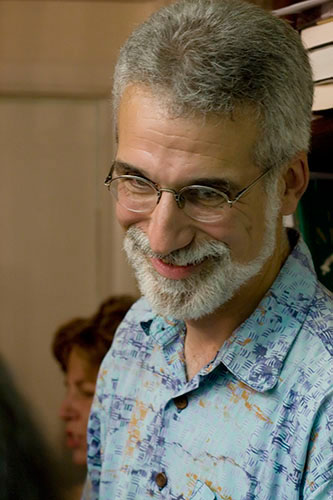
(Image: Robert Birnbaum)

The Bat Segundo Show #335: Barry Gifford (Download MP3)

This text will be replaced