- We are not in New York. Our gaunt hosts have sallow eyes, aquiline noses, and have muttered some nonsense in Gaelic. I heard one of the footmen mutter the words “kill humanity.” So far, they have only asked us for three pints of blood. The damp stone steps wind downward into a cool cave, with a small gust of stale air providing ventilation from a crenelated crack. We have been informed that various guests have been sacrificed over the past few centuries, but we have reason to believe that we will make our way back to New York in safety, and have tipped one of the gnomes with a slab of raw meat to ensure that we stay salubrious. Amazingly, there is wi-fi, proving indeed that you can get a wi-fi connection just about anywhere — even in the ninth circle of hell. So while we await our fates, we’ll still continue to keep you posted on what’s going on in culture.
- Word on the street is that Houghton Mifflin Harcourt will not be acquiring new books in the future. This has been described as a “temporary freeze,” and some agents are dubious. One literary agent referenced in the above linked Jeffrey Trachtenberg’s article has remarked that she has not seen a freeze before and that she doesn’t know how such a model can sustain itself if there isn’t new product. This is a very reasonable question to ask. Traditionally, publishers move at a glacial pace when it comes to shifting stock and making the necessary internal developments necessary to keep abreast in a fast-changing technological age. But should the “temporary freeze” continue beyond Q1 2009 — presumably, a period in which Houghton is expecting some profits that will keep the operation afloat without having to axe any employees — then one must ask how this publisher can remain even remotely current and competitive.
- Holt Uncensored has thankfully returned in blog form, and Pat Holt has some very interesting ideas about online royalty accounts. Given the extraordinary rights that a publisher seizes from an author during the course of publication, it seems only equitable for the publisher to be transparent about how it is doling out its author royalties. Of course, most authors are especially keen to leave such inquisitive niceties about whether or not they are getting screwed to their agents. So I don’t think we’ll be seeing authors storming Midtown with pitchforks anytime soon. Agents, on the other hand…
- Details on the new Pynchon novel. I’m wondering if any hard-core Pynchonites will be legally changing their surnames to “Sportello.” Someone should record the explanations to the judges for posterity, and perhaps a grad student might run with this further in a thesis project.
- Dan Green quibbles with the “certain facts” about writers that are apparently “buried there.” Yes, novels have been known to express certain truths about the world around us. But who knew that Joseph Bottum read novels to psychoanalyze the author? Well, to take Bottum’s amazing skill set and apply it to the essay in question, here are “certain facts” about Mr. Bottum: (1) Mr. Bottum would really, really like to visit Buenos Aires, (2) Mr. Bottum has not yet heard of the Power Exchange sex club in San Francisco, but would likely become a regular if he were to pay good money on one daring night, (3) Mr. Bottum is arrogant, and in his arrogance wishes to declare anybody who is smarter than him “arrogant,” and (4) Mr. Bottum, during weak moments, barks at small children and tells them that Santa Claus and the Easter Bunny are dead and that they are mere fictive constructs fornicating and doped out in a ratty motel in Akron, Ohio. Now how do I know these “certain facts?” Well, because they are “buried there.” I need not cite any specific text to prove my point. This is prima facie, my friends. And should Mr. Bottum (a most suspicious name, don’t you think?) come to these pages to dispel them, then his denial will almost certainly reveal that the “certain facts” are truer than he ever intended! My keen literary analysis will no doubt hold up in a court of law. Now pardon me while I go hypnotize a rabbit.
The Bat Segundo Show: Christopher Plummer
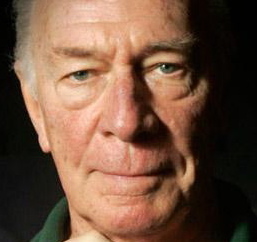
Christopher Plummer appeared on The Bat Segundo Show #253.
Mr. Plummer is the author of In Spite of Myself. He is also a highly talented and very distinguished actor.
Condition of Mr. Segundo: Fleeing from Mr. Plummer’s considerable achievements.
Author: Christopher Plummer
Subjects Discussed: The roles that get Mr. Plummer the best seats at a restaurant, Lillian Hellman’s control over director Joseph Anthony during The Lark, whether or not playwrights understand the interpretation of their work, Death of a Salesman, Elia Kazan, the notion of Hamlet as an Everyman, Shakespearean adaptations, creative interpretations, Amanda Plummer’s creative freedom, being turned down for Gladiator, turning down David O. Selznick, the theatrical problems with Arch Oboler’s Night of the Auk, not always knowing when a play or a script is suitable, Christopher Fry, the virtues of radio drama, the lack of decent writing and the commercialization of the media, helping young actors, success in the acting industry being predicated on who you know, being sandbagged by an understudy named William Shatner, Geoffrey Unsworth, concentration during preparation, throwing people out during rehearsals, getting crushes on actresses, when an actor should demand rewrites, the sacredness of text, and being pummeled with rewrites from Neil Simon.
EXCERPT FROM SHOW:
 Plummer: There is an Everyman in Hamlet. And every member of the audience must, whether they like it or not, try to identify with him in this sense. And there is the chance in that extraordinary role of them being able to do that. Then there’s the remoter side of Hamlet, which is the urbane and the wit and the wisdom in one so young. And the style that perhaps takes him away from being identified, but particularly with modern audiences, who probably don’t know what style is. So it is such a melange of extraordinary qualities, Hamlet, that it makes the greatest role ever written. There is no doubt of that. And he must have also the great temper. He must possess the great temper in order to frighten the audience. He must have all sorts of qualities all in one. Because it’s written that way. It’s written as a great symphony of a part. And unless you obey the codas, the climaxes, and the stresses, musically, you’re not anywhere near finished playing Hamlet.
Correspondent: Well, this is an interesting distinction. Because I also know that you took James Earl Jones to task in this book for approaching Othello with a more analytical framework.
Plummer: Yes.
Correspondent: And I’m wondering if you believe that Shakespeare needs to always have this great emotional poetry to it or whether there is room, given the complexities, for numerous types of adaptations.
Plummer: Well, of course there’s room. But you’ve got to have all of them. You can’t come on and just sort of say, “Alright, I’m going to play Hamlet as a junkie. Period.” Please! Where would he be able to think so clearly? And how could he give out such brilliant thoughts if he was a junkie? It would take him days to say one line. So, of course, James Earl Jones was fantastic in the prose section of the play. What interested me, and what disappointed me at the same time, was — with his great organ of voice, which he has to his fingertips — why he did not let go in the great poetic passages.
Correspodent: Yeah.
Plummer: He just decided not to. Whether he was embarrassed or he decided he would do them in more monotone realistic way. There was only one great moment where he let fly. It was about the Pontic sea, and that whole imagery in the famous scene with Iago. There, he let fly. And it was absolutely wonderful. And then you wanted him to go on at moments doing the same thing again.
Correspondent: So I take it then that you’re not really a fan of creative interpretations like, say, the R & J or the Baz Luhrmann approach to….
Plummer: Oh, I thought that as a contemporary Romeo & Juliet, it was [the Luhrmann] by far the best I’d ever seen. I thought it was excellent. And I didn’t think that the poetry was mangled. Because I think that somebody helped — obviously, I don’t know if this is true, but it seemed as if someone had helped Leonardo DiCaprio with his words. Because he stretched them out correctly. So even though it was a modern piece, he obeyed the rhythm of the poetry. And I thought that the girl did too. She was a little behind him in that. But he was excellent. And I thought that was remarkable. Because that was an honest departure all the way down the line. It didn’t pretend to be half-modern, half a sort of allegiance to Shakespeare. It was a modern take on Romeo and Juliet.
BSS #253: Christopher Plummer (Download MP3)
This text will be replaced
Listen: Play in new window | Download
The Bat Segundo Show: 2008 National Book Awards
Our reports from the National Book Awards previously appeared in piecemeal on these pages, and have also appeared on The Bat Segundo Show #252.
So far as we know, the National Book Awards has not authored anything aside from programs and informational pamphlets. The people that Our Young, Roving Correspondent talked with on that fateful night, however, have authored a few books. Or at least, this is what they have told us.
Condition of Mr. Segundo: Deeply suspicious of Harold Augenbraum.
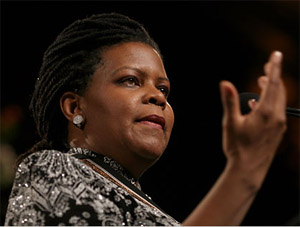
Authors: Joan Wickersham, Annette Gordon-Reed, Salvatore Scibona, Mark Doty, Candace Bushnell, and Richard Howard.
Subjects Discussed: The difficulties of writing a memoir in straight chronological order, the paradox of suicide, having a handrail to guide you through the writing of a book, the Hemmings family, endnotes, the perils of plunging into research, working on a book for nine years, narrative arcs, attempts by finalists to describe a book in 100 words, planning a book for ten years, writing and throwing things away, typewriters and distractions, mixing up Cs and Ds, the difficulties of selecting poetry for a volume, wrestling with Walt Whitman, why Candace Bushnell reads what she reads, attempting to get an answer on how one exudes glamor at the National Book Awards, and how long it takes Richard Howard to write a poem.
EXCERPT FROM SHOW:
 Correspondent: How are you wrestling with Whitman exactly?
Doty: Well, I want to think about the common ground that I share with Whitman. A real interest in the relationship between the individual — the single self — to the community. Whitman is always trying to figure out where the margins of himself are, and often he feels like he doesn’t have any. That’s been an obsession of mine too. He’s a person who was so interested in affirming the body, and the pleasures of sex and of physical life. And at the same time, he was a person who was absolutely obsessed with mortality and the end of physical life. So those are all things that matter to me. And I love the way that he really thought his poems could change the world.
Correspondent: And you’re here for the National Book Awards specifically in what capacity? To exude glamor or what?
Bushnell: To celebrate books. This is the business that I’m in. Publishing. I’ve written five novels. And this is about publishing. So it’s always a treat for writers to come out and see other writers.
BSS #252: 2008 National book Awards (Download MP3)
This text will be replaced
Listen: Play in new window | Download
The Bat Segundo Show: Alex Beckstead
Alex Beckstead appeared on The Bat Segundo Show #251.
Mr. Beckstead is the filmmaker behind Paperback Dreams, a documentary on independent bookstores. The documentary is now touring around the nation and is making appearances on PBS.
Condition of Mr. Segundo: Surrendering to hard-boiled journalists.
Guest: Alex Beckstead
Subjects Discussed: Why Beckstead singled out Cody’s and Kepler’s over other Bay Area bookstores, Kepler’s as a prominent fixture on the Menlo Park town square, the Cody’s “hail Mary” play in San Francisco, business location problems in Union Square, the commercial viability of Telegraph Avenue in Berkeley, the Bay Bridge as the cultural Berlin Wall, the question of why Cody’s didn’t survive in the present age when it survived the seedy environment of the 1960s and the 1970s, economic vs. cultural shifts, passion and independents, the absurdity of buying everything online, Amazon, bookstore proprietors who don’t own their buildings, the graying of bookstore customers, Andy Ross vs. Clark Kepler as successful bookseller, the independent bookstore as cultural space, listening to the customer base, the importance of being an entrepreneur, comparisons between bookstores and movie theaters as glorified snack bars, the two storefront dilemma, the bookseller as philanthropist, an independent bookseller’s responsibility to the community, the conglomeration of publishers and the lack of dangerous books on the market, Salman Rushdie’s The Satanic Verses and the Cody’s firebombing, books vs. music as a medium, whether or not the Internet is bad for books, gatekeepers, the importance of the countercultural movement to independent bookselling, and the ubiquity of Amazon vs. the selection of a bookseller.
EXCERPT FROM SHOW:
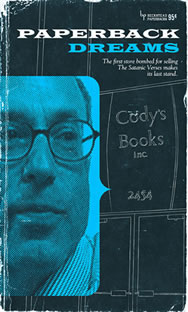 Beckstead: I didn’t smell blood in the water. I didn’t go in thinking, “Okay, well this is going to be a failure.” I mean, it was a huge risk. The kind of thing that Andy [Ross] was doing, there was going to be a dramatic outcome one way or the other. Either he wasn’t going to make it and then the losses were going to be catastrophic or he was going to make it and sort of prove that somewhere, somehow, an independent bookstore can still make it. That was the outcome I was still rooting for. But that’s not what happened.
Correspondent: But simultaneously, you do have footage of Andy Ross, as the bookstore is opening. He’s saying very proudly in the streets how banks won’t lend him money, how he’s putting his entire savings into this “hail Mary” — we’ll call it that, I suppose, because it did indeed go belly up. And at the end of the film, he even says, “This was a colossal act of hubris.” I mean, this store was operational at the expense of the Telegraph store.
Beckstead: Well, the Telegraph store wasn’t making money. That’s what people need to understand. You know, the Telegraph store was not going to survive. It might have limped along for another year or two, had Andy not opened San Francisco. But it was losing a lot of money. The kind of books that historically sold were not selling well there. And I think Andy’s reasoning was that, when they opened the second store in Berkeley in ’98 — you know, Cody’s on Fourth Street — that store became very successful very quickly. It was smaller than Telegraph. There’s a whole other thing about Telegraph. It’s always been a little edgy, but it’s kind of got a little bit seedy. There’s a high rate of vacancies along Telegraph Avenue. I was talking at one point, when we were making the film, with the owner of Ameoba Music. He has a very large record store on Haight Street in San Francisco and then also on Telegraph. It’s still not clear to me exactly who’s to blame for the decline of Telegraph. But it’s clear. He was saying that there’s hardly any vacancies on Haight Street. It’s very similar in terms of the kind of people who spend time there. Similar problems with aggressive panhandling. With drug dealing and all those sorts of things. But Haight Street does fine. For some reason, Telegraph does not.
Telegraph was in decline. Fourth Street was really taking off as a shopping district. I can’t remember the exact number, but it’s something like 20 to 30% of the sales tax revenue for the City of Berkeley comes from Fourth Street. And Cody’s was the biggest shop on the block. They were the anchor on Fourth Street. So I think Andy’s logic was: We opened a second store in a more upscale shopping neighborhood. That quickly became profitable. Not quite profitable enough to hold Telegraph as well. But maybe if we did the same thing on a bigger scale, then we’d have two successful stores and one that was kind of slowly dying. But maybe we could subsidize it long enough to figure out what was going to happen. I mean, there’s been talk of turning around Telegraph Avenue for years. So I think that he was really optimistic that you could do that. But, yeah, it wasn’t the right call at the end of the day.
BSS #251: Alex Beckstead (Download MP3)
This text will be replaced
Listen: Play in new window | Download

The Bat Segundo Show: Alison Bechdel II
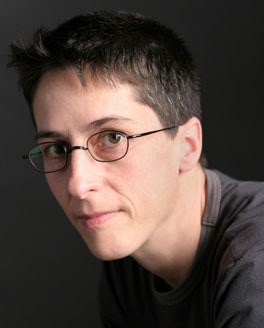
Alison Bechdel recently appeared on The Bat Segundo Show #250.
Ms. Bechdel is most recently the author of The Essential Dykes to Watch Out For. To listen to our previous interview with Ms. Bechdel, check out The Bat Segundo Show #63.
Condition of Mr. Segundo: Overly concerned with modifiers attached to artists.
Author: Alison Bechdel
Subjects Discussed: The relationship between visual developments and storyline developments, how personal developments worked their way into Dykes to Watch Out For, Tips o’ the Nib, narrative authenticity, research through asking people, being afraid of the telephone, the comics world as a simulacrum of the real world, being overly stimulated by the real world, developing specific background details, the risks of diverting attention between graphic novels and comic strips, dwelling upon a community vs. dwelling upon the self, therapy, Woody Allen, being ahead of the technological curve, Proust and the first telephone call in a novel, laziness vs. being seduced by technology, scanned lettering, managing all the characters in the strip, having characters refer to each other by first name, the advantages and disadvantages of deadlines, adapting media messages for the comics medium, Mad Magazine and Mort Drucker, fear of empty space, when text and images are not enough for comics, political semiotics and behavior, strips with little to no dialogue, artistic influences, fitting multiple people into a frame, portraying the butts of various characters, contending with censorious requests from newspaper clients, the limitations of four rows, Madwimmin Books and big box stores, why the bookstore is the perfect social nexus, the outcry upon introducing Stuart, the ideological balance between Mo and Stuart, gender jokes as cheap shots, contending with those who didn’t understand Bechdel’s storytelling style, the role of politics in Dykes, the moral responsibilities of a cartoonist, and Proposition 8 and the future of cartooning.
EXCERPT FROM SHOW:
 Correspondent: I think we should really clarify this for the record. I mean, the stripes on Mo’s shirt become more pronounced over the course of time. And they increasingly grew thicker during the course of the early ’90’s. And then sometime around 1995, they solidified into that absolute thickness that we have enjoyed for the last decade or so. I know there have been many Harry Potter jokes that you’ve thrown around. But you were there, of course, before Harry Potter.
Bechdel: That’s right.
Correspondent: But I have to ask you about the stripes. Had it occurred to you at any time to have Mo not wear a striped shirt? Or did you feel that this was such an indelible part of her disposition?
Bechdel: I think there might be one scene where she’s not wearing a striped article of clothing. But I can’t remember what it is or what its significance is. Indeed, the stripes did grow thicker. Very good observation!
Correspondent: Yeah! They did! They did! It was really great to read this all in one burst, because there are so many different character developments, which I plan to ask you about. But maybe I could probably phrase this better by pointing out Sparrow, for example. How the front curls that she had were chopped off to fit in with the adjusting times. And I’m wondering when you decide to change the look of a character. What circumstances dictate that? And some characters, of course, like Mo, stay the same over the course of time.
Bechdel: Wait, can I just make an observation? Thinking about those thickening black stripes, I think that’s of a piece with the increasing darkness of the strip and indeed the era in which it was passing through.
Correspondent: Yeah, yeah, that’s true.
Bechdel: Maybe now if I were continuing to write it, Mo’s stripes would continue to get thinner and thinner.
Correspondent: Thinner, thinner, thinner.
Bechdel: No, I mean literal — I mean like figurative darkness.
Correspondent: Figurative darkness!
Bechdel: Yeah! Yeah!
Correspondent: So there’s some allegory here, I see. So it’s
Bechdel: Yeah, I’m totally bullshitting. I’m totally making this up.
Correspondent: Ah! No, no, this is good. This is good.
Bechdel: But…
Correspondent: But we can give the listeners something to latch onto here. Great allegorical decisions upon your part. I mean, how much of this is intuitive? And how much of this is really a conscious effort? Well, you know, Mo’s stripes look better. They just look better.
Bechdel: No, it was purely a visual decision. I don’t know. I just used a different pen or something. And it looked better thicker.
Correspondent: Okay, what about Sparrow’s hair?
Bechdel: Sparrow’s hair. Well, what made me decide to do that? I don’t know, but interestingly it prefigured her crossing over from being a lesbian into being a…
Correspondent: Yeah.
Bechdel: …a bisexual. I forget what she called herself. A bisexual lesbian.
Correspondent: I think she did.
Bechdel: But she didn’t want to completely let hold of her lesbian title. But she got this slightly more feminine-looking haircut.
Correspondent: Yeah, she did. She did. I mean, did you plan her to essentially shack up with Stuart?
Bechdel: No, not at that point. I didn’t.
Correspondent: How much does a visual decision like this predate the actual plotting? Or perhaps anticipate it in some way? It’s a very interesting observation.
Bechdel: It is interesting. What’s even more interesting is that the way that these storylines and developments prefigure my own life. Or are a reaction of things going on in my own life. Which I don’t like to admit, typically. But as I looked back over the book, I could see all these absurd parallels with my own life. It seemed almost indiscreet to have included them.
BSS #250: Alison Bechdel (Download MP3)
This text will be replaced
Listen: Play in new window | Download