Variety reports that Philip Roth’s The Dying Animal is headed for the big screen, with Nicholas Meyer scripting and Penelope Cruz, Ben Kingsley and Patricia Clarkson starring. Meyer previously wrote The Human Stain. No word yet on whether Meyer will be addressing David Kepesh’s previous existence as a human-sized mammary gland, but Lakeshore, the company behind this production, is also trying to get a film version of American Pastoral off the ground with director Phillip Noyce attached. So while Noyce may not be much of a breast man, we can only hope that Meyer is.
Sometimes Courage is the Little Voice at the End of the “Star Trek” Theme That Wails…Remember, Remember Me
Lee Goldberg has located a documentary on composer Alexander Courage on YouTube: [Part One] [Part Two] [Part Three] [Part Four]
Kurt Eichenwald: $2,000 for “Editorial Integrity”
Remember that Kurt Eichenwald essay from December? Eichenwald wrote a New York Times Magazine story investigating a 13-year-old boy who was sexually exploited through the Internet. But today’s New York Times Corrections page revealed a very interesting development:
The essay was intended to describe how Mr. Eichenwald persuaded Justin Berry, then 18, to talk about his situation. But Mr. Eichenwald did not disclose to his editors or readers that he had sent Mr. Berry a $2,000 check. Mr. Eichenwald said he was trying to maintain contact out of concern for a young man in danger, and did not consider himself to be acting as a journalist when he sent the check.
The Associated Press’s David Caruso reports that Eichenwald sent Berry the check in an effort to learn the boy’s true name and address. I think it’s important to note that Eichenwald’s piece yielded him the 2006 Payne Award for Ethics in Journalism, awarded for “preserving the editorial integrity of an important story while reaching out to assist his source.”
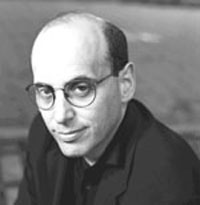 But if this story was an exercise in total candor and perspicacious judgment, why didn’t Eichenwald inform his editors at the Times? Were the judges at the University of Oregon aware of this check before they relayed the Payne? If the Payne Award is indeed one of the highest honors a journalist can receive, will the University of Oregon School of Journalism and Communication rescind the award in light of Eichenwald failing to report the $2,000 check?
The correction observed that “Times policy forbids paying the subjects of articles for information or interviews.” So aside from the Times policy, let’s examine why this issue is troubling. Here is a reporter investigating a boy who had amassed hundreds of thousands of dollars to conduct lewd acts in front of strangers. If Eichenwald himself is paying money to Berry, does not this behavioral association (Berry accepting check from a stranger) color Berry’s answers? Can we count on total candor when an interview subject receives money? Eichenwald noted, “We were gambling $2,000 on the possibility of saving a kid’s life.” If “saving a kid’s life” was Eichenwald’s motivation, then does not a four-figure check color even this subjectivity?
In my review of William T. Vollmann’s Poor People, I criticized Vollmann for paying his interview subjects, contemplating whether Vollmann’s guilt had clouded his judgment. Whether this was a wrong move or not, one can at least commend Vollmann for revealing this practice to his readers. Even Nick Broomfield was candid enough to include former LAPD chief Daryl Gates accepting a cash payment on camera in his documentary, Heidi Fleiss: Hollywood Madam. Good subjective journalism, perhaps because it deals in partiality, demands complete transparency if one is expected to believe in the truth it presents.
Eichenwald may view his failure to disclose the check as innocent. But his lack of candor calls his “editorial integrity” of his story into question. Since the story was very much about Eichenwald’s efforts to save Berry, and since Eichenwald led us to believe that he was following New York Times standards, it would be lacking great integrity indeed if Eichenwald did not return his award to the University of Oregon.
Eichenwald has since moved on to a position as investigative reporter at Portfolio, Condé Nast’s forthcoming business magazine. If Eichenwald plans to investigate corporations, I’m thinking that Condé Nast Legal might want to be careful with Eichenwald still assigned to a beat. While Berry’s family may have had to return a mere $2,000, the Fortune 500 has whole armies of lawyers ready to descend upon 4 Times Square. And if Eichenwald manages to “forget” another detail, it may prove a costly resolution.
Live Action GoldenEye 007
Roundup
- Mike Ponder: “I’d say I am a businessman. A businessman who was lucky enough to have the talent to paint.” Ah, but what is talent when your true calling is generating money? It’s true that poet Wallace Stevens was an insurance man and it would be naive in the extreme to suggest that artists give up their day jobs and shirk their breadwinning duties. But does the true artist spend nearly moment possible producing art first and foremost, no matter what the circumstances? More advice from Ponder: “At the end of the day, if you are going to be successful as an artist you have to be successful as a businessman.” If this is true, then why doesn’t Thomas Pynchon taking meetings?
- Jonathan Lethem talks with theoretical cosmologist Janna Levin. Video also available.
- It seems that scrotum-shock isn’t confined to the States. The Hamas Education Ministry is removing Palestinian folk tales from school libraries because of “sexual innuendo.” Of course, an offhand reference to genitals is far less suggestive than a Mae West line and certainly less pernicious than a schoolyard taunt. But what’s even crazier is that Hamas has not only removed the book in question, but destroyed 1,500 copies.
- Are Oscar Ameringer’s literary contributions being overlooked in Oklahoma because of his politics?
- Nilanjana S Roy: “They have the air of seasoned explorers, emerging from the rain forest of literature with advice about how to avoid media pythons, the malarial interview (where you speak in a kind of delirium that lasts until you see what you’ve said the next morning in the paper) and other hazards of the festival life. The festival enthusiasts are the ones who’re comfortable leading the life of rockstars on a long world tour, sans the groupies and the psychedelic drugs.” I can report with some authority that authors are not immune to groupies and psychedelic drugs. And I’m certain that Alice Denham can agree.
- Rose Wilder Lane, overlooked literary journalist?
- Gwenda’s reports of bad AWP fashion have been memorialized by Carolyn Kellogg, although it would seem that Tayari Jones was the exception.
- The horrors of 1980s stickers. (via Quiddity)
- Seamus Kearney makes the case for epilogues.
- 30 dead at a Baghdad book market.
- Joshua Ferris observes that, of Granta’s recently announced Best Young American Novelists, 15 of 21 had MFAs. Maybe this was one of the reasons I wasn’t nearly as excited about Granta’s list as I wanted to be. In the end, isn’t good writing not about workshops, but about sitting on your ass and trying to write the best damn story you can? Personally, I find greater value showing my work to people I trust instead of sitting in front of a bunch of emaciated students who are more driven by uninformed envy than collective no-bullshit encouragement. An open environment in which you can count upon people to tell you the truth is far better than a stuffed classroom in which the same textbook tropes are encouraged. I feel the sorriest for bleary-eyed editors looking for something different.