Jane McGonigal’s Reality is Broken, landing with a Gladwellian thud of wily reductionism and indolent thinking, is the most irresponsible nonfiction book I am likely to read this year. This remarkably callow book, professing to be new in approach but merely retreading exhausted notions, offers the shaky premise that, because reality is difficult, video games exist to pick up the slack. Perhaps a foolish belief in games as magic beans for a hypothetical beanstalk (McGonigal is curiously obsessed with enormity throughout her book) is similar to a foolish belief in alien abduction, Scientology, fundamentalist religion, vaccines triggering autism, or the Loch Ness Monster. That’s really the only conclusion I can draw. Because McGonigal cannot make the case that a weekend of Halo 3 is any more purposeful than a weekend in Cabo San Lucas drinking margaritas and banging the brainless.
In the McGonigalian view, failure has to be “fun” and embarrassment needs to be “happy.” Fiero, an Italian adjective for being proud that was used as an epithet by Petrarch, is “the most primal rush we can experience” and, paragraphs later, “one of the most powerful neurochemical highs we can experience.” And if we can get our loved ones playing a virtual game called Chore Wars (instead of simply being adult and doing our housework), “our friends and family will define fiero moments for us every day.” Hang on a minute. Is it altogether healthy to forge relationships around inherent smugness? Isn’t this a bit Ayn Randian? Or, dare I say it, Riefenstahlian? “Through my optimism,” once said Leni Riefenstahl, “I naturally prefer and capture the beauty of life.”
 In McGonigal’s world, one cannot simply go for a run. One needs to have an obnoxious Nike+ mini avatar (Nike’s answer to Clippy?) accompanying the exercise — a cuddly animated little bastard who smiles and trash talks for “vicarious reinforcement.” Except that vicarious reinforcement, popularized by a Canadian shrink named Albert Bandura, involves learning about behavioral consequences by observing other people (that would be those flesh-and-blood, carbon-based life forms called humans: your friends, family, enticing strangers, and so forth, all decidedly not computer-animated and all decidedly not a narcissistic reproduction of you). McGonigal’s elastic application fails to explain why a virtual creature sponsored by a multibillion dollar corporation interested in getting people running (and thus buying more shoes) is better at conveying behavioral consequences than flesh-and-blood friends (who like to run, generally out of an interest that has little to do with money). And I can guarantee McGonigal that a childish avatar isn’t going to make me run anytime soon. I do walk (ideally) five miles a day, three times a week. And it’s because I enjoy being attuned with the very reality that McGonigal claims is broken. The people you stop and talk with, the sights you observe, the friends you walk with. And so forth.
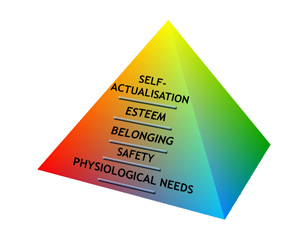 Different people have different approaches. One would think that McGonigal, having a PhD, would understand this basic truism. But then McGonigal, a New Geek type who wishes to cram her unlived perspective down our throats, really doesn’t grasp psychology very well. She quotes Maslow without comprehension and then writes, “Games are showing us exactly what we want out of life: more satisfying work, better hope of success, stronger social connectivity, and the chance to be a part of something bigger than ourselves.” But what McGonigal missed in Motivation was Maslow’s assurance that those who are self-actualized have “an unusual ability to detect the spurious, the fake, and the dishonest in personality, and, in general, to judge people correctly and efficiency” and that this efficiency in relation to reality “extended to many other areas in life.” Presumably, that would include video games. In other words, Maslow urged us not to put the cart before the horse, whereas McGonigal sees the video game as a crass cure-all.
These are only just a few indications that Reality is Broken is nothing less than the product of a consummate quack. Consider the book’s numerous “Fix” insets, offering “helpful” summaries of how we can fix the “broken” reality around us. These seem more designed for a self-help audience than anything even half-approaching scholarship:
FIX #6: EPIC SCALE — Compared with games, reality is trivial. Games make us a part of something bigger and give epic meaning to our actions.
I’m not sure what kind of drug experience McGonigal has had, but swap “games” for “mescaline” and you start to see the problem.
 McGonigal uses the word “addictive” as a positive modifier. “What makes Tetris so addictive,” McGonigal writes, “is the intensity of the feedback it provides.” Wait a minute. Isn’t intensity a problem if we’re trying to contend with a mad influx of feedback? Later in the book: “By providing a goal-oriented, feedback-rich, obstacle-intensive environment for dancing, [Top Secret Dance Off, McGonigal’s project] makes dancing more motivating, fun, and addictive.” There’s a variation of “intense” and “feedback” again. Still, no clear answers on the “addictive” question. And isn’t it a bit self-serving and highly disingenuous to write in general marketing terms about your own game project? “Of course, we’ve also developed many external shortcuts to triggering our hardwired happiness systems: addictive drugs and alcohol….But none of these methods are sustainable or effective in the long term.” Wait a minute! If you’re applying “addictive” to something that isn’t sustainable, then is it safe to say that video games might prove just as unsustainable or ineffectual in the long term?
McGonigal can complain about the “moral debates over the addictive quality of games” all she wants (and, as a gamer who severely limits his gaming time precisely because of these addictive qualities, I’m likely to be on her side on this point), but if she doesn’t possess the smarts or the courage to be transparent about the medium’s more harmful aspects, then her mind is clearly broken and her book contributes nothing to a meaningful debate on whether or not video games are art, whether or not video games have real-world applications, and so forth.
Just how roseate is McGonigal? Rather tellingly, you won’t find “addiction,” “psychological disorder,” “failure,” “violence,” “aggression,” or “binge gaming” listed in the index. (You won’t find “emotion” either, but you will find “emotional activation.” Such is the programmer’s disease.) McGonigal is too much of a terrified doe to confront the very reality she wishes to condemn. That reality, for those who haven’t been paying attention (presumably McGonigal included) involves a Korean couple who proved so irresponsible that they let their child die while they played World of Warcraft. Or how about the South Korean teen who died from exhaustion after a twelve hour gaming binge? What about the mother who shook her three-month-old son to death because he had the temerity to interrupt a game of Farmville? Video games didn’t kill these children, but they certainly contributed. Given such stories, it is intellectually irresponsible for McGonigal to stick with the California sunshine that video games are a foolproof cure for the mind. I like raisins, but I wouldn’t be arrogant or foolish enough to suggest that everybody can find peace and harmony and “fiero” (“Boo yah, motherfucker, how you like me now! I ate me some raisins!”) by eating raisins. McGonigal’s myopic view is particularly troubling, since her book comes not long after Tom Bissell showed us the other side of the token in Game Over, writing bravely about his deadly cocaine-fueled descent into Grand Theft Auto IV.
 “What the world needs now are more epic wins,” writes McGonigal in typical Pollyanna mode, “opportunities for ordinary people to do extraordinary things — like change or save someone’s life — every day.” By nearly every philosophical standard, this statement is laughable. A Grand Theft Auto IV player may very well find pride in biking up the highest virtual mountain from the city (as McGonigal cites). While this alleviates boredom and occupies time, is this really comparable with saving a person’s life? McGonigal brings up Joe Edelman’s Groundcrew, which McGonigal describes as “a wish panel for real people.” But in an interview with McGonigal, Edelman reveals that this represents little more than entitlement and narcissistic wish fulfillment:
A woman was at a dance rehearsal in a basement somewhere in Boston. She was completely exhausted, she couldn’t leave rehearsal, and she was dying for a latte so she could keep dancing. That’s the wish she posted on Groundcrew: “Help, I need a latte.”
Note the laughably hyperbolic language Edelman uses here. “Completely exhausted” instead of “tired.” “Dying” instead of “wanting.” “A latte so she could keep dancing.” Ever hear of water? Any real thinker would cut through this redolent nonsense, or at least question it. Then there’s the preposterous petit-bourgeoisie “help” — a word that I usually associate with someone in the process of being mugged or in need of spare change — that springs from these desires. And, Edelman continues, when some guy in Boston orders the latte, he walks into the basement and declares, “I have a latte!” “as if it were the most important thing in the world.”
McGonigal concedes, “Okay, so getting someone a latte isn’t exactly the most world-changing effort you could make,” before offering the one-sentence paragraph: “Or is it?” One rapidly understands that McGonigal, like a common newspaper hack about to be cut loose by the last editor willing to understand her, is trying to cram quotes into her thesis, rather than letting a thesis emerge naturally from her results.
“The normal way of getting a latte is a cold, economic exchange,” continues Edelman. “But this latte was different. This latte was love. This is about inventing a different way, a better way, of getting what we need, every day.”
The beer I had last night was lust. And the morning coffee is redemption. Please. Instead of challenging this statement (which reads more like marketing copy), or getting Edelman to expand upon what he means, McGonigal closes this section of the chapter. The latte, in McGonigal’s words, “perfectly represents the new kind of epic win.”
 “Epic” is another modifier that McGonigal likes a great deal. She’s fond of bringing up meaningless achievements, such as the fact that, on April 2009, Halo 3 players scored 10 billion kills against the Covenant. “Ten billion kills wasn’t an incidental achievement, stumbled onto blindly by the gaming masses,” writes McGonigal. “Halo players made a concerted effort to get there.” You may as well jump up and down over the 30,000 Americans who killed themselves last year. Weren’t their suicides also “a concerted effort to get there?” Should we celebrate the fact that several trillion cigarette butts litter the streets worldwide every year? Simply the pollution is worthwhile because of its “epic” results. Bigger doesn’t necessarily mean better. And on the subject of Halo, McGonigal also praises the Halo Museum of Humanity — a startlingly convincing shrine that provides “epic context for heroic action.” What McGonigal calls “epic context,” I call “slick marketing.” And I’ll even go further. Soviet propaganda posters certainly carry an allure, but we also know that the distinctive style was calculated to get citizens to believe in bad things.
McGonigal’s stunning lack of vision stretches into a soul-sucking need for constant self-affirmation:
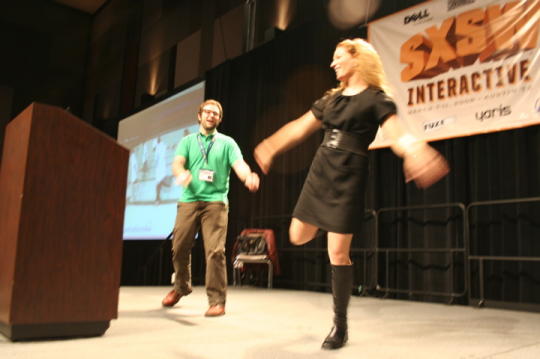
Giving talks is exhausting, even when I enjoy it, I explained. It would be energizing to see some +1s pop up right on top of my Powerpoint slides as I worked my way through the deck.
There it is again: the word “exhausting” used in relation to a privileged life. You know what’s exhausting? Digging ditches for eight hours. Delivering UPS packages in a blizzard without a break. But let’s cut Calamity Jane a little slack. Positive reinforcement is certainly a good thing. But what McGonigal seems to be asking for here is nothing but positive reinforcement. After telling a SXSW crowd about desiring a “plus-one intellect for every smart thing I said during this talk,” she is flooded with emails. Some guy named Clay Johnson creates plusoneme.com. But of course, there’s no way to cap the praise or even offer a self-correcting -1. And what we end up having is a delusional McGonigal: “So far, I’m up to +25 innovation, because I asked my colleagues to plusoneme when I do something innovative at work.” Which leads one to ask why McGonigal requires all this cheerleading, or whether the +1s might actually be interfering with innovation. After all, doesn’t innovation sometimes come from presenting unpopular ideas? Doesn’t innovation sometimes come from challenging the status quo? Indeed, might not some personal discovery emerge by confronting reality and using it to enrich one’s life? The timorous McGonigal resorts to her precious little toys to find a “better” life.
“In the end, what makes a Foursquare social life better than your regular social life is the simple fact that to do well in Foursquare, you have to enjoy yourself more.” Note the assumption that living through Foursquare is better before the fact! The user just has to enjoy herself! McGonigal hasn’t considered privacy, much less how one’s appreciation and approach might change if one is angling to become the mayor of some dive bar. And her overbearing suppositions — which are the apotheosis of geek douchery — stand in sharp contrast to the dérive‘s possibilities:
In a dérive one or more persons during a certain period drop their relations, their work and leisure activities, and all their other usual motives for movement and action, and let themselves be drawn by the attractions of the terrain and the encounters they find there….the dérive includes both this letting-go and its necessary contradiction: the domination of psychogeographical variations by the knowledge and calculation of their possibilities. In this latter regard, ecological science, despite the narrow social space to which it limits itself, provides psychogeography with abundant data.
That “calculation of their possibilities” doesn’t involve technology at all. It’s the noggin taking in details and finding a magical way to take in the seemingly commonplace. But now Guy Debord’s “abundant data” is tabulated through Foursquare. The metrics Foursquare tabulates is “just data, a way to quantify what you’re already doing. What really makes Foursquare engaging is the challenge and reward system built around the data.” In other words, McGonigal leaves nothing to non-objective, non-metric possibility. The machine takes care of everything and it computes data around a highly limited social construct.
In order to turn a group of strangers into a community, you have to follow two basic steps: first, cultivate a shared interest among strangers and, second, give them the opportunity and means to interact with each other around that interest.
 Aside from the fact that one doesn’t need a video game to create this type of needlessly limited community (why should people “interact”around a singular interest?), this is a troubling Kinsey-like approach to socialization. As anyone who has ever attended a science fiction convention knows, a common interest doesn’t necessarily ensure a lasting social bond. But don’t tell that to McGonigal, who confuses this grouping with communitas, “a powerful sense of togetherness, solidarity, and social connection. And it protects against loneliness and alienation.” Let’s see how well communitas worked out during the Blessed Sacrament procession, courtesy of Michael J. Sallnow’s Contesting the Sacred:
During the Blessing Sacrament procession, therefore, space becomes highly contested, as Hospitallers and pilgrims jockey for position. Since the brancardiers are heavily outnumbered, they rely on persuasion and their official status to defend the space which has been marked out by their senior officials. As the ceremony approaches its climax, the boundary between sick and healthy pilgrims becomes ever more difficult to maintain, as the faithful press forward to catch sight of the Host and of the clergy following the priest conferring the blessing. Such moments of intense religious fervour dramatically illustrate the uneasy co-existence of communitas and status, of solidarity and self-interest, which is so characteristic of the cult as a whole.
There’s a tremendous difference between buying a homeless man a meal (a tangible and immediate reward) and playing Free Rice — a game whereby the user answers questions (a virtual and unseen reward), with the promise of rice being delivered to a starving nation. I bring this up because, with Free Rice, McGonigal is willing to concede that “the grains are rice aren’t coming from the players — they’re coming from a small number of advertisers who agree to pay the cost of ten grains of bulk rice for every correct-answer page view.” Had McGonigal applied this rightfully skeptical eye towards games that are created with similar free market goals, then her book might have become an invaluable investigation on how games can extend beyond their present capitalistic concerns.
Jane McGonigal’s mind is broken. She is no more concerned with an honest approach to social change than a sleazy salesman who hopes you will buy his Ford Lariat. The Lariat will only get you ten miles to the gallon, but the salesman assures you that the experience is epic and will leave you with a feeling of fiero — unlike the Pontiac model.
UPDATE: Shortly after I posted a link to this essay to Twitter, Jane McGonigal responded (in a now deleted tweet) as follows.

I reiterate my tweet. I will happily challenge Ms. McGonigal to a public debate about her book. And because I’m so sad, I also welcome Ms. McGonigal’s lengthy refutation of my points — that is, if she has the guts or the chops.
UPDATE 2: To provide yet another example on how McGonigal’s idealism gets in the way of comprehending the available data, one can look no further than a recent “debate” in the Wall Street Journal. On January 25, 2011, McGonigal cited a recent Pediatrics study, claiming:
The study, conducted by the National Institute of Education in Singapore, found that gamers who played on average 30 hours a week or more were more likely to experience negative real-life impacts from their gaming, such as increased social anxiety or decreased school performance. But for gamers playing 20 or fewer hours a week, no such problems occurred. Once again, these results suggest that there is a fairly clear distinction between gaming enough to fuel our real lives and gaming so much that it interferes with real life.
But if one reads the PDF, one finds something altogether different:
Most researchers have assumed that would be similar to pathological gambling. The parallel seems justifiable, because both are assumed to be behavioral addictions that begin as entertainment that can stimulate emotional responses and dopamine release. People gamble or play video games for many reasons, including relaxation, competence, autonomy, and escape from daily concerns. Playing can produce “flow” states, in which the player is focused, has a sense of control, may lose a sense of time and place, and finds playing intrinsically rewarding. Playing is not pathologically initially but becomes pathological for some individuals when the activity becomes dysfunctional, harming the individual’s social, occupational, family, school, occupational, family, school, and psychological functioning.(Emphasis added.)
The study rightfully points out that its purpose is not to answer this debate, but “to provide new data that may be useful.” And the purpose of this essay is to point out that, if McGonigal were a responsible or a flexible thinker, she would take greater care with a word like “addiction” and address the scientific fact that pathological behavior emerges from video games (about 9% of gamers are pathological, according to the Pediatrics study), while simultaneously pointing to the benefits. A nuanced and adult approach offers a fairly clear distinction between a self-help huckster and a genuine thinker.