New Mayor, New Hysteria: De Blasio and Bratton’s Insane and Secretive War on Jaywalking

On Sunday, the New York Police Department put Kang Wong, an 84-year-old man, in the hospital. Wong was left bleeding in the streets. There were cuts to his face. His crime wasn’t murder or drug trafficking or robbery. It was jaywalking.

kangwongThe New York Post reported that Wong, who did not speak English, was approached shortly after he had crossed the intersection of 96th Street and Broadway against a red light. Wong walked away when the cop tried writing him a ticket. The police tried pulling him back. There was a struggle. And the violence began.

The NYPD has launched a crackdown on jaywalkers at this intersection — still in effect as of Monday afternoon — in response to three fatal accidents over a week. (Details on these deaths can be read at DNAinfo.) The most prominent fatality was Samantha Lee, who was struck by a red Dodge Charger sedan on early Saturday morning.

But the jaywalking crackdown, and the violence directed towards Wong, is completely out of proportion with the crime or even the jaywalking “epidemic,” as Mayor de Blasio referred to it on Monday afternoon. As The New York Times reported last March, New York’s traffic fatality rates are less than one-third of the national average and half the rates of other big cities. 286 people died in New York City last year, up from 2012’s 274 deaths. Yet this is still a remarkably low figure. Indeed, 2013’s tally was only 30 fatalities greater than 2010, when Mayor Bloomberg and Transportation Commissioner Sadik-Khan announced that it was the best year for traffic fatalities in the City’s history. (The second-lowest figure is 269 in 2011, just 17 shy of the 2013 “epidemic.” Historically speaking, New York is doing much better than the 471 traffic fatalities in 1910.)

Yet Mayor de Blasio is determined to rid New York City of all traffic deaths by 2024. Aside from the fact that such a statistic is completely impossible unless the streets are purged of all cars, there’s an even bigger problem: the program that de Blasio is drawing from doesn’t actually work in New York.

Vision Zero — a policy idea cribbed from Sweden that de Blasio was talking up last August — wishes to put an end to all traffic fatalities. But the considerable efforts by Scandinavians to curb death have had middling and often ineffectual results. Norway adopted a Vision Zero policy in 1999, but the number of traffic fatalities remained largely unchanged since. And while Sweden has seen traffic fatalities fall as low as 266 in 2010, New York is not Sweden. Sweden isn’t nearly as dense as New York. It doesn’t have nearly as much traffic. Moreover, 65% of Sweden’s serious accidents involve wild animals. Unless New York reduces its population density (not likely) and sees a sudden influx of Swedish moose hopping around the BQE, what works for Sweden is unlikely to work in the Big Apple.

Moreover, de Blasio’s attempts to enact policy predicated upon an unworkable fantasy has established a dangerous authoritarian precedent: a tactic that the newly reappointed Police Commissioner is bringing to New York from Los Angeles that is more about sponging offenders with frivolous $250 tickets and making their lives more of a hassle.

Mayor de Blasio and New York Police Commissioner Bill Bratton are also working from illusory datasets for their new program. Bratton appeared at a press conference last Wednesday to promote Vision Zero, claiming, “Last year, pedestrian error — and I point this out — pedestrian error contributed to 73 percent of collisions.” The New York Times‘s J. David Goodman and Matt Flegenheimer — among other journalists — accepted this statistic without question, failing to follow up on where or how Bratton obtained this 73% figure. (On Monday afternoon, I spoke with Lieutenant John Grimpel in the NYPD’s public information about what data Bratton was drawing upon. Gimpel informed me that this came from an internal document from the Collisions Investigation Squad. I asked Lt. Grimpel if he would be releasing the data or the survey at a future date. “We’re not giving that out,” he said.)

On Friday, Streetsblog’s Brad Aaron did the work that other journalists couldn’t be bothered to perform, attempting to track the source of Bratton’s figure and reporting similar communications issues with the NYPD. Aaron pointed out that the 73% figure “doesn’t match up with any known dataset or the robust recent research into the causes of serious pedestrian issues.”

In other words, de Blasio and Bratton are using Scandinavian ideology that doesn’t work and basing their policy on statistics that they refuse to be transparent about and that look to be illusory.

When questioned by reporters on Monday about the crackdown, de Blasio stated that while there was no citywide crackdown, precinct commanders could act upon the issue. De Blasio also referred to pedestrian fatalities as “an epidemic we’re facing,” but refused to address the Wong case “until I have a better sense of it.” But if the Mayor cannot provide adequate data and transparent justification which explains why his jaywalking crackdown is a sane corrective, then he and his Police Commissioner are no better than other thugs who have persecuted the hoi polloi in the name of mass hysteria that they lacked the acumen to respond to.

As Philip Alcabes has pointed out in his thoughtful book, Dread: How Fear and Fantasy Have Fueled Epidemics from the Black Death to Avian Flu

When officials or entrepreneurs make use of an epidemic threat to create politically or financially useful lessons, they follow a long tradition. Medieval Christians burned Jews in hopes of warding off epidemics of plague; outbreaks of cholera in the mid-nineteenth century in England and America; early-twentieth century epidemics of plague in San Francisco were said to be caused by immigrants (Chinese and Mexican, respectively); and venereal disease epidemics have been attributed historically to “loose women.”

During his inauguration speech, de Blasio held up Fiorello La Guardia as “the man I consider to be the greatest Mayor this city has ever known,” citing La Guardia’s belief in the rugged individual. But his new policies against jaywalking are not only a shocking throwback to draconian police measures enacted by Mayor Giuliaini. These measures stand against La Guardia’s populist principles. (They are also a waste of police resources. When Mayor Rudolph Giuliani criminalized jaywalking in the late 1990s, pushing up the fine from $2 to $50, police rightly balked at having to waste their time. How many more manhours will be wasted because of de Blasio and Bratton’s ridiculous war?)

According to H. Paul Jeffers’s The Napoleon of New York, Mayor La Guardia stood adamantly against criminalizing jaywalking. In 1936, as the Nazi conflict escalated in Germany, La Guardia vetoed a bill passed by the aldermen that required police to arrest people for jaywalking. “I prefer the happiness of our unorganized imperfection to the organized perfection of other countries,” said La Guardia. “Broadway is not Unter den Linden.”

But maybe under de Blasio and Bratton, it is.

Operating Instructions (Modern Library Nonfiction #99)

(This is the second entry in The Modern Library Nonfiction Challenge, an ambitious project to read and write about the Modern Library Nonfiction books from #100 to #1. There is also The Modern Library Reading Challenge, a fiction-based counterpart to this list. Previous entry: Melbourne.)

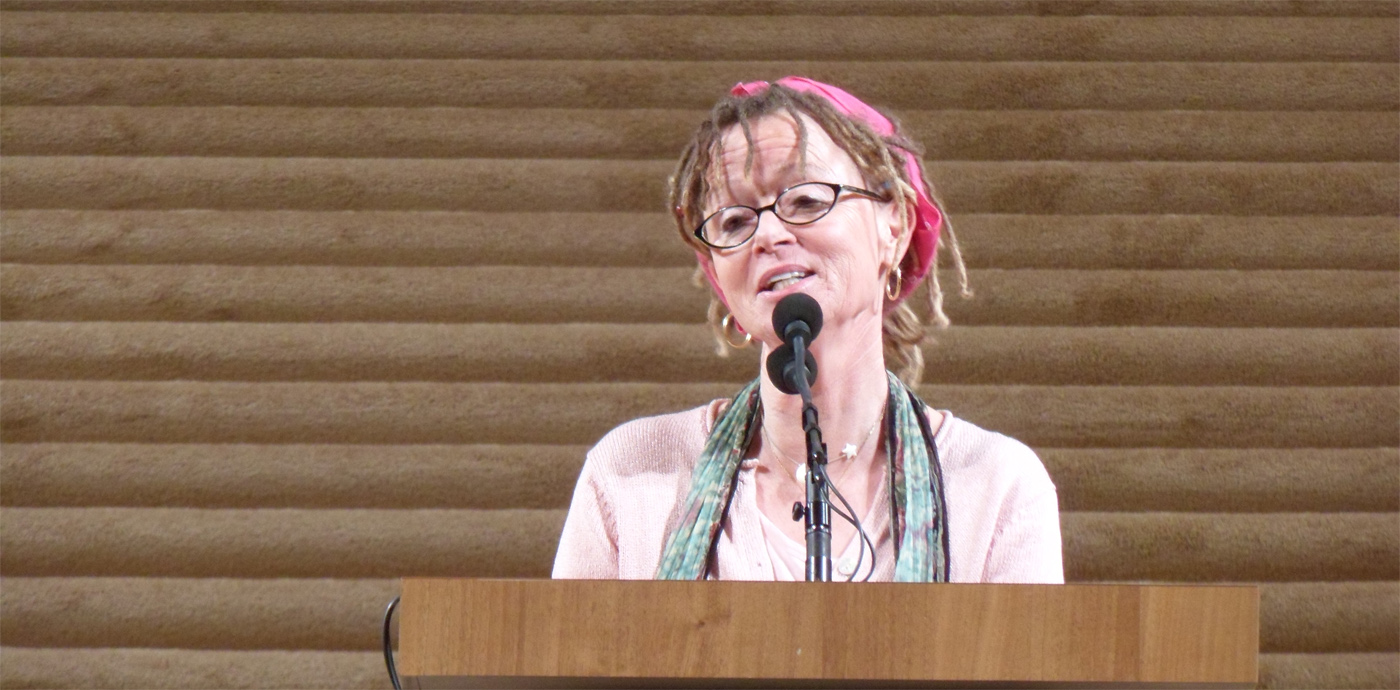
mlnf99It is easy to forget, as brave women document their battles with cancer and callous columnists bully them for their candor, that our online confessional age didn’t exist twenty years ago. I suspect this collective amnesia is one of the reasons why Anne Lamott’s Operating Instructions — almost an urtext for mommy blogs and much of the chick lit that followed — has been needlessly neglected by snobbish highbrow types, even when hungry young writers rushed to claim transgressive land in the Oklahoma LiveJournal Run of 2006.

Lamott’s book, which is a series of honed journal entries penned from the birth of her son Sam to his first birthday, was ignored by the New York Times Book Review upon its release in 1993 (although Ruth Reichl interviewed her for the Home & Garden section after the book, labeled “an eccentric baby manual” by Reichl, became a bestseller). Since then, aside from its distinguished inclusion on the Modern Library list, it has not registered a blip among those who profess to reach upward. Yet if we can accept Karl Ove Knausgaard’s honesty about fatherhood in the second volume of his extraordinary autobiographical novel, My Struggle, why then do we not honor Anne Lamott? It is true that, like Woody Allen in late career, Lamott has put out a few too many titles. It is also true that she attracts a large reading audience, a sin as unpardonable to hoity-toity gasbags as a man of the hoi polloi leaving the toilet seat up. Much as the strengths of Jennifer Weiner’s fiction are often dwarfed by her quest for superfluous respect, Anne Lamott’s acumen for sculpting the familiar through smart and lively prose doesn’t always get the credit it deserves.

Operating Instructions — with its breezy pace, its populist humor, and its naked sincerity — feels at first to be a well-honed machine guaranteed to attract a crowd of likeminded readers. But once you start looking under the hood, you begin to understand how careful Lamott is with what she doesn’t reveal. It begins with the new baby’s name. We are informed that Samuel John Stephen Lamott’s name has been forged from Lamott’s brothers, John and Steve. But where does the name Samuel come from? And why is Lamott determined to see Sams everywhere? (A one-armed Sam, the son of a friend named Sam, et al.) There are murky details about Sam’s father, who flits in and out of the narrative like some sinister figure with a twirling moustache. He is six foot four and two hundred pounds. He is in his mid-fifties, an older man who Lamott had a fling with. We learn later in the book that he “filed court papers today saying that we never fucked and that he therefore cannot be the father.” Even so, what’s his side of the story?

This leaves Lamott, struggling for cash and succor, raising Sam on her own with a dependable “pit crew” of friends. Yet one is fascinated not only by Lamott’s unshakable belief that she will remain a single parent for the rest of her natural life (“there is nothing I can do or say that will change the fact that his father chooses not to be his father. I can’t give him a dad, I can’t give him a nuclear family”), but by how the absence of this unnamed father causes her to dwell on her own father’s final days.

Lamott’s father was a writer who “died right as I crossed the threshold into publication.” His brain cancer was so bad that he could barely function in his final days. Lamott describes leaving her father in the car with a candy bar as she hits the bank. Her father escapes the car, becoming a “crazy old man pass[ing] by, his face smeared with chocolate, his blue jeans hanging down in back so you could see at least two inches of his butt, like a little boy’s.” It is a horrifying image of a man Lamott looked up to regressing into childhood before the grave, leaving one to wonder if this has ravaged Lamott’s view of men — especially since she repeatedly chides the apparent male relish of peeing standing up — and what idea of manhood she will pass along to her growing boy.

Part of me loves and respects men so desperately, and part of me thinks they are so embarrassingly incompetent at life and in love. You have to teach them the very basics of emotional literacy. You have to teach them how to be there for you, and part of me feels tender toward them and gentle, and part of me is so afraid of them, afraid of any more violation. I want to clean out some of these wounds, though, with my therapist, so Sam doesn’t get poisoned by all my fear and anger.

This is an astonishing confession for a book that also has Lamott tending to Sam’s colic, describing the wonders of Sam’s first sounds and movement, and basking in the joys of a human soul emerging in rapid increments. Motherhood has long been compared to war, to the point where vital discussions about work-family balance have inspired their own “mommy wars.” Operating Instructions features allusions to heroes, Nagasaki, Vietnam, and other language typically muttered by priapic military historians. Yet Lamott’s take also reveals a feeling that has become somewhat dangerous to express in an era of mansplaining, Lulu hashtags, and vapid declarations of “the end of men.” Men are indeed embarrassing, but are they an ineluctable part of motherhood? It is interesting that Lamott broaches this question long after Sam’s father has become a forgettable presence in the book. And yet months later, Lamott is more grateful for the inherited attributes of the “better donor” in “the police lineup of my ex-boyfriends”:

He’s definitely got his daddy’s thick, straight hair, and, God, am I grateful for that. It means he won’t have to deal with hat hair as he goes through life.

Throughout all this, Lamott continues to take in Sam. He is at first “just a baby,” some human vehicle that has just left the garage of Lamott’s belly:

The doctor looked at the baby’s heartbeat on the monitor and said dully, “The baby’s flat,” and I immediately assumed it meant he was dead or at least retarded from lack of oxygen. I don’t think a woman would say anything like that to a mother. “Flat?” I said incredulously. “Flat?” Then he explained that this meant the baby was in a sleep cycle.

But as Sam occupies a larger space in Lamott’s life, there is an innate ecstasy in the way she describes his presence. Sam is “a breathtaking collection of arms and knees,” “unbelievably pretty, with long, thin, Christlike feet,” and “an angel today…all eyes and thick dark hair.” We’re all familiar with the way that new parents gush about their babies, yet Lamott is surprisingly judicious in tightening the pipe valve. Even as she declares the inevitable epithets of frustration (“Go back to sleep, you little shit”) and trivializes Sam (“I thought it would be more like getting a cat”), Sam’s beauty is formidable enough to spill elsewhere, such as this description of a mountain near Bolinas:

So we were driving over the montain, and on our side it was blue and sunny, but as soon as we crested, I could see the thickest blanket of fog I’ve ever seen, so thick it was quilted with the setting sun shining upward from underneath it, and it shimmered with reds and roses, and above were radiant golden peach colors. I am not exaggerating this. I haven’t seen a sky so stunning and bejeweled and shimmering with sunset colors and white lights since the last time I took LSD, ten years ago.

Being a mother may be akin to a heightened narcotic experience, but that doesn’t have to stop you from feeling.

* * *

I suggested earlier that Operating Instructions serves as a precursor to the mommyblog, but this doesn’t just extend to the time-stamp. There is something about setting down crisp observations while the baby is napping that inspires an especially talented writer to find imaginative similes, especially in commonplace activities which those who are not mothers willfully ignore or take for granted. Compare Lamott and Dooce‘s Heather Armstrong (perhaps the best-known of the mommy bloggers) as they describe contending with a breast pump:

“You feel plugged into a medieval milking machine that turns your poor little gumdrop nipples into purple slugs with the texture of rhinoceros hide.” — Anne Lamott, 1993

“I end up lying on my back completely awake as my breasts harden like freshly poured cement baking in the afternoon sun.” — Dooce, February 23, 2004

Armstrong has sedulously avoided invoking Lamott’s name in more than a decade of blogging, but, in both cases, we see just enough imagery squirted into the experience for the reader to feel the struggle. Both Lamott and Armstrong have rightly earned a large readership for describing ordinary situations in slightly surreal (and often profane) terms. (Both writers are also marked in ways by religion. Lamott came to Christianity after a wild life that involved alcoholism. Armstrong escaped Mormonism, eluding to a period as an “unemployed drunk” before meeting her husband, who she subsequently divorced.)

Next Up: Ian Hacking’s The Taming of Chance!

Melbourne (Modern Library Nonfiction #100)

(This is the first entry in The Modern Library Nonfiction Challenge, an ambitious project to read and write about the Modern Library Nonfiction books from #100 to #1. There is also The Modern Library Reading Challenge, a fiction-based counterpart to this list.)

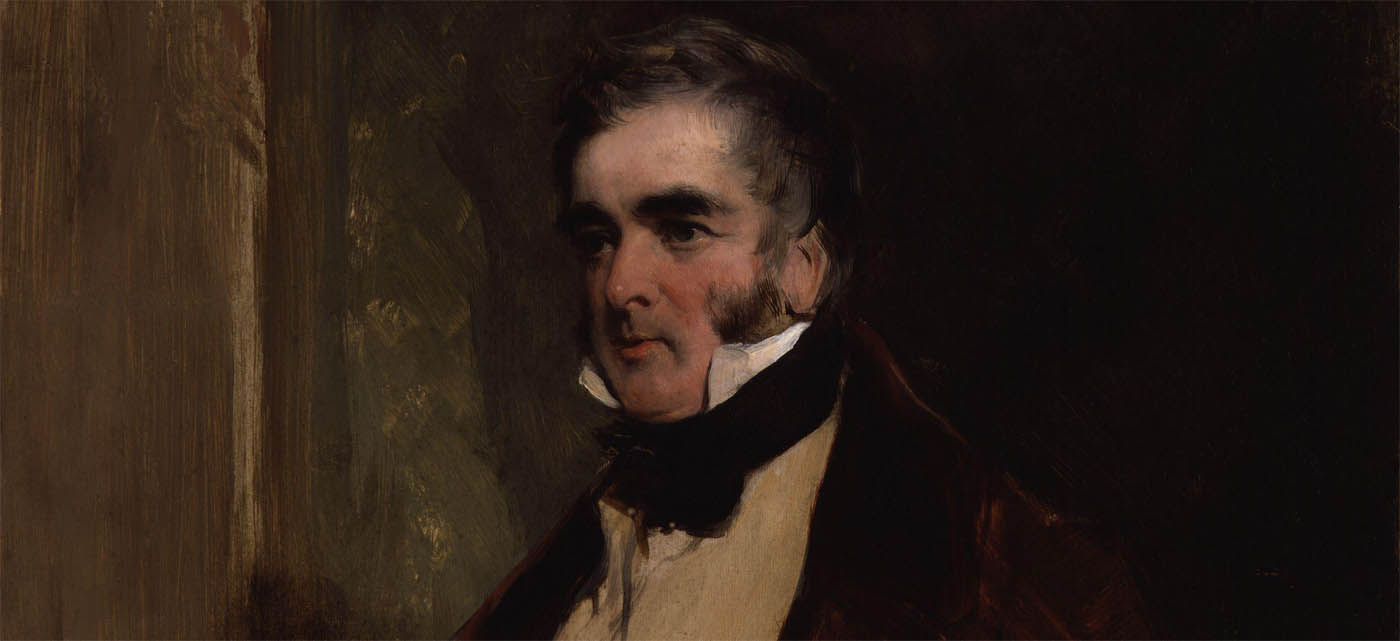
mlnf100History has produced such a rich pile of devious political figures who spend every spare minute scheming and plotting their rise that today’s aspiring aristocrats, who can be found working every connection to get their kids into bright educational citadels and reliable sinecures, cannot come close to such cutthroat monomania. Yet there are also those who blunder into top office like bumpkins crashing high-class weddings through the simple repetitive act of placing one foot in front the other. William Lamb, aka Lord Melbourne, Prime Minister of the United Kingdom for eight years (1834, 1835-1841) and the subject of Lord David Cecil’s generous biography, was one such man.

Melbourne was a ponderous speaker, a bookish man who reportedly dozed off in the middle of a conversation, a leader largely blind to the way people beneath his station lived, and a cautionary tale for any soul who avoids conflict. “He pondered, he compared, he memorized,” writes Cecil of Melbourne in middle age, just before his improbable political career begins, “the Elizabethan drama, for instance, he knew so well that he could repeat by heart whole scenes not only of Shakespeare but of Massinger; the margins of his books were black with the markings of his flowing, illegible hand.” Melbourne was so mind-bogglingly passive in his actions that he not only refused to intervene in his wife’s adulterous affairs, but he believed that each infidelity would pass with the fleeting speed of a common cold.

It’s easy to ridicule Melbourne and the people of that time (as the bitterly judgmental Carrie A.A. Frye and Philip Ziegler, another Melbourne biographer, have). Melbourne was cuckolded by Lord Byron. When Byron would no longer plant his flagpole in Lady Caroline Lamb, Melbourne’s wife gradually traded down in her boys on the side until she tapped Edward Bulwer-Lytton (best known today for inspiring a writing contest for wretched writing). Caroline would go on to write Glenarvon, an awful roman Ă  clef which exposed the Byron episode and left the Lambs open to disgrace and derision. When his wife died, the lonely Melbourne sought solace with another Caroline (the remarkable Caroline Norton, a tireless crusader who would go on to campaign successfully for legislative acts rectifying the second-class status of women), there was an attempt at blackmail. When Queen Victoria ascended to the throne, Melbourne became her unlikely tutor and constant companion, wasting a good chunk of his late years because the young Queen required constant attention (much of it documented in Victoria’s journals, which are now digitized and accessible through arrangement with your library; Cecil is good enough to quote from many of these entries).

When I learned from Paul Douglass’s Lady Caroline Lamb just how abhorrently Melbourne had treated the largely forgotten badass Isaac Nathan, I began to grow less tolerant of Melbourne’s nonplussed nature. Nathan — a Jewish composer who wrote the groundbreaking Hebrew Melodies and suffered from the Jewish exclusion laws which denied him the ability to vote, run for office, or pursue justice in the courts against the scabrous opportunists who stole his lyrics, often without credit or compensation — befriended Caroline and set many of her words to music. Despite Nathan defending Caroline when she was disgraced (to the lively extent of fighting duels and even publishing a defense of her character in Fugitive Pieces after her death), Melbourne refused to pay Nathan for services rendered to the Whigs when Nathan really needed the cash, leaving Nathan humiliated and bankrupt and forced to flee to Australia, where he was to write Don John of Austria (the first opera composed and performed in Australia), became the first to research indigenous music and the first settler in this new and exciting country to be killed by a tram. (Don’t worry. Nathan died at 74. It was an accident.)

Melbourne’s clueless cruelty also emerged as organized labor became a more vocal part of British life. In March 1834, a group of laborers in Dorset started a trade-union and it was discovered that these men had administered secret oaths as part of the membership. Several of these men were arrested and sentenced to seven years of penal transportation. At the time, Melbourne was Home Secretary. Instead of overturning this remarkably harsh punishment, Melbourne asked the local magistrates about the temperament of these men. He was informed by these tendentious adjudicators that they were scoundrels. Melbourne, strictly on this point of secret oaths, confirmed this inhumane sentence. And during the next month, a group of thirty thousand marched to Whitehall to demand redress. He refused to see these leaders. And this austere decision set back the trade-union movement for years. As Cecil writes:

“So far from being criminals and revolutionaries, they were sober, respectable men enough, driven into lawless courses largely by ignorance and hunger and by the struggle to hang up their families on wages lately reduced to seven shillings a week. Melbourne was not to blame for not realizing their true characters. He was not there, and he had to trust to the reports of his subordinates.”

Melbourne also did not intervene when the revolting laborers of 1830 (during the Swing Riots) were sent to the gallows. Even Cecil is forced to accept the “painful and disturbing” prospect of an ostensibly kind-hearted man who wished to uphold the death sentence even when prisoners were not intended to be executed. Yet as callous as these consequences were, contributing to great unrest in the immediate years that followed, one has to remember that these terrible measures emerged in response to fears over recent turmoil in France and while parliamentary reform was being hashed out at a frustratingly glacial pace. There was a palpable anxiety that events across the English Channel would be reenacted at home.

How did such a man ascend to Prime Minister? Largely because there was nobody else. In 1834, King William IV needed someone who could keep variegated political factions together and, although the King didn’t care much for Melbourne, he liked him better than the other candidates. After all, this wasn’t exactly a position that you could leave open because you didn’t care for the present spate of rĂ©sumĂ©s. Melbourne almost didn’t take the job. (Indeed, near the end of his stint as Prime Minister, he drifted forward with listlessness and exhaustion. Obligation seemed to be the only quality that kept him going.) An opportunistic little creep named Tom Young, who ensconced himself into Melbourne’s administrative circle through skillful cunning, was the one who played to Melbourne’s vanity and love for the classics, securing Melbourne’s commitment with the following words: “Why, damn it all, such a position was never held by any Greek or Roman: and if it only last three months, it will be worth while to have been Prime Minister of England.”

Melbourne was a weird Prime Minister. His strategy involved ridding himself of loud and querulous colleagues and keeping the new Government as calm as possible, even as he remained obdurate in his decision making. This approach did not sit well with some of the more boisterous statesmen. In a moment that could almost be pulled out of a David Lynch movie, Cecil describes Lord Henry Brougham visiting Melbourne’s house just after learning that he would not have a place in the new government. “Do you think I am mad?” shouts Brougham over and over again, his tone and gestures rising with violence as he repeats this question, almost anticipating the charismatic psychosis of Blue Velvet‘s Frank Booth. Yet the highly avoidant Melbourne could not fend off the King, assorted radicals, and any number of people who beseeched him for attention. “Damn it!” he cried to himself. “Why can’t they be quiet?” (In 1836, the aforementioned Norton blackmail episode went down, with Melbourne emerging largely unscathed even while living at Downing Street.)

I can’t entirely pardon Melbourne for some of his asshattery, but Cecil’s careful touch allowed me to understand and even empathize with some of Melbourne’s flaws, for he was also quite idiosyncratic. He stuffed his coats with endless notes. He would emit several strange sounds before beginning to talk. He would shout at random servants and ask them what time it was rather than consult a watch. These quirks allowed him to be liked by the right people, or, perhaps more accurately, tolerated because his actions were so endearingly inexplicable. Perhaps they felt sorry for him because of the Glenarvon episode, although Cecil doesn’t really address how that scandal besmirched his later life, long after Caroline was gone.

What I can say is that Cecil does such a classy job conveying the shenanigans of these often loutish patricians — the rampant adultery, the tolerated insane behavior, the strange manner that all this infiltrated British poetry and politics — that I was placed in the unusual position of fighting strong desires to throw my mind into the mire of the French Revolution, parliamentary protocol, and numerous other subjects. In the last two years, we have seen wild ideological sentiment (exacerbated by Twitter) and staunch stylistic preference (e.g., any polemical book on the lyrical essay) erode the possibilities of understanding human nuance. Melbourne reminds us that the more receptive we are to factual details that trouble or intrigue us, the more willing we are to commiserate with a person’s embarrassing qualities. Perhaps this was one reason why Melbourne was one of John F. Kennedy’s favorite books.

Cecil found both a subject and a tone that recalls John P. Marquand’s Pulitzer Prize-winning 1937 novel, The Late George Apley, published just two years before Cecil’s first half of Melbourne. He tells us baldly at the end that Melbourne’s death caused no great stir during the nineteenth century’s rampantly changing atmosphere. It is a crushing realization. Like Apley, Melbourne outlived his time and took in his personal and professional regrets with a resigned agreeableness. Melbourne’s life is often a sad portrait, yet we are somehow won over by him. Cecil’s book is a welcome reminder that if we’re going to judge someone, maybe we should buffet the impulse to castigate them with a smidgen of kindness, reserving our wrath for the real monsters. Without that vital flexibility that allows us to evolve, there may come a point when we outlive our time too. Sooner than Melbourne.

Next Up: Anne Lamott’s Operating Instructions!

Victoria Wilson (The Bat Segundo Show #531)

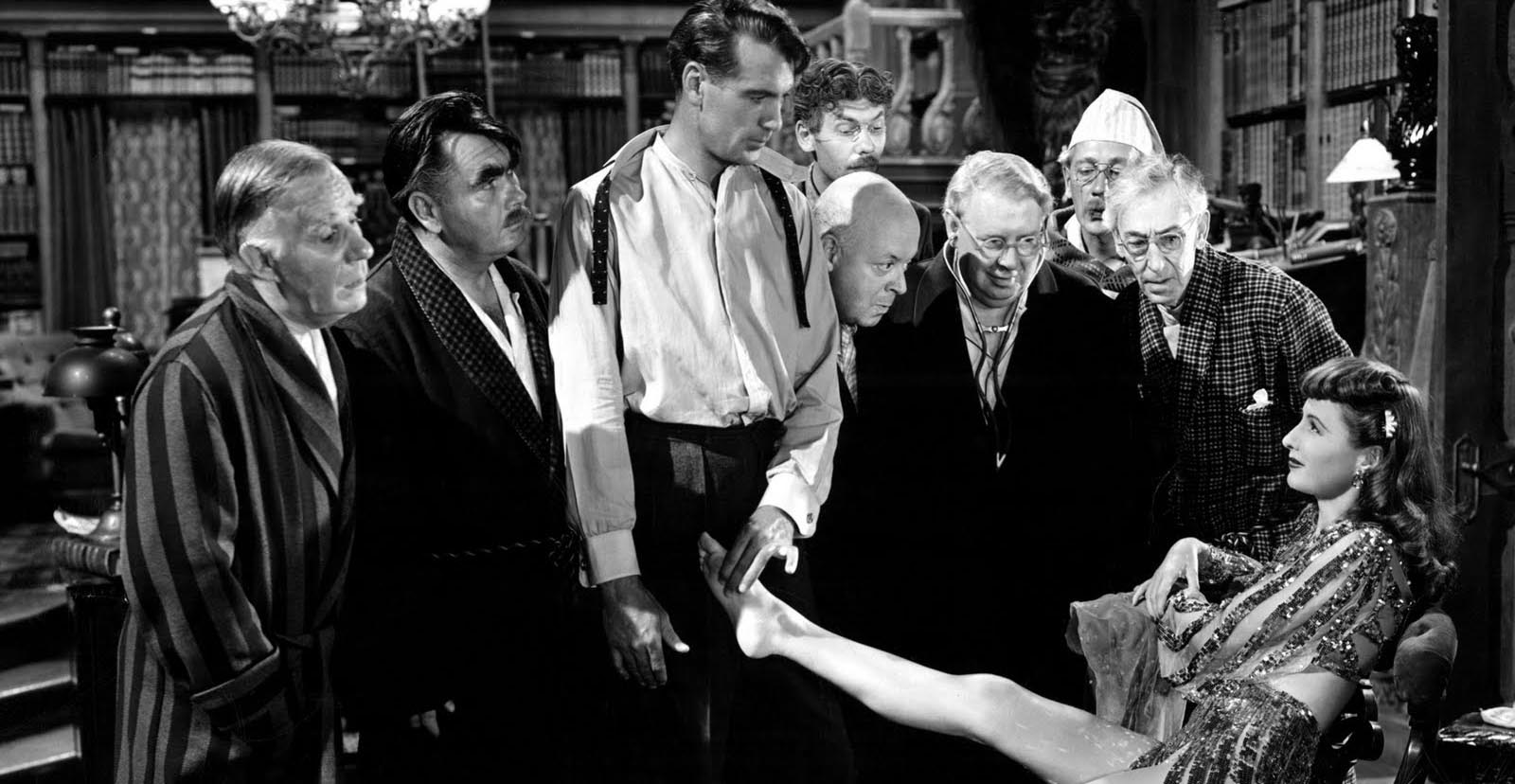
Victoria Wilson is most recently the author of A Life of Barbara Stanwyck: Steel-True, 1907-1940.

Author: Victoria Wilson

Subjects Discussed: Stanwyck shifting from being known as “Frank Fay’s husband” to being the dominant breadwinner in a matter of years, when Frank Fay was a washed-up actor spending Stanwyck’s money, Jimmy Cagney taking his inspiration from Frank Fay, Stanwyck learning how to simplify her acting, Fay’s alcoholism, Stanwyck’s initial hatred for Hollywood, Fay being ahead of his time, Frank Fay as the origin point of standup comedy, Stanwyck’s early fractious relationship with Frank Capra, the frustration of endless screen tests, Meet John Doe, Ladies of Leisure, Stanwyck’s defiance and resentment, how Fay helped Stanwyck get her big break, Stanwyck’s near-affair with Capra, difficult actors, Stanwyck’s aversion to parties, Stanwyck and class distinctions, how Stanwyck closed the iron door on a lot of people, Stanwyck shutting out Mae Clarke, Clarke and Cagney’s grapefruit, Stanwyck’s conservative politics, anti-Roosevelt actors, Republicanism vs. modern conservatism, the gold standard, Stanwyck becoming more discerning with her politics with Robert Taylor, Stanwyck’s acts of generosity, unemployment during the Depression, Stanwcyk’s literacy, being an autodidact, Stanwyck and Katharine Hepburn, how Stanwyck cultivated her modernity, how Stanwyck networked, reading a book at a party, Stanwyck’s shyness, Frank Fay’s attempts to kidnap his adopted son, how Wilson tracked down Dion Anthony Fay (Stanwyck’s son) in the pre-Internet age, mysterious investigators, sinister methods of finding sources, Stanwyck’s clothes, motherly love, when Stanwyck accidentally wore a dress backwards, the moral assaults on unmarried Hollywood couples living together, Clark Gable’s forced marriage to Carol Lombard, how Stanwyck and Robert Taylor were encouraged to marry, the Hays Production Code’s hold on the private life of actors, Stonewall, Olivia de Havilland’s resistance, Stanwyck teaching younger men how to act, Stanwyck’s relationship with Robert Wagner, Joel McCrea, Stanwyck identifying herself as the masculine presence in relationships, what contributed to the dying years of the Stanwyck/Taylor marriage, Stanwyck’s monogamy and possible affairs late in the Taylor marriage, Harry Hay, a secret anecdote from Anthony Quinn, Stanwyck’s involvement with Gary Cooper, Stanwyck’s unexpected nude appearance before a crowd at a surprise birthday party, what conditions cause a biographer to trust a source, Stanwyck and Joan Crawford, Al Jolson’s assault on Stanwyck, editorial forensics, determining authenticity, how Wilson used her editorial background to determine the accuracy of a fanzine report on Stanwyck, the balance between facts and imagination, Wilson’s set of rules, avoiding movie star biography tropes, the difficulty of getting Richard Chamberlain to talk, the differences between today’s media-trained actors and yesterday’s more open actors, Robert Stack, when actors once drove to their own screenings, building trust with sources, Wilson’s formidable fanzine collection and her efforts to preserve it, some details about the second Stanwyck volume, the end of the studio system, Stanwyck’s willingness to work in television, and how talent makes you larger than the time.

EXCERPT FROM SHOW:

Correspondent: So let’s talk about Ruby Stevens, aka Barbara Stanwyck. She had one of the most formidable work ethics I think I have ever read about of any Hollywood actress of that time. I mean, she worked after she fell down the stairs, her right leg shorter than the left during Ten Cents a Dance. She toiled through that. She toiled through a painful leg injury that she had in Ever in My Heart. She would run lines with other actors when she was completely exhausted, after a long shift.

Wilson: Ed, I’m happy to say that I can see you’ve read the book.

Correspondent: I have read the book. Yes. She kept her costume and her makeup on, even when she was asked to go home for the day because she figured that a director would ask her to work. So my question — and this is a good way of getting into her origins here in Brooklyn. How did this work ethic originate? I mean, I’m wondering if she had some sort of incident in her early showgirl days or her early Broadway days where she may have flubbed a line and she figured that committing everything to memory and also always being there was going to be the absolute advantage that she would have over everyone else. So I was hoping you could talk about this and unpack this incredible ethic that she had.

Wilson: Well, let me see if I can unravel this mystery. To begin with, Stanwyck knew — what she did learn — you’re right in that she did learn in being in shows on Broadway and being in other kinds of shows. Revues. Which she said. She could always be replaced. And she understood that. But what she got, well, it wasn’t really one specific incident. I think, given the childhood that she had, the most important thing to her, speaking of Baby Face, was for her to be able to get out. She wanted to get out and she didn’t want to go back to that. And her sister brought her into her world — the sister who was an actress and who was a dancer, etcetera etcetera. She loved her sister. And she loved that world because it allowed her to escape in her head what the circumstances were of her life. And that world, that theater world, that world of working actors was her way out. It was her road out. And combining that with a need to understand that she could be fired or replaced at any time, over time she and the people who she admired were serious workers. And I think it all combined to give her that work ethic.

Correspondent: Well, I’m wondering. Obviously this book only goes up to 1940. Did this particular work ethic ever dissipate in her later years?

Wilson: Never.

Correspondent: Never. Wow.

Wilson: And at a certain point in the early ’50s, when she absolutely could not get a job, it was a torment to her. Because it was an honest day’s pay for an honest day’s work. And that was what you did. And it didn’t matter if it was 90 degrees and she had on all this makeup. At one point, Mitchell Leisen said, “For god’s sake, loosen that corset.” “No, you may need me.” And when she had to do a scene over again because another actor — there’s a story, again, in Volume 2, when she’s making Clash by Night and Marilyn Monroe keeps screwing up the line. And she has to pack that suitcase. She unpacked that suitcase in exactly the way that it had to be packed before the prop men could get there. But it was all perfect. And that was another thing that interested her about radio. Because the voice had to be perfect. And it had to be so modulated to express everything that had to be expressed. But she had that discipline.

Correspondent: I alluded in this question to the fact that she would memorize the entire script, transcribing it out multiple times, and she would know not only her lines, but everybody else’s lines. And this Marilyn Monroe story you mentioned, which is in the next volume, has me curious about the level of tolerance she had for other actors. I mean, she was pretty brutal on Joel McCrea, which I’ll get into later on. But I’m wondering how this method originated and why knowing every single angle like this was essential to her. And also, in light of the fact that she did a lot of improvisation, how that worked into this steel memory. This almost military-like work ethic which we’ve been discussing here.

Wilson: Well, actually, she didn’t do improvisation in terms of veering away from the script. She was absolutely disciplined about that. But I think that there’s one word to describe why she did what she did and that word is fear. Not something that people associate with Barbara Stanwyck, but there was a lot of fear around her and, over that, there was the overlay that drove her. And I think that she thought she needed to get it perfect. I mean, at the beginning, she was thrown by the way these movies were made. And she wanted to be in command, in control, so that she could be able to pick it up at any point and also I think she got something out of the fact that she knew everybody else’s part. But I do think, at the heart of it, it was fear.

Correspondent: Fear. This is interesting. Because I was kind of curious about these early Broadway days. She has great success with The Noose. But I’m wondering, given that it took probably another decade or two for her comedic instincts to really come out in, of course, The Lady Eve and Ball of Fire, I’m wondering how that particular play reinforced certain acting tics or certain acting methods. Were you able to find out anything through your very meticulous research about what that play did to get her going and to get her adjusting?

Wilson: Well, now that’s a very interesting story. Because what she has always done — and the thing about working with Barbara Stanwyck for fifteen years is that she was not a liar. She was honest. I’ve caught her in a couple of inventions, which were self-protective. I suppose most lies are.

Correspondent: Such as what? What were those particular lies?

Wilson: Well, she said that she could not have children because she was a bleeder. Okay, let’s put it this way. If you’re a bleeder, you’re not doing your own stunts. You’re not riding horses the way she rode horses. You’re not taking falls the way she took falls. You’re just not doing that. She had an abortion at a certain age and it was a terrible abortion. And she couldn’t have children.

Correspondent: At twelve?

Wilson: (pause, unanswered) So there’s that. I mean, but other than that, in another few instances, she was somebody who basically was straight up honest. Steel true and blade straight. And so what I started to say was in The Noose, she always reported that it was Willard Mack who taught her everything she needed to know for that play. But it wasn’t just Willard Mack. It was Mrs. Harris. Mrs. Renee Harris, who was the widow, the last surviving person, which I write about, to get off the Titanic as it was sinking, who was the person who spotted her and who gave her the larger part and who worked with her until Willard Mack came back from New York, where he was looking for another actress and had sent up Francine Larrimore, who was going to take the part. Once Willard Mack came back to work with her to join the show, and said, “Alright, you can do it out-of-town until we get to New York,” he was the one who worked with her and really just taught her everything. And, you know, I write about what happened to theater after the First World War, where it became much more naturalistic. The Noose itself, written by Willard Mack, was an attempt to be more naturalistic in terms of showing the realities of how people talked and how people in nightclubs talked and how lowdowns would talk. It was like this was supposed to be the real thing. And that’s what he was interested in capturing. It wasn’t artifice anymore. Or melodrama. I mean, the play is somewhat melodramatic. It is still of its time. But I do think that it was a combination of Willard Mack and then, when she goes to make burlesque, unless I’m getting ahead of you.

Correspondent: No. I’m hearing you.

Wilson: When she goes to make burlesque, she’s working with Arthur Hopkins, one of the great directors and producers, who also was very involved in naturalism. And again, he helped her strip herself down and simplify her work. And then, of course, who does she end up with and who was she in awe of? Long before she met him? That was Frank Fay, who was as simple and unadorned as a performer as you could possibly be.

Correspondent: Yeah. Well, I’m wondering. She is operating off of fear, as you say. The book regrettably does not get as far as Double Indemnity, where Billy Wilder basically cajoles her into the role by saying, “Are you a mouse or are you an actress?” So it seems to me that she was still driven by fear in terms of what her range was likely to be. Is that safe to say?

Wilson: Well, I don’t think — look, when you’re asking me that one question, I say she wrote it down because of fear. She did this because of fear. I mean, yes, in a way, it was fear. But it was fear coupled with a whole range of other emotions. And one of them was determination to get the hell out from where she came, to make sure she never had to go back there. So I think that it wasn’t just fear.

Correspondent: Well, in terms of developing a range, when do you think she became aware that she could more than either cry on stage or be a very physical performer? I mean, did she know this fairly early on? Based off of what I mentioned about Billy Wilder, it seems that even after being nominated for Stella Dallas, she still didn’t realize what she could do. Or did she?

Wilson: No, she did. Because it was earlier, before Stella Dallas. I mean, people didn’t know this, but what I discovered and what I put together is that it was Zeppo Marx, who basically said, “You can do comedy,” and who pushed her roles in those minor movies where it was Breakfast for Two or The Mad Miss Manton, which was later. But it was those. The Runaway Bride, which was supposed to be a kind of Frank Capraesque, It Happened One Night, which, believe me, it wasn’t. But it’s an interesting movie for a lot of other reasons. Where she tries to do a kind of screwball comedy. And she was terrified of that. But she tried it. And the one thing she understood was, if you’re going to do just one thing and you’re just going to play it, you’re screwed.

Correspondent: It’s also interesting, this period where she’s at Columbia, where she’s about to jump to another studio. But, of course, she has to fulfill her contract. And she is quite adamant, even during the Great Depression, about sticking for that $50,000 figure. And I was curious about that. I mean, money was certainly a drive for her to act in the pictures. But how did that interplay with this range that you say she knew she had and that was actually urged on later by Zeppo Marx, who was her manager.

Wilson: Well, I don’t know at that point, when she was fighting for that contract at Colubmia Pictures, for that raise, that it was about her range. It was about her…

Correspondent: Respect?

Wilson: Well, I think it was about her looking at Constance Bennett and Ann Harding and seeing what they were making and saying, “I can damn well do that too.” I mean, the thing about her is that she didn’t have — from a very early age, there was nobody who was really fighting her battles, except for Ruby Stevens. And even after she married Frank Fay, he says to her — one days, she’s upset — he says, “You can tell me. I’m here for you.” It wasn’t a natural impulse for her. It wasn’t the kind of thing that she could rely upon a mommy or daddy. She had no mommy or daddy. And so when you do that, which is the perfect training for her in terms of the choices she made in Hollywood, which was living outside of that studio system as much as she could. And then, by that point, she could rely on Frank Fay. And she could see what she was doing. She could see the response. She could see how her career was building. And I think she just said, “Screw this. This is what I’m going to do.” And I also think that there’s something to be said about the bond that she had with Frank Fay, which basically was a bond that brought them together and excluded the rest of Hollywood. Because they were excluded and they became isolated and more isolated and this reproduced itself. So I think her attitude was “Screw this. I don’t need you. We’re onto ourselves and we’re going to be just fine.”

The Bat Segundo Show #531: Victoria Wilson (Download MP3)

This text will be replaced

Blake Bailey (The Bat Segundo Show #530)

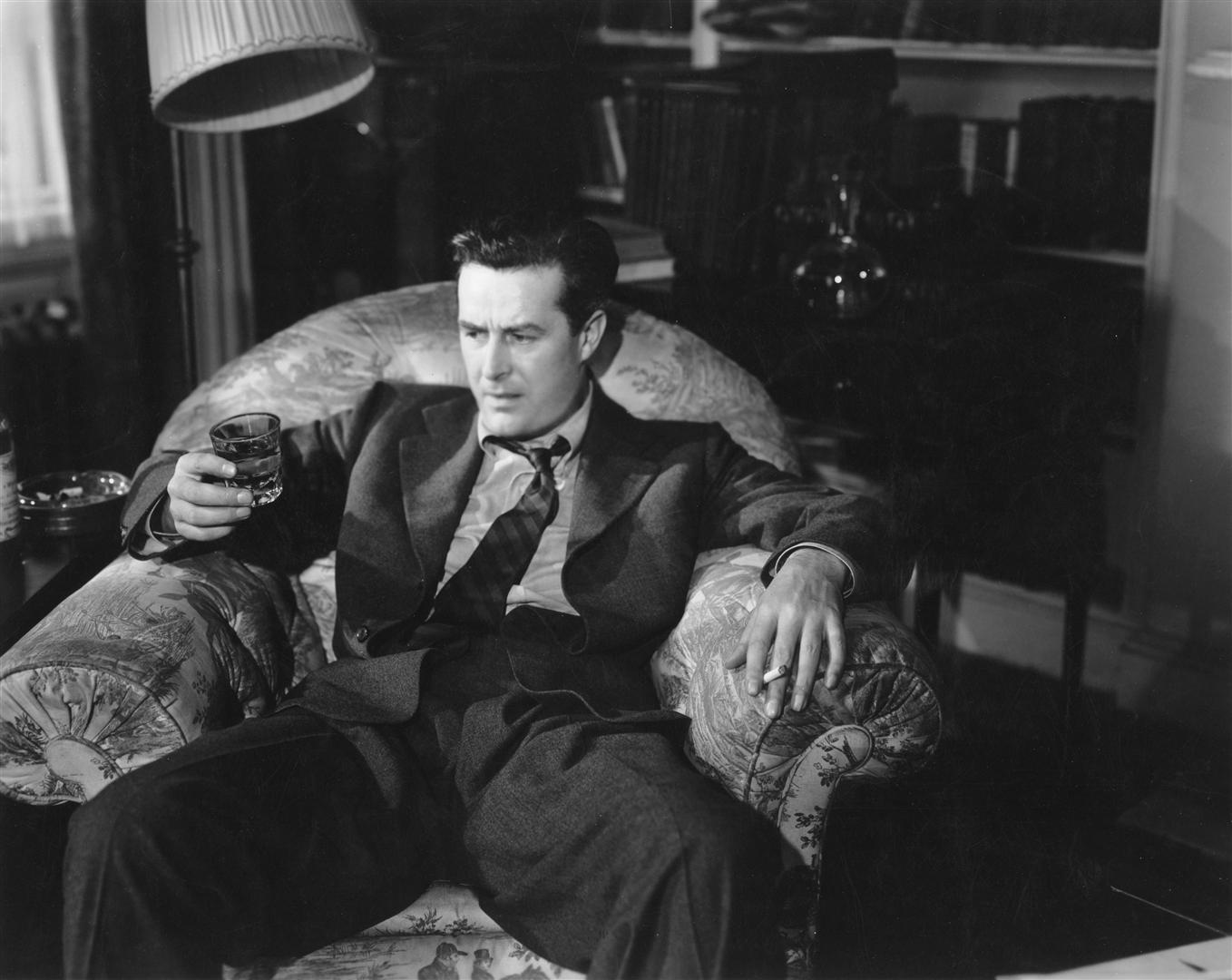
Blake Bailey is most recently the author of Farther and Wilder: The Lost Weekends and Literary Dreams of Charles Jackson. He is also the author of the forthcoming The Splendid Things We Planned, to be published in March. Both books, along with every Charles Jackson volume ever published, were read and consulted for this comprehensive conversation. He previously appeared on The Bat Segundo Show #284.

Author: Blake Bailey

[PROGRAM NOTE: In Farther & Wilder, Blake Bailey mentioned an extraordinary radio program called The Author Meets the Critics, in which authors confronted their critics live on radio. After a diligent search, I was able to locate 46 episodes of this program and I’ve collected them at the Internet Archive, where they can be downloaded for your enjoyment.]

Subjects Discussed: Jackson’s need for money, how The Lost Weekend‘s success freaked him out, Jackson’s self-perception as a misfit, becoming an unintentional spokesman for dipsomania, Jackson’s block after The Lost Weekend, Seconal addiction, Jackson’s hospitalization, Mary McCarthy’s fictionalized version of Jackson, McCarthy’s unfinished manuscript The Lost Week, John P. Marquand, vacations in Truro, the friendship between McCarthy and Jackson, why one shouldn’t read all of Charles Jackson, Jackson vs. Cheever and Yates, the perversity of reading A Second-Hand Life, prosaic sexual affairs in Jackson’s later work, Jackson’s obsession with Shakespeare busts, Adam Kirsch’s review of Farther & Wilder, average writers who long to be geniuses, literary failures, the origins of Farther & Wilder, Calvin Kentfield, Nathan Asch, Flannery Lewis, Jackson’s death by overdose at the Chelsea, undiscovered papers at Dartmouth, the impossible-to-find TV adaptation of Waugh’s “The Man Who Liked Dickens” directed by Nicholas Ray and written by Jackson, Jackson’s involvement with radio and television, the nineteen years when Jackson didn’t publish a novel, William Inge, how television affected Jackson’s storytelling abilities, comparisons between “The Outlander” and The Fall of Valor, the way that Jackson wrote about writers, the stories that Jackson wrote sober, Jackson’s writing difficulties when stoned on Seconal, how Jackson’s fiction explored writing ego, Jackson being ahead of postmodernism with “The Sunnier Side,” what literary biography can do, The Author Meets the Critics (in which Jackson appeared three times), Dwight Macdonald’s “By Cozzens Possessed,” when literary critics had the power to destroy a career, James Agee’s A Death to the Family, the mid-20th century war on midcult, why Jonathan Yardley is a terrible critic, Yardley’s negative review of Norman Rush’s Mating, John P. Marquand’s overlooked novels (The Late George Apley, Sincerely, Willis Wayde, and So Little Time), Roger Straus financing Jackson’s life, Philip Wylie, Wylie’s futile attempts to respond to The Fall of Valor‘s terrible qualities, when critics used to give talented writers a fair pass for sophomore slumps, Daniel Mendelsohn’s attempted takedown of Mad Men, Rhoda Jackson’s tolerance for her husband’s behavior, how the Jacksons managed their money, the many literary people who got their start at Fortune Magazine, Ron Sproat, Rhoda’s acceptance of Charlie’s sexuality, Jackson coming out of the closet, the weirdly limited way in which Jackson’s fictional wives were portrayed, D.T. Max’s Every Love Story is a Ghost Story, Max angling for motive about David Foster Wallace, the importance to double source details and relate it to a writer’s career, Mary Karr’s response to D.T. Max on Twitter, Alan Hollinghurst’s The Stranger’s Child, Bailey’s work on the Roth biography, how to ensure that people don’t come at you with pitchforks on Twitter while working on a literary biography, Karen Green’s Bough Down, DFW’s saintlike image, Infinite Jest, DFW’s nonfiction, literary biographers addressing issues of posterity, the DFW death porn industry, J.D. Salinger’s legacy held hostage by commercial interests, the collaboration between Roth and Bailey, Bailey’s access to Roth’s papers (sealed through 2050), coaxing Claire Bloom to talk, Philip Roth’s retirement, Bailey’s forthcoming memoir The Splendid Things We Planned, similarities and differences between memoir and literary biography, how hard you need to be on yourself when writing about yourself, Blake Bailey’s appearance diminishing somewhat in the second half of The Splendid Things We Planned, and writing about family.

EXCERPT FROM SHOW:

Correspondent: So I basically surprised you by pointing to the fact that I think you and I may be among the few people in America who have actually read all of Charles Jackson’s work.

Bailey: Living people. You know, Ed, probably the only two. His own daughters, who are alive and well, they have not read the oeuvre of Charles Jackson.

Correspondent: Wow.

Bailey: No. It’s you and me.

Correspondent: That’s it? Wow. So let’s talk. Charles Jackson, best known as the author of The Lost Weekend. Let’s get into what he did. I mean, he was adamantly determined in his early days to write what he knew, as you outline in your biography of him. Don Birnam, the protagonist of The Lost Weekend, many of Jackson’s short stories, and also the hero of this unfinished multivolume book project, What Happened? — this is basically Jackson’s life. This is what Jackson drew heavily on for his fiction. But then you have Jackson’s later fiction — The Outer Edges, A Second-Hand Life, and “The Outlander,” which I’m happy to argue with you about. These are adamantly determined to suggest deviance or behavioral aberration in common everyday fallacies, often out of step with the cultural mores of the time. And then, of course, you have “The Sunnier Side,” this story in which Charles Jackson himself appears and is commenting upon various people in Newark. So just to get started here — and that’s a lot to talk about — why do you think Jackson was so terrified of his own life in fiction? And so willing to castigate himself? Why did he need to pit his real and his fictional selves against each other and against society?

Bailey: Well, it’s interesting. You mention Newark. And I want to clarify for your listeners that is not Newark, New Jersey — the hometown of my current subject, Philip Roth. That is Newark, New York in the township of Arcadia. Up in the Finger Lakes region of upstate New York. It was a little town of about six thousand souls where Charles Jackson led a very tortured childhood and idyllic childhood. It was a little of both. Beautiful region. And people are kind to you in a sort of condescending way there. Charlie and his brother Fred, known always throughout his adult life as Boom, were the town sissies.

Correspondent: There’s also a beefcake shot of Boom in the book as well.

Bailey: A gorgeous beefcake shot of Boom taken by the famous gay photographer George Platt Lynes. There are photos by Man Ray of Boom at the Hood Museum at Dartmouth. Anyway, Charlie kind of deplored the way that people gossiped maliciously in small towns such as Newark and yet put a good face on things. And when the worst catastrophes happened — for example, Charlie was molested by the choirmaster of his church; a man named Herbert Quance, who appears in Charlie’s first published story, “Palm Sunday,” which was a pioneering work. It appeared in Partisan Review in 1939 and nobody was writing about pedophilia. And it’s quite frank in its treatment of that. It’s a terrific story. And it caused as much of a ripple at Partisan Review as Delmore Schwartz’s “In Dreams Begin Responsibilities”. So he was molested at age 14. The year before, his 16-year-old sister Thelma and 4-year-old brother Richard were killed by a train. And the egregious phony kindness with which he was treated — and meanwhile people knew about this pedophiliac choirmaster, but nice people didn’t talk about that sort of thing. You didn’t talk about touching little boys and what not. So he was tolerated, even though they knew that their own children were in danger of being molested. So long story short: Charlie regarded this as a deplorable state of affairs and he thinks that human beings should face up to their vagaries. And so that’s what he chose to write about. The vagaries in himself, which were considerable, and in humankind very much at large.

Correspondent: But, with “The Sunnier Side,” he’s there to castigate these three real-life women in Newark, which is also quite interesting. And that also is sort of a You Can’t Go Home Again/Thomas Wolfe type of thing too. But at the same time, with The Outer Edges, this book is utterly bizarre. Especially the guilt of the dog. That whole incident. This protagonist. He runs over a dog. And then he’s comparing himself to this true sociopath. So there’s this weird impulse going along in Jackson’s fiction as well. On one hand, he wants to go ahead and out the truth. On the other hand, he wants to hold everybody, including himself, accountable for every conceivable moral failing — even putting it up there and comparing it with a rapist and so forth. He’s a really bizarre guy.

Bailey: Okay. Let me explain The Outer Edges. It is based on the Edward Haight murders. Edward Haight, when he was sixteen years old, gave a lift to two kids — two girls, 11 and 9. Not only did he rape them, he tied them up, put them in the street, ran over them repeatedly. I mean, it was horrific. And Charlie was deeply disturbed by that. Now Charlie was disturbed by the viciousness of Edward Haight. Because Charlie was a married father of two girls and a homosexual. These days, people don’t understand the opprobrium in middle-class, mid-century America. Especially gay men, who presumed to get married and lead a normal life and were still seeing men on the side, as Charlie certainly was. So he did feel this kind of horrifying kinship with this child murderer Edward Haight. So how to acceptably portray that in fiction? He comes up with a Charlie-like character who, like him, is married to a long suffering woman and he’s a doting father, as Charlie was. And he feels a kinship with the murder in the book because he’s having an affair. Heterosexual with this tootsie. And because he inadvertently runs over a dog, now that, of course, is the fatal flaw with The Outer Edges. It doesn’t work and everyone told Charlie it doesn’t work.

Correspondent: But also there’s that weird phone call heard through the gas station restroom, which makes absolutely no sense. Like this is the reason why the wife decides to leave. Because she’s speculating upon a phone call. Just as he’s actually more concerned about driving over the dog than this particular affair. He just has a really bizarre moral compass.

Bailey: Yeah. Well, but I don’t want to dismiss The Outer Edges out of hand. Because certainly Charlie wrote worse books than The Outer Edges.

Correspondent: [looking at the stack of Jackson books on the table] He looks at A Second-Hand Life. (laughs)

Bailey: Oh my god. Let’s save that. What does work in The Outer Edges is the portrayal of the murderer himself, which really captures this whole Hannah Arendt notion of the banality of evil in a way that I think is sort of pioneering and very effective. And it’s a very episodic book. The French, Bovary-esque woman whose stuck in the boring marriage and tries for her maids not to see her having nothing to do. All that was very astute. I mean, again, no less than — I’m blanking on his name, which is terrible. A great British novelist. Sort of out of favor now. Anyway, he reviewed the book in The Listener and said, “Charlie Jackson is the man to write the Great American Novel of suburban ennui.” And if he wasn’t such a complete pill freak, he might have pulled it off.

Correspondent: Well, let’s talk about this. Okay, so he’s an alcoholic. And he uses this to write The Lost Weekend. Then he becomes this big AA spokesperson. But he’s also this go-to guy for Spencer Tracy, Robert Benchley, Dorothy Parker. He chronicles this problem — alcoholism — and, as you say, at the time this had not been pursued to this depth in fiction. And then this is interesting. He pitches his Uncle Mr. Kinbar to Roger Straus and he writes, “This book has everything. Humor, pathos, real social comment.” There’s the story idea that Jackson conveys to Sandy with the wife as “a shock absorber between him and the world around him.” Given Jackson’s keen interest in Thomas Mann, I’m wondering why he felt the need to mimic or outperform his better. I mean, the Fitzgerald passage in The Lost Weekend, where he just speaks glowingly about Fitzgerald, you would think that Jackson could have figured out that one of Fitzgerald’s fatal flaws was trying to actually reproduce Gatsby. So why was he just not self-aware enough to realize that masterpieces just kind of happen by accident?

Bailey: Well, I think that Charlie had a taste for fine things, which was very much like Scott Fitzgerald. Scott Fitzgerald had a very big nut. He liked to live lavishly and that meant writing trashy stories for the Saturday Evening Post and not writing great novels. So there it is. Charlie, his great surrogate parents in Newark was the Bloomer family in town. And he wrote a story, Charlie did, called “Tenting Tonight.” In the midst of this dreary provincial place, here are people with real tastes, who have culture, who have this opulent house. And this is something that Charlie aspires to. And then later, this man, this gay bachelor, this Wall Street lawyer with a fabulous fortune whose father was Edith Wharton’s best friend, Bronson Winthrop, takes Charlie and his brother Boom under his wing and really gives them a taste for fine things. You know, they both had tuberculosis. Bronson Winthrop sent them to these luxury sanitoria in Davos, Switzerland. So Charlie said, “I want to live like that.” And he managed miraculously — we’re condensing a lot, but he went through this period of horrific alcoholism where he miraculously got sober. He wrote The Lost Weekend, which was not only regarded critically as a masterpiece. That’s the very word that The New York Times used.

Correspondent: I’d call it a masterpiece.

Bailey: I would too. I think that Don Birnam is still the definitive portrait of an alcoholic in American literature. And he goes to Hollywood and suddenly he’s this alcoholism guru, which you pointed out. People like Spencer Tracy and Dorothy Parker and Benchley and so on. And, you know, he wants to keep living like that. He wants to still have the celebrity friends. He wants Judy Garland to remain his pal. And he buys this ridiculous federal mansion in New Hampshire and finds that he can’t keep it up without writing dreck. And pretty soon, he falls into the same trap that poor Fitzgerald did, which was writing terrible short stories for the slicks.

Correspondent: Was it Hollywood that forced him to have this yardstick to measure himself by? Or was it the success of The Lost Weekend? Because that sold like crazy. Like Franzen style at the time.

Bailey: It did sell like Franzen style. But what happened was — he goes to Hollywood. Everything’s going Charlie’s way. He’s the most popular man in town. He was very endearing and very charming. Everyone invited him. He never had to dine alone in Hollywood. All the stars loved him, especially all the alcoholic stars. Which was every one of them. What was the question again?

Correspondent: I’m trying to get from you why he felt the need to be this great social novelist and I gave you a hint with the Thomas Mann thing.

Bailey: Right. Charlie had a terrible need to be loved. And he adored the work of Thomas Mann. And Mann — they had sort of an Eckermann/Goethe-like relationship. Mann met him in Hollywood. And they became correspondents and friends who saw each other maybe three times. It wasn’t misguided for Charlie to aspire to write great books. He’d written one. And to his credit, he terminated his contract at MGM. He didn’t want to stay in Hollywood and be this hack. He wanted to write The Fall of Valor, which was the first mainstream novel about homosexuality in American fiction. 1946. Two years ahead of Gore Vidal’s The City and the Pillar. The problem was it wasn’t that great of a novel. Now if you want to talk about what the real reason that Charlie’s fiction never equaled The Lost Weekend, we can do that.

Correspondent: Well, sure. Feel free. We’re getting into some really high-end reading geek things.

(Loops for this program provided by danke, ozzi, 40a, and bedenney.)

The Bat Segundo Show #530: Blake Bailey II (Download MP3)

This text will be replaced