The Bat Segundo Show: John Wray

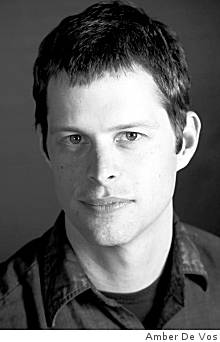
John Wray appeared on The Bat Segundo Show #282.

John Wray is most recently the author of Lowboy.

segundo282

Condition of Mr. Segundo: Searching for those who will listen to him in the subway.

Author: John Wray

Subjects Discussed: The ABAB narrative of Lowboy, mirroring schizophrenia within a narrative structure, a sane perspective that assists the reader, subway details, Franz Kafka’s Amerika, real vs. imaginary details, Jonathan Zizmor, the C#/A subway tone, the origin of the character name Heller, Ulysses, resisting eccentric character names, merging two words into one unhyphenated word, A Portrait of the Artist as a Young Man, ideal seating positions in a subway, appealing to a wider audience, balancing the uncompromising literary voice with suspense, comparing the research in Wray’s three books, the difficulties of convincing the reader, Daniel Paul Schreber’s Memoirs of My Nervous Illness, sexual preoccupation and schizophrenia, an intimate third-person voice, the relationship (or lack thereof) between Freud and Schreber, pat summations, urban exploration, the benefits of imagination, the Sikh religion and the end of the Seventh Avenue Line, open interpretations and false connections, respect for the subconscious, the old City Hall station, the dangers of being subsumed by research, writing vs. thinking, graphical segues in prose, B.S. Johnson’s holes, and John Wray vs. John Henderson.

EXCERPT FROM SHOW:

johnwrayCorrespondent: You have Emily and Lowboy entering at the 14th Street station. I’m going to get subway geeky with you here.

Wray: Okay.

Correspondent: I should point out that when you get into Union Square, there is — or there is now and there won’t be very soon — a Virgin Megastore.

Wray: Right.

Correspondent: Was that particular location a deliberate choice on your part?

Wray: (laughs) You know, sometimes there are just these happy accidents that come about either completely by chance or through some sort of action of the subconscious. I’m not really sure. The German editor of Lowboy was very proud of himself for the game of interpretation that he played, which involved a lot of reversals and mirror image analyses, that I guess you could say. He was very proud of himself for having been the only person to discover that the name of the detective in the novel, Ali Lateef..

Correspondent: Either the jazz artist or even the hip-hop artist in Oakland.

Wray: Well, there’s that. Yeah, that was a conscious reference on my part. But this German editor of mine was very proud to have figured out that Lateef spelled backwards is “fetal.”

Correspondent: Yes.

Wray: Which is something that I never thought of. In a million years, I wouldn’t have thought of that. And I still don’t know what he was getting at. But who knows? I mean, it’s quite possible that these things percolate up from the subconscious in some way.

Correspondent: But I also must point out that the 86th Street Station does not have a line that you can see across, as you point out in this particular book. This led me then to believe as I was reading it, “Oh! Is this really real or not?” It was a kind of clue. Deliberate choice on your part?

Wray: Well, I deliberately — I’ve always been a big fan of Franz Kafka’s novel, Amerika. Particularly of the way that Amerika begins. Amerika, of course, being a novel written by someone who had never been to America and who was making deliberate use of the myth of America as a way of addressing many other things. Kafka was not particularly interested in the United States. And in the beginning of the novel Amerika, this boat filled with immigrants enters New York Harbor. And one of the very first sentences describes the Statue of Liberty holding aloft its wonderful gleaming sword.

Correspondent: Yeah.

Wray: Rather than the torch, of course. So in an earlier version of Lowboy, in a bit of a tip of the hat to that novel, I introduced various, fairly overt features into this New York City that would differentiate it from the New York of realistic fiction. Then as the novel evolved, it became more and more naturalistic in a way, and eventually settled into this mode of heightened realism that it now occupies. But there are still certain little vestiges of that earlier alternative New York.

Correspondent: And this would be one of them.

Wray: I think you’ve caught one of them. Yeah.

BSS #282: John Wray (Download MP3)

This text will be replaced

The Bat Segundo Show: Laura Lippman

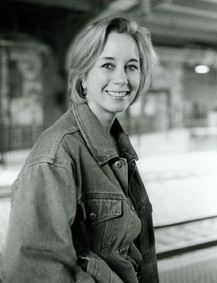
Laura Lippman appeared on The Bat Segundo Show #280.

Laura Lippman is most recently the author of Life Sentences.

segundo280

Condition of Mr. Segundo: Frightened of sleazy and opportunistic biographers.

Author: Laura Lippman

Subjects Discussed: Cassandra Fallows vs. Kathryn Harrison, writers with peculiar personalities, the memoir dictating the memoirist, Hegelian synthesis, the Quarter Pounder and Proustian comparisons, philosophical modifiers, the inauthentic self, stereotypes of NPR listeners, book smart vs. people smart, satire and gentle fun, shaking the “serious is better” notion, Thomas Pynchon, being true to voice, the problems with the word “ballsy,” writing effrontery, Janet Maslin’s overanalysis of Life Sentences, the value of the red herring, the benefits of found opportunities, the problems with plans, Portnoy’s Complaint, creating deflections for the reader, the Oz books and the Nome King, Philip Roth’s Zuckerman, overworking sentences, the joys of dashes, Emily Dickinson, smarmy memoirs, reading the entire book aloud at 40 pages per day, writing a book a year, following instructions, William Gibson, editing as “deboning a fish,” Lippman’s work ethic as a saving grace, racist perceptions, generalizations, and the older generation in Baltimore, the fallibility of memory, the purpose of memoir, Ann Patchett’s Truth and Beauty, making stuff up, basing a novel on true crime, the ethics of taking from real-life stories, responding to email, investigative journalism and amateurism, faking it, and losing sight of the victims over the course of fiction or investigation.

EXCERPT FROM SHOW:

lippmanCorrespondent: You have, of course, Callie-ope — Calliope — and Cassandra. I read Janet Maslin’s review in the New York Times and she seemed to be really hung up on the notion that this represented some Greek mythology. But when I read your book, I immediately said to myself, “Oh! Well, this is a very funny red herring to throw the reader off.” Just as the dates that precede each particular section have no significant meaning, or very little meaning, on the narrative. And I’m wondering if little red herrings along these lines are intended to either see if the critics of the Janet Maslin streak are going to latch onto them or whether they represent a way for you to obtain this level of “just doing it” that you just described in your last answer.

Lippman: It is true that both Cassandra and Calliope show up in the narrative, show up in my writing, with their names attached to them. I did not sit down and schematically design a story in which, yes, I will create two characters named after classic figures of Greek mythology. Cassandra was Cassandra. And then I realized her father was a Classics professor, and I began to think he would have conveyed. And Calliope was just always Calliope. There’s a certain Baltimore-ness to it. But I’m a really big believer in found opportunity. And sometimes writers create their own found opportunities. So it’s an accident that the two main characters of this novel have these names that have a lot of resonance. But I’m okay when people then see the resonance and point it out. It’s like someone at a painting and focusing on a detail that might not have been the intent. But it’s in there. It is there.

My belief is that if one is overly schematic in writing, it will feel a little stale and airless. So on the one hand, I’m delighted that people come to this and say, “Oh! Cassandra and Calliope. There’s all this significance.” Well, there is for them. They found it and it affects the way they read the story. And that’s great. At the same time, I think that if I had had a plan, I think the novel would have a really contrived feeling to it. I think it would feel kind of pedantic. One of the things I didn’t plan. You know, it just comes out. You’re writing. I write trying to think about who is this person and what would they be doing and what would they be thinking at this moment. And there’s a scene in which Cassandra has sex with someone who she’s really been yearning for. And because Cassandra can’t turn her head off ever, she’s thinking and thinking. And for some reason, she starts thinking about Leda and the Swan. Which if people are really paying attention, and they’ve seen the bit about Portnoy’s Complaint in the book, that’s very important in Portnoy’s Complaint. So Cassandra, whether she knows or not, is actually channeling that book that she read as a kid, which she remembers seeing in her father’s house.

So I’m writing this. And, you know, I don’t remember every line of Leda and the Swan! And, by the way, although I’m pretty well versed in Greek mythology, I didn’t remember that Leda gave birth to Cassandra. I didn’t remember that. So I go back and I read the poem and I just think, “Oh my god. That’s hilarious!” And if I had planned it. If I had been writing to that moment steadily for days and days — “Oh, I can’t wait until the moment in which Cassandra evokes her namesake’s mother. Via Yeats in bed.” — I think it would have felt a little off.

BSS #280: Laura Lippman (Download MP3)

This text will be replaced

The Bat Segundo Show: Carl Wilson

Carl Wilson appeared on The Bat Segundo Show #279.

Carl Wilson is the author of Let’s Talk About Love and reports indicate that he is loved, in turn, by the actor James Franco.

segundo279

Condition of Mr. Segundo: Evading the pomp and circumstance of cultural taxonomies.

Author: Carl Wilson

Subjects Discussed: Celine Dion and incompatible tastes, Elliott Smith, the questioning of canonical knowledge, Paul Valery’s concept of taste composed of a thousand distastes, TV on the Radio, choosing sides when dismissing trash, defying the stereotypes of Celine Dion fans, snobbish record store clerks and zealous fans, anti-snobbery, false dichotomies and cultural advantage, culture and existing power structures, Fiona Apple’s Extraordinary Machine, the Internet and the music industry, fans and cultural capital, Immanuel Kant and “common sense,” cultural consensus, the Beatles, questioning Wilson’s party criteria, middlebrow aesthetes in newspapers, separating the person from the artist, the relationship between vituperative feelings and meeting people, the celebrity-industrial complex, Dion’s 2005 appearance on Larry King, whether or not Larry King mocks his guests, judging a person on a handful of eccentricities, whether it’s possible to see the “real” Celine Dion, reinforcing celebrity image, whether or not personal information about an artist can affect your opinion about the art, Michael Jackson, “classic” vs. contemporary pop culture, the expiration date of scorn, that damn song from Titanic, Celine Dion in Vegas, music and emotional frames of reference, the problems with the word “social” being applied to art, Pierre Bourdieu’s Distinction, the problems with “hip,” coolness and judgment, the Mountain Goats, the perceived “hipness” of alt-music boosters, authenticity, “keeping it real,” and civil disagreement.

(Note: Video excerpt forthcoming.)

EXCERPT FROM SHOW:

wilson2Correspondent: But look at the Beatles and Elvis. I mean, this would seem to me to confirm the ideal conditions. It would be very difficult to find someone who is a music lover who hates the Beatles or the Rolling Stones or Elvis. I mean, there’s a fairly common consensus. Even if you don’t love them, you can at least appreciate the achievement of these bands that just went in and likewise captured the popular consensus. And this is a little bit different from Celine Dion.

Wilson: It is.

Correspondent: In which there’s an artistic criteria likewise being applied. So how do you separate this?

Wilson: I mean, it’s different than Celine Dion. And it’s different than Stockhausen. Right? So look at them as poles of a spectrum and the Beatles and Elvis as being somewhere in the center of that spectrum. By the end of the book, there’s a whole essay at the end of the book about taste and different ways of thinking about it and criticism. And the thing, that at the end of this whole process of immersing myself into a different taste world than my own, was that where those big aesthetic disagreements arise, my tendency at this point is to suspect that really it’s a problem of terms. That people are arguing on a different set of assumptions than one another, but that their conclusions are perhaps equally valid. But that doesn’t mean that I think now that Celine Dion and the Beatles are equals. And it would be a whole other sort of chapter of this exploration to figure out where to find some kind of more objective set of measurements for greatness. But if you’re using populism and anti-populism hand in hand, what you do find with people like Elvis and the Beatles, and Louis Armstrong and Ray Charles — you know, they kind of win all of those contests. I’m not saying everything’s the same.

Correspondent: Then what accounts for the aberrative impulse for Celine Dion then?

Wilson: I think that there are things that are confirmed both by elite opinion and populist opinion. And in those cases, it’s kind of good to think, “Oh, well, whichever direction you come from, this gets through the gates.” What explains what doesn’t get through one set of gates and what doesn’t get through another set of gates. And so the book is more concerned with aesthetic disagreement than aesthetic agreement. And it’s a question of when we have these fights. When you’re at a party and somebody’s saying, “This is great,” and you’re saying, “This is terrible,” what are you really talking about? And my suspicion is that you’re talking about something that has more of a deeply autobiographical root than it has any connection to some objective set of markers. But that’s not to say that there might not be works of art that are more profound and universal than others.

Correspondent: But see, Carl, this is where I’m going to have to disagree with you. Because you’re applying a criteria here where if I go to a party to express a particular opinion about music, I’m immediately going to focus in on Celine Dion and absolutely damn her to the skies. When, in fact, in my case, I have not actually thought about Celine Dion in any serious capacity until I read your book. I mean, I largely ignored her. So this is why I’m a little suspicious. I mean, I hear where you’re coming from. But I’m a little suspicious of how you’re applying such a broad brush to how we have tastes and how we express those tastes at parties.

Wilson: Well, it might just be that Celine’s not the best example for you. But maybe Whitney Houston is a good example for you. I think there’s a whole category…

Correspondent: I ignore her too!

Wilson: But that just, to me, speaks to the aesthetic world that you live in — it’s well cordoned off enough from places where you might have to deal with that. But, I mean, the places where I use as examples in setting this up is, in the media, the people who are representatives of our tribe. You know, the aesthetes. Which are middlebrow aesthetes in terms of who’s writing a column in the newspaper. Celine is a very favorite whipping boy.

Correspondent: Whipping boy. Have you looked at her lately?

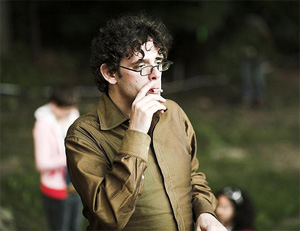
(Photo credit: David Waldman)

BSS #279: Carl Wilson (Download MP3)

This text will be replaced

The Bat Segundo Show: T.C. Boyle III

T.C. Boyle appeared on The Bat Segundo Show #273.

T.C. Boyle is most recently the author of The Women. To listen to our previous interviews with Mr. Boyle, check out The Bat Segundo Show #70 and The Bat Segundo Show #10.

segundo273

Condition of Mr. Segundo: Pondering new author taxonomies.

Author: T.C. Boyle

Subjects Discussed: How to conquer jet lag, Ellen Key’s The Woman Movement, the individual vs. the spirit of the time, feminism and Frank Lloyd Wright, notions of education, Miriam’s presence and hypercaffeinated prose, balancing the women in The Women, the ABAB narrative of the first section and Talk Talk, representing Wright through his women, novelizing a fictive novelist’s biography, Blake Bailey, the burdens of chronological order, parallels between Wright and Boyle, the question of what anybody really knows about history from hearsay, seeing the details through an ever-shifting prism, the novel as a suspect medium, Riven Rock, dashes, sentences, and parenthetical information, annotations and “the rest is commentary,” art standing above morality, balancing empathy and the satirical impulse, rejecting reader expectations, reputation and renown vs. not knowing, why cruelty is necessary, reevaluation, empathy and narcissism, and understanding an artist.

EXCERPT FROM SHOW:

boyleBoyle: I try to get it both ways. I try to involve you in something in a satiric way. And yet it should also move you. And of course, in this book, I had to do that because of the tragedy of Mamah, which will conclude the book. So you have to set the reader up for that throughout. And I think there is tragedy throughout the book. Tadashi’s life is incredibly tragic in many, many regards. So again, I’m playing one element against the other throughout. And there is commentary upon commentary upon commentary. And, for me, it opened up the structure and it made it fun. It made it invigorating. A lot of the footnotes exist to give you information that I would like you to know about Frank Lloyd Wright and his buildings and where he was at any given time. But a lot of them also, I just express surprise on the part of Tadashi. And I find the hilarious.

Correspondent: Well, the question is: Okay, the reader wants to know about the artist. And essentially you believe — your own particular view is — that the art should stand above any morality. This is interesting because we don’t know about the artists. And simultaneously, well, you do have many details about Taliesin, as well as the skies and the views and all that. But I’m curious if this almost runs counter to the impulse if you’re playing with the reader’s expectations. So that they will never know about the artist, even though this is, in fact, why they read your books. Whether that’s entirely fair to the reader.

Boyle: Well, don’t forget that when I am creating art, I don’t mean to be fair to the reader or unfair to the reader. Those questions lie right outside the parameters of what I’m doing. I’m dreaming something. I’m creating something for my own purposes. I deliberate to you. And I hope that you interact with it in some way. And obviously you do and other readers do. Sophisticated art, to my mind, doesn’t provide answers and doesn’t have an agenda other than art itself. So I think a book like this one, of all my books, is probably the one in which the reader will be most engaged to try and unravel the truth of what it is in its own right. And don’t forget. I’m not writing about an unknown figure here. Kinsey, as you know, was recognizable second only to the President in this country in his time. But by the time I wrote about him, everyone had completely forgotten who he is. No one knows who he is. And Kellogg too was lost to the mists of history. But again, Frank Lloyd Wright, there’s been a thousand books. There’s a cult. People are lined up in Chicago today, freezing, to get in and go on the tour. So this is someone who has been written about eternally and is very well-known. My interest is: How do I get a new angle on this?

Correspondent: So by him being more well known than Kinsey or Kellogg, you can then justify this notion of not knowing Frank Lloyd Wright. That’s what you’re saying. Of the reader not knowing.

Boyle: If this is your interpretation, I would say yes. But again, I think you do know him. You do see him from his point of view a few times. But I didn’t want to represent his point of view a great deal. Because then you know his motivation and you know what he’s thinking. I would rather have it — that’s why I called it The Women. I’d rather have him viewed from other perspectives so that you can make your own determination. And, yes, I think part of that determination is that he was incredibly narcissistic. Maybe one of the most narcissistic people who ever lived. And yet narcissism, as we talked about with regard to Peck Wilson in Talk Talk, can be very damaging to everybody around you. I like to hope and think that I am sympathetic to people whom I meet and with people who are close to me. And that far from damaging them, I might even be aiding them in some way. A narcissist like Frank Lloyd Wright though, or Kinsey or Kellogg, doesn’t view the world in that way. Everybody else is simply valuable, only as they fit into his regime. So I think that any reader, even the least sophisticated reader of this book, will have a portrait of Frank Lloyd Wright that may be more true than what you get from a biography.

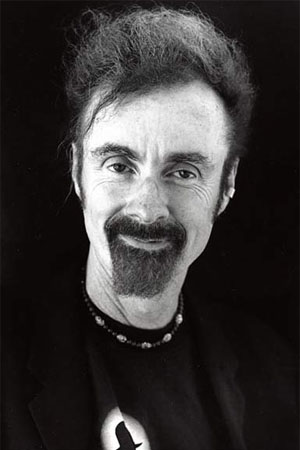
(Photo credit: Christopher Felver)

BSS #273: T.C. Boyle III (Download MP3)

This text will be replaced

The Bat Segundo Show: Andrea Peyser

Andrea Peyser appeared on The Bat Segundo Show #272.

Andrea Peyser is most recently the author of Celebutards.
segundo272

[PROGRAM NOTE: At the 22 minute mark, while the conversation concerned itself with the dangers of generalization, a woman, who was sitting at a table located a good seventy-five feet away from them, gave Ms. Peyser and Our Young, Roving Correspondent a note. The note read: CAN YOU PLEASE TALK QUIETER? Now it should be observed that, while the conversation was animated, the two talkers did keep their volume level to a reasonable decibel level. Indeed, many folks sitting adjacently to these two appeared to be interested in the conversation. (This has been known to happen from time to time, since these conversations are recorded in public places. Indeed, there are a few amicable people working at one Midtown cafe who have urged Our Correspondent to come back because these conversations are apparently quite odd and intriguing to them. It also helps that we tip well.) It should also be noted that the woman with the note had congregated with a group of peers for a discussion that deployed such strange terms as “synergy,” “collaboration,” and “market forces,” and that this group talked at a level far exceeded all other conversations occurring in the cafe. We note all this for several reasons: (a) to explain to the listener yet another odd and unusual moment in the history of this program, (b) to point to the problematic lack of distinction between workplace and social gathering point in our present epoch, and (c) to demonstrate that strange forms of passive-aggressive behavior remain troublesomely alive and well.]

Condition of Mr. Segundo: Pursuing the unexpected qualities.

Author: Andrea Peyser

Subjects Discussed: Why celebrities cannot be ignored, “anti-American” sentiment, Sean Penn’s trips to other countries, whether or not Alec Baldwin is entitled to privacy, photographers and paparazzi, the limits of the media, whether hypocrisy is a valid description of celebrity, First Amendment rights, Martin Sheen’s 9/11 remarks, being invited to be honorary mayor, rudimentary viewpoints and free thinking, Nancy Pelosi’s importance, whether it’s possible for Peyser to agree with Al Sharpton, Munich and Black September, the problems of holding an artist’s statement on the same level as the art, Steven Spielberg’s remarks about Israel, the problems with generalizing about Mumia Abu-Jamal’s followers, being friends with Rosie O’Donnell and O’Donnell’s betrayal, on not taking the high road, celebrities of virtue, Bruce Springsteen, old Hollywood vs. the present publicity machine, on being vituperative in the New York Post column, quibbling with the infamous Heath Ledger column, “knowing” the celebrity from a snippet view, whether or not Peyser is happy, giving into the readership, and a few positive things that Peyser can say about the entertainment industry.

EXCERPT FROM SHOW:

peyserCorrespondent: You deem Alec Baldwin a celebutard partly because of the infamous voicemail to his daughter. But I’m wondering if it really is fair, given what you’ve just discussed in relation with Sean Penn and his political sentiments, to take something that was never intended for the public and put it up there with something that is actually in the public record. I mean, is it really fair to deem someone a celebutard for their private actions like this?

Peyser: Well, private actions. He left a voicemail. Any idiot knows that anything you say on a cell phone, anything you email and voicemail, it’s out there. He was in the middle of a custody battle. He was threatening his daughter. To come over to California and straighten you out. It got into the public eye and he got furious because of that too. He blamed others for his own actions. That’s also a common thread in celebutardism. When Barbra Streisand, for example, is caught being really, really stupid, she blames other people for her own stupidity. So in the case of Alec Baldwin, he did something really stupid — actually dangerous — and he blamed someone else.

Correspondent: But if it were not Alec Baldwin, someone could leave that voicemail and it may not have been disseminated out into the media like this. Just as, for example, you mention George Clooney and his anger and fury towards a photographer shooting a picture of him above the men’s stall. You’re saying to me that if a photographer came up to you while you were doing your business that you wouldn’t have any particular problem with that?

Peyser: No.

Correspondent: It’s out there to be disseminated?

Peyser: I wish George Clooney would make up his mind. One day, he’s fighting against the stalerkazzi, as he’s called them. As other celebrities have called them. People who stalked Princess Diana. Of course, the courts found that she was killed not because of the paparazzi, but because of her drunk driver. But anyway, he made a very big deal about that. People could be seeing it as censorship. Whatever. But then he turned around and he decided that I am going to back off. And that is censorship. And it’s okay. Say whatever you want about me. So I wish he’d make up his mind really.

Correspondent: Well, he is expressing understandable anger at a photographer shooting a picture of him above the stall. If someone did that to me, I would probably also be quite upset. I’m sure you would too.

Peyser: Yeah.

Correspondent: I’m wondering if it’s fair to hold him accountable for that particular understandable reaction and use this in the broader painting of who he is in relation to all of his other actions.

Peyser: Well, that was in Australia, first of all. He’s giving a picture of the media. The media. I love that word. I’m not shooting George Clooney naked. I really don’t care. But that was in Australia. He got the thing suppressed. He threatened a lawsuit. And I wish he’d now be quiet. And now he’s decided that the media has to be left alone. Which one is it? Are they killing Princess Diana? Or are they okay? Which one is it?

Correspondent: But do you believe that a celebrity is entitled to some level of privacy? Is it really fair to constantly — I mean, you’re living a life as a celebrity. You’re having all these photographers, reporters, paparazzi, you name it, invade your particular personal space. So understandably, your particular lines in interviews and the like are going to be subject to more scrutiny. And so this makes me wonder whether it’s actually fair to attack them.

Peyser: What I really love is how somebody — like, take Madonna, for example. Way back when, she was creating things that would attract media attention. She was desperate for media attention. And now that she’s a huge star, she’s the most controlling person who exists as far as interviews go. So why can they run to me and say, “Please, pay attention. Pay attention.” They do everything including taking their clothes off in public to get us to write about them. To take their pictures. And then when they reach a point of fame and fortune, it no longer exists. I don’t know. Actually, I would say that the media is dreadfully controlled by celebrities. I don’t think it’s as much of a free-for-all as you’re suggesting. I think there are armies of publicists out there who really control the image.

Correspondent: I certainly agree with you about that. You make many interesting points about Tom Cruise and Michael Moore certainly.

Peyser: Yes, that’s very…

Correspondent: I would never interview them because of these particular controls. But nonetheless, look at what happened with the Christian Bale outburst. This was remixed in a very fun way on YouTube. And suddenly things did get out. But the question is whether it’s entirely fair. I mean, I understand what you’re saying. Which is that the media — one needs it to advance in one’s career. But simultaneously, is there a particular point when the media should back off? Should they be probing and taking pictures of children and the like? And that sort of thing?

Peyser: Well, you know, personally, I have never done that. I don’t go after somebody’s children. Not without permission. But you know, I don’t know. Michael Jackson goes out in public with his children in veils. I would say that he’s attracting more attention to them then if he had just gone out in public with children with their faces showing. But I don’t personally condone using children. But I think that a lot of celebrities put them out there. Put them out there to attract attention.

Correspondent: Even if they’re doing their shopping, for example. And the children happen to be along. And then the paparazzi come. I mean, see, this is where we get into — I’m trying to just clarify where you’re coming from here.

Peyser: See, once again, this is a very small thing. I make the point. And I do this in the cases where the celebrity is obnoxious in the control. Of pointing out that at one point in their career, when they were very young, they would do anything for attention. Now I have never stalked anyone. Everything I get is from above-board sources. So I’m not speaking for myself. I’m talking about the hypocrites. The celebrities who use the media and then have no use for it once they’re famous and rich.

BSS #272: Andrea Peyser (Download MP3)

This text will be replaced