The Bat Segundo Show: Laura Lippman

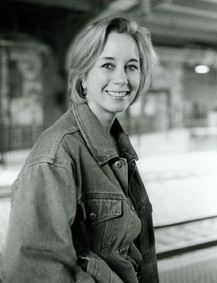
Laura Lippman appeared on The Bat Segundo Show #280.

Laura Lippman is most recently the author of Life Sentences.
segundo280

Condition of Mr. Segundo: Frightened of sleazy and opportunistic biographers.

Author: Laura Lippman

Subjects Discussed: Cassandra Fallows vs. Kathryn Harrison, writers with peculiar personalities, the memoir dictating the memoirist, Hegelian synthesis, the Quarter Pounder and Proustian comparisons, philosophical modifiers, the inauthentic self, stereotypes of NPR listeners, book smart vs. people smart, satire and gentle fun, shaking the “serious is better” notion, Thomas Pynchon, being true to voice, the problems with the word “ballsy,” writing effrontery, Janet Maslin’s overanalysis of Life Sentences, the value of the red herring, the benefits of found opportunities, the problems with plans, Portnoy’s Complaint, creating deflections for the reader, the Oz books and the Nome King, Philip Roth’s Zuckerman, overworking sentences, the joys of dashes, Emily Dickinson, smarmy memoirs, reading the entire book aloud at 40 pages per day, writing a book a year, following instructions, William Gibson, editing as “deboning a fish,” Lippman’s work ethic as a saving grace, racist perceptions, generalizations, and the older generation in Baltimore, the fallibility of memory, the purpose of memoir, Ann Patchett’s Truth and Beauty, making stuff up, basing a novel on true crime, the ethics of taking from real-life stories, responding to email, investigative journalism and amateurism, faking it, and losing sight of the victims over the course of fiction or investigation.

EXCERPT FROM SHOW:
lippmanCorrespondent: You have, of course, Callie-ope — Calliope — and Cassandra. I read Janet Maslin’s review in the New York Times and she seemed to be really hung up on the notion that this represented some Greek mythology. But when I read your book, I immediately said to myself, “Oh! Well, this is a very funny red herring to throw the reader off.” Just as the dates that precede each particular section have no significant meaning, or very little meaning, on the narrative. And I’m wondering if little red herrings along these lines are intended to either see if the critics of the Janet Maslin streak are going to latch onto them or whether they represent a way for you to obtain this level of “just doing it” that you just described in your last answer.

Lippman: It is true that both Cassandra and Calliope show up in the narrative, show up in my writing, with their names attached to them. I did not sit down and schematically design a story in which, yes, I will create two characters named after classic figures of Greek mythology. Cassandra was Cassandra. And then I realized her father was a Classics professor, and I began to think he would have conveyed. And Calliope was just always Calliope. There’s a certain Baltimore-ness to it. But I’m a really big believer in found opportunity. And sometimes writers create their own found opportunities. So it’s an accident that the two main characters of this novel have these names that have a lot of resonance. But I’m okay when people then see the resonance and point it out. It’s like someone at a painting and focusing on a detail that might not have been the intent. But it’s in there. It is there.

My belief is that if one is overly schematic in writing, it will feel a little stale and airless. So on the one hand, I’m delighted that people come to this and say, “Oh! Cassandra and Calliope. There’s all this significance.” Well, there is for them. They found it and it affects the way they read the story. And that’s great. At the same time, I think that if I had had a plan, I think the novel would have a really contrived feeling to it. I think it would feel kind of pedantic. One of the things I didn’t plan. You know, it just comes out. You’re writing. I write trying to think about who is this person and what would they be doing and what would they be thinking at this moment. And there’s a scene in which Cassandra has sex with someone who she’s really been yearning for. And because Cassandra can’t turn her head off ever, she’s thinking and thinking. And for some reason, she starts thinking about Leda and the Swan. Which if people are really paying attention, and they’ve seen the bit about Portnoy’s Complaint in the book, that’s very important in Portnoy’s Complaint. So Cassandra, whether she knows or not, is actually channeling that book that she read as a kid, which she remembers seeing in her father’s house.

So I’m writing this. And, you know, I don’t remember every line of Leda and the Swan! And, by the way, although I’m pretty well versed in Greek mythology, I didn’t remember that Leda gave birth to Cassandra. I didn’t remember that. So I go back and I read the poem and I just think, “Oh my god. That’s hilarious!” And if I had planned it. If I had been writing to that moment steadily for days and days — “Oh, I can’t wait until the moment in which Cassandra evokes her namesake’s mother. Via Yeats in bed.” — I think it would have felt a little off.

BSS #280: Laura Lippman (Download MP3)

This text will be replaced

The Bat Segundo Show: Carl Wilson

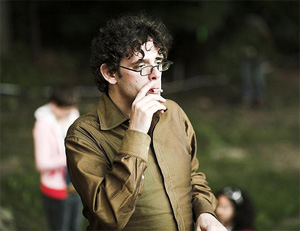
Carl Wilson appeared on The Bat Segundo Show #279.

Carl Wilson is the author of Let’s Talk About Love and reports indicate that he is loved, in turn, by the actor James Franco.

segundo279

Condition of Mr. Segundo: Evading the pomp and circumstance of cultural taxonomies.

Author: Carl Wilson

Subjects Discussed: Celine Dion and incompatible tastes, Elliott Smith, the questioning of canonical knowledge, Paul Valery’s concept of taste composed of a thousand distastes, TV on the Radio, choosing sides when dismissing trash, defying the stereotypes of Celine Dion fans, snobbish record store clerks and zealous fans, anti-snobbery, false dichotomies and cultural advantage, culture and existing power structures, Fiona Apple’s Extraordinary Machine, the Internet and the music industry, fans and cultural capital, Immanuel Kant and “common sense,” cultural consensus, the Beatles, questioning Wilson’s party criteria, middlebrow aesthetes in newspapers, separating the person from the artist, the relationship between vituperative feelings and meeting people, the celebrity-industrial complex, Dion’s 2005 appearance on Larry King, whether or not Larry King mocks his guests, judging a person on a handful of eccentricities, whether it’s possible to see the “real” Celine Dion, reinforcing celebrity image, whether or not personal information about an artist can affect your opinion about the art, Michael Jackson, “classic” vs. contemporary pop culture, the expiration date of scorn, that damn song from Titanic, Celine Dion in Vegas, music and emotional frames of reference, the problems with the word “social” being applied to art, Pierre Bourdieu’s Distinction, the problems with “hip,” coolness and judgment, the Mountain Goats, the perceived “hipness” of alt-music boosters, authenticity, “keeping it real,” and civil disagreement.

(Note: Video excerpt forthcoming.)

EXCERPT FROM SHOW:

wilson2Correspondent: But look at the Beatles and Elvis. I mean, this would seem to me to confirm the ideal conditions. It would be very difficult to find someone who is a music lover who hates the Beatles or the Rolling Stones or Elvis. I mean, there’s a fairly common consensus. Even if you don’t love them, you can at least appreciate the achievement of these bands that just went in and likewise captured the popular consensus. And this is a little bit different from Celine Dion.
Wilson: It is.

Correspondent: In which there’s an artistic criteria likewise being applied. So how do you separate this?

Wilson: I mean, it’s different than Celine Dion. And it’s different than Stockhausen. Right? So look at them as poles of a spectrum and the Beatles and Elvis as being somewhere in the center of that spectrum. By the end of the book, there’s a whole essay at the end of the book about taste and different ways of thinking about it and criticism. And the thing, that at the end of this whole process of immersing myself into a different taste world than my own, was that where those big aesthetic disagreements arise, my tendency at this point is to suspect that really it’s a problem of terms. That people are arguing on a different set of assumptions than one another, but that their conclusions are perhaps equally valid. But that doesn’t mean that I think now that Celine Dion and the Beatles are equals. And it would be a whole other sort of chapter of this exploration to figure out where to find some kind of more objective set of measurements for greatness. But if you’re using populism and anti-populism hand in hand, what you do find with people like Elvis and the Beatles, and Louis Armstrong and Ray Charles — you know, they kind of win all of those contests. I’m not saying everything’s the same.

Correspondent: Then what accounts for the aberrative impulse for Celine Dion then?

Wilson: I think that there are things that are confirmed both by elite opinion and populist opinion. And in those cases, it’s kind of good to think, “Oh, well, whichever direction you come from, this gets through the gates.” What explains what doesn’t get through one set of gates and what doesn’t get through another set of gates. And so the book is more concerned with aesthetic disagreement than aesthetic agreement. And it’s a question of when we have these fights. When you’re at a party and somebody’s saying, “This is great,” and you’re saying, “This is terrible,” what are you really talking about? And my suspicion is that you’re talking about something that has more of a deeply autobiographical root than it has any connection to some objective set of markers. But that’s not to say that there might not be works of art that are more profound and universal than others.

Correspondent: But see, Carl, this is where I’m going to have to disagree with you. Because you’re applying a criteria here where if I go to a party to express a particular opinion about music, I’m immediately going to focus in on Celine Dion and absolutely damn her to the skies. When, in fact, in my case, I have not actually thought about Celine Dion in any serious capacity until I read your book. I mean, I largely ignored her. So this is why I’m a little suspicious. I mean, I hear where you’re coming from. But I’m a little suspicious of how you’re applying such a broad brush to how we have tastes and how we express those tastes at parties.

Wilson: Well, it might just be that Celine’s not the best example for you. But maybe Whitney Houston is a good example for you. I think there’s a whole category…

Correspondent: I ignore her too!

Wilson: But that just, to me, speaks to the aesthetic world that you live in — it’s well cordoned off enough from places where you might have to deal with that. But, I mean, the places where I use as examples in setting this up is, in the media, the people who are representatives of our tribe. You know, the aesthetes. Which are middlebrow aesthetes in terms of who’s writing a column in the newspaper. Celine is a very favorite whipping boy.

Correspondent: Whipping boy. Have you looked at her lately?

(Photo credit: David Waldman)

BSS #279: Carl Wilson (Download MP3)

This text will be replaced

The Bat Segundo Show: Eric Kraft

One of the difficulties of managing so many projects is that I continue to forget that I am committing some of these conversations to video. So I must now atone for the slightly delayed missing component. If you missed out on the elaborate roundtable discussion for Flying, or you don’t have the 2+ hour investment to listen to the three-part podcast (Part One) (Part Two) (Part Three), or you just want to get a sense of how much remarkable vivacity Mr. Kraft has, then the above four-minute video excerpt should offer a dutiful encapsulation of what became, over the course of March, quite a momentous undertaking. And if you haven’t yet picked up Flying, and wish to plunge into some crazed postmodernist fun that may keep you occupied for some time, well, the bookstore still awaits.

(For those who tire of my continuous Kraft boosterism, don’t worry. This will likely be the last post related to Mr. Kraft for quite some time.)

The Bat Segundo Show: T.C. Boyle III

T.C. Boyle appeared on The Bat Segundo Show #273.

T.C. Boyle is most recently the author of The Women. To listen to our previous interviews with Mr. Boyle, check out The Bat Segundo Show #70 and The Bat Segundo Show #10.

segundo273

Condition of Mr. Segundo: Pondering new author taxonomies.

Author: T.C. Boyle

Subjects Discussed: How to conquer jet lag, Ellen Key’s The Woman Movement, the individual vs. the spirit of the time, feminism and Frank Lloyd Wright, notions of education, Miriam’s presence and hypercaffeinated prose, balancing the women in The Women, the ABAB narrative of the first section and Talk Talk, representing Wright through his women, novelizing a fictive novelist’s biography, Blake Bailey, the burdens of chronological order, parallels between Wright and Boyle, the question of what anybody really knows about history from hearsay, seeing the details through an ever-shifting prism, the novel as a suspect medium, Riven Rock, dashes, sentences, and parenthetical information, annotations and “the rest is commentary,” art standing above morality, balancing empathy and the satirical impulse, rejecting reader expectations, reputation and renown vs. not knowing, why cruelty is necessary, reevaluation, empathy and narcissism, and understanding an artist.

EXCERPT FROM SHOW:

boyleBoyle: I try to get it both ways. I try to involve you in something in a satiric way. And yet it should also move you. And of course, in this book, I had to do that because of the tragedy of Mamah, which will conclude the book. So you have to set the reader up for that throughout. And I think there is tragedy throughout the book. Tadashi’s life is incredibly tragic in many, many regards. So again, I’m playing one element against the other throughout. And there is commentary upon commentary upon commentary. And, for me, it opened up the structure and it made it fun. It made it invigorating. A lot of the footnotes exist to give you information that I would like you to know about Frank Lloyd Wright and his buildings and where he was at any given time. But a lot of them also, I just express surprise on the part of Tadashi. And I find the hilarious.
Correspondent: Well, the question is: Okay, the reader wants to know about the artist. And essentially you believe — your own particular view is — that the art should stand above any morality. This is interesting because we don’t know about the artists. And simultaneously, well, you do have many details about Taliesin, as well as the skies and the views and all that. But I’m curious if this almost runs counter to the impulse if you’re playing with the reader’s expectations. So that they will never know about the artist, even though this is, in fact, why they read your books. Whether that’s entirely fair to the reader.

Boyle: Well, don’t forget that when I am creating art, I don’t mean to be fair to the reader or unfair to the reader. Those questions lie right outside the parameters of what I’m doing. I’m dreaming something. I’m creating something for my own purposes. I deliberate to you. And I hope that you interact with it in some way. And obviously you do and other readers do. Sophisticated art, to my mind, doesn’t provide answers and doesn’t have an agenda other than art itself. So I think a book like this one, of all my books, is probably the one in which the reader will be most engaged to try and unravel the truth of what it is in its own right. And don’t forget. I’m not writing about an unknown figure here. Kinsey, as you know, was recognizable second only to the President in this country in his time. But by the time I wrote about him, everyone had completely forgotten who he is. No one knows who he is. And Kellogg too was lost to the mists of history. But again, Frank Lloyd Wright, there’s been a thousand books. There’s a cult. People are lined up in Chicago today, freezing, to get in and go on the tour. So this is someone who has been written about eternally and is very well-known. My interest is: How do I get a new angle on this?

Correspondent: So by him being more well known than Kinsey or Kellogg, you can then justify this notion of not knowing Frank Lloyd Wright. That’s what you’re saying. Of the reader not knowing.

Boyle: If this is your interpretation, I would say yes. But again, I think you do know him. You do see him from his point of view a few times. But I didn’t want to represent his point of view a great deal. Because then you know his motivation and you know what he’s thinking. I would rather have it — that’s why I called it The Women. I’d rather have him viewed from other perspectives so that you can make your own determination. And, yes, I think part of that determination is that he was incredibly narcissistic. Maybe one of the most narcissistic people who ever lived. And yet narcissism, as we talked about with regard to Peck Wilson in Talk Talk, can be very damaging to everybody around you. I like to hope and think that I am sympathetic to people whom I meet and with people who are close to me. And that far from damaging them, I might even be aiding them in some way. A narcissist like Frank Lloyd Wright though, or Kinsey or Kellogg, doesn’t view the world in that way. Everybody else is simply valuable, only as they fit into his regime. So I think that any reader, even the least sophisticated reader of this book, will have a portrait of Frank Lloyd Wright that may be more true than what you get from a biography.

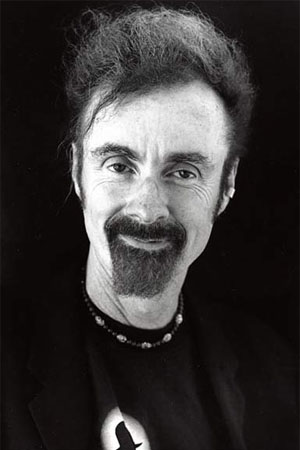
(Photo credit: Christopher Felver)

BSS #273: T.C. Boyle III (Download MP3)

This text will be replaced

The Bat Segundo Show: Tony Stone

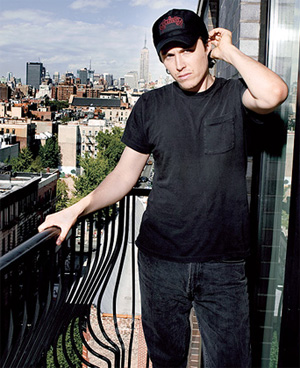
Tony Stone appeared on The Bat Segundo Show #271.

Tony Stone is the director, writer, producer, editor, and actor of Severed Ways, a film about Vikings that opens in limited release on March 13, 2009.

segundo271

Condition of Mr. Segundo: Unsure of whether he wants to be a Viking or not.

Guest: Tony Stone

Subjects Discussed: The many crew positions that Tony Stone worked, music clearance people who keep weapons under their beds, making a film with seven chapters, how a two week shoot went on for three years, not getting the visuals right the first time, motivations for handheld camera work, accepting art as it is, “Greedo shoots first,” contemporary slang transposed into Viking talk, A Knight’s Tale, how far filmmakers can go in “modernizing” historical settings, the ethics of killing chickens on screen, Ingmar Bergman’s Shame, helpful ways of agitating both vegetarians and meat eaters through cinema, filming a defecation scene, the appropriate constituency of shit for a beautiful shot, Charles Leland’s Algonquin Legends, abstaining from profiling the Abenaki religion, paganism, anarchy, and secular humanism.

EXCERPT FROM SHOW:

tstoneCorrespondent: “This fish is pretty killer.” Well, “killer,” as I understand it, is a recent modifier in the English language.

Stone: Yes, it is.

Correspondent: And I don’t think necessarily that the Vikings were using this or that the Nordic tongue had any answer to “killer.” So why the modernization of etymology here? Is this an inroad point along the lines of the Viking headbanger who likewise appears in this?

Stone: Yeah. It’s that. But it’s also that a lot of the times, you’d watch any period piece or historical film, whether it’s Romans or barbarians or whatever else, they’re speaking in semi-Shakespearean accents in their Old British. It doesn’t really make any sense. And everything’s very formal. There’s no reason why, a thousand years ago, they weren’t just as casual as us and they had their own vernacular. So this is using a piece of dialogue — like “This fish is killer” — is basically more of an accurate translation in my mind. Because you’re taking whatever their vernacular was and putting it into our vernacular. So you understand the tone and the vibe of what they’re actually saying. So I actually find there’s more accuracy in it. And we’ve just been so beaten down by the traditional Hollywood stupidity of how I’m dealing with history in films. So that sort of explains why I wanted it there. And of course, the film is trying to bridge the past and the present. And so it’s maing these characters have mannerisms that maybe the dude walking down the street has. Or whatever else. It’s trying to just not have it be this distant, far off, separate thing. It’s trying to make it more current and now. And it is with us.

Correspondent: But on the flip side, there is a certain point where it becomes ridiculous; i.e., A Knight’s Tale, for example. In which you have the Nike swoosh in the Middle Ages. Do you remember this film?

Stone: Yeah, I do. I do.

Correspondent: I mean, it was totally ridiculous. It was fun. But at the same time, one does not look to this for verisimilitude.

Stone: “The Boys Are Back In Town.” Yeah.

Correspondent: So the question is: how far can you go with this?

Stone: Yeah, that’s interesting. A Knight’s Tale. I forgot about that. It’s been a while. But yeah. They use modern music.

Correspondent: “We Will Rock You.” Yeah.

Stone: Then there’s that amazing part where they’re going back to London. And the Thin Lizzy song comes in. “The Boys Are Back In Town.” (laughs) It’s very incredible.

Correspondent: I mean, if we’re talking about Hollywood stupidity, I’m wondering how…

Stone: Yeah. Obviously, there is a level of absurdness to it. I’m not going to deny it. But I think the film is sort of rebellious in a way. It’s trying to set up a dialogue. I don’t know. But in a way, like I’m saying, it’s sort of modernizing the Viking. Making him a current character. Making him more similar to somebody maybe you know is the idea. I’m just getting away from that wall that’s usually put up in terms of dealing with historical material.

BSS #271: Tony Stone (Download MP3)

This text will be replaced