The Return of Bat Segundo

After spending several weeks away from Bat Segundo, I’m happy to announce that I’ve figured out a way to carry on doing the podcast without going insane. There will be five more podcasts released in 2009, with the first new show released on November 20, 2009. This quintet represents three conversations I’ve been sitting on — one of which may prove to be one of the most controversial episodes in the show’s history — and two new interviews which I have scheduled. (Indeed, I actually broke my hiatus for one of them.)

Then, starting on January 8, 2010, I will be shifting to a weekly format, where I will release a new Segundo installment every Friday. The first installment will be a “Best of Segundo” special, featuring some of the conversational highlights throughout the show’s four year history. (Several friends and listeners have been asking for a “clips show” for a while. And I feel this will be a good way to break back into the format. And for those who believe this to be a “repeat,” I assure you that Mr. Segundo and his associates will provide new context for the collected madness.)

I’ve decided to cut down to one show a week for several reasons. I felt that Bat Segundo was taking up too much of my time and that the burden I had placed (thank you, work ethic!) was getting in the way of maintaining the ebullient nature of this program. As I’ve said all along, if it’s not fun for me, then chances are it won’t be fun for listeners. And the last thing I want to do is serve up boilerplate radio. But I’ve returned to a point where the show is fun again. And the weekly pace should permit me to carry on with clean hands and composure, while simultaneously tending to such pedantic needs as scrambling for work in this dour economy. There are also a number of long-standing projects that I’ve had going on for some time. But Bat Segundo was getting in the way. But the hiatus has permitted me to restructure my life around these projects, making Bat Segundo more of a secondary project that I can happily carry on with.

There’s also the simple fact that, with the previous pace, very few people, save the hard-core listeners, were able to keep up with all the shows. I feel that this was a great disservice to the many authors, filmmakers, and cultural figures who have kindly offered their time to the program. The weekly format will also permit me to be more selective, although I will remain just as committed to including small presses and independent filmmakers as I have in the past.

So that’s the new mandate. It is subject to change at any given moment. I assure you that Bat Segundo will return very soon to wreak havoc, goofiness, and insight.

The Bat Segundo Show: Laurie Sandell

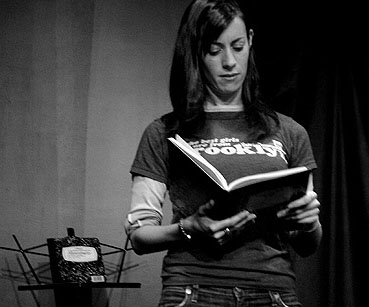
Laurie Sandell recently appeared on The Bat Segundo Show #306.

Laurie Sandell is the author of The Impostor’s Daughter.

segundo306

Condition of Mr. Segundo: Wondering if the coalminer was an impostor.

Author: Laurie Sandell

Subjects Discussed: Chicken recipes, the quest for truth within memoir, how narrative shapes and stretches truth, subjective vs. objective accounts, the essay written anonymously for Esquire, memory vs. concrete evidence, emails from Ashley Judd, how hard evidence enhances a visual diagram, lawyers sifting through evidence, the use of clothing against background, working with a colorist, becoming one’s parents, the use of motion lines, adopting comic book semiotics, drawing from an intuitive part of the brain, Art Spiegelman’s Maus, feeling liberated in comic form vs. restrictions in textual form, maintaining privacy vs. spilling all details to the public, diagramming environment, knowing the lay of the land, static panels, consulting graphic novels, Scott McCloud, arrows pointing to figures, strange stays in five-star hotels, sketching out the book before drawing, taking the story arc from the text version of The Impostor’s Daughter, structure and spontaneity, maintaining momentum vs. contending with painful memories, emotional change and artistic change, whether or not writing is the proper way to exorcise demons, the story of Sandell’s father as a former sense of identity, the ethical dilemmas of narrative seduction, and fearlessness.

EXCERPT FROM SHOW:

lauriesandellCorrespondent: I should point out I’m not trying to insist that stretching [the truth] is necessarily a bad thing. I’m merely pointing out that memory, as we all know, is a fallacious instrument.

Sandell: Yes, it is.

Correspondent: It’s been said that memory is the greatest liar of them all. It’s been said — by, I believe Lincoln — that you have to have a great memory to be a great liar.

Sandell: Right.

Correspondent: So given this conundrum, I’m wondering to what degree you relied on your own memory and to what degree you relied on reference shots. You have, for example, illustrations that crop up within the course of the book. This leads me to wonder about other specific details. But maybe we can start on memory vs. concrete evidence.

Sandell: Well, you know, it was a mix of memory and concrete evidence. On the one hand, I had a lot of concrete evidence because I had interviewed my father over a period of two years and I tape recorded our conversations with his knowledge. This was leading up to the Esquire piece when I had a 300-page transcript. So most of the things that my father said in the book came directly from those transcripts. So he’s telling stories from his past. Those came directly from my father’s mouth.

Correspondent: Yeah.

Sandell: As far as — I’m trying to think. I don’t know. What else?

Correspondent: Well, I could actually cite specific examples.

Sandell: Okay, sure.

Correspondent: For example, the difference between the narration and what is actually spoken in the text bubbles.

Sandell: Right.

Correspondent: Here’s one example. When you’re working at the office, you have a text box point to the screen: “Have you considered inpatient treatment.” We don’t actually see the email on the screen.

Sandell: Okay.

Correspondent: We actually see your particular perspective.

Sandell: Right.

Correspondent: And so I want to ask you about why that particular emphasis — I mean, that’s inherently subjective. We’re counting on your subjective viewpoint as to what is on the screen. As opposed to later on, when we actually see what’s on your screen, when you’re on your laptop in your motel room.

Sandell: I need to be honest. The reason you didn’t see that screen was probably because it didn’t fit in that box.

Correspondent: Okay.

Sandell: And so I had to deal with little callouts so you could actually see what was on the screen. But the interesting thing about the process of putting together all this evidence — a lot of it really was evidence — is that there were so many emails. For example, that email was an email, I believe, from Ashley Judd.

Correspondent: Yeah.

Sandell: And I have those emails from Ashley Judd. I have the emails from my father. You know, I worked with a private investigator for two years. So I have all of his information and the lawsuits he compiled and all the various evidence and things written by my father. You know, I think — did you ever read Autobiography of a Face by Lucy Grealy?

Correspondent: No, I never read that.

Sandell: It’s a beautiful memoir. Ann Patchett later went on to write Truth & Beauty: A Friendship.

Correspondent: That’s right.

Sandell: And one of the things that Ann Patchett said in her afterword — after Lucy died, Ann Patchett wrote an afterword to the book — and she described how, at a reading, someone said to Lucy Grealy, “How did you remember all those details about your past?” And she said, “I didn’t remember it. I wrote it.” And people were a little bit up in arms about that. But she was pointing out the fact that this was a piece of art, it’s a piece of subjective memory, and the most important thing is to show the emotional truth of the situation. And I would say that in my case, because I have so much evidence, and evidence that Little Brown asked to say and anytime I’ve done television, they’ve actually asked to see the evidence, I feel pretty comfortable that there’s not going to be any big explosive James Frey situation.

Correspondent: Well, to what degree were they asking for the evidence? Because we’re talking about transcripts. We’re talking about investigative reporting. This is all text right now. And here you are. You have a visual document here.

Sandell: Yes.

Correspondent: You have to construct something from the text here. So it’s a wonder that evidence even means anything if it’s a visual result.

Sandell: I think it does. I mean, the visual result is obviously my memory. It’s the way I remember the situation.

(Image: Brantastic)

BSS #306: Laurie Sandell (Download MP3)

This text will be replaced

The Bat Segundo Show: Dick Cavett

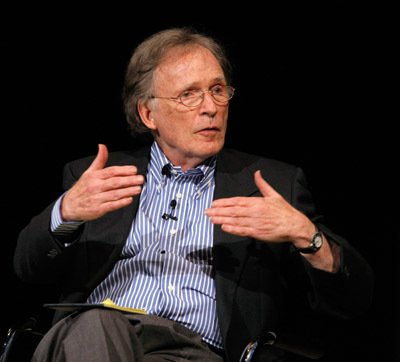
Dick Cavett appeared on The Bat Segundo Show #305.

Dick Cavett’s column, “Talk Show,” regularly appears at the New York Times.

segundo305

(PROGRAM NOTE: During the course of our conversation, a “Professor Robert Castelli from John Jay College” — who apparently has a background in law enforcement — pushed in Mr. Cavett’s chair, causing Mr. Cavett to accost him. This unusual social moment, which was resolved with bonhomie, can be experienced at the 38:04 mark.)

Condition of Mr. Segundo: Examining his birth certificate for potential Nebraskan roots.

Guest: Dick Cavett

Subjects Discussed: Books that Cavett may or may not have authored, jobs that Cavett has worked, being a professional magician as a teenager, Cavett’s brief career as a caddy, humorless Germans, James Ellroy, starting the Caddies Hall of Fame, Groucho Marx’s golf ball-enhanced hat, stalking Jack Paar in the bathroom, the dreadful cliche “It’s who you know, not what you know,” being drawn to living with showbiz people, Paul Douglas, meeting Groucho at George S. Kaufman’s funeral, Studs Terkel, being born with the showbiz urge, fame vs. ideas, whether or not showbiz people are “real” people, Nixon’s blue-suit adventures in Montauk, separating the real Cavett from the telegenic Cavett, Johnny Carson’s failure to remember his guest lineup that night, learning how to listen over the years, real listening vs. telegenic listening, Jimmy Fallon, on not relying on a catalog of quips, overpreparing for an interview, advice Cavett picked up from Jack Paar, the icky word “share,” Werner Erhard and est, “oversharing,” Twitter, on not getting Mike Nichols on the show, interviews vs. conversations, when Cavett had to telephone potential guests to get them on the show, Frank Sinatra, Gay Talese’s “Frank Sinatra Has a Cold,” secretly taping a telephone conversation with Marlon Brando, phrases that Brando used, Cary Grant, having to contend with armies of publicists, the worthlessness of many present talk show appearances, talent coordinators, allegations from 1960s Toronto journalists that Cavett was “attractively functional,” the bright orange shag rug on the ABC set, being bombarded by constant information and subwindows on television, TV as GUI, why Cavett didn’t renew his six-year contract at CNBC, the mispronunciation of “nuclear,” David Frost, the problems with occupying vacant rooms, Peter Ustinov, claims from executives that people won’t sit still for a long-form interview, the relationship between William Peter Blatty’s appearance and the success of The Exorcist, the number of panties that Cavett has received over the years, resistance from ABC, the infamous Norman Mailer-Gore Vidal show, the Mailer-Torn brawl, Of a Small and Modest Malignancy, Wicked and Bristling with Dots, the Lillian Hellman/Mary McCarthy feud, making sure that writers could talk on television, Stephen Colbert, and Jon Stewart as “the most trusted newsman in America.”

EXCERPT FROM SHOW:
cavettCorrespondent: I’m curious about this period of you coming to New York. Coming into town. You’re on the prowl trying to get work as an actor. Before you eventually become a copy boy for Time Magazine.

Cavett: That’s right. I finally made it. (laughs)

Correspondent: I should point out that your efforts to befriend numerous showbiz figures here in New York would in some cases, by today’s standards, be considered stalking. You know, Jack Paar in the bathroom and all that.

Cavett: Yeah.

Correspondent: I’m curious. Were you drawn by the notion of “It’s who you know rather than what you know” — or what was the impetus for this?

Cavett: I had heard that dreadful cliche, usually used in the same conversation as “I don’t know much about art but I know what I like” and “Some of my best friends are Jews.” In fact, two friends of mine used all three one evening and hit the jackpot. But anyway to get to your question.

Correspondent: Wow. And they’re still your friends?

Cavett: They’re both dead. So I don’t see them that often.

Correspondent: Using the phrase has killed them, I presume.

Cavett: It mighta. If cliches could kill.

Correspondent: (laughs)

Cavett: But what was the one we were working on?

Correspondent: Oh, we were kinda talking about who you know.

Cavett: Oh, who you know. Nobody ever says, “It’s whom you know.”

Correspondent: No, they don’t.

Cavett: Even though my father was an English teacher, I never did. And I was just drawn to famous successful showbiz people and wanted to live among them.

Correspondent: Really.

Cavett: Be one of them. And that took me to accost — on my first day in New York — Dave Garroway, who was out in front of the Today Show window. And speaking of making it around as an actor, one day, the great Paul Douglas — film actor for those of us older than 30 — was standing next to me waiting for a light to change waiting on Madison Avenue. And I said, “Mr. Douglas, where would you go to look for work today as an actor?” And he said, “I couldn’t answer,” and walked on. (laughs) He wasn’t impolite.

Correspondent: Yeah.

Cavett: He told the truth.

Correspondent: He probably had to get to an appointment. I’m sure it wasn’t anything personal.

Cavett: I still love him in the movies.

Correspondent: But you managed to coax Groucho into buying you lunch. And I’m curious if it was a scenario involving charisma or blackmail. I mean, what happened here? What did you attribute your ability to get on with so many people? So many bigwigs here? Or did you stalk them all like Jack Paar?

Cavett: Well, I’ve never given that much thought. I don’t know what it is. Something in me appealed to him apparently enough. I met him at George S. Kaufman’s funeral — or after it on the street. Groucho was starting to come down Fifth Avenue. Puerto Rican Day Parade booming along beside. And I said, “Groucho, I’m a big fan of yours.” Then he said, “Well, if we get any hotter, I can use a big fan.” I should have said “gets any hotter,” which is what he said. Retake. (laughs) And Groucho said, “Well if it gets any hotter, I can use a big fan.” There. That’s right, isn’t it?

Correspondent: Yeah, sure. Sure.

Cavett: Yeah. And the joke still works.

Correspondent: Yeah, it does.

Cavett: Even though it was years and years ago.

Correspondent: Actually, we should have six different attempts at this joke.

Cavett: Yeah.

Correspondent: Just to show the Cavett mind.

Cavett: Well, it shows the Groucho mind in a way. Because I never saw him misspeak a joke or a line. I only saw Hope, who I used to worship and watch and hang around when I was working for Carson/Parr. When we were out in California, I would watch Hope tape his show all the time. Once or twice, he would blow a monologue or a joke, and get a bigger laugh about doing that. As Johnny could.

Correspondent: Yeah.

Cavett: And really any good comic could. But where was I? Oh, Groucho. So we started walking down the street and chatting. Beautiful day. And I remember thinking, “This may be the best day of my life.” And I’m still not sure it was not. When we got all the way down the Plaza, where he was lunching — alone. And on the way down, he insulted every doorman. And then a Puerto Rican man in a bright suit happily enjoying his day saw Groucho and made a great grin. And he said, “Com-e-dy!” (laughs)

Correspondent: Yeah.

Cavett: And Groucho said, “Tell me. Is it true that you were cutting sugar cane only a month ago? You seem to have succeeded with that suit.” Well, anyway, it entertained me and the man. And we got to 59th Street. And he said to me, in the voice from the game show, “Well you seem like a nice young man and I’d like you to have lunch with me.” And I thought, “Am I going to awaken in a moment and find this to be only a dream?”

Correspondent: The question I have is why did showbiz people appeal more than, say, regular people. Like say the doorman, for example. I know that over the course of your show, you had a number of intriguing cultural figures and unusual people that wouldn’t be on other late-night shows. But on the other hand, it does make me curious why culture, in some sense, was the great prism for which you could conduct these many lengthy conversations with these people. Why didn’t you go the Studs Terkel route? I’m curious.

Cavett: How do you see the Studs Terkel route?

Correspondent: Well, he talked with everybody.

Cavett: Talking to?

Correspondent: He talks with writers. He talks with ditchmen.

Cavett: Talk to janitors. Or, in the politically correct age, custodians.

Correspondent: Exactly.

Cavett: (laughs)

Correspondent: I’m old enough that when I went to elementary school, they called them custodians back then.

Cavett: They did even then? Oh.

Correspondent: Yeah, they did. Back in the 70s.

BSS #305: Dick Cavett (Download MP3)

This text will be replaced

The Bat Segundo Show: Richard Russo II

Richard Russo recently appeared on The Bat Segundo Show #301.

Richard Russo is most recently the author of That Old Cape Magic. He previously appeared on The Bat Segundo Show #152.

segundo301

Condition of Mr. Segundo: Shoving Cape Cod mackerel down his throat.

Author: Richard Russo

Subjects Discussed: [List forthcoming, but lots in the latter half of the show about the Newsweek piece and the perceptive problems with close third-person.]

EXCERPT FROM SHOW:

Books RICHARD RUSSOCorrespondent: Bon Jovi’s “Living on a Prayer.” Why “Living on a Prayer” over “You Give Love a Bad Name?”
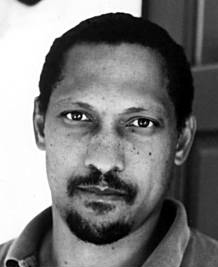
Russo: (laughs)

Correspondent: Was “Living on a Prayer” the tune that was more applicable to weddings here?

Russo: Ed, Ed, you’re trying to make me feel regret now, aren’t you? Because that would have been perfect as well.

Correspondent: Was it more about living than love? With the emphasis in the book.

Russo: It was the result of my wife and I having gone recently to a number of weddings and being absolutely fascinated by the way young people my daugghters’ age react to the song. Because it is so much before their time. And for a lot of young people — 28, 29, 30 — it is a kind of anthem And the way they not only know the words, they have a kind of routine worked out on the dance floor. Those in the know have this routine on the dance floor that involves the fist-pumping, which they do in unison. Sometimes forty or fifty of them, young people out on the dance floor, to a song that is just so much before their time. But they’ve adopted it. So it was a wonderful way to show a bridge between those generations. And Laura, who does such a kind act in that redeems her father, at least temporarily. It just fit that slot so nicely. It also suggests that when Griffin begins this novel, he’s had a tiff with his wife. But it’s really just a tiff. I mean, he has a kind of tenure in his job. He loves his life. He loves his wife. He loves his daughter. Everything is right. And yet by the end of the first half of this book, he’s living on a prayer. And he knows it. Whereas he didn’t in the beginning.

Correspondent: But it’s interesting. Because your timing is absolutely perfect! Recently, on YouTube, there’s this video that’s been going around, that 18 million people have seen, of this elaborate dance at a wedding all set to music.

Russo: Oh really? I hadn’t seen it.

Correspondent: Well, I know. I don’t think you’re much of an online guy.

Russo: (laughs)

Correspondent: I wanted to talk about the notion of the home in this book. There’s a sentiment that is expressed: “You aren’t a real adult until you have a mortgage you can’t afford.”

Russo: Right.

Correspondent: Griffin is pressured into home ownership. And he and his wife often sift through the real estate catalogs, splitting up properties into Cannot Afford It and Wouldn’t Have It As a Gift.

Russo: Right.

Correspondent: And then also, 13-year-old Sunny Kim says, “You have a lovely home,” later on in the book. Home though is not necessarily where the heart is in this. This is a couple that is united by home as a piece of property, as opposed to a place where one can establish a family. This is a couple that settles on The Great Truro Accord and actually figures that this prearranged stratagem will aid them in deflecting every curveball of life thrown their way. So I wanted to just ask you why the home, of all things — or even just property in general — would be the central place for this couple’s failure to (1) deal with life and (2) come to the real terms that they are their parents and that they share a lot of family qualities. That’s a lot of points. I’ll stop there.

Russo: No, no, that’s — yes, I’m overwhelmed by the question. The other conflict, of course, is that Griffin’s parents, of course, are confirmed renters. So their notion of a home is something which recedes before them. Like the Cape itself. I mean, home for them is a place that you can only visit. And so, for Griffin, home is something that he is really reluctant to go to. Joy loves her parents’ home. She loves the vacation home. The same home that they rent every year. For her, home is a central place, as you said. It is the place where love resides most powerfully. And I think I would also expand that to say that home, like marriage, is not just a private thing. Just as marriage institutionalizes love in some way, home institutionalizes family. So when Sunny Kim — the outsider — comes in and says, “You have a lovely home.” He’s saying, “You have a lovely daughter with whom I’m in love. You have a lovely marriage to which I aspire. You have a lovely home that I would like to live in one day and you have a lovely nation that is now my adopted home.”

So just as your question is big, my answer is kind of big. In the sense that the notion of home, by the time we get to the end of this book — especially that final Sunny Kim scene — that notion of home has gone from something at the beginning — it was two people separating real estate property on a place they can’t afford into those two categories — Can’t Afford It and Wouldn’t Have It As a Gift. And by the time we get to the end of the novel, it’s almost something that you would expect to be taken over at some point by Department of Homeland Security. (laughs)

BSS #301: Richard Russo II (Download MP3)

This text will be replaced

New Review: I Am Not Sidney Poitier

In today’s Chicago Sun-Times, you can find my review of Percival Everett’s I Am Not Sidney Poitier. And it’s rather fitting that much of my review ended up as a list of rhetorical (and possibly unanswerable) questions.

everett2As it so happens, just after filing the review and being wowed by the book, I learned that Everett happened to be in New York. And I was able to set up a rare interview with him (which will be airing as the next episode of The Bat Segundo Show, to be released very soon). Everett, who has avoided nearly every form of marketing for his books*, and who declared to me that he had no interest in the business of publishing or catering to an audience, identified his book as a “novel of ideas.” But I Am Not Sidney Poitier is also steeped in an old-fashioned sense of humor. Here’s a brief excerpt from the forthcoming Segundo installment, in which Everett explains the relationship between these two concepts:

Everett: There are no rules. I don’t believe in any rules when it comes to fiction. If I can make you believe it, then it’s fair game. Probably when I’m working, if I can make myself believe it, then it’s fair game. Because I don’t know what you’re going to believe. And it depends on the work. A novel like Not Sidney, where much of it is more a novel of ideas and the narrator is of a certain sort, can make bizarre perceptions or representations of the world and have the one-dimensional county of Peckerwood County. Whereas in other works, that simply wouldn’t work. So the work talks to me. The most important part of the story is the story. And I can’t impose my feelings or my desire to write a certain kind of thing that day on it.

Correspondent: But in identifying Not Sidney as a novel of ideas, I would argue — and this is where we get into needless taxonomy arguments. But I should point out that you are essentially saying, “Well, this is a novel of ideas.” And maybe the story itself will matter on some basic entertainment level.

Everett: Oh no. The story still matters.

Correspondent: Okay. But I’m curious how committed you are to this idea of the “novel of ideas.” If it’s entirely a construct, should we believe in it entirely or should we believe in the ideas?

Everett: Well, if I’ve done it right, you should believe in it entirely. And superimposed upon this is the narrator’s concept of this being a story of ideas. But you can’t have — and this is not a rule, but, for me, I cannot have a novel where the story is secondary to anything. The world has to exist. And so I have to make it. And I have to make it believable. How I do that can vary and come across in any different number of trajectories or strategies or whatever.

* — This may answer, in part, Gregory Leon Miller’s query this weekend on why Everett’s work hasn’t received the attention it deserves.