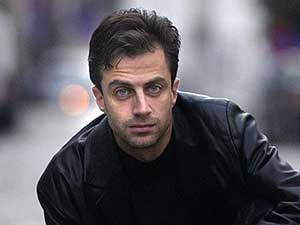
The Bat Segundo Show: Laila Lalami II

Laila Lalami recently appeared on The Bat Segundo Show #291.

Laila Lalami is most recently the author of Secret Son. She previously appeared on The Bat Segundo Show #11.

segundo291

Condition of Mr. Segundo: Unpersuaded by fictive convictions.

Author: Laila Lalami

Subjects Discussed: Interviewing enthusiasm, similarities between Secret Son and Richard Wright’s Native Son, Invisible Man, the original title of The Outsider, Ayelet Waldman’s similar title, the maximum number of story and title configurations, the Brooklyn titular fiasco, depicting scenes from multiple perspectives, character restrictions, masculinity and swagger, fiction and personal experience, blogging and silly distinctions, not having time to pay attention to the publishing industry, violence and representative characters from the slums, subverting terrorist expectations in fiction, brown falcons with twigs in their beaks, symbolism vs. emotional and psychological signs, not having a sense of home, censorship in Morocco, the Western Sahara Separatist Movement, TelQuel, questionable freelancing circumstances portrayed in Secret Son, questioning acts of generosity in the novel, inconsistent character qualities and financial transactions, Chekhov’s gun, personal experiences with paperweights, the problems with making things up, Nadeem Aslam’s Maps for Lost Lovers, being more comfortable with the least strange aspect of invention, government bailouts, legalized pot, and truth vs. believability.

EXCERPT FROM SHOW:

llalamiCorrespondent: Do you view Youssef stealing the paperweight as a financial transaction?

Lalami: Do you know, to this day, I have no idea why he does that?

Correspondent: Really?

Lalami: Yeah, I was just in the middle of the scene. And before I knew it, he was walking down the elevator with it. And it just…I don’t know.

Correspondent: I kept thinking it was like Biff from Death of a Salesman or something.

Lalami: Oh my god. (laughs)

Correspondent: But instead of the fountain pen, it was a paperweight. I don’t know.

Lalami: Very clever. No, no. I wasn’t thinking of that. You know, to this day, I don’t know why he does that. I mean, I think — I don’t know. And the fact that it turns up later on in the book, that again. I mean, literally, two lines before it happened, I didn’t know it was going to be on that desk.

Correspondent: Maybe you needed Chekhov’s gun.

Lalami: (laughs)

Correspondent: Maybe that’s what this is all about.

Lalami: Yes, maybe.

Correspondent: I mean, intuitively, when you introduce a character or an element or an object along these lines, to what degree is your subconscious saying, “Hey, I’ve got to go ahead and put things in here that I can follow up later, and resolve, and wrap things up.”

Lalami: Honestly, yes. Honestly, it really did happen at the level of the subconscious. And I couldn’t tell you why he steals it. Or why? I mean, it seemed fitting to me that the friend would convince him to sell it. I mean, that was just something that fit with the character. But why it would then turn up on Hateem’s desk, I don’t know. You know, honestly, it just seemed to be intuitive. I was just following my intuition with that. Maybe there is a larger symbolic subconscious meaning to it.

Correspondent: Or maybe you had a really painful, cathartic, and emotional experience with a paperweight.

Lalami: No.

Correspondent: That you’re just not going to share.

Lalami: (laughs) Then the story would be a lot more interesting.

BSS #291: Laila Lalami (Download MP3)

This text will be replaced

The Bat Segundo Show: Arthur Phillips

Arthur Phillips appeared on The Bat Segundo Show #288.

Arthur Phillips is most recently the author of The Song is You.

segundo288

Condition of Mr. Segundo: Reconsidering the playlists and those who play him.

Author: Arthur Phillips

Subjects Discussed: Characters who are enslaved to culture, partisan positions in relation to hoarding facts, being in denial about larger arguments within novels, Nabokov’s Lectures on Literature, aesthetic concerns, muses and playing against reader expectations, the myth of an author’s personal connection, listening to headphones, ghosts and Jeopardy experiences gone awry, personal experience and lies within fiction, speculating on the specific conditions in which a man can be a muse, being a male model and a musician, the myth of writing what you know, getting excited about emotion, the distance required to contend with a fictive location, the wall between the personal and the artistic, the magic souffle, predicting 2009 weather in New York, reading time, the danger of boredom, William Gaddis’s The Recognitions, outlines and improvisation, reinventing the wheel, the little changes within a manuscript vs. changing as a writer, the value of urgency, being a metaphorical roofer and upholsterer, Re-Flex’s “The Politics of Dancing,” and the crazy amounts of money one must pay to republish lyrics.

EXCERPT FROM SHOW:

arthurphillipsCorrespondent: If we’re talking about time, there’s also the notion of reader’s time. And as a stylist, you have some control over how frequently or how long or how short the reader’s going to turn the page. When I read your book, I found numerous passages when I would slow down. And then when dialogue would bump up, particularly with the scenes with the cop, it then sped up.


Phillips: Right.

Correspondent: And so I’m curious. If time on a structural level was important, I’m curious if there was any importance you placed in terms of thinking of the reader and thinking of this notion of how fast the reader’s going to turn the page?

Phillips: That’s such a great question. And on one hand, I want to say, “Jeez, I wish I had more conscious — and I will vow in the future to have more conscious — understanding of those technical matters.” On the other hand, it seems a little impossible to control. Well, not just a little. It’s entirely impossible. I think any time you start getting into what does the reader or what does a reader expect, react to, experience, you’re doomed. I mean, you’re just — it can’t be. If you have one or ten or a hundred or ten thousand or a hundred million readers, they’re just different. And this is just so obvious that it’s just not saying anything. But it says everything. Because if everybody’s going to have a slightly different reaction, even taking a smaller subset of the people who “like” it, they’re going to all have a different reaction. You can’t plan for them. So the only reader that you can really have much planning for is yourself. At which point, I don’t really have to think very consciously about “I need to speed it up here, I need to slow it down here.” All I have is the feeling of “I’m bored.” And so when I’m writing and I go back and I read the draft, I say, “Oh this is just — I’m just bored.” Something has to happen here that is different from what’s happening. Because I don’t like it. And then at the end of it, when I’ve gone and I’ve done that twenty-five times, and I say, “I like the whole thing,” then it’s done.

Correspondent: Well, to deflate my own interlocutory souffle…

Phillips: (laughs)

Correspondent: I should point out that this may very well be the difference between having lots of dialogue and having lots of imagery. I guess the question here is how intuitive is it really. I mean, when you’re getting lost in a long sentence, whether as a writer or even as a reader, you’re going to be aware of the slowness. Or maybe you’re lost in such a fugue state that there really is no sense of time.

Phillips: Right. I’m reading The Recognitions right now and…

Correspondent: First time?

Phillips: First time.

Correspondent: Oh wow.

Phillips: And I’m having all kinds of temporal feelings about that book as I work with it. There are times when I am lost in a fugue state, although not often enough for my taste. And often I’m feeling, “I think Gaddis was lost in a fugue state. And I just can’t join him for some reason.” I don’t know that it’s just images and dialogue. I think that you can have some very impenetrable, hard-to-wrestle-with dialogue. And actually that’s what brings The Recognitions to mind. Because there are passages. Long passages.

Correspondent: The party scenes, I know.

Phillips: You know, there’s a forty page party scene with almost nothing but dialogue. And you have to go, “Oh wait a minute. Is this the same person who four pages earlier was talking? And where is that in relation to the little girl asking for sleeping pills?” And all the rest of it. So it goes on and on. So you can have some very slow-moving dialogue. And actually I was thinking about Gaddis writing that in ’55, and Nabokov in some period around the same time doing one of his customary unappealing little digs at novels that are all dialogue, and thinking, “I wonder if he read this, looked at it, had any feeling about this, would have included or excluded it from that grouping.” Generally speaking, light dialogue goes faster than description or internal thought. But not necessarily, I guess is the short answer. I could have said “Not necessarily” about fifteen minutes ago.

Correspondent: (laughs) That’s all right.

Phillips: There you go. Just cut it down to the dialogue.

BSS #288: Arthur Phillips (Download MP3)

This text will be replaced

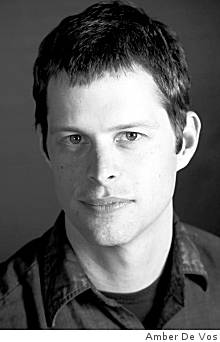
The Bat Segundo Show: Michelle Goldberg

Michelle Goldberg appeared on The Bat Segundo Show #286.

Michelle Goldberg is most recently the author of The Means of Reproduction.

segundo286

Condition of Mr. Segundo: Wondering if there’s any fate in what we make.

Author: Michelle Goldberg

Subjects Discussed: [TK]

EXCERPT FROM SHOW:

goldbergCorrespondent: You use the words — the modifier “seemingly liberated’ — to describe this educated Indian woman who goes and, of her own volition, says, “I want to have boys. I don’t want to have girls.” Let’s actually take this into consideration, along with the case of Fuambai Ahmadu, who would feel very much insulted by the notion that she is not empowered. Here is someone who has been circumcized and who finds the notion of being mutilated — that particular verb as applied to her — very gravely offensive. So now we’re dealing with a scenario in which, if we are trying to talk about broader problems like reproduction and reproduction rights, we are also talking about having to deal with people who have values that are 180 from us. And simultaneously we’re trying to get through to them. But now we’re in a situation in which we have to find some kind of Venn diagram of how we talk with them. And if you think that this is not reconcilable, as you suggested two answers ago, I must point out some problems with this overall thesis. Because if we cannot communicate to these people; if we cannot respect the rights in a cultural relativist way of these people to make decisions that are converse to pro-choice, that are converse to women’s right (at least as they are established in our country), how then do we find common ground here?
Goldberg: Well, I’m not saying that we can’t discuss them. I’m saying that I don’t think it’s always — or maybe it’s just beyond me — to create some kind of absolutist system in which we can kind of hallucinate and create a hierarchy of what falls under the category of universal human rights, what is multiculturalism, and how we value the right of people to perpetuate their own cultural practices vs. the rights of dissidents to be protected by universal human rights guarantees. I clearly, over and over again, tend to side with people who say — with minorities who do demand to be protected by the same kind of universal human rights guarantees that I cherish. I’m not particularly sympathetic to multiculturalist or relativistic arguments, as opposed to universal kind of enlightenment type arguments. But I guess what I’m saying is that this book is about — I’m often interested in the ambiguities and the hard questions and the human stories in which it’s not as easy to sort out this hierarchy of values. You know, I’m not a philosopher like Martha Nussbaum, who has created this very rigorous and well thought out taxonomy of these different issues.

Correspondent: I guess that the question here is: When someone like Eve Ensler goes to Kenya and gives a V Day jeep to Agnes Pareyio, is there not something imperialistic about that notion of taking our particular values and stamping them onto another country that doesn’t necessarily reflect it? I mean, this is really what the problem is in terms of your complaints about the Cairo conference — the UN convention — in which you complain about the Vatican and you point out, “Well, it’s a country of 1,000 people. Mostly celibate men.” Nevertheless, it is a country. Nevertheless, we do have to have some sort of communicative process. The question is what conditions would seem to be fair to present these messages in ways that don’t feel imperialist and that don’t encroach upon these terms that we may consider here in America to be terrible or perjorative or just really against our notion of human rights and what someone else considers to be, “Well, this is my form of empowerment. This is the way I go about the universe.”

Goldberg: Well, let’s back up and explain what we’re talking about here, right? We’re talking about the context of Agnes Pareyio.

Correspondent: Yeah.

Goldberg: And Fuambai Ahmadu. We’re talking about female genital cutting, or female circumcision. Fuamabi Ahmadu is a woman in this book who is from Sierra Leone, who undergoes circumcision as an adult, who is someone who talks about it being a valuable part of her cultural identity, who is probably the most eloquent defender of the practice on the global stage. In part because, although it’s clearly very valued in these societies — otherwise, people wouldn’t fight so hard to keep the practices alive — the people who genuinely practice it aren’t people who have a lot of access to NGOs and the media, etcetera. So I think she’s an important voice. At the same time, I think the question of whether Eve Ensler is being imperialistic by supporting these women in Kenya who are fighting female genital cutting, I don’t know. To me, it’s not that interesting. And I think if you brought that up with Agnes Pareyio, who is someone who’s from the community who practices this, who’s underwent it herself, who’s regretted it her whole life, who’s a grassroots activist against it. Girls were running away from home to escape this practice and she was finding them places to stay and enrolling them in school. And then she finally met Eve Ensler. And then Eve Ensler started to support her. I think that the question of “Well, is it imperialist to support Agnes Pareyio?” is kind of insulting to her. Because she has just as much right. She’s just as authentic a voice for her community. She has just as much right to try to change and create progress in her community as we have to create progress in ours.

BSS #286: Michelle Goldberg (Download MP3)

This text will be replaced

The Bat Segundo Show: John Wray

John Wray appeared on The Bat Segundo Show #282.

John Wray is most recently the author of Lowboy.

segundo282

Condition of Mr. Segundo: Searching for those who will listen to him in the subway.

Author: John Wray

Subjects Discussed: The ABAB narrative of Lowboy, mirroring schizophrenia within a narrative structure, a sane perspective that assists the reader, subway details, Franz Kafka’s Amerika, real vs. imaginary details, Jonathan Zizmor, the C#/A subway tone, the origin of the character name Heller, Ulysses, resisting eccentric character names, merging two words into one unhyphenated word, A Portrait of the Artist as a Young Man, ideal seating positions in a subway, appealing to a wider audience, balancing the uncompromising literary voice with suspense, comparing the research in Wray’s three books, the difficulties of convincing the reader, Daniel Paul Schreber’s Memoirs of My Nervous Illness, sexual preoccupation and schizophrenia, an intimate third-person voice, the relationship (or lack thereof) between Freud and Schreber, pat summations, urban exploration, the benefits of imagination, the Sikh religion and the end of the Seventh Avenue Line, open interpretations and false connections, respect for the subconscious, the old City Hall station, the dangers of being subsumed by research, writing vs. thinking, graphical segues in prose, B.S. Johnson’s holes, and John Wray vs. John Henderson.

EXCERPT FROM SHOW:

johnwrayCorrespondent: You have Emily and Lowboy entering at the 14th Street station. I’m going to get subway geeky with you here.

Wray: Okay.

Correspondent: I should point out that when you get into Union Square, there is — or there is now and there won’t be very soon — a Virgin Megastore.

Wray: Right.

Correspondent: Was that particular location a deliberate choice on your part?

Wray: (laughs) You know, sometimes there are just these happy accidents that come about either completely by chance or through some sort of action of the subconscious. I’m not really sure. The German editor of Lowboy was very proud of himself for the game of interpretation that he played, which involved a lot of reversals and mirror image analyses, that I guess you could say. He was very proud of himself for having been the only person to discover that the name of the detective in the novel, Ali Lateef..

Correspondent: Either the jazz artist or even the hip-hop artist in Oakland.

Wray: Well, there’s that. Yeah, that was a conscious reference on my part. But this German editor of mine was very proud to have figured out that Lateef spelled backwards is “fetal.”

Correspondent: Yes.

Wray: Which is something that I never thought of. In a million years, I wouldn’t have thought of that. And I still don’t know what he was getting at. But who knows? I mean, it’s quite possible that these things percolate up from the subconscious in some way.

Correspondent: But I also must point out that the 86th Street Station does not have a line that you can see across, as you point out in this particular book. This led me then to believe as I was reading it, “Oh! Is this really real or not?” It was a kind of clue. Deliberate choice on your part?

Wray: Well, I deliberately — I’ve always been a big fan of Franz Kafka’s novel, Amerika. Particularly of the way that Amerika begins. Amerika, of course, being a novel written by someone who had never been to America and who was making deliberate use of the myth of America as a way of addressing many other things. Kafka was not particularly interested in the United States. And in the beginning of the novel Amerika, this boat filled with immigrants enters New York Harbor. And one of the very first sentences describes the Statue of Liberty holding aloft its wonderful gleaming sword.

Correspondent: Yeah.

Wray: Rather than the torch, of course. So in an earlier version of Lowboy, in a bit of a tip of the hat to that novel, I introduced various, fairly overt features into this New York City that would differentiate it from the New York of realistic fiction. Then as the novel evolved, it became more and more naturalistic in a way, and eventually settled into this mode of heightened realism that it now occupies. But there are still certain little vestiges of that earlier alternative New York.

Correspondent: And this would be one of them.

Wray: I think you’ve caught one of them. Yeah.

BSS #282: John Wray (Download MP3)

This text will be replaced