Of Human Bondage (Modern Library #66)

(This is the thirty-fifth entry in the The Modern Library Reading Challenge, an ambitious project to read the entire Modern Library from #100 to #1. Previous entry: Heart of Darkness.)

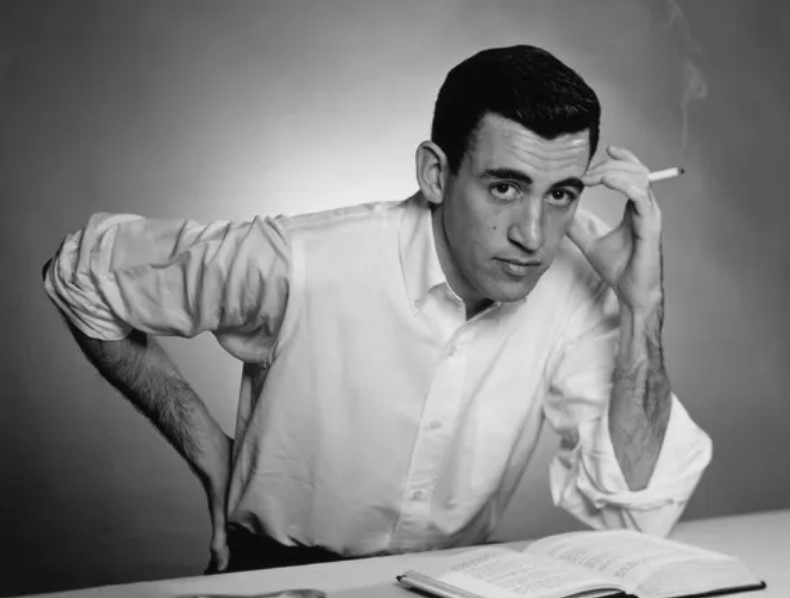
William Somerset Maugham was a largely gloomy man who just wanted to be loved. And because Maugaham was constitutionally incapable of behaving in the manner of Sally Field accepting her Oscar (and was frequently self-deprecatory), he often wasn’t. It certainly did not help that he was closeted, emo as fuck, fiercely protective of his private life, tight-lipped about his inexorable agony, and reported by many of his acquaintances and admirers as emotionally detached (although he did commit many quiet acts of generosity, including building up a library at The King’s School in Canterbury, where the ashes of Ashenden’s creator were eventually scattered). He frequently quipped that he stood in the first row of second-rate writers, almost to steel himself against the effusive and well-deserved reception he received for his considerable literary accomplishments. The Moon and Sixpence, Cakes and Ale, and The Painted Veil remain remarkably vivacious and salacious for their time and are still eminently readable today.
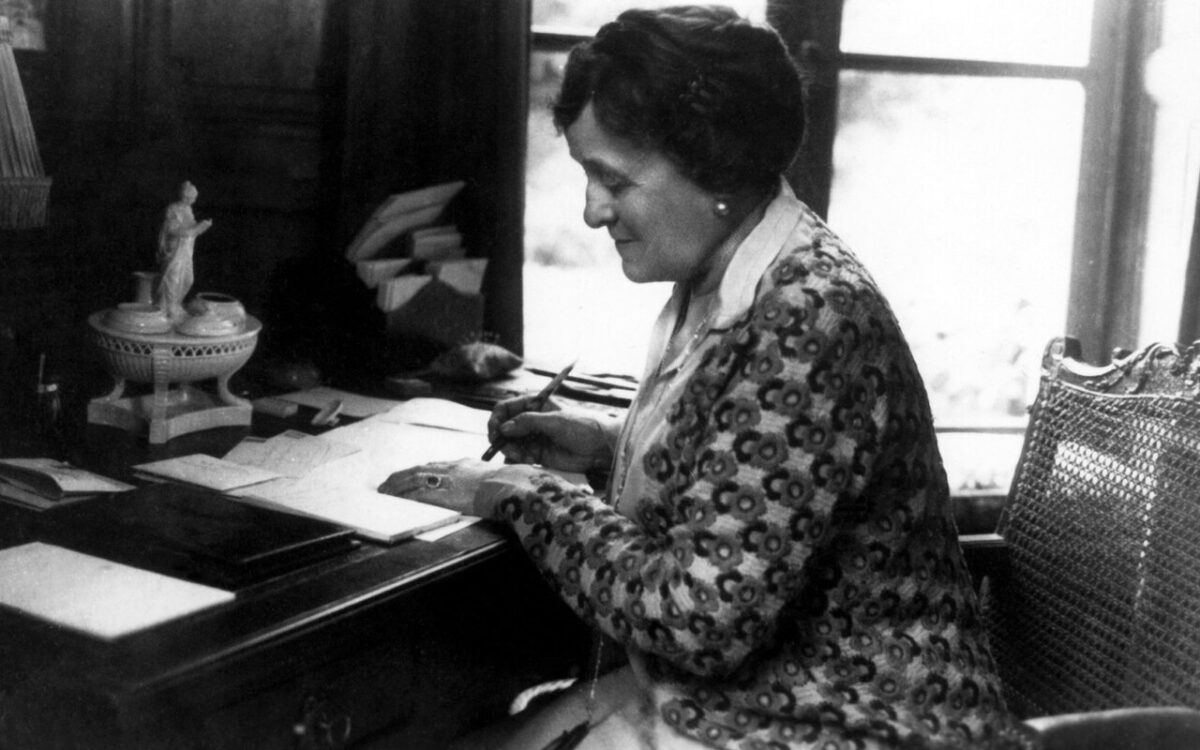
Maugham’s ardent commitment to the “fuck my life” bit, which one often sees today with glum cube slaves over forty, is best evinced by how difficult it is to find a photograph of Maugham smiling. This man hated himself so much that it’s safe to say that he probably would not have been the right man to ask for a selfie. Maugham’s knack for misery is seen in the themes and the grim humor that often punctuate his lurid fiction: the fixation on death and depression, the sense that all love affairs are fated to suffer an abominable heartbreaking end (often with a protagonist too steeped in butterfingers myopia to recognize what’s right in front of him), and a heartless world that is permanently at odds with the joys of human existence. I don’t think it’s an accident that Bill Murray decided on Maugham as his source material when he attempted to turn to dramatic acting in the mid-1980s. Numerous biographers have made noble attempts to ascertain why Maugham was so hopelessly dolorous, but even with “newly discovered papers,” Maugham’s pitch-black penumbra has stubbornly summoned more enigmatic angles. Despite his affluence, he lived quite modestly and, perhaps due to the publicity of his theatrical work, he perfected the art of suffering in plain sight. Given that he made it all the way to the age of 91, one wonders just what it was that kept this tortured depressive living. His storytelling is often so spellbinding that you just want to give the poor man a hug.

But Maugham was also one of the most successful writers of the early twentieth century. With fame came the relentless hail of stonecold critics who refused to budge from their gilded dogpens and throw Willie a bone. Despite his position on the Modern Library list, Maugham has been unfairly neglected in the 21st century. He is not taught, not stocked in most bookstores, and certainly not mentioned by the bratty hordes who are too busy dropping their knickers over such blinking babies as Colleen Hoover and R.F. Kuang. In 1908, Maugham had four wildly successful plays running simultaneously in London. And by the middle of the 20th century, Maugham was so wealthy, such a seemingly permanent mainstream pasha, that even the iconoclastic Simon Raven singled him out as a member of the protected class to be caviled with. And there was Edmund Wilson’s notorious drive-by on Maugham in the New Yorker (contained in Classics and Commercials): “He is for our day, I suppose, what Bulwer-Lytton was for Dickens’s: a half-trashy novelist, who writes badly, but is patronized by half-serious readers, who do not care much about writing.”

Well, I care very much about writing. And while I will concede that Maugham sometimes resorted to pat imagery, melodrama, and telltale tropes (“If only you knew how heartily I despise myself for loving you!” is one cringey line from Of Human Bondage), he could summon striking imagery when he wanted to. In Of Human Bondage, Maugahm beautifully evokes the hope limning the world’s roughness: “The delicate iridescence of the London air gave the softness of a pastel to the gray stone of the buildings; and in the wharfs and storehouses there was the severity of grace of a Japanese print.” Maugham compares a bottle of Chianti with “a slim fair Circassian guarded by four corpulent eunuchs.” And while such imagery probably did not occur frequently enough for a stodgy stooge like Wilson, Maugham’s fixation on surfaces is also vital to what Of Human Bondage is about: namely, the power of imagination and perception to alter one’s life for the better and to make something of one’s existence even when the chips are down.

In condemning Maugham, Wilson had only read two of Maugham’s novels: Then and Now, a truly mediocre historical novel which even we Maugham stans have to discount, and East is West, which even Wilson had to confess was “quite entertaining.” So why the adamantine hate? Why didn’t Wilson bother to tackle Of Human Bondage, which confidently debunks many of Wilson’s beefs with a writer who generations of readers have rightly loved?) I suspect that Wilson’s reckless irresponsibility here as a critic had more to do with the fact that he was an alcoholic who burned through four wives and who made it his lifelong mission to asphyxiate joy whenever he saw it. (And it’s worth pointing out that Wilson is much uglier and somehow more tormented than Maugham is in photographs, resembling nothing less than the living answer to Harold Skimpole: a rage-filled parasite with a permanent scowl.) Moreover, Wilson’s casus belli seems more motivated by Maugham’s dodgy stances on three of Wilson’s literary heroes: Henry James (whom I also despise), James Joyce (whom I am a perfervid acolyte of), and Yeats (yeah, okay, but I prefer Blake and Berryman). Which essentially makes Edmund Wilson’s position no different from those Comic-Con dweebs duking it out on Twitter (sorry, but I can’t will myself to call it X). Wilson engaged with the man and his views, not the work. His criticism is thus nullified.

Even so, I feel an aching need to defend Of Human Bondage against the likes of Wilson and his hamfisted acolytes — that is, if any of them are even still alive. This brilliant novel is far more than a picaresque Bildungsroman, although Dickens is mentioned multiple times and there are many colorful characters that are clearly inspired by Henri Murger’s Scenes of Bohemian Life, which is also name-checked by Maugham. It is, in short, a novel that adeptly portrays the behavioral patterns established in early life and reckoned with in the next two decades. (To cite one of many repetitive phrases throughout Of Human Bondage, the words “I don’t mind” factor in heavily among Philip’s romances.) Yes, Maugham’s grasp of working-class vernacular is not the greatest, confined largely to elided aitches in the manner of Shaw. But who cares? None of Maugham’s modest failings detract from the feel of the novel or the book’s quirky philosophical asides, which include the claim that suicide is better framed through the loss of money rather than the loss of love. Of Human Bondage is a book for the people. That it still remains remarkably absorbing more than a century after its publication and that its subtle lessons about life are still applicable in the 21st century should count for something.

It’s also a mistake to read this massive novel as transposable autobiography, which Wilson was content to do with Dickens in The Wound and the Bow: “If one approaches his first novel, Pickwick Papers, with these facts of Dickens’ biography in mind, one is struck by certain features of the book which one may not have noticed before.” Of Human Bondage‘s hero, Philip Carey, who we follow from the age of eight (after his parents die and he is adopted by his penurious and religious uncle) to early middle age, has a club foot. Maugham had a lifelong stutter. But the panoramic canvases that Maugham paints of London, Paris, and Heidelberg (to say nothing of Philip’s oppressive early life under his vicar uncle’s thumb, the art world, the medical world, and even the down-and-out Athelnys who show up near the book’s end) clearly tells us that there is something larger and more worldly at stake here.

And while Ruth Franklin suggested thirteen years ago that the doomed affair between Philip and Mildred is what makes this novel “original,” I think Mildred — as enthrallingly malicious as she is — is one of the least interesting aspects of this book, particularly when you consider Maugham’s vast scope. All of us meet a Mildred along the way. All of us make the mistake of rejecting people who are good for us — as Philip does with Norah Nesbitt, a woman estranged from her husband and saddled with a kid who is impressively writing penny dreadfuls to support her family and who, even when listening to Philip, is seen knitting so as not to waste a precious moment. All of us, like Philip, meet certain types over the course of our amorous journey. While my 21st century progressive spirit quibbles with Maugham’s portraits of accomplished women as spinsters, Maugham is nevertheless accurate when it comes to Miss Wilkinson (his first love, ten years older than Philip and treated abominably by the tormented young man) and Norah fill in the hole of his absent mother. (Over the course of the novel, Philip sadly loses the photographs and trinkets that are left of his mother, thus having little more than faint memories mimicked by the women he gets involved with in adulthood.) What counts is how we react to all this and how we become nimbler in this tricky business called living.

Of Human Bondage takes its title from the third section of Spinoza’s Ethics. And for the Wilson-friendly snobs who would decry Maugham’s lifting, claiming this to be as graceless as the way old Star Trek episodes were named after Shakespeare lines, this is hardly a casual reference. Rather interestingly, Philip comes to resent and reject religion over the course of the book. And anyone familiar with Spinoza knows that the famous philosopher was careful to establish the existence of God in the first part of Ethics. (Which causes, uh, issues for a staunch atheist and Spinoza fan like yours truly. But I’ve always found ways to look for spiritual sublimity outside of fictitious deities.) So the rejection of religion is, in some sense, a rejection of life. And one of the great thrills of reading Of Human Bondage is watching Philip gradually come to terms with negotiating existence. There is also a concern for Goethe’s notion of living resolutely in “the whole, the good, and the beautiful” — as mentioned by Hayward, the young man who Philip meets in Germany and who proceeds to make cameo appearances throughout the novel. But Maugham is equally suspect of philosophy when he has Cronshaw, a friend of Philip’s, who has this to say about life’s mysteries:

Have you ever been to the Cluny, the museum? There you will see Persian carpets of the most exquisite hue and of a pattern the beautiful intricacy of which delights and amazes the eye. In them you will see the mystery and the sensual beauty of the East, the roses of Hafiz and the wine-cup of Omar; but presently you will see more. You were asking just now what was the meaning of life. Go and look at those Persian carpets, and one of these days the answer will come to you.

Philip does indeed get his hands on a Persian carpet and hopes that, one day, the carpet will yield the mighty answer. But the carpet is destroyed during a particularly crushing moment. Much like Douglas Adams summoning the number 42 as the answer to life, the universe, and everything, so too is the carpet something of a Macguffin. At a certain point, one has to live instinctively rather than relentlessly ponder what life means. And when Philip loses the carpet (along with most of his fortune due to a foolish investment decision), it is only then when Philip begins to find true happiness, with Maugham telegraphing this hard by concluding Chapter CVI with the one sentence paragraph, “Philip was happy.”

And while Of Human Bondage‘s ending may feel a little too tidy, we do get a sense that Philip has thrown off the shackles that marred his efforts to grow as he bounced around many nations and all sorts of people. We have followed his adventures through the first half of his life. And in the end, he has conquered Spinoza’s “lack of power to moderate and restrain the affects” through the strange hope and humility that often comes with middle age. That Philip has done so after considerable misfortune is a testament to the happiness that poor Maugham himself tried so unsuccessfully to chase throughout his life. But then fiction is very often a prayer sent out into the universe, often entailing what the writer himself cannot possibly find in his life. At one point in the novel when Philip faces significant despair, the young man finds a sense of awe and within El Greco’s View of Toledo. El Greco’s raw colors are not easily found in the everyday, but the painting gives Philip the impetus he needs to find something close to heaven in humility. So too do we in revisiting this enormous and scrappy classic. Philip’s character transformation allows us to forgive him of his terrible treatment of the women who gently entered his life. And, in so doing, this novel allows us to forgive ourselves for our own inevitable transgressions.

Next Up: Anthony Burgess’s A Clockwork Orange!

The House of Mirth (Modern Library #69)

(This is the thirty-second entry in the The Modern Library Reading Challenge, an ambitious project to read the entire Modern Library from #100 to #1. Previous entry: The Alexandria Quartet.)

“But brilliant young ladies, a little blinded by their own effulgence, are apt to forget that the modest satellite drowned in their light is still performing its own revolutions and generating heat at its own rate.” — The House of Mirth

Our universe has become more hopelessly transactional. Vile narcissists with limitless greed and an absence of smarts and empathy have taken over the landscape with their blunt bullhorns. At every socioeconomic level, you will find a plurality of mercenaries who will push any bright and promising head beneath the waterline with ruthless cruelty. Perhaps I’m finally understanding, at an embarrassingly late age, just how commonplace such self-serving treachery is in our world. But what’s the alternative? Cynicism? At times, I have a sense of humor that is darker than the nightscape above the Roque de los Muchachos Observatory, but no thanks. I’ve always been a cautious optimist with a healthy handle on reality, but I still detest this state of affairs. I will still speak out vociferously against it and fight the business-as-usual cowards who uphold this great sham known as the status quo at any personal cost. I stump for the outliers and the misfits. The people who have authentic and vital voices. I don’t care who they are or where they come from. I will stick up for the gas station attendants and the baristas. I will listen to their full stories rather than judge them from a fleeting glance or a superficial and supercilious position. I despise bullies and opportunists. I believe in affording everyone basic dignity. I believe that everyone has it within them to grow and to learn and that inquisitive efforts should never be mocked, especially when genuine curiosity is now in such short supply. Reprobates who use their positions of power to denigrate the marginalized and the underprivileged are scumbags who need to be fought and, if necessary, destroyed.
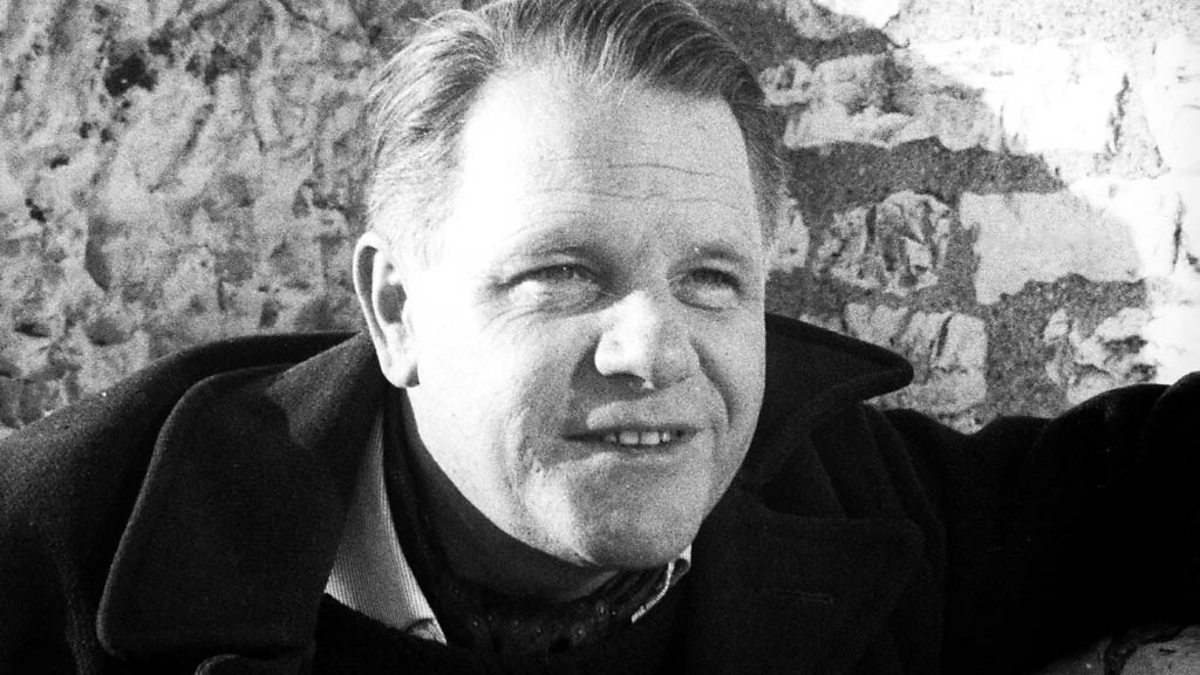
So you can probably imagine how much The House of Mirth means to me. It is one of the best books on the Modern Library list and it should have been ranked much higher. This is my favorite Edith Wharton novel, although The Custom of the Country is a close second. Just this year, I have purchased four copies of this book for friends, urging them to read it with every ounce of exuberance I can summon. And you need to read it too, if you haven’t already. This book is vivacious and brilliant and funny and utterly heartbreaking. I rooted for Lily Bart. I wept for her. Even when I knew her fate. She did not deserve her downfall. She is one of the great tragic heroines in all of literature, right up there with Emma Bovary, Dido, Anna Karenina, Ophelia, Bertha Mason, and Francesca da Rimini. Much like Muriel Spark’s masterpiece The Prime of Miss Jean Brodie, you can read this novel multiple times and always discover a new angle. That the rules of the game haven’t changed all that much in the one hundred and seventeen years since this classic was published is a great testament to Wharton’s sagacious and prescient genius. And if you finish this novel and you’re not in the “ride or die” wagon for Edith Wharton, then I’m sorry, but you simply have no literary taste.

Should Lily Bart be blamed for her fate? Conservatives (and privileged neoliberals) will likely condemn her for her apparent financial irresponsibility, but the peer pressure from her rich friends to gamble away vast sums she doesn’t have at bridge will be deeply felt by anyone who can recall the youthful horrors of trying to fit in. (In fact, I’d say the only contemporary writer today who could be an Edith Wharton in the making is the ferociously talented Adelle Waldman, whose excellent novel, The Love Affairs of Nathaniel P, mined similar territory. MacArthur people, are you listening? Award her a fellowship already! We really need to get her writing more books so we can find out!) And Wharton is exquisite in communicating to us precisely why Lily is so susceptible to social pressure from these higher-ups and hangers-on:

Her naturally good temper had been disciplined by years of enforced compliance, since she had almost always had to attain her ends by the circuitous path of other people’s; and, being naturally inclined to face unpleasant facts as soon as they presented themselves, she was not sorry to hear an impartial statement of what her folly was likely to cost, the more so as her own thoughts were still insisting on the other side of the case.

More than a century later, with the Dobbs Supreme Court decision and the Democrats’ failure to revive the Equal Rights Amendment serving as disheartening signs that a Handmaid’s Tale future could be in store for us, women are still pressured to be “good” and compliant. And while women have a lot more freedom today than they did in 1905, patriarchal conformity upheld through peer pressure has ensured that a lot of women silently endure such internal and external conflict.

Lily is lucky to have true friends like Carry Fisher (initially described as a “professional sponge” and “a mental habit corresponding to the physical titillations of the cigarette or the cock-tail,” but she turns out to be a hell of a lot more than this) and Gerty Farish (an indefatigable charity worker who doesn’t easily buy into any of the false charges eventually leveled towards Lily) when she eventually slips, but the affluent allure of the Trenors and their circle amaurotizes (and thus amortizes and possibly amouritizes?) her to the deadly puppetry of the Trenors and, most diabolically, the repellent and calculating bedhopper Bertha Dorset, whose doctors, we are informed, forbid “her from exposing herself to the crude air of the morning.” (Such a beautifully compact way of foreshadowing Bertha’s vampiric nature!)

Wharton was a master of gentle ambiguity nestling just beneath the surface of narrative clarity. The first time you read Mirth, you don’t buy Simon Rosedale’s mercy near the end. With his “small stock-taking eyes,” he’s little more than a bean-counting arriviste and his despicable tabulating also applies to people. (When Rosedale says, “I can’t help making love to you” to Lily near the end of the book, he’s basically every vulpine loser hitting a singles bar at 3 AM, scoping out the remaining women who haven’t gone home with anyone.) But the second time you read Mirth, you’re not so sure. Rosedale says, “The wonder to me is that you’ve waited so long to get square with that woman.” Can Rosedale be forgiven for simply being socially clueless? Is he a product of the system? And does his gesture actually mean anything? I’ll leave it to the capable writers of Jezebel and The Cut to argue the culpability of mediocre men.

Mirth‘s vast cast of characters tend to glom onto the split-second flourish of a socialite’s physical gesture to fuel gossip and umbrage. Consider the way that Mrs. Peniston is described as “the kind of woman who wore jet at breakfast.” But Wharton’s meticulous study of mercenary manipulators is far from vapid. She hoped to show that “a society of irresponsible pleasure-seekers…can acquire dramatic significance only through what its frivolity destroys.”

Perhaps one of the reasons why The House of Mirth is so authentically devastating is because Wharton was undergoing a great deal of stress as she wrote it. Her husband Teddy had just experienced a nervous breakdown and his erratic behavior was worse than ever. Her fiction was in demand and was being published everywhere, but her social calendar was spiraling out of control. Scribner’s editor Edward Burligname needed a serialized novel at the last minute after another writer had dropped out. And amazingly, Wharton produced this masterpiece in ten monthly installments, with Mirth appearing in publication before Wharton had even finished it (although the tale had gestated in her notebooks for at least five years under the working title “A Moment’s Ornament,” taken from a Wordsworth poem).

Scribner’s knew that it had a big hit on its hands and promptly placed sensationalist ads on the cover — packaging that Wharton objected to — when The House of Mirth hit bookstores in October 1905. The publicity forces also talked up Wharton’s social movements and, while Wharton was happy to have her novel read, she feared that her work would be seen as nothing more than a juicy gossipfest.

She need not have worried. The book was fiercely debated in various letters sections, with many wondering if Wharton was accurately portraying the leisure class or mercilessly skewering them for her own gain. And the robust discussion lent greater credibility to Mirth‘s considerable literary merits.

In her excellent Wharton biography, Hermione Lee has suggested that The House of Mirth can be defined by the presence of books within the book: largely decorative and untouched by few outside Lawrence Selden, the young lawyer who toys with Lily Bart’s need to land a husband. But Mirth can also be epitomized by the actors recruited to entertain the wealthy at Bellomont:

Indeed, so skillfully had the personality of the actors been subdued to the scenes they figured in that even the least imaginative of the audience must have felt a thrill of contrast when the curtain suddenly parted on a picture which was simply and undisguisedly the portrait of Miss Bart.

If all the world’s a stage, why then are we still susceptible to objectifying people? It’s actually quite astonishing how effortless it is to transpose the cruelty of class trappings to the casual character assassination that now passes for “truth” on social media. (As Wai-Chee Dimock has observed, Lily Bart spends most of the novel marketing herself, attempting to appeal to the highest bidder. This is not unlike the behavior of a comely Instagram influencer or, if we want to take Gus Trenor’s sinister insinuation on its face, an OnlyFans model willing to say or do almost anything to extract money.)

Many disgusting creatures in high places fancy themselves Lily Barts — even as they stab with the fierce sociopathic duplicity of Bertha Dorset. (On literary Twitter, there can be no better contemporary parallel to Bertha than the monstrous bully and largely mediocre writer Jennifer Weiner, whose relentless attacks on other writers are quietly circulated among those in the know and whose odious demands for “literary respect” were smartly captured by The New Yorker‘s Rebecca Mead in 2014.) They jockey for precarious perches to cleave to their careers while piling onto the week’s “main character” with gossip and lies. An otherwise innocent figure’s glaring mistake is used to perpetuate further prevarications and even those in the know, like Rosedale, will not lift a finger to salvage their own shaky ascent into a perceived predominance. Indeed, as someone who has been the target of multiple smear campaigns, I can report that a literary man of modest renown — a figure who once maintained a blog inspired by Wharton — treated me, when I was homeless, with the same false solicitude that Rosedale tenders to Lily Bart in the final crushing pages of The House of Mirth. He strung me along with phony plaudits about my writing talent and he offered me the sham promise of a prominent magazine gig that I would have killed to land at the time. He was not unlike Rosedale. Indeed, like all of Wharton’s socialites, he inevitably deemed me invisible — likely with a cognizant irony. It is doubtful that I will ever forgive this motherfucker for tinkering with my dignity and my then shaky self-respect to delude himself into thinking that he was a “kind and decent man.”

So Lily Bart’s awful and needless plunge into the abyss resonates deeply and painfully with me. Today I am tremendously grateful to be gainfully employed, doing what I love, tackling new creative mediums, and to be very much alive. That there are so many “influencers” who hold this book up without comprehending or practicing its emotionally instructive lessons about the need for empathy says everything about the vicious myopia of the contemporary literary world, which now thrives on stubbing out noisemakers and ruining outliers. They cancel anyone with an even remotely disagreeable opinion and they murder anyone who stands in their way of their self-serving and meretriciously earned “success.” Cutthroat capitalism and opprobrious opportunism at its finest! Edith Wharton had her finger on the pulse of 1905 life. And sadly 2022 life.

Next Up: Sinclair Lewis’s Main Street!

The Alexandria Quartet (Modern Library #70)

(This is the thirty-first entry in the The Modern Library Reading Challenge, an ambitious project to read the entire Modern Library from #100 to #1. Previous entry: A High Wind in Jamaica.)

In a previous life, when talent and bonhomie mattered more than sad resentful ciphers dedicating their wasteful energies to demolishing rivals on social media, I had the great privilege to interview authors. I once made a northeastern trek by train to talk with a literary titan — a formidable essayist, a first-rate fiction writer, and a mischievous wit with a bright high voice who is still blessedly alive and who remains quite undersung today. After I pressed the square STOP button on my bulky black recording unit, we got to gabbing for two more hours off-tape — an act of generosity that stunned my companion and me. The author surprised us by confessing that she had played the then-in-vogue Angry Birds and we discussed the literary classics that young people read (or, more frequently, neglect). She was very likely picking our unweaned and less wiser brains in that pre-Trumpian epoch when, even then, declining erudition was a growing pestilence, as it wasn’t all too often that she had the company of young strangers at her long refectory table, which was punctuated by a plate of store-bought cookies that no one touched. The first name that this author mentioned was Lawrence Durrell.

“Does anyone even read him anymore?” she asked.

Neither my companion nor I had read a single word of this almighty author at the time. As I was to learn only in the last few months, I missed the teenage ritual of diving into Durrell by about five to ten years. Justine, Balthazar, Mountolive, and Clea. These were the four volumes read by an impressionable generation just before me. My older literary friends describe soaking up Durrell’s words with wide and voracious eyes around seventeen — just before they joined the less exclusive liturgical practice of tossing their tasseled caps into the heavens preceding the uncertain foray into higher education and the newfound duty of negotiating injurious capitalism (clearly not redeemable by taxation these days, contrary to sentiments expressed by the novelist Pursewarden in Mountolive).
Now that I have finally read the mighty quartet — with its gorgeous sentences, its exotic vernacular (which caused even a rhapsodic word nut and undefeated Wordle regular like me to make repeat trips to the dictionary), its bold meditations on “modern love” (a term of art regrettably coarsened by the New York Times‘s often vapid essays and an even more vacuous television offshoot) and intertextuality (most notably, Balthazar‘s Interlineal), its vast tapestry of unreliable narrators and colorful characters (many marked by disease and disfigurement and, most tellingly, the absence of eyes; the number of one-eyed characters throughout the Quartet greatly overshadows the sum of spastic dancers you’ll find in any Brooklyn nightclub on a Saturday night), and the hypnotic and baleful city at the center of all these proceedings — I am frankly kicking myself for not getting around to it much earlier. My reading experience was a true coup de foudre.

This tetralogy is clearly one of the 20th century’s greatest literary achievements. I suspect, as I crest closer to the age of fifty and reckon with surprising strains of unsummoned maturity that have often bemused me, that this was the last possible moment of my life in which I could have supped upon Durrell with an eager appetite. There are only a handful of living writers whose command of the written word beckons you to slow down and imbibe the text ever so delicately — much like a pied crested cuckoo leisurely supping on drops of rain water. Of Alexandria itself, we learn of warm winds that strike against the cheek as “soft as the brush of a fox” from an enchanting near-phantom city “whose pearly skies are broken in spring only by the white stalks of the minarets and the flocks of pigeons turning in clouds of silver and amethyst; whose veridian and black marble habour-water reflects the snouts of foreign men-of-war turning through their slow arcs.” Even if one is blind and cannot see the Nile’s adjacent estuary, there is eldritch life within the “gloomy subterranean library with its pools of shadow and light,” where “fingers [move] like ants across the perforated surfaces of books engraved for them by a machine.”

Shallow word-wasters have abseiled down the other side of once robust parapets with evermore ubiquity these days, emboldened by the narcotic allure of likes and follows rather than the purer and more rewarding journey set by the instinctive tempo of their distinct voices. But Durrell (whose name rhymes with “squirrel” and not the inexact “laurel,” as I have unknowingly mispronounced for decades) is very much on the level. Given the astronomical prices of his non-Alexandria volumes online — despite a well-received four season television series on the Durrell family in recent years and an enthusiastic nonprofit society sustaining a cheery and active Twitter presence — it appears likely that Lawrence Durrell is fated to be forgotten. All writers, of course, have their time and eventually fade into the sunset. Very few of today’s readers speak of Naipaul, Ford Maddox Ford, John Dos Passos, or even Anthony Burgess anymore. For some of these plodding stampeders now collecting well-earned dust in used bookstores from here to Gehenna, there is sturdy raison that only a handful of graying hangers-on will dispute. (Besides, what kind of giddy and obsessive bastard reckons with ancient canons when one is regularly unsettled by the cannonades of apocalyptic headlines and the high probability of a third world war? An increasingly shrinking number these days, easily a hundredfold more minuscule than the combined tally of all who still collect vinyl and Beanie Babies.) But in Durrell’s case, this feels like a notable criminal oversight. Particularly since crossing the four book Rubicon was, not so long ago, a vital rite for any stripling with unquenchable curiosity.

It all starts with an unnamed Irishman (whose name is revealed to be Darley a few books later) in exile on an island with a child, recalling his passionate affair with a woman named Justine.  Justine is married to a distinguished Copt diplomat named Nessim.  Before that, Justine had been married to a tyrannical French national and that life has been captured in a book called Moeurs written by some guy named Jacob Arnauti. Intertexuality and the struggle to make sense of ineffable feelings through words (or even the words from another committed and capricious chronicler) is very much a Durrell motif.  Darley has abandoned a devoted and far too patient dancer named Melissa for the sake of this seemingly distinguished affair.  There is also a mysterious painter named Clea, who smartly tells Darley, “Love is horribly stable, and each of us is only allotted a certain portion of it, a ration. It is capable of appearing in an infinity of forms and attaching itself to an infinity of people.”

But what if the “love” that Darley feels has not been reciprocated in the way that he has believed? Durrell’s second volume, Balthazar, calls into question all the events of the first volume, with Balthazar himself (a mystical Jewish doctor who is involved with the Cabal) arriving by sea with an annotated version of Darley’s manuscript.  The third volume, Mountolive, not only expands these angsty escapades to the vaster canvas of surprising espionage developments that often crackle with the griping momentum of a John le Carre novel, but reveals the tableau from the third-person vantage point of the titular diplomat, where we not only learn that Nessim has an unhinged brother named Narouz, but that Mountolive himself is mad about their mother, Leila. Finally, in Clea, we return back to the narrator Darley, five years after the Rashomon-like events of the first three volumes. The Second World War now unsettles the city. And the characters we have been rapturously following are still trying to make sense of the events that have happened, but what living now encompasses. Which is not all that removed from today’s practice of doomscrolling, dodging new variants, and submitting one’s deltoid for yet anther booster shot. As Darley himself puts it:

I am hunting for metaphors which mighty convey something of the piercing happiness too seldom granted to those who love; but words, which were first invented against despair, are too crude to mirror the properties of something so profoundly at peace with itself, at one with itself.  Words are the mirrors of our discontents merely; they contain all the huge unhatched eggs of the world’s sorrows.

Amazingly, Durrell wrote Clea in four weeks.

It may seem from my description that Durrell was merely a relentless brooder, but he was often quite witty with his pen. Biographies from Ian MacNiven and Gordon Bowker both depict Durrell’s obsession with the great P.G. Wodehouse.  And Durrell fueled these comic energies in humorous stories about a diplomat named Antrobus.  While the tableau of Scobie cross-dressing as Dolly Varten in Balthazar possesses the dowdy feel of an entry in the Carry On film franchise, Sir Louis’s eccentricities in Mountolive could almost be interposed to an Evelyn Waugh novel:

Within the last year, and on the eve of retirement, the Ambassador had begun to drink rather too heavily — though never quite reaching the borders of incoherence. In the same period a new and somewhat surprising tic had developed. Enlivened by one cocktail too many he had formed the habit of uttering a low continuous humming noise at receptions which had earned him a rather questionable notoriety. But he himself had been unaware of this habit, and indeed at first indignantly denied its existence. He found to his surprise that he was in the habit of humming, over and over again, in basso profundo, a passage from the Dead March in Saul. It summed up, appropriately enough, a lifetime of acute boredom spent in the company of friendless officials and empty dignitaries.

One reason why Durrell’s voice is so distinct on the page — and why it has been so inimitable since (only Malcolm Bradbury and Roger Angell have attempted Durrell parodies, with unsustainable and ineffectual results) — is because he needed a fellow outlier (specifically, Henry Miller) and a commitment to impropriety and originality to get there. Indeed, as Durrell himself observed in a January 12, 1972 appearance at UCLA, his febrile dilettantism was his lodestar:

But it seems that every writer need a kind of placental relationship with another writer to approve of him and to help him. To reassure him. And it seems very curious how they come up in doubles in such very dissimilar people. I’m very frequently asked, “How could a writer like you admire Miller? And what on earth could he see in you?” The second question is difficult, I know. But a friendship is not qualified by the actual material one produces. And in our case, what we had in common was an unprofessional attitude to literature. In other words, neither of us were really interested in literature. Nor was Anais Nin. We were interested in other things. That is to say that we were not professional litterateurs. And we didn’t think professionally about writing. Writing, for us, was a kind of windscreen wiper which might help us to look ourselves in the eye a little more clearly. To liberate ourselves or to realize ourselves. In other words, our occupation was not literary, but philosophic really.

The journalist Peter Pomerantsev has suggested that Durrell only appeals to “the ‘cross-patriates,’ the hyphenated.” And he may very well be right. As a writer, audio producer, journalist, theatre producer, radio dramatist, sound designer, performer, voiceover man, TikTok microinfluencer (this still puzzles me),  and (just weeks ago) soundtrack composer, it’s becoming increasingly harder these days to find people who aren’t so singular and unadventurous in their passions and interests. As Cormac McCarthy has said, “Of all the subjects I’m interested in, it would be extremely difficult to find one I wasn’t. Writing is way, way down at the bottom of the list.” Those of us who find joie de vivre in living as widely and as fulsomely as we can are increasingly becoming exiles like Darley.

It’s also difficult to fathom the lion’s share of today’s emerging writers being driven by the same impetus. One’s individuality is now drowned out by the unceasing firth of social media’s brackish tide, its morass of groupthink. The urge to please, to install one’s self as some influential pinnacle who plays it safe, is diametrically opposed to the noble pairing of future artists who can provide mutual succor, possibly shaking the very foundations of an increasingly stodgy medium that rewards uninventive bougie hokum and shameless mimesis. Inimical idiocrats with such stultifying surnames as Athitakis, Ulin, Kellogg, Kachka, Kreizman, Miller, Grady, Romano, Freeman, and Schaub regularly stump for what Durrell identified (through his novelist character Pursehaven) as “the ancient tinned salad of the subsidised novel.” All of them, unlike Durrell, will scarcely be recalled by anyone fifteen years after they pass. They will live out their dull and unadventurous lives and take out their parasitic resentiment on true originals with pablumatic “hot takes” that are largely mercantile and self-serving. Having abdicated their sense of humor sometime in their thirties or forties, and expressing little more than a perfunctory interest in other things, these egregious weasels continue to wage war on any dazzling lights casting a lambent heat upon their cold and cozy conformity. And contemporary literature is lesser for it.

So it becomes increasingly urgent these days to not tuck true talents like Durrell into the granules of forgotten history. Literary achievement is consummated by puckish punks who stand against the boring norms, by young writers who pay close attention to the dazzling output of all the eclectic outliers who presaged them and who summon the instinctive effrontery to pick a crucial and principled fight in the mystifying battles against misfits.

Next Up: Edith Wharton, The House of Mirth!

The Tyranny of Henry James: A Conversation with Dinitia Smith

I have read The Golden Bowl three times. I have read The Ambassadors three times. I have read The Wings of the Dove once. Despite these good faith reading efforts, I have detested Henry James — particularly late Henry James — with the force of a thousand suns. I find his interminable sentences to be tedious. I find his behavioral observations to be superficial. I would much rather be locked in a room with a garrulous chowderhead for a three-day weekend than deal with this hideous “Master” in any form.  In short, I cannot stand Henry James.

Unfortunately, I’m in something of a pickle. You see, because of my years-long Modern Library Reading Challenge project, I am fated to read those last three triple-deckers written by James at some point in the next few years.  And I am a man of my word.

And because I possess a highly stubborn temperament, I started contacting people who were obsessed with Henry James, hoping that they might be able to help me.

Thankfully, there was succor from an unanticipated source! When novelist Dinitia Smith heard about my Henry James problem, she swiftly offered to help me see the light. She had, after all, written The Prince, a modern day retelling of The Golden Bowl. What follows is a modest excerpt from our lengthy conversation, which occurred, rather fittingly, in the early days of Russia’s invasion of Ukraine — a point where nearly everyone in the world was in a moribund mood. The full podcast of my conversation with Smith (as well as my good faith efforts to overcome Henry James’s tyranny) will be released sometime in the next week.

CORRESPONDENT: So there are two reasons why I’m talking to you. First, and most importantly, I’m here to unpack your book. Second, I have a problem with Henry James. I have tried. I have read him repeatedly. And he just doesn’t stick. And maybe one good way of initiating this conversation is to discuss what the appeal of Henry James is for you and how you approached writing this book [The Prince] with the so-called “Master” – what a debatable label!– in mind?

SMITH: Alright, I’ll begin with why I chose to do this.  And I’ll discuss with you — or tell you my feeling about Henry James. First of all, Henry James — as his career reached a kind of end — his last three books were very, very difficult books. The most difficult was the book, The Golden Bowl, which is his last complete novel. And it is difficult. Now I read Henry James in a certain way. I read him almost as if it were poetry. Um, it’s not. I don’t see a linear form in this. The last three novels, actually, are told from the point of view of the characters’s consciousness. Mostly they don’t speak very much. So the appeal? First of all, the difficulty I admit. And there is almost no novel as difficult as The Golden Bowl. But what appealed to me about The Golden Bowl is that it is about secrets. James’s novel is about a wealthy family with terrible secrets and it fascinates me how they solve these secrets.

And from that, I took my own novel. I borrowed the outlines of James’s novel for The Prince. And I then transferred that story to the 21st century. And, by nature of having been a journalist, I write in what could be called ordinary English. So my novel was very different. The Prince, in style, is completely different.

CORRESPONDENT: Oh yeah. And I noticed that, in the first third of the book, you made this attempt to mimic Henry James’s sentences. You had the commas and the clauses and all that. But you were also mercifully brief. You didn’t have page-long sentences. And, as the book carried on, I noticed that you increasingly drifted away from this style. I’m wondering: Was this an attempt initially to write a pastiche? What happened here?

SMITH: Very, very good question. First of all, in The Prince, I wasn’t aware of mimicking his style. I thought the style — even at the beginning of The Prince — was fairly ordinary.  I do go inside the character’s head a lot. I tell you what he or she is thinking. We see that with the character of the Prince, for example, at the beginning of the book. But I will tell you that, in the past, when I have been reading a lot of James and doing my own work, his style infects me. And I have to stop myself. But here I was very conscious in The Prince of telling a story in our time. And I love a good story. And that’s what interested me about my own book.

But Henry James – early James — is much easier to read. Late James, you have to decide that you’re just going to read this like poetry. Meaning certain words and phrases will stand out buried in very long sentences and paragraphs.

And you pick those out. Also, in Henry James, in The Golden Bowl, there is this element of mystery. You’re looking for meaning in this. I really didn’t have that in my novel, The Prince. What was pushing the novel forward was an illicit relationship between an impoverished Italian prince and his old girlfriend, while he is married to a very wealthy woman, and what happens in this love affair. Because this woman who he eventually has an affair with marries his father-in-law. The novel is about what happens when these secrets come to the surface and how the family — the wealthy patriarch and his daughter — solve this problem and what they know.

One thing I borrowed from James was the whole notion of gradual awareness and not wanting to admit what you see. As as someone once said, love is about not knowing and acknowledging. So I used to write this novel.

CORRESPONDENT: Well, you know, I actually did reread The Golden Bowl before this conversation. I spent two days rereading it. I nearly lost my will to live, but I did reread it. One criticism I have of The Golden Bowl is that these characters talk about nothing other than the marriages of the other characters. And it’s this incredibly annoying gossipfest.  Particularly with the Assignhams, who are just annoying as hell to me. I mean, just shut up! It’s like I’m stuck on vacation, listening to these people gabbing — with that terrible dialogue and those terrible sentences. They don’t have anything else going on with their lives!

But in your book, you have Federico, who’s the Amerigo of your book, playing music in a band. He’s smoking pot. You have Emily, the Maggie Verver of your book, talking about taking classes, signing up for Teach for America. There’s a prenuptial agreement. There’s some concern with the President speaking about North Korea. I have to thank you for making your book readable.  Unlike Henry James. Because it’s actually realistic — the so-called mystery. And then you have the father-in-law, Henry, checking out the, the Charlotte character, Christina. And it’s far more plausible when it comes to human behavior, as far as I’m concerned. It seems to me that you were aware that Henry James was a bit one-note when it came to the reality that people have lives other than gossiping. You know what I mean?

SMITH: Yes, I do. Because, rarely in Henry James, do you encounter a character who actually has a job. Very rare.

CORRESPONDENT: I know!

SMITH: And a lot of this is because James was a precursor of what we call modernism. So a lot of this takes place within the consciousness of the characters. But there is that element. There’s a muffled quality in his books. You do get a sense of these grand houses, but in my book I actually had fun in The Prince, creating these grand houses in more vivid terms.

CORRESPONDENT: And thank you for that. Because The Golden Bowl is anything but fun.  I would not call these muscled sentences. I would call them, “Hey, you can say this in one third of the length, buddy!” You know?

SMITH: Well, you know, Ed, you’re not in the minority here. There are very, very literary people who have trouble with that book. In fact, William James — Henry’s brother.

CORRESPONDENT: Yes! He’s much better.

SMITH: He hated the book.

CORRESPONDENT: William James. I love! I have no problem with him. I love Thackeray. I love Dickens. I love Tolstoy. I love all of these great pre-modern novelists. But it’s Henry James who just makes me want to asphyxiate something. I mean, the last time I reread The Ambassadors — I kid you not! — I had a nightmare in which I was strangled by the sentences of James and I woke up in a cold sweat. So how can you help someone like me who wants to like Henry James? And I do like the early Henry James. But late James? This guy is a drunk at a bar, except he’s a little bit more highfalutin. He’s rambling incessantly. For God’s sake, just shut the hell up!

SMITH: You know, you’re making me laugh very hard. First of all, you mentioned his class structure. This is relevant to my novel, The Prince. In his novels, as I said, nobody ever has a job. They always take place on estates or in grand houses or plots. They rarely take place in the United States. There are scenes in the United States, but usually they move to Europe. He was writing about maybe the second generation of the robber baron class — the antecedents of those people, the rough, tough people who built the railroads.

And then they had offspring who became more educated. Who began to collect art — much like the father figure in my novel, The Prince.  So there is that truth. And I had a background as a filmmaker, which made me more interested in scenes.

CORRESPONDENT: I went to film school myself. So maybe you and I can find a common point? How does a film mind grasp the portentous length of Henry James’s oppressive sentences?

SMITH: You’re making me laugh as I discuss this. And I want to tell you you’re not alone. Maybe people will read my novel, The Prince, to get a sense of what his novels were about.  Because what I borrowed from James is essentially the structure and the ideas. My character — the wealthy father — is a descendant of the robber barons.  But, at this point, he’s gone to law school and he’s very conscious of his wealth and he becomes a public interest lawyer and he does very good things. Although he moves like this, you the wealth is in the air. He birthed his daughter, who is one of the characters in my novel.

Emily is her name. She did go to a very good school. She is smart, but, in that environment, she has had to hide her intelligence to some extent. So she’s a certain kind of woman you find in that world. But this was part of my effort to give life to these people, that perhaps is lacking in James. Although I do love Henry James.

CORRESPONDENT: Clearly. It’s very clear reading your book that you are a Henry James nerd. And that’s great! But at the same time, you are also very honest about Henry James’s fallacies.

SMITH: Yes, I think I am. You have to understand that, in writing The Prince, I spent one year rereading The Golden Bowl taking it apart.

CORRESPONDENT: Wow! How many times did you reread it?

SMITH: Well, in this case, because I was looking at it with the idea of writing a novel, it was probably one reading.  But I went back to certain chapters. I sat on the couch and read through Henry James. I was examining it, thinking about what each chapter in my own novel, The Prince, could be.

Thinking about how I could make these characters. There are certain elements in The Prince that are a continuation of James. For example, many wealthy descendants of the robber barons.  Think of the Rockefellers or the Vanderbilts. They collected art. They made art museums or started them.

And I put that into my novel. We know in Henry James that he is going to involve himself in art. So I was interested in how this would happen with the new generations — in regard to the Rockefeller family, which is a good analogy.

I know immensely wealthy people who are very private about their wealth.  But in the Rockefeller family, the newest generation — or the generation that’s in their sixties and seventies — they became doctors and environmentalists. They had to live with the weight of the original Rockefeller, who was not a very nice man.

So that interested me.  It was fun to create a world.  In The Prince, I borrowed the notion of a private island   It’s sort of primeval place, which was fun.  And I created a house for each of them. I actually researched the decor these houses might have had.  Because these houses are a lot bigger than my house!

CORRESPONDENT: I’m getting the sense that you actually did more research on the robber barons of the Gilded Age.  More so than looking to The Golden Bowl itself. Would that be safe to say?

SMITH: Absolutely.

CORRESPONDENT: That would explain why your novel is readable! And Henry James’s The Golden Bowl is not! (laughs)

SMITH: Well, thank you. For The Prince, I should tell you that my husband is an historian.  He wrote a biography of Andrew Carnegie. And from that, and discussions with him, I learned a great deal about the robber barons.

CORRESPONDENT: Oh yeah. Ron Chernow’s The House of Morgan is great too.

SMITH: Yes! Oh my. Yes. Very, very. And there have been biographies of Frick.  None of these guys were very nice.

CORRESPONDENT: Well, you had to be a bit of a dick in order the hoard all that wealth, right?

SMITH: Not only that, but to gain the wealth.  When you think of Frick and the strike. The Homestead Strike, where, you know, he called the Pinkertons on these people.

CORRESPONDENT: Yeah!

SMITH: Some people died and Carnegie was a participant. I have met some descendants of the Carnegie family. They couldn’t be more different from him.

CORRESPONDENT: They actually had a heart. That’s good to know.

SMITH: Yeah. Right. It was fun to create this private island. I was outraged that somebody could have a private island that big in the middle of the Long Island Sound!

I used research about a place called Gardiners Island — this huge place that belongs to the Gardiner family, which I had visited. So in the middle of the Long Island Sound, which is filled with boats and with some pollution, there is this primeval place with trees, an old manor house, and beautiful wildlife.

And so this purity is analogous to the purity of my character, Emily, in her realization of what’s going on.  A lot of this novel — my novel and James’s — is about her growth. And the solution to this problem, which I’d rather not give away, is almost monstrous.

CORRESPONDENT: Going back to the whole Henry James problem, here’s the thing. Right now, I’m actually going through all of Edith Wharton. And I love her. I love her. I have no such problems with her. She’s amazing. The House of Mirth. The Age of Innocence. All those ghost stories. She depicts class far more intelligently and far more subtly and with far greater nuance than Henry James. And not only that. I have to ding Henry James for taking ten years to befriend her after Edith Wharton was saying, “Hey, Henry! I love you!” And then he takes ten years and does that false modesty thing. Please give me a reason why I should give Henry James another shot. You talk about the mystery and the ambiguity. I look at his sentences and honestly I see something that is completely on the nose. I don’t see characters here who have the great vivacity of Lily Bart from The House of Mirth or any of these other great classics of that era. You know?

SMITH: Well, you know, I have to agree with you in some bizarre way. I love Edith Wharton. Of course they were friends. They became friends. He was kinda snotty about her first short story. But they became very close. She admired him so much. But I think you’re right in some way.  With regard to The Golden Bowl, the only way to see it is as a mystery. But you have to go through these filaments of language and find the truth underneath it.  And you have to have a taste for it. And I happen to like being surrounded by the miasma of Henry James,  But Wharton is a great, great novelist.  She tells you a story in plain English that you can lose yourself in. And I think human beings love stories. They tell stories every day. And my primary goal as a novelist is to tell a good story. So let’s just say that Henry James is a hobby of mine that not everyone shares.

CORRESPONDENT: I know. And look, I want to cultivate this taste, Dinitia, but I am having incredible difficulty with this late period — especially these last three novels. To me, Henry James is the most offensive mansplainer in all of American literature. Am I just missing some DNA that will allow me to appreciate Henry James? Come on!  Stump for this guy for me!

SMITH: You make me laugh. I’ve learned as a novelist — and as a sort of literary person — just how many of my literary friends don’t like certain authors.

For example, I tend to not like a lot of contemporary novels, which are kind of postmodern, fragmentary, and usually about a woman with a husband betraying her.  Or who doesn’t like her children. I think we can all be forgiven for not liking these novels, which are very, very successful right now.

But I think we all can be forgiven. I might discuss books with my friends and discover. There are certain authors that they just can’t abide by and they are very talented. I’ve learned to forgive myself when I find the authors that I don’t like.  I suggest you forgive yourself and leave them alone and read Edith Wharton!

A High Wind in Jamaica (Modern Library #71)

(This is the thirtieth entry in the The Modern Library Reading Challenge, an ambitious project to read the entire Modern Library from #100 to #1. Previous entry: A House for Mr. Biswas.)

Richard Hughes’s A High Wind in Jamaica is the wild and bracing corrective to William Golding’s Lord of the Flies (forthcoming at ML #41) that I never knew I needed. Truth be told, the two books I am least looking forward to revisiting during the course of this ridiculously ambitious and time-consuming project are J.D. Salinger’s A Catcher in the Rye (forthcoming at ML #64) and Lord. Both novels meshed with me when I was an impressionable high school kid who didn’t know any better, but I have assiduously avoided rereading both volumes as an adult — much in the way that you hang down your wiser and more mature head over some of the dodgier cartoons you advocated as a child. (For the record, in my adulthood, I still abide by The Rocky & Bullwinkle Show, the decades-long catalog of Warner Brothers cartoons, and — if you get me on the right day — Robotech and Star Blazers.)

Thankfully, I had no such qualms with High Wind; in large part because, unlike Golding, Hughes isn’t so obsessed with plugging in values — the novel as a Sudoku puzzle? — to uphold his Great AllegoryTM (and thus literary posterity). The older you get as a reader, the more you welcome the fresh shock of the visceral: those exotic and sometimes unsettling voices you may not encounter in the real world.

Hughes was twenty-five years ahead of Golding when it came to writing a novel about children losing their civilized patina as they travel deeper into the wild and aberrant vales of anarchism (in this case, by dint of a ragtag gang of pirates). But his exquisite command of atmosphere shows that he was arguably more subtler than Golding, permitting the transformation of his children to become something of a shock in part due to the great care he took with his prose. High Wind was one of only four novels that Hughes wrote. (And aside from High Wind, I especially recommend In Hazard.) He was more of a playwright, a poet, and a journalist than a fiction writer — in large part because the lapidary approach he took with his sentences significantly slowed him down. But despite his bradykinetic progress, High Wind proved to be such a literary sensation that it turned Hughes into a notable figure saddled with controversy, literary renown, and even a modestly burgeoning financial cushion.

The novel’s setup involves the Bas-Thornton children, who flirt with feral wonders in the Jamaican wild when not relishing their privileged comforts at a plantation named Ferndale. A storm devastates their idyllic paradise. And as they sail back home to England, the children are scooped up by pirates.

When the pirates do board the ill-fated Clorinda (complete with Captain Narpole sleeping through the whole imbroglio, saving face later with a devastatingly bleak letter of lies), Hughes is crisply fastidious about describing these interlopers against type:

With this second boatload came both the captain and the mate. The former was a clumsy great fellow, with a sad, silly face. He was bulky; yet so ill-proportioned one got no impression of power. He was modestly dressed in a drab shore-going suit: he was newly shaven, and his sparse was pomaded so that it lay in a few dark ribbons across his baldish head-top. But all this shore-decency of appearance only accentuated his big splodgy brown hands, stained and scarred and corned with his calling. Moreover, instead of boots he wore a pair of gigantic heel-less slippers in the Moorish manner, which he must have sliced with a knife out of some pair of dead sea-boots. Even his great spreading feet could hardly keep them on, so that he was obliged to walk at the slowest of shuffles, flop-flop along the deck. He stooped, as if always afraid of banging his head on something, and carried the backs of his hands forward, like an orangutan.

Much as Knut Hamsun seemed to anticipate the hardboiled existential feel of Jim Thompson and James M. Cain in 1890 (thank you also, late and great translator Sverre Lyngstad!), so too does Hughes depict the professional working-class criminal just before the gaudily garbed grunt became a staple of noir. These pirates do make a perfunctory effort to look presentable (the captain — later revealed to be a Danish German-speaking ruffian named Jonsen — has gone to the trouble of shaving and pomading what is left of his hair), but they are also makeshift in their sartorial choices. Hughes’s beautiful choice of “dead sea-boots” suggests something vitiated and unholy at work here. (Indeed, one of the buyers who unloads the booty is a vicar, described as “less well shaved than he would have been in England.” Later, a warped nativity play is performed to entertain the pirates. Even later, the song “Onward, Christian Soldiers” is evoked in creepy fashion.) And Jonsen’s desperate attempt to keep his fancy bespoke slippers on — coupled with the telltale pocks of his aloof hands, which resemble a spastic animal — is just one of many examples of the dry exacting comedy that Hughes doles out gently throughout this deranged adventure tale. There’s also a mysterious first-person narrator serving almost as a cosmic god offering mordant asides. Indeed, the standoff between Marpole and these thugs reminded me of the “civilized” exchange between Barry and the highwayman in Kubrick’s Barry Lyndon. (In Barry Lyndon, Kubrick also had a sardonic narrator in the form of Michael Hordern’s arch commentary, which also dished up bone-dry asides on how we are all barely disguised animals beneath the human sheen. Was Kubrick familiar with Hughes? We may never know, although it is worth noting that a young Martin Amis did appear as one of the kids in the 1965 film adaptation of Hughes’s novel.)

Yet the look of these pirates is enough to ignite a modest crush within Margaret, one of the children, who marvels at their beauty. In an age in which television shows like Euphoria and high school cinematic classics like Fast Times at Ridgemont High or Ferris Bueller’s Day Off are heralded for using transgressive behavior to depict teens as “adults” (one can likewise see this approach nimbly executed in Megan Abbott’s more recent novels, which have used this storytelling device by framing kids through the subcultures of ballet, cheerleading, and hockey), it’s impossible to overstate the big risk that Hughes took here in 1929. During the hurricane that plagues Jamaica, Hughes also foreshadows how living in a state of nature can inevitably subsume anyone — even a child — by having a domesticated pet named Tabby ruthlessly chased by wildcats.

You will, alas, have to contend with the novel’s appalling and off-putting racism (“there is, after all, a vast difference between a negro and a favorite cat,” writes Hughes when both die after a hurricane and there is a cruel treatment of a monkey on the high seas, which suggests an unsettling metaphor). But the sheer weirdness that forms the backbone of this sweeping story swiftly atones for these hoary and horrendous “cultural values.”

High Wind is also the first recorded instance of the Hangman’s Blood, a cocktail later favored by Anthony Burgess. Seventeen years ago, I persuaded a bartender in the Upper Haight to make me this famous libation. It was, I am sad to report, quite ghastly. I never tried it again. Hughes himself also understood what a hideous mix it was, describing it as possessing “the property of increasing rather than allaying thirst, and so, once it has made a breach, soon demolishes the whole fort.”

Subconsciously, too, every one recognizes they are animals — why else do people always laugh when a baby does some action resembling the human, as they would at a praying mantis?

The children adapt to their new life much like many of today’s bored kids stare into the vacuity of their digital screens for constant stimulation. When one of their number dies, Hughes eerily notes how quickly accustomed they become to an empty bed. When Jonsen withholds the “three Sovereign Rules of Life” on the basis of their youth, Edward replies, “Why not? When shall I be old enough?” Indeed, reading High Wind in 2022 is rather eldritch, particularly in the shock of recognizing such everyday behavior among children today. Hughes does not shy away from how boredom can turn kids unruly and mischievous quite fast. Margaret speaks “with an eagerness that even exceeded the necessities of politeness in its falsity.” When the first mate attempts to inveigle the kids by mentioning a famous pirate named Rector of Roseau, the children quickly see through the superficiality of the apocryphal origin story, puncturing the first mate’s plot holes faster than the Comic Book Guy on The Simpsons. And the children strike back, with Hughes even describing a corporeal awakening among Emily.

I certainly don’t want to spoil how the kids transform. But it is subtly disconcerting, with a clever nod to the Flying Dutchman. We are left to wonder whether this particular group of kids was fated to turn out this way, even if the pirates had never kidnapped them, or if feral circumstances shaped their transmutation. Hughes, to his credit, lets the reader off the hook somewhat with this aside, pointing to how children are regularly underestimated:

Grown-ups embark on a life of deception with considerable misgiving, and generally fail. But not so children. A child can hide the most appalling secret without the least effort, and is practically secure against detection. Parents, finding that they see through their child in so many places the child does not know of, seldom realize that, if there is some point the child really gives his mind to hiding, their chances nil.

Given how problem children have been a pain in the ass for so many parents over the years, it’s rather surprising that it took so long for literature to point this out. Hughes’s immaculately written masterpiece — complete with its alligators and earthquakes as odd forms of fierce incitement and its wry asides about our assumptions about children — was one of the first major works of fiction to interrogate this discomfiting truth. And, even today, A High Wind in Jamaica is a bold and welcome reminder that kids are not to be underestimated. In an epoch in which moronic milquetoasts ban Maus from classrooms for the most arbitrarily intransigent concerns (just read the meeting minutes), High Wind — complete with its chilling final sentence — is a swift kick in the ass to the cowardly and unadventurous sensibilities that prevent us from being honest about what anyone is capable of becoming and how so many of these disturbing possibilities hide in plain sight.

Next Up: Lawrence Durrell, The Alexandria Quartet!