Review: Rubber (2010)

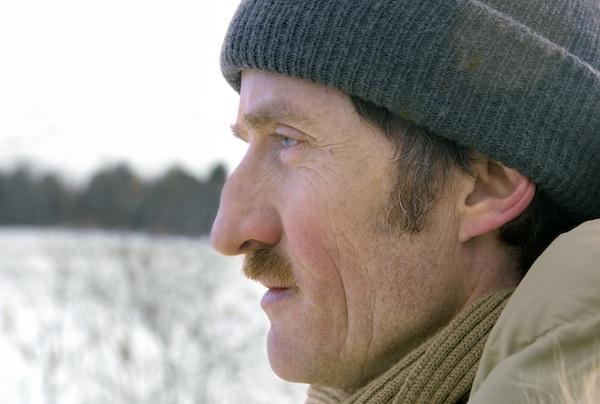
Quentin Dupieux’s latest film, Rubber – not to be confused with a effervescent sex education film – is not for the uptight analytical type who needs to know the precise motivations of a sentient tire (credited here as Robert) emerging from dead detritus in the desert, rolling over spiders and scorpions in the early minutes of his revitalized life, developing telekinetic powers that involve vibrating its body piles violently and causing distant objects to explode, and then using these same powers to go on a murderous rampage. But don’t let these eccentricities fool you. Rubber is a quite pleasant and deceptively pointless picture that did have me wondering why Dupieux – an electro musician turned filmmaker – did not attempt to get Goodyear to bankroll the whole of his meager budget. (Perhaps Dupieux has issues with product placement. I did notice Mountain Gust enjoyed by one character.)

When Robert (actual name for the tire or name for the character?) isn’t enjoying these homicidal activities, the tire watches television, stares at nude women taking showers, plops over sideways every so often for a nap, and rolls into a swimming pool. Discounting Robert’s need to kill people, such behavioral range suggests that Dupieux has closely observed the average American male. Lacking the orifice to enjoy a cerveza in the desert, Robert instead uses his considerable energies to cause human heads to explode. Rather curiously, Robert doesn’t require an air refill at the gas station, presumably because there is enough hot air contained within the film’s story to sustain him.

If the film’s premise recalls the sack awakened by a long pole in Samuel Beckett’s Acts Without Words II, then the presence of spectators within the film, all observing the tire narrative from afar and gradually starved by the folks putting on the show, suggests an homage to Augusto Boal. I don’t believe the Theatre of the Oppressed was especially keen on turning its audience into a bunch of starving animals wolfing down a turkey – a suitably carnivorous image we see midway through the film. After all, if we’re going to be equitable about the artistic experience, shouldn’t we have starving audiences in addition to starving artists?

Forget the theory. Forget the influence. Dupieux would rather have his audience believe that much of this is fun and absurdist bullshit. And it is. Before the tire comes alive, we are introduced to chairs placed meticulously in the road, which are then plowed down by a car. The car’s trunk is then opened, and a sheriff named Lt. Chad (Stephen Spinella) gets out, is handed a glass of water by the driver, and then addresses the camera. Lt. Chad informs us that there is “no reason” that the couple is mad about each other in Love Story. Why doesn’t anybody in The Excellent Chainsaw Massacre [sic] wash their hands or go to the bathroom? “No reason.” Why does Adrien Brody in The Pianist have to live like a bum when he has such remarkable piano skills? “No reason,” says Lt. Chad, conveniently ignoring the Nazis.

“Life itself is filled with no reason,” continues Lt. Chad. And we are informed that the film we are about to see an homage to “no reason.” In other words, this glorious fuck you gives Dupieux liberty to let loose countless what the fuck moments in the next 80 minutes. But we soon see that Lt. Chad is addressing a number of spectators, that binoculars are being disseminated to them so that they can track the tire. Never mind that they never really seem to have a great view or that the range of the binoculars extends for several miles, beyond any and all obstructions. Is Lt. Chad’s prologue directed at us or them? Does a participatory reference point even matter for a film like this? Later in the film, Lt. Chad, locked into one stubborn spectator’s need for the story to continue, dismantles the tire on his own car and announces to everybody, “That’s our suspect!”

To call Rubber postmodern is something of a mistake. You can’t take a film like this seriously. In fact, it’s more fun and more rewarding if you don’t. For my own part, my entertainment value greatly increased as I watched one self-important tool, who had offered a feeble intellectual defense of Sucker Punch just before the movie, fail to appreciate the glorious batshit madness before him.

Yet Rubber works beyond mere free association or curious cult offering. There are scenes in which the spectators remark upon the fact that they can be arrested for piracy, in which they quibble with the T&A moment, and in which they question the logic of the scene (and even question whether they should be offering commentary in the first place). There’s even a moment in which our guide Lt. Chad asks his fellow actors to shoot him with bullets to prove how artificial the environment is.

The film has a healthy contempt for what moviemaking has devolved into in recent years: namely, a process so mechanical and soulless that the latest forgettable $200 million 3D CGI extravaganza may as well be as a spare tire dropped into a pyre. Sure enough, Rubber‘s final moments features an army of derivative tires storming Hollywood. Who knew that it required a bloodthirsty tire to get us to reconsider our relationship to movies?
Review: Potiche (2010)

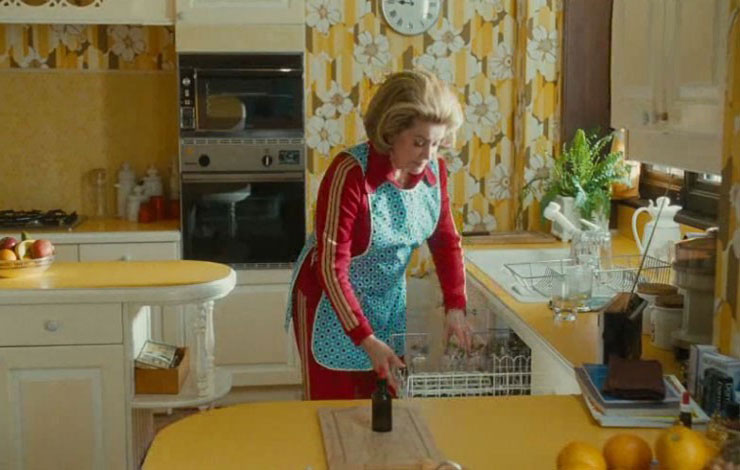
Catherine Deneuve — now 67 — is one of the few actresses in the world who will still stop a man in his tracks in her seventies and eighties. Yet François Ozon, having worked with Deneuve before in the comic murder mystery 8 Women, has rightly comprehended, much like Jacques Demy, the effervescent appeal beneath the sexy sheen.

Potiche, based on a play by Pierre Barillet and Jean-Pierre Grédy, is certainly a pleasant enough vehicle for Deneuve and her costar Gerard Depardieu. The older and middle-class critics at the screening I attended laughed at the right moments, perhaps not entirely aware that Ozon has been kind enough to toss a few goofy Molotovs over the years. For those who enjoy the more provocative side of Ozon, Potiche signals a retreat from the eye-popping fare that established this intriguing director’s career.

Whether the condition is permanent is anyone’s guess. But the gleeful assaults on bourgeois marriage, seen in such films as 5×2 and the glorious Sitcom, that imbued Ozon’s work with such mischievous zest have been replaced by a comparatively stale story involving Suzanne Pujol (Deneuve) as the titular “trophy wife” to Robert Pujol (Fabrice Luchini), an umbrella manufacturer (a nod to Demy’s The Umbrellas of Cherbourg) who enjoys balling his secretary Nadège (Karin Viard) on the fly (when, of course, an altogether different fly is unzipped). Robert is a man who cannot remember his wife’s birthday. Which begs the question of why Suzanne has stuck around for so long. (There’s an answer late in the film, but, alas, it’s something of a contrivance.)

It could be because this is 1977, a year when France is a paradise for labor strikes. Sure enough, the umbrella factory run by Pujol finds itself facing the kind of progressive resistance that seems to elude 2011 America. Leading the strike is Maurice Babin (Depardieu), who happened to have a fling with Suzanne back in the day. He may be a man of the people, but he knows how to respect a lady — a sentiment that the film is careful to heed by featuring needless flashbacks with younger actors. (I felt sorry for the the largely mute thespians playing younger versions of Depardieu and Deneuve in these scenes. With classic French cinema to be compared against, how can they compete?)

You’d think that all this political intrigue would permit Ozon to expand his cheerfully irreverent approach. One promising joke of copulating rabbits suggests that the Ozon we know is here. But he’s hamstrung by the somewhat passe and toothless material he has to work with. What’s odd about Potiche is that the Suzanne/Maurice affair — that vital subplot that’s pretty much the linchpin of good farce — doesn’t have nearly the same narrative traction as the Babin family taking over the factory while dad is occupied. Suzanne’s daughter Joelle (Judith Godrèche) faces a dwindling marriage and an augmented belly, but despite these conflict, she’s quite the reactionary little minx — especially when asked to vote during the board meetings. (Is this a joke relating to France being behind the women’s suffrage curve? Remember that France didn’t give ladies the municipal elections until 1945.) But I was especially fond of Jérémie Renier’s subtly mannered performance as Paul, Suzanne’s son. His artistic background is applied to the factory with humorous effect. And perhaps that’s because Ozon delights in decorating the Pujol house with green drapes with a sofa to match.

Potiche doesn’t quite have the retro pizzazz of an American movie like Down With Love, much less Ozon’s fashion-conscious world in Time to Leave. Watching this latest movie, it’s difficult to fathom that, only a few years before, Ozon made a movie about a baby with a working set of wings.

One sign of an interesting filmmaker is how well he can stay himself when asked to work in the mainstream mode. In Potiche, there’s one moment when a man shoves whole potato chips in his mouth. This may very well mimic what the audience is being asked to enjoy here. Or perhaps it’s a strong indicator that Ozon is better off commenting upon conventional narratives through the unconventional. Why stick with trophies when you can raise hell and get away with it?

New Directors/New Films: Pariah (2011)

[This is the fifth in a series of dispatches relating to the New Directors/New Films series, running between March 23, 2011 and April 3, 2011 at MOMA and the Film Society of Lincoln Center.]

Last September, in response to Floyd Mayweather’s homophobic rant against Manny Pacquiao, Stanley Crouch wrote an essay suggesting that African Americans “exemplify the modern age in their contradictions as thoroughly as any other ethnic group.” Yes, black voters showed up in California to vote against same sex marriage. But Crouch observed that, thanks to Amiri Baraka, homophobia had been part of black nationalism as early as the 1963 March on Washington. (In a 2009 interview with 3AM Magazine, Baraka claimed that his words emerged from anger that “was part of the mindset” created by numerous political assassinations, but he didn’t apologize for his homophobia.)

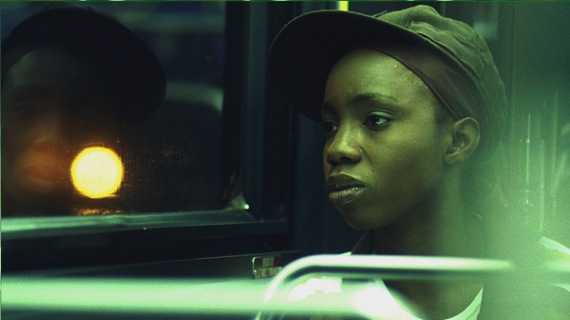
Since black homophobia is often too easily portrayed as a symptom of race rather than a symptom of class, it’s a relief that writer-director Dee Rees has arrived to investigate the matter. Her debut narrative feature, Pariah — an extension of her 2007 short — finds its best footing when illustrating how middle-class aspirations and the desire for stability are often responsible for this lingering atavism. Late in the film, when Audrey (Kim Wayans) reacts to her 17-year-old daughter Alike (Adepero Odeuye) after she defiantly shouts, “I’m a lesbian, I’m a dyke,” the moment’s true horror comes from understanding how Audrey’s materialist desires for a Fort Greene brownstone (rather than a place in Queens, an early life of struggle hinted at throughout Rees’s film) and her efforts to stick with the “right people” at church have permitted a few dormant prejudices to explode within this apparent domestic bliss. (And by making Alike’s father a cop, played by the excellent Charles Parnell, Rees neatly aligns Audrey’s Christian virtues with Alike’s father’s concession to an authoritarian vocation. It isn’t a surprise when we learn that this isn’t a happy marriage.)

Crouch suggested that “consenting adults will win out over all the blather,” but, in his otherwise thoughtful essay, he didn’t answer the equally important question of how children, still struggling to find identity, might cut through this noise. In Pariah, Alike isn’t a terribly rebellious teenager. She sneaks into nightclubs in drag with her friend Laura (Pernell Walker), but spends most of her time inside shyly occupying red velvet couches and struggling with her sexuality. Does she shove a dildo down her pants and pretend to be a man? Does Alike have the “right people” to go to? Even in seemingly civilized Fort Greene, Rees has the courage to suggest that plentiful community resources aren’t always allocated to answering the right questions.

One night, Alike returns home later than curfew and Audrey yells at her. Rather than trying to understand her daughter, who is also a blossoming creative writing student getting good grades, Audrey would rather blame Laura, “that young lady you run out with,” for Alike’s apparent confusion. But surely the mixed signals at home (dad calls her “Allike,” mom calls her “Lee”), buttressed by Alike’s parents trying to squeeze their daughter into their cannibalized notions of success, are the main problem.

Audrey sets Alike up with Bina (Aasha Davis), a girl from church who appears to be a model teenager. Someone who dresses nice, who isn’t likely to corrupt Alike with that Reema Major trash, and who quickly subsumes Laura’s role as regular friend. What Audrey and Alike don’t realize is that the world isn’t nearly as neat as they realize.

Rees is greatly helped by her cast. Oduye, Davis, and Walker all play their teenage roles as if they’re just close enough to self-sufficiency to grow beyond many of these invisible shackles. And this makes it especially painful when some unanticipated development sets their slow progress back.

Unfortunately, the film sometimes tries far too hard to be natural. The handheld camera work, striving for a docudrama approach, sometimes intrudes too much on an organic moment. One scene in a store, in which the question “How does pussy taste?” is presented in front of a few old timers, contains streetcred that is just too forced to be believed. However, one of the film’s best moments is a late night bonding session between father and daughter, where Elika comes very close to telling her dad how she feels. The dialogue itself is okay, but Charles Parnell, who is probably best known for his voiceover work on The Venture Bros., is a very generous actor and sells the scene so that it resonates.

Rees deserves credit for exploring social issues that few American filmmakers are willing to touch. Once she figures out the right balance between realism and drama, she’ll be a very formidable filmmaker. I certainly hope that she isn’t seduced by the less nuanced Hollywood machine.

New Directors/New Films: Curling (2010)

[This is the fourth in a series of dispatches relating to the New Directors/New Films series, running between March 23, 2011 and April 3, 2011 at MOMA and the Film Society of Lincoln Center.]

If Kingpin and The Big Lebowski (or, heck, even Dreamer – a silly movie starring Tim Matheson as a bowler from 1979 that nobody remembers) portrayed the bowling experience from the bowler’s vantage point (natch, given that this is the way most of us comprehend that lengthy lane with the nine pins we hope to topple down in half-drunken triumph), then Curling dares to see it from the middle-aged folks toiling in bowling alleys. This may be because writer-director Denis Côté was born in New Brunswick. In fact, what you may not realize is that five pin bowling, which is quite popular in much of Canada, isn’t nearly as much of a draw in Quebec, New Brunswick, and Nova Scotia. And that is because in some of the French-speaking territories, petite quilles (or duckpin bowling, which is ten pin bowling with fat little bastards replacing the slim pins most of us know in the States; perhaps this is why the obesity epidemic is writ larger south of the 49th parallel) is more the order of the day.

I didn’t intend to write a silly essay about the many variants of bowling, although they certainly excite me. (In fact, my discovery of candlepin bowling upon moving to the East Coast made me both very surprised and very happy.) I am, after all, supposed to tell you about this movie, Curling. What I can say is that Denis Côté isn’t terribly interested in the bowling alley’s culinary offerings, which you’d figure that anyone who speaks French or who enjoys chilli cheese fries (does Côté?) would be keen on investigating. However, as the film’s title suggests, the film itself isn’t about bowling. It also involves a pastime that is insufficiently defined by Wikipedia as “a sport in which players slide stone across a sheet of ice towards a target area.” I don’t wish to come across as overly querulous, but this clinical sentence certainly doesn’t insinuate what makes curling a draw. Having not curled in any meaningful capacity outside of the boudoir, I can safely report that Curling‘s curling moments did fill me with the sense that I had missed something – even if most of the curlers were advanced in years and looked as if they had taken up curling to alleviate the gloomy boredom awaiting them outdoors. Since the Will Farrell comedy Dodgeball is held in high acclaim, I would not be surprised if some crass Hollywood crew appropriated this sport too. After all, like golf, curling did originate in Scotland.

For one unsmiling man with a mustache, Jean-Francois (played by Emmanuel Blidodeau), bowling isn’t so much a joy, as it is a low-paying part-time job in which he sometimes loses bets with his co-workers to clean the bathroom or dress up in preposterous costumes. Jean-Francois’s other gig involves cleaning a motel and, one morning when he discovers a bloody mess in Room 9, he is informed by the owner that his services are no longer required. Of course, it isn’t Jean-Francois’s fault, nor even the fault of the “big Accordion trucker” who stayed the night before who either killed somebody or died bleeding in the wilderness. The owner had planned on closing down the motel anyway. “I don’t have the energy,” says the owner. Well, who can blame the owner when the guests die like this?

Did I mention the fact that some tiger is running loose and that various people are being mauled down in the wintry wilderness? Did I also mention that Jean-Francois is a single dad home-schooling his daughter Julyvonne because it’s so dangerous outside? Jean-Francois takes care of Julyvonne because his partner is locked up in a mental institution. “If you touch a hair on her head,” she shrieks, “I’ll rip your fucking heart out.” Such is the promise of domestic tranquility in this family’s universe, but, in Côté’s defense, I should point out that I grew up in an environment in which such lines were shouted around the dinner table. In fact, the situation here is so bleak that Julyvonne begs her father to play Stacey Q’s “Two of Hearts” through a crappy stereo so that she can dance in a vague manner as Jean-Francois sits on the couch in a moribund manner.

And you thought some of your nights were pathetic. In seeing these scenes, I wondered if the film was set sometime around 1989. Later in the film, when there was talk of cell phones and video games, I felt a genuine sense of shock that this time capsule of a town in the middle of nowhere could be penetrated.

These cinematic results, depending upon your temperament, are either relentlessly bleak or mostly depressing with occasional bright and quietly hilarious spots. At times, Curling made me feel like I wanted to kill myself. And yet I can recommend this mumblecore opus from Quebec. Because the melancholy often functions in a peculiar comic mode. Any film featuring a man dressed up in a bowling pin costume, hassled by a ten year old kid who wants to wear the top portion and who then reveals rudimentary erudition that eludes Julyvonne, can’t be entirely humorless. And any film featuring a fetching employee who has a new hair dye color for every fresh screen appearance is probably suggesting that iridescence can be located in a bleak landscape if you know how to change your stripes. (In fact, chances are that maintaining a silly moustache may be part of the problem.) Then again, this is also a film in which Julyvonne, precluded from painting the town red, humbly requests that her dad paint the bathroom red. Jean-Francois insists that green would be a better shade. Julyvonne is later briefly abandoned because, in Jean-Francois’s view, this contributes to the possibility of him going insane like his partner.

What I enjoyed so much about Curling is that it doesn’t give up its mysteries. We never quite learn why the mother has gone insane. For all I know, it could be a rite of passage in this village. I mentioned earlier that a large cluster of the local population seems to be getting killed or mauled. It could be the tiger. It could be the truck driver. It could be what some folks call cabin fever. I don’t believe the Quebec community is this violent in real life, although I don’t have any fresh crime statistics at my side. Curling presents enough ambiguities to make you wonder whether its village represents some parallel universe occupying Côté’s inventive mind or some part of Québécoise equipoise that just isn’t talked about. It is the rare film that is both a downer and a winner.

Review: Win Win (2011)

Can a woman seeking a $1,500/month guardian stipend truly afford to stay at a New Jersey motel for several weeks? (The Quality Inn in Toms River, New Jersey has kindly informed me that they rent rooms at $39.95/night. Discounting tax, that’s $279.65/week. At three weeks, that’s $838.95.) I suppose she could put it on her credit card, even though she’s just spent a considerable amount of her money in rehab and doesn’t appear to be gainfully employed. But can this same woman also afford to retain an attorney who makes at least three public appearances?

If a pack of cigarettes cost about eight bucks in Jersey, and you are a spendthrift like Mike Flaherty (played by Paul Giamatti), does it make any sense to buy a fresh pack, throw the other nineteen cancer sticks into a dumpster, and then smoke the remainder whenever you need to relieve stress? (For that matter, why are you spending your money on mid-grade scotch you keep in the office? And if your cigarette intake is that why aren’t you relieving stress that way?)

Such story problems emerge up with troubling frequency during Win Win, which isn’t just a subpar mainstream comedy, but a fallacious fantasy. The vastly overrated writer-director Thomas McCarthy (not to be confused with the very smart British novelist Tom McCarthy, who gave us Remainder and C) hasn’t bothered to ask or answer these basic questions. Perhaps it’s because McCarthy lives in a privileged bubble which prevents him from researching or investigating the very people he wishes to depict.

If we are to (rightly) condemn the Tea Party for perpetuating the view that some mythical age of prosperity occurred under Reagan, then we should also (rightly) condemn any huckster who wishes to perpetuate a roseate view of the middle-class instead of one that accurately presents its ongoing erosion (yet still manages to get us to walk away with some faith in humankind: Stewart O’Nan’s novels or Mike Leigh’s films come very much to mind). Because of these problems, Win Win is more feel-good propaganda than respectable entertainment. It’s the kind of movie that a clueless centrist, the type who doesn’t know how to live and who arrogantly claims comprehension of the hoi polloi without actually talking with them, will enjoy without question. I know this, because the film’s generic and gutless humor (1980s rock stars, games called Secret Apprentice, signs on ceilings that read “If you can read this, you’re pinned”) caused the middle-class types I was sitting with to laugh at the carefully engineered, preprogrammed moments.

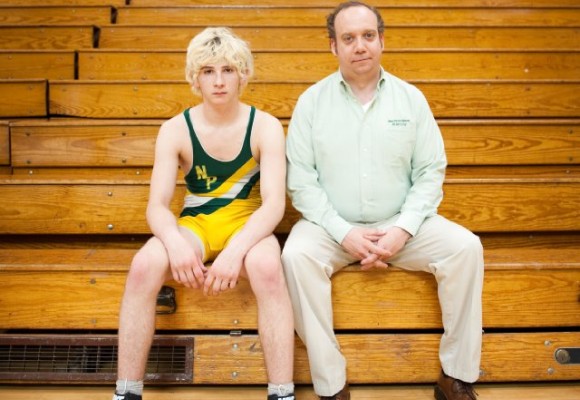
The problem here may be that Win Win is actually two movies awkwardly sandwiched into one. Does it want to be a film about how Mike Flaherty survives in an increasingly unforgiving economy as a sole practitioner who takes up the causes of the elderly and as a part-time wrestling coach? Or a film about how a man who cannot relax finds a new cause to take up with Kyle (Alex Shaffer)? Kyle, a troubled boy, reveals himself to be a very capable wrestler who can shake the wrestling team from its losing streak. (Some hint of Kyle’s troubled past is seen late in the film, where Kyle’s violence shows signs of surfacing to the edge. Between this, and one joke that has Mike hitting Kyle in the face just before a wrestling match, there’s the possibility of a richer film buried beneath the crowd-pleasing claptrap. Alas, McCarthy would prefer to collect the check.) He’s landed into Mike’s life not long after Mike has taken the aforementioned $1,500 monthly guardian stipend from Kyle’s grandfather to help keep his family afloat.

Because the film’s story is so overstuffed, supporting characters who should matter aren’t given the chance to breathe. Amy Ryan, for instance, plays Jackie, Mike’s wife, revealed to be nothing less than a former Jersey girl (with a JBJ tattoo on her ankle: JBJ, of course, being shorthand for Jon Bon Jovi, a shorthand that also condescends to the audience) who now nurtures. The Flaherty family may be having financial difficulties, but why doesn’t the family chip into pick up the slack. Why doesn’t the film give Jackie a chance to get a part-time job? Or even offer us a dramatic moment in which Mike finally cops to Jackie about his inability to make ends meet? Surely, a woman who has observed her husband cheaping out (not fixing the creaky pipes in the office, not sending in the health insurance check on time, not hiring a tree surgeon to cut down the diseased tree) would notice. Even Mike’s office assistant, a woman confident enough to announce her hangovers and carefully tallying the expenses, would probably have some modest clue that the arithmetic doesn’t add up. Presumably, these women don’t confront Mike with these financial issues because they are aware of Mike’s health (he hyperventillates after too much stress). But if Mike has the time to work two jobs, and he’s spending nearly all of his spare time playing Wii tennis and bullshitting with his somewhat loutish friend Terry (Bobby Cannavale), surely he should take some personal responsibility or would at least be called (gently perhaps) on the way he evades what he needs to do. I mentioned a woman earlier who also cannot do the financial numbers. That woman is Kyle’s mother. So that’s three women McCarthy offers who are incapable of understanding basic personal finance. In a world in which The New York Times claims gang rapists to be the victims, I don’t think it’s hyperbolic to call Thomas McCarthy a sexist pig.