Posts by Edward Champion

Edward Champion is the Managing Editor of Reluctant Habits.

My Terrible Thirty Year Love Affair with Cigarettes

I

I was twenty-one when I first put a cigarette to my lips. I was oh so stupid, swiftly addicted to the bursts of artificial dopamine that nicotine seemed to guarantee. Cigarettes fueled my writing, my conversational energy, and, pathetically, my reason to be alive. In my early twenties, three thousand crisp and witty words spilled out of me with libertine glee every Wednesday night, with a few late lead dispatches or an eleventh-hour interview transcript on a Thursday. I documented the week’s film releases with verve and eclat and I would chain smoke as I happily banged all this madness out of me, operating in some fumy fugue state.

I would pore proudly over the remains of fifteen to twenty cigarettes in my ashtray as my 56k modem emitted that telltale screech of an Internet handshake. And when I connected, I would send a triumphant email gravid with Word attachments to my editor. I delivered such clean copy that there usually wasn’t much of a punch up.

We’ll never see the likes of those days again, now that writing long and lavish thoughts about books and film seems to have fallen by the wayside with eight-track tape, zines assembled with scissors and Sellotape, and video store clerks who memorized the Leonard Maltin movie guide with Talmudic resolve. Years later, I would learn how much my weird knack for accessible intellectualism aggravated and angered my colleagues. The more envious and invidious practitioners often read through my work for gaffes so they could announce what a charlatan I was in the comments. It was truly amazing how many enemies you could make in the literary world by simply having a fun time or writing with genuine passion and exuberance. Hopeless and humorless hacks wasted astonishing amounts of their spare time shit-talking and spreading unsubstantiated falsehoods about me to anyone they deemed “important.” Had they possessed any true idea of how fragile and uncertain and self-hating I was at the time, they might have raised their sniper rifles and instantly murdered the maniac who wrote as rapidly as Lester Bangs, but who somehow did so without Darvon and Nyquil. But I did have the cigarettes. There was enough of a command in my writing voice for me to carry on. And for a long time, as recently as last August, cigarettes were so poisonously intertwined with my good faith efforts to deliver something original in words.

When the late great Roger Ebert was extraordinarily gracious and commended my writing in those puckish and punkish days, when writing online was akin to being some top-tier leper that no legacy media practitioner roosting in a high place wished to talk about, I didn’t believe him. I stupidly assumed he was praising the latest fresh hard pack of Lucky Strikes or Marlboro 100s I had tapped four or five times against the edge of my palm before ferociously ripping off the foil which protected my vile babies. I had precious little self-esteem in those days and I would learn decades later that I was carrying a remarkable amount of accumulated pain and trauma that contributed heavily to my many failings. This made me an easy mark for tobacco. And I told myself that it was the cigarettes, not me. It never occurred to me that I could write well or live better without cigarettes. When I met other writers who smoked, some of them believed the same thing.

The cancer sticks were there for every victory and every loss. Almost like a long lost uncle who would never leave you. Lovers bolted. Friendships dissolved. Prospects fizzled. But the cigarettes always stayed. And that security — the extremely lethal reliability measured out in lots of twenty — seemed to overshadow the yellow teeth and the bad breath and the nicotine stains on my fingers and the wretched odor that settled upon every article of clothing I donned and every piece of furniture I reclined on. Every time I fired up a gasper while shivering in the cold, puffing hard and greedy upon the five packed inches of deadly tobacco rapidly reduced by selfish sucks into soft sprinkles of ash, I would tell myself that I was warm and that this atoned for how winded I felt whenever I climbed multiple flights of stairs.

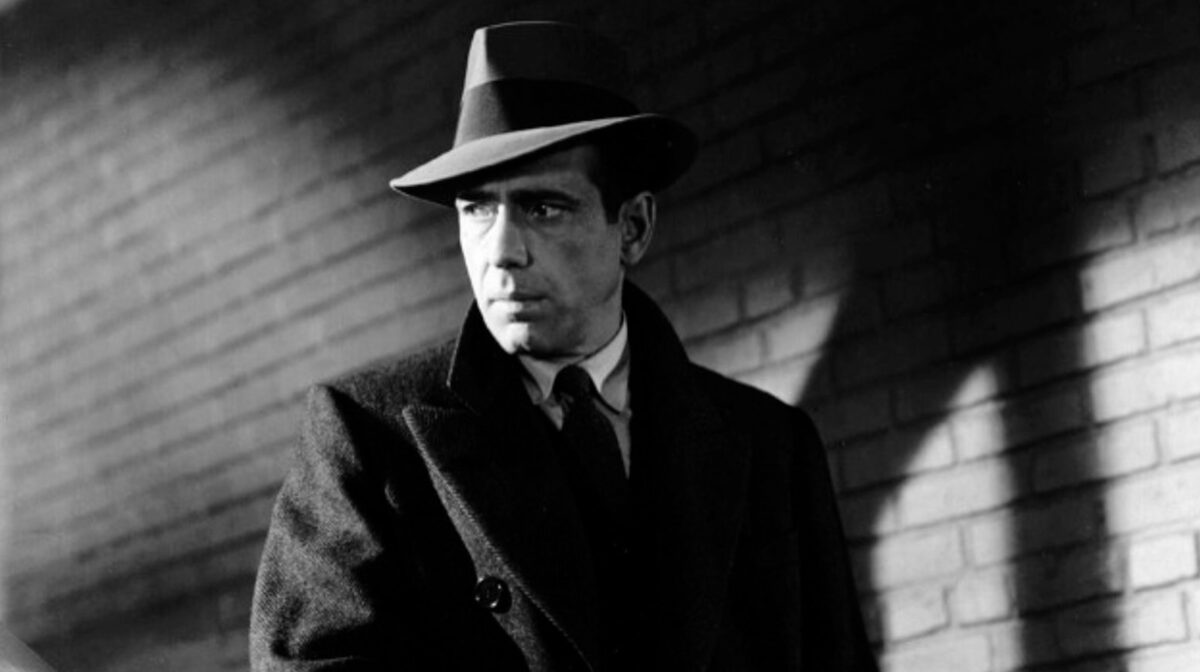
In my younger days, I was incredibly shy and awkward and sensitive. Still am today to some degree, though I am better at cloaking it when I am in the presence of the baleful and the obnoxious. Since cigarettes seemed to provide a solution to every problem, I deferred to their sham expertise. I could plant myself on a barstool, ask the barkeep for any drink I had the bread for, put one of those hideous sticks between my lips, light it up, and watch the blue smoke flutter in an upward whirl that reminded me of all the great noir films that I wolfed down like some starved animal eating Thai or Indian food for the first time in years. But my great hunger for cigarettes, all part of an insidious scam manufactured by malevolent bloodthirsty capitalists in the tobacco industry and their chemist accomplices, soon eclipsed that relatively harmless addiction.

The nicotine screamed within my bloodstream like some coddled toddler demanding candy packaged in seductive multihued paper. Cigarettes were my answer to those sweet goodies stacked right next to the supermarket checkout line as all the poor single people begrudgingly waited in line to buy their Saturday night pints of Haagen-Dazs or their bottles of merlot while suffering through the piercing tantrums of a child pointing at a brick of Kit-Kat waiting for an adult with a fat wallet. Oh yes. That was nicotine and me, except that I was a petulant addict without the parents to blackmail or the audience to terrorize.

You see, nicotine is one of the most addictive alkaloids ever created by mercantile men. And back when I first started smoking in the mid nineties, the cigarette companies began to increase nicotine levels through improved chemical technology. It was the worst time in American history to become ensorcelled by these dreaded coffin nails. The tobacco conglomerates added ammonia, sugars, additives, and other nasty chemicals to ensure that the nicotine was sent faster to my brain and that tobacco smoke settled more smoothly into my lungs.

The tobacco companies had this sinister idea of profiting by creating millions of lifelong addicts, who would become dedicated consumers until just before the tombstone, smoking their way into COPD, emphysema, heat disease, and lung cancer and hopefully passing on the addiction to their children. Even the Nazis, who actually had anti-smoking programs in place, didn’t go that far. (But let’s not pat those evil bastards on the back. Especially as we chillingly repeat history in this wildly awful immigrant-detaining and Iran-bombing age.) It became so difficult and unpleasant for smokers to quit that some drug addicts have described cigarettes as more addictive than heroin.

No matter how hard you tried, you’d eventually go back to smoking.

II

I first started smoking while walking the streets of San Francisco by myself. Scratch any addict and you’ll see that it starts as a temporary cure for loneliness or anxiety. I was hooked on the ironically pure-white scags within a week.

I started smoking in the twentieth century with a decidedly twentieth century brand: unfiltered Lucky Strikes. This was a partial nod to my father, who smoked Pall Malls. But Pall Malls weren’t easy to find in the nineties. Lucky Strikes were the closest thing.

My father had smoked more or less to the end of his life, dropping dead at the age of seventy-three during the pandemic. The probate attorney who informed me of his passing told me that the furniture around him had been pocked and riddled with careless and prolific burns. She told me over the phone that there came a point in which my father just didn’t have the will to live. He gave up, much as he had given up writing sometime in his forties, presumably having little more than smokes to soothe his paranoia and his bitterness. And this spooked me. I didn’t want to be a cynic. And I very much wanted to live. In large part because I needed to write. I wanted to live even as I was puffing away while the attorney squawked more details through the tinny Android speaker pressed to my ear. Here I was. Still slowly killing myself and not quite knowing what to feel about the man who had abused me for years, the man whom I had cut myself off from three decades before for my own protection.

After I said my goodbye to the attorney, I imagined a future twenty-five years from now in which I might suffer the same fate. That’s the irony of cigarette time. Backwards and forwards. Forwards and backwards. Sex or a meal punctuated by a rapaciously inhaled toby rib. The nicotine muddling your memory and sending you into a terrifying future. My dad. Me. Seventy-three. A face as dour and drained as Kerouac near the end, underappreciated at forty-seven after the booze finally got him. No reason to carry on. Puttering around. Becoming indifferent. Smoke ‘em if you got ‘em. Dropping half-smoked cigarettes onto the floor with learned negligence. Burning holes in anything that had not fallen apart. Giving up. Did he finish his last pack before he passed? I suspect he did. He was always a committed smoker.

And then a bolt back to the past. The waft of tobacco that curled from the open gate of the pipe shop in the mall. Yes, believe it or not, they had pipe shops in malls near the end of the seventies. The days in which shady men hoped to hook kids on lung darts, paying off the Salkinds with forty grand to have Superman tossed by General Zod into a Marlboro truck. I recalled my father’s daily saunter into the convenience store, with me tagging alongside him as a scrawny kid. I remember the frightening roar of the fan, insecurely mounted just above the entrance. My father would buy beer and a pack of cigarettes, grunting and looking sour and never thanking the congenial Indian man behind the counter, who gave me the kindly smile that my father was supposed to tender to me. And I would look up at the fan, worried that it would fall down and chop my gaunt underfed little body into tiny bits. In a way, the fan did fall on me. Because two decades later, I would be the one repeating my father’s beer and cigarettes convenience store routine, though I would improve upon my father’s sullen demeanor by making small talk with the guy behind the counter, always thanking him for selling me highly addictive goods that were designed to kill me.

Cigarettes weren’t just an addiction with my dad. They were a weapon. He burned me with the bright red ends when he wasn’t filling the living room with blue smoke. Despite all this, I romanticized my father, preferring to remember his better moments to bury the pain he burned into me sometimes daily, which obviously extended beyond cigarettes. And when I took up cigarettes as an adult — or, more accurately, a foolish and desperate infant of an adult — they turned out to be a brilliant accessory at inhuming sizable portions of my humanity. I didn’t know that three decades ago, but I know that now — nearly two hundred days after puffing on my last cigarette.

III

Near the end of my deadly smoking run, which ended shortly after my fifty-first birthday, I was reduced to hideous but cheaper Newports picked up through the black market trade at my bodega. These tasted like filthy mint, with the smoke crackling like a crumbling pillar within my heavy lungs, slicing my alveoli like fine crystal daggers. I was just one of an estimated 28.8 million American smokers who did this to himself. Most of us want to stop. Most of us can’t.

I had always been contemptuous of cigarette regulation, in large part because the overly tanned and smugly speaking men who declared cigarettes evil really seemed to have no significant understanding of how viciously addictive cigarettes are. Instead of helping nicotine addicts by regulating cigarette production to reduce the addictive qualities (akin to the 3.2% beer during Prohibition) or offering free nicotine replacement therapy, local and state governments preferred to profit from gasping gasper junkies like me by raising cigarette taxes. It was a bit like Trump’s tariff scam. Pass on the costs of the grift onto the addicted consumer and have him feel the biggest pinch. Big Tobacco profited either way.

When I started smoking, a pack of cigarettes cost $1.50. At the end of my on again/off again smoking career (I have no exact number, but I’m pretty sure I “quit” smoking at least two hundred times), I was buying contraband smokes at eleven dollars a pack. Now if you didn’t know a guy who knew a guy (or knew a bodega who knew an illicit trader), you’d have to purchase cigarettes legally, which would set you back $18 to $20 here in New York City. And if you smoked one pack a day, that would add up to $600 a month: roughly the cost of a CUNFON RZ800 electric scooter. (By contrast, a pack of cigarettes cost twenty cents in 1940. Adjusted for inflation, that’s $4.65, a far more manageable luxury at $139/month.)

But it was especially difficult for me to quit because of the permanent nexus between smoking and writing. I’d usually scarf down a cigarette every two or three paragraphs. And if I was really hardcore, I’d chain smoke while slicing through my sentences with a pen. When I was a smoker, I could write a one thousand word essay in about two and a half hours.

But if you quit cold turkey — and I didn’t want to be a vampiric Maron hording nicotine lozenges — this godlike superpower slips away for many months. Because even when your physical cravings disappear, you’re still contending with the psychological attachment to cigarettes. You’re still dealing with a damaged brain in which the receptors, which not so long ago were pummeled relentlessly by the slings and arrows of outrageous nicotine, need time to heal. The scientists say that it takes three months of not smoking for your dopamine levels to return to normal. But the last time I quit before I finally stopped, it was more along the lines of four or five months before I felt that I could read and write like my former self. This is one of many reasons why it’s difficult for creative people, who often rely on dopamine, to quit smoking. When the great Lady Gaga became a smoking apostate, she claimed she saw Jesus for an entire week. I fully believe that she did.

Last summer, I had reached a point in which I needed to quit. I had quit before. And then I started right back up with the ciggies after a Polish woman gaslighted me and broke my heart. (She had two kids. So it was like breaking up with three people. I had given the trio every bit of my heart and I was damaged goods.) Then, when I was finishing up the editing of “Libromendel,” I started feeling a strange pain near my left lung. This was it, I thought. All those years of smoking were coming back to bite me in the ass. What hideous diagnosis could be awaiting me? Would there be a mask and an oxygen tank in my immediate future?

I had also seen Weird Al Yankovic perform live in Bethel and it was one of the best live shows I had ever seen. I had been utterly astonished at how spry and alive he was as a performer. The dude performed nonstop for three and a half hours, complete with costume changes, and never once sang a wrong note. And the man was sixty-five. Weird Al’s indefatigable energy was so deeply inspiring that it became an instrumental part in persuading me to quit. I wanted to be a goofy old dude with that level of energy.

So I stopped smoking. Not quit. Stopped. There’s a difference. And I saw many doctors and I got everything looked at. I found a primary care physician who was hilariously brutal with his data-driven analysis and who informed me that I had to take up a quasi-pescatarian diet. I responded by showing up to a followup appointment and saying, “Yo, doc, I ate a bacon egg and cheese before arriving here just to spite you.” He patiently repeated the data — his eyes rolling gloriously like those alphanumeric characters on an old Solari board — and said, “Do you want to live long?” And I conceded that he had a point. So I (mostly) went back to the diet, with occasional deviations. It turned out that the pain was a pulled muscle, not my lung. I didn’t have cancer. I had moved a 200 pound piece of furniture up four flights of stairs with a bit too much fervor. Sorry, I’m a man. And any honest man will tell you that he approaches his life with some stupid variation of stubborn male pride. At least I wasn’t one of those hopelessly hateful and ditch-dirt dumb and feebly aimless and lamentably illiterate Trump fuckheads claiming to be a phony victim of the mythical “male loneliness epidemic” because he doesn’t know how to shut the fuck up and listen to women.

I applied my deranged obudracy to staying off cigarettes. It helped that I was hell-bent on outliving my enemies. Yes, my mind was gone. I couldn’t write much else other than “Thank you for meeting for lunch” or “Say, that was a pretty good episode of Only Murders in the Building.” I was so profoundly idiotic that I felt very much like Dougie in Twin Peaks: The Return and even considered buying a lime green blazer that was several sizes too big on me.

After two months of functioning like a veritable vegetable (and failing to find a Dougie style blazer that matched the color of chayote sequash), I refused to smoke cigarettes, but I couldn’t take this new lifestyle in which my ability to write was so deracinated. I had to write not just from need, but out of spite. You see, I have sadly watched so many bright and burning lights decline and dim into zestless and soulless hacks as they made the shift from blogs and alt-weeklies to the more vanilla and unadventurous pastures of corporate media. But I have always loved writing. And I adamantly refuse to bore an audience or phone it in. I am Sammy Davis, Jr. singing a number from Golden Rainbow before the soft drink companies appropriated that marvelous ode to authenticity. When these same commercial outlets hired me to write pieces for them, I fought them with great feist or won them over with a barrage of jokes every time they tried to neuter my voice. Most of the writers I once knew became no different from corporate drones who saunter the earth with that dead “fuck my life” look in their eyes. The soulless husks you see on the subway who are about two bad days away from mimicking Hemingway’s final act with a twelve-gauge. This is a deliberate decision that happens around the age of forty. And I have always stubbornly resisted this. I’m the guy who defiantly wears floral and paisley shirts into an office, leaning with unpunctured felicity into some early form of my Mister Furley years. If you don’t rock it on the fashion front until your final day on this mortal coil, you’re doing life very wrong.

I didn’t smoke, but I had no mind. So I came up with a workaround. I began to ride my exercise bike every day to generate dopamine.

And it worked.

Twenty minutes at around 20 miles per hour generated around five hundred words that were close to my former smoking self.

So I rode and I wrote. And I rode and I wrote.

And now I don’t even have to ride the bike to write. The brain fog is gone. And most of this essay has been written, au natural, sans cigarettes. Eat the inner pieces within the deepest recess of my posterior, RJ Reynolds!

IV

But there has been something else I’ve learned.

What nobody tells you about smoking is that, much like any drug, you learn just how much you’ve pushed down a lot of your emotions by cleaving to the stimulant. In the last few months, I’ve felt more. Happiness, sadness, anger, hypersensitivity, an evermore burgeoning worry about the future of my nation. I’ve cried a lot more in the last six months than I have in the last six years.

And then I met a woman near the end of last year. An amazing woman. Tall, gorgeous, beatific eyes gleaming with ambition and mischief, gloriously weird, delightfully quirky, tremendously kind, incredibly smart, hilariously intense at times, sweet in ways that demand me to be more emotionally present, adorably loud like yours truly.

Our first date was rocky. Our second date was better. By our third date, we started to have some inkling that we were meant for each other. And now? We are inseparable and we are forging mighty plans. Every night that she is not in my arms is deeply painful. But we love each other. What can I say? When you know, you know. And I know. And she knows. I have told her all the terrible things about me and she’s still around. How? I have no idea. The universe has been so relentlessly against me that I did not think I would ever catch one of the luckiest breaks of my life. But I have. And I also have to give myself a little credit.

If cigarettes remained a part of my life, she would not be here.

If cigarettes remained a part of my life, I would not have the courage to let her in.

I needed to quit smoking because there was so much of me buried under peat moss.

I needed to quit smoking so that the real man, the real writer trapped within me, could at long last reveal himself.

V

Thirty years with cigarettes (1995-2025) is a very long time. Longer than most marriages. But when you grow up with a toxic and abusive family, as I did, you develop a narcotic attraction to toxic elements. You may even give off some uncanny aura of toxicity when you’re holding the door open for a stranger or helping a mother carry her stroller up the subway steps. Because it takes such a long time for the contamination to clear. A contagion enters you and announces to surrounding parasites lurking about for a new host that this emotionally bruised dude is a ripe mark to maim.

There have been a number of bad actors, pathological liars, and outright prevaricators who have tried to destroy me with falsehoods. In their own way, they were just as poisonous as the cigarettes. They have spent an inordinate amount of time obsessed with me. I’m still fending off two stalkers, one of whom has created six dozen accounts to intimidate me on TikTok. A talentless lowlife who works at a Penske Media outlet spent a week on social media harassing and spreading lies about me last year. And in the last weekend, I was physically assaulted by someone who resented the happiness and purpose that I had finally found in middle age. But I refused to be a victim. I refused to strike back. After I was attacked, I dusted myself off and wrote this essay.

I am not afraid to lean into love and empathy and the far more meaningful realm of being sensitive and giving and vulnerable. The important people in my life know who I truly am. The rest is just noise. The haters latch onto me because they have no lives of their own, no ambition or beauty or purpose that they can summon. And I now realize they see something in me that they covet but will never find within themselves.

I can say all this now because I finally removed cigarettes from my life. I’m the real deal now more than I ever was before. I stopped being an addict and I raised the barrier for entry into my life. I finally became myself. Who knew that this was the real tough guy move?

Why Repeatedly Kicking Jonathan V. Last in the Balls Gives Me Hope

For a large chunk of Tuesday, just as the dust started to settle upon the tail of a particularly dystopian year, I kicked Jonathan V. Last in the balls. Repeatedly. Regrettably, this low-hanging flagellation (and Last’s responsive groans of pain) was confined strictly to my imagination. However, I found that the more that I fantasized about my steel-toe Doc Martens colliding into the scrotal region of one of America’s foremost political grifters, the more it became possible in the real world. Perhaps it had already happened? The thought had given me hope. A New Hope, as it were. (Stay tuned!)

If you consider this to be a strange pastime, well, it’s not altogether different from the remarkably predictable way that Jonathan V. Last has devised his half-baked and covertly fascist theses over the course of his checkered career (a small sample of Last’s pablum to neutralize any potential “Trust me, bro!” allegations leveled at yours truly: Maybe it’s just too much effort to protect immigrants from ICE! Mike Pence is a hero! Let Trump be Trump!). Except that my idea was more violent and thus decidedly more entertaining.

Before this remarkably vapid and autocracy-friendly douchebag fell upward to become editor-at-large at The Bulwark, Last was known for defending the Galactic Empire in Star Wars — quite literally the only self-identifying geek who has ever defended one of the most tyrannical fictitious institutions in cinematic history. I can legitimately imagine George Lucas reading Last’s piece and saying, “How did this ghettoass motherfucker come up with that takeaway?” But let us adopt a more pragmatic tenet from the Spielberg-Lucas oeuvre, shall we? It stands to reason that if it was okay for Indiana Jones to punch a Nazi, then the modern day parallel would involve kicking Nazi-friendly transphobic fuckheads like Jonathan V. Last repeatedly in the balls. He is, after all, a not very perspicacious scumbag who now spends many of his spare moments stroking his salami to Marjorie Taylor Greene. And, look, I don’t want to kink shame. But when an extremely stupid person’s kink begins to dwarf his understanding of basic democratic principles, there comes a time for violent fantasies and longass vitriolic essays to be directed against the dunderhead in question.

Let us state the truth plainly:

Jonathan V. Last is more equipped to pump gas during a particularly harsh New Jersey winter than write a regular political column.

Back to Mr. Last’s gonads.

Earlier this week, the general region down there, which was quite chapped and inflamed because of Last’s penchant for onanism (both as a sad sack conservative writer and as a sad sack human being), needed a little more variety (and perhaps a little more lube). Last’s hands had been down there far too frequently when writing his “thought pieces.” And if he was going to abuse himself (and damage his junk) in the privacy of his own home, why not replace the incessant and overly rigorous stroking with sharp painful kicks? Perhaps Last’s painful yelps in response to this well-earned testicular violence could be recorded with a quality Neumann microphone and become a new Wilhelm scream for the 21st century or, failing that, walla for some forthcoming episode of Pluribus. Last also required apposite payback for risibly claiming that MTG — one of America’s foremost fascists, a believer in Jewish space lasers, a 9/11 truther, a monster who suggested that Nancy Pelosi be executed for treason, a racist who had called whites “the most mistreated group” in America, an evil and illiterate grifter who knowingly denied that Biden had won the 2020 election and who was involved with the January 6th insurrection — was a champion of what Last called “liberal democracy.”

I kid you not. This is the remarkably gormless and highly gullible mouthbreather steering a sizable chunk of the “liberal” ship The Bulwark. He has, rather amazingly, not been given a banker’s box for his office possessions and a thorough ass-beating by a security guard. And the fool still holds onto his job. And on BlueSky, Last tried to have the last word by delivering this whopper:

Yes! By all means, give MTG a cookie for adopting such “policy preferences” (a phrase that sounds as ridiculously harmless as a health-conscious diner seeking the gluten-free options on a labyrinthine menu) as deliberatly misgendering a colleague’s daughter, banning the display of Pride flags, opposing the Equality Act, warning everyone about the Gazpacho Police (an apparent existential threat to all hot soup in America!), calling all Democrats “pedophiles,” calling anyone aiding the FBI “a traitor,” and many other gaffes and perversions of “liberal democracy” as we have known it in America for more than two centuries!

Of course, there have been many other reasons to kick Jonathan V. Last in the balls — repeatedly and with great accuracy so he can at long last understand that every opinion piece he has ever published is indistinguishable from five tons of shit burning in a dumpster. There’s the endorsement from imperious tadpole Chris Cilliza as “my favorite thinker and writer operating in the political space right now.” There’s Last’s superficial description of Trump’s dangerous policies as “a whole bunch of bad stuff that is coming,” which reads like something that the Pakleds on Star Trek might have written if they were hired as political pundits. There’s Last’s insufferable cleaving to the “JVL” moniker, as if he is some VIP regular at a five-star hotel or this acronym alone somehow absolves him of his limitless stupidity. The only rival to Last’s lock-in as a guy you want to repeatedly kick in the balls is probably Ezra Klein — another political “thinker” deserving of scabrous opprobrium whom I’ll have to take to the wood shed some other time.

As I imagined Last’s cadaverous lips careening upwards in agony as he keeled over with each and every cold swift kick to his balls, I began to wonder if kicking Last in the balls would be enough to get him to understand how useless his opinions were to the human race. I begin to wonder if I should keep a bottle of bubbly in the fridge in the event that Jonathan V. Last was stabbed. I began to adopt the position that inflicting pain upon a paleoconservative asshole like Jonathan V. Last, whether real or imaginary, represented the most common sense remedy against the present national epidemic of dumbass writers punching above their weight.

I was free to imagine and memorialize all of these condign responses because, unlike other writers, I have no interest in writing for The Bulwark and, as such, possess an ethical core that circumvents the possibility of being seduced by the devil. You see, that’s how a dope as unfathomably idiotic as Last has risen to the top. If you inure yourself to much-needed pushback from other writers by becoming someone who could theoretically assign another writer a freelancing piece, then your words, however stupid, will be taken as gospel by a certain trough-eating crowd. I mean, even the enjoyably ferocious writer Moira Donegan pulled her punches when Last was being rightfully dogpiled on BlueSky.

If I can offer one invaluable idea that we can carry into the new year — a year with very important midterm elections that will determine whether or not we still have a legitimate democracy — it’s this. Kick the grifters in the balls. Whether literally or with your imagination. People like Last have been allowed to bang out horseshit for years without consequences. Last has no real strategies, much less any real understanding of historical patterns or vital precedents. He is a parvenu and a grifter, a guy who should be 86ed from any bar with at least four regulars who are journos. He betrays the purpose of journalism with every piss-poor sentence he bangs out like some spastic monkey who just started a new antidepressant prescription. Kick the motherfucker in the balls. Starve him of oxygen. Block him. Do not link him. And pay attention to other grifters like Dave Wiegel, who — sure enough — stood up for Last in the manner of a sweaty and closeted linebacker snapping a tight end with a locker room towel right after the big game:

Access journalism has always been a line that I will never cross. I’ve done hundreds of interviews in my life and I’ve never agreed to prerigged questions. Normalizing fascists — in this case, following The New York Times’ greasy lead, is similarly a point on which I will never bend. (And I’ve turned down serious dinero that fuckheads like Last and Wiegel will lap up like demented six-year-olds scarfing candy down their corpulent gullets.) For Last and Wiegel, the betrayal of basic Fourth Estate principles represents a thrill that is as seminal as Laura Loomer dreaming about giving That Orange Sack of Shit a handjob under his desk as he is on the phone taking orders from Putin.

They are both enemies of the American people and enemies to journalism. And they both need to be kicked in the balls until they can summon a take that doesn’t answer the question “Do you spit or swallow?” If we want our nation to return to some semblance of how it was before Evil Motherfucking Trump, we have scrotums to kick and vital standards to uphold.

The Other Side of Being Kind

This happened just before the pandemic.

I met her as I was heading to a bar after hitting quite a few other ones. Needless to say, I didn’t make it to the other bar. She was in her early thirties. Her dark hair flowed down her shoulders in a tangled and confused mess. She wore several layers of mismatched clothing and she moved in the somewhat jerky and protective manner of someone who was accustomed to being hurt and demeaned on a daily basis. Occasional winces. A thin arm that often popped up to protect herself even as she made a valiant good faith attempt to connect. I could tell that she was someone who had been very open with people before she had fallen on hard times. Her limpid eyes singled me out and she seemed to see a tenderhearted light in me. She said hello. I said hello back. And we talked.

She sang me a song, one she had written, and she had a beautiful voice. She told me that she had been homeless for months and that she didn’t have any place to sleep. She told me a few things about herself and she seemed to me a pretty decent and severely hurt soul. She told me that she was very hungry. So I took her to a bodega to buy her a hero. She had been in New York for a few months and she had stayed on the streets the entire time, but nobody had bought her a hero before. She was clearly unfamiliar with how sandwiches worked in Brooklyn bodegas. She thought that I was buying her a gyro and she asked for sprouts. The guy at the bodega, seeing her and me, gave me a wink and a thumbs up. And that creepy assumptive gesture really pissed me off. Because I had no designs. The only thing I wanted to do was to help her. Probably because I was lost myself.

I could smell her pungent odor. So I said, “Would you like a shower?” I told her that I had some leftover shampoo because I had just shaved off my latest beard and she could use the shampoo to clean her hair. She said that she trusted me and we went to my apartment. I made sure she had a fresh bar of soap. I made sure she had a fresh towel and luckily I had a brand new toothbrush for her to use. Then she finished cleaning herself up and got dressed and opened the door and emerged from the bathroom and I offered her a beer and she jumped on me and tried kissing me with an almost animalistic instinct, the kind of thing you do when you really need to survive. I gently pushed her away. She offered me sex in exchange for crashing at my pad and, when I was making my bed up for her, she tried to go down on me and she tried to move my hand on her body. And I stopped her and I said, “No, that won’t be necessary. Please. I’m not that kind of man. You can stay here tonight unconditionally.”

I did, however, record her singing. Because when she first walked into my apartment, she saw one of my microphones mounted high in the main room and she wanted to sing. But she didn’t have a phone. And she didn’t have an email address. And so I have this recording of her singing that I’m not going to share with anyone and, I suppose, if she ever contacts me again, I can give it to her. Then I made sure she was comfortable in my bed while I crashed on the couch.

I only got bits and pieces of her story, but I learned enough about her to know that pretty much every other man she’d met had used her and that the quid pro quo she had offered me was pretty much par for the course. And I hated myself for not being able to do more for her. But at the very least, I could treat her with dignity and make sure she was fed and showered and had a MetroCard with a few rides on it. She declined my offer of breakfast.

She said that I was a very cool person. And I told her that I wasn’t that cool. I asked if she had gone to a shelter and she said that she had, but that it hadn’t worked out. I did my best to urge her to call her family, offering my phone. But she declined. I asked her what she’d be doing that day. She said that she’d be spending the day wandering around Times Square. And it broke my heart. But at least I could help her for one night and treat her with a kind of respect she didn’t usually receive. I asked her if she wanted one of my books. Something to read while she tried to survive another day. And she slipped my copy of Lorrie Moore’s Who Will Run the Frog Hospital? under her coat — largely because she thought the idea of a “frog hospital” was very funny. When I escorted her to the subway station, she told me that she felt it was going to be a very good day. And I really hope it was for her. When we parted ways, I spent some time thinking about her for a while, hoping that she would get back on her feet, wondering if I did enough. But I did the best that I could with what I had.

I was shaken by what happened, in part because there was a time in my life not long ago (and maybe even not far in the future) in which I could have been some version of this woman. And it has me wondering if my sincere efforts at kindness arise in some way from a baleful solipsism. I feel uneasy about chronicling all this because, even in mentioning the facts here, I fear that I have painted myself as a hero. But I’m far from a hero. I’m just a wildly flawed human being.

That morning, I got a call from my incredibly sweet and deeply spiritual friend. She has an uncanny instinct for checking in on me at the right moments. And I apparently possess the same timing with her. I told her what happened. We got to talking about how so many people who mete out benevolent gestures towards the marginalized are besmirched. My wise friend reminded me that there have been many saints in human history who have been inexplicably belittled and badmouthed. One can look no further than Hippolytus’s castigation of Pope Callixtus I. Pope Callixtus I, an incredible bishop who is justly celebrated by the Catholic Church, was condemned because he extended absolution and forgiveness to those who had committed sexual transgressions. He was upbraided simply for having the stones and the instinct to be merciful. I certainly do not consider myself to be a saint and I am often not sure if I am a good person, although I certainly try to be. In chronicling the details, at least as I perceived the situation, I am wondering if I am not acknowledging my faults or even fully reckoning with my privilege. Could I have stopped the woman from kissing me faster? Yes, but I was extremely surprised and very tired and thus slightly delayed in my response. Could I have done more for her? Maybe, but I had just paid off a huge bill. The one thing I knew that night was that I had the ability to help someone and that I couldn’t bear the thought of this woman sleeping on the streets. How many times has any New Yorker passed by one of the countless thousands of people who need our help, not once considering their perspective? Is my good act diminished by other actions in which I have kept my head down on the subway when someone has asked me for help? Am I truly doing enough to help other people when there are other times in which I don’t have the energy for it?

The problem with being kind is that we are inevitably forced into a situation in which our actions are perceived as pious absolutism and further promoted on social media. I think of all the self-aggrandizing TikToks in which people depict their professed acts of kindness for likes and follows. It is the same perceptual problem that we see in those who we deem evil: namely, that evil people are incorrigible monsters who are incapable of change. Both hard archetypes fail to account for the vaster middle ground that all human character is rooted in. Yet we must be good. And that goodness must emerge by unprompted natural instinct.

In Phenomenology of Perception, existentialist philosopher Maurice Merleau-Ponty believed that “living” was defined by what he deemed “circumscribed absences,” which is to say, in plain English, that heartfelt life and everyday behavior both contain certain qualities that can only be understood through the body and by the physical gestures from which we assign and interpret motivation:

The meaning of a gesture thus ‘understood’ is not behind it, it is intermingled with the structure of the world outlined by the gesture…[i]t is arrayed all over the gesture itself — as, in perceptual experience, the significance of the fireplace does not lie beyond the perceptible spectacle, namely the fireplace itself as my eyes and movements discover it in the world.

If Merleau-Ponty is correct, it’s quite possible that what we comprehend as “being kind” can only be interpreted through the structure of the world. But if the structure of the world leaves little room for expressive variation — and during the pandemic, we find our faces covered by masks, our bodies increasingly removed from public space, and we leave far too many in the cold — we seem forever fated to be enmeshed within a structural construct hostile to natural kindness in which we have no control. If the structure of our world is further vitiated by the vicious construct of social media — itself an imperfect representation of tangible experience and palpable reality that rewards self-serving networkers and the savage wolf pack mentality — then the benison of a kind gesture becomes lost in the miasma of blind spots and a failure to grasp human totality — this at a time when we really need to know and feel it most if we hope to solve our numerous social ills. Perhaps the natural instincts of the human heart are too volatile and too foggy for anyone to entirely trust. Perhaps the structure of the world can never be altered, particularly since empathy has been increasingly politicized. The cruelty is the point when the point should be all about the kindness.

A House for Mr. Biswas (Modern Library #72)

(This is the twenty-ninth entry in the The Modern Library Reading Challenge, an ambitious project to read the entire Modern Library from #100 to #1. Previous entry: The Day of the Locust.)

I have to be honest. V.S. Naipaul’s literary work is so abominably heartless that I would be greatly tempted to fire bottlerockets all night from my Brooklyn rooftop while wearing nothing more than a male monokini if his scabrous worldview and his pointless head games were permanently erased from the canon. He is surely the most overrated writer of the 20th century.

I’ve delivered variations of these sentiments over the phone to amused literary friends, who, when they weren’t laughing their asses off over my five minute anti-Naipaul soliloquies, were good enough to urge me to forgo the semi-scholarly format of this ridiculous years-long project and simply speak from the heart. I shall do my best to be as thoughtful as I can about my Naipaul bellicosity, which is, alas, the only way to move forward with this project. I can tell you this much. Not even Finnegans Wake, which took me five years to read and eventually write about, made me feel as frustrated as I was with A House for Mr. Biswas. Even the books on the list that I haven’t cared for all that much (The Old Wives’ Tale, the wildly overrated Ragtime, the failings of Kim) still contained something essential or interesting. You could see why a bunch of old white dudes decided to canonize the books even if they seemed to be speaking a hoary language — even accounting for the folkways and mores of 1998. But A House for Mr. Biswas was a joyless chore during the two times I read it. It is a reactionary monument to imperialistic ugliness that isn’t so much a thoughtful examination of colonialism as it is an author catching mice in a glue trap and watching them squirm their way into a slow and painful death instead of putting them out of their misery with a hammer.

In his life and his work, Naipaul was a sadistic bully, a narcissistic tyrant, and a mean-spirited man who used his powers to punch down. The only quality that distinguishes Naipaul from Donald Trump is his descriptive acumen and his honed prose. There is a moment in A House for Mr. Biswas in which Naipaul has a mother snap off branches from a hibiscus bush to discipline her child and it represents that brilliant exactitude. But that’s pretty much it. There isn’t a single Nobel laureate who basks in repugnancy like this simply because he can. Knut Hamsun was a terrible person (who later turned Nazi), but his masterpiece Hunger actually made you feel something about the down-and-out impoverished wretch at the center of the novel. The late great Toni Morrison, inexplicably omitted from the Modern Library canon, used ugly imagery to reveal the deep humanity within victims of racism and oppression. But what does Naipaul offer other than pointless cruelty? James Wood offered the hamfisted theory that Naipaul adopted the dual role of the colonizer and the colonized to adopt “a cool, summary omniscience that he uses to provoke our rebellious compassion.” But I personally could not feel any compassion for Biswas, in large part because I was constantly aware of the manipulative way that Naipaul had rigged the game. Naipaul, in other words, is an old school bully lulling and gaslighting the reader into a phony empathy. Having no empathy to offer, Naipaul leaves such overanalytical and generous critics as Wood to mine the gelid prose and do the work that Naipaul himself couldn’t be bothered to do. That Naipaul was able to play this game of three-card monte on so many says a great deal about how the literary establishment has a knack for propping up bona-fide sociopaths. Even progressive-minded naifs like Teju Cole stumped for this novel, claiming House to be “a masterwork of realism,” but largely on the basis of its itemized lists and of the way that the book encumbers the reader with its turgid pace. Both Wood and Cole acknowledge that it falls upon the reader to provide the munificence that Naipaul himself cannot. But they refuse to acknowledge that the faults of House‘s thin characterizations very much fall on Naipaul’s shoulders. If a writer isn’t committed to depicting the human, then why even bother praising the writer?

For the Spainards, Mr. Biswas knew, had surrendered the island one hundred years before, and their descendants had disappeared; yet they left a memory of reckless valour, and this memory had passed to people who came from another continent and didn’t know what a Spainard was, people who, in their huts of mud and grass where time and distance were obliterated, still frightened their children with the name of Alexander, of whose greatness they knew nothing.

I don’t gainsay Naipaul’s command at the sentence level, such as the measured passage above. At times, Naipaul comes across as the holistic sage reminding us that all of our lives are mired in historical cycles in which we often forget the final festoons of the previous arc. But grifters often talk in cant that suggest a larger tapestry. If you speak in ways that suggest larger cosmic contours, many people are going to assume that there’s something more to your tale than a mean monodimensional character who treats his family badly and who spends most of the goddamned novel writhing in anger and resentment simply because he never has the guts to make a real decision. I suspect Naipaul has bamboozled so many otherwise cogent minds because this kind of pedestrian toxic masculinity, especially in an older book, can be easily excused as a “sign of the times.” But even with Wuthering Heights‘s Heathcliff, named by Bustle‘s Charlotte Ahlin as the “most toxic male character in all of literature,” we can still understand why he forces his son Linton to marry. Heathcliff grows nastier as the novel continues. But he’s still tormented by Catherine’s ghost and the dregs of being bullied and locked in an attic. Mr. Biswas, by contrast, loses his father Raghu early on in the book after Mr. Biswas, entrusted to take care of a neighbor’s calf, falls into a stream and drowns. Mr. Biswas hides beneath his bed in shame. Raghu dives in for the missing calf and his own son. Raghu dies. Emily Bronte had the smarts to connect Heathcliff’s psychology to the past, which makes him more than merely a “toxic male character.” We want to understand why he behaves as he does. But, with Naipaul, the drowning incident is rarely referenced again in the novel. So Mr. Biswas is a man flung into misfortunes in the present without really acknowledging his past. Does this make him as much of a dope as any other ostensible cipher living out a failed life on a former Spanish colony? Apparently.

But there’s something much seedier at work here. As I pointed out with A Bend in the River, Naipual’s bad faith portrayal of low-caste types has always felt supererogatory. He isn’t taking potshots in an interesting or bona-fide punk rock way that challenges the audience. He revels in filth and ugliness and he chooses targets who are just too easy to flambee. You may recall my love for Erskine Caldwell’s Tobacco Road, which featured some wild and outlandish depictions of degeneracy, but Caldwell used his broad caricatures to implicate his audience for their generalizations about the poor. It’s clear to me that Naipaul doesn’t have any such grand game afoot here, other than reveling in his hideous hubris. He’s happy to see his inventions rot. The man lived to hurl unpleasant observations about unpleasant people, both in his life and in his fiction. And I say this as a huge fan of unlikable characters. Naipaul’s ensemble isn’t terribly interesting or dimensional. For all my complaints about Evelyn Waugh, at least that reactionary clown was committed to some kind of beauty. A throwback beauty that came from a repressed Catholicism, but a beauty nonetheless. What do we get with Naipaul? Hari “humming from some hymn book in his cheerless way.”

While I commend Naiapul’s prose powers (his description of a box imprinted with the circles of condensed milk cans and his evocation of gods for the Tulsi house are two of many examples of what make him a commendable stylist), I really don’t see why Mr. Biswas deserves such an expansive volume. He is mean, arrogant, cowardly, and an altogether predictable specimen of 20th century masculinity. He possesses no empathy for the people who surround him, looking at his future wife Shama not with compassion as she is berated by a customer, but “as a child.” He expresses flights of wild behavior that might be characterized as bipolar. He throws fits, feels as if he is entitled to a job. Even in describing Mr. Biswas in the way I am here, I fear that I am making him more interesting he deserves to be portrayed. Naipaul doesn’t give us a real reason for Mr. Biswaa’s ego or his cruelty — despite the fact that we are constantly surrounded by his family, which include in-laws who are too numerous to track without notes. He would prefer to wallow in ugliness — both in the ramshackle aesthetic of rural Trinidad and the boorish behavior of his many side characters. There are unlikable characters and villains in literature who deserve our attention because we want to know how they came to be who they are. But with Mr. Biswas, I never felt any strong pull to know him any further. Mr. Biswas is an unremarkable reader, a mediocre sign-painter, and a ham-fisted writer who never has anything especially interesting to say, but always has an especially monstrous act to mete out to anyone in his surrounding orbit.

So I’m quite happy to be rid of Naipaul. I will never read him again. There are people who still swear by Naipaul. Robert McCrum once declared Naipaul to be “the greatest living writer of English prose.” But what’s the point of picking up the pen when you don’t have a pulse?

Next Up: Richard Hughes, A High Wind in Jamaica!

The Day of the Locust (Modern Library #73)

(This is the twenty-eighth entry in the The Modern Library Reading Challenge, an ambitious project to read the entire Modern Library from #100 to #1. Previous entry: A Farewell to Arms.)

December 22, 1940 may be literature’s answer to July 4, 1826, the day in which John Adams rasped his last words on his deathbed. “Thomas Jefferson still survives,” he gasped, not knowing that Jefferson himself had passed away only five hours before. One hundred and fourteen years later, two towering literary titans, far more obscure in their time than Adams and Jefferson had been in theirs, met their end at a needlessly early age. On December 21, 1940, F. Scott Fitzgerald collapsed inside a ground-floor apartment not far from the Sunset Strip at the age of 44. The alcohol had finally caught up with him. He believed himself a failure. He would never know that his tragically brief life and his coruscating work would be rediscovered only a handful of years later — not long after 155,000 copies of The Great Gatsby were distributed to World War II servicemen. The next day, about two hundred miles southwest of Fitzgerald’s home, Nathanael West and his wife Eileen McKenney (whose sprightly spirit would be immortalized by her sister Ruth in a series of light but amusing New Yorker pieces later turned into a wildly successful stage show called My Sister Eileen) would be killed instantly in a car collision on their way back from Mexico. West was, by all reports, a notoriously awful driver and he was even younger than Fitzgerald. Just thirty-seven.

Both men had turned to screenwriting to stay afloat during the Great Depression. Both men had much to say about the traps and illusions of American life. But it would take longer for West to be reassessed and appreciated — in large part because he was arguably fiercer than Fitz with his fiction. He had his finger firmly on the troubling pulse of feral American life and he wasn’t afraid to use it with the other nine at his typewriter. In a short essay called “Some Notes on Violence,” West pointed to the idiomatic violence that had permeated every corner of printed media: “We did not start with the ideas of printing tales of violence. We now believe that we would be doing violence by suppressing them.” His razor-sharp satire featured philandering dwarves, skewered the hideous contradictions of gaudy Hollywood spectacle, and, in just one of many enthralling flashes of his grimly hilarious invention, depicted a dead horse serving as au courant decor at the bottom of a swimming pool. (In an age in which urine-drinking is prescribed as a COVID remedy and reality star Stephanie Matto makes $200,000 selling her farts in a jar, one wonders why the present fictional landscape doesn’t reflect our scabrous realities and why 85% of today’s gatekeepers are so hostile to such a necessary dialogue between fiction and life. But then this is the same universe in which Hanya Yanagihara’s excellent, quite readable, and wildly ambitious new novel, To Paradise, is framed by The New York Times in belittingly racist and sexist terms, assuaging an increasingly unadventurous bourgeois readership: “Can an Asian American woman write a great American novel?” (Well, of course, she can. Why even summon the rhetoric?))

West’s high point as a novelist was arguably The Day of the Locust — just as compact as Gatsby in its length and sentences, but more wryly surreal than ethereal. And he had a genius for fusing this talent with a theatrically visceral and often bleakly comic strain revealing the FOMO and desperate collective belonging at any vicious cost that one sees prominently among numerous Instagram influencers today. Consider this scene at a funeral:

He knew their kind. While not torch-bearers themselves, they would run behind the fire and do a great deal of the shouting. They had come to see Harry buried, hoping for a dramatic incident of some sort, hoping at least for one of the mourners to be led weeping hysterically from the chapel. It seemed to Tod that they stared back at him with an expression of vicious, acrid boredom that trembled on the edge of violence.

This is followed not long after by an old woman who shows up with “a face pulled out of shape by badly-fitting store teeth” whispering to “a man sucking on the handle of a home-made walking stick.” This close attention to background characters making do with either the remaining scraps they could cobble together or the insufficient products on sale at a store obviously sprang from the Great Depression and West’s own experience working at a hotel, where he undoubtedly observed a motley array of eccentrics and strange outliers. (Jay Martin’s excellent biography, Nathanael West: The Art of His Life, covers quite a bit of these hotel days and reveals West to be an impeccable bullshit artist in his life, wheeling deals to help other writers land rooms and constantly reinventing the details of his life to negotiate a failing capitalist system.) But West’s panoramic description also feels unsettlingly close to our present time, in which inflation, the supply chain, and an inept framework increasingly leaving Americans out in the cold produces the same plausible character types. And in another eerie parallel to the present, The Day of the Locust also includes a dismal romantic rival named Homer Simpson. The only song Homer knows is the national anthem

The novel follows Tod Hackett, an artist who has moved to Hollywood to find inspiration for what he hopes will be his masterwork painting, “The Burning of Los Angeles.” (I casually wondered if Rage Against the Machine’s album The Battle of Los Angeles took titular inspiration from West. But sadly no interviewer appears to have asked Zack de la Rocha and company this.) He swoons for Faye Greener after seeing her in the hall at a dismal complex called San Berdoo. But Faye can “only love a handsome man and would only let a wealthy man love her.” Tod harbors disturbingly intense and violent fantasies towards Faye. Is Tod mentally unbalanced? Or is this the inevitable byproduct of trying to find inspiration in a landscape of contradictions? West smartly leaves these questions open for the reader to infer.

One reads this masterpiece in 2022 greatly saddened by the possibilities of what West could have become. Would he have floundered like Erskine Caldwell or soured into a bitter reactionary like Evelyn Waugh? I don’t think he would have. West was committed to grim playful truth right out of the gate — as his scatologically driven first work, The Dream Life of Balso Snell, made abundantly clear. It says quite a lot about the bleak tenor of the prewar Depression period that so many wild and dark comic novelists flourished. Much as one reads the fiction published just before World War I and marvels at the flowing frankness that just preceded Hemingway permanently altering the English language with his declarative sentences, so too does one approach Tobacco Road, Scoop, and The Day of the Locust with a sense of what might have been in literature if the Second World War had never happened. One then turns to our present pandemic age and wonders why most of today’s contemporary fiction writers remain so spineless, so dully vanilla and offensively weak-kneed and uninventive, so hostile to serving up appropriate pushback against our present devil’s bargain of late-stage capitalism and all of its concomitant horrors.

West would have been canceled quite swiftly if he were starting out today. Joe Woodward’s biography of Nathanael West, Alive Inside the Wreck, points to a fascinating review from Ben Abramson that appeared in Reading and Collecting in which he suggested that West’s books should be reviewed two or three years after publication so that they could be reviewed on “merits” rather than “merchandise.” Indeed, it is the mercantile thrust of vapid careerist “critics” on social media these days — the type epitomized by so many mediocre Twitter addicts who wouldn’t know, appreciate or stump for bona-fide punk rock even if they traveled back in time and became desecrated by excrement while standing in the front row of a GG Allin show — that motivates their own sham criteria and their head-in-the-sand approach to our societal ills. But eighty-three years after The Day of the Locust‘s publication — well past Abramson’s prescription for proper consideration — The Day of the Locust says more about the eternal and seemingly unfixable ailments of American life than most of today’s writers can summon over the course of a career. Despite being cut down in his prime, Nathanael West still survives.

Next Up: V.S. Naipaul’s A House for Mr. Biswas!