The Bat Segundo Show: Paul Harding

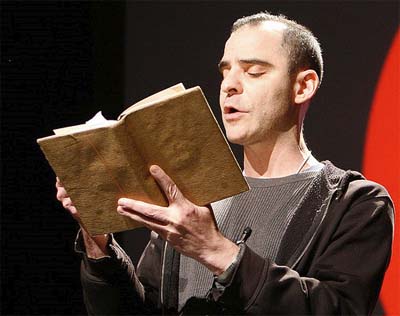
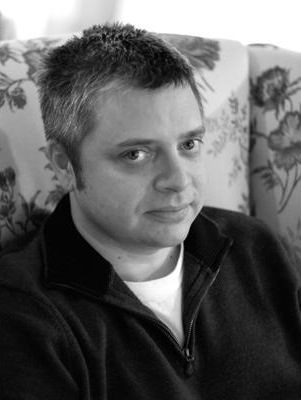
Paul Harding appeared on The Bat Segundo Show #364. He is most recently the author of Tinkers.

Condition of Mr. Segundo: Tinging with Mingus and tinkering with Tinkers.

Author: Paul Harding

Subjects Discussed: [List forthcoming]

EXCERPT FROM SHOW:

Correspondent: We were talking before all this about the idea of novels and whether or not they can actually serve as a handbook for life. Something I don’t necessarily believe in. And I don’t think you do. But I wanted to address that. Because your book, Tinkers, does, in fact, present life. And I’m wondering how you, as a writer or just in general, arrange text as a way to present life rather than dictate life. Was this ever a struggle for you when writing this?

Harding: Not with this. I think I had done my apprenticeship to bad prescriptive moralizing writing and just ended up writing very bad propaganda.

Correspondent: (laughs)

Harding: You know, it was just designed to show people how progressive and enlightened and intelligent I was. And then I’d say the kind of operative word is description. And precision of description. And if you describe things precisely, you end up bearing witness to the truth of your characters — in this case, characters’ lives — in a way that does them the kind of moral justice that’s misplaced when you think you’re going to moralize. For me, it even starts with the writing process. The difference between writing declarative prose and writing interrogative prose. Like I don’t presume that I know something and I’m going to tell you how it is and that afterwards, if you’re lucky, you’ll be as smart as me. What I do is that I try to write interrogatively, discover things, work through revelation. It’s just a type of aesthetic. But then what you leave on the page behind you — when the reader reads what you’ve written, the reader will have the same kind of revelations and moments of recognition. To me, that’s like the greatest experience as a reader. Those moments of recognition. Where you read something and you simultaneously realize, “I’ve always known that’s true. I’ve never thought about it consciously and I’ve never seen anybody put it into language before.” So there’s a kind of morality to that. There’s some sort of confirmation of common humanity or whatever. But it’s not prescriptive, small-minded minor kind of moralizing.

Correspondent: I’m very glad that you brought up description. Because one thing that I really think is interesting about this book is the hyperspecific nature of the description.

Harding: Right.

Correspondent: To offer an example, you have George “reading by the dim light of a small pewter lamp set on the rolltop desk at the far end of the couch.” Now that’s extremely specific. And I’m wondering if that serves as a way for you to get the reader inside George’s head. Or is this a way for you as a novelist to kind of know where everything is situated? The only person I think who writes that hyperspecifically is possibly William Gibson or someone like that. A lot of the 19th century authors do.

Harding: Yeah. And I’ve certainly spent all my reading time trolling around 19th and early 20th century fiction. I mean, I almost think of Thomas Mann’s little preface he has to The Magic Mountain. That we will be long on detail, but when was a book ever short on interest that was long on detail? People would argue against that novel’s glacial — but it’s sort of a bit of both. Which is while I’m writing, I’m blocking the scene out, you know? And since my characters in Tinkers — it’s so interior that I knew from the beginning that I had to keep the world embodied. I had to keep it physically, tangibly present. Because otherwise it would just be feasting on ether. So there’s that. There’s the kind of geography of the room. But then it’s also to make the reader feel like he or she has been put in a real place. Actually put in a place where there’s a chair to your left. There’s a certain physical feeling you get when you feel that there’s a chair to your left and a sofa over here and a painting over there. That sort of thing. I also just believe in the virtue of concrete nouns and verbs. And I think it’s true too that there ends up being something hyperreal, rather than surreal, about it. But there’s really a cool kind of bandwidth of unintended affects that you can’t predict. But you use that process of total precision, almost pointillist precision, that you end up getting into these kind of transcendent or metaphoric realms. But not by lifting up out of the world or evaporating off of it, but by going deeper into what’s imminent. So you’d get so materialistic about it that then it turns into something you don’t recognize and you sort of double back on yourself and it becomes unrecognizable and sort of unsettling and hyperreal. So I love that. I just love that phenomenon.

Correspondent: But it’s not just also in relation to materialism. It’s also in relation to place. Of course, the clock theme that goes throughout with The Reasonable Horologist, which I presume is invented.

Harding: Yeah, that’s all invented.

Correspondent: I’m wondering if that text within the text [The Reasonable Horologist] was included almost as a way to distract the reader from the fact that the text, the prose itself, is almost written in this kind of William James, 19th century mode. And that by having this, you can almost justify the style that you’re doing within the actual prose itself.

Harding: It’s a little bit of — on the most generic level, it’s just to change things up. It’s just to use relief. So much of the book is very somber and funereal and twilit. And this is just a little more verbose and florid, and kind of tongue-in-check. It’s kind of humorous. And so it keeps the textures changing. But, yeah, I think it’s also true. Because the writing is formal and that kind of precision leads to that kind of, “It sounds formal, so it sounds archaic to some extent.” It was also just a fun way to write in that kind of, “Welcome, dear reader, to Reason!” You know, it just worked emotionally with the character, with George the clock repairman. His upbringing was so chaotic and disorderly that the idea of the deterministic, mechanical view of the universe is appealing to him. The idea that you can fix things, that it’s mendable, and that there’s an order to everything.

The Bat Segundo Show #364: Paul Harding (Download MP3)
This text will be replaced

The Bat Segundo Show: Yiyun Li

Yiyun Li appeared on The Bat Segundo Show #363. She is most recently the author of Gold Boy, Emerald Girl.

Condition of Mr. Segundo: Confusing golden boys with golden tickets.

Author: Yiyun Li

Subjects Discussed: [List forthcoming]

EXCERPT FROM SHOW:

Li: The way I look at fiction is that the most dramatic moments do not come from physical or real dramas, but from internal dramas. And those moments are actually quite still, if you look from outside, and those are the moments I like to write about in fiction.

Correspondent: I’m wondering why narrative scenarios or stories tend to come more from that than, say, a natural collision of ideas. Or a natural collision of two characters arguing in a coffee shop or something.

Li: Right. I think with that scenario, if you have two characters, or two ideas, bumping into each other, there’s no space for them to stop. It’s like a train wreck. It’s like a crash. As a writer, you have to follow that. Which some writers do really well — following in that crash. By nature, I don’t think I follow that crash. But I like the aftermath of the crash. Or right before that crash. So I don’t follow the event. I follow the crash within the crash, in a way.

Correspondent: Do you feel that — if you had, say, an obvious crash, like two people — that this might complicate a narrative situation that you’re forming in your head? Or something like that? Do you work better from a minimalist narrative scenario than, say, a rather complex one?

Li: Yes. You know, in a way, I think my fiction doesn’t deal with a lot of physical actions. I think maybe that reflects my tendency to back up a little. Just to watch. And when I watch, my attention oftentimes is not with the physical crash or noise. I’m very sensitive to noises. And I think that those moments there — sometimes there’s too much noise. It’s too noisy for me. So I would go away. And I would go into the internal world. Where the noise is a different kind of noise. (laughs)

Correspondent: Have any sentences or any character developments emerged in your head from a noise? I’m curious.

Li: Oh, that’s so funny. No! I think oftentimes that the characters start with a very quiet moment. I don’t think I have — oh, I would say the counterrevolutionary who was sentenced to death in The Vagrants, she was the only one of my characters, I think, that had a little bit of noise in her. I mean, her experience was quite noisy. Loud. So she was the only one.

Correspondent: I mean, this is very interesting. Because I actually wanted to remark on one thing I’ve observed in your work. A very slight internal rhyme to your sentences. And I’m going to dig out some examples here to show that I’m not some paranoid, crazy freak here. “Spring in Bejing was as brief as a young girl’s grief over a bad haircut.” That’s in “Number Three, Garden Road.” In “House Fire,” “the court, as the last resort.” In “Kindness,” “I fumbled under the bundled clothes.” Not exact. But close enough. I mean, you mention sound. I’m curious how rhyme along these lines helps to anchor a sentence for you. How a sentence is formed based on this rhythm. Because there is this really wonderful rhythm, I think. And it comes out more directly to the reader, I think, with the internal rhyme.

Li: Right. So the question is somewhat about how do I come up with this sentences.

Correspondent: Yes! How does this musicality come about?

Li: Right. I think one thing is I have to write to the music. I actually imagine the music of my stories.

Correspondent: Oh yeah.

Li: And that’s one thing that’s really important. I’m not a visual writer. So I don’t imagine the images. I imagine the rhythm and the tone. So in a way, I think, you just have to push a sentence to match to the music in your head.

Correspondent: Aha! So you literally have the song going on.

Li: Yeah.

Correspondent: There’s a musical phrase right there.

Li: (laughs)

Correspondent: You have to get the sentence matching up exactly.

Li: Right.

Correspondent: Even if it’s diatonic.

Li: Right. It’s almost like the sentence has to talk to the music in my head, rather than anything else I think.

Correspondent: Is this why it often takes you so long to come up with a sentence or a story? Because you’re so exact like that?

Li: I am. I think I do pay a lot of attention to the sentences. And I also listen to music. Like sometimes I would choose a specific piece that would match the mood of the story. Or to the novel. I’ll listen to it again and again until I get it. The sentence and the music. They sort of have the conversation.

Correspondent: So I’m curious what kind of music is going on in your head. Are we talking the Ramones? Are we talking classical music?

Li: (laughs) Well, this is a little confession. My first book was written to U2.

Correspondent: Oh yeah?

Li: I was listening to U2 songs.

Correspondent: Which albums?

Li: Actually, all albums of the time.

Correspondent: Oh really.

Li: You know, my husband would make all these files on my computer. So I would have all the U2 sounds. And I would just go over and over again. While I listened to U2, I would write. That’s how my first collection came into being. But then I think my music has changed since then. Now it’s more classic music. I listen to Tchaikovsky a lot. Because I feel very close to his music. And Brahms is oftentimes in my accompanying pieces. And Mahler. I wrote one story — “Kindness,” the novella in the new collection — completely to Mahler’s Symphony No. 1.

Correspondent: Which Tchaikovsky? The 1812 Overture?

Li: 1812 Overture. Yes!

Correspondent: I knew it. That’s so fitting in light of the depressed nature of the characters.

Li: Yes. Tchaikovsky is really close to my mind, I think. I don’t know. His music moves me just beyond words.

Correspondent: I’m curious if you have thought to find composers and artists who are oppressed in some ways — as Tchaikovsky was.

Li: No. (laughs)

The Bat Segundo Show #363: Yiyun Li (Download MP3)

This text will be replaced

The Bat Segundo Show: David Rakoff II

David Rakoff recently appeared on The Bat Segundo Show #362. Mr. Rakoff is most recently the author of Half-Empty. He previously appeared on The Bat Segundo Show #167 and The Bat Segundo Show #168.

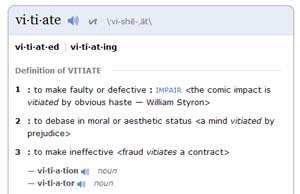
PROGRAM NOTE: This show contains many unusual moments: the unanswered phone calls ringing in Mr. Rakoff’s apartment, the race to the Internet to look up the word “vitiate,” the efforts by both gentlemen to assign various forms of depression and optimism to each other, the common counting mistakes (listen carefully to the intro), and Mr. Rakoff opening up a window. Since these flubs and quirks are presented here unadorned for the listener, we must offer at least one correction. Our Correspondent mangles a George Bernard Shaw late into the conversation. The correct quote is “The real moment of success is not the moment apparent to the crowd,” and comes from Caesar and Cleopatra.

Condition of Mr. Segundo: Confusing threes, fours, and fives.

Author: David Rakoff

Subjects Discussed: [List forthcoming]

EXCERPT FROM SHOW:

Correspondent: You just mentioned that you will not delve into certain aspects of your life in writing these essays.

Rakoff: For the most part.

Correspondent: For the most part. This leads me to wonder about “Shrimp.” The essay in which, as a child, you report that you have a desire to have a fast track to adulthood. This led me to wonder if you had even really attempted to view this from the reverse vantage point. Of you as an adult reporting back to David Rakoff the child, “Okay. Here’s what it’s all about. It’s perfectly okay.” You say you have a happy childhood. But you also have this longing to become an adult very, very rapidly.

Rakoff: Yes.

Correspondent: As a quick rung up the ladder. That’s just not the way life works. Why view it from this linear quality? This is interesting because you are often very digressive in your essays.

Rakoff: Yes.

Correspondent: Which is why I like them. But from this vantage point, from childhood to adulthood, you’re looking at only in one direction and not really the reverse. I’m curious why that was. Or if you have made attempts to look at it the other way. Or is that where the essay “Isn’t It Romantic?” comes into play? Is that you — okay, here’s the adult looking back to being a child.

Rakoff: Wow.

Correspondent: Just to throw some things at you.

Rakoff: Okay, let me see if I can parse this into something resembling an answer. Part of the reason that I don’t look back — or, you know, look in reverse — is twofold. I’m really not kidding when I said I didn’t enjoy being a child. So I don’t really adore remembering that. I’m not comfortable with who I was. I’m a little embarrassed with who I was. So I don’t spend a lot of time looking back. And also because I don’t generally try to mine my own life. It feels a little — I’m still not entirely comfortable with what seemed to be a certain sort of self-mythologizing aspects I’m not just comfortable using the details of my life. Although it’s a somewhat waffling response. Because this particular book is full of details about my life and things that are quite personal, I suppose.

Correspondent: And possibly the most personal of the three books.

Rakoff: Oh, undoubtedly the most personal of the three books. Yes, absolutely. But in terms of the forward-looking thing, there is that anxiety that marks whatever phase you’re at. And I think it’s an anxiety that marks life in general. Which is: Everything takes longer than you hope it’s going to. Everything. Everything has to gestate. Whether it’s work, whether it’s creativity, whether it’s just having people in the world knowing who you are and therefore throw work your way. It’s always, “Everything takes longer.” Certain recipes, where the congealing of albumen in an egg where you apply heat, you know, that takes the number of minutes that it takes. Everything takes longer than they say it’s going to take. It’s going to take years. To pay your dues. To get out of a job. Whatever. So it’s that source of tension. Which is that nobody wants to wait that long. Nobody wants to put in the time. And everybody hopes to be ushered past the velvet ropes or somehow upgraded on the great flight. To business class without having deserved it in any way. That’s a constant tension. Not just among me, but I think among every person alive. And every child wants to be suddenly older.

I suppose both essays are an attempt to both make sense of that and also to — if they are speaking to those younger people, to say, “It will be okay. This period shall pass.” And you will look back upon it not fondly. Because that would just be a little nostalgic and kind of unrealistic. But at least with some kind of peace. And I no longer quite begrudge myself those feelings, embarrassing though they may have been — you know.

Correspondent: But not wanting to look back. I’m wondering if this is one of the reasons why your sentences — and even more so with this book — are so ornate and modifier heavy and very phrase happy.

Rakoff: I am phrase happy. That’s a lovely expression! I’ve never heard of it.

Correspondent: Well, it’s one that just occurred to me.

Rakoff: It’s so good.

Correspondent: But if this almost serves as a kind of insulating mechanism, so that if you are going back to your self, you’re doing so in such an idiosyncratic way as to not direct kind of…

Rakoff: Oh, that’s interesting!

Correspondent: Putting your nib into your vein and letting the blood flood onto the page, which is what’s often said about writing.

Rakoff: Yes, it’s true. I guess though that being phrase happy is just inevitable. It’s the way that one moves through the world. You know, it’s the way that one looks at things. It’s the way that one speaks about things. Or rather the way I speak about things. You know, conversation and talking is my favorite thing. It’s my meat. So “phrase happy” is inevitable. It’s interesting to me that you would maybe see it as a kind of mediating or obfuscating screen. Because I see it as the opposite. As a way of actually getting at the exact nature of something. Because a reluctance to look back is not the same thing as not looking back. One cannot help but look back. But you know, it’s inevitable. And it’s not really in my control. So insomuch as I’ve chosen to in certain places, the best I can hope to do is to do so in an accurate and evocative manner. So that someone that I’ve taken along with me (i.e., the reader) will feel like, “Oh, I get what you mean.” That seems very vivid to me and I completely understand what kind of house this was, what kind of experience this was, or something. But, no, I don’t think of the barrage. You know, that huge wave of verbal diarrhea — which is the way I both speak and write –as being a mediating factor. I think of them as being closer to the nib in the vein.

Correspondent: Well, I think maybe it could be both. Words can both insulate and also be the telltale indicator to the reader, “Hey, if you want to go down my journey with me, you’re going to have to wend through my conscious patterns.” You know?

Rakoff: Sure.

Correspondent: And I don’t think that’s necessarily a bad thing. It’s just the way that you are introspective on the page perhaps.

Rakoff: Precisely. And in life. I’m not one of those minimal guy speakers or writers.

Correspondent: Yeah.

Rakoff: I like words. It’s just like having a lot of spices in my kitchen. It’s just that I like having access to all that stuff.

Correspondent: Well, this also leads me to wonder — because you did bring up words in “A Capacity for Wonder.” You report your concern for bad neologisms. Particularly those that are muffed on lexical blending. Words like “innovention.”

Rakoff: Oh yeah.

Correspondent: Or “snackitizer.”

Rakoff: (laughs)

Correspondent:Or “appeteaser.” In your words, “It makes one suspicious, wondering about the ways in which the object in question is found so wanting, so insufficiently innovative or lacking in invention to warrant this linguistic boost.” I’m wondering. Do you greet all words — all language — with some level of skepticism or suspicion? What does it take for you to trust a word?

Rakoff: Oh! What does it take for me to trust a word? First of all, I have to know what it means.

Correspondent: (laughs)

Rakoff: And there are a lot of words — that as often as I pack my ear with them and look them up all the time — I can’t get them. I’ve even said this in an interview. There was one word. “Vitiate.”

Correspondent: It was our interview! We talked about “vitiate” last time!

Rakoff: Yes! And then I even — I’ve still not gotten “vitiate” — and I’ve said it again in another interview with somebody else!

Correspondent: Yes!

Rakoff: Because I still can’t get it into my head.

Correspondent: To wither or to dry.

Rakoff: It means to either strengthen or weaken an argument. Which one does it mean?
Correspondent: No. I thought “vitiate” means to —

Rakoff: Strengthen?

Correspondent: To dry. Like…

Rakoff: No.

Correspondent: No, no, no! Because you’re vitiated! Your energy forces are…

Rakoff: No, it means to either strengthen an argument or weaken an argument. One vitiates one’s argument.

Correspondent: Oh, in rhetoric, that is.

Rakoff: I don’t know. In the dictionary. Should I look it up?

Correspondent: We may as well. Because….

Rakoff: All my stuff is in storage.

Correspondent: Wait, I could do it.

Rakoff: (moves off microphone to computer) Wait, I can do it right here. On the Internet.

Correspondent: I was going to suggest. I’ve got a netbook on me too.

Rakoff: Generally, I use a — is this picking up on the tape, you think?

Correspondent: We could — yeah, I think it’s going to pick up. I can boost it or something like this. We’ll get this moment or I’ll — I thought it was “to wither.”

Rakoff: (still faint, on computer) No, I don’t think so. Vitiate.

(Phone rings.)

Correspondent: Yeah. To impair the quality. To make faulty. Spoil. To repair or weaken.

Rakoff: Revert.

Correspondent: Yeah, yeah, yeah!

Rakoff: Interesting.

Correspondent: Well, do you want to answer? (indicates phone) Because I can stop.

Rakoff: No, no, no. I’ll let the machine pick up.

(Rakoff returns to mike.)

Correspondent: Anyway, now that we have used the Internet to confirm what this word is.

Rakoff: Yeah.

Correspondent: Both of us are coming at it slightly wrong. I drew my attention to the weakening aspect of the word and you drew your attention to the rhetorical quality of the word.

Rakoff: Yeah. To ruin one’s argument.

Correspondent: Yes.

Rakoff: So it’s the same.

Correspondent: We had the same idea. We’re close. But both of us are imprecise. I don’t know what that says about us or the word.

Rakoff: I think we are close. I think we both get the word. But it’s funny that we — Jesus, even five years later.

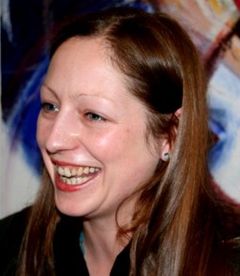
(Image: Kris Krug)

The Bat Segundo Show #362: David Rakoff II (Download MP3)

This text will be replaced

The Bat Segundo Show: Andrew Ervin

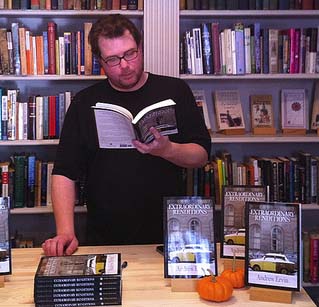
Andrew Ervin appeared on The Bat Segundo Show #361. He is most recently the author of Extraordinary Renditions.

Condition of Mr. Segundo: Contemplating alternative forms of freedom.

Author: Andrew Ervin

Subjects Discussed: [List forthcoming]

EXCERPT FROM SHOW:

Ervin: What else do we have but politics to write about? Ultimately. Whether it’s on a personal level or a cultural level or a national level, politics is going to play a part in every element of our lives, I would imagine. You were asking me about anger recently and I think that gets back to Brutus, who is a very angry character. And he’s the way that I found a voice from my intense anger about our political realm in America. I mean, what’s going on is disastrous to me. We’re still an incredibly racist nation. We’re still an incredibly sexist nation. And this character gave me an opportunity to voice that in some way. And it may be a bit over-the-top. It may push the radicalism a little too far in some regards. And perhaps I tried to mediate that with some of the other characters. But I’m not sure.

Correspondent: But with Brutus, you are very clear to point out that he has a good deal of materialistic hypocrisy.

Ervin: Absolutely.

Correspondent: Here’s a guy who goes ahead and he complains about blowing money. He complains about getting ripped off by the hotel and then he’s blowing money on fast food and Tom Clancy novels. And also that shopping trick he makes, where he’s totally fleeced. So for a guy who is in this really terrible and probably not very well-paying occupation of setting rat traps, and for a guy who is really anti-corporate and inflamed and into a possible post-Black Power situation, he is decidedly hypocritical. That his ultimate engagement with politics is actually a way of him getting lost further instead of finding that identity he wants.

Ervin: Is it still hypocritical if we’re aware that we’re participating? I mean, can we ever get completely outside of the system that we’re trying to critique. We can write the great environmentalist novel of our age, but it’s still going to be printed on bleached paper and packed into trucks and carried across the highway system. There’s always some participation in what we’re critiquing. No matter what. My hope is that I’m aware of the extent to which I’m working within a system to critique it to some extent. Not that I have a specific political agenda with this book. I don’t. I really don’t. Every critic that I speak to wants to ascribe one to it. And they tend to be different ones, depending upon whom I’m speaking to. Which is kind of nice. But there’s definitely an awareness both on my part and, I believe, on Brutus’s part — there’s no getting away from what we’re critiquing. We are also participating.

Correspondent: Yeah. So basically, the question I have now is why fiction is the best way to critique this problematic involvement with politics. Because…well, maybe I’m answering your question a bit. (laughs)

Ervin: (laughs) Yeah, would you please?

Correspondent: The thought I had here was maybe fiction serves as this container for you to examine our participation in the system we’re critiquing. Because it is, in itself, a container. And I did actually want to bring up some of the descriptive details about containment. You refer to “the ceiling of the sky.” There’s the Coca-Cola sign that is on the top of the apartment in the third novella. So this leads me to believe that this is indeed a preoccupation. But maybe we can tie in how you arrived at this walled in description with another query about whether fiction is the best way to create a dialogue about this issue. Do you think it is?

Ervin: I’m not sure that fiction is privileged in any way in speaking to those issues. If I could play piano, I would try that. If I could paint pictures, I would do that. I’d be willing to break out an interpretive dance for you.

Correspondent: Please do.

Ervin: If you think you can record that. I don’t know what fiction can do in relation to the other arts or any means of expression or nonfiction or poetry. They all play a part in whatever we’re trying to say. Fiction is just what works for me personally. And I don’t want to claim that it has some kind of privilege. It’s what I do.

Correspondent: Well, in terms of the description of characters walled in interiors, why do you think you’re so focused on this? I mean, you do use “the ceiling of the sky.” That is a very clear indicator that no matter where one goes, one is going to find one’s self in some kind of interior. Even walking outside.

Ervin: Are you telling me that you don’t feel that way?

Correspondent: Well, it depends.

Ervin: (laughs)

Correspondent: You’re asking me to confess perspective versus description perhaps. And maybe that’s the tension we’re describing here.

Ervin: I guess a large part of what this book is about are the restrictions that are placed on us by social organizations and political organizations. The barriers we put on ourselves. The limitations we’re wiling to put on our own imaginations very often without even knowing it. And this scares me. This frightens me a great deal. That we don’t know how free we are. And we participate in these polite little conversations in front of microphones. And we go out in public and follow the rules. And go where we’re supposed to go and buy what we’re supposed to buy. There’s some part of our humanity that we’ve lost touch with. We’ve lost something that is vitally important to who we are. We’re all so damn polite now.

Correspondent: Yes.

Ervin: And if my characters are constrained some way even by their natural environment, that may be the reason. Because I feel like we are constrained.

Correspondent: And yet you associate this freedom with violence. The end of the second novella has a very specific line about freedom. “This was something that he had not perceived for so long.” And to my mind, that is extremely interesting. Because on one level, what your freedom might be or what Brutus’s freedom might be — and then I think in my mind, Franzen’s idea of freedom, which from my standpoint is very much endorsing the exact system that you’re trying to critique. So since freedom is really a relative term, is it even a term to dwell on? Is it possibly too general a term? Does fiction, by way of ambiguity, allow one — either the author or the reader — to find not necessarily a solution, but at least an understanding of this dilemma that we’re describing?

Ervin: How are we going to know when we are free? I mean, that’s the question. Is it just opening up one more barrier and seeing a slightly bigger horizon? There’s no way for me to be able to answer that. The moment you’re talking about at the end of the second novella, with Brutus on the bridge over the Danube, I think references the [Frantz] Fanon book he’s reading. He’s carrying around The Wretched of the Earth. This great book in many ways about the curative power of violence. And to try and conflate my personal political agenda, if I have one, with that is a mistake, I think. That’s not me. That’s this one character who may have a more enlightened view of the world than I do or a more limited one in some way that I’m not sure. But freedom is not — I mean, what can you say? Who knows?

(Image: Dean Sabatino)

The Bat Segundo Show #361: Andrew Ervin (Download MP3)

This text will be replaced

The Bat Segundo Show: Scarlett Thomas II

Scarlett Thomas appeared on The Bat Segundo Show #357. Ms. Thomas is most recently the author of Our Tragic Universe. She previously appeared on The Bat Segundo Show #117.

Condition of Mr. Segundo: Unusually pedantic about modifiers.

Author: Scarlett Thomas

Subjects Discussed: [List forthcoming]

EXCERPT FROM SHOW:

Correspondent: I wanted to address one review. Jessa Crispin in The Smart Set. She said, “Well, you adhered to the two laziest storylines that the world of fiction has ever thrown up. Love Conquers All and Secretly a Princess.” But to my mind, I thought this was a severe misreading and misunderstanding of the book. I mean, the book is very much concerned with how narrative must rely on contrivances in order to present life. On the other hand, when you have, for example, the deus ex machina of the magic money appearing in Meg’s account, this is something of a risky proposition for someone who is accustomed to the page-turning of your previous books. So I’m curious as to how much you worried or agonized over this, coming off of a fairly substantial success — particularly in the UK and particularly here among bloggers and the like. Did you just not care? Or did you worry about people misreading this? Because you’re presenting narrative within narrative within narrative and some people are clearly not picking this up.

Thomas: Yeah, I mean — God, there’s quite a lot there. I read the Jessa Crispin piece and I feel quite frustrated with it. Because the reading that she presents is the reading that’s set up for you in the book. That, in fact, it’s one character’s analysis of what’s happened. But the book sets it up as probably wrong. The reading that’s there –- I mean, this is just my own reading. Everybody is welcome to read it the way they like.

Correspondent: Sure.

Thomas: But the idea is that you actively go through and think, “Oh! Aha! So it was the cosmic ordering that gave her the money. And then this and that and the other. Oh my god, everything’s prearranged. And there’s no free will and everything’s perfectly placid. And it’s just like Kelsey Newman. Do I actually want to live like that? Or would I rather read it a different way?” So that’s what you’re supposed to be doing with those ideas. And Jessa seems to have stopped a bit too early. The money device – it’s not really a deus ex machina. Because Meg has written these novels. And they have been optioned for TV. And she has got the money for it. And I think, as most writers know, you do these things. And everybody’s always talking about optioning this and optioning that. And you might get some money. And you never do. And one day, you open your online banking. And there’s some money. And it does kind of change your life. For me, The End of Mr. Y did so well in the UK and Europe that there were days when I’d open up my bank account and think, “Whoa! Where has that come from?” For the first time in my life. Because, you know, I’ve always been pretty poor. And I wanted to try and write out that experience of suddenly having some money. But, of course, it’s really hard to do in a novel. Because the novels are supposed to be about drama and struggle and conflict, and somebody striving. You’re supposed to get the money at the very end of the book. I wanted to play with the idea of getting the treasure in the middle. And then what happens to life after that? But I have to say that Meg is not really a princess. Not for me anyway. What was the other thing?

Correspondent: I was going on about how narrative has to rely on contrivances to some degree in order to represent life. But to phrase that in light of your last answer, what I think we’re talking about here is the problem with coincidences, which occur in reality and life all the time. And yet when you put them into a novel, then, all of a sudden, it seems like “Oh, that can’t possibly happen!” And that’s the problem with structure, I suspect.

Thomas: Well, you see, another thing I’m trying to do in the novel – maybe not so obviously; well, maybe it is obvious – is to look at coincidence. Is the world and our experience of it – is that somehow structured in a scientific or positivist and rationalist way? Is it structured on the spiritualists on some level? Because that’s also a structure that’s imposed. Is it completely random? Or the fourth option – I may have just said there are three.

Correspondent: Well, that’s okay. We’re not counting.

Thomas: (laughs) Yeah, I don’t think you can count. But the fourth option is more interesting to me. And I think that there is no structure. But there are lots of people who are aware of lots of different structures. Which is interesting. And there are things that happen that aren’t pure coincidence. So that things don’t just happen out of nowhere. But they happen through plots or series of events leading up to that that are so minute that you almost can’t see them. So, for example, towards the end of the novel, Frank and Vi turn up miraculously on the River Dart, where The Beast maybe is, and end up taking place in some action there. And for me, I really liked putting them there. Because I thought they were there because they read Alice Oswald’s poem about the Dart. So it’s not that they weren’t there randomly by complete chance. Everybody does everything for a reason. I’m really interested in that. And so looking at the reasons for why people do things, and why that might lead to something else, that’s what’s really fascinated me in this book. So I really don’t believe in complete coincidence. I believe in choices and desire and motivation of characters, and just how interesting it is when you look at the tiny aspects of that.

Correspondent: You’ve created almost by necessity, however, a system. And life is what happens when you make other plans. So I’m not certain if I entirely buy your causist explanation for these characters. Because I think you also portray much of the attempt to explain the universe, or explain the world around us, as a trap. And a way to avoid living without absolute cognizance. So I’m curious about how you managed to depict this double-edged sword here.

Thomas: Yeah, it might. I don’t know. I mean, you don’t have to buy it. But it’s absolutely how I wrote the book. That okay, on some level, when you write a novel, you do have to impose some kind of scheme on things which don’t have a scheme like that. You need a beginning, a middle, and an end. You need to choose when you take up with the carrots. When you let them go. All of that. Yes, you do impose a structure. But for me, one of the most interesting moments in the book was when I realized that Arthur Conan Doyle, when he believed in the Cottingley Fairies. For him, the fairies were more believable than these working-class girls who could actually forge pictures of fairies. I found that so fascinating. Because for that to be your explanation – because it was impossible for him to believe in the motivation of the girls, for him to think his way into their lives and the way they would have planned something, wasn’t just a coincidence. They didn’t just happen upon the pictures. They actually made them. And that’s a wonderful thing to imagine. I think it’s great and so inventive. And then, for him, it was easier to believe in the fairies. For him, the more believable plot or the more believable story is that the fairies exist. And, for me, that was a really central image in the whole book.

Correspondent: So even if you don’t clutch to the Kelsey Newman-like idea, you still can find solace in either the Conan Doyle fairies or, as Meg has in this childhood flashback, where there’s this guy who says, “I can teach you magic.” Which is interesting in light of the fact that her father is very much about finding an explanation for the universe with numbers. And so it seems to me that the burden of these characters is very much to find any kind of explanation –- or even the self-help books that Meg must review for this particular column. That this is really the onus for almost all the characters. Either that or you have the option of just tossing your car into the river.

Thomas: Yeah, absolutely. I’m fascinated with the process of looking for explanations for things, and understanding things scientifically. Which has always been my urge. Even though I’m not into the kind of — this nouveau atheist movement is not my thing at all. Because any explanation that makes sense would be okay for me. Usually it’s a kind of scientific explanation. Sometimes, it’s not. But if I’m up in a plane, I want to know how it flies. I want to know why I’m not crashing.

The Bat Segundo Show #357: Scarlett Thomas II (Download MP3)

This text will be replaced