(This is the thirty-first entry in The Modern Library Nonfiction Challenge, an ambitious project to read and write about the Modern Library Nonfiction books from #100 to #1. There is also The Modern Library Reading Challenge, a fiction-based counterpart to this list. Previous entry: The Rise of the West.)
 All historical reconsiderations have to start somewhere. And before C. Vann Woodward combed fastidiously through newspapers to change our perception of Jim Crow, he had to unseat a formidable (and wrongheaded) standard.
In 1941, a journalist by the name of W.J. Cash published a strange book called The Mind of the South and then hanged himself. This volume, aloof and offensive by 2020s standards, nevertheless reflected a good faith effort to attempt to document the Southern region of America: namely, the strains of thought and sensibilities that contributed to its distinctive character.
The problem was that Cash, more seduced by the filigree of writing in the assumed voice of a racist Southern white man rather than offering a coherent, inclusive, and well-sourced anthropological breakdown, was keen on wrapping the unruly region in a mighty blanket of generalizations. Cash believed that the South had no mind, was driven by a romantic instinct boxed into an inflexible historical continuity, and that this was all largely fueled by hedonism and paralogia. This is obviously extremely inaccurate when one considers, oh say, the birth of the blues, the fiction of Jesmyn Ward, Zora Neale Hurston, and William Faulkner, the fact that you will find some of the world’s best gumbo in Louisiana, or, even more importantly, the evolution of civil rights. Cash conveniently elided a great deal of the odious imperialism that jumpstarted the Civil War and, perhaps most criminally, he glossed over slavery (“a vastly wasteful system,” focusing on “the white victims of slavery” rather than Black people, lip service to the aristocrats occasionally huffing about “moral indefensibility,” et al.).
While Mind serves up occasionally smart insights into farmers and class loyalty, it is a largely unsatisfactory volume when it comes to the class and race divides. It is a bit too pat and conveniently poetic for Cash to say that the dominant mood of the South was “one of well-nigh drunken reverie — of a hush that seems all the deeper for the far-away mourning of the hounds and the far-away crying of the does” (and I could quote more from this ridiculously prolix passage, but you get the picture).
Cash’s most unpardonable characterization of the South is his failure to consider the origins and nuances of systemic racism. Black people are nigh invisible through large sections of the book. Yet his highly flawed study became the textbook tendance for postwar intellectuals because there were few other Mencken-endorsed volumes measuring up Southern identity at the time.
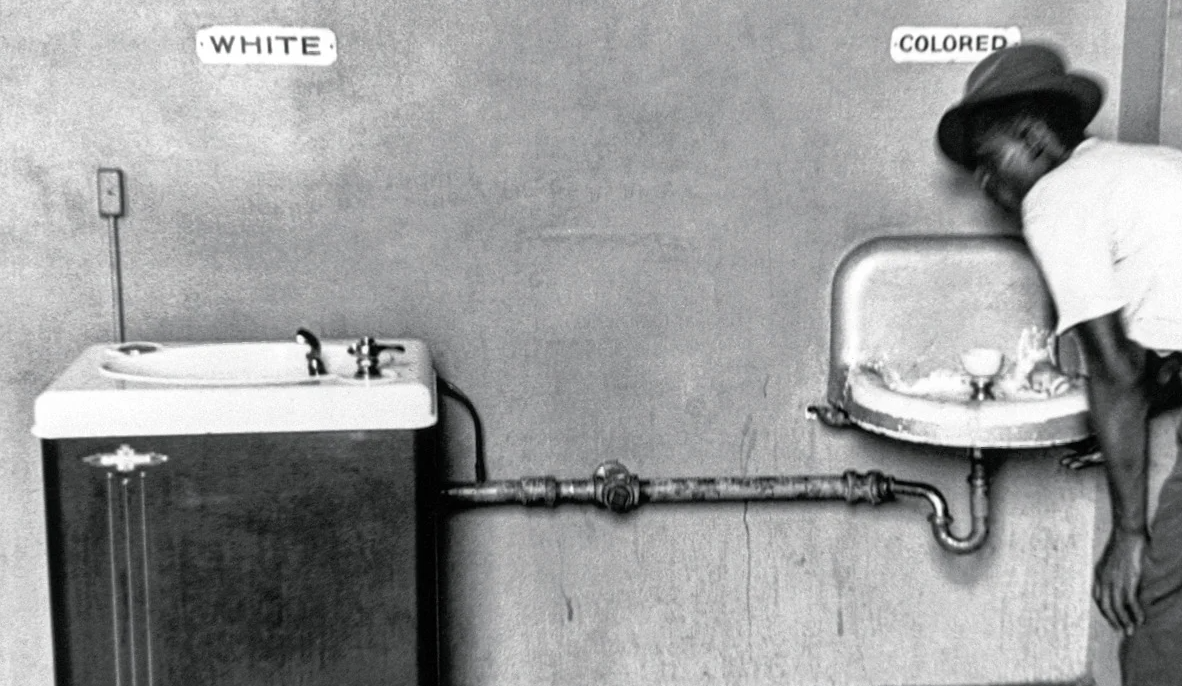
That’s when C. Vann Woodward — a Southern historian who had established himself as an expert on naval history and who quietly wrote recommendation letters for more Blacks to be appointed into academic positions — entered the picture with his excellent volume The Strange Career of Jim Crow. He introduced a vital thesis that was to challenge understanding of racial integration in a deeply important way: In the immediate decades after the Civil War, there were natural moments of social inclusion in which Blacks and whites lived and intermingled together. But these vital steps forward were completely overturned by a group of 19th century white supremacist “influencers” turned lawmakers who ensured that the evils of Jim Crow, which separated public facilities by race, were on most of the state law books south of the Mason-Dixon line and enforced by sinister men perhaps best epitomized by the likes of Bull Connor unleashing German Shepherds upon Black protesters in 1963.
It’s extremely important to understand that there were moments in the 19th century’s waning years in which Jim Crow legislation (which actually originated in the North) was mocked and ridiculed in major Southern cities. One can, in fact, make a persuasive argument that Southerners, in some cases, were willing to put aside their bigotry. Prior to Woodward, the dominant view held by historians was that racial segregation emerged rapidly as Reconstruction began to implode. But a close examination of the sources dredged up by Woodward reveals that his thesis of racial integration emerging in unanticipated spots, which was by no means Panglossian and certainly didn’t erase the repugnant racial violence of that postbellum epoch, holds up in 2026.
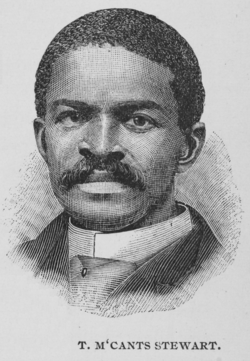 Woodward observed that, as late as 1885, T. McCants Stewart, a Black lawyer and journalist and a close friend of Booker T. Washington, journeyed to his homestate of South Carolina to see how life was shaking out after not stepping foot there for ten years. (Stewart’s extraordinary reporting, published on April 18, 1885 and April 25, 1885 and titled “Rambles in the South,” can be read in its entirety at the Library of Congress.) As he was traveling by rail, Stewart discovered much to his surprise that the car was full and white people were sitting on their luggage and he had a seat. But he was not asked by the conductor to give it up. If anything, the conductor had been gentle and courteous to Stewart when requesting him to move his luggage to accommodate a white passenger. He sat in a dining car in the same room as whites.
Perhaps most remarkably, Stewart said that he actually experienced more racism in Wilmington, Delaware than he did in Virginia and South Carolina. Indeed, white Southerners — in 1885 — made small talk with him. Stewart wrote (and this is not quoted by Woodward): “In the South it is no unusual thing for a man to ask the distance to the next point, to borrow your paper, to remark about the weather, to enter into conversation.” Stewart further remarked, “I feel about as safe here as in Providence, R.I. I can ride in first class cars on the railroads and in the streets. I can go into saloons and get refreshments even as in New York. I can stop in and drink a glass of soda and be more politely waited upon than in some parts of New York.”
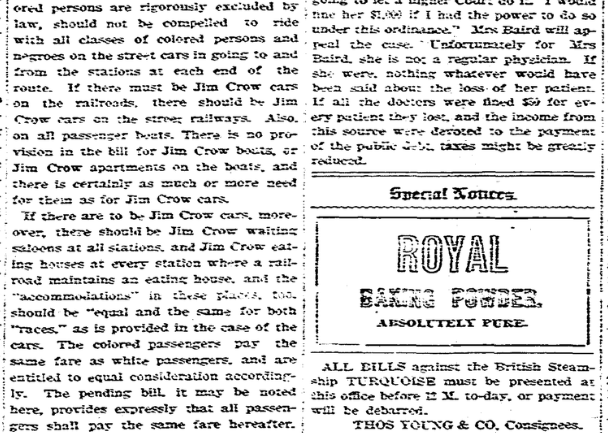
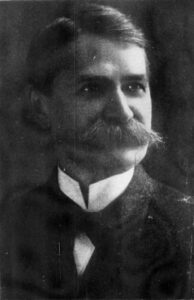 On January 25, 1898, the Charleston News and Courier published an item of devilish satire in response to a Jim Crow law then under consideration by the South Carolina Legislature. Much like people in 2024 never believing that ICE would become a massively budgeted paramilitary force randomly shooting American citizens and kidnapping taxpaying immigrants without due process, it then seemed unthinkable to call for railroad cars to be segregated by race. And so a shit-stirring editor by the name of James C. Hemphill, who had an extremely impressive mustache and who had written many editorials against lynching, had this to say (Woodward quotes some of it, but when I found the entire piece on Newsbank, I couldn’t resist offering more of it):
There should be a Jim Crow section in the jury box, and a separate Jim Crow deck and witness stand in every Court — and a Jim Crow Bible for colored witnesses to kiss. It would be advisable also to have a Jim Crow section in county auditors’ and treasurers’ offices for the accommodation of colored taxpayers. The two races are dreadfully mixed in these offices for weeks every year, especially about Christmas, and just afterward, when the time for making returns and paying taxes, without penalty, is about to expire. The cars are provided with seats, so that everybody can sit down and keep separate from everybody else. It is not so in the county offices. There the crowd stands together in a bench, or is strung out in a waiting and highly variegated line. There should be a Jim Crow “department” for making returns and paying for the privileges and blessings of citizenship.
 Unfortunately, the Charleston News and Courier was taken over by a different editor (Robert Lathan, who did not have an amazing mustache or a sense of humanism), where the Jim Crow stance shifted from high 19th century snark to bona-fide xenophobia.
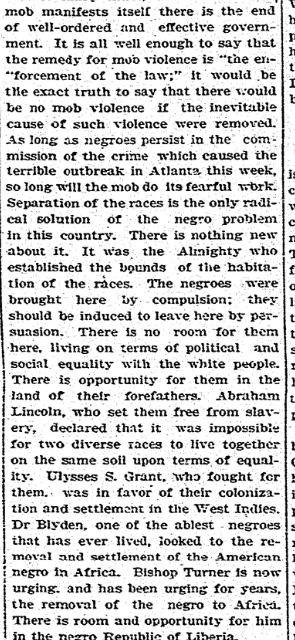
On September 26, 1906, in response to a massacre in Atlanta, one that was as vile and as forgotten as the 1921 Tulsa riots, in which whites murdered dozens of Black people because the Georgia gubernatorial race between then candidates Hoke Smith and Clark Howell stoked racist fears about a Black upper class, the News and Courier blamed racial integration on this:
As long as the negroes [sic] persist in the commission of the crime which caused the terrible outbreak in Atlanta this week, so long will the mob do its fearful work. Separation of the races is the only radical solution of the negro problem in this country. There is nothing new about it. It was the Almighty who established the bounds of the habitation of the races. The negroes were brought here by compulsion; they should be induced to leave here by persuasion. There is no room for them here, living on terms of political and social equality with the white people.
The item also notes that the “problem” “is worse now [1906] than it was ten or twenty years ago.” Never mind that only eight years before, the same newspaper roundly ridiculed any application of Jim Crow laws. But Lathan had no problem leaning into racism, concluding, “[The problem] can be settled effectively only by the separation of the races. The sooner it is settled the better for both races and for the sake of all humanity.” Fortunately, Lathan had the decency to drop dead at the early age of fifty-six before he could blow more racist dog whistles.
Woodward’s salient point still resonates today. Would some of these Jim Crow laws have been abandoned if the people had stood up to the racist lawmakers? Would some of the terrible violence in the aftermath of the Civil War and extending into the 20th century — the East St. Louis riot in 1917, the “Red Summer” of 1919, et al. — have been mitigated? Then and now, it takes only a handful of hateful demagogues delivering repugnant sermons from the mount to make a terrible idea stick.
Like any pithy historian with his finger firmly on the pulse of institutional ills, Woodward has had a few scholars challenge his thesis. In Bind Us Apart, Nicholas Guyatt observed that some abolitionists in the early 19th century (notably William Short) stumped for racial segregation (what Short called “amalgamation”) because they feared interracial sex. Interracial love could only be tolerated by covertly racist Jacksonian Democrats like President Andrew Johnson if it involved non-whites passing as white. Some ostensible “liberals” even argued that freed slaves should be sent off to Africa. (Lincoln himself was keen on sending freed slaves to Liberia in 1854. He also tendered famously abhorrent remarks against racial inequality in his 1858 debates with Douglas.)
These are all fair and unsettling observations, but it doesn’t entirely overturn Woodward’s thesis, particularly since Guyatt is vague about the timeline in his book. Woodward was explicitly talking about how Jim Crow laws were put onto the books and how this codification galvanized more whites to endorse what they had previously either disregarded or countered with high-caliber badinage, not hypocritical whites who professed to stick up for Blacks even as they simultaneously promoted versions of segregation. Unlike Woodward, Guyatt mentions “segregationist Jim Crow laws that had swept through southern legislatures after the collapse of Reconstruction in 1877,” but never cites the states, the dates these laws were passed, or, perhaps most importantly, the severity of these statutes. Woodward, by contrast, is far from ambiguous about what states did what:
Up to 1900 the only law of this type adopted by the majority of Southern states was that applying to passengers aboard trains. And South Carolina did not adopt that until 1898, North Carolina in 1899, and Virginia, the last, in 1900.
In 1896, Plessy v. Ferguson created the conditions for these “separate but equal” iniquities to flourish at the state level until Brown v. The Board of Education of Topeka overturned this interpretation in 1954, leading to what Woodward fairly describes as a volatile time.
Racism certainly did flourish after the Civil War. But Woodward’s more important point is that laws helped to enable white supremacy — to give Southern racists who were on the fence some terrible ideas about accepting Black people into their regular lives. It’s not unlike the way that Trump emboldened racists with his false claims that Haitian immigrants were “eating cats and dogs” during the September 2024 debate with Kamala Harris. And people, who often long to be law-abiding citizens, are more inclined to believe such racist malarkey, capitulating their natural ability to get along with each other, if an institution or a significant person in power tells them that bigotry is not only okay, but very much something enforced by malevolent legislation. This was why Martin Luther King adamantly declared in Why We Can’t Wait that “one has the moral responsibility to disobey unjust laws.”
But it isn’t just statutes we need to worry about. If there is no accountability for the manner in which well-meaning institutions operate, then these can also become enablers of regressive policy. Historian Eric Foner, in his great and massive volume on Reconstruction, noted that Woodward later observed that postbellum “progress” was, much like most of the Democratic Party in the 2020s, “essentially nonrevolutionary and conservative.”
Foner cited two later Woodward volumes — (1) 1960’s The Burden of Southern History, in which Woodward proposed that a “third war aim” (that is, racial equality) had been practiced by Union soldiers and (2) 1971’s American Counterpoint, in which Woodward retracted this. The Freedmen’s Bureau — a federal agency which existed from 1865 to 1872 to help integrate nearly four million formerly enslaved Blacks and poor whites — became a pale shadow of its lofty intentions. Union General Oliver Howard, in cahoots with President Andrew Johnson, went well out of his way to subvert the radical policy that had initiated the bureau. Howard sought to remove “virtually every subordinate who sought to fulfill the original mission of the Bureau and help the freedmen.”
C. Vann Woodward didn’t confine his studies to how the tyranny of law encouraged racism to triumph over equality and decency. He was also deeply worried about how well-meaning federal agencies become corrupted, neutered of their original purpose. Various editions of The Strange Career of Jim Crow became less optimistic with every new revision. Perhaps this is because a great historian always remembers that, even when he exhumes the vital scholarship revealing a more sophisticated understanding of the past, we are always contending with odious loudmouths in the present manipulating a potentially more humane population to settle for the worst.
(Next Up! Thomas S. Kuhn’s The Structure of Scientific Revolutions!)



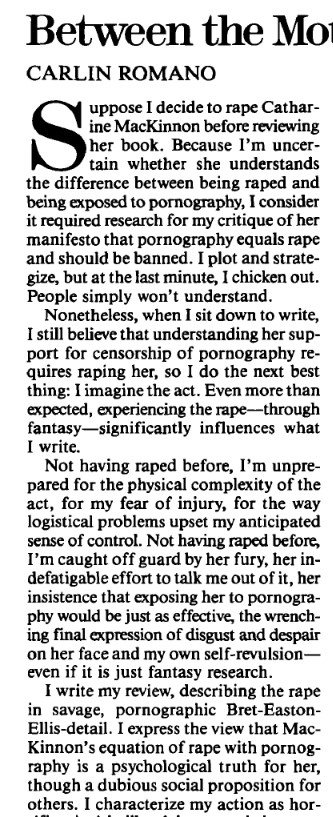 Romano took umbrage with the idea that white gatekeeping “stifles black voices at every level of our industry,” declaring this to be “absolute nonsense.” Never mind that
 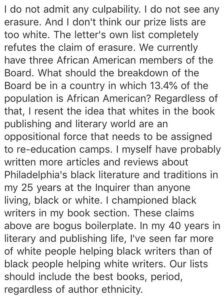 Romano got even uglier, claiming that black writers would “never have been published if not for ecumenical, good-willed white editors and publishers who fought for the publication of black writers.” Amber Books? Black Classics Press? Third World Press? Triple Crown Publications? Life Changing Books? Any of the far too few African-American publishers who have stepped up to redress the systemic racism that the largely white-owned publishing industry has failed to remedy? That Romano applies “ecumenical” to his atavistic statement says much about his condescending views of writers of color. Apparently, in his view, any publisher who puts out a worthy novel that happens to be written by an African-American is an act of charity rather than an act of merit. James Baldwin? Toni Morrison? Octavia Butler? Ta-Nehisi Coates? Well, you’re lucky that your ass got through the door because Whitey decided to let one or two of you through the gates. Does Romano’s repugnantly racist sentiment here not reinforce the problems of white gatekeeping and not buttress the need for any and all literary organizations to be more inclusive? As far as Romano was concerned, the fact that countless people of color had to fight to be published — despite the fact that African-American novels have continued to be financially successful (Samuel R. Delany’s Dhalgren sold one million copies, Alice Walker’s The Color Purple sold five million copies, even Ann Petry’s The Street selling one million copies in 1946, the list goes on) — did not get in the way of his sentiment that black people needed to be fawning and grateful, much in the manner of slaves, to white publishers. Romano doubled down on this racism by writing, “In my 40 years in literary and publishing life, I’ve seen far more of [sic] white people helping black writers than of people black people helping white writers.” In other words, Romano believes that black people should devote their already disadvantaged positions to spending all their time promoting white writers.
 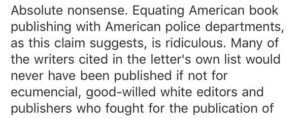 In short, Romano articulated in very clear terms just what he wants the system to be. And his deplorable viewpoint here is no different from an antebellum slaveholder. Romano’s despicable vision is this: White editors serving as gatekeepers. Black authors dancing with joy at the honor of having their neutered visions “represented.” Romano’s statement is, in short, a racist screed against literary merit and inclusiveness. That Romano cannot acknowledge any white bias that has prevented great literature from being published, even as he demands that African-American writers jump up and down over concessions that their white counterparts would never have to face, is nothing less than a pompous white xenophobe revealing his true colors.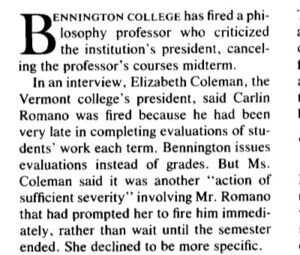
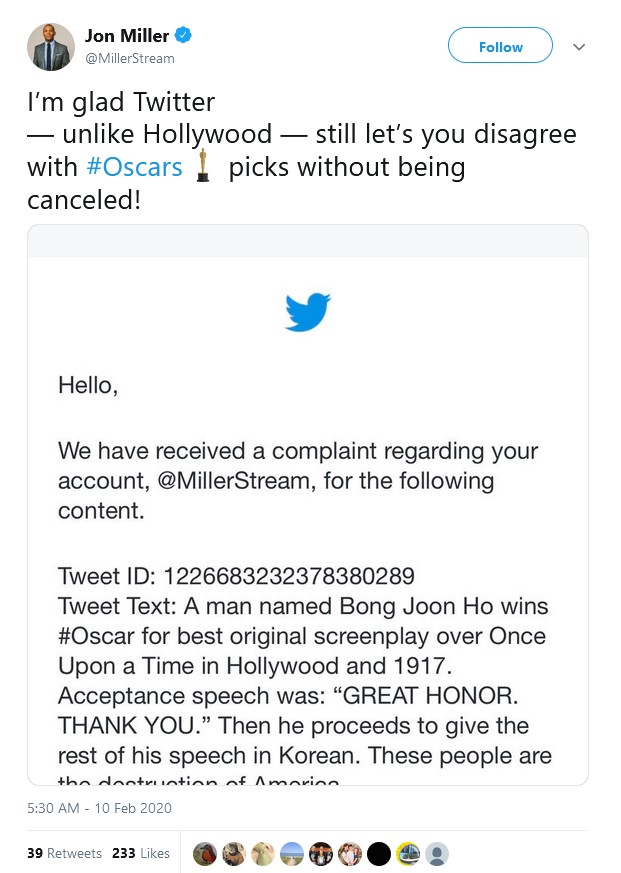
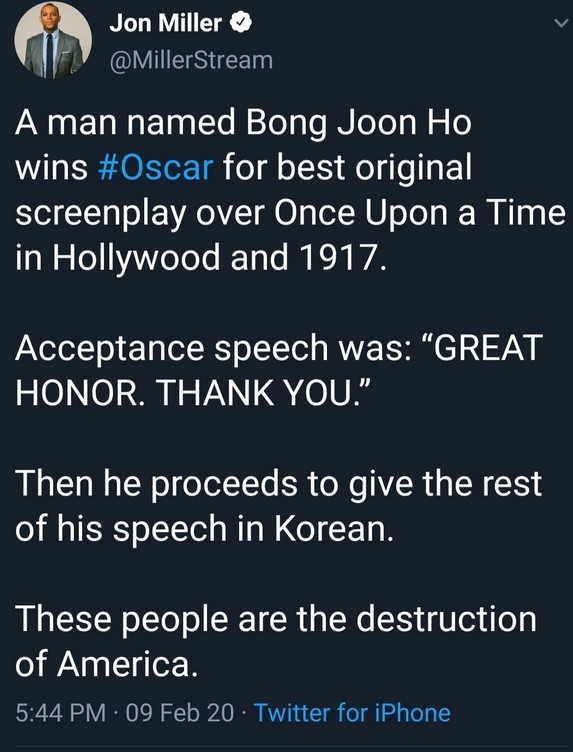 A man with a blue checkmark by the name of Jon Miller, a conservative “White House correspondent for BlazeTV,” tweeted an insulting, cruelly disparaging, and racist message mocking the great filmmaker Bong Joon-ho after he delivered one of his Oscar speeches in Korean. Miller’s disturbingly xenophobic words, which are still published on Twitter as of Monday morning, proceeded to claim that “these people are the destruction of America.” This is language that echoes anti-Semitism in 1930s Germany and