On George Zimmerman: Why Racist “Stand Your Ground” Laws Must Be Challenged

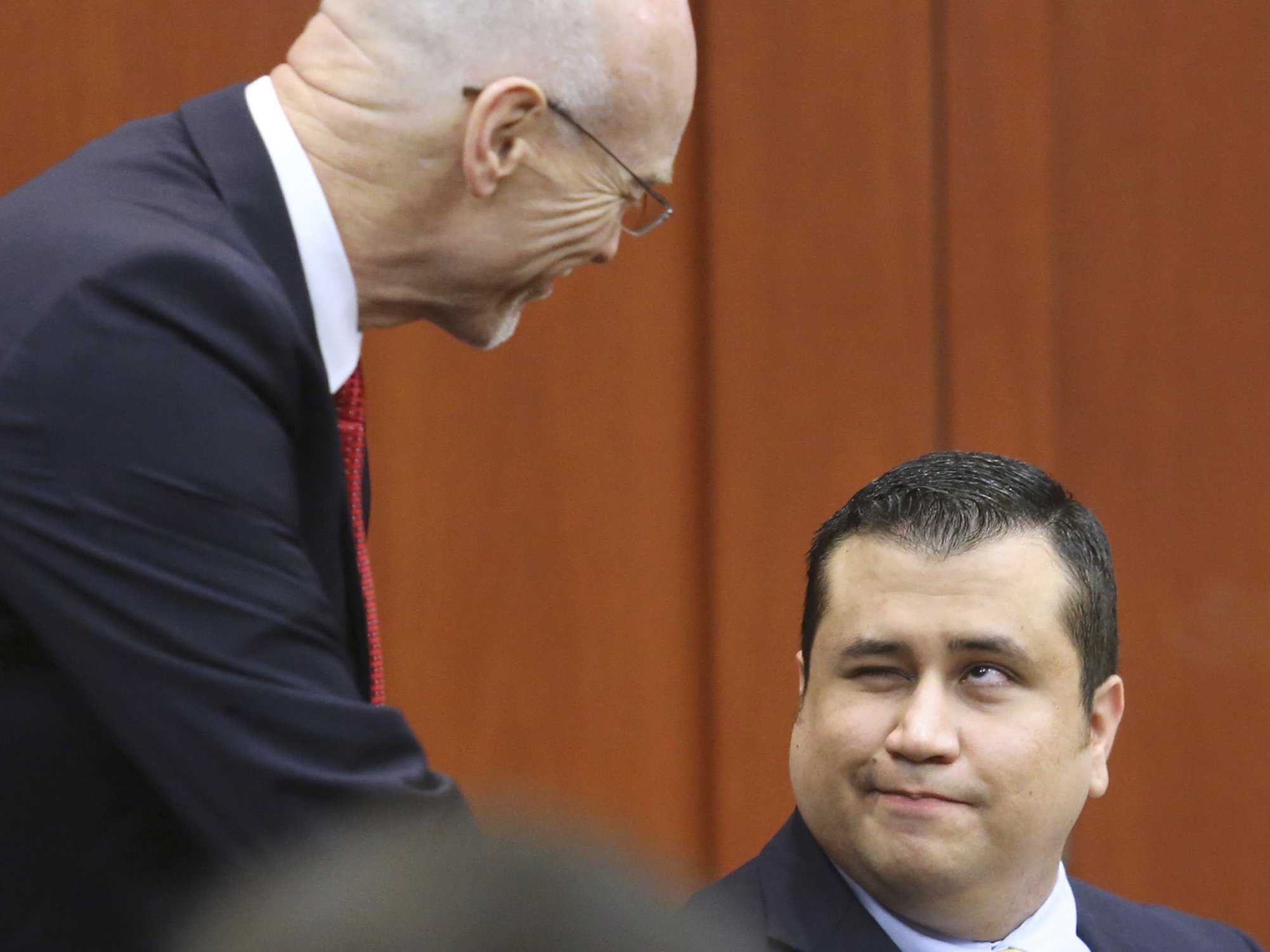
We believed we were long past the point where an unarmed boy would be gunned down because of his race. We were told by dulcet-voiced television pundits soothing us from their comfortable chairs that electing a black man twice as President had pushed all the problems away. We believed, despite racial profiling and the billions of dollars wasted on racially biased arrests, that our nation was “post-racial.” But on a hot Saturday night, a six woman jury demonstrated that this was little more then a myth with one of the most egregious verdicts of the 21st century. This jury acquitted George Zimmerman because virulent laws enacted to cater to these harmonious fantasies encouraged our worst instincts.

Trayvon Martin is dead. There is no verdict or legislation that can bring him back. The man who executed Trayvon from within the privileged gates of an affluent Sanford community has walked. The same statute* that permitted Zimmerman to flee without consequence has also caused an African-American woman to be sentenced to twenty years in prison** for firing warning shots. Clearly, there is something deeply injurious inside the “stand your ground” law that allowed all this to happen.

Trayvon has not been the only victim. The Tampa Bay Times has complied a list of casualties, with the accompanying stories revealing hurt and sorrow needlessly complicated by a law intended to create simple results. “Stand your ground” supporters, such as Florida State Rep. Dennis Baxley, have claimed that violent crime went down and that tourism went up, as if some modest spike in Walt Disney World visitors atoned for an instrument encouraging our basest vigilante instincts. But the facts demonstrate otherwise. Five years after SYG was put into Florida law, reports of justified homicides tripled. SYG cases are are more likely to increase the not-guilty finding of a person accused of killing a black person. A CU-Boulder study from last year revealed that 69 undergraduates and 254 police officers were more likely to shoot black suspects over Hispanics and whites. And all this is just the beginning.

But much as Arizona’s racist anti-immigrant law has spawned two dozen clones across state legislatures, 24 states have followed Florida’s racist lead, putting their own versions of SYG on the books. Ten of these states didn’t even bother to change the language, passing bills that were nearly identical to Florida. These political actions were as callous in deed as epithets or hate automatically assigned to a person because of skin color.

At Salon, Roxane Gay eloquently argued why no one should allow themselves to feel hopeless because of these developments. Beyond asking difficult questions about why racism’s cancer continues to infect the promising fabric of our nation, we need to examine the machinery that holds the quilt together. Libertarians have long parroted Justice Oliver Wendell Holmes’s famous maxim, “Detached reflection cannot be demanded in the presence of an uplifted knife.” But it is no longer 1921. And a strict federal mandate against cartoonish “stand your ground” laws which do not see a distinction between firing a submachine gun at an intrusive encyclopedia salesman and massacring some kid in a hoodie isn’t an unreasonable proposition in 2013.

* UPDATE: It has been rightfully observed by a few readers that Zimmerman waived his “stand your ground” immunity right during the trial. However, the jury instructions define self-defense very much in line with “stand your ground” under the “justifiable use of deadly force” section. The Tampa Bay Times has also pointed out that several “stand your ground” cases have shared qualities with the Trayvon Martin case.

** UPDATE: This CBS News article was updated a day after this piece was filed. The new version of the article pointed out that the Marissa Alexander “stand your ground” angle was not as cut-and-dry as previously stated. I have let this piece stand as is to reflect the information as it was reported at the time, proving that this issue is indeed a highly complicated one. Thanks to M. Smith for pointing out the revised article.


The Bat Segundo Show: Nell Irvin Painter

Nell Irvin Painter appeared on The Bat Segundo Show #329. Painter is most recently the author of The History of White People.

Condition of Mr. Segundo: Drowning in David Coverdale’s noxious imperialism.

Author: Nell Irvin Painter

Subjects Discussed: [List forthcoming]

Correspondent: You are careful to write, “Harvard’s importance in eugenics does not imply some nefarious scheme or even a mean-spirited ambiance. Rather, Harvard’s import in this story attests to the scholarly respectability of eugenic ideas at the time.”
Painter: And that could be said about Princeton or Yale or any of the other lofty institutions.

Correspondent: But it is curious to me. I mean, if we recognize today [Robert] Yerkes and [William] Ripley’s stuff as “junk science” essentially, why at the time were these ideas so respected? Why did some of these people get tenured at Harvard?

Painter: Indeed.

Correspondent: I mean, it couldn’t have just been Harvard’s prestige. It had to be something else, I suppose.

Painter: Well, we’re talking about what was considered good science at the time. That was the knowledge that our culture needed at the time. And, after all, Ripley consulted all sorts of authorities. European authorities, American authorities, and so forth. So he had a really big bibliography and he followed the rules.

Correspondent: If someone attempted something along those lines today, I guess the Internet would kill it, I suppose.

Painter: Not necessarily. If it were something that we all agreed upon. Like, for instance, we’re seeing in the medical field right now. Recently, I read a report in the New York Times by a doctor saying there’s just too many prostrate cancer screenings. But a year or so ago, that was considered good science to have everybody screened. So things change.

Correspondent: I wanted to talk about Emerson, who you really take to task in this book. You devote a whole chapter to English Traits.

Painter: Yes. There are three Emerson chapters.

Correspondent: Yes. There are three Emerson chapters. But English Traits seems to be the one key text with which the…

Painter: It is the key text for this reason.

Correspondent: Yeah. But I just wanted to ask you about this. You note later in the book that Henry Ford was an admirer of English Traits.

Painter: Yes.

Correspondent: But in the book that you cited from — because I was really curious about this – Neil Baldwin’s Henry Ford and the Jews. Baldwin notes that it was Emerson’s essay, “Compensation,” that Ford favored above all else. And he even handed that out as as gifts. And that essay doesn’t contain any reference to race. You also state that Theodore Roosevelt echoes the phrase “hideous brutality” in English Traits. But in English Traits, Emerson uses the word “hideous” only once, in reference to the injustice of pauperism. And granted, there are issues with pauperism related to the Saxon seed, which we had mentioned earlier. But I just want to ask. Because I don’t disagree with you that Emerson’s views on the Irish, his drawing upon Robert Knox — these are problematic.

Painter: Yeah. I’m not saying that Emerson is a bad man. But I’m saying that Emerson, because of his importance in American culture, by focusing on these themes and presenting them, orchestrating them in his impeccable prose, made it acceptable. So it’s not that I’m castigating Emerson. I’m trying to place him in an intellectual theme.

Correspondent: But in the case of Henry Ford drawing more upon “Compensation,” say, than English Traits, that’s where I was — my question mark went up.

Painter: But we’re doing Henry Ford — what? Sixty, seventy years after Emerson.

Correspondent: Yeah. Well, the other thing too is picking and choosing one’s values from Emerson. Like Ralph Ellison, for example. He was named after Ralph Waldo Emerson.

Painter: Right.

Correspondent: And actually took a lot from the transcendentalists.

Painter: Oh, there’s a lot of Emerson. Emerson’s an extraordinary figure. And one who his contemporaries said embodies the whole of American learning. And to a certain extent, he did.

Correspondent: But going back to the question or relativism. Can he be let off the hook somewhat simply because he was, in part, an abolitionist? Maybe he didn’t go all the way, but…

Painter: No. We’re talking about different things.

Correspondent: Hmmm.

Painter: We’re talking about different things. Because he had one set of views, this doesn’t change what we think about another set of views. You can still respect Emerson for his central role in the American Renaissance and still know about his Saxonism.

The Bat Segundo Show #329: Nell Irvin Painter (Download MP3)

This text will be replaced

The Racist Senate of the United States

Here is a listing of racist incidents involving United States Senators presently in office:

BENNETT, ROBERT F. (R — UT)

On March 13, 1998, during investigations pertaining to the 1996 Presidential Campaign, Sen. Bennett remarked, “I stepped in and said, `No. I have owned a business in Asia. I have done business in Asia. Charlie Trie’s actions are the typical actions of an Asian businessman.'” (CSPAN — video and transcript)

BOXER, BARBARA (D — CA)

On July 16, 2009, at an Environment and Public Works Committee hearing, Sen. Boxer was speaking to Harry Alford, president and CEO of the National Black Chamber of Commerce (an organization that Boxer confused with the NAACP), when the following exchange occured:

Boxer: Then we’re going to put the NAACP resolution that passed saying this: The NAACP approved a historic resolution addressing climate change legislation for the first time in the organization’s history.

Alford: What does that mean?

Boxer: Sir, we’re gonna put that in the record, and you can read it cuz I don’t have the time, but I’ll read the rest-

Alford: What does that mean though? I mean, the NAACP has a resolution. What does that mean?

Boxer: Sir, they could say the same thing about what do you mean? I’m just telling you they passed it-

Alford: I’ve got documentation!

Boxer: Sir, they passed it. Now, also, if that isn’t interesting to you, we’ll quote John Grant who is the CEO of A Hundred Black Men of Atlanta. Quote: Clean energy is the key that will unlock millions of jobs, and the NAACP’s support is vital to ensuring that those jobs help to rebuild urban areas. So clearly there is a diversity of opinion.

Alford: Madame Chair-

Boxer: If I can-

Alford: -that is condescending to me.

Boxer: Well-

Alford: I’m the National Black Chamber of Commerce-

Boxer: If this- if this-

Alford: -and you’re trying to put up some other black group up to pit against me.

Boxer: If this gentleman- if this gentleman were here, he would be proud that he was being quoted. Just as-

Alford: He should have been invited.

Boxer: Just as- He would be proud-

Alford: It is condescending to me.

Boxer: Just as so- Just so you know, he would be proud that you were here. He is proud I am sure-

Alford: Proud, proud (bitterly and contemptuously).

Boxer: -that I am quoting him.

Alford: All that’s condescending-

Boxer: Well, Sir.

Alford: -and I don’t like it. It’s racial.

Boxer: What’s racial?

Alford: I don’t like it.

Boxer: Excuse me, Sir.

Alford: I take offense to it.

Boxer: Ok.

Alford: As an African-American and a veteran of this country, I take offense to that.

Boxer: Offense at the fact that I would quote-

Alford: You’re quoting some other black man. Why don’t you quote some other-

Boxer: No.

Alford: Asian? Or some other-

Boxer: Well, lemme-

Alford: I mean- what- You are being racial here.

(Transcript and YouTube clip)

BROWNBACK, SAM (R — KS)

On July 10, 1997, when questioning a witness about a reward from Asian-Americans that Democratic fundraiser John Huang was to receive, Sen. Brownback remarked, “No raise money, no get bonus.” (USA Today, Seattle Times)

BUNNING, JIM (R — KY)

At a March 20, 2004 Republican event, Jim Bunning stated that his opponent, Sen. Daniel Mongiardo, looked like one of Saddam Hussein’s sons. (USA Today, Associated Press)

BYRD, ROBERT (D — WV)

“Senator Byrd quit the Klan in the 1940s and has renounced it since. On the other hand, his history is worth revisiting, since it’s something Democrats have been willing to tolerate, despite Lott-like remarks that would have ended a Republican’s career. Only last year Mr. Byrd told Fox News that ‘there are white niggers. I’ve seen a lot of white niggers in my time, if you want to use that word. But we all–we all–we just need to work together to make our country a better country and I–I’d just as soon quit talking about it so much.'” (Wall Street Journal)

COBURN, TOM (R — OK)


During the July hearings for Supreme Court Justice Sonia Sotomayor, Sen. Coburn impersonated Ricky Ricardo from I Love Lucy, saying, “You have lots of ‘splaining to do!” (YouTube clip and The New York Times)

CORKER, BOB (R — TN)

During his 2006 campaign, Sen. Corker used fears of interracial relationships and stereotypes against his opponent, Harold Ford, who was African-American. “Harold Ford looks nice,” says one African-American woman, “isn’t that enough?” “I met Harold at the Playboy party,” says a scantily clad white woman. (Truthdig with video clip)

GRAHAM, LINDSEY (R — SC)

During the health care debates, Sen. Graham argued the following: “I have 12 percent unemployment in South Carolina. My state’s on its knees. I have 31 percent African-American population in South Carolina.” Later in the speech, Sen. Graham said, “My state, with 30 percent African-American citizens, a lot of low income people in South Carolina is going to cost my state a billion dollars, that’s the same old stuff that I object to. That’s not change we can believe in. That’s sleazy.” Rachel Maddow concluded, “The argument here appears to be that Sen. Graham believes it is sleazy to expect a state with lots of black people in it, to have health reform.” (Rachel Maddow video and Raw Story)

MCCAIN, JOHN (R — AZ)

During the 2000 campaign, Sen. McCain told reporters, “I hated the gooks. I will hate them as long as I live.” (Seattle Post-Intelligencer, March 2, 2000)

In 1983, as a young congressman, Sen. McCain voted against the recognition of Martin Luther King Day. (ABC News)

In an August 1, 2008 post, Capitol Hill Blue’s Doug Thompson noted additional anecdotal examples of racism. (Capitol Hill Blue)

REID, HARRY (D — NV)

In John Heilemann and Mark Halperin’s new book, Game Change Harry Reid stated that Barack Obama could become the first African-American President because he was “light-skinned” and because he did not speak with a “Negro dialect, unless he wanted to have one.” (New York Times)

SESSIONS, JEFF (R — AL)

In 1986, Sen. Sessions was rejected from an Alabama judiciary seat by the Senate Judiciary Committee seat. In previous remarks, Sessions had claimed that the NAACP was “un-American,” calling an African-American aide “boy,” and describing a white civil rights attorney as “a disgrace to his race.” Sessions also claimed that Klansmen were “O.K.” until he learned that a few of them smoked pot. (Numerous articles through Meet Jeff Sessions. See also The New Republic.)

SPECTER, ARLAN (D — PA)

Before he switched parties from Republican to Democrat, Sen. Arlen Specter spoke at a November 1, 2008 pro-McCain rally, where he noted “a couple of hidden factors” in the 2008 presidential election: “The first is that people answer pollsters one way, but in the secrecy of the ballot booth, vote the other way.” (Salon)

VITTER, DAVID (R — LA)


In October 2009, an interracial couple was denied marriage by justice of the peace Keith Bardwell. Sen. Mary Landrieu and Gov. Bobby Jindall both called for Bardwell’s firing. But Sen. Vitter was the only senior official who refused to comment, running away when asked by a guy with a video camera. He also refused to comment when asked three times by MSNBC. (YouTube video, Talking Points Memo)

Those Who Resist the End of Racial Profiling

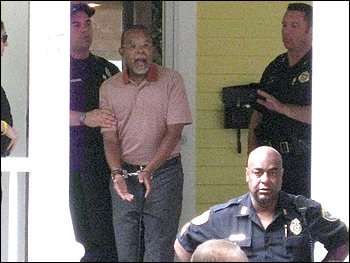
It didn’t take long for the gutless Washington Post writer Neely Tucker to chicken out on the Henry Louis Gates, Jr. arrest. Beginning his article with the lame certainty of a Duck and Cover film, Tucker wasted no time suggesting that the conformist maxim “Don’t Mess With Cops” was “one of the common-sense rules of life.” Tell that to the 320 people who complained of racial profiling in 2007 to the Los Angeles Police Department, only for the LAPD to report back in April 2008 that not a single case had merit. Tell that to Zakariya Reed, a Gulf War veteran in Toledo who retired from the U.S. National Guard after twenty years of service, and who, like many Muslims and Arab Americans, was interrogated at the Canadian border because he had converted to Islam and because he had changed his name.

henrylouisgatesarrestThere are more truths to be found in this eye-opening ACLU report released last month, which demonstrates that racial profiling is alive and well in the United States. And you’d have to be more sheltered than a stray Samoyed hoping to woo an owner before getting the gas not to know that the color of one’s skin often remains more suspicious to a police officer than hard evidence.

But if you’re Neely Tucker and you’re a privileged white guy living in “a predominantly white neighborhood” and you cleave to the naive notion that even the bad cops can have their corrupt actions halted by a next-door neighbor, and if you’re “thrilled” to have the police search your entire house without considering that they might be overstepping their authority, then I must ask in all sincerity just how vanilla your understanding of human nature really is. I must ask whether you even have a basic understanding of American history.

The Fourth Amendment’s beginnings, as Leonard Williams Levy’s Origins of the Bill of Rights helpfully informs us, emerged by linking the right to privacy in one’s home with the Magna Carta maxim that a man’s home is his castle. In 1589, a clerk by the name of Robert Beale asked why agents could “enter into mens houses, break of their chests and chambers” and carry off any evidence that they felt like taking home. Beale was the first figure to suggest that the sanctity of a man’s castle applied to everyone. And over the next two centuries, the English propensity for warrantless searches would draw numerous protests.

Here in the colonies, in 1766, the writ of issuance would face protests from Daniel Malcolm, who allowed customs officials to search all parts of his film save a locked cellar and defiantly responded to these efforts with a set of pistols and the threat, “Try it and I’ll blow your head off.” (A crowd had formed. The officials abandoned their quest. Malcolm and the crowd shared the cask of smuggled wine that he had, after al, hidden in the locked room.)

But the writs of assistance, which gave tax collectors a remarkable degree of powers to violate Beale’s egalitarian link between privacy and the sanctity of home, restricted free speech with the case of John Wilkes and were famously derided in a blistering five hour defense by James Otis. The seeds for the Fourth Amendment were sown. But the fledgling federal government wasn’t exactly upholding its principles. To cite one of many abuses that came in the United States’s first decade, in 1777, six Quaker homes were violently violated, with numerous papers confiscated. Legislation, such as Frisbie v. Butler (1787), was enacted to limit any search which there was reason to suspect. This set down the flagstones for “the right of the people to be secured in their persons, houses, papers, and effects,” and the Fourth Amendment’s ratification.

These incidents created an ongoing dialogue — helpful in an emerging nation that valued vital rights and liberties — about what searches and seizures were acceptable. But incidents like Henry Louis Gates’s needless arrest outside of his own home, in which the arrest is motivated by race, the abuse of police power, and police reaction that is incommensurate with the incident being investigated, must likewise cause the dialogue to continue. Gates was fortunate to have the charges dropped, but how many others in this nation don’t have such a luxury?

The complicity of knee-jerk authoritarians like Neely Tucker, who are better suited devoting their limited talents to writing about forgettable two-part TV movies, is part of the problem. It is part of what Martin Luther King once identified as the “almost universal quest for easy answers and half-baked solutions.” Progress begins by identifying a different form of resistance — namely, those who perpetuate grave injustices by endorsing them with their silence. There once was a time when people drank from different fountains or were forced to sit at the back of the bus. And there will eventually be a time in which people will scratch their heads, wondering why the police went around arresting people for irrational reasons.

(Image: Demotix Images)