The Bat Segundo Show: Hari Kunzru, Part Two

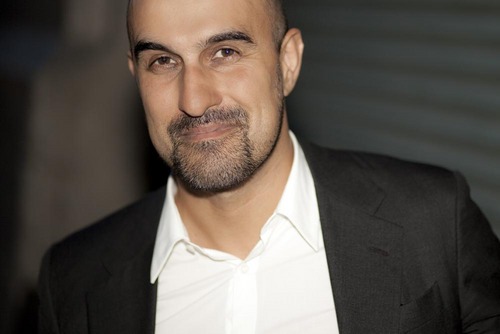
Hari Kunzru recently appeared on The Bat Segundo Show #441. He is most recently the author of Gods Without Men. This is the second of a two part conversation. The first part can be listened to here. But I’m afraid that This American Life isn’t the only program forced to issue a retraction. We’ve discovered that one of our longest conversations contained numerous extensions. This week, we detail this deeply troubling problem in the first few minutes of our program before carrying on with the second part of the Kunzru conversation.

Condition of Mr. Segundo: Unpacking the complexities.

Author: Hari Kunzru

Subjects Discussed: David Mitchell, Kenneth Goldsmith, Tom McCarthy, what is considered valid artistry in 21st century literature, connections between Mitchell’s Cloud Atlas and Calvino’s If on a Winter’s Night a Traveler, Bolaño’s 2666, narrative and functional strands, reviews of Gods Without Men, compromises with editors, Chad Harbach’s The Art of Fielding, publishing job duties, Mark Danielewski’s House of Leaves, rejecting the inclusion of glossaries, editions of books that Kunzru isn’t satisfied with, visiting Michael Moorcock in 2010, what Kunzru takes away from genre, the division between genre and literature, China Miéville, genre fiction that pretends, prizes given to disreputable fiction, postmodernism and the detective novel, science fiction as a method of conceptual confrontation of current trends, simulated worlds, the problems with conventional characters, playing role-playing games, Moorcock’s multiverse, getting the non-Mike people into Moorcock’s work, Moorcock and JG Ballard, a number of very geeky Moorcock references, physical locations, travel writing, writing impressionistic accounts in hotel rooms, the downside of purple lilac hotel room interiors, being close to a location to write about it, Burning Man as a business expense, skepticism about utopias, the literary value of dust storms, knowing what you’re doing before walking across desert country, mysticism, geodesic domes, avoiding certain words, imposing linguistic limitations, Kunzru’s affinity for technical vocabulary, Mormon religious terms, finding the truest deities within computers, Kunzru’s first computer, the ZX Spectrum, the Timex Sinclair 1000 vs. the Timex Sinclair 1500, early efforts to use networks, cradle modems and university computers, Lunar Lander, Adventure, Kunzru’s early efforts to write a Pynchonesque novel, not desiring to be a professional philosopher, the Conspiracy Nation newsletter in the early Internet days, connecting with the world of weirdness from your desktop, Kunzru’s days at Wired, journalism as a way into fiction, the network as a primary form for understanding culture, resolving a ridiculously pedantic pissing match between @drmabuse and @harikunzru, the results of Kunzru’s social media experiment, literary journalists, Jami Attenberg’s report on Jonathan Franzen, Twitter as a way of finding who your people are, the importance of writers getting involved with non-literary interests, how a secular writer can persuasively approach the issue of faith, the relationship between freedom of religion and freedom of expression, doubt as an ethical position, reading The Satanic Verses at the Jaipur Literature Festival, and being better friends to the believing Muslim.

EXCERPT FROM SHOW:

Correspondent: So what then, Hari, do you make up when you write a novel? I mean, I also detected, for example — I saw at least two David Mitchell nods. Not just “Segunda,” which of course I have also plucked. But also there is an early incident with Nicky in which he complains about the waiter not understanding that he’s saying “water,” which I’ve heard David say a couple of times.

Kunzru: Oh really?

Correspondent: Yeah. And I was thinking, “Oh! Now I know they’re friends.” (laughs)

Kunzru: Yeah.

Correspondent: But I am curious about this idea of plucking almost everything from other incidents. Is this something you can help? Do you make shit up to combat that in any way? To keep it real or to keep it authentic? Or do you not even care?

Kunzru: I simply think that you’d be lying if you said everything — let’s see. There’s various positions. On one end of the spectrum, it’s that people like Kenneth Goldsmith and Tom McCarthy would say, “We’re at the end of this tradition. We’re playing in the ruins. The only valid artistic act is a kind of reconfiguration of existing material.” You know, I frankly that’s much easier to say as a straight white guy. Because you’ve had two thousand years of airtime.

Correspondent: (laughs)

Kunzru: Maybe you feel that’s all there is. But actually I think we’re in a moment where there is a lot that’s genuinely new and there’s a lot that’s genuinely unsayable. So, however, my experience of the world isn’t of this kind of wonderful, sort of romantic notion of the primary creation out of nothing and that the extraordinary poetic mind of the creator shaping raw material into art — that simply is not an accurate description of the pragmatics of making literary art. Is it important to distinguish one kind of thing from another? Only when the lawyers turn up. I think any literate person these days is literate in a way which encompasses the notion of source and secondariness. And in words: bad writers borrow, good writers steal. You can make something your own. David Mitchell’s project is interesting. We are friends. I’m friends with Tom as well. And I have productive conversations with these guys about it. I mean, Dave is a much more orderly character than me, I think. A lot of people — mostly because Dave’s blurbed my book; so that’s very nice of him. But Cloud Atlas, to which various people have connected Gods Without Men, is a very different project. That’s a response to Calvino’s If on a Winter’s Night a Traveler, where Dave just could not stand the fact that all these stories opened and then didn’t close. And he made this very beautiful, nested structure, where the stories open, open, open, open, open, center, close, close, close, close, close, end. And that’s one way of seeing the world. And it’s a very formally perfect thing. And it allowed him to show that he’s head and shoulders above most other people working today. As I said before, I’m more interested in breaking that formal perfection and allowing silence. A model I had for this book was Bolaño’s 2666, where there are these very big — three, four very big slabs of narrative. They seem as you read to have no damn connection to each other at all, but gradually, in this almost ineffable way, they start to vibrate in harmony with each other. And it becomes clear that this is a work. I admired that so much.

And also, I think, given that plot at this point is taught everywhere. I mean, I’ve been in some screenwriting lately. You know, this world of the three act structure and this has to happen at this point. It’s those wonderful little clockwork things that you can make out of plot. And the only way of breaking out of that slightly clockwork feeling is literally by breaking out, by making openings, by making strands where things are not functioning as they are expected to function. And it’s been quite a pleasure to see that, in both the US and the UK, the reviewers who have not fundamentally liked this book have all, despite themselves, basically — I mean, Michiko Kakutani did this in the New York Times today; I was just reading her review. They all say, “Why was this not tied up properly? Why did he not concentrate on the straight story of this couple and their child? Why is this imperfectly integrated material been introduced in the book?” And that’s the project. And that’s where I find interest.

Correspondent: The Millions also accused you of doing too much style.

Kunzru: I mean, fair enough. I will never be a kind of cool writer in a certain sort of way. I don’t…

Correspondent: In a literary sort of way?

Kunzru: In an affectless sort of way.

Correspondent: A plain, hardboiled realism degree of fiction?

Kunzru: You know, I feel I have a reasonably nailed down and possibly even cynical view of human relations. But just in terms of writing prose, I like the idea of pretending to be an 18th century Spanish dude. And I like to do the different voices. And that’s the opposite of a certain sort of literary call. I read a lot of post-writing school American fiction in particular, which I find painfully self-conscious because it’s very scared of being uncool. It’s very scared of what might look like style, what might look like showing off, or what might actually look like fun. And it adopts a kind of Carver, who’s obviously the big — you know, all the sentences are stripped down. The most emotional moment is the downfall at the end. I mean, this stuff is now being put out by the yard. Because it’s become a kind of MFA staple. I think it’s what happens when a bunch of hyper-conscious 25-year-old MFA students critique each other in a room for too long. It’s that acute self-consciousness, which I think you’ve got to lose. You need to basically be able to make yourself look slightly ridiculous to be a writer. You need to ideally make yourself look a bit ugly. I mean, there are writers I admire because they can be unlikable on the page and because that’s interesting to me.

Correspondent: I agree with you. But I think we’ve seen a shift — especially from the agents and the editors. I mean, I have heard this. Editors are saying, “You know, all the novels that I get tend to hit these same notes.” This problem we’re talking about. This fear of offending. This diffidence when it comes to chronicling unlikable characters or unlikable perspectives. On the other hand, when you have agents as gatekeepers, who are preventing those types of desired perspectives from actually hitting into publishers and you’re also dealing with the need to get a return on revenue, I mean…

Kunzru: It’s structural, isn’t it? You can’t just blame the writers. You have to blame the way the industry is structured. And there are many, many ways which make books — I haven’t read Chad Harbach’s book yet. But it’s very interesting to me that that book was given the keys to the kingdom very immediately. My partner, the novelist Katie Kitamura, is reading it and, at the moment, has found it very unsatisfactory. I mean, there’s a kind of prose that is deemed by the gatekeepers to play in the Midwest.

Correspondent: Yes.

Kunzru: And hence kind of gets through. And this structural stuff — I can’t have a book that looks like I want it to look. I mean, the physicality of my book is not under my control because the publishers have certain job descriptions. There’s an art director. There’s a designer. I mean, my books would not look like the published objects that they are. Those objects should be considered as compromises. You know, you fight for the kind of cover that you feel you want. I mean, my visual taste is not always the visual taste of my publishers and my editors. In terms of font. In terms of spacing. Let alone if you were to point to really fooling around with formal stuff or you wanted to try and open your book in some way that wasn’t the traditional novel. All these things exclude certain types of things you can do with writing and make the novel look like the novel looks now. And I don’t know whether it’s fixable. Because in a way, I’m kind of into the idea that, as a writer, you’re in this very impure situation. My gallery artist friends are shocked by the lack of control I have over the presentation of my work. Because they’re able to control minutiae. Because they’re just trying to sell six things to six very wealthy dudes. You know, I’m trying to sell six thousand — hopefully more than six thousand — to many, many people. So there is this point. You’re in the market. You’re in this very, very different kind of aesthetic world. And yet you’re trying to make art in this situation. And it’s an interesting one.

Correspondent: But what do you do? Do you pull a Mark Danielewski? Do you go to Random House and sit in a carrel for three to four weeks and say, “I know exactly how this novel should look”? I mean, if you have to compromise on these levels, I’m curious also — narrative-wise, textually-wise — what compromises do you make to keep this real?

Kunzru: I know. I think that’s really a very personal question for each writer. You have different things that are redlines and things that aren’t.

Correspondent: But what are we talking about?

Kunzru: Well, I mean, I give completed drafts to an agent, an editor, a couple of other people, and I listen when they say, “I don’t understand why this is happening.” So even if I think something is clear, and I think it’s not communicating to that extent, that’s when I’ll change. I don’t know if that counts as compromise. I dug my heels in structurally on this book — in that there was a point of view that I should cut certain sections and that I should give more help, tie up more neatly. And that was precisely what I didn’t want to do. Same with previous books. I mean, I was asked to put a glossary into The Impressionist. But I figured that would be a way of saying that this book is for non-Indian readers rather than for Indian readers who will already know these words and I had written in a way where I thought that all the Hindi and slang words and stuff would be understandable from context. So I said no to that. Where do I compromise? I have ended up compromising on all the visual stuff. I’ve never really beyond a certain point tried to impose. I mean, publishers have house styles in terms of fonts. I’ve never really tried to fight my corner very hard in that.

Correspondent: Can you ever be happy with the final way that the book looks and feels and is?

Kunzru: I like some of the books that are out under my name. The objects that are under my name. I mean, I’d say that there are editions that I’m embarrassed to carry around.

The Bat Segundo Show #441: Hari Kunzru, Part Two (Download MP3)
This text will be replaced

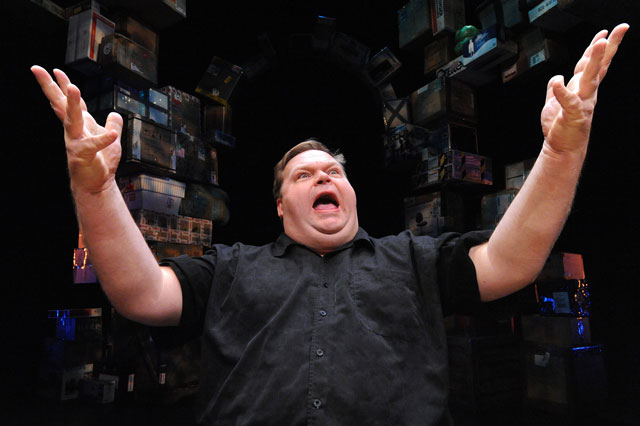
Mike Daisey Lies on This American Life; Theaters Won’t Cancel Performances or Issue Refunds

On Friday afternoon, Mike Daisey, the monologist who appeared on This American Life earlier in the year to report on apparent abuses of Chinese workers at Foxconn, was revealed to have fabricated and conflated substantial details of his story. Daisey’s lies and errors had proven so severe that This American Life devoted an entirely new episode to clearing up Daisey’s story.

Daisey’s tale, which was an excerpt from his one-man show The Agony and the Ecstasy of Steve Jobs, had helped to shape many people’s feelings about Apple. Apple had relied upon its supplier, Foxonn, to manufacture its line of iPhones and iPads. And while an independent investigation from The New York Times earlier this year also revealed unsafe working conditions at Foxconn, there remain significant doubts over whether much of what Daisey has stated on stage and on air is true.

“As best as we can tell,” said host Ira Glass on the new episode of This American Life, “Mike’s monologue in reality is a mix of things that actually happened when he visited China and things that he just heard about or researched, which he then pretends that he witnessed first-hand.” Glass went on to say that he had taken Daisey at his word and that he saw no reason to doubt Daisey. “I can now say in retrospect that when Mike Daisey wouldn’t give us contact information for his interpreter, we should’ve killed the story rather than run it. We never should’ve broadcast this story without talking to that woman.”

Rob Schmitz, a Marketplace correspondent in Shanghai, was able to track down “Cathy” — Daisey’s interpreter for the piece, whose real name is Li Guifen but who also goes by the name Cathy Lee — by putting the terms “Cathy,” “translator,” and “Shenzhen” into Google. He called the first phone number that came up. Cathy Lee did not know that Daisey had used her in his show. She thought that Daisey was merely an American writer.

Hers is a list of Daisey’s lies uncovered on the program:

  • Daisey claimed that the Foxconn guards at the gates had guns. Schmitz said that, in all of his years of reporting, he had never seen guards with guns. “The only people allowed to have guns in China are the military and the police, not factory guards.” This was corroborated by Cathy Lee, who told This American Life that she had never seen a gun in person.
  • Daisey claimed that he met with workers “at coffeehouses and different Starbucks in Guangzhou.” Schmitz pointed out that it was unlikely that factory workers who made fifteen to twenty dollars a day would sip coffee at Starbucks. Because Starbucks is pricier in China than in the United States.
  • Daisey claimed that he talked to hundreds of workers. Cathy Lee said that it was 50 workers on the outside.
  • Daisey claimed that he posed as a businessman to get inside Foxconn’s factories. In fact, Daisey’s appointments were all set up in advance.
  • Daisey claimed that he visited ten factories Cathy Lee told This American Life it was only three.
  • While Apple’s own audits have revealed some underage workers (a total of 91 workers among hundreds of thousands in 2010), Cathy Lee revealed that Daisey had not met any underage workers during his trip. “Maybe we met a girl who looked like she was thirteen years old, like that one. She looks really young,” said Cathy Lee. “I think if she said she was thirteen or twelve, then I would be surprised. I would be very surprised. And I would remember for sure. But there is no such thing.” In the ten years that Cathy Lee has visited factories in Shenzhen, she’s hardly seen any underage workers.
  • Daisey claimed to meet twenty-five to thirty workers from an unauthorized union in an all-day meeting. The meeting did happen. But it was two to three workers, and the meeting was only for a few hours, over lunch at a restaurant.
  • Cathy Lee has doubts about the government-issued blacklist of people who the companies weren’t allowed to hire. While she remembers the blacklist, she says that it didn’t have an official government stamp, which any government-issued document would have.
  • Daisey claimed that he encountered people who had been poisoned by n-hexane, with their hands shaking uncontrollably. But Cathy Lee told Rob Schmitz that she and Daisey hadn’t met anybody poisoned by hexane. The story came from news in 2010, but the hexane poisoning occurred in a Wintek family in Suzhou, nearly a thousand miles away from Shenzhen.
  • Daisey describes an old man who got his hand twisted in a metal press and who has never seen an iPad turned on. In Daisey’s monologue, the old man says, “It’s a kind of magic,” when the iPad’s screen is turned on. Cathy Lee said that this never happened. “It’s just like a movie scenery,” she said on the program. She did say she remembered the guy, but that he never worked at Foxconn.
  • The taxi ride on the exit ramp that ended in thin air 85 feet from the ground? Cathy Lee said that it did not happen.
  • Cathy Lee said that she and Daisey never saw any factory dorm rooms.
  • Daisey claimed that it would not work if he talked with Foxcon workers at the gate. But Cathy Lee has been taking workers to the factory gates for years.

In the fact-checking process, Daisey repeatedly lied to Glass and Schmitz. He initially told Glass that he met with 25 to 30 illegal union workers. When pressed by Glass and Schmitz, he knocked the number down to ten. Cathy Lee said it was really between two and five.

“Why would Cathy say that you did not meet any underage workers?” asked Schmitz on the program.

“I don’t know,” replied Daisey. “I do know that when doing interviews a lot of people were speaking in English. They enjoyed using English with me and I don’t know if she was paying attention at that particular point.”

When pressed further by Schmitz, Daisey claimed to have “a clear recollection of meeting somebody who was thirteen years old” and with another worker who was twelve years old.

“But none of them said they were twelve, right?” countered Glass. “The others didn’t actually give their ages and you’re just kind of guessing.”

“That’s correct,” replied Daisey. “That’s accurate.”

When confronted about the invented hexane workers on the program, Daisey could not actually confess that he lied.

“I wouldn’t express it that way,” said Daisey.

“How would you express it?” asked Schmitz.

“I would say that I wanted to tell a story that captured the totality of my trip. So when I was building the scene of that meeting, I wanted to have the voice of this thing that had been happening that everyone had been talking about,” replied Daisey.

“So you didn’t meet any worker who’d been poisoned by hexane?” asked Glass.

“That’s correct,” replied Daisey.

* * *

Daisey told The New York Times in 2006 that he “once fabricated a story because it ‘connected’ with the audience.” That same year, Daisey performed a one-man show called Truth: The Heart is a Million Little Pieces Above All Things, which used James Frey and JT Leroy as inspiration. As Variety wrote at the time, “Daisey comes to a judgment that is strict but sympathetic; he suggests that if people are often the least reliable narrators of their own lives, they are also sometimes the most engaging.”

When I contacted theater companies on Friday afternoon, it was evident that they were more taken with the “engaging” nature of Daisey’s show rather than its veracity. DJ from New York’s The Public Theater informed me that the three remaining performances of Daisey’s show scheduled on Saturday and Sunday were still on. There were no plans to cancel.

But what of theatergoers who might have believed that Daisey’s story is real and who booked tickets in advance of these allegations?

“We don’t offer refunds,” said DJ.

Burlington’s Flynn Center will not be canceling Daisey’s March 31st show. The spokesperson and I have been playing telephone tag. [SEE 3/19/12 UPDATE BELOW FOR ADDITIONAL FLYNN CENTER DETAILS.]

When I contacted Emily Weiner at the D-Crit Conference, where Daisey is scheduled to speak on May 2nd, I was apparently the first person to inform Ms. Weiner of the news. There was nobody available to issue an official statement.

I was also the first to inform a very friendly woman at the Emmett Robinson Theater of Daisey’s fabrications. I left a message with Jesse Bagley, the chief contact person at the Spoleto Festival in Charleston, where Daisey is scheduled to perform from May 31st to June 6th.

The best response I was able to get was from Brooke Miller, Press and Digital Content Manager and designated spokesperson for the Woolly Mammoth Theater Company. Daisey is scheduled to perform at the Washington, DC theater from June 17th to August 5th. After getting Miller on the phone, I was told that there would be no refunds or cancellations. When I pressed Miller further on what circumstances might cause the theater to issue refunds or cancel, I was simply told that the show was “constantly changing.”

Woolly Mammoth even expressed pride in Daisey’s work. In an official statement sent to me via email, Miller called The Agony and the Ecstasy of Steve Jobs “a daring work of theatre that opened people’s eyes to some of the real working conditions in Chinese factories where high-tech products are manufactured–conditions which have been documented by subsequent journalistic accounts in The New York Times and other sources. It’s a core value of Woolly to present works that spark conversation around topics of socio-political importance, and we’re pleased to have played a part in bringing these issues to national attention. We look forward to welcoming Mike back for an encore performance of the show this summer.”

3/17/2012 1:00 PM UPDATE: The Public Theater has released this statement (PDF) in response to Mike Daisey:

In the theater, our job is to create fictions that reveal truth — that’s what a storyteller does, that’s what a dramatist does. The Agony and the Ecstasy of Steve Jobs reveals, as Mike’s other monologues have, human truths in story form.

In this work, Mike uses a story to frame and lead debate about an important issue in a deeply compelling way. He has illuminated how our actions affect people half-a-world away and, in doing so, has spurred action to address a troubling situation. This is a powerful work of art and exactly the kind of storytelling that The Public Theater has supported, and will continue to support in the future.

Mike is an artist, not a journalist. Nevertheless, we wish he had been more precise with us and our audiences about what was and wasn’t his personal experience in the piece.

3/17/2012 7:30 PM UPDATE: Out of Focus‘s Aaron Dobbs was at this afternoon’s 2:00 PM performance of Mike Daisey’s The Agony and the Ecstasy of Steve Jobs and reported the following on Twitter:

The Associated Press’s Mark Kennedy also confirms that Daisey has added a new section at the beginning in which he addresses questions raised by critics. According to Kennedy’s report, Public Theater artistic director Oskar Eustis said that Daisey “eliminated anything he doesn’t feel he can stand behind.” Eustis called the prologue “the best possible frame we could give the audience for the controversy.”

3/18/12 2:00 PM UPDATE: Mike Daisey has posted an audio file of his new opening prologue. You can listen to the file below:

Mike Daisey — New Prologue (Download MP3)

This text will be replaced

Here is a transcript:

Good afternoon. I wanted to take a second before we do the show. Because I wanted to let you know that This American Life is airing an episode this weekend that calls into question the veracity of some of the personal experiences that you’re going to hear about in this monologue. And I want you to understand that what’s being called into question is the personal experiences. The facts of what the situation is in China in manufacturing are undisputed. And they’re reinforced by The New York Times, CNN, NPR, all these organizations have gone and done the hard journalism that’s necessary. When you leave here, if you feel interested, I’d really urge you to go out and read about those things. But I wanted to let you know that I stand behind this work. And the work you’re going to see today has had changes made to it. So that we can stand behind it completely. And, uh, includes this controversy in it, so that you can have a full picture and you can do what you want with it. Because I believe that as an audience that’s your role — is to determine how you feel about the art you take in. You will make those determinations for yourselves. When the lights go down here, I will go backstage. When I come back out, the lights will come up on the stage and I will be telling you a story. And that’s the oldest form of theater, you know. When the light comes on to the stage, I assume that role where I am speaking. We use these tools that the Greeks invented so long ago to try and communicate. The whole attempt is to try to shine a light through something and get at the truth. The truth is vitally important. I believe that very deeply. And I, uh, have come here today to set this up. Because I think context is utterly important. And so some of you are like, “Ah yeah.” Some of you are like, “I have no idea what any of this is about.” (audience laughter) But thankfully because we live in such a wired and connected world, I would ask that you not look up the controversy on the Internet while the show is actually going. (audience laughter) Small…just a small request. There’ll be time enough after it’s over. (audience laughter) Um….I’d like to thank you all so much for coming. And I do hope you have a great show. Thanks. (audience applause)

3/18/12 11:00 PM UPDATE: CNET’s Greg Sandoval collected audience reactions from Daisey’s remaining shows at the Public Theater. In his first filed story on March 18th, Sandoval describes professor Alan Zimmerman complaining last night to the theater about Daisey’s lack of credibility. “He misled the audience about what occurred,” said Zimmerman. “I’m disappointed.” In Sandoval’s second story (only just filed), he reports that Daisey’s last performance at the Public Theater received a standing ovation. “It was a great performance,” said one audience member. “He really makes you think.”

3/19/12 12:00 PM UPDATE: This morning, I spoke by telephone with John Killacky, executive director of the Flynn Center, who was very gracious with his time. He informed me, as previously reported, that the Flynn Center is going ahead with the March 31st performance of The Agony and the Ecstasy of Steve Jobs. Killacky was sufficiently satisfied with the added prologue and the minor changes in the script, and had been in touch with Daisey’s agent and publicist over the weekend.

“The fascinating part of it,” said Killacky, “is that both Ira Glass and reporters from Marketplace are saying the facts are correct. And what’s wrong with it is that it’s not first person.”

Killacky felt that the show would still remain compelling for audiences, telling me that one of theater’s essential roles is “to promote dialogue.” To this end, Killacky tells me that he may work in a post-show dialogue with Daisey on stage. He also said that, unlike the other theaters I talked with, he planned to issue refunds for anybody who felt taken in by Daisey’s material.

I asked Killacky if he had reviewed the informational sheet that Daisey is handing out to the audience after the show. He said that he hadn’t. I then asked if he had considered offering a secondary sheet of This American Life‘s findings, so that the audience would have enough information to make up their minds. There were no plans as of Monday morning.

“I think what’s important here is that people experience the work itself,” elaborated Killacky. “Did Mike make mistakes? Yes. He admitted and then he apologized, I thought. I’m not sure that invalidates him as an artist. In fact, it doesn’t invalidate him as an artist.”

3/19/12 12:30 PM UPDATE: Gawker’s Adrian Chen was also taken in by Mike Daisey last year — after he began doing some fact-checking on Agony. He relates that he met with Daisey, “as intense in person as he is onstage, though more piercing than the loony American Abroad persona he’s cultivated for The Agony and the Ecstasy,” and he confesses to being duped by his charisma:

Throughout our interview, he’d been so convincing; his lies were so detailed and full of compassion and humor. And now I wondered why I was wasting my time trying to poke holes in his facts when I should be writing about the awful things he saw. We talked for a bit more and he invited me to his show. I went, and dropped the story.

3/19/12 6:30 PM UPDATE: Alli Houseworth, former marketing and communications director at Wooly Mammoth, has an interesting post up at New Beans, in which she has called on audiences to boycott the show: “He insisted that ‘This is a work of non-fiction’ be printed in playbills. This was to be a work of activist theatre. Staff at Woolly handed out sheets of paper to every audience member that left our theatres, per Mike’s insistence, that urged them to take action on this matter. (I and other staffers would get nasty emails from him the next day if even one audience member slipped by without collecting this call to action.)”

New Directors/New Films: Crulic: The Path to Beyond (2011)

[This is the third in a series of dispatches relating to the New Directors/New Films series, running between March 21, 2012 and April 1, 2011 at MOMA and the Film Society of Lincoln Center.]

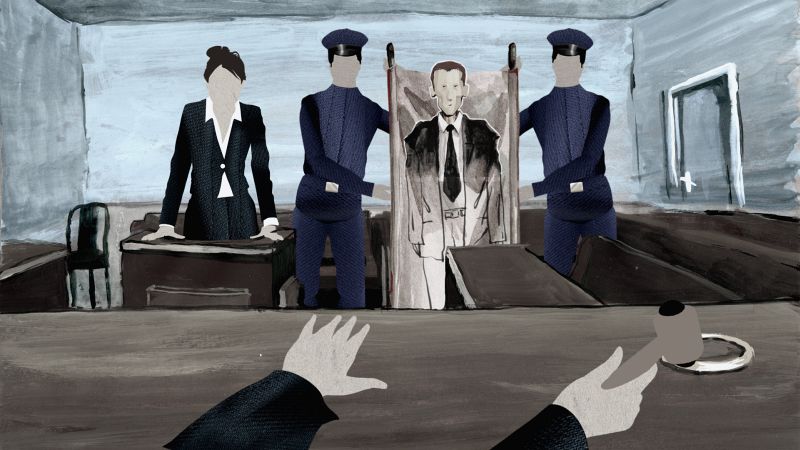
His name was Claudiu Crulic. He was a 33-year-old Romanian who, as a younger man, abandoned his loose educational plans and involved himself in the family business of selling sundries in various European nations. Or he was a mysterious drifter harassed by the authorities for minor indiscretions. Or he was living it up in vaguely dissolute, vaguely familial terms in Krakow. It really all depends — as Anca Damian’s animated film Crulic: The Path to Beyond makes clear in its enticing murkiness — on how you look at the situation, on the facts you decide to appropriate for your own subjective purposes, whether as filmgoer or fellow human being. Is that ringing telephone a cardboard reconstruction? Or is it merely a collection of hastily sketched lines? We can hear the cinematic fizzle of the overhead florescent lights, yet why can’t we see them? We are told that a man has lost 30 kilograms in weight before death, yet the air that surrounds his story is often weightless.

Damian’s film cannot commit itself to any one animation technique: cutout, hand-sketched, and the kitchen sink are all vigorously pursued in an effort to unpack Crulic’s story, which is by no means airtight, entirely authentic, or even completely tellable. Crulic’s voice and imagery have been reappropriated, with another actor reading what I must presume to be reinvented words to convey one possible truth about a terrible tale in which facts may be fickle. This raises ethical questions over whether Damian the filmmaker is as reckless with the truth as the Polish authorities were with Crulic’s life. Perhaps the only way to hit at Crulic’s truth is through such smudging.

There is one thing most people will agree on. Claudiu Crulic did not have to die at such a needlessly young age in a Polish prison. On July 11th, 2007, a judge of the high court had his wallet stolen, with two ATM transactions on his card totaling 500 Euros following not long after. Crulic, the apparent suspect who may or may not have been in Krakow at the time, was recognized in a photograph by the judge, detained, and placed into a prison to await trial in the months to come. Curlic decided that he could no longer wait and initiated a hunger strike, stating this in a letter to the Romanian Consulate. Damian’s film implies that the Consul strung Crulic along. This may very well be true. The judge and the Court and the lawyers and the doctors and the prison officials all have blood on their hands for allowing Crulic to die, for not intervening in time, and for throwing out evidence which might have exonerated Crulic (Crulic on a bus to Italy during the time in which the Judge was robbed). If the Crulic situation weren’t so tragic, it would certainly be comic or Kafkesque. But another important question that the film never quite answers is why Crulic would choose such a dramatic and life-threatening protest option over a more practical one. An inhumane hardliner could point to the heroes and rebs who have done hard time for worse offenses.

We are told many times along the way that “it was at this point” that Crulic’s life might have been saved or the cruel bureaucratic process might have grinded to a halt. But do we really know this for certain? This film carries the illusion of veracity with a narrator who steps into the vocal track to give us more than contours. And some kernel of another truth is implied during the end credits with various television clips. But while I was seduced by the film’s imagery and ideas — the frozen cutout representation of Crulic flung about from cell to cell as he is shifted in disorientation by the guards, the idea that one life might contain a finite number of photos — I felt vaguely bothered by the film’s tendency to dictate rather than to suggest. I cannot in good conscience call this a documentary. But as one dramatic representation of a story that was largely ignored in the States, this path to beyond leaves one considering the path less traveled and fuels a new desire to travel both. It is a sad indication of the Polish justice system’s inadequacies that a more complete excursion is probably not possible.

The Bat Segundo Show: Hari Kunzru, Part One

Hari Kunzru recently appeared on The Bat Segundo Show #440. He is most recently the author of Gods Without Men. This is the first of a two part conversation. The second part can be listened to on The Bat Segundo Show #441.

Condition of Mr. Segundo: Wrestling with issues of conversational faith.

Author: Hari Kunzru

Subjects Discussed: Variants of faith in the author/reader covenant, Kunzru’s background, Kierkegaard’s Fear and Trembling, absence and unknowability, F. Scott Fitzgerald, The Celestine Prophecy, liberals who distrust science, how the media portrays women, when New Yorkers are confused with Englishmen, owning a motel in a desert town, attempting to escape the narrow possibilities of life, the appeal of cults, the desire for community, coercive situations in group living, Dawn’s tendency to accuse men of molesting a child, pedophilia, when people are faced with the offensive and the unspeakable, public discussions of children, organizing a book around echoes rather than plot, absent children and spirituality, simulacra within Gods Without Men, STRATFOR, Tom McCarthy’s Remainder, housing compartmentalized illusions within the giant illusion of a novel, the gaps within storytelling, breaking the contract between author and reader, refusing to tie up all ends, growing up in a period of postmodernism, being in a period of overlays, Augmented Reality, war simulations, being trapped in the imagination of the United States, the financial model as mystical tool, complex systems that are only understood through models, high-speed trading engines, machines that disguise their positions in the marketplace, the 2010 Flash Crash, comparisons between a day trader and a novelist, the predatory nature of collecting stories from other people, Theron Wayne Johnson, hearing a grisly story from a man in a bar, the ethics of making a story sufficiently transformative from its original source, conducting research for My Revolutions, people who use violence in support of their politics, the moral difficulties of formal interviews used for fiction, recent anti-gentrification movements in London, John Barker and The Angry Brigade, Bill Ayers, the Barker/Ayers ICA discussion, the inevitability of copying and pasting in 21st century art, using living people for fiction, impinging on public personae, Robert Coover’s The Public Burning, Adam Johnson, fictional projections of Nixon, James Frey and Oprah, the authenticity of memoir, the entanglement of novels and nonfiction, living in a Googleable age, the novel as a link dump, Kunzru’s Twitter presence, and hyperlink fiction.

EXCERPT FROM SHOW:

Correspondent: I wanted to first of all start off on a question of faith — predictably enough. A writer has a lot of faith when he is putting together a novel. A reader places her hard-earned shekels over the counter and has faith in the writer to tell a story. The characters in this novel, Gods Without Men — they are both faithful and faithless to ideologies, to their families, to their relationships. So faith is a very loaded concept. And I’m curious why any novelist would tackle something that is so tricky, so duplicitous, so hypocritical, so difficult to pin down. I mean, how do you deal with this? Because even though this novel does not always answer all questions, you are dealing with something that you have to fit into narrative. So maybe we can start here.

Kunzru: Yeah. I suppose my own relationship to faith is a complex one. I’ve got an Indian father from a Hindu background. Many people on both sides of my family are actively practicing religious. My mother’s background is Protestant English. My parents decided quite sensibly to bring me up without any religious — not to bring me up with either of those two traditions. So I was left to find my own way. And I’ve always had for many reasons a kind of inclination to see things one way and then see things another way. But over the years, I’ve developed a sense that I don’t believe in god. I’m an atheist. However, I don’t think that position — the idea that you don’t believe in some kind of personalized creator to whom you owe an ethical duty not to sleep with the wrong people. That doesn’t take any of the big questions off the table about human agency, about ethics, about meaning and value. And I’ve always been very fascinated by people of faith. Because in some ways, I find them very scary. People with a very strong faith have stopped asking questions at a certain point. There’s a certain point where they have made this leap. This extraordinary leap into the world of faith. And it’s something I felt that I understood poorly as well. The only book that’s ever really made me really kind of feel what it must be like to have a powerful religious faith is Fear and Trembling, the Kierkegaard book where he talks about the extraordinary moment where Abraham has sacrificed Isaac and he’s prepared to do this because his faith in God’s word is true. And that kind of encapsulates it. It’s a terrifying act. It’s a horrific act. And it, in a way, echoes with all these incredibly violent things that have happened in the name of religion. But at the same time, there’s a kind of horror to it. There’s a sublimity to it. There’s an absolute abandonment of the human.

And this novel is a way, is my attempt to talk about our relationship with the unknowable and with the unknown. And it’s about all sorts of people who have many different ways of conceptualizing this and many different sorts of solutions that they’ve come up with. But the essential question is the question of absence and unknowability. At a certain point, human comprehension ends. And whether you believe that everything is essentially knowable — like Jaz, the husband in this. The husband and the wife who are at the center of the book. Jaz is a rational man. He is trained as a scientist. His sense of the world is if you think hard enough and you have the right concept and you test and you hypothesize, then the world will open up its secrets. And his wife goes absolutely in the other way. She withdraws into a kind of mysticism. And other characters in the novel range from various people who have profound faith — like a Franciscan friar and a lapsed Mormon coalminer to people who have a much more complicated relationship with it and a skeptical relationship with it.

Correspondent: But I would argue that this concern for faith — both sides of the fence — almost mimicks Fitzgerald’s idea of the first-class intellectual being able to hold two opposing ideas in his mind. I mean, with Jaz and Lisa, it’s very interesting, those sections in particular. Because the prose itself is both general but specific enough for us to get an idea. It’s almost as if the prose needs to mimic their especial judgment towards the world, towards each other, and the like. And I’m curious how you developed this at the prose level. Because that was one of the things that really impressed me about your book. What struggles were there to get that balance? I’m just curious.

Kunzru: You mean, in terms of the voice for the different characters?

Correspondent: Yes. Exactly. Especially for Jaz and Lisa.

Kunzru: You know, it’s one of these things that emerges through the doing. I don’t think it was a very programmatic thing. I mean, those characters emerged as quite defined opposites to each other in their reaction to what happens to their missing child. I mean, I’m interested in the business of faith in the financial markets, faith in credit and the extraordinary kind of high wire act that is the global financial system, which depends on everybody believing that this money exists. And yet placing a kind of Mr. Science in this world of high finance was an interesting one. Out of those decisions, his way of talking and his way of understanding the world emerged quite naturally. Once you know that somebody has a higher degree in physics, you know that they’re unlikely to be basic in their worldview on The Celestine Prophecy. And Lisa’s character comes out of something I’ve observed from a lot of liberals with humanities backgrounds. Here, in London, everywhere. That actually, people aren’t very scientifically educated very often and actually have a kind of gut hostility to the procedures of science. Because they feel that it’s kind of closing down the space of wonder in the world. And that leads quite a lot of people — I’m always quite surprised by people who are very skeptical and argumentative will often have this blind spot where it comes to — especially things to do with health, in particular. Like people get into homeopathy and various other things that I would personally consider quackery. Because partly they wish to believe certain things about the world that have to do with wonder and ineffability and unknowability and often beauty and a kind of non-utiliatarian way of seeing the world. It’s all kind of very valid reasons to want to protect a sacred space from an intrusion by the methodology of science. But it can lead people into some very strange, anti-rational positions. And often those two ways of being can be very buried in people. Because we don’t tend to have these conversations. It’s off the list of what’s polite in a party chat.

Correspondent: Well, be as impolite as you like here. (laughs)

Kunzru: (laughs) Well, we can talk about it. But having a couple who basically have a great deal in common, who love each other — they genuinely love each other, these two. The kind of gradual exposure of the real contours of their ways of dealing with the unknown is what causes this terrible tension in their relationship. And that seemed to me to speak to quite an interesting fault line that runs across a lot of contemporary culture.

Correspondent: I’m wondering if Lisa, at least in relation to the question of faith, was almost sort of a spillover character for what you could not do with Dawn, who I’m also really curious about. I mean, it’s interesting that the women tend to gravitate towards issues of blind faith, often destructive faith. I mean, with Lisa, it’s interesting too because you have all these media incursions into her life. So it’s almost like some part of the world wishes to punish her for her beliefs.

Kunzru: I’m very interested in the way that media presents women. Especially mothers. The censoriousness that attaches itself to women’s choices around motherhood and around the work. I mean, in this novel, their child disappears. They become the object of this media witch hunt. And everybody zeroes in on “Is this a bad mother?” — especially “Is this a cold mother?” She fails to emote in a way that the media folk think is appropriate. And hence she’s immediately suspect. Because it’s a novel and you can get inside somebody’s inner life, we know very well that she’s absolutely destroyed by this and she’s an emotional person. She’s not some kind of psychopath who fails to have correct emotion or a response. However, the appearance sort of drifts further and further from reality. Of course, they’re also New Yorkers lost out West. Everyone hates New Yorkers in the rest of the country, as far as I can see. I now get outed as a New Yorker by other Americans in other parts. The English accent gets bracketed into some sort of New Yorker thing. So I get the prejudice as well. (laughs)

Correspondent: Those wild and crazy liberals with their British accents.

Kunzru: Yeah. Exactly.

Correspondent: You’re drinking a cappuccino right now! So there you go.

Kunzru: Drinking a cappuccino with a British accents. That’s exactly what everyone thinks happens in Chelsea.

Correspondent: You are America’s nightmare! (laughs)

Kunzru: I am. Rick Santorum, right now, is burning an effigy of me in a basement somewhere in Idaho.

The Bat Segundo Show #440: Hari Kunzru, Part One (Download MP3)

This text will be replaced

The Bat Segundo Show: Adam Wilson

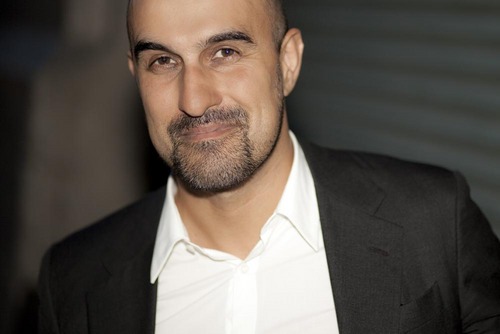
Adam Wilson appeared on The Bat Segundo Show #439. He is most recently the author of Flatscreen.

Condition of Mr. Segundo: Seeking his remote control and his dignity within an armed blanket.

Author: Adam Wilson

Subjects Discussed: Wilson’s dislike of flying, Will Self’s rules for writers, Flatscreen‘s televisual influence, working at Flavorpill, innovating literature through the Slanket, attempts to win television watchers to literature, the couch potato as Renaissance man, using bulleted lists and possible endings as alternative chapters, Frederick Exley’s A Fan’s Notes, awkward uses of Viagra, the davenport vs. the Slanket, Saul Bellow’s The Adventures of Augie March, Johnson going to Columbia because he was a Sam Lipsyte fan, “Portnoy and Playboy Go to Summer Camp,” reading Portnoy’s Complaint at the age of 13, satisfying queasiness and Jewish identity, brutal workshop smackdowns, finding a new take to send up middle-class suburbia, 21st century Borscht Belt schtick, the difficulties of writing about synagogues, spiritual vacancy, troubled and handicapped mentors, Augie March character inspiration for Flatscreen, The Modern Library Reading Challenge, creating a fictitious Boston suburb, Matt Corley’s obsessively hyperlinked interview with Wilson, Newton, Massachusetts, finding creative freedom drifting away from the realities of location, the frequency of Boston residents who live and spend time and do bad things in basements, unappealing young men with profligate sex lives, pathetic people who hook up, ensuring one sexual climax every 100 pages, throwing humiliation at a protagonist, needlessly beautiful people in contemporary fiction, the cruel fates that Martin Amis hands his characters, Money‘s John Self, Dead Babies, Success, Lord of the Flies, going through a rough period while writing Flatscreen, Kurt Vonnegut’s idea (“In America, high school never ends”), adults who live with their parents, Lipsyte’s Venus Drive, Eli being a good cook and eating good meals alone, men who build arsenals of kitchen utensils rather than making weekend trips to Home Depot, gender roles in urban environments, cooking shows and masculinity, finding an agent, writing Flatscreen over five years, resistance to unlikable characters in contemporary fiction, hostility from Goodreads, Cynthia Ozick, Amazon reviewers, Fitzgerald as a commercial failure during his lifetime, The Great Gatsby, Wilson’s father beaten down by Amazon reviews, being a victim of impressions made by blurbs, working as a bookseller at Bookcourt, false romance attached to literary people, trying to get a mass audience excited about books attached to smaller audience, Ben Lerner’s Leaving the Atocha Station, slipping secret books to students and customers, competing literary canons vs. secret books, creative writing programs as your buying audience, Richard Nash, the literary inefficiencies of the American education system, teachers and enthusiasm, George Saunders, Donald Barthelme, how literature can encourage young people to rebel, Gary Lutz’s “The Sentence is a Lonely Place,” fusing different sentences together, Wilson’s answer to “portable solitude,” ideal sentences, and the inner life vs. dramatic narrative.

EXCERPT FROM SHOW:

Correspondent: I’m glad I could get in touch with you before you were actually getting on a plane.

Wilson: Yeah. No, it’s good. I hate flying.

Correspondent: Oh, you do? Well, what’s wrong with flying?

Wilson: Um…

Correspondent: Aside from the security theater and all that?

Wilson: No, it’s…

Correspondent: Aside from the defenseless position you’re put in?

Wilson: Yeah. That’s a big part of it.

Correspondent: Aside from the lame snacks that you get? Sorry. I don’t want to be negative here.

Wilson: Yeah. You sort of hit the nail on the head.

Correspondent: Yeah.

Wilson: Although I do love Ativan. So it’s sort of a…

Correspondent: (laughs) Let’s get into the book. I actually wanted to broach the TV question from a weird angle. One of the items contained within Will Self’s half-serious, not really serious rules for writing. He has this on his list: “Remember how much time people spend watching TV. If you’re writing a novel with a contemporary setting there need to be long passages where nothing happens save for TV watching.” Now I know that you once worked as a TV blogger for Flavorwire.

Wilson: That’s true.

Correspondent: There is a notable televisual influence down to the technical details in Flatscreen that is often so striking that one, in fact, even encounters Eli’s mom sleeping on a sofa in a Slanket. So I’m wondering. Do you have any pragmatic ideas…

Wilson: The Slanket was actually a period detail.

Correspondent: Ah, yes! Okay.

Wilson: Not to go off topic too much.

Correspondent: I’m sorry to be so out of touch. (laughs)

Wilson: But I will say the Slanket was the one thing that I guess I had to change in the book. Because I originally had it as a Snuggie. The book’s set in 2006. And the Snuggie was not yet on the market.

Correspondent: Oh, that’s right. Yeah.

Wilson: But the Slanket was.

Correspondent: Yes.

Wilson: It was sort of the precursor. But the Snuggie has since taken a monopoly on the armed blanket.

Correspondent: The armed blanket thing.

Wilson: Yes.

Correspondent: No, Slankets do seem very endurable — the Slanket, I have to say. So maybe they just seem to last like plastic that’s not going to biodegrade or something.

Wilson: Oh yeah. Anyway…

Correspondent: No, no, no! Thank you for the clarification. It’s very important to get the Slanket detail right.

Wilson: It might be that I think I learned about both items in infomercials. (laughs)

Correspondent: Well, I mean, the question I have is how novelists can win over readers from television. And do they need to follow this advice that Will Self offers. Writing long scenes describing watching television? To what degree was the process of writing Flatscreen your way of contending with your own television feelings? Clearly, we touched a nerve here on the Slanket thing.

Wilson: Yeah. (laughs)

Correspondent: Let’s just get the ball rolling here. Do you need to specialize also in short alternating chapters? That’s a lot to throw. So go for it.

Wilson: No. I don’t think necessarily. I don’t know. It does seem like a ridiculous rule. Will Self’s rule seemed almost the opposite of what you’re probably told in most writing programs. Which is: set up conflict so that your characters can move around rooms and pick up objects. And stuff like that. I don’t know. I think more so, I was just interested in a character whose worldview has been so shaped by television. Perhaps in the way that mine has, or that people of my generation or even your generation, a slightly younger, probably a slightly older generation too have. I like the idea of having this guy whose kind of poorly educated and didn’t pay attention in school. Didn’t go to college. But at the same time, he actually has quite a lot of information available to him. Based on the fact that he’s watched an incredible amount of television. And I like this idea that if you actually spend days just watching The Discovery Channel and The History Channel and The Nature Channel, but also the news and CNN and old movies on AMC, that you could sort of become this Renaissance man of knowledge, in that you know about all sorts of different things without having any kind of deeper understanding of any of them.

Correspondent: So the couch potato is a superficial Renaissance man?

Wilson: Yeah.

Correspondent: That’s all America has to offer these days? (laughs)

Wilson: (laughs) Well, I don’t know.

Correspondent: Come on! We’re trying to win these people so that they dive into libraries! I was hoping that you, the guy who managed to synthesize TV in novel form, might have a few ideas here.

Wilson: Um, no. I have almost no ideas on that front. I think we’re losing the battle.

Correspondent: We are losing the battle. But at least it’s marvelous nonetheless to watch this cultural phenomenon mushroom as it is.

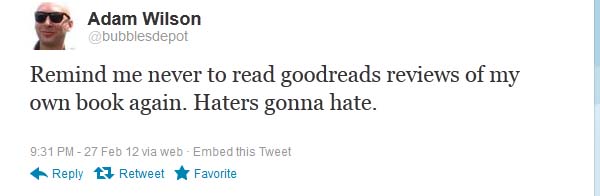
Wilson: Sure. Then again, I have received — I sort of did have this idea that, oh, you know, maybe people can relate to this. Because we all spend our time on the Internet and watch a lot of movies on TV and stuff. But then I’ve gotten all sorts of criticisms on Goodreads and from bloggers complaining about how this guy just sits around and watches TV and doesn’t do anything. So maybe these people, who are complaining about the book, are like living these rich lives that the rest of us aren’t experiencing. And they’re sick of reading about characters. I don’t know. They probably wouldn’t like Will Self’s books either.

Correspondent: Yes, that’s true. Well, I’ll get into the Goodreads review thing. Because I actually checked them out too. But I wanted to get into your book before we actually did that.

Wilson: Sure.

Correspondent: I mean, you have this strategy of alternating chapters throughout the book. It kind of relates to what we’re talking about here. Where you’ll have something short, followed by another Eli episode. The first two parts of the novel have these bulleted lists. You have things such as “Facts About My Mom.” “Ways In Which I am Like a Rapper.”

Wilson: That’s one of my favorites.

Correspondent: Good! I caught the right one. And then the third part shifts to all these possible endings. And then Eli starts to reference these narrative terms near the end. Sitcom C-plot. Things like that. So I’m wondering to what extent these alternative chapters were almost a series of bona-fide notes to help you better know your character in your book. How did this tension between the self-reflective and almost the self-aware narrative occur during the course of writing this book? I’m curious.

Wilson: I think it happened in a few different stages. Originally, the book was quite a bit longer. And I felt it was bogged down. I felt it was a bit slow and that there were two things slowing it down. One is that there was a lot of time spent relating backstory. Things about this character’s childhood memories. And all this type of stuff that I felt was really slowing down the pace of the book. Because I knew I wanted to have this really quick pace. And maybe part of that is trying to appeal to readers who have low attention spans.

Correspondent: Well, this leads me to wonder. Did the bulleted lists come from the larger draft? Where one would normally expect that type of thing to come from a notebook, the awkward details you plucked from…

Wilson: Exactly. Exactly.

Correspondent: Wow.

Wilson: So I wanted to figure out a way to speed it up without losing a lot of this information. And so I thought of these kinds of lists. And I ended up cutting about 100 pages from the book and replacing it with all of these interesting little chapters that I hoped were doing some of the work in a kind of fun and more entertaining and quicker way, and that felt right for the character who is reading blogs. And it felt like it worked. So that was one thing. And then as for the other endings, I think those in part came out of — one thing I think the character Eli is struggling in the book is this idea that everything, all his points of reference, comes from television and movies. And he has this idea that he wants to be in the classic coming-of-age movie. He wants to grow and become a real person maybe. Whatever that means. And live some kind of grown-up life. But his imagination, I think, has been compromised in some way. Because I think everything he can imagine is something he’s seen in a movie or on TV. And he has bad points of reference in terms of his family. He can’t look at his father and say, “I want to be like that.” So he looks at movies and he says, “Well, I could be like that. But is that realistic? Or is that even a possibility?” Or has it gotten to the point where American life is really just a kind of imitation of these tropes and this received culture or narratives? And I think Eli’s struggle with that reflected my own struggle as a writer to try and imitate and write a book in a genre that’s been done a million times and come up with a kind of narrative that is, at the same time, aware of all that’s come before it and doesn’t cop out and have and ending where someone drives off into a sunset with a perfect song playing. And so the way I battled that was to have Eli himself imagine all these endings that he’s seen before. But then they don’t all come at the end. They come over the last 100 pages. So I think that each time one is presented, my hope is that, with the book continuing along, that ending is passed over. And that it’s pointed out as being ridiculous or unrealistic or cliche or impossible or all of those things. And then life continues to go on in the book.

Correspondent: But it’s also trying to find an ending while all these other things are happening.

Wilson: Sure.

Correspondent: Which also made me — I had a total wonkish question for you. But the whole incident on the football field with the Viagra.

Wilson: That’s not really happened to me. (laughs)

Correspondent: (i>laughs) Well, I was going to ask first and foremost, what is your Viagra experience? And second, I mean, that almost seemed to remind me, almost, of Frederick Exley’s A Fan’s Notes. I’m wondering if that might have been a possible nod.

Wilson: A Fan’s Notes is one of the books I’ve read more times than any other book.

Correspondent: And, of course, Exley talks about reading other books multiple times.

Wilson: Yeah.

Correspondent: Was that a touchstone for you? In terms of reading?

Wilson: In my life. It’s funny. I didn’t think of it that much. In terms of when I was working on the book. But it’s a book that’s been really important to me in my life. And interestingly, I think, in that book, one of his touchstones is Saul Bellow’s The Adventures of Augie March.

Correspondent: Which I also know is a big influence on you.

Wilson: Which was in some ways a big influence on this book too. So maybe it all kind of comes together. But A Fan’s Notes is great. I just did a piece for Flavorwire on my ten favorite slacker novels,

Correspondent: Oh yeah?

Wilson: I think my favorite thing about that book is that it introduces a great piece of slacker furniture I’d never known about. Which is the davenport.

Correspondent: Yes. (laughs) So there are all these little clues for furniture that almost doesn’t exist anymore in there.

Wilson: Yeah. It’s the perfect slacker item, I think. (laughs)

Correspondent: Well, it makes me wonder if Flatscreen is, in some sense — I mean, we were talking about it being set in 2006 — whether it’s more of a historical novel as well. Maybe your davenport is the Slanket. (laughs)

Wilson: Yeah. I think so. I’d like to think that. If I leave one thing in the world, it’s to put the Slanket into the history of American literature.

Correspondent: (laughs) We need more writers to do that.

The Bat Segundo Show #439: Adam Wilson (Download MP3)

This text will be replaced