The Bat Segundo Show: Roger Corman

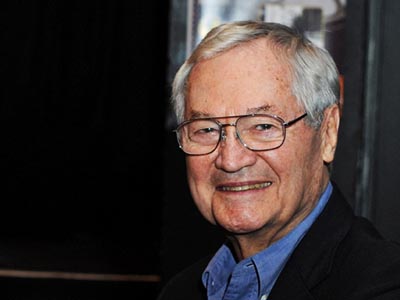
Roger Corman appeared on The Bat Segundo Show #416. In addition to directing some of the most memorable and entertaining drive-in movies of the 20th century (among many other accomplishments), he is most recently the subject of a new documentary called Corman’s World, which is now playing film festivals and is set for release on December 16.

Condition of Mr. Segundo: Not of this earth.

Guest: Roger Corman

Subjects Discussed: Corman’s infamous cost-cutting measures, unusual marriage proposals, bloated corporations, Occupy Wall Street, comparisons between Zuccotti Park and 1960s protests, keeping tabs on pop culture, not giving stars and directors a few bucks to stay around, Easy Rider, the philosophy behind the Corman university, picking people on instinct and the qualities that Corman looks for in a potential talent, Francis Ford Coppola, James Cameron, directors who move up the ladder, The Intruder, why Corman didn’t make explicit socially conscious films after 1962, financing pictures with your own money, the financial risks of being ahead of the curve, looking for subtext in the nurses movies, the sanctimony of Stanley Kramer, Peter Biskind’s “one for me, one for them” idea, simultaneous exploitation and empowerment, the minimum amount of intelligence that an exploitation film has to contain, throwing calculated failures into a production slate, distributing Bergman and Fellini through New World, why Corman believes it was impossible to produce and distribute independent art house movies in the United States in the 1960s and the 1970s, the importance of film subsidies, why Corman gave up directing, Von Richthofen and Brown, the allure of Galway Bay, getting bored while attempting to take time off, the beginnings of New World, the many breasts in Corman’s films, Annabelle Gurwitch’s “Getting in Touch with Your Inner Bimbo,” targeted incidental nudity opportunities, enforcing nudity clauses in contracts, questioning why actresses can’t be sexy without taking their tops off, Rosario Dawson, the undervalued nature of contemporary films, and Corman’s thoughts on how future filmmakers can be successful.

EXCERPT FROM SHOW:

Correspondent: I have to get into your eccentric temperament right from the get-go. There is a moment in this documentary where your wife Julie confesses that you proposed to her. And she said yes. Then you disappeared for a week into the Philippines. And she tried to get in touch with you and finally did get in touch with you and asked, “Well, is the marriage still on?” And you said, “Oh yes, of course.” Your justification was, well, you didn’t want to pay the expense of long-distance telephone. I told this story to my partner and I thought it was amusing. But she was absolutely horrified by this. And this leads me to ask if the notorious reputation you have for aggressive cost-cutting, perhaps one of the finest cost-cutters in the history of cinema — well, how much does this lead into your personal life? And your private life? I mean, surely, when you’re talking about sweethearts and fiancées, you can afford to spend at least a buck or something. I mean, come on!

Corman: Well, that story is possibly true. But the fact of the matter is I’d been in the jungle. At that time, there were no phones. So that was the real reason for the call.

Correspondent: That was the real reason. But this does raise an interesting question. I mean, under what circumstances will you, in fact, pay the regrettable cost of maintaining a relationship like this? Whether it be professional or private.

Corman: Well, I would have to divide that into two answers. Privately, and particularly with my wife and children, I’m much more liberal in spending than I’d ever been on films. On films, I really watch every penny.

Correspondent: Yes. But are there any circumstances you’ve regretted? Either spending extra money or not spending the dollar? Or not spending the dime so to speak?

Corman: I don’t think I regret any overspending. I think, once or twice, I should have let pictures go a little longer and spent a little bit more. These were pictures that were coming in on budget and on schedule. I might have added a couple of extra days to the shooting schedule. But I felt this was a fifteen day schedule. This is the thirteenth day. I have to make a decision. We’re going to shoot it in fifteen days. In retrospect, had I gone to sixteen or seventeen, the additional quality — for lack of a better word — might have been greater than the expenditure.

Correspondent: Well, what’s the cost-benefit analysis for this quality to spending ratio that you’ve devised over the years? Is it largely instinctual? Is it largely looking aggressively at the books? What of this?

Corman: It’s a combination of all of the above, plus just the calculation. I’m always looking for the greatest quality. I’ve done pictures — The Little Shop of Horrors — in two and a half days. I did that with very little money. But I did the best possible job I could do with the amount of money. So I’m looking for the highest possible quality. But since I back my pictures with my own money, which is something you’re never supposed to do, I have to be certain — well, I shouldn’t say certain. I have to have a reasonable guess that I’m going to come out of this one okay.

Correspondent: Do you think that such brutal, Spartan-like tendencies might be applied to, oh say, balancing the federal budget? Or perhaps creating a more efficient Department of Defense? Do you have any ideas on this?

Corman: Well, I believe that it isn’t just the federal government. I believe large corporations or the Department of Defense, which of course is part of the federal budget — I think there’s a certain inherent waste in any large organization, whether it’s public or private. I think they all could be streamlined or — let me put it this way, I think they all should be streamlined. But I question whether it can be done. Because the bureaucracies are in place. And it’s very, very difficult to move.

Correspondent: It’s difficult, I suppose, not just in motion pictures, but for everybody right now. Do you have any thoughts on the present Occupy Wall Street movement that’s been going on in this city while you’ve been here?

Corman: Weirdly enough, I was at the Occupy Wall Street meeting — or sit-in. Whatever you want to call it.

Correspondent: You went to Zuccotti Park?

Corman: Yeah. Just about an hour ago.

Correspondent: Really?

Corman: I donated a little money and they had a couple of pictures taken of me there. Which they said they wanted to use in some way. And I told them I was totally in support of what they’re doing.

Correspondent: I’m surprised you weren’t down there with a movie camera getting master shots for a later production based on Zuccotti Park or something like this. There should be an Occupy Wall Street movie. Is there some possible narrative? Some bucks in this?

Corman: Well, it’s the kind of thing I did before in the 1960s, with the various protest meetings and anti-Vietnam demonstrations. I was there with cameras. And we did use the footage. And this one at the moment isn’t quite that big. If it grows, however, that will be a different thing.

Correspondent: Well, did you see it at Times Square on Saturday? It was actually 15,000 people. And it was pretty aggressive with the cops arresting people. 88 people that day too.

Corman: We came in on Saturday.

Correspondent: Oh, I see.

Corman: And actually I saw opposite ends of New York. I came in, went straight to the opera, went straight from the opera to Comic Con to sign autographs. So I figured if I went from New York to the opera to Comic Con, I saw various aspects of New York.

Correspondent: Well, this leads me to ask you about how you collect your ideas or how you maintain your attentions as to what’s going on in contemporary society. It seems to me that going down to Zuccotti Park, you’re still very much interested in finding out what the present concerns are. I mean, how often do you do this now in your daily life? Just to keep tabs. How do you know, for example, that Hell’s Angels or LSD or Zuccotti Park might be a salable idea?

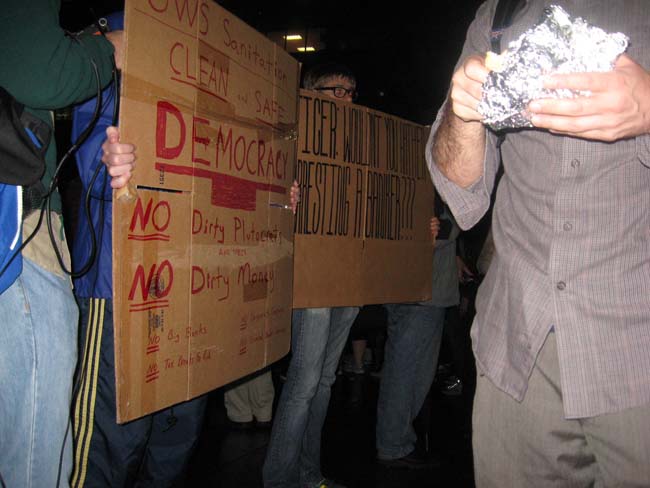
Corman: These are just aspects of pop culture that come to the surface. And I’ve been involved in all the previous ones. Or most of them, one way or another. And the Occupy Wall Street movement is new. And I went just to see what it was like. And it was strange. There’s a real similarity to the 1960s here. And I don’t know if the young people of today know that what they’re doing, the signs they have, the music they had playing, the discussions — it brought me right back to 1968.

Correspondent: Do you see any differences by chance?

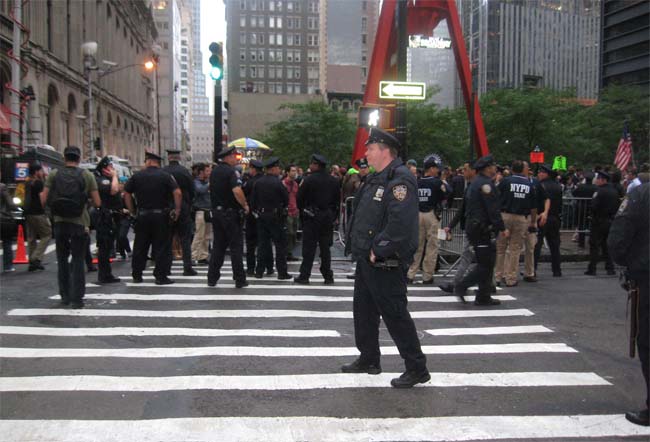
Corman: I saw very little differences. I did notice this. The police were not antagonistic. They were standing there. But I didn’t see any of them make any harmful moves. Where in the ’60s, I did see police make harmful moves. Maybe they’ve learned something over the years.

The Bat Segundo Show #416: Roger Corman (Download MP3)
This text will be replaced

Laura Miller’s Black Helicopters

Last Wednesday, Laura Miller offered another typically incoherent tirade, perhaps demonstrating some closet desire to become the Maureen Dowd of the literary world. Her column attempted to stir up controversy over the apparent problem that this year’s fiction finalists for the National Book Award were, with the exception of Tea Obreht’s The Tiger’s Wife, composed of “low-profile and/or small press offerings.” Failing to comprehend that awards often represent opportunities for readers of all stripes to discover new titles, and lacking anything even approximating facts, Miller resorted instead to the conspiracy theories that one expects from undergraduates passing a pipe in a dorm room to stave off boredom. She put on her tin foil hat, detecting “the sense that the fiction jury is locked in a frustrating impasse with the press and the public” and not understanding that the National Book Award judges are too busy reading hundreds of books to worry about what their decisions will mean with “the press and the public.”

Miller writes that the press “expresses bafflement” when some obscure writer wins, but fails to cite any examples. Sure, there was some minor controversy one year over the five fiction finalists all being women from New York. But that was seven years ago. Last year, Jaimy Gordon certainly surprised the audience by winning the National Book Award over such literary bigwigs as Peter Carey and Nicole Krauss. But what specifically is Miller referring to? The New York Times merely reported it as “a surprise pick,” which was accurate reporting. Much as Maureen Dowd once got a ridiculous column out of some mythical meeting between two senators, Miller seems to be implying some similar clink of glasses between NBA judges and the press. But as someone who has covered the National Book Awards multiple times, and who hasn’t been able to get anything from the judges (despite a combination of charm and silly questions), I can confidently report that Miller doesn’t know what she’s talking about.

Miller’s column is little more than irresponsible speculation. It belongs in a neighborhood circular, preferably distributed by lunatics off a moving truck in the middle of nowhere, not a distinguished online magazine. Even though she’s clearly unfamiliar with “whatever policy each panel of judges embraces,” Miller’s ignorance certainly doesn’t prevent her from engaging in relentlessly uninformed speculation. Miller claims that “the impression has arisen that already-successful titles are automatically sidelined in favor of books that the judges feel deserve an extra boost of attention.” But when we refer to two recent judges who were kind enough to share their National Book Award experiences, Miller’s deranged theories don’t add up. In 2006, judge Marianne Wiggins wrote an essay for the Los Angeles Times outlining the process:

In our first conference call, we began to try to define what we were looking for. A “national” book? A work of fiction that spoke to the “American” character? Judge No. 1 wanted “readability,” and No. 5 wanted “a sense of discovery.” I just wanted writing that would set my hair on fire.

We see with Wiggins a variety of motivations. But neither “readability” nor “a sense of discovery” fits into the hypothetical sidelining of successful titles.

More recently, Victor LaValle wrote a piece for Publishers Weekly responding to Miller’s claims: “If such a thing ever happened then the NBA are really nefarious because they wiped my memory banks clean.”

If Miller had taken the time to consult Wiggins’s essay or contacted any of the judges, then she would not have written such an intellectually bankrupt column. She certainly would not have leaped to the paralogic contained in the unintentionally hilarious paragraphs that follow, whereby “the larger reading public has also proven recalcitrant” (really?) and even has the effrontery to dictate the qualities that “don’t matter much to nonprofessional readers or even put them off.”

I’d like to inform Ms. Miller that this outsider was so intrigued by Jaimy Gordon and Paul Harding’s respective award-winning books that he invited both authors to discuss their books at length on The Bat Segundo Show. (Both graciously accepted. You can listen to my conversation with Gordon or Paul Harding, if you like.) I would like to think that Ms. Gordon and Mr. Harding would have found their way onto the program eventually. But it was the awards that allowed resources, permitting these two writers to make their way to New York and talk with me. I don’t especially care how obscure or popular any writer is. And I also don’t especially care whether a book is “so obscure as to be virtually invisible.” I only care if the book is interesting. What Miller doesn’t seem to get is that if people like a book, then they are not going to stay silent about it. To the extent that awards can encourage such enthusiasm, I don’t really see what the problem is. Unless you are someone who hates books or, like Miller, you hate any independent mind or mechanism offering an alternative to your unadventurous, huckster-friendly sensibility. As Dan Green has noted, “by now it’s clear that Laura Miller has staked her claim to critical influence on a defense of ‘ordinary’ readers against fancy writers who write too much and that she’ll stick to that story, however misguided, lest her standing as a critic to be heeded is threatened.”

Occupy Wall Street: The Morning They Didn’t Clean the Park

They were saying on Thursday night that it was all over for the protesters. Brookfield Properties, the owner of Zuccotti Park, had asked the NYPD to uproot the people who had been occupying their park. Mayor Bloomberg had said it would be clean on Friday morning at 7 AM. And there were petitions and pleas and hues and cries. Just after midnight, I was paying attention to the cracks of thunder and the white lightning flashes and the hard rain rapping against the pane of my window in Brooklyn. I was reading reports of protesters shouting with joy against the heavens. They didn’t give a damn if they were being doused. Yet I fretted hard about the whole scene and couldn’t sleep and hit the subway station less than two hours after these ruminations, hitting the subway station close to the golden palindromic time of 2:22 AM.

While waiting for the train, I listened to a thin middle-aged man loosen his incoherent rap addressed to our present President from some semblance of a Black Power haze, conflating a CIA conspiracy to flood drugs into poor neighborhoods with an anti-Semitic plot involving 9/11. His umbrella nib stabbed through the air with each improvised line. In ten or fifteen years, could this be an Occupy Wall Street protester? Not out of the question. A little more than a week before, I went to Zuccotti and the surrounding areas after the Foley Square arrests. The open talk had transmuted into something more quiet and cautious after mikes caught quite a lot but sullied the message. There had been talk of interlopers and intruders and betrayers. And while hardly an expert in American politics, I knew my history, remembering how it had all fizzled out in the years before my existence. The thin middle-aged man gave me an opportunity for more sentimental equations, and I couldn’t shake my heart’s troubling tendency to play the long game.

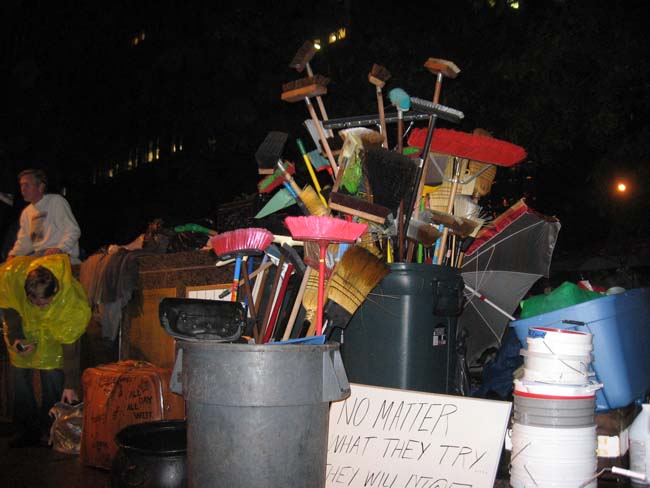
When I hit Zuccotti on a very early Friday morning, the park was more pristine than I expected. The protesters were determined to keep it clean. The trash was neatly packed in careful sheaths. I observed a plastic lid on the ground, then watched as it was scooped up by a stray hand a mere thirty seconds later. Such stunning efficiency reminded me of Disneyland’s garbage policy.

The mood was more sanguine than the previous week. Two vehicles, circling round and round and round the park, were capturing images. I was certain that my face was now in a database.

“Hey guys,” shouted an enthusiastic man, “instead of surveilling, why don’t you check out the 24/7 live stream?”

It was a little before four. The TV news vans were mostly parked on the other side of Cedar. Their insides were dark, still as coffins. I looked above at the mannequins in a Men’s Wearhouse, their dead forms serving as sentries for the lively sea I was swimming in. Then I watched a man in a Santa Claus suit sweeping the curb. Thinking of the approaching winter, I wondered if this morning cleanup, this last moment of dignity, was the end of the movement.

I walked around, didn’t see any apparent plan for seven that morning. One sanitation car, one garbage truck. If the authorities had something up their sleeves, it was as unplanned as lint in a belly button. Not long before, Bill O’Reilly had called the Occupy Wall Street protesters “drug-trafficking crackheads.” But the only smells in the air were cigarettes and incense and the fresh urban aura that settles in just after a storm. Narcotics? The only person who came close was a Wikileaks reporter making a pleasant show about cadging a cancer stick. And who can blame him? He was one of the few reporters the protesters trusted, probably because most of the media had dead opportunism in their incurious gazes. I watched a dark-haired radio reporter in his early thirties, a dutiful employee wearing a tie, talk with a man who had been fired in 2009, a man who was trying to explain why he and his fellow protesters were there. The reporter quoted some circuit case, but it was his eyes that unsettled me. They were more concerned with winning rather than listening, perfunctory as a man trapped in a weekend escrow seminar.

It was difficult to ignore the media presence. As more reporters settled around Zuccotti’s perimeter, with few of them wishing to enter the square, the scene resembled some Mephistophelean metaphor from a Scorsese movie: more steam pluming from the grates on the corner of Liberty and Broadway, a plump and devilish photographer staring rabidly at his recently snapped images with a cigarette undulating up and down in his mouth like some phallic fount and backlighted by the harsh gleam of a TV news camera. In fact, the more these media types were concerned with image, the bigger their waistlines tended to be. It was almost as their cameras badgered their torsos into requiring more space.

“Nobody really marches anymore,” complained an anxious and experienced protester behind me. “We’re out there for America and they don’t even appreciate this.”

I chalked this up to raw nerves. What the protester didn’t know was that in a few hours, the collective hope would be vindicated. For now, more blue boys had arrived at Broadway. The human microphone system had adjusted itself to the city’s noise code. But when it came time to respond with jubilation, the protesters lived up to the bargain.

There was a Superman and two Captain Americas in the crowd. I wondered if there was some crossover between Occupy Wall Street and New York Comic Con. I had obtained press credentials for the latter many months before, but I had decided to blow it off. It seemed superficial in light of recent developments. One Captain America told me that he was tempted to go on Sunday when the tickets were cheaper. But it was clear that Zuccotti needed more superheroes than Jacob Javits. And the superheroes I observed – even the ones with Alan Moore’s Guy Fawkes homage – didn’t really need costumes. It wasn’t a surprised that their masks stayed mostly off.

I saw a kid peacefully sleeping on the perch on the park’s western corner and, vexed by what was set to go down in less than an hour, I became very protective. But he woke up and I was relieved. I walked back to Broadway and I stole wifi from McDonald’s. While snickering over this strange irony, I saw a guy trying to pick a fight. Something about twelve hundred dollars, one guy bopped on the nose. The NYPD stepped in and issued citations. The protesters urged those surrounding this duo to stay calm and nonviolent. This was to be a running theme of the morning.

People who wear T-shirts and who have a week’s worth of stubble (my mien on Friday) get different answers from protesters than people who wear ties. Even so, the protesters had been here long enough to employ caution. After two weeks, you had to be an old timer to get any bites. And I had only been at Zuccotti about seven times. So I spent most of the time just observing.

Still, the protesters were kind. Two asked how I was doing, perhaps sussing me out. A hearty man who identified himself as Keeper of the Trail Mix offered me a generous portion. Two men circled the perimeter swinging incense. There was a peaceful ding from a bell. “Good morning. Good morning. Spread the love.” DING! “Good morning. Good morning. Spread the love.” Ginsberg’s “oms” would not have been out of place.

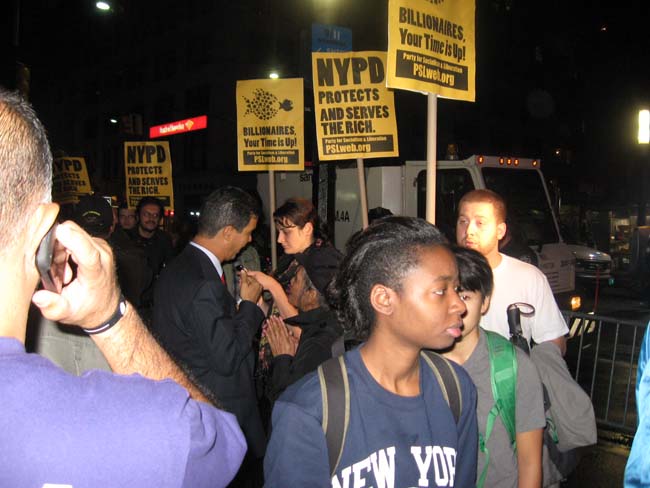
Then, with less than an hour to go before the 7AM showdown, the blue boys began clearing the sidewalk on Zuccotti’s Broadway edge. But this precious isthmus between the edge of the protesters and the cops, tricky to negotiate on scant sleep, narrowed. And it thinned further when the union men came in with pickets decrying the NYPD standing up only for the rich.

“I’m trying to move!” shouted a burly man at a cop as the throngs thickened. “Don’t push me!” I hoped it wasn’t a harbinger of things to come. I squeezed in and out of the mass; it now took about five minutes to wade through the pea soup of a crowd. I noticed that the cops had formed phalanx positions at the two open corners of Broadway.

But revolutionary talk stayed strong. “We….are….the 99%!” shouted the crowd. I watched two empty NYPD buses shuttle down Broadway. The crowd remained very confident, but I did notice workers squeezing in between the cops and the barricades and wondered what was up.

Then word arrived that the Zuccotti cleanup would be delayed and there were cries and cheers. I hadn’t been quite sure of the news, in part because it seemed anticlimactic, but another man confirmed it. And the promise of a new plan, intimated by the double-layered trickle of repetition only minutes before, had come to fruition. But what to do?

“All week, all day, marching down Broadway!” shouted some people. There was a guy with a whistle. But for some reason this pledge didn’t catch on. There was still a tremendous cluster in Zuccotti. As the daylight arrived, I somehow caught on to this two step gambit and followed the group, finding myself near the head of the march.

Then there was a call to march on Wall Street – a celebratory response to recent developments. And the people with whistles piped in time to “Whose street? / Our street!” At first, they walked slow. A smiling woman stood atop a trash can, shaking her fist in unison to the chant. I liked her a lot. Another woman raised her open pink umbrella into the sky. I liked her a lot too. We were close to Bowling Green Park. I saw the two empty police buses that I had noticed earlier parked to the right. I was troubled by the police presence at the other end, which was close to the Charging Bull (protected by the same grille barricades used at Zuccotti). Were they leading us into a trap similar to the Brooklyn Bridge?

Judging by the number of bandanas over various mouths, the other protesters had the same worry. If I had to be pepper spayed, so be it. At the head of the march, many protesters had taken the brooms from Zuccotti, sweeping them along the surface of Broadway. It was a perfect protest metaphor.

Then the march rounded a corner towards New Street, with many protesters hopping a diagonally raised platform. “Banks got bailed out! / We got sold out!” A normal-looking guy, around my age and close to my male pattern baldness (I like to look out for my fellow balding members) and wearing a blue T-shirt, held a simple sign reading SAVE THE MIDDLE CLASS, with two humble red stars. He stood out from the others, and I wondered if he was part of the fresh influx that MoveOn had called upon.

But then the crowd began to run, for reasons unknown. At first, I thought it was general euphoria. But there seemed a genuine rush to run down the street, followed by protesters chanting “Walk! Walk!” to prevent any problems. And then we reached a new set of barriers, with a few white shirts and boys in blue. And I wondered again if we were being deliberately trapped. Being near the head of the group, I walked along the length of the barricades with the other protesters, bathed in the red neon light of freshly opened cafes to my right. And at the other end, there were several police mounted on horseback. White shirts commanded me to move on the sidewalk. “Keep walking,” they shouted. I ambled around in a slight daze. Somehow I ended up in the middle of the street, away from the barricades. I looked up and saw several horses headed my direction, with one mounted cop looking directly my way.

Not really knowing the protocol for how mounted policemen contend with guys drifting into the street, I felt the best course of action was to keep walking down Broad Street. Surely the other protesters would be behind me. They were not. It looked as if the NYPD were closing the protesters in. I somehow ended up in a Starbucks on Broad and Beaver, where the sight of mild-mannered white collar workers, many of them miserable, grabbing lattes before work proved a strange contrast to the recent excitement. I stole wifi from this Starbucks, as is my wont with a Starbucks, and attempted to consult Twitter to find out what the hell was going on. The signal was intermittent. I was only able to send tweets. So I returned to the streets, where I saw cops approaching with white ties dangling on their belts moving down Beaver.

I had asked a few people if there were any arrests. They said that there weren’t. But the great irony is that, only a few minutes later, after I was trying to find the march again, five people would be arrested at the very corner where I had just found refuge.

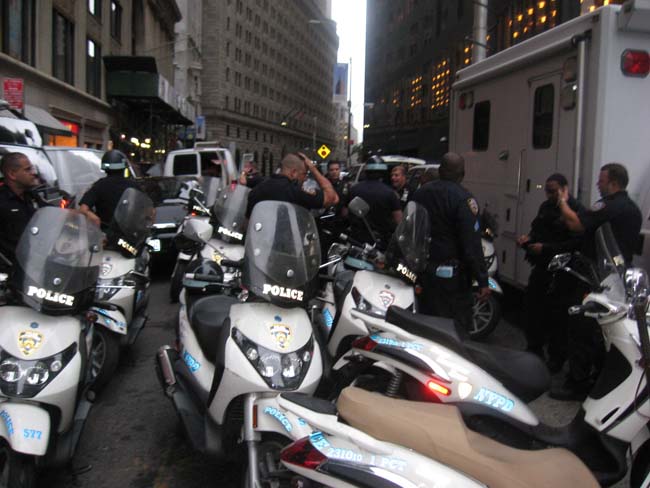
I did manage to pick up one part of the march again, greatly enjoying someone who had gone to the trouble of dressing in a shark costume, top half covered by giant jaws. The march turned left again on New Street, following the same pattern as before. I intercepted the march again when it headed down Beaver. There was a great roar of beeps from the cars moving in the other direction. I was to hear Wall Street workers grumble disapprovingly about traffic. But then there were about five NYPD scooters that pushed forward against this traffic in the street. Not quite Corman’s The Wild Angels in reverse, but I was still curious. At first, they appeared to be amicably following the protesters on their march. But I was later to see that some on these scooters were trying to intimidate protesters. I was relatively safe, somehow scooped up with all the video cameras that were following the angry red rear lights. In the distance, I saw one protester stand in front of the scooters, pacing back slowly. Then a scooter roared inches past me to my right. (Later in the morning, one of these scooters would run over a protester’s foot.) The protesters ran again. I saw a white shirt run into the street, his hand reaching to his belt, and I didn’t know if he was going to raise hell. So I pointed my camera at him and started filming. He saw my camera and then beat a retreat forward.

And then something amazing happened. An entire circle of protesters surrounded the scooters. They shouted, “The whole world is watching!” Behind us, a band arrived, composed of drums, horns, and flutes, and all dressed in green shirts. In the mad rush, I didn’t catch what group this was. But I appreciated their peppy offerings. And I wasn’t alone. There was a guy with a thatchy green scarf around his neck and a burgundy sweater who was clapping his hands and swaying his body to the music. He was nodding his head at his friends and smiling wide.

A witness later told me that five people had been arrested at Broad and Beaver. I decided to track back and noticed that there was a huge police presence moving down Broad – perhaps sixty cops. I decided to follow them. But when the last cop made it past the barricade, they closed the opening behind them. So much for my stealth tactic.

I decided the best option was to return back to Zuccotti. The mood there had not been broken, but the police presence remained strong. When I walked past Wall Street and saw a barricade manned by several police, with a few cops checking the IDs for all employees walking through, this was a dispiriting sight, like unexpectedly setting foot into an old Eastern European country. I decided that I had dodged enough arrests and barricades for one day.

It was Friday morning and it wasn’t over for the protesters. I headed home to grab a few hours of sleep.

The Bat Segundo Show: Susan Orlean

Susan Orlean appeared on The Bat Segundo Show #415. She is most recently the author of Rin Tin Tin: The Life and the Legend.

Condition of Mr. Segundo: Pondering an alternative timeline with the golden retriever rising as the heroic dog of choice.

Author: Susan Orlean

Subjects Discussed: Rin Tin Tin references in Finnegans Wake, Rinty’s indefinable charm, Jack London, dogs in World War I, the state of marketing in different time periods, flawed people and dog heroes in early animal films, soldiers reading poetry, mass cultural mediums and heroic animal images, emotional connections with animals, Burt Leonard’s desperate efforts to revive Rin Tin Tin, Paul Klein impersonating Lee Aaker at conventions, Rin Tin Tin as the blank slate for the American obsession, Strongheart, Rinty’s durability as an American icon, devotion to dogs, a tense 1955 photo shoot with Lassie and Rin Tin Tin appearing on the cover of TV Guide, fierce competition between Lassie and Rin Tin Tin, having “bitten exclusively” written into a contract, Daphne Hereford and Rinty’s obsessive defenders, sinking one’s savings into battling intellectual property law, the perils and nature of giving into passion, knowing Lee Duncan through records, going through a dead man’s ATM slips, respect and “intimate eavesdropping” into subjects, occupational hazards in quirky journalism, cultivating trust with subjects, the bigness of passion, avoiding Rin Tin Tin overload, the rising population of German Shepherds in the 20th century, whether Rinty was bad in any way for history, the rise of fascism, and contrary images that meet on the battlefield.

EXCERPT FROM SHOW:

Correspondent: I wanted to start off with something unusual. I had found this accidentally. Because I started to read Finnegans Wake a month ago. I’m now on Page 20. But on Page 12, I was very happy to find this. There is this passage: “She knows her knight’s duty while Luntum sleeps. Did ye save any tin? says he.” Now this comes after Joyce has laid down all sorts of Germanic references. And of course, While London Sleeps? Rin Tin Tin film.

Orlean: Right.

Correspondent: So this seems as good a pretext as any to ask, well, if Rin Tin Tin got the approval of James Joyce, what accounts for his appeal? What accounts for his enduring popularity? What is the ultimate quality of Mr. Rinty here?

Orlean: You know, I think, in a way, that you can’t quite answer that is the answer. There’s a kind of charisma that certainly the first Rin Tin Tin had, but also this symbol of a dog, which is a dog who is brave and true and loyal and heroic. That resonates with people. He embodied it — especially the first Rin Tin Tin — so well that I think it touched something that was already there. The desire to have a superhero who was credible and not some comic book figure, but actually something real.

Correspondent: Krypto before Krypto.

Orlean: Yeah.

Correspondent: A superdog to match a superman.

Orlean: Exactly. I also think that, if you could say what it is that makes something endure, you’ve ruined it in a way. That there is something mysterious and wonderful about something that connects something with so many people and that lasts for so long, that shouldn’t be something you could put in words. I think that it defines itself by being something emotional that you feel and that you respond to. That can’t quite be described.

Correspondent: Well, I want to point out something you mentioned in the book. You point out that in the 19th century, dogs had only been recently domesticated. They were considered to have deep feelings. They were capable of expressing their emotions more than humans. Now I should point out that Jack London’s The Call of the Wild and White Fang — well, this was only fifteen years before the Rin Tin Tin film. I’m wondering. How did World War I, I suppose, tilt this fixation from dogs as emotional beings to this heroic quality that we’re talking about? Was hero worship the next inevitable stage in the evolution of this man-dog perception situation?

Orlean: Well, for one thing, there were so many dogs in the war. People in World War I saw dogs performing heroically. When you think of a battlefield and dogs being brave and being companionable and working hard, which they did, and maybe not showing as much fear as a soldier might — because dogs don’t have the apprehension of death or the worry of mortality the way people do. So they have the chance to be brave in a way people can’t. So there’s no question that seeing dogs and being alongside dogs in the war had a very huge impact on their perception. I mean, there were tens of thousands of dogs in World War I. So I imagine this entire generation of soldiers coming back, filled with awe. It was also a time where dogs were working not as our servants — the way they might have on a farm or a ranch, but as equals pretty much. I mean, dogs were in the trenches with soldiers. So the feeling that they were our partners almost more than our possessions arose during that time.

Correspondent: Well, you mention this move toward the cities.

Orlean: Right.

Correspondent: That’s still ongoing even in our time. It’s interesting to me that we went from dogs being perceived as “Well, let’s figure out when they’re domesticated, when they come from the wild, and vice versa.” Those two Jack London novels. And then you have this situation when suddenly they’re fighting wars with us.

Orlean: Right.

Correspondent: I’m wondering what it is about that turns a dog into a hero as opposed to some emotional being or tapping into some sort of primordial instinct or what not. Do you think that the original folks — Lee Duncan and company — sort of knew that they had to push the dog thing further?

Orlean: I think what Lee did was totally instinctual. I don’t think he was somebody who did a lot of strategizing and projecting forward what would be good. And, in fact, I think that’s part of what’s so touching about him. He seemed to be somebody who was really responding entirely out of this feeling of “I have this wonderful dog and I want you to appreciate how wonderful he is” rather than “Hmmm, I can make some money off of this if we write scripts that make him such and so.” Remember too that people consumed entertainment in an entirely different way in the ’20s. It wasn’t the juggernaut that it is today. You come up with a good character. You can then merchandise it and turn it into a multi-platform marketing device. It wasn’t like that. I think it was a simpler thing. How the idea of the heroic character evolved? Well, first of all, animals very often appeared in early literature as having heroic qualities that were selfless. I think selflessness is something that an animal can have more easily than a person.

Correspondent: Or it’s easier to understand altruism when it’s placed within an animal as opposed to a man.

Orlean: Exactly. And I think that it may seem a little funny to us now. But when you look at an animal doing something heroic, you don’t project a million things onto it. You don’t think “Oooh, he reminds me of my Uncle Milton who I didn’t like that much” or “I’m sick of this type of person always being the hero” or “She isn’t my race or gender or color” or whatever. A dog is something else. So you can look at it and admire it and maybe be in awe of it without bringing a lot of your own baggage to it. It’s not a person. You don’t look at it with the critical eye that you might look at a person with. So there’s a way that it’s easier to be thrilled by them and not have that reserve of thinking, “Oh, I don’t know.” I mean, it’s funny in those films. The early Rin Tin Tin films. The people are all so flawed. Each one of them has some terrible character flaw. Even the heroes among the humans have some — they’re either naive or they’re — they all fail. And whether that’s some aftermath of the war, in which people saw what terrible things people could do to each other. That feeling that human beings were deeply flawed. Maybe that’s what made a dog a hero that could be admired more freely and with less reservation.

The Bat Segundo Show #415: Susan Orlean (Download MP3)

This text will be replaced

The Bat Segundo Show: Yannick Murphy III

Yannick Murphy recently appeared on The Bat Segundo Show #414. Her most recent novel is The Call. She has previously appeared on The Bat Segundo Show #158 and The Bat Segundo Show #41.

Condition of Mr. Segundo: Terrified of picking up the telephone.

Author: Yannick Murphy

Subjects Discussed: Chatty people named Ed, imagining the proper format for an illusory veterinary log, husbands who claim prodigious memory, how little bits of anecdotes help fiction, the virtues of limitations and structure, the candor in Here They Come vs. the candor in The Call, seasonal cycles, working with editor Maya Ziv, how fiction can be inspired by thinking about things in a car, the national economical environment, sensing possibilities without having a sense of time, publishing a book as a paperback original instead of a hardcover, crackpots who telephone you at home, earning the right to know the name of the character, the unanticipated origin of fictional spacemen, being asked by Dave Eggers to contribute a “sci-fi story,” Kirk Maxey and sperm donors, inventing thoughts of mice, flies, and other animals, judgment in contemporary fiction, avoiding cliches while pursuing earnestness, independent will and work, balancing ambiguous and precise description to relay the observational spirit, injecting life into side characters, and characters who read within a novel.

EXCERPT FROM SHOW:

Correspondent: I was really honored to identify with the Ed who likes to talk with people. I don’t know if I was possibly an inspiration. That might be presumptuous of me. But it was nice to see a very chatty Ed in your novel.

Murphy: Okay. Well, you might have been at the back of my mind, but…

Correspondent: The rearest. First off, I wanted to determine where the daily log format arose from. Call, Action, Results. This is what is the framework of the book. I’m wondering if you consulted specifically with log books — your husband is a veterinarian — and whether you scoured through that. Did you try varying formats before you found something that was just right? What of this?

Murphy: Well, I think the idea came from the fact that my husband doesn’t keep any call logs. And I’m always wondering why not. That would be something I would do. I would know who I visited on what date and what I did to actually treat that specific animal. And he says, “No. I don’t need that. I just remember this stuff. Or, if I don’t remember it, it really isn’t relative to the next case that the animal may have or that I’m treating the animal for.” So I think it arose out of my disbelief that he doesn’t have this kind of system.

Correspondent: How does he stay organized?

Murphy: He’s pretty organized.

Correspondent: Just no log.

Correspondent: He’s one of those people who remembers. And I always thought, “What if he had a call log? What would it look like?” Because it certainly wouldn’t look like what I think it should like. It probably would look more like the book, or how the book is written. Where it’s his ruminations on the world and ruminations on just driving around and who he meets. He loves to talk with people and he really has a knack with the New Englanders. Even though they tend to be stoic, he can draw out their life stories. So what I find really fascinating is when I go along with him on those visits and he engages people and gets them talking and it’s this kind of windfall for me. Because I get to hear their stories that I would never dare to ask. Because I’m more shy than he is.

Correspondent: Well, this leads me to ask two questions. But let’s talk about these stories. How many of these anecdotes did you make up? And how many of them came from your husband’s chronicles?

Murphy: Most of them came from his chronicles. Some were mixed up with others. I think very few I had to imagine completely. There was a little bit of inspiration behind all of them that was based on a real incident.

Correspondent: Yes. So having little bits of the story helped to have your imagination fire up and invent further?

Murphy: Right. Right.

Correspondent: Well, what about the actual log format itself? If you had no logs at home, did you consult any veterinarian associations? Other veterinarians?

Murphy: No. No. I just started writing. Okay, what is the reason the veterinarian is going out on the call? Well, I’ll call that THE CALL. And then, okay, ACTION. What did I do there? RESULT. How did that end up? And then when he would leave that particular farm, then it was what I saw on the drive home. WHAT THE WIFE COOKED FOR DINNER. So I was able to integrate his home life with his work life that way.

Correspondent: What’s interesting though is, as you read the book, you find that he isn’t able to compartmentalize as much as he thinks he can. I mean, we start to see that even though he starts to think of something, it then goes into describing the action. And what’s also interesting is that, when you have WHAT THE WIFE SAID, you often have him interjecting. It’s almost as if WHAT THE WIFE SAID is like an open quote with which to carry on here. And so I’m curious. To what degree were you conscious of this design? Or did this just happen through the course of a sentence in this book in the early draft?

Murphy: Well, I knew partway in — maybe a couple pages in — that the structure had to be a little more wieldy than what I had set up. I knew that I was going to run into trouble really fast and that I had to have as much fun with it as I could. So when you set up a structure like that, sometimes you can have a lot of freedom with it. Because you’re in the structure. So you can see where places are that you need to jump out of. It actually — for some reason having the imposition of a structure actually liberates my writing a lot more. So I know that as long as I stay within that framework, I can say anything I want to say. Which makes it a lot more fun.

The Bat Segundo Show #414: Yannick Murphy III (Download MP3)

This text will be replaced