Stone Arabia Roundtable — Part Two

(This is the second of a five-part roundtable discussion of Dana Spiotta’s Stone Arabia. Additionally, Spiotta will be in conversation with Edward Champion on July 20, 2011 at McNally Jackson, located at 52 Prince Street, New York, NY, to discuss the book further. If you’ve enjoyed The Bat Segundo Show in the past and the book intrigues you, you won’t want to miss this live discussion.)

Additional Installments: Part One, Part Three, Part Four, and Part Five

Darby Dixon writes:

A lot of interesting stuff so far. I’ll start off with my own opening thoughts — which pick up a few points from this discussion, I think — though there’s plenty more here for me to consider in more detail.

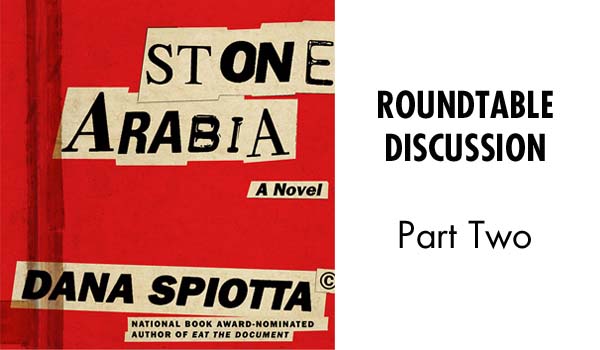
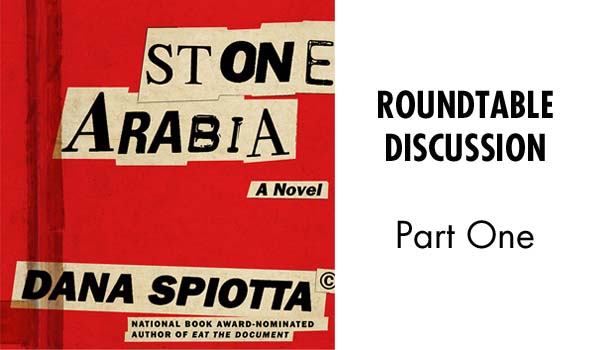
I’d like to start by looking at the book’s cover. Which — if this is in any way a novel about music or any sort of glory days in which the cover as a physical artifact actually means something — is hardly a bad place to start. But I find the cover of this book troubling for two particular reasons. Is the cover poorly executed? Or, more hopefully (and perhaps more likely), do these issues point to aspects or views of the book that I missed on my first reading?

Consider the treatment of the title and the author type on the front cover. I’m not referring to the copyright mark placed after Spiotta’s name, a witty winking question mark that pays off with a dot-dot-dot-exclamation-point within the novel itself.* Rather I’m looking at the supposed handmade quality of the cover. If it is meant to allude to Nik’s self-made album art, why does it have to look so Photoshoppy? This cover never stank of real glue or caused any paper cuts. Why not?

What also bugs me — and you’ll have to see it by taking the dust jacket off your hardback copy and stretching it flat on the table in front of you — is that the background is mirrored from the front to the back. The distress along the top inside flaps is the tell. I can’t think of a good reason why it had to be this way.

Why then this postmodern take on the handmade? I ask because I did not read this book as a postmodern novel, although I guess there’s postmodernish stuff inside it. There’s some framing going on and a little bit of self-reference. But it felt well-contained to me; the effects are just means to an end. This is essentially representational work; neither Nik nor Denise feel like ciphers or “texts” to me, but, rather, realist characters with real issues drawn in a real manner: each drawing himself or herself into being. Maybe the mirrored back cover is a superfan-level Easter egg, a nod to whatever mirroring is happening between Nik and Denise. They are two creators, two storytellers: one far more gung-ho and self-assured than the other. But as I type that thought, my internal editor is all like, “Uh, really?” So.

So. Am I missing layers of irony and self-reference and other postmodern gobbledygook? Or do I have a legitimate desire for a cover that gets more real, more DIY? Is this a bit more of a scorched mess?**

Full disclosure: I came to this book (and this book discussion) a skeptic. I read Eat the Document because it sounded like the kind of book I was supposed to read. And, while I don’t remember hating it, I don’t remember loving it either. Stone Arabia mostly won me over though for various reasons. In time, I’ll get back around to Document and give it another shot (and pick up Lightning Field along the way). It didn’t hurt Arabia‘s case that my current reading project involves a stack of 1,000 page+ books. Being able to sit down and read Arabia over the course of a single weekend? Well, it read like an absolutely blissfully quick short story; so much so that, due to miscalculation on my part, I didn’t realize the ending was the ending until I turned the page and found no more story following it. (That ending. I’d like to swing back around to it in more depth later in this discussion, with anyone who is game.)
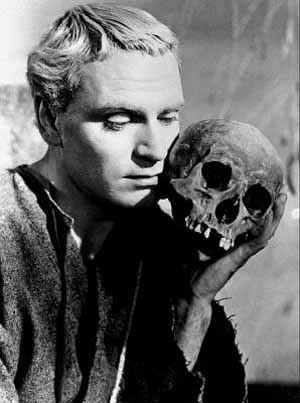
This book worked for me less as a novel about art and rock and success, and more for me as a novel about memory and time and how we use both to tell ourselves the stories of our own lives.*** Levi has offered quite a bit to chew on in this regard, and I’m still chewing on it myself. For me, what I think bumps the memory issue up on the queue is the fact that everything in the novel is filtered through Denise’s consciousness: either directly through her writing or indirectly through her point of view. She sees the kind of failing memory in her mother that might await her in later years, and it’s scared the wits out of her.**** She’s anticipating the downfall that awaits her and she’s struggling to arrest it before it can arrest her. In some way, she’s highly jealous of Nik’s apparent freedom from that; his ability to make his own story up has to be a severe kick in the sibling rivalry gut. But what can there be of it now? It’s funny how little left there is of their mom to approve or disapprove of the actions of either sibling. It’s a bit of a tragedy of impending morality. Denise and Ada also act a bit like Horatio to Nik’s Hamlet. If the journals and the albums are Nik’s heroic acts, the documentary and the Counterchronicles are their stories, at least the stories that people might actually get to hear.

This is where all the Nik stuff comes into play for me. Where it really works is in its service to a story about memory, about making memory, and about making a story out of the life one is living. Is Nik a success? Neither commercial nor popular. Okay, is Nik a success as a brother? As a son? He seems too self-involved for that.***** No doubt this is a book as much about time as it is about memory, if indirectly. To pull off the projects that Nik pulls off; well, it requires massive amounts of time and effort and dedication. (A twenty album cycle! Not five, not ten. Twenty! You can’t do that while holding down a productive day job and taking care of your sick relative.) In this regard, he’s a success in a completely logical way. He did the things he set out to do. He succeeded, at whatever cost. He only needed a small handful of people to witness it, to make it real, and, even then, he never seemed especially interested in their actual reactions.****** In a day and age when fame and fortune appear right around the corner for everybody willing to fart out a lolcat-style meme, there’s something admirable about that. Is this a withdrawal from reality or a redefinition of reality? A determined, self-defined vision of reality? Could this book have been set in 2011 rather than 2004? Perhaps today, Nik’s “success” might feel all the more anachronistic. How much of this is happening right now that we don’t know about and aren’t supposed to know about?

In going on about Nik like that, I realize I’ve detracted a bit from my belief that Denise really is the emotional core of the book. She is, though, in some strange way, the character I felt myself most identifying with; or at least she’s the one I sorta rooted for. It’s something I’m trying to unpack for myself still; and for some reason I keep coming back to that crushing pile of debt she has been accumulating while taking care of her ailing brother******* and her ailing mother. You can’t buy memory, but having money on hand to try doesn’t hurt. More on this later in the discussion, I hope.

* — The whole author/artist-as-brand conversation is probably worth a couple thick discussion threads alone. I’ll admit that, as a current student in real art classes trying to make real art, I found the Thomas Kinkade stuff funny. Painter of Light, indeed. Paint this, Mr. Success Pants.

** — Is there a rock album cover that inspired this treatment that I’m not aware of? I’ll admit to missing vinyl the first time around due to youth, and, due to finances, neglecting the recent indie-hipster resurgence this time around. So my personal cover art experience is largely based on a 90’s and early 00’s CD collection. I know, I know. The big beautiful vinyl cover square is superior as a means of conveying the visual side of an album. But I think the folded up CD liner sheet gets (or got) a bit of a short shrift; how much earlier would I have hit the hay in high school if I’d been strictly focused on homework instead of occasionally pulling out one of those squares, unfolding it panel by panel to find the secrets contained within? How much has music’s impact on me been minimized by the lack of something, anything, physical to go with it? I, for one, miss accidentally cracking jewel cases. But I just can’t see finding time and cash enough to put a record player in anytime soon.

*** — Reading Nik as simply musician-creating-for-no-audience felt a bit “meh” to be, taken at face value. I mean, I’ve done the same thing, on a smaller scale; made stuff nobody’s listened to, I mean. It’s not that interesting a thing to me. Music is for ears! Music-as-music is better when other people hear it and like it. Or am I being overly simplistic (or obtuse?)

**** — Having seen some of those issues in the last decade in my own family has been similarly both terrifying and sobering. My dreams of my writing career eventually actually starting and lasting me well into late in a long, healthy, productive, and active mental life? I dunno. What will I think of this discussion fifty years from now? How shamed will I be in my distraction from blogging about the books I’ve been reading, from more actively keeping journals, from taking more pictures? What bundles will I leave behind that tell some small portion of my story, to whomever might be around to hear it?

***** — I’m not passing judgment there. I’d only be passing judgment on myself. I’ve got a lot of guilt bound up in my relationship to art, in the hours devoted to potentially fruitless pursuits that may have been better spent with loved ones or what others might call “doing good”: doing charity work or hopping a plane to a distant city to help someone other than myself. What good is that unpublished novel, or that self-portrait tucked away in a closet for the rest of my life? I can’t pass judgment on Nik because in some ways I wish I was him, the jerk.

****** — Oh, the crummy, crummy jerk.

******* — The selfish dick.
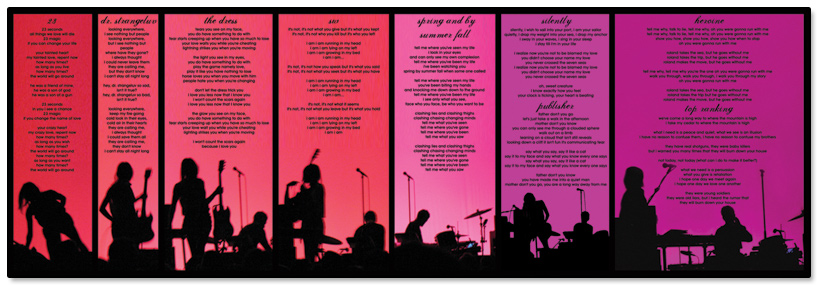
…and of course I realize immediately after I hit “send” at least one thing that I meant to (and forgot) to clarify: if I’m critical of that cover, I’m also so, so, so, so, so glad to see it was conceptually relevant to the contents of the book! This could have easily been yet another one of those blurry photos of a woman with her face turned away from the camera or cropped out of the frame. And maybe some flowers or something like that. Yawn. I praise the concept (and that red really is the right red, somehow, isn’t it? the kind of red you just want to curl up with in your hands while listening to it on a gigantic pair of headphones, no?) while raising an eyebrow at aspects of the execution. (I’ve had similar love/hate issues with the covers for Jennifer Egan’s A Visit from the Goon Squad, a book I badly need to reread, because, yeah, duh, there’s things to compare and contrast between these books; sadly I think the deck is stacked against me this next week. But, suffice it to say, I’m an self-acknowledged Egan fanboy, yes, and Spiotta, I think, is up to something else with her book. So it’s probably unfair of me to try to pick a book I prefer to another. If this was a Tournament of Books thing, I would politely and ethically rescind my position on the brackets. But! I’d very much like to see the two books sit down at the bar, grab some drinks, and talk shop. Is that what I’m saying? There’s enough bourbon here for both.)

Ahem. Carry on!

Robert Birnbaum writes:

I am struck by the realization that the more vocal of the aggregation who read on this planet expend a lot of verbiage and hand wringing about the prospects of books, literature, reading and what not. So it should not go unsaid that this opportunity for a diverse, spirited group of readers to commune is a joyful affirmation. So thanks for that, Ed Champion.

I am lucky to have, for the most part, the freedom to choose the books I want to read. While this is not a totally unblemished blessing, it is an immeasurably wonderful one. So the books that I pick up tend to reach my hands and eyes in almost infinitely (a large number) manifold ways. Dana Spiotta’s Stone Arabia came to me via Eddy’s latest literary initiative. But there is a context for reading this book — since, for me, reading takes place within my life and not as stepping out of it. If you know what I mean.

In the short period before picking up Spiotta’s tome, I had read two books — which pulled me in different, if not opposing directions. I picked up the ARC of Lydia Millet’s new opus, Ghost Lights, and delved in, propelled by the nimble and ironic prose. I found myself about two thirds of the way into this tale of a disenchanted IRS employee who embarks on a mission to Central America for his equally disenchanted wife. I was losing interest. But being close to the end, I finished the book. Besides a mildly surprising ending, I was not impressed or engaged.

In the meantime (or the same time), I had one of my periodic conversations with Jim Shepard, The Wizard of Williamstown). Part of our talk hit home immediately:

RB: I no longer feel compelled or obliged to finish books.

JS: Yeah, that’s really characteristic of a life spent reading. I am struck, when I talk to students or younger writers how much —- I guess I remember that feeling too —- how much they feel like, “No. If I got this far, in I want to say I did it [finished]?” 

RB: There is always the occasional book that it takes longer to figure out.

JS: That’s the danger. If you bail too soon. I try to give books every possible reason to keep reading. But I don’t any longer feel bad about bailing. It’s not anger or contempt -— it’s “I think I get the idea here.”

In that same chat, Jim mentioned that he was reading and impressed by Bonnie Jo Campbell’s story collection, American Salvage. Which prompted me to pick up the copy of Campbell’s novel, the one that had been previously dispatched to some pile of miscellany.

Wow, this is a book that grabbed me from the first page. And though its resolution was profoundly satisfying, I was a little bereft to leave the lush and variegated world of riverfront Michigan.

So the next book I picked up was The Secret History of Costaguana by Colombian novelist Juan Gabriel Vasquez — mostly because I had tried to read his American debut, The Informers, with little pleasure. Another chance for Vasquez, and a trip to beleaguered Colombia with Joseph Conrad as a character, seemed enticing. And I was digging my way in when I received Stone Arabia and remembered my intention of participating in another Ed Champion extravaganza.

So with no background (except some dust jacket info), I began to read. I reached Page 92, impressed by Spiotta’s precise and nimble prose but not engaged by the characters. Not unhappily, I had to put down the book to read Josh Ritter’s Bright’s Passage in preparation (such as it was) for my chat with Ritter (sweet and charming kid, by the way).

And then came Eddy’s first invitation (incitement?), which I may or may not have responded to with the clarity that I hope to exhibit in these later offerings. At that point, having read about half the book, I was clear that, had I not committed to joining a discussion, I would not have gone on reading Stone Arabia.

I don’t by any means see this as a negative assessment of the book. It wasn’t my kind of story. Plus, I already have to deal with the deaths of close friends, aging parents, and worries about losing my memory (and, ultimately, my mind) in real life. Plus the call of the unread always haunts me.

But then did I read the book in its entirety without other narratives impinging? As you can see, my thoughts so far about this book are so far mostly about my thoughts.  

I see Part Two of this mission, where I now read what others have said and where I may arrive at something more objective (or less subjective) about Dana Spiotta’s book. That’s narcissism, isn’t it?

Bill Ryan writes:

I suppose, since everyone is pretty much throwing their own interpretive bowling balls in this opening frame, I’ll do the same. I’m going to fire off a half-cocked argument in which I can this very moment poke holes. And what fun is a discussion if someone can’t be completely wrong? 
 
I’ll start off (with apologies) by disagreeing with Diane — I think Jay is slightly more than a fill-in. He’s the fuckable opposite of Nik. Denise and Jay deliberately ignore each other’s memories, and actively avoid discussing their histories. They prefer to live (cringe for cliche) “in the moment,” and seem to survive as a couple so long as they both agree to do as much. With Nik, there’s nothing but history, “shared knowing.” Jay teaches the next generation about art, Nik makes it for an audience of two or three.  Jay brings her Kinkade’s schlock (seriously, take a look at Bambi’s First Year for a lurid example of Kinkade’s art) that “piles up in her garage.” Nik brings art that she treasures: a mere taste of the art that’s piling up in Nik’s garage. She fucks Jay (albeit lukewarmly), finances and forgives Nik, and ultimately carries his torch. We get no news of poor balding Jay and his “off-putting, almost creepy” sweaters.
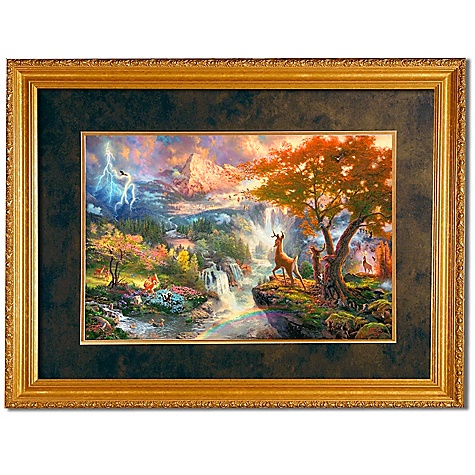
 
I think here we get Denise’s answer to Sarah’s question about the value of art, purity, etc.: Thomas Kinkade’s “art” vs. Nik Worth’s music and Chronicles.
 
The only thing that Denise really appreciates is Nik’s art, and seeing him carry that art to its conclusion was Denise’s self-imposed destiny. Nik “is” his art, for better or worse. Denise is his art’s audience. Just as it’d be unthinkable for me to tell Richard Serra what shape his next giant metal sculpture should take, Denise ultimately can’t stop Nik from following through with his art.
 
Denise admits that she’s complicit in Nik’s downfall. She is, if not pushing, then enabling Nik towards whatever end he comes to at the end of the book. Her need to write her own history of the events preceding “the crisis” meant to read as a pardon for her part in Nik’s death. Like Sarah mentioned, she’s rewriting family history in the Counterchronicles to fit the history she needs to forgive herself for Nik’s apparent suicide. An alibi.
 
That might also explain her need to get it all down, beyond just her failing memory. Even when she should “call someone” when she’s almost certain her brother’s killed himself. She has to write, she has to formulate a reality in which she isn’t a complete failure. Her brother’s sarcastic note about her being a “writer, now” could also be read as a grim prediction and condemnation of her rewriting history.  
 
Throwing on my pop psychology hat now, Denise can’t stop him because she’s afraid to upset whatever mixture of drugs, alcohol, and psyche come together to create the art she alone can appreciate so well. Nik’s “concessions,” his need to “get off his face, out of his head, expand, shut down, alter, spin, fly, sleep, wake up, float” was there as long as Denise could remember.
 
Denise has her own “concession.” Nik, his music, his art, his life, is her life’s concession. If everyone lives with these consolations, and if the non-stop dissociative drugging was Nik’s consolation, Denise was willing to accept those terms so long as she could feel the “consolation of recognition” that she felt in Nik’s art. Because Denise is ultimately empty. She fills herself with whatever she can — she regularly “possesses” these “permeable moments” that wrack her with guilt and empathy. Again, I read these moments as further attempts to convince her audience (us? herself? Ada?) that we should forgive her, the patron saint of lost musicians. She’s so useless that she ends up crying on the doorstep of the woman she’d flown cross-country and driven hundreds of miles to “help.” How could she help Nik? 
 
Finally, when Nik’s gone, Denise becomes the de facto arbiter of Nik and his art. Now, rather than just his audience, she’s his curator. “It’s hard to believe [Nik and his art] is really gone,” Denise says. “But there is this.” 
 
“What remains,” says Ada. 
 
“And what I remember, of course.” 
 
I’d be hard pressed to think of a more dismal life than correcting YouTube commentators, but this is what Denise is finally left with. Maybe it’s enough, negotiating the Chronicles and Counterchronicles. It sounds like a sad fate to me. 

Roxane Gay writes:

I’ve enjoyed the conversation thus far. I’ll just ramble through some thoughts on this book

I’m not familiar with Spiotta. So I did not know what to expect from this book. But I found it very timely. I read Nik as a blogger before there was blogging. The Internet makes it very easy for artists and writers and musicians, and even people who are none of these things, to chronicle their careers or lives obsessively — whether those careers or lives are real or imagined, interesting or quotidian. It was interesting that Ada actually was a blogger and Denise stayed apprised of her daughter’s interior life via blog, while staying apprised of her brother’s interior life through the Chronicles, or his retro blog. Nik and his imaginary life, the Chronicles, blogging, social networking, sharing what we’re watching on Twitter — all these things speak to Sontag’s thoughts on living as having one’s life recorded. And this, along with the idea that we are not truly alive and can’t be remembered if we do not leave artifacts behind documenting that we were, indeed, here. Documenting our lives also connects to memory which was such a dominant theme in this book. Denise became the documentarian of many lives — her own, her mother and brother’s lives, sometimes her daughter’s life, sometimes the lives of strangers in how she followed the news. At times, I felt like she saw her responsibility as bearing witness. 

I don’t know if Nik is an artist, but he certainly performs the part of the artist very well. I was fascinated by the sheer extent of how he chronicled his imaginary career and the obsessive attention to detail, and how Spiotta was able to convey the obsession so convincingly. I would not say Nik is an impostor as much as he is a coward. He believes in his art enough to make it, but he doesn’t believe in his art enough to push it beyond the claustrophobic community he has created himself — people who, for the most part, have a certain obligation to love and appreciate his art. I thought of Hoarders, which airs on A&E, as I read this book. The show follows people who hoard trash, dolls, beer cans, and other strange ephemera that holds some deep emotional significance, even as it threatens to drive these people from their very homes. I read Nik as hoarding this chronicle of his imaginary life, slavishly devoted to the upkeep of that imaginary life even in the face of what would be deemed, by many, as abject failure.

Edward asks what our judgments are worth when so many people are providing their own commentary and it is a good question: one that people in many fields are asking. Social media, the Internet, and what have you have made it possible for everyone to be a critic. So we have to ponder the value of criticism when it has been diluted the way it has in recent years. Nik himself proves that everyone’s a critic when he solipsistically reviews his own albums. He certainly takes that solipsism to a new level by sometimes critiquing himself negatively, but I find his project to be the ultimate expression of this notion of anarchic, overly democratic criticism — both creating art and then providing commentary on that very same art. Who does that? If a self-published writer (who is already pretty marginalized in the publishing world) were to then review her own work, the response would be swift and merciless. There’s a real tenderness, though, in how the people in Nik’s life view his Chronicles and self-criticism. It would be easy to think of Nik as a deluded, obsessive genius or impostor or coward but there’s also more to him. He demonstrates a real awareness, for example, when he articulates that he knows precisely the slant Ada will take in her documentary. He knows how he appears but remains undeterred. There’s something to that.

I would have loved to see more done with the design of this book. I kept wanting to see more evidence of the Chronicles other than the brief glimpses we were given. There was a real opportunity here to do something conceptually interesting and that opportunity was missed. 
Stone Arabia Roundtable — Part One

(This is the first of a five-part roundtable discussion of Dana Spiotta’s Stone Arabia. Additionally, Spiotta will be in conversation with Edward Champion on July 20, 2011 at McNally Jackson, located at 52 Prince Street, New York, NY, to discuss the book further. If you’ve enjoyed The Bat Segundo Show in the past and the book intrigues you, you won’t want to miss this live discussion.)

Additional Installments: Part Two, Part Three, Part Four, and Part Five

This week, Dana Spiotta’s third novel, Stone Arabia, hits bookstores. Spiotta is previously the author of Lightning Field and Eat the Document and also appeared on The Bat Segundo Show #28. Reluctant Habits will be devoting the entire week to authors, journalists, critics, bloggers, and various readers discussing Spiotta’s book further. We’ll be serializing the conversation in five chunky installments from Monday through Friday.

Edward Champion writes:

I don’t want to give away the ghost from the outset (although it’s possible that I may be remarking on a spectre), but it’s interesting that a novel depicting how we respond to art should begin with an epigraph from Jean Dubuffet, who believed very much in the idea of lower art (specifically images and paintings) possessing greater authenticity and humanism than loftier cousins, while ending on the ultimate image wish fulfillment: in 1972, Nikolas Kranis (aka Nik Worth and possibly the sketchy Nik Kat) is photographically positioned as rock star paragon for his sister Denise and his then girlfriend Lisa.  But that artistic status is also there in the order of his room, the makeshift coffee table, and the sundry posters arranged in “idiosyncratic” spots throughout his garage studio.  So the big burning question I have for you good folks, one I’ve been dying to ask you for weeks, is what you think this all amounts to.

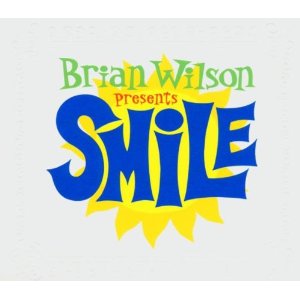
Here we have Nik, a musician who has devoted decades of his life (1970s-2003, a time period that intriguingly matches how long it took Brian Wilson to get around to finishing Smile, which I bring up because the Wilsons features prominently in Spiotta’s previous book, Eat the Document, and also because the gloriously hallucinogenic “Mrs. O’Leary’s Cow” now blasts through my speakers; but I digress) to two bona-fide private projects: the Chronicles, a written compendium of journal entries, press clippings, and assorted articles in which much of the biography has been fabricated (and which contains, moreover, any number of inside jokes and prevarications), and The Ontology of Worth, a twenty album project released in descending order (last volume timed with his fiftieth birthday) to Nik’s immediate circle of family and friends.  For Denise (our primary guide through this book) or Ada (Denise’s daughter, a documentary filmmaker who soon beings work on Garageland, a Nik documentary named after a notable Clash song that begins “Back in the garage with my bullshit detector…”) to make sufficient sense of this, they must wade through a bogged labyrinth of invented personae, cruel parodies mimicking and meticulously referencing their real lives, and other wetware manifestations that serve in lieu of the truth (Nik, washed out rock star suffering from gout, reliant upon family handouts, brittle vocational truth not revealed until very late in the book). (“Versions of Me” indeed!)  So we are forced to confront difficult questions: Is Nik, who is clearly capable of impressive encyclopedic insularity, building up to his own masterpiece akin to Smile?  Or is he, as many of the characters in Spiotta’s previous novels have been, an impostor?  Some go-nowhere bum to be pushed into reality or an unhatched autodidactic genius who requires encouragement?  Is Nik’s private work, emerging from the house he calls Cafe Real (perhaps with a shit-eating grin or a “smiley smile”), more humane and authentic in its lower and personal efforts than his efforts to pin down power pop through The Fakes or glam aspirations with The Demonics?
On the other hand, what right do any of us have to make judgments on artistic intentions — even the fictional ones contained within this book?  Just to be clear on this, I certainly don’t wish to hinder any of you from doing so!  But to my mind, Spiotta promulgates a legitimate question: What are our judgements worth when so many people (including the characters in this book) are talking over the cinematic soundtrack, providing their own commentary?  (Even Nik is seen writing “while someone is talking to him.”)  That goes for the YouTube commenters seen near the end of the book, who present their own theories and are mostly interested in the old Fakes footage, as well as the “scripted” interviews from Ada’s film-in-progress — a stylistic technique Spiotta also deployed in Lightning Field. To what degree is the text that Nik or Denise present commentary?  And if Nik’s Chronicles are “a private joke he doesn’t have to explain to anyone,” why then has he (or, for that matter, Spiotta) layered the joke with so many inside jokes (some explicitly mentioned, such as Neil Young’s Skyline Drive; some not, such as the Garageland reference I pointed out above)?

Would we be more satisfied accepting art on its own emotional terms?  That’s a big question too.  Because just look at the serious grief Denise offers in response to the news cycle, the ostensible “reality” that she feels compelled to confront.  She can’t even name Lynndie England as she takes in the Abu Ghraib photos, but, much as many (including Nik) speculate on Nik’s character, she finds herself fixating on England’s “storm chasing,” even after Denise confesses that she “eluded any explanations.”  Perhaps this is the ultimate response to Debuffet.  And if we want to bring up Susan Sontag’s “Regarding the Torture of Others” into this discussion, to what degree do you think Sontag’s thoughts (“To live is to be photographed, to have a record of one’s life, and therefore to go on with one’s life oblivious, or claiming to be oblivious, to the camera’s nonstop attentions. But to live is also to pose. To act is to share in the community of actions recorded as images.”) inform this novel or even our experience beyond the novel?    Must we accept all this if we wish to have a relationship with art?  Has the advancement of artistic creation and artistic commentary made us merely Able-Bodied Adults Without Dependents, Voluntary Missing Adults, or (to offer a pleasantly overreaching take on the book’s affinity for acronyms) inversions of “dad” (Ada) who feel compelled to shoot attention-seeking video instead of seeking “basic words of familiar vocabulary hid behind missing letters”?

I realize that’s quite a lot to trot out, especially since I haven’t mentioned Denise’s twin concerns of aging and declining memory, to say nothing of the book’s frequent concern with trading off accumulation for elimination.  I’ll leave others to remark on some of this before I jump in again.  But I can’t resist closing this jam-packed opening with Spiotta’s joke about Denise having a “sort-of boyfriend” named Jay, who teaches art history (and sometimes film). This is a pretext to get laid and watch James Mason films in lieu of actually living outside the house.  But the truly sad thing is Jay’s interest in Thomas Kinkade and how this meaningless affair is, for Jay, an excuse to maintain a minimum of grooming habits.  I have to ask whether you folks think there’s anything redeemable in this relationship.  Or is this relationship, like many of the distractions presented in the book, a reflection of some new dull narcotic and wholly insufficient existence in bloom?  Perhaps it’s something referenced to the Stones’s “Dead Flowers” — an especially bleak song representing the Stones’s effort to shift to country that Nik likes to play every New Year — “I’ll be in my basement room, with a needle and a spoon.” Steering from your natural voice creates some fairly rocking material, but at what gloomy cost? Another of Spiotta’s inside jokes, especially since the Stones refused to play this song live for quite a long while.

Sarah Weinman writes:

There is so much to unpack in Stone Arabia, and, by extension Ed’s wonderful and jam-packed opening salvo, that it almost threatens to do my head in! As such, I’m going to do an end-run and touch on a couple of topics Ed didn’t bring up, with the hope of circling back a little later on.

First is the idea of audience, and even that idea, as filtered through Spiotta’s novel, goes off in a number of different directions. There’s young Nik playing and posing to his girlfriend Lisa and Denise, the image Spiotta returns to in a big way at the end of the book (and which led me to a particular conclusion about the book that I’ll get to in a bit). Obviously, there is Nik’s choice to conduct his massive project more or less privately, with Denise as his primary audience, commentator and admirer. There’s Ada and her documentary, wishing to bring her uncle into the light of a greater audience. All have intentions, noble and selfish, thoughtful and venal – and that’s one of the many things that so impressed me about Stone Arabia, which is that it tackles the notion of whether the expression of art is “purer” with a tiny audience while also subverting it. Does art function in a vacuum? Is “selling out” a less worthy or more worthy goal? Spiotta simply presents possibilities here, but it’s up to us, as readers, to come to our own judgments, and then, in reaching them, get hoisted by our own petard because we sought some element of rightness or wrongness here.

Then there’s the relationship closeness of Nik and Denise: she’s his closest confidante and supporter, he’s the conduit by which she can express her own nascent artistic desires, or think she can. There’s some double-fold work here, because, on the one hand, brother-sister closeness seems to resonate a little less in literature than same-sex sibling relationships — unless there’s some cliched element like “brother protecting little sister from bad boyfriend” or vice versa. (I love, too, that the deepest love in Stone Arabia is familial — brother-sister, mother-daughter — and romantic attachments are almost incidental, never measuring up in terms of emotional power.) But in this case, Nik and Denise are both protecting and perhaps enabling each other: if Denise wasn’t around to be Nik’s #1 admirer, might he have reached that larger audience? Or was her active support really the only way for him to produce those many albums and to stay on the “right side” of artistic integrity? And is Ada, Denise’s daughter, representative of Denise’s admiration the next generation over, or is she part of some weird familial artistic triangle that will upend everything?

Based on what happens to Nik — his disappearance and his canny self-obituary, seemingly left for Denise to find after he’s gone — it seems like the explosive triangle is the likeliest option. But again, I love that Spiotta leaves it open for interpretation. Which is ultimately why I read the end of Stone Arabia as Denise’s attempt to rewrite her own family history, to put Nik on some kind of artistic pedestal while also finding a framework to focus her own thwarted ambitions. (“I feel like I am him, this is my little edge of want.”) Or, to riff off of the “impostor” idea Ed mentioned, Nik and Denise’s artistic output are the same, manifold in different expressions, and even if it turns out that this whole massive project may be in Denise’s head, a manifestation of shifting (even failing) memory, or that she essentially created “Nik Worth” so she had a more legitimate way of expressing her artistic self (which would also help explain her evasion on camera when talking to Ada — her own daughter! — about the so-called origin events of how Nik came to be a rock star) it still doesn’t negate the artistic truth of what’s been expressed. Or, to state it more simply, does it matter who created or who expressed art when the art itself carries so much meaning for whomever experiences it?

I came away from reading Stone Arabia wanting to experience art more fully and more deeply, but also caring a little less about the semantics of it all. There’s so much to rewrite and rework and reshape that, ultimately, it’s the context any audience member or reader or observer brings that adds vital truth to it – especially if the bonds are so strong, so familial, as to attach even greater importance to what’s being created.

Levi Asher writes:

Well, I think I’ll take a cue from Sarah and avoid responding to Ed’s impressive questions (because I don’t know how to answer these questions) and instead kick off with my own first impressions of the novel.  There will be time to circle back in this roundtable later, I’m sure.

First, unlike Ed and possibly Sarah, I never entertained for a minute the idea that Nik Worth could be considered an artistic success, or that he could be seen as having any artistic integrity based on his extremely weird decision to fork off a fantasy career as a rock star after the evident failure of his real career as a rock star.  

He is a gigantic success, in my opinion, as the central character in this novel — I love the character (and, since it happens I’m nearing the age of fifty myself, and am also grappling with the gap between my own fantasy career and reality career as a writer, I relate to him more than I want to admit).  But Nik Worth could not have seen himself as a success, and neither Denise nor Ada nor anyone else could possibly have been proud of him.  His retreat into fantasy seems to me a mild analog to schizophrenia. His decision to detach himself from reality and find solace in a world of sarcastic self-reference is like Alonso Quijana’s decision to become Don Quixote. And everybody knew that Don Quixote was mad.

I think Ed and Sarah have done a better job than me of analyzing the many connections in the novel — I didn’t think about Brian Wilson, though I did think of Spiotta’s great Eat The Document often while reading Stone Arabia — but I did form one strong impression that neither Ed nor Sarah focused on.  To me, it’s obvious that this is a book about memory. There are five characters in the book: Denise, Nik, their mother, Jay the boyfriend, and Ada. They form a pentagon of attitudes about memory.

Denise feels everything, remembers everything, takes responsibility for correcting everybody else’s memorial imperfections.  She’s not only her family’s conscience, but also the conscience of the world, and she both suffers mildly for this and rewards herself for her honesty.

Nik, of course, is remarkable for his protest against truth.  He doesn’t like the world, he doesn’t like the way New Wave and power pop and MTV destroyed the operatic classic rock visions of the great 1970s, and so he tells the world to fuck off and departs from reality: first mentally (when he begins the Chronicles) and then physically when he drives off with his car and guitars into complete oblivion.

Their mother represents the tragedy of memory — she needs it as much as all of us do, but it has left her, and she’s struggling without it.

Jay the boyfriend represents the same escape impulse as Nik Worth, but he escapes in a more “normal” and socially acceptable way: by absorbing himself in Thomas Kinkade paintings, elegant 1950s cinema, and friendly lukewarm sex.

Ada the cheerful filmmaker-daughter represents the youthful fascination of memory.  Charged with creative spirit, but too young and unformed to obsess (yet) over her own thoughts, she feeds rapaciously on Nik’s quiet insanity, turning it into YouTube fodder.  The fact that she barely seems to care when her uncle disappears demonstrates the lack of depth — a condition of the very young, I suppose — of her own memory at this point, though of course the crises of life await her.

That’s my first takeaway.  The other thing I want to say about Dana Spiotta’s writing is that, more than anything else, I appreciate reading a novelist who truly understands the grand masterpiece proportions of 1970s rock music.  An Aladdin Sane birthday cake, indeed!

I will attempt one response to Ed’s avalanche of conversation-starters.  Ed suggests that the name Ada is an inversion of “Dad,” which is intriguing, and I’d like to hear more examples of acronym-play and inversion-play in this novel.  However, I’m completely sure that Dana Spiotta named this daughter after a famous daughter named Ada.  Ada Lovelace was the daughter of Lord Byron, and was notable for her own work on early computer prototypes.  The computer language “Ada” was named after her, and since computers do nothing but operate upon memory, this connection supports my idea that the whole book is about memory.

But the reference to Ada is a clever inversion of a different kind, because, of course, Ada’s father Lord Byron was widely believed to have had a sexual affair with his sister.

Diane Leach writes:

I’m with Levi — I’m not touching Ed’s analysis. 

I had a strongly personal reaction to this book.  My brother is a professional musician who, until recently, worked exclusively in Los Angeles. My brother deals with much of the bullshit Nik endures, though, unlike Nik, he is functional and earns a living.  I also found this difficult from the same standpoint Levi did: at 43, I find myself gaping at the yawning pit between my “real” writing career and the one that did not happen.  

I interpreted Nik’s retreat from the music business and the conventional definitions of artistic success (this may be self-serving on my part) not as failure, but as a decision. Nik is clearly a brilliant guy whose talents would permit him to do whatever necessary to attain broad popular success.  Look at the Lux Smith interlude — Los Angeles is full of these guys. Nik is hardly the type who will tolerate such people. Is retreat a form of purity? I suppose it depends on what one wants from her art.  The great ballerina Suzanne Farrell, in her biography Holding On to the Air, writes that she hardly intended to spend her life dancing in her living room.  Does this make her art better or more important than Nik’s?  I don’t think so.  Our current artistic culture — in all the arts — is too often a definition of the lowest common denominator.  Where would a polymath like Nik Worth fit?  In today’s culture, he’d be reduced to a “niche market.”  

Interesting to me that nobody noted that Stone Arabia was about loving somebody who is incapable of returning that love.  Though Nik loves Denise, as he ages, the relationship moves from siblings on reasonably equal footing to a caregiving situation.  Denise is also left as sole caregiver of her mother; Nik rarely even visits.  We’ve all known or loved Niks — people who are so gifted, so charismatic, that we fall for them and continue to accept bad behavior long after we should have cut them off. Think Kurt Cobain, Jim Morrison, or the dazzling lover or friend who took your life over, fucked with your head, and who is now gone (interesting how so many of these people end up dead). But this type continues to absorb too much available brain space.  Denise is fully cognizant of Nik’s shortcomings, particularly his drug abuse:

If it came up at all between us, it was usually because I decided I wanted him to change his habits out of simple health…He would simply tell me that this was his consolation.  And what could a sister say to answer that?

Yet she defends him to Alize:

“This is a person, if ever there was a person, who will not change.  I promise you, all you have is all you will ever get…”

Denise sticks around. Alize does not. 

The changes in POV are interesting too.  Here is a book-within-a-book, possibly two books: the third-person narrative focusing on Denise, Denise’s frantic first-person correction of Nik’s extensive Chronicles.  Atop all this is Ada’s film, which is posted to the media of the moment: YouTube, where Nik’s life becomes an object for public dissection.

Spiotta throws in a lot (to borrow a word from the book) about perviousness of media.  The news, such as it is, has become inescapable.  Those hideous crawl strips throwing more information at us even as we watch Chechens attack children.  We turn off the televised images of Abu Ghraib only to find them on the Internet. Denise is aware that her tears are self-indulgent, but cannot stop crying.  Perhaps her obsession with news is a way of coping with the loss of her family — it’s far easier to cry over the suffering of strangers.  Then again, how are we to cope with the endless procession of horrors? 

Ada is very much of her generation: specifically, younger adults who don’t recall life before the Net.  They post extensively on their own lives and the lives of others; there is a compulsion to document every moment publicly.  Her decision to be a filmmaker is not surprising.  Nor is her blogging.

As for Jay, he seemed to me an aside. His twee obsession with Thomas Kinkade kitsch and lukewarm kindness means Jay lacks the capacity to harm Denise.  He’s a warm body.  Given that all of Denise’s energies are tied up in Nik and her mother (Ada is independent enough that Denise arguably needs Ada more than Ada needs her), she hasn’t room or inclination for anything more in her life. 

One more note before closing this missive: As the book moves toward the end, we realize Nik is going to commit suicide.  Denise decides she cannot stop him.  She would never interfere with what she knows to be a carefully thought-out plan.  But she goes on to say she was meant to “endure.”  To see things through — aging, burying their mother, taking full responsibility for Nik’s archives.  “I would stay, waiting for the terms to unfold around me.  That’s the price you pay for staying around.”  Or, that’s the price you pay for compromising, for accepting the mortgage payments, the dental appointments, the day job with health insurance, from turning away from the uncertainties of the artistic life.  The page left me sad.  Nik’s life may not have been what he wanted — it’s hard to say — but Denise’s love and devotion leave her with scarcely little happiness.  

Our Next Installment: Part Two features a footnote-charged cover dissection from Darby Dixon, thoughts on reader obligation from Robert Birnbaum, insights into concession from Insulted by Authors’s Bill Ryan, and connections to hoarding from Roxane Gay.

The Bat Segundo Show: Edie Meidav II

Edie Meidav appeared on The Bat Segundo Show #402. She previously appeared on The Bat Segundo Show #51 in a tag-team interview with Scott Esposito. She is most recently the author of Lola, California.

Condition of Mr. Segundo: Been all around this great big world.

Author: Edie Meidav

Subjects Discussed: Returning to old neighborhoods, whether or not the first-person perspective as the most authentic method to get the reader to believe in the account, carryover between Emile in Crawl Space and Vic Mahler in Lola, California, how a third-person novel is like a panopticon, the immensity of motherhood, the chasm in American fiction between the female perspective and male-dominated, idea-centric fiction, postgender fiction, narrative stripteases, fiction as the act of omission, Freud’s dream categories, being aware of the reader’s patience, writing the equivalent of three books for every book, rewarding the reader, short chapters, failed attempts at a 250 page novel, putting the essential into a novel, Peter Orner’s The Second Coming of Mavala Shikongo, Laura Mulvey’s “Visual Pleasure and Narrative Cinema” (PDF), Eros and Thanatos driving a novel, people who read Dan Brown during a commercial break, 21st century reader expectations, Hemingway’s A Moveable Feast, writing about a place when you’re not in it, views of California within and without, Jerry Brown’s assault on California parks, living writers capable of writing a “California novel,” Aimee Bender, TC Boyle, Dana Spiotta, identities in California, “Daughter of California,” needlessly psychoanalytical readings, whether a prison cell can be written as a “uniquely Californian” one, overcrowded prisons, writers who are fascinated by twins, considering robots, the secret language of boys, tactile forms of enlightenment, enlightenment found by embracing one’s origins, false ideals and physical healing, burrito metaphors, using “she lied” instead of “she said,” readers who expect the truth, the courtroom trial as a dramatic device, whether it’s inevitable for an author to repeat herself, and overly modular attempts to explain the novel.

EXCERPT FROM SHOW:

Correspondent: I want to ask about the dramatic appeal of the trial. There was a trial in the last book [Crawl Space]. And there’s a trial in this book. Sort of. What of the trial? It’s the ultimate way to force a character to become contrite with what he has done in ultimate sin. But I don’t know. I look at you now and I see a possible courtroom junkie quality. What of courtroom trials? Do you think that today’s novels and dramatizations seem to have moved away from this basic justice? Why trials?

Meidav: Well, that’s interesting. I mean, in a way, I hear what you’re saying. You’re saying, “Am I kind of creating a hysterical version of what is actually occurring?” It could be an ethical confrontation rather than something that confronts one of the institutions of society. Not being somebody who has spent a lot of time in any way linked to the law, I think I like playing — and maybe I’ll try and tone it down in the next book — but I like playing with society’s institutions. The prisons, the courtroom; in this book, there’s also a sanitarium.

Correspondent: Yes, of course.

Meidav: You know the spa? I think it interests me especially when you have such an ectoplasmic subject as California. It’s interesting to have a hard-edged setting in which somebody comes into a dark mirror moment. That said, one of my favorite scenes in literature is in Madame Bovary — to go back to Flaubert. I love this scene — and this is kind of a societal institution too — where you have a kind of village marketplace like a pig contest. A very agricultural contest taking place. And up above, you have the two lovers having this intimate scene. And it’s interspersed with this judging of the pigs. And I love that interweaving of the very small personal against the bigger habitual unseen eye of society. So maybe that’s an answer.

Correspondent: Or maybe it’s a way of turning something that is seemingly individual or personal into something that has the resonance of history. If you align a personal strength or failing with an institution, suddenly, yes, there is the societal impression! There is this sense that everything we do will matter more if it’s being judged by a jury. (laughs)

Meidav: That said, I also do deeply believe in this Wordsworth idea that in the meanest flower, a universal wind blows. So I’m hearing it. I’m thinking, “Okay, maybe in the next book, I’m going to avoid all big scenes.”

Correspondent: No!

Meidav: I’m going to keep it smaller.

Correspondent: No.

Meidav: More personal. But, you know, maybe I’m starting to lean on that as a crutch.

Correspondent: I don’t know though. I mean, you’re going to inherently repeat certain elements over several books.

Meidav: True.

Correspondent: But approaching it from a different angle, it’s going to become fresh. There’s one really great early moment where the girls are stealing slices of pizza from a parlor that, if you think about it and if you want to reduce it down to its basic essence, well, it’s common shoplifting. It’s a common theft. But because of the way you describe it, it actually means something and it resonates. And I don’t know if avoiding, say, a trial or avoiding a specific element in a future book is really an honest approach if you’re writing fiction.

Meidav: That’s true.

Correspondent: Do you think?

Meidav: Yeah, right. Because when you said that, I suddenly had this view of fiction like the mosquito eye with all its little parts. You rotate it. The element needs something different. So perhaps.

Correspondent: On the other hand, you have to be extremely reliant upon the subconscious in order to write fiction. You have to completely capitulate to the muse, so to speak, and not be aware of conscious repetition. Conscious things you may have been employing in previous books and the like. What do you do to deal with this? Do you think that the whole enormous operation of honing a book pretty much negates any concern for “Oh, I’ve done this before” or “Oh my god, Ed has noticed this from a previous book” or something like this? I mean, to what degree should it even matter?

Meidav: Do you think it’s a truism that most writes essentially write and rewrite the same book over and over and just get better at it? Until they are not better?

Correspondent: To some degree, I believe that. And it all depends on the voice. And it all depends on the ambition. I mean, some writers write the same book if you boil it down to its basic elements — even though every book will be different. I think once you strive to not do that, and I think the best way to counter that is to simply approach something perhaps as you have. An enormous mosaic of institutions with which to splay the typical into something that is a little more distinct. You think?

Meidav: You know, it’s possible. I was just thinking. You know, there are certain writers I admire. I’m thinking of Saul Bellow or others who work against this societal backdrop. Or J.M. Coetzee. But there’s a way that, even if their elements are identifiably repeated, each book they are really in a different timbre. And this is also true in a way of Alice Munro! Even though her turf is a different turf. We’re sitting in this restaurant maybe two blocks away from where, years ago, I interviewed this woman who each year — her name was Linda Montano, she was a performance artist. Each year, she would wear a different color. And that was her art. And she would have someone see her to bring out different energies. And it’s probably a question of focus. One probably brings the same understanding to what literature is meant to do to each novel. But I was trying to use Linda Montano’s words — a different shock — for this book.

Correspondent: Or maybe it’s that ambition that causes difference. I mean, okay, I love PG Wodehouse like you wouldn’t believe. But he does have a tendency to repeat some of his basic elements. But you know what? At the same time, I don’t care. Because it’s just very delightful. His sentences are so rhythmic. There’s a great sense of fun. There’s a great sense of quirkiness. Same thing goes for a lot of comic novelists. John P. Marquand, the great undersung guy who won the Pulitzer and now nobody reads. Or Donleavy, for example, who I read for the first time this year — The Ginger Man was incredible. And then I read his next book and said, “Wait, this is the same thing as the last one.”

Meidav: You know what I’m thinking as you’re talking? Maybe each author over his or her lifetime is creating rules of counterpoint. And within that, there’s greater potential tension. In other words, if you know the furniture is there, maybe you can create different kind of energy, a heightened energy, once you’ve established this is the furniture of my craft.

Correspondent: So do you think it’s a matter of every author creating as many furniture options as possible so there’s the illusion that the author is not repeating herself?

Meidav: Yeah, possibly. Possibly. I mean, that sounds so modular.

Correspondent: (laughs) Yeah, I know. It doesn’t work that way.

Meidav: (laughs) Right.

Correspondent: It’s not like a desktop theme or anything.

The Bat Segundo Show #402: Edie Meidav II (Download MP3)

This text will be replaced

The Bat Segundo Show: James Marsh

James Marsh appeared on The Bat Segundo Show #401. He is most recently the director of Project Nim, which opens in theaters on July 8, 2011.

Condition of Mr. Segundo: Pondering unethical experiments that might slide by today’s authorities.

Guest: James Marsh

Subjects Discussed: States of exhaustion, Project Nim’s purported origins of the 1970s hippie residue, scientific ethics and Columbia code of conduct, attempts to teach a chimpanzee to use sign language, Professor Herb Terrace, the transgressive aspects of ripping an animal from his mother, Skinner, Harry Harlow’s experiments, Terrace’s efforts to seek media coverage, Nim Chimpsky’s attacks on grad students, Terrace’s concerns for insurance issues over harm and suffering to students, Washoe, a filmmaker’s obligation to history, contending with demands from studio executives, when Marsh recreates moments in a documentary, dramatic reconstructions, murdering poodles, the inherent danger in cutting too much, audience imagination and the dangers of being too literal, balancing the needs of individual perspective and audience reaction, having ongoing debates while editing a documentary, some of the qualities that cause a documentary filmmaker to become prickly, the potential conflict of interest of obtaining film clips from the very subjects you’re interviewing, having sexual feelings for a chimp, being faithful to the honest confessions of documentary subjects, viewing documentary subjects as actors, earning trust as a filmmaker, Philippe Petit, whether discomfort is required in the questioning process, asking a question in ten different ways, trying to get a scientist to reveal he committed an affair, why people should trust James Marsh, the moral implications on Catfish, the possibilities that Catfish is a fake documentary, and phony indignation.

EXCERPT FROM SHOW:

Correspondent: You don’t bring up the Washoe project. Allen and Beatrix Gardner and Herb Terrace had a huge rivalry going on at the time. And it’s almost like East Coast/West Coast, Biggie/Tupac…

Marsh: Well, there’s another film to be made about all that stuff. There’s quite a few PBS type documentaries that get into the whole language experiments that Washoe, the Gardners, and that whole debate. That would be a film about science, a film about ideas. And our film is a drama about a chimpanzee and people. So I was aware of that context and many people spoke about it in the course of our interviews. But I thought it was going to be a blind alley for me as a filmmaker to get into that too much. It may be an oversight on my part. But that’s a different film. If you want to go see that film, someone else can make that. That’s not my film.

Correspondent: But don’t you think you have an obligation to present, to some degree, the history…

Marsh: No.

Correspondent: Of all of these animal language…

Marsh: Why?

Correspondent: Why? Because Washoe ended up having 350 words she “learned” of sign language. You can just do a brief mention.

Marsh: Well, you see, here’s my feeling about that. It’s that a brief mention is not good enough. That’s when you’re playing with it. If you’re just trying to flirt with something and say, “Well, I can mention Chomsky and I can mention Washoe and the Gardners.” You may know about that. But my brother watching the film won’t know anything about that. So I’m not trying to be — I’m being a little defensive here. But that wasn’t the film I wanted to make. That’s a different kind of film. And that film? Go online. Nova has done that film. Washoe, the fucking dolphins — you know, the Gardners, signs. But the bottom line is that the experiment failed. And that chimps do not learn language. So I can get caught up in this whole discussion about who was right and who was wrong, and who learned the most words. That’s not a story. That’s a discussion about the practice of science and the nature of these experiments. And so I wanted to focus on a dramatic story as opposed to the issues and the context. And, of course, someone like yourself, who is very….who is familiar with this stuff, probably feels a bit cheated. Because I don’t explain and give you the context you are sort of dimly aware of or know a little bit about. But that’s a very conscious choice on my part. Not to get caught up in things you can’t really fully explain and will, I think, be a sort of sideshow to what I think my interest in the story, which is my interest in the drama of it and the life story of this chimpanzee. Now if you’re a Nim, what does he fucking care about Washoe and dolphins and the Gardners? He isn’t going to know nothing about these things. So I’m trying to put you. You know, his life story is where I’m focused here. Not so much on this whole fascinating internexual climate that you’re aware of and the film doesn’t really get into.

Correspondent: To go ahead and correct your impression that I felt cheated, what I’m actually talking about here is how you as a documentary filmmaker make the choice to not include Washoe. Is it really a consideration of “Oh, well here’s a rabbit hole that will create a three hour film”?

Marsh: Yeah. Or where is my interest in this story? Where do I think the narrative is in this story? As opposed to — I think you could cram the film with reference points to other experiments and to other thinkers and linguists. And on and on. But that isn’t the film that I think would work for me as a filmmaker, or the one I’m interested in making. And so to distill my view into I want to tell you the story of this from the point of view of the chimpanzee, who would have no awareness of the other chimpanzee lab experiments and no interest in them either, I think.

Correspondent: So to some degree, it sounds to me that when you make a film — especially one that deals with science as opposed to, say, an event that numerous people see such as Man on Wire — your problem, I suppose, is that you’re enslaved to narrative to some degree. Is that safe to say?

Marsh: Well, that’s my interest in narrative. I guess I’m a little prickly about this. Because there’s quite a lot of pressure around the making of the film of this sort. Explaining to people. “Give me more context. Give me more science. Show me the scientific debate here.” And so I’m prickly about it because it caused me a lot of trouble as I was filming it, getting these comments from people — executives involved with the film — that they wanted more of this stuff. And they’re saying, “Well, I want a narrator for the film.” And I began to get quite pissed off about this. Because it wasn’t the kind of film that I was making, nor did I say that I was going to make this film. I was making the story of Nim the chimp. And films tend to not deal with ideas terribly well. It’s not what films are good at doing. I mean, some films do it extraordinarily well. But it’s not what they’re best for. I think film is best as a medium for storytelling. And so that’s where my interest is in this particular story again.

The Bat Segundo Show #401: James Marsh (Download MP3)

This text will be replaced

Midnight’s Children (Modern Library #90)

(This is the eleventh entry in the The Modern Library Reading Challenge, an ambitious project to read the entire Modern Library from #100 to #1. Previous entry: Tobacco Road)

It is somehow appropriate to announce, on the 235th anniversary of my nation announcing its independence from Great Britain, my independence from Salman Rushdie. Midnight’s Children is Rushdie’s allegorical novel about India declaring its independence from Great Britain. My announcement is buttressed by the fact that Rushdie himself is British and presently living in the city I happen to live in, albeit in a less interesting borough than mine.

Ultimately, one must separate the art from the artist. Patricia Highsmith preferred the company of animals to people, and was cruel to many. Norman Mailer stabbed his wife. Knut Hamsun sent Goebbels his Nobel Prize as a gift and called Hitler “a prophet of the gospel of justice for all nations” after his death. Yet in Rushdie’s case, it has been difficult to draw the distinction, in large part because Rushdie himself is (a) a study in contradictions and (b) not yet dead. The man has sometimes proved so humorless that, when Insulted by Authors‘s Bill Ryan approached him for an insult, the good-natured literary enthusiast received this response from Sir Salman: “Well, why would you want to bring more insults on yourself?” And this seemed a needless extension of Rushdie’s efforts to enforce his will upon others. A few years ago, Rushdie caused Terry Eagleton to partially recant for taking him to task for his neoliberal imperialism. There have been lawsuits. On the other hand, Rushdie did support online criticism much earlier than one would expect from an apparent windbag.

* * *

When I was 22, I read Midnight’s Children for the first time. I was seduced, like many young and impressionable readers, by the language. I also liked Shame and Haroun and the Sea of Stories. I thought The Satanic Verses to be a sensationalistic exercise. The infamous book had earned Rushdie a fatwā, resulting in many years of hiding (with a £10 million tab to UK taxpayers for protecting him over a decade) and a bizarre exchange of letters between Rushdie, John le Carré, and Christopher Hitchens over free speech. Then I read The Moor’s Last Sigh and was greatly underwhelmed. I had the sense that Rushdie’s big mammoth books were less about engaging the reader’s interest and more about forcing the reader to submit. Where was the Rushdie who had charmed in the earlier books?

Still, I decided to give the man another chance. I read Shalimar the Clown and discovered a remarkably ho-hum book despite the promising title. I had observed Rushdie at a few literary events I had attended, seeing a man who appeared to be in love with himself. Since Rushdie wasn’t going away anytime soon, I figured the best thing to do would be to ignore the guy. Let the man stay busy with his half-assed involvement with politics and the film world. Let him have fun persuading supermodels and actresses decades his junior to hop into bed with him. It’s a free country. I didn’t need Rushdie.

So I had thought myself done with the man. It had not occurred to me that Rushdie would pop up like some zombie surprise when I threw down the gauntlet back in January.

* * *

Ultimately one must separate the art from the artist. And I cannot deny, in my thirties, that Midnight’s Children is a stylistically accomplished novel. If you know nothing about Rushdie and you are young and in need of patois, it will almost certainly fulfill a need. It is adept in stringing the reader along. Chapters begin with bold bursts of storytelling: “To tell the truth, I lied about Shiva’s death” and “No! — but I must.” So in Saleem Sinai, you have an unreliable narrator who is lying and twisting and inventing and rambling, but always giving you more. And by bringing in such side characters as the Brass Monkey begging, “Come on, Saleem; nobody’s listening, what did you do? Tell tell tell!” and in deftly deploying dependable tricks such as swapped babies and secret basements and political intrigue and creepy soldiers at tables and convenient coincidences, Rushdie’s gargantuan story reminds the reader that not only is this a story, but it’s a story familiar with story. There are indeed very few places in the book where I wasn’t aware that what I was reading was a story.

But Rushdie is not a writer who I enjoy reading now.

Perhaps it is because life is more than story. Or maybe I have reached a point where story is no longer enough to satisfy me in a novel. I confess that I had to take three twelve mile walks, dutifully flipping and sweating into the pages in the humidity, in order to finish this book. And even then, this eccentric form of self-discipline was countered by the many dogs, kids, and people who I talked with along the way — all of whom proved more worthy of my time and more interesting than Midnight’s Children.

The issue is not India’s marvelous history. Before rereading Midnight’s Children, I decided to read an enormous book (Ramachandra Guha’s India After Gandhi), which outlined the great nation’s vivid history in remarkably clear and quite interesting detail. I figured that knowing more about Nehru and Indira and Sanjay — to say nothing of the Kashmir conflict, the battles with China over Tibet, and the wars with Pakistan — would give me additional insight and interest into Rushdie’s carpet bag. And yes indeed! I became very excited to step right up and enter Rushdie’s rollercoaster.

Until I realized the lack of tensility in the track.

The issue is not my mixed feelings about magical realism. I should probably confess that, while I’m almost always game for fantasy and speculative fiction and Murakami’s surreality, magical realism has felt like a cheat to me. Yet in revisiting the Midnight’s Children Conference, Saleem Sinai’s nose, and his ability to clamber inside other people’s heads, I found these portrayals justifiable because Rushdie remained fairly fluid with his allegory.

The issue is not complexity. Even now, when I read Joyce or Faulkner or Gaddis, I still have a good time doing so. I delight over the sentences and the jokes and the obscure words and the convoluted plots and the complex character relationships revealing more human insight, and I still feel very much alive on the second or third or fourth read. (Since some of these titles are contained on the Modern Library list, I look forward to experiencing this life again!)

Rather, the issue is Saleem/Salman’s desperate need to be liked, to smother the reader into a participatory role rather than that of a peer or a fellow adventurer seeking mystery and ambiguity. Back in 1981, Rushdie’s hey presto smashing mingling mixing form of writing was fresh and innovative: a defiant assertion from a wily wordsmith sticking up for his needlessly neglected home turf.

But thirty years later?

* * *

Statement Posited in Recent Weeks to Random Smart Literary People in Empirical Attempt to Determine Rushdie’s Current Stature: “I’m reading Midnight’s Children.”

Literary Person #1: “Oh, that’s great.” (Begrudging tone, recalling something distasteful — as if one is supposed to like the book rather than genuinely like it. Efforts to press Literary Person #1 on subject prove fruitless.)

Literary Person #2: “I read that in my early 20s.” (It’s the opening paragraph she likes, although she agrees with me that Lolita‘s opening is better. Have you reread it?) “No.” (Would you?) “No.”

Literary Person #3: “Oh….Rushdie.” (Do you like him?) “…” (Do you know him?) “…” (What’s wrong with Rushdie?) “Let’s just say I’d rather read Naipaul.” (You and me both.)

* * *

Indagating further:

independent: adj. 1. not influenced or controlled by others in matters of opinion, conduct, etc; thinking or acting for oneself: an independent thinker 2. not subject to another’s authority or jurisdiction; autonomous; free: an independent businessman.

What type of person initially read Midnight’s Children? Let’s slide the lectern to our man Rushdie:

“The people who like the book most are young. That’s obviously a simplification, but it’s interesting that very large numbers of the people who came to meet me or hear my talks were very young. They were all Saleem’s generation or younger. And I like that. I felt that it was right that the people who were the essential subjects in the book had taken it for themselves and made it their own. Endless numbers of people, not just in Bombay, would come up to me and say, ‘You shouldn’t have written this book. We know all this stuff. We could have written this book.’ And I thought that was an extraordinary thing for a writer to be told — much the biggest compliment anyone has ever paid me. The older generation, I suspect, were often shocked by it.” — Rushdie in conversation with Una Chaudhuri (interview conducted 1983, published in 1990 in Turnstile 2.1)

* * *

In 2011, I am neither especially old nor especially young. I was born in the state of California…once upon a time. No, that won’t do. There’s no getting away from the book.

I was not especially shocked by Midnight’s Children: not even with the book’s admirable depiction of forced sterilizations. But the assault upon the magicians ghetto near the end felt very much like an author desperately needing to justify his novel’s importance:

…standing in the chaos of the slum clearance programme, I was shown once again that the ruling dynasty of India had learned how to replicate itself; but then there was no time to think, the numberless labia-lips and lanky-beauties were seizing magicians and old beggars, people were being dragged towards the vans, and now a rumor spread through the colony of magicians: “they are doing nasbandi — sterilization is being performed!”

Note the way that Saleem telegraphs this horror to the reader without subtlety. Instead of letting the dreadful action speak for itself, Rushdie feels the need to frame it through “the ruling dynasty of India.” The prose here begs (pardon the crass pun) for a rhythmic juxtaposition between “labia-lips and lanky-beauties” and “magicians and old beggars,” but aside from the visual dashes and a few alliterative Ls in the first phrase, we have commonplace discordance. Is this an occupational hazard of communicating through a mishmash Mother India tongue? Saleem is capable enough to joke of a “djinn-soaked evening,” but why the explicit explanation for nasbandi? (Later Rushdie novels are, in fact, less literal than Midnight’s Children. But it is interesting to me that the Rushdie novel that is most celebrated is the one most cemented in explanation.)

* * *

Indagating further:

Rushdie’s early copywriting teaches him to condense. “Midnight’s Children may be long, but I don’t think it’s overwritten.” (The Sunday Times, October 25, 1981)

Rushdie establishes his vocational conditions on his own terms. “There are quite a lot of writers too who do advertising part-time. They both use it for the same reasons, a means to an end. I used to work never more than two days a week in advertising. Those two days would finance the other five. It’s very difficult for a completely unknown writer with no private means to find five-sevenths of his week entirely free for his own writing. In that sense, it was very useful. But it was also good to get out of it.” (Debonair Reviews, February 1982)

* * *

In Midnight’s Children, Saleem declares “…in autobiography, as in all literature, what actually happened is less important than what the author can manage to persuade his audience to believe.” Rushdie has denied that Midnight’s Children is a historical novel in numerous interviews. Is belief the only quality that remains? Aadam Aziz, Saleem’s grandfather, is separated from his friends by “this belief of theirs that he was somehow the invention of their ancestors.” And yet belief related to birth is both problematic and ugly, as when Saleem states his “belief that Pavarti-the-witch became pregnant in order to invalidate my only defense against marrying her.” Then there is India’s “national longing for form” — “perhaps simply an expression of our deep belief that forms lie hidden within reality.” The midnight children do eventually lose belief in the very mechanism Saleem creates for them.

So if belief in Midnight’s Children cannot be tied to history, cannot be tied to people both real and imagined, and cannot be manifested even in the positive events that Saleem describes in hindsight (even the ones that result in betrayal), why then should we believe in Saleem? Why should we believe in Rushdie?

It seems to me that what I have been protesting through this essay — admittedly in the manner of an easily distracted tap dancer who longs for another ballroom — is not so much the idea of a novel reframing intricate history in a quirky and robust manner (which Midnight’s Children does quite well at times), but the troubling notion of Saleem (and by extension Salman) refusing to believe or burrow into belief.

In a 1996 interview, The Critical Quarterly‘s Colin McCabe asked Rushdie about the idea of creating a version of Islamic culture that could be inherited without belief. Rushdie replied (in part), “I felt that I had inherited the culture without the belief, and that the stories belonged to me as well. And because they belonged to me they were mine to use, in, if you like, my way.”

So if Rushdie sees culture, both religious and secular, as mere mechanical strata to pluck and claim as his own, then perhaps I’m objecting to his inherent insensitivity: his brazen ownership of other people’s ideas without recognizable deference to the originators. But in claiming ideas so totally in Midnight’s Children (an admittedly admirable performance), I don’t think he leaves nearly enough for the reader.

Next Up: Henry Green’s Loving!