The Bat Segundo Show: Deb Olin Unferth

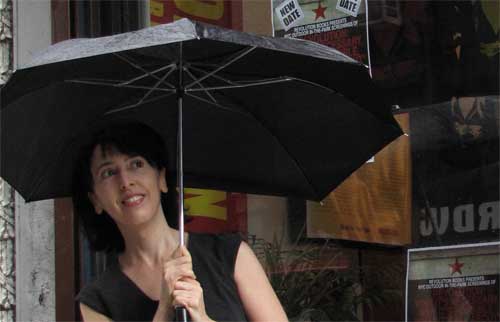
Deb Olin Unferth appeared on The Bat Segundo Show #386. She is most recently the author of Revolution.

PROGRAM NOTE: Just before the tape rolled, Our Correspondent, who met with Deb Olin Unferth at a Vegan restaurant, had casually mentioned (in an entirely different context) that he was a meat eater. Our Correspondent’s revelation was rejoined by a scowl from a man sitting directly behind Ms. Unferth. The scowl was so minatory that Our Correspondent, not an especially homicidal individual, wondered if he had killed a few random New Yorkers on the way to the restaurant. And then he realized that he had unthinkingly revealed his carnivorous habits in a Vegan restaurant. Had the story stopped there, it would not be worth reporting. But as it turned out, the Vegan’s fury made its way into our program. At about the 35:30 mark in this program, Ms. Unferth noted that a strange man was photographing both she and Our Correspondent through the window, just outside the restaurant. And this wasn’t just a one-time snapshot, but multiple angles. For all we know, there are photographs of us on some “meat is murder” website. Our Correspondent fully accepts the blame for his gustatory effrontery. Our Correspondent respectfully requests that Ms. Unferth, who is a very nice person and not a meat eater, not be implicated in any Angry Vegan movement that arises from this conversation.

Condition of Mr. Segundo: Wondering if he accidentally signed up for a revolution sometime in the late 1980s.

Author: Deb Olin Unferth

Subjects Discussed: The nonfiction volume Revolution containing echoes of the fictional Vacation, the Bowles-like distinction between tourist and traveler, Unferth’s early efforts to write about her Nicaraguan experiences as a murder mystery, Minor Robberies as a warmup for the memorialized document, the key qualities that Unferth sought in a revolution in 1987, the influence of Marxism, taping people for interviews, capturing history, lasting urgencies vs. ephemeral urgencies, how urgencies are captured into text, the Farabundo Marti National Liberation Front, the El Salvador peace accords of 1992, revolutionizing your way into legitimacy, remembering what you did at eighteen, confusion and youth, sufficiently recapturing certain feelings in book form, being harassed by men, violence from men as a deliberate omission, making choices about what to reveal in a book, whether two bad boat tales are balanced by one good tail, having confidence in adages, alliteration, Gertrude Stein’s The Autobiography of Alice B. Toklas, comedy and disturbing situations that are poignant, the pleasant sound of “so say sailors,” whether it’s possible to run away and have it mean something, the fear of being left, being rejected as a writer, early success with McSweeney’s, the inspiration that comes from fleeing, multiple acts of creation, Unferth’s storytelling efforts as a child, unanticipated reverberations in life that aren’t remembered, taking dialogue verbatim from old notebooks, La Prensa and censored newspapers, competing mnemonic notions of what you lived, contending with Angry Vegans taking photographs of Our Correspondent and Deb Olin Unferth, tracking down an ex-fiance, the need for corroboration, the private investigator’s role in assembling the memoir, legal reasons as a convenient excuse, “if I could write the book,” the first question Unferth would say to her ex-fiance, and chronicling the unique voice.

EXCERPT FROM SHOW:

Correspondent: As the interviewer, I feel compelled to ask why you felt taping the people was the best way for understanding them. You describe this bundle of tapes. And later you were stopped because of these particular tapes. And thankfully they weren’t actually played. But it is rather curious that recording these stories seemed to be the best way for you to try and understand them. Why do you think that was?

Unferth: That’s a good question. I think it was that we felt that maybe the tapes — we would be able to go back and listen to the tapes later. That the tapes would be useful in some way at a later date. That we felt that we could understand the people we were interviewing better and have opportunities to meet them if we had a tape recorder and were saying, “You know, we’re asking questions.” I don’t know. I could ask you the same question. Why do you feel it’s important to interview people?

Correspondent: Well, that’s a good question. Well, to my mind, in some vague way, I perhaps would like to — and this almost sounds hubristic, even though I don’t mean it to sound like that. I would like to think that I’m recording a history of some kind. That let’s say, in ten years, you Deb produce your masterpiece. And we can go back ten years before and see, well, what were you thinking before these germinations? The three books leading up to what ended up being an even bigger book. Well, there’s the trajectory right there. It’s also why I like to talk with people multiple times. I’ve talked with TC Boyle now four times. And even then, I find that he’s a little bit different each time. So maybe history was perhaps the draw for you at a very young age?

Unferth: Yeah. But if I think about you, and what you do, it seems like you’re also recording the echoes of contemporary culture.

Correspondent: Yes.

Unferth: So you are getting — because you’ve interviewed quite a few people. So you’re getting a wide swath of contemporary letters and what are people thinking about in contemporary letters at this time.

Correspondent: Yes.

Unferth: And so I would say that it’s a similar thing to what we were trying to do. To establish the tone and the concerns of liberation theologians and people who were involved in these revolutions at the time.

Correspondent: We have to capture the present moment in an effort to see it differently five years from now. Or ten years from now. Or twenty years from now.

Unferth: That’s true. Yeah.

Correspondent: Does text for you serve the same function? Or a similar function? Or is it a little bit different? By coming at it from memory, from research, from your notebooks at the time, I presume. You allude to those in the book. What is the effort of this cycle for you? What is the ultimate purpose? That’s a very general question. But since we’re talking about this.

Unferth: The ultimate purpose of writing Revolution?

Correspondent: Yes! Exactly!

Unferth: Well, I mean, it felt like an urgent thing to do. It felt like I really really wanted to write it. Which is also how it felt with Vacation and Minor Robberies. And I haven’t felt that way about many other things in my life. So I would say that’s the primary thing. It’s a personal urgency. And just a desire to untangle the questions that were being asked for myself. But then if I look at it with a broader — like what place does this book have? I really wanted it to contribute to the conversation about memoirs. Was one thing. I wanted to be thinking about what a memoir is. And I wanted to expand that a little bit. I wanted to do something a little different from most memoirists. Because I feel like memoir is such an interesting form. And then I wanted to write a coming-of-age story that isn’t quite as simple as “something is learned and then someone grows as a result of it.” I mean, I think that there are so many different ways to approach coming-of-age stories. And so in this one, it’s almost like someone becomes slowly disillusioned. And that’s how the coming of age is accomplished in some way. So I think that was part of it. And then also I think my continued fascination with those countries — especially Nicaragua. Nicaragua to me just seems like such a fascinating place. And El Salvador. Both just fascinating places. And they were these people who did these incredibly courageous things and developed whole philosophies and risked their lives and all these things. And now we’ve just forgotten about it.

Correspondent: Sure.

Unferth: And I find that to be so heartbreaking. I haven’t forgotten. So I want to talk about it.

Correspondent: Well, to go back to what you were saying at the beginning of that answer about this sense of urgency. It is very interesting to me that you have chosen perhaps the least urgent of all mediums. The book, which takes a long time to write. Which then has to go through editing. Which then has to sit in drydock for two years before it’s published. And then here you are two years later talking about something. And we’re not talking about the urgent moment. This is the difficulty, I suppose, of some of these conversations. Because you’re probably working on something else right now. And yet, that spirit of urgency is what was the guiding principle of this particular project. Why try urgency in such a slow burn medium?

Unferth: Because my moments of urgency last a long time.

Correspondent: Aha! So it’s lasting urgency you seek.

Unferth: Yeah. It’s not that my urgencies aren’t something that sweep in on me and last for a moment and then flee. They just sit inside me for a long time.

Correspondent: So, for you, some of your very taut paragraphs, your one-sentence paragraphs, they’re almost an attempt to capture a lasting urgency. And then the ephemeral urgencies don’t actually make it into your book. Would that be safe to say?

Unferth: What do you mean by my ephemeral urgencies?

Correspondent: Well, would you say that all of your urgencies are lasting? Or is some of it ephemeral?

Unferth: No. Some are. I guess in many ways we’re all sort of a bundle of urgencies, right? We’re all trying to do all sorts of things to stay calm. To try and stay calm. And some of those things are satisfied very easily. Just by eating something if I’m hungry. And others feel deep and existential and possibly without solution.

Correspondent: Yeah.

Unferth: So there are many different levels of urgencies, I suppose.

Correspondent: When your urgencies are captured into text, is it less urgent? Or does it still last?

Unferth: Maybe it feels less urgent once it’s done and out there. Like this particular topic. Now that it’s written and it’s done and the book is out, I don’t feel as urgent about that topic anymore.

(Image: Meghan Kenny)

The Bat Segundo Show #386: Deb Olin Unferth (Download MP3)
This text will be replaced

New Directors/New Films: Pariah (2011)

[This is the fifth in a series of dispatches relating to the New Directors/New Films series, running between March 23, 2011 and April 3, 2011 at MOMA and the Film Society of Lincoln Center.]

Last September, in response to Floyd Mayweather’s homophobic rant against Manny Pacquiao, Stanley Crouch wrote an essay suggesting that African Americans “exemplify the modern age in their contradictions as thoroughly as any other ethnic group.” Yes, black voters showed up in California to vote against same sex marriage. But Crouch observed that, thanks to Amiri Baraka, homophobia had been part of black nationalism as early as the 1963 March on Washington. (In a 2009 interview with 3AM Magazine, Baraka claimed that his words emerged from anger that “was part of the mindset” created by numerous political assassinations, but he didn’t apologize for his homophobia.)

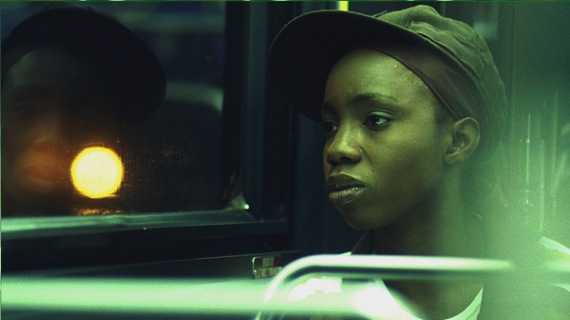
Since black homophobia is often too easily portrayed as a symptom of race rather than a symptom of class, it’s a relief that writer-director Dee Rees has arrived to investigate the matter. Her debut narrative feature, Pariah — an extension of her 2007 short — finds its best footing when illustrating how middle-class aspirations and the desire for stability are often responsible for this lingering atavism. Late in the film, when Audrey (Kim Wayans) reacts to her 17-year-old daughter Alike (Adepero Odeuye) after she defiantly shouts, “I’m a lesbian, I’m a dyke,” the moment’s true horror comes from understanding how Audrey’s materialist desires for a Fort Greene brownstone (rather than a place in Queens, an early life of struggle hinted at throughout Rees’s film) and her efforts to stick with the “right people” at church have permitted a few dormant prejudices to explode within this apparent domestic bliss. (And by making Alike’s father a cop, played by the excellent Charles Parnell, Rees neatly aligns Audrey’s Christian virtues with Alike’s father’s concession to an authoritarian vocation. It isn’t a surprise when we learn that this isn’t a happy marriage.)

Crouch suggested that “consenting adults will win out over all the blather,” but, in his otherwise thoughtful essay, he didn’t answer the equally important question of how children, still struggling to find identity, might cut through this noise. In Pariah, Alike isn’t a terribly rebellious teenager. She sneaks into nightclubs in drag with her friend Laura (Pernell Walker), but spends most of her time inside shyly occupying red velvet couches and struggling with her sexuality. Does she shove a dildo down her pants and pretend to be a man? Does Alike have the “right people” to go to? Even in seemingly civilized Fort Greene, Rees has the courage to suggest that plentiful community resources aren’t always allocated to answering the right questions.

One night, Alike returns home later than curfew and Audrey yells at her. Rather than trying to understand her daughter, who is also a blossoming creative writing student getting good grades, Audrey would rather blame Laura, “that young lady you run out with,” for Alike’s apparent confusion. But surely the mixed signals at home (dad calls her “Allike,” mom calls her “Lee”), buttressed by Alike’s parents trying to squeeze their daughter into their cannibalized notions of success, are the main problem.

Audrey sets Alike up with Bina (Aasha Davis), a girl from church who appears to be a model teenager. Someone who dresses nice, who isn’t likely to corrupt Alike with that Reema Major trash, and who quickly subsumes Laura’s role as regular friend. What Audrey and Alike don’t realize is that the world isn’t nearly as neat as they realize.

Rees is greatly helped by her cast. Oduye, Davis, and Walker all play their teenage roles as if they’re just close enough to self-sufficiency to grow beyond many of these invisible shackles. And this makes it especially painful when some unanticipated development sets their slow progress back.

Unfortunately, the film sometimes tries far too hard to be natural. The handheld camera work, striving for a docudrama approach, sometimes intrudes too much on an organic moment. One scene in a store, in which the question “How does pussy taste?” is presented in front of a few old timers, contains streetcred that is just too forced to be believed. However, one of the film’s best moments is a late night bonding session between father and daughter, where Elika comes very close to telling her dad how she feels. The dialogue itself is okay, but Charles Parnell, who is probably best known for his voiceover work on The Venture Bros., is a very generous actor and sells the scene so that it resonates.

Rees deserves credit for exploring social issues that few American filmmakers are willing to touch. Once she figures out the right balance between realism and drama, she’ll be a very formidable filmmaker. I certainly hope that she isn’t seduced by the less nuanced Hollywood machine.

New Directors/New Films: Curling (2010)

[This is the fourth in a series of dispatches relating to the New Directors/New Films series, running between March 23, 2011 and April 3, 2011 at MOMA and the Film Society of Lincoln Center.]

If Kingpin and The Big Lebowski (or, heck, even Dreamer – a silly movie starring Tim Matheson as a bowler from 1979 that nobody remembers) portrayed the bowling experience from the bowler’s vantage point (natch, given that this is the way most of us comprehend that lengthy lane with the nine pins we hope to topple down in half-drunken triumph), then Curling dares to see it from the middle-aged folks toiling in bowling alleys. This may be because writer-director Denis Côté was born in New Brunswick. In fact, what you may not realize is that five pin bowling, which is quite popular in much of Canada, isn’t nearly as much of a draw in Quebec, New Brunswick, and Nova Scotia. And that is because in some of the French-speaking territories, petite quilles (or duckpin bowling, which is ten pin bowling with fat little bastards replacing the slim pins most of us know in the States; perhaps this is why the obesity epidemic is writ larger south of the 49th parallel) is more the order of the day.

I didn’t intend to write a silly essay about the many variants of bowling, although they certainly excite me. (In fact, my discovery of candlepin bowling upon moving to the East Coast made me both very surprised and very happy.) I am, after all, supposed to tell you about this movie, Curling. What I can say is that Denis Côté isn’t terribly interested in the bowling alley’s culinary offerings, which you’d figure that anyone who speaks French or who enjoys chilli cheese fries (does Côté?) would be keen on investigating. However, as the film’s title suggests, the film itself isn’t about bowling. It also involves a pastime that is insufficiently defined by Wikipedia as “a sport in which players slide stone across a sheet of ice towards a target area.” I don’t wish to come across as overly querulous, but this clinical sentence certainly doesn’t insinuate what makes curling a draw. Having not curled in any meaningful capacity outside of the boudoir, I can safely report that Curling‘s curling moments did fill me with the sense that I had missed something – even if most of the curlers were advanced in years and looked as if they had taken up curling to alleviate the gloomy boredom awaiting them outdoors. Since the Will Farrell comedy Dodgeball is held in high acclaim, I would not be surprised if some crass Hollywood crew appropriated this sport too. After all, like golf, curling did originate in Scotland.

For one unsmiling man with a mustache, Jean-Francois (played by Emmanuel Blidodeau), bowling isn’t so much a joy, as it is a low-paying part-time job in which he sometimes loses bets with his co-workers to clean the bathroom or dress up in preposterous costumes. Jean-Francois’s other gig involves cleaning a motel and, one morning when he discovers a bloody mess in Room 9, he is informed by the owner that his services are no longer required. Of course, it isn’t Jean-Francois’s fault, nor even the fault of the “big Accordion trucker” who stayed the night before who either killed somebody or died bleeding in the wilderness. The owner had planned on closing down the motel anyway. “I don’t have the energy,” says the owner. Well, who can blame the owner when the guests die like this?

Did I mention the fact that some tiger is running loose and that various people are being mauled down in the wintry wilderness? Did I also mention that Jean-Francois is a single dad home-schooling his daughter Julyvonne because it’s so dangerous outside? Jean-Francois takes care of Julyvonne because his partner is locked up in a mental institution. “If you touch a hair on her head,” she shrieks, “I’ll rip your fucking heart out.” Such is the promise of domestic tranquility in this family’s universe, but, in Côté’s defense, I should point out that I grew up in an environment in which such lines were shouted around the dinner table. In fact, the situation here is so bleak that Julyvonne begs her father to play Stacey Q’s “Two of Hearts” through a crappy stereo so that she can dance in a vague manner as Jean-Francois sits on the couch in a moribund manner.

And you thought some of your nights were pathetic. In seeing these scenes, I wondered if the film was set sometime around 1989. Later in the film, when there was talk of cell phones and video games, I felt a genuine sense of shock that this time capsule of a town in the middle of nowhere could be penetrated.

These cinematic results, depending upon your temperament, are either relentlessly bleak or mostly depressing with occasional bright and quietly hilarious spots. At times, Curling made me feel like I wanted to kill myself. And yet I can recommend this mumblecore opus from Quebec. Because the melancholy often functions in a peculiar comic mode. Any film featuring a man dressed up in a bowling pin costume, hassled by a ten year old kid who wants to wear the top portion and who then reveals rudimentary erudition that eludes Julyvonne, can’t be entirely humorless. And any film featuring a fetching employee who has a new hair dye color for every fresh screen appearance is probably suggesting that iridescence can be located in a bleak landscape if you know how to change your stripes. (In fact, chances are that maintaining a silly moustache may be part of the problem.) Then again, this is also a film in which Julyvonne, precluded from painting the town red, humbly requests that her dad paint the bathroom red. Jean-Francois insists that green would be a better shade. Julyvonne is later briefly abandoned because, in Jean-Francois’s view, this contributes to the possibility of him going insane like his partner.

What I enjoyed so much about Curling is that it doesn’t give up its mysteries. We never quite learn why the mother has gone insane. For all I know, it could be a rite of passage in this village. I mentioned earlier that a large cluster of the local population seems to be getting killed or mauled. It could be the tiger. It could be the truck driver. It could be what some folks call cabin fever. I don’t believe the Quebec community is this violent in real life, although I don’t have any fresh crime statistics at my side. Curling presents enough ambiguities to make you wonder whether its village represents some parallel universe occupying Côté’s inventive mind or some part of Québécoise equipoise that just isn’t talked about. It is the rare film that is both a downer and a winner.

The Bat Segundo Show: TC Boyle IV

TC Boyle appeared on The Bat Segundo Show #385. He is most recently the author of When the Killing’s Done. This is his fourth appearance on the program. He has previously appeared on The Bat Segundo #273, The Bat Segundo Show #70, and The Bat Segundo Show #10.

Condition of Mr. Segundo: Considering a savage swim to the Channel Islands.

Author: T. Coraghessan Boyle

Subjects Discussed: Whether one can look dapper while being under the weather, Boyle’s powerful immune system, connections between Wild Child‘s stories and When the Killing’s Done, fishing expeditions gone awry, early subconscious efforts to hone the narrative framework, the short story “Anacapa,” “Question 62,” who has the ethical result to control all creatures, details on the next novel San Miguel, the Channel Islands, the bleak winds of San Miguel, straightforward historical narrative vs. exuberant adventure, Boyle’s prodigious description of hair, folk singers and massive hair, writing about women, Ruth Dershowitz in East is East and Dana in Talk Talk, basing When the Killing’s Done on news accounts without meeting anybody involved, Dave LaJoy and megalomaniacs, readers who take hard sides in response to the book, whether the portrayal of an exuberant megalomaniac causes an unintended ideological tilt, sympathizing with an animal rights activist, not being able to look at the PETA slaughterhouse videos, Diane Johnson’s essay in the New York Review of Books, whether Boyle’s sense of the ridiculous overcomes moments of gravity, the role of literature within Killing, Madame Bovary “in the Jean Renoir original,” Island of the Blue Dolphins, Boyle’s pessimism, being thrust into the lap of the existentialists, Jeffrey Dahmer, the comforts of irrelevance, Flannery O’Connor’s “A Good Man is Hard to Find,” spirituality, feeling the pulse of nature and being humbled by it, Boyle’s pilgrimages, blocking out terrible news, the role of art in a nihilistic viewpoint, the geography of Santa Cruz and Anacapa, Boyle’s mother-in-law, the degree of geographical exploration required for Drop City and When the Killing’s Done, the Judas pig, Tom Wolfe’s journalistic approach to novel writing, passages written by “Boyle the historian,” being in the clear when using real people for fiction, when fiction is more real than reality, riffing on history, Home Depot as “the loneliest place in the world,” not having material goods, and escaping to the mountain.

EXCERPTS FROM SHOW:

Correspondent: I wanted to remark upon a recent essay by Diane Johnson in The New York Review of Books. I’m sure you’ve probably seen it by now.

Boyle: Yes, I have.

Correspondent: She wrote something that I happen to agree with. “Because his sense of the ridiculous usually overcomes his moments of gravity, he rarely departs from a comic mode that precludes tears even in the most tragic circumstances.” I think that this is a fair point, especially in this book. But if your book is informed with this sense of the ridiculousness, I’m wondering if this is going to impede upon writing in more serious or greater turf.

Boyle: It might. Which is precisely why I’m doing a non-comic straightforward historical narrative right now. Just to see how that might be and what might happen. Don’t forget. I’m the guy who wrote Water Music as my first novel, which turned the historical novel on its head and subverted and pulled the rug out and nudged you constantly about the unreliability of fiction and of history too. Now I am trying to write something without any irony or any comedy. Straightforward drama. Straightforward realism. Just because I’ve never done it before. I’ve done it in short stories. But I’ve never done it at length. And I found this wonderful story, a historical story, which I’m telling as best I can. We shall see what the results are. In fact, if we’re very lucky, you and I will be sitting here in three years discussing that one. And we’ll find out. (laughs)

Correspondent: Well, maybe we will. But I want to see if we can get to When the Killing’s Done and this problem of adopting the comic exuberant tone. I think this book does really present some very important issues, which we were getting to earlier, about how does humanity play god in the animal kingdom. I mean, this is a very serious topic. And the comedy is almost a mask over something which is — well, if you think about it from either side — really depressing. So I’m wondering if, in not permitting us to share tears (as Diane Johnson believes), it almost trivializes the issue to some degree. Does it present a problem? Or is your strategy more laying a few comic exuberant bombs to blow up in the reader’s head in about a week or so?

Boyle: Wow. Neither of the above. I’ll go for Choice C. I don’t see this as necessarily a comic novel. Certainly there are many varieties of comedy, of course. And I’ve used every possible mode I can think of. This has its moments, of course. And I think it allows the reader to stand back at times and view the characters with some kind of ironic detachment perhaps. But I don’t see this as essentially a comic novel. I see this as a dramatic novel. And further — and we’ve talked about this in the past — I often find that using the comic mode can be more emotionally wrenching then writing a straightforward drama. Because it subverts your expectations. And in this one. Well, look at the ending to this book. It should punch you right in the heart. I hope it does.

Correspondent: But I don’t know. From my standpoint, it read very much like a comic novel. To me. Particularly every time LaJoy came up. I mean, this guy is such a hilarious…

Boyle: Because he’s exaggerated to a degree. And yet, and yet, he’s also real. And I wouldn’t want to say, as I said earlier, that he represents a large part of me. But certainly that part is there. And certainly, Ed, we are both of us pretty much perfect and beautifully emotionally adjusted. But a lot of people out there are not. There are a lot of people out thee who make LaJoy look calm.

* * *

Correspondent: Do you have anything that you feel optimistic or joyful about?

Boyle: No.

Correspondent: No? Nothing optimistic?

Boyle: No. Since I discovered death at a very young age, it has obsessed me. And the whole purpose of our endeavors obsesses me. And in a larger scale, of course, our human endeavors on the planet, which will of course be burned to a cinder in there and a half billion years anyway. So what does anything matter? Etcetera. As I probably have said to you before, you know, I went from a Roman Catholic boy with god and his heaven and Santa Claus at the age of eleven or twelve or whatever, realizing that it’s all completely phony and it’s just some myth that we’ve been fed to prevent us from committing suicide at a young age. And within three or four years of that, I was thrust into the lap of the existentialists. And I’ve never come back.

Correspondent: Then is work really the only way, the only reason to stay alive?

Boyle: All work is irrelevant. Everything is irrelevant. Our conversation is irrelevant. Literature is irrelevant. Films, love, everything is utterly irrelevant in the face of utter meaninglessness and death. That’s what we live with. Everybody lives with every minute of every day. On the other hand, if you’re not going to shoot yourself tonight, do what satisfies you. What satisfies me is making literature and then sitting here with you talking about it. And also I have honor. I really believe in the power of literature and I like to promote it. I’ve never cheated anybody or hurt anybody — you know, that sort of thing. And that’s simply because that’s my own code. It doesn’t make me any worse than Jeffrey Dahmer, for instance.

Correspondent: Who’s dead.

Boyle: It’s just my point of existence.

(Image: Mark Coggins)

The Bat Segundo Show #385: TC Boyle IV (Download MP3)

This text will be replaced

Review: Win Win (2011)

Can a woman seeking a $1,500/month guardian stipend truly afford to stay at a New Jersey motel for several weeks? (The Quality Inn in Toms River, New Jersey has kindly informed me that they rent rooms at $39.95/night. Discounting tax, that’s $279.65/week. At three weeks, that’s $838.95.) I suppose she could put it on her credit card, even though she’s just spent a considerable amount of her money in rehab and doesn’t appear to be gainfully employed. But can this same woman also afford to retain an attorney who makes at least three public appearances?

If a pack of cigarettes cost about eight bucks in Jersey, and you are a spendthrift like Mike Flaherty (played by Paul Giamatti), does it make any sense to buy a fresh pack, throw the other nineteen cancer sticks into a dumpster, and then smoke the remainder whenever you need to relieve stress? (For that matter, why are you spending your money on mid-grade scotch you keep in the office? And if your cigarette intake is that why aren’t you relieving stress that way?)

Such story problems emerge up with troubling frequency during Win Win, which isn’t just a subpar mainstream comedy, but a fallacious fantasy. The vastly overrated writer-director Thomas McCarthy (not to be confused with the very smart British novelist Tom McCarthy, who gave us Remainder and C) hasn’t bothered to ask or answer these basic questions. Perhaps it’s because McCarthy lives in a privileged bubble which prevents him from researching or investigating the very people he wishes to depict.

If we are to (rightly) condemn the Tea Party for perpetuating the view that some mythical age of prosperity occurred under Reagan, then we should also (rightly) condemn any huckster who wishes to perpetuate a roseate view of the middle-class instead of one that accurately presents its ongoing erosion (yet still manages to get us to walk away with some faith in humankind: Stewart O’Nan’s novels or Mike Leigh’s films come very much to mind). Because of these problems, Win Win is more feel-good propaganda than respectable entertainment. It’s the kind of movie that a clueless centrist, the type who doesn’t know how to live and who arrogantly claims comprehension of the hoi polloi without actually talking with them, will enjoy without question. I know this, because the film’s generic and gutless humor (1980s rock stars, games called Secret Apprentice, signs on ceilings that read “If you can read this, you’re pinned”) caused the middle-class types I was sitting with to laugh at the carefully engineered, preprogrammed moments.

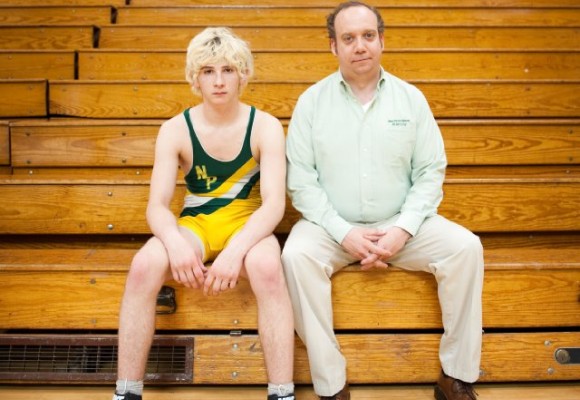
The problem here may be that Win Win is actually two movies awkwardly sandwiched into one. Does it want to be a film about how Mike Flaherty survives in an increasingly unforgiving economy as a sole practitioner who takes up the causes of the elderly and as a part-time wrestling coach? Or a film about how a man who cannot relax finds a new cause to take up with Kyle (Alex Shaffer)? Kyle, a troubled boy, reveals himself to be a very capable wrestler who can shake the wrestling team from its losing streak. (Some hint of Kyle’s troubled past is seen late in the film, where Kyle’s violence shows signs of surfacing to the edge. Between this, and one joke that has Mike hitting Kyle in the face just before a wrestling match, there’s the possibility of a richer film buried beneath the crowd-pleasing claptrap. Alas, McCarthy would prefer to collect the check.) He’s landed into Mike’s life not long after Mike has taken the aforementioned $1,500 monthly guardian stipend from Kyle’s grandfather to help keep his family afloat.

Because the film’s story is so overstuffed, supporting characters who should matter aren’t given the chance to breathe. Amy Ryan, for instance, plays Jackie, Mike’s wife, revealed to be nothing less than a former Jersey girl (with a JBJ tattoo on her ankle: JBJ, of course, being shorthand for Jon Bon Jovi, a shorthand that also condescends to the audience) who now nurtures. The Flaherty family may be having financial difficulties, but why doesn’t the family chip into pick up the slack. Why doesn’t the film give Jackie a chance to get a part-time job? Or even offer us a dramatic moment in which Mike finally cops to Jackie about his inability to make ends meet? Surely, a woman who has observed her husband cheaping out (not fixing the creaky pipes in the office, not sending in the health insurance check on time, not hiring a tree surgeon to cut down the diseased tree) would notice. Even Mike’s office assistant, a woman confident enough to announce her hangovers and carefully tallying the expenses, would probably have some modest clue that the arithmetic doesn’t add up. Presumably, these women don’t confront Mike with these financial issues because they are aware of Mike’s health (he hyperventillates after too much stress). But if Mike has the time to work two jobs, and he’s spending nearly all of his spare time playing Wii tennis and bullshitting with his somewhat loutish friend Terry (Bobby Cannavale), surely he should take some personal responsibility or would at least be called (gently perhaps) on the way he evades what he needs to do. I mentioned a woman earlier who also cannot do the financial numbers. That woman is Kyle’s mother. So that’s three women McCarthy offers who are incapable of understanding basic personal finance. In a world in which The New York Times claims gang rapists to be the victims, I don’t think it’s hyperbolic to call Thomas McCarthy a sexist pig.